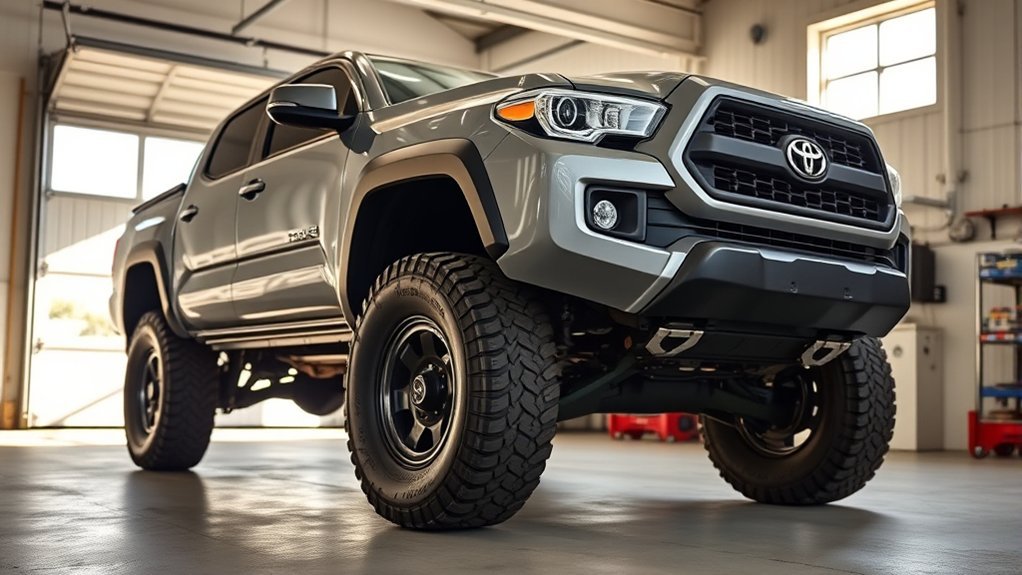
A Toyota Tacoma leveling kit raises the front of the truck to reduce the factory rake, improve stance, and create more room for certain tire and wheel setups. It can be a smart upgrade, but it is not a magic performance fix. The right kit depends on your Tacoma generation, drivetrain, tire size, wheel offset, towing needs, and how much ride-quality change you are willing to accept.
Quick Answer
A Tacoma leveling kit lifts the front of the truck, usually by about 1 to 3 inches, so it sits closer to level with the rear. It can improve appearance, front ground clearance, and tire clearance, but it should be followed by an alignment and careful checks for rubbing, brake-line tension, CV angles, and handling changes.
Key Takeaways
- A leveling kit mainly corrects front-end rake; it does not increase Toyota’s factory payload or towing ratings.
- Spacer kits are budget-friendly, while adjustable struts usually offer better control and fewer spacer-related travel compromises.
- Tire fitment is not guaranteed by lift height alone; wheel offset, tire brand, mud flaps, cab/trim, and alignment all matter.
- A wheel alignment, headlight check, fastener re-torque, and brake/ABS line inspection are important after installation.
At a Glance
| Time Required | About 2–5 hours for many front spacer or adjustable-strut installs, plus alignment time |
| Difficulty | Moderate to advanced DIY; professional installation is safest if you lack suspension experience |
| Tools Needed | Floor jack, jack stands, socket set, torque wrench, wrenches, pry bar, safety glasses, and the kit instructions |
| Cost | Spacer kits are usually the lowest-cost option; adjustable struts, professional labor, and alignment increase the total |
What Is a Leveling Kit and How Does It Work?
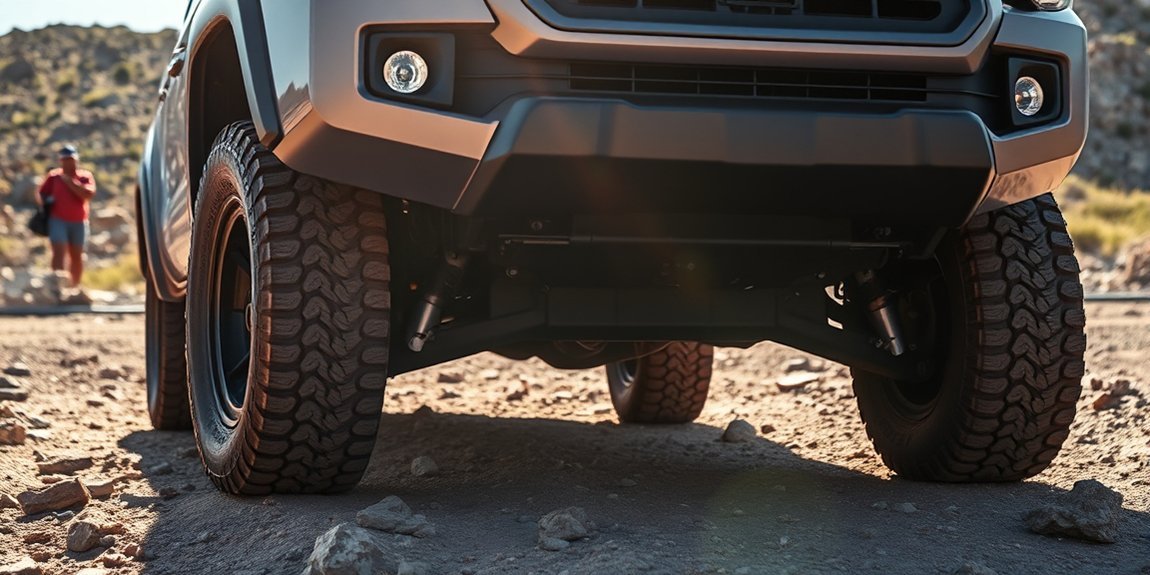
A leveling kit is an aftermarket suspension upgrade that raises the front of your Toyota Tacoma so the nose sits closer to the height of the rear. Tacomas often leave the factory with rear rake, meaning the rear sits higher than the front. That rake helps when carrying cargo or towing, but some owners prefer a more level stance.
Most Tacoma leveling kits use one of three approaches: a strut spacer above the factory coilover, a preload spacer that changes spring preload, or a replacement ride-height-adjustable front strut. Some kits add about 1 to 3 inches of front lift, but exact height depends on the kit, model year, suspension design, and whether the truck has factory packages such as TRD Off-Road, TRD Pro, or Trailhunter hardware.
For example, Bilstein lists its B8 5100 ride-height-adjustable shocks as a direct-fit alternative to coil spring spacers, with adjustable lift up to 2.75 inches depending on application. Spacer kits can also work well, but they may change suspension droop, geometry, and how the truck feels over rough roads.
Warning: Any ride-height change can affect steering feel, braking behavior, headlight aim, stability, and suspension wear. Read the kit instructions completely, use properly rated jack stands, and get a professional alignment after installation.
Benefits of Installing a Leveling Kit on Your Tacoma
Installing a leveling kit on your Tacoma is not just about looks. The right setup can improve front-end clearance, make the truck look more balanced, and help with certain tire upgrades. The key is being honest about what a leveling kit can and cannot do.
Improved Aesthetics and Stance
A leveling kit can make your Tacoma look more balanced by reducing the nose-down factory rake. Many owners choose this upgrade because it gives the truck a cleaner side profile and a more aggressive stance without the height, cost, and complexity of a full suspension lift.
The visual benefit is especially noticeable when paired with properly sized tires and wheels. Keep the setup moderate if you want a factory-like daily-driver feel.
Increased Tire Clearance
By raising the front of your Tacoma, a leveling kit can create more space around the front fenders and bumper area. That extra space may help with larger tires, but lift height alone does not guarantee rub-free fitment. Wheel offset, tire section width, caster settings, mud flaps, inner fender liners, and tire brand all matter.
| Approximate Tire Size | Typical Leveling Kit Notes |
|---|---|
| 32 inches | Often achievable with mild leveling, depending on wheel offset and trim. |
| 33 inches, including common sizes near 285/70R17 | Common goal for Tacoma owners, but rubbing may require alignment changes, mud-flap work, or minor trimming. |
| 34 inches | Usually more than a simple leveling-kit fitment; expect trimming, offset planning, and possible additional suspension work. |
| 35 inches | Usually better matched to a full lift, trimming, gearing considerations, and careful wheel/tire planning. |
Note: Tire safety matters as much as tire size. NHTSA tire guidance recommends using properly sized, load-rated, and inflated tires. Always confirm load rating and inflation guidance with the tire placard, owner’s manual, tire manufacturer, or a qualified tire shop.
Enhanced Off-Road Capability
A leveling kit can improve front approach clearance because the front bumper and lower air dam sit higher. That can help on mild trails, rutted roads, and uneven campsites. It can also reduce the chance of scraping the front end when entering driveways or crossing small obstacles.
However, a leveling kit is not the same as a complete off-road suspension system. It does not automatically add skid plates, lockers, stronger control arms, extra wheel travel, or better shocks. If your Tacoma sees frequent rocky trails, high-speed washboard roads, or heavy overlanding loads, a complete suspension system may be a better match.
Selecting the Ideal Leveling Kit: Key Factors to Consider
Choosing the right leveling kit for your Toyota Tacoma starts with your real goal. A commuter truck on 32-inch tires needs a different setup than a trail truck carrying armor, a winch, and camping gear.
- Model year and generation: A kit for a 2nd-gen Tacoma may not fit a 3rd-gen or 4th-gen Tacoma. Always match the kit to your exact year, drivetrain, cab, and trim.
- Lift height: Mild height is easier on geometry. More height can increase the need for upper control arms, trimming, and alignment correction.
- Ride quality: Spacers often keep many stock parts, while quality replacement struts can improve damping and control.
- Tire plans: Pick the tire and wheel setup before buying the kit. Offset and width can create rubbing even with plenty of lift.
- Towing and hauling: Leveling the front does not increase Toyota’s tow rating or payload rating. Toyota lists current Tacoma towing capacity at up to 6,500 lbs and payload at up to 1,705 lbs, depending on configuration, so always follow your specific truck’s manual and door-jamb labels.
- Warranty and inspection rules: Suspension modifications may affect warranty claims related to modified parts. Local inspection and insurance rules can also vary.
A Tacoma leveling kit is best viewed as a stance and clearance upgrade, not a factory-rating upgrade. It can help tire clearance and approach angle, but it does not raise payload, towing, braking, or axle ratings.
[Products Worth Considering]

Replace worn wheelchair rear tires with a universal 24x1 no-flat polyurethane foam option designed to mount tightly on 24-inch rims without the tire falling off. Installation is made easier with included tools and multiple methods, including using a pry bar or softening the tire in hot water to reduce resistance. The package includes two tires plus tie ropes for convenient fitting and handling.

These aluminum alloy tire valve stem caps with an O-ring seal help protect valve stems from corrosion while adding a clean, stylish look to your vehicle. The universal fit works across cars, trucks, motorcycles, bicycles, and more, making them an easy upgrade for everyday driving and off-road use. Installation is quick, and the included four-pack keeps all your tires dressed and protected.

The Ziopetru adjustable magnetic wheel alignment tool helps you check and restore camber and caster positioning after removing and reinstalling undercarriage components. With a clear leveling/bubble measurement system and an easy zeroing adjustment knob, it supports precise horizontal angle checking. The strong magnetic base mounts to metal surfaces for convenient use at home on cars, motorcycles, trucks, vans, and SUVs.
Types of Leveling Kits for Toyota Tacoma
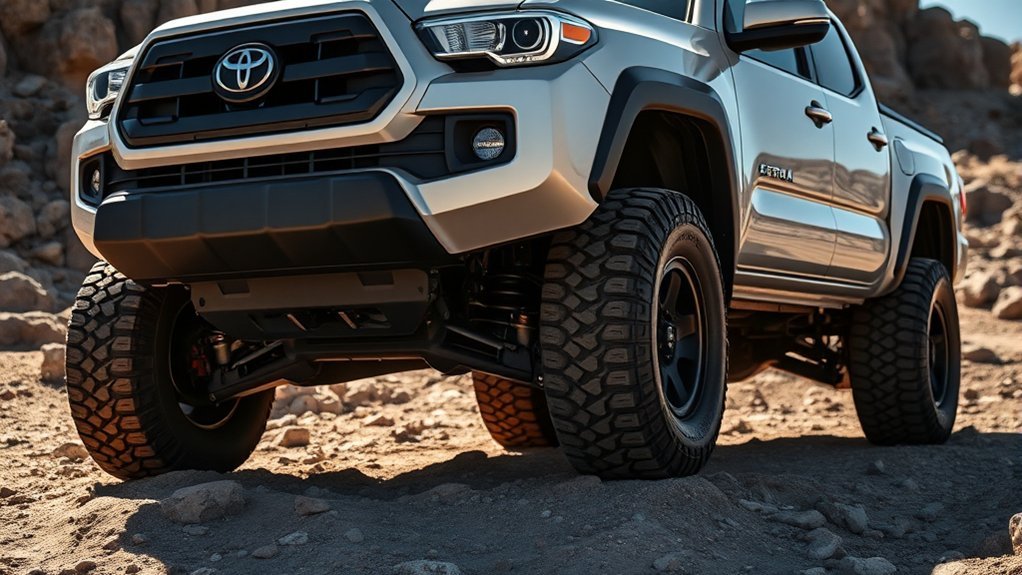
When it comes to leveling kits for your Toyota Tacoma, you will usually compare strut spacers, preload spacers, replacement leveling struts, and full lift kits. Each option has strengths and trade-offs.
[Products Worth Considering]

These M14x1.5 closed-end chrome lug nuts are a one-piece replacement designed for secure fitment on compatible GM, Ford, and select Chrysler/Dodge models. Featuring a 60-degree conical seat and anti-rust chrome plating, they help resist corrosion and maintain a bright look for everyday driving. Built for long-term durability, they include OEM-style part references and are backed by 12 months of support.

This manual duck head tire changer kit makes tire installation and removal simpler by letting you embed the duck head into the tire with applied pressure. The integrated design and durable steel construction help reduce friction and improve efficiency and safety during use. Suitable for 16–21 inch wheels, it’s convenient for cars, trucks, SUVs, and ATV tires, with 24-hour after-sales support.

Upgrade your wheels with MIKKUPPA M12x1.5 mag seat lug nuts built for secure, corrosion-resistant performance. These closed-end chrome lug nuts are a direct replacement for select Toyota models, including Camry, Corolla, RAV4, Sienna, Avalon, Highlander, Matrix, Venza, and Prius. Triple-chromium plating and cold-forged, heat-treated steel help deliver strength for daily driving and replacement needs.
Strut Spacers Overview
Strut spacers are popular because they are usually affordable and simple compared with a full suspension lift. A spacer mounts around the factory front strut assembly to raise the truck’s front ride height. Many spacer kits are bolt-on, but that does not mean they are risk-free or tool-free.
- Best for: appearance, mild clearance gains, and budget-conscious daily drivers.
- Pros: lower cost, simple parts list, and often no cutting or welding.
- Cons: can reduce droop travel, increase ball-joint/CV angle stress, and may not improve damping.
Replacement Leveling Struts
Replacement leveling struts can be a better option if you want more than a basic stance change. Ride-height-adjustable struts use different spring perch positions or designed shock lengths to raise the front while improving damping control. The Bilstein B8 5100, for example, is built as a direct-fit ride-height-adjustable shock for trucks and SUVs with OE-style coilover front suspension.
- Best for: drivers who want a better-controlled ride and a cleaner setup than a basic spacer.
- Pros: better shock control, adjustable height on many applications, and more complete suspension tuning.
- Cons: higher parts cost and more involved installation, especially when coil springs must be compressed.
Preload Spacers and Full Lift Kits
Preload spacers add height by compressing the coil spring more than stock. They can create lift, but they may also make the ride firmer. A full lift kit is different from a leveling kit because it usually includes front and rear components, geometry correction, shocks, and sometimes control arms, differential drops, or brake-line parts.
Choose a full lift kit instead of a simple leveling kit if you want 34- or 35-inch tires, heavy armor, frequent off-road use, or a bigger stance change than a mild front level can safely provide.
How to Install Your Leveling Kit: A Step-by-Step Guide
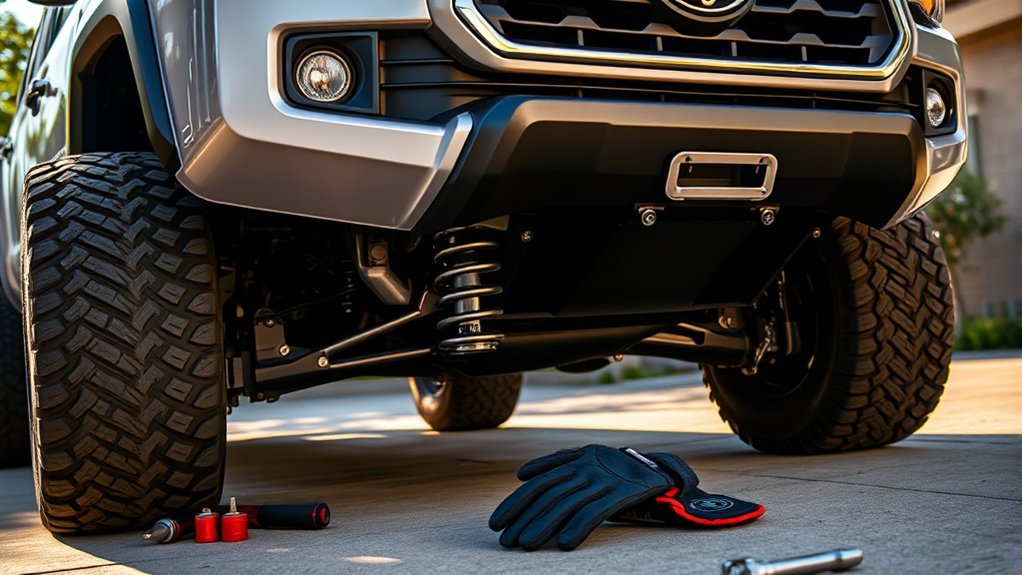
Installing a leveling kit on your Toyota Tacoma can be a rewarding DIY project, but suspension work carries real risk. Read the kit instructions first, use the proper Toyota service information for your model year, and do not work under a truck supported only by a jack.
Pro Tip: Measure from the center of each wheel hub to the fender lip before installation. Record all four corners. This gives you a baseline to confirm the final stance and spot uneven side-to-side height after the kit is installed.
- Confirm compatibility. Check that the kit matches your Tacoma year, generation, drivetrain, cab, trim, and suspension type.
- Prepare the truck safely. Park on a flat surface, set the parking brake, chock the rear wheels, loosen front lug nuts, lift the front by the frame, and support it with properly rated jack stands.
- Remove the front wheels. Keep hardware organized and inspect the tire, brake hose, ABS wire, and suspension components before disassembly.
- Disconnect components as directed. Depending on the kit, you may need to disconnect sway bar links, brake/ABS brackets, or the lower strut bolt to create enough droop.
- Remove or access the strut assembly. Many spacer and replacement-strut installs require removing the coilover/strut assembly. Use caution around loaded coil springs.
- Install the leveling parts. Fit the spacer, preload spacer, or replacement strut exactly as the manufacturer instructs. Do not stack lift parts unless the manufacturer specifically approves it.
- Torque hardware correctly. Reinstall all removed components and torque fasteners to the kit instructions or factory service specifications.
- Check clearance. Turn the steering from lock to lock and inspect brake hoses, ABS wiring, CV boots, sway bar links, and tire-to-fender clearance.
- Reinstall wheels and lower the truck. Torque lug nuts in a star pattern to the proper specification for your wheel setup.
- Get an alignment. A professional alignment is strongly recommended after changing front ride height.
Warning: ReadyLIFT’s Tacoma leveling-kit instructions recommend trained-mechanic installation, post-install clearance checks, headlight adjustment, alignment, and re-torquing fasteners after 500 miles. Treat those checks as essential, not optional.
[Products Worth Considering]

This spare tire tool kit is designed for the 2004 to 2018 Ford F-150 to help you loosen and tighten wheel lug nuts and manage the spare tire and provided jack functions from underneath the vehicle. It includes the lug nut wrench and extension pieces plus a convenient storage carrying case for organized transport. The jack itself is not included.

The Trivd Frol 1/2" air impact wrench delivers high performance torque up to 1500 ft-lbs with a twin hammer impact mechanism for strong, balanced blows. It features an ergonomic grip, compact lightweight design, and quick-stop control with 3 forward speeds up to 8000 RPM plus a reverse speed. Built for demanding automotive repair and tire shop work, the rear exhaust helps keep debris away from the surface.

This 1/2-inch drive breaker bar delivers powerful leverage for loosening and tightening stubborn lug nuts and automotive fasteners. The 180-degree flex head helps you reach tight spaces at the angle you need, making tire and brake jobs easier. A spring-loaded ball detent design holds 1/2-inch sockets securely while the chrome-moly head provides durable strength for everyday use.
Post-Installation Checklist
After your Tacoma is leveled, take a slow test drive before heading onto the highway or trail. Listen for clunks, rubbing, pulling, vibration, or steering-wheel shake.
- Alignment: Check camber, caster, and toe after the kit is installed.
- Headlights: Re-aim headlights if the front lift changes beam height.
- Brake and ABS lines: Confirm they do not stretch, bind, or rub at full steering lock or suspension droop.
- CV boots and angles: On 4WD trucks, inspect CV boots and watch for vibration or premature wear.
- Fasteners: Re-check torque after the first few hundred miles and during routine service.
- Tires: Check rubbing at full lock, during compression, and in reverse.
- Spare tire: If your new tires are larger than stock, plan for a matching spare or understand the limits of using the factory spare temporarily.
Leveling Kit Impact: Performance Improvements After Installation
While many Tacoma owners focus on looks, a leveling kit can change real-world performance in both helpful and limiting ways. The main gains are front clearance, approach angle, and room for selected tire setups. The main trade-offs can include altered suspension geometry, a firmer ride, added wear on steering/suspension components, and more wind resistance or fuel use if you add larger tires.
For towing, be careful with expectations. A leveling kit does not increase the Tacoma’s factory tow rating, gross vehicle weight rating, payload rating, axle rating, or braking capacity. Toyota’s owner’s manual towing guidance notes that towing can affect handling, braking, performance, durability, and fuel consumption. If you tow often, consider how the truck sits when loaded, because a front leveling kit can make rear sag more noticeable with tongue weight or bed cargo.
Troubleshooting Common Leveling Kit Problems
- Truck pulls left or right: Get the alignment checked and confirm tire pressure is even.
- Steering wheel is off-center: Alignment is needed after the suspension height change.
- Clunking over bumps: Re-check sway bar links, strut top nuts, lower strut bolts, and control-arm hardware.
- Vibration in 4WD trucks: Inspect CV angles, CV boots, driveshaft angles, and installation orientation.
- Tire rubbing: Check wheel offset, caster, mud flaps, fender liner, cab mount area, and tire width.
- Uneven stance: Re-measure hub-to-fender height and confirm the kit was installed evenly on both sides.
Frequently Asked Questions
Are leveling kits good for Tacomas?
Yes, a leveling kit can be good for a Tacoma if your goal is a more level stance, mild front clearance, and room for a carefully chosen tire setup. It is not the best choice if you need heavy-duty off-road performance, large tires, or extra load capacity. For those goals, a full suspension system may be better.
What are the downsides of a leveling kit?
The downsides can include changed suspension geometry, reduced droop travel with some spacer kits, faster wear on ball joints or CV components, a firmer ride, tire rubbing, headlight glare, and the need for an alignment. A leveling kit may also make rear sag more obvious when towing or carrying bed cargo.
How much does a leveling kit usually cost?
Parts-only pricing varies widely. Basic spacer kits are usually the cheapest, while ride-height-adjustable struts or higher-end suspension packages cost more. Also budget for professional installation if needed, a wheel alignment, and any tire trimming or supporting parts your setup requires.
What size tires can I run with a Tacoma leveling kit?
Many Tacoma owners target 32- or 33-inch tires with a leveling kit, but fitment depends on wheel offset, tire width, alignment, trim, and how much trimming you accept. A size near 285/70R17 is common on many Tacoma builds, but it is not guaranteed to be rub-free on every truck.
Do I need an alignment after installing a leveling kit?
Yes. Any front ride-height change can affect camber, caster, and toe. A professional alignment helps prevent uneven tire wear, steering pull, poor tracking, and unstable handling.
Does a leveling kit affect Tacoma towing?
A leveling kit does not increase towing capacity. It may change how the truck sits when loaded, especially if trailer tongue weight or bed cargo makes the rear sag. Always follow Toyota’s towing, payload, axle, and tire-load limits for your specific Tacoma.
What year Tacoma should I stay away from for a leveling kit?
No Tacoma model year should be avoided solely because of leveling-kit compatibility. The important part is buying a kit made for your exact generation and suspension setup. If you are buying a used Tacoma, inspect the frame, suspension, steering, tires, alignment history, and any previous lift or spacer work before adding a leveling kit.
Conclusion
Installing a leveling kit on your Toyota Tacoma can improve stance, front clearance, and tire-fitment options, but the best results come from choosing the right kit and avoiding exaggerated claims. A mild spacer kit may be enough for a cleaner daily-driver look, while replacement leveling struts or a full lift kit may be smarter for serious trail use or larger tires. Measure first, install safely, align the truck afterward, check clearances carefully, and remember that a level stance does not raise Toyota’s factory towing or payload ratings.
Sources
- Toyota USA Newsroom — 2026 Toyota Tacoma — current Tacoma towing, payload, trim, and factory tire context
- Toyota Owners Manual — Trailer Towing — towing cautions and handling/braking impacts
- Bilstein B8 5100 Ride Height Adjustable — adjustable leveling strut details and lift range
- ReadyLIFT Toyota Tacoma Leveling Kit Instructions — installation, safety, alignment, and re-torque guidance
- NHTSA Tire Safety — tire sizing, load rating, and inflation safety guidance