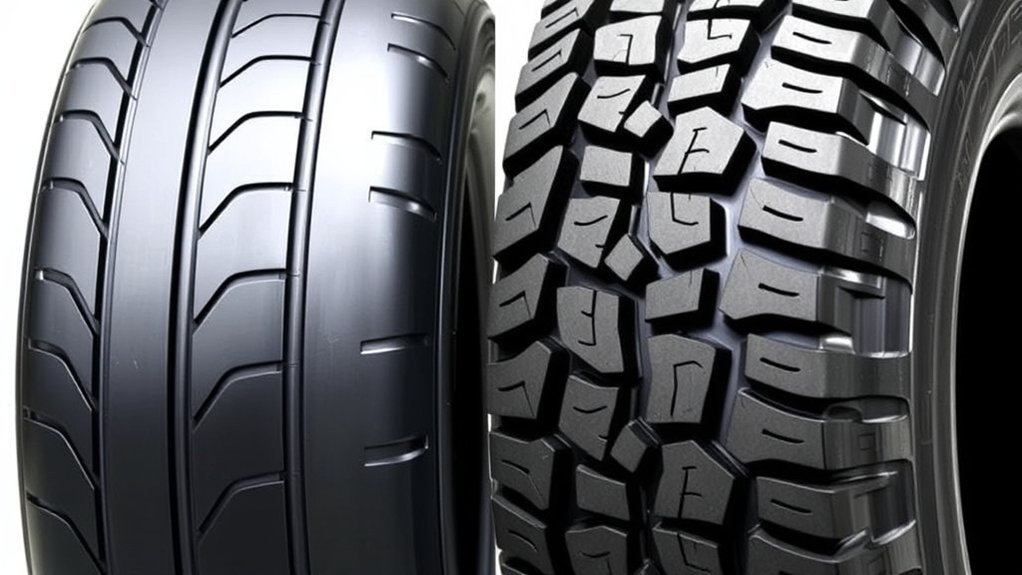
Street tires and off-road tires are built for different jobs. A quiet tire that feels stable on the highway may struggle in mud, while an aggressive mud tire can feel loud, heavy, and less precise on pavement. The right choice depends on where you drive most, what your vehicle requires, and how much road comfort you are willing to trade for trail grip.
Quick Answer
Choose street tires if you drive mostly on pavement and want quiet handling, wet-road grip, and better fuel economy. Choose all-terrain tires for mixed pavement, gravel, and light trails. Choose mud-terrain or specialty off-road tires only when loose dirt, rocks, sand, or mud matter more than road noise and comfort.
Last reviewed: July 6, 2026. This guide was checked against current tire-safety guidance from NHTSA, FuelEconomy.gov, USTMA, and Michelin.
Key Takeaways
- Street tires use road-focused tread patterns, firmer construction, and compounds tuned for paved-road braking, handling, comfort, and efficiency.
- Off-road tires use deeper voids, stronger shoulders, and tougher construction to bite into loose surfaces and resist trail damage.
- All-terrain tires are the middle ground, but they still trade some pavement quietness and fuel efficiency for gravel and light-trail traction.
- Before buying, check tire size, load index, speed rating, DOT/TIN markings, and winter markings against your vehicle placard and owner’s manual.
- Tread depth, tire pressure, rotation, alignment, and driving surface can affect safety and tire life as much as the tire category itself.
What Makes Street Tires Different From Off-Road Tires?
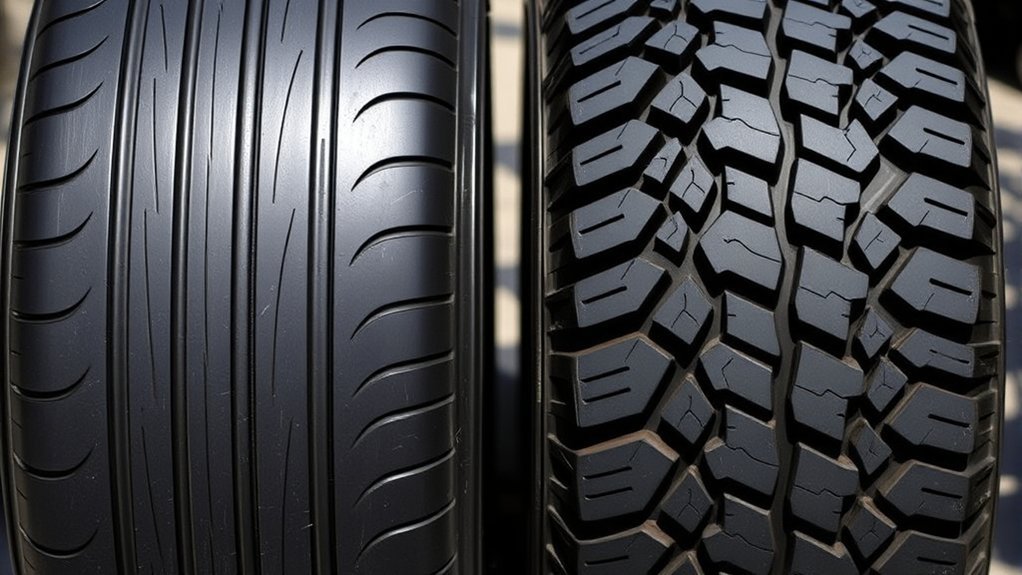
The biggest difference is the tread pattern. Street tires usually place more rubber on the road, with tighter tread blocks, shallower voids, and grooves that help move water away from the contact patch. This helps with paved-road braking, steering response, road noise, and rolling resistance.
Off-road tires move in the opposite direction. They use larger tread blocks, wider gaps, deeper grooves, shoulder lugs, and tougher sidewall features. Those open spaces help the tire bite into dirt, gravel, rocks, sand, snow, or mud instead of skating across the surface.
The trade-off is not only traction. More aggressive tread can improve grip on loose ground, but it can also create more noise, more vibration, heavier steering, longer braking distances on pavement, and faster wear if you drive mostly on asphalt.
Warning: Do not assume every off-road tire is legal or safe for highway use. Before driving aggressive off-road tires on public roads, check for DOT/TIN markings, proper street approval, tire size, load index, speed rating, and vehicle fitment. Avoid any tire marked “Not for Highway Use” on public roads.
Street vs. All-Terrain vs. Mud-Terrain Tires
Many drivers compare “street” and “off-road” tires, but the better way to shop is by category. Most light trucks, SUVs, and crossovers fall into one of these tire groups.
| Tire Type | Best For | Main Trade-Off |
| Street, touring, or performance tires | Daily commuting, highway driving, wet pavement, quiet ride, and fuel efficiency | Limited grip in mud, rocks, ruts, and loose dirt |
| Highway-terrain tires | Pickup trucks and SUVs that tow, commute, and spend most time on pavement | Less off-road bite than all-terrain or mud-terrain tires |
| All-terrain tires | Mixed pavement, gravel roads, campsites, light trails, job sites, and occasional snow | More road noise and rolling resistance than a road-focused tire |
| Rugged-terrain or hybrid tires | Drivers who want a tougher look and more trail grip than a mild all-terrain tire without going fully mud-terrain | Usually heavier and louder than highway-terrain tires, but less extreme than mud-terrain tires |
| Mud-terrain tires | Mud, deep ruts, rocky trails, and frequent off-road use | Louder ride, rougher feel, and reduced pavement efficiency |
| Specialty off-road tires | Sand, racing, rock crawling, farm use, or dedicated trail vehicles | Often poor for daily street use and may not be highway legal |
[Products Worth Considering]

Monitor tire tread wear with a smart, color-coded depth gauge that shows clear condition ranges at a glance. The bar is range marked for fast, easy readings, helping you maintain safer traction and performance. Each gauge is portable with a pocket clip, and the set includes 20 units for daily use and sharing.

Accurately measure tire tread depth with a calibrated gauge marked from 0 to 1 inch in 1/32 inch increments. The color-coded bar helps you quickly identify tread condition ranges, supporting safe driving for trucks, motorcycles, automobiles, and passenger vehicles.

Measure tire tread depth quickly and accurately with this LUMITECO dial gauge that reads in 1/32" increments up to 14/32". The color-coded green/yellow/red zones make it easy to judge tire wear and know when replacement is needed. A rugged, compact design with a protective pouch helps keep the gauge ready for use on cars, trucks, motorcycles, and more.
Key Factors in Choosing Street vs. Off-Road Tires
Start with your real driving mix. If you spend 80% to 90% of your time on pavement, a street, touring, highway-terrain, or mild all-terrain tire usually makes more sense than a mud-terrain tire. You should get a quieter ride, sharper steering feel, and less fuel penalty in most daily driving.
If you regularly drive gravel roads, hunting trails, forest roads, construction sites, or muddy access roads, an all-terrain tire can add useful grip without becoming too extreme for daily use. For deep mud, sharp rock, and frequent low-speed trail work, a mud-terrain tire may be worth the road comfort trade-off.
- Choose street tires for commuting, highway miles, wet pavement, ride comfort, and fuel economy.
- Choose highway-terrain tires for trucks and SUVs that tow or haul but still spend most time on pavement.
- Choose all-terrain tires when you split time between pavement, gravel, light trails, and occasional bad weather.
- Choose rugged-terrain tires when you want more trail toughness than a mild all-terrain tire but still need regular road use.
- Choose mud-terrain tires when off-road traction matters more than noise, comfort, and fuel use.
- Choose specialty tires only for a specific job, such as sand, rock crawling, racing, or farm work.
Note: Always match the replacement tire to your vehicle’s required size, load rating, and speed rating. NHTSA says the correct tire size is listed in the owner’s manual or on the Tire and Loading Information Label near the driver’s door area.
[Products Worth Considering]

The SAFELIFE dial tire tread depth gauge measures tread depth in 1/32 inch increments with clear, easy-to-read 2-inch dial face. Color zones using a traffic light system help you quickly judge whether tread is low, marginal, or ample for safer driving. Built with a durable zinc cast body and a metal detect probe for precise, comfortable use across cars, motorcycles, trucks, and buses.

Measure tyre tread depth precisely with a digital gauge that reads in both MM and inches, helping you monitor safe driving conditions. The large LCD screen is easy to operate, and the compact tool fits for cars, trucks, and motorcycles. It provides high accuracy with a 0-25.4mm range and includes a 1-year warranty for added peace of mind.

This ALL-TOP auto-stop tire deflator valve kit lets you air down off-road tires quickly without watching pressure, automatically stopping when your preset PSI is reached. Each valve is individually calibrated for reliable performance with an acceptable +/- 2 PSI tolerance. The adjustable deflator range covers 10 to 30 PSI and includes four valves plus valve caps and a zipper pouch for easy setup on trucks, SUVs, RVs, UTVs, and powersports.
How to Read Tire Sidewall Markings Before You Buy
Before you choose a tread style, confirm that the tire can safely support your vehicle. The sidewall gives you the size, load capacity, speed rating, tire type, manufacturing information, and sometimes winter-use markings. These details matter more than tread appearance.
- Size: Match the original size from the vehicle placard unless your vehicle maker or tire professional approves another size.
- Load index or load range: Make sure the tire can carry the vehicle, passengers, cargo, trailer tongue weight, and added overlanding gear.
- Speed rating: Do not drop below the vehicle’s required speed rating unless a qualified professional confirms the change is safe and legal for your use.
- DOT/TIN marking: Use this to identify tire manufacturing information and recall details. Also check the date code on used or older tires.
- M+S marking: This indicates mud-and-snow capability, but it does not automatically mean the tire performs like a dedicated winter tire.
- Three-peak mountain snowflake: Look for this severe-snow symbol if winter traction is a serious priority.
Truck and SUV owners should be extra careful with load rating. A tire that fits the wheel may still be the wrong choice if it cannot handle towing, hauling, heavy accessories, or a loaded roof rack. Added weight from bumpers, winches, drawers, campers, and tools can change what your tires need to carry.
How Tire Tread Design Influences Performance on Different Surfaces
Tread design controls how the tire contacts the surface under acceleration, braking, and turning. On pavement, a road-focused tire uses more continuous rubber contact and smaller voids. That helps the tire feel stable at speed and reduces squirm from the tread blocks.
In wet conditions, grooves and tread depth matter because they help move water away from the contact patch. As tread wears, the tire has less depth available to channel water, so hydroplaning risk increases. Michelin notes that tread grooves move water away from the contact patch, and reduced tread depth lowers that water-channeling capacity.
Off-road tires need a different shape. Large voids help mud, gravel, and loose soil clear from the tread. Shoulder lugs can add grip when the tire leans against a rut or climbs over uneven ground. Sipes and smaller biting edges can help in light snow, but they do not turn an all-terrain tire into a true winter tire.
- Tight tread blocks: better road feel, lower tread squirm, and usually less noise.
- Wide voids: better self-cleaning in mud and loose soil.
- Deep tread: more off-road bite, but more tread movement and heat on pavement.
- Sipes: extra biting edges for wet or light snow traction.
- Shoulder lugs: added grip in ruts, rocks, and uneven trail surfaces.
How Rubber Composition Affects Tire Performance
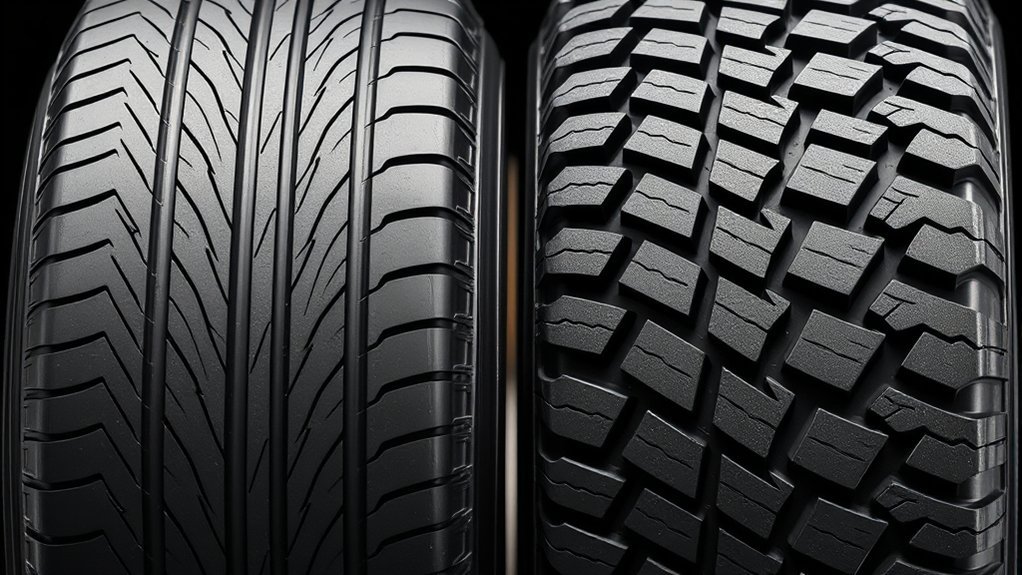
Rubber compound affects grip, wear, heat resistance, and rolling resistance. A touring street tire may use a compound tuned for long tread life and low rolling resistance. A performance street tire may use a softer compound for grip, but it may wear faster. A mud-terrain tire may use a tougher compound and reinforced construction to handle cuts, chips, and impacts.
This is why hard mileage claims can mislead you. Tire life depends on compound, tread design, vehicle weight, wheel alignment, inflation pressure, rotation schedule, road surface, temperature, load, and driving style. Two tires in the same category can wear very differently.
Fuel economy also depends on more than tread. Tire weight, rolling resistance, air pressure, tread depth, and vehicle setup all matter. FuelEconomy.gov says keeping tires inflated to the proper pressure can improve gas mileage by 0.6% on average and up to 3% in some cases.
Pro Tip: If you want off-road capability without a big fuel or noise penalty, start with a mild all-terrain tire before jumping to an aggressive mud-terrain pattern.
How Tire Sidewall Features Affect Handling and Comfort
Sidewall construction affects steering response, impact protection, ride quality, and off-road grip. Street tires usually focus on predictable road handling and comfort. Off-road tires often add stronger shoulders, thicker sidewalls, or extra reinforcement to resist cuts and bruising from rocks, roots, and trail debris.
Tire Sidewall Construction Differences
A street tire’s sidewall usually supports stable highway handling and smooth cornering. On many passenger cars, that means a quieter ride and sharper response on pavement. A light-truck or off-road tire may use stronger construction for higher loads or tougher terrain, but that can add weight and stiffness.
Some off-road drivers lower tire pressure on trails to increase the contact patch and help the tire conform to rocks, sand, or uneven ground. That can improve off-road traction, but it is not a casual street-driving practice. Too little pressure on the road can build heat, damage the tire, reduce control, and trigger bead or sidewall problems.
Impact on Ride Quality
A more aggressive tire often creates more vibration and tread noise. You may notice this most at highway speeds, during braking, or on smooth asphalt. A street or highway-terrain tire usually feels calmer because the tread blocks are smaller and the sidewall construction is tuned more for paved-road comfort.
Flexibility and Stability Balance
Flexible sidewalls can help off-road grip because the tire can conform to uneven ground. Stiffer sidewalls can help road stability because the tire deforms less during cornering. Neither design is automatically better. The right balance depends on whether you need highway control, trail traction, towing stability, or impact resistance.
Tire Selection Tips for Different Weather Conditions
Weather should influence your tire choice as much as terrain. A street all-season tire can work well for many paved-road drivers in mild climates. A dedicated winter tire is a better choice when you regularly face deep snow, ice, or freezing temperatures. NHTSA says winter tires are more effective than all-season tires in deep snow.
All-terrain tires can help on gravel, slush, and light snow, but they are not all equal. Some have severe-snow ratings, while others are only designed for mild winter use. If winter safety matters, read the sidewall markings and the tire maker’s product details before buying.
- Dry pavement: street, touring, performance, or highway-terrain tires usually feel more precise and quiet.
- Heavy rain: tread depth, groove design, and inflation pressure become critical for resisting hydroplaning.
- Light gravel or dirt: all-terrain tires provide extra bite without going fully aggressive.
- Deep mud: mud-terrain tires clear packed mud better than tight street tread.
- Snow and ice: dedicated winter tires are the safer choice for frequent severe winter driving.
[Products Worth Considering]

Vigorder rubber cement glue delivers superior adhesion and cures quickly within about 30 seconds for seamless rubber bonding. Once cured, it helps provide a strong, durable, waterproof seal that holds up to vehicle weight, pressure, and heat. Suitable for cars, motorcycles, trucks, bicycles, and off-road tires, it’s designed for emergency patch and maintenance repairs.

Make hard-to-reach areas easier to access with the MAXXHAUL truck tire service step featuring an adjustable width and height. The foldable design stores compactly, while the serrated non-slip platform provides secure footing for tire-related maintenance. It fits most stock tire sizes up to 31-inch diameter with a 300-lb capacity.

Check tire pressure with the Milton S-925 pencil gauge built for trucks, RVs, and bicycles. It features a single-head chuck with a built-in deflator valve, and it displays readings in both PSI and kPa for convenient use. The gauge is designed for accurate, repeatable pressure checks within its working range.
Common Mistakes When Switching to Off-Road Tires
Many tire problems start before the tire ever touches the road. The wrong tire can fit the wheel but still hurt braking, steering, ride comfort, fuel economy, or load safety. Avoid these common mistakes when moving from street tires to all-terrain or off-road tires.
- Buying for looks only: aggressive tread may look tough, but it can be loud, heavy, and less efficient on pavement.
- Ignoring load rating: towing, hauling, roof tents, toolboxes, and steel bumpers can require more load capacity.
- Oversizing without checking clearance: larger tires can rub the fenders, frame, mud flaps, or suspension at full turn or full compression.
- Assuming all A/T tires are winter tires: some all-terrain tires handle light snow, but dedicated winter tires are better for frequent ice and deep snow.
- Airing down on pavement: lower trail pressure can help off-road grip, but low road pressure can build heat and damage the tire.
- Skipping alignment after changes: new tire size, suspension work, or uneven wear can make alignment more important.
What Maintenance Tips Can Extend Tire Lifespan?
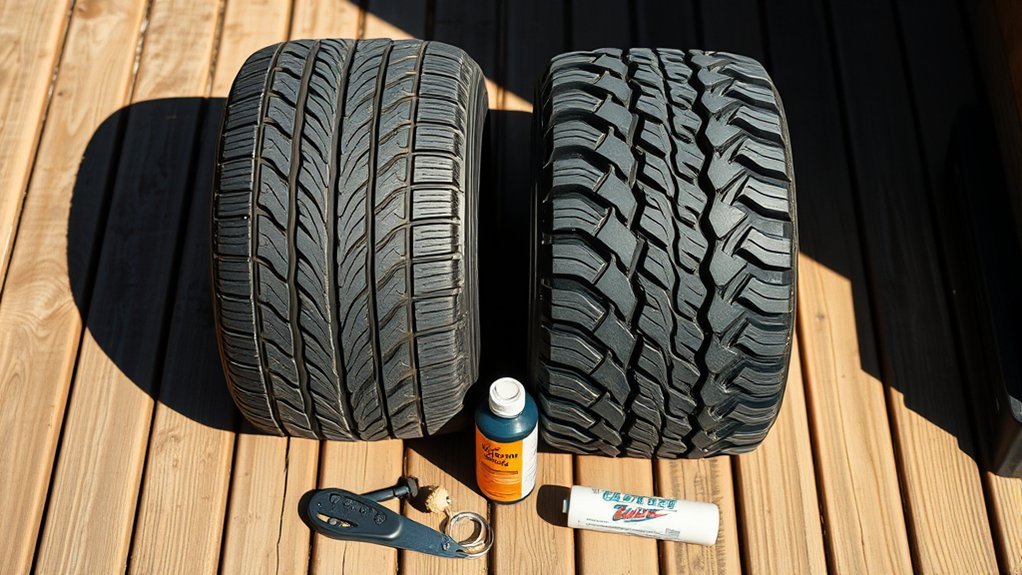
Choosing the right tire is only the first step. Tire pressure, tread depth, rotation, alignment, balance, and load all affect performance and safety. NHTSA recommends checking tire pressure and tread at least once a month, and checking pressure when the tires are cold.
NHTSA reported 511 total motor vehicle traffic fatalities in tire-related crashes in 2024, which is a reminder that tire condition is a safety issue, not just a wear-and-tear expense.
- Check cold tire pressure monthly: use the pressure listed on the vehicle placard or owner’s manual, not the maximum pressure printed on the tire sidewall.
- Measure tread depth: use a tread depth gauge or built-in treadwear indicators. NHTSA says tires are not safe and should be replaced when tread reaches 2/32 inch.
- Rotate on schedule: follow your owner’s manual. If the vehicle maker recommends it, many passenger tires are rotated every 5,000 to 8,000 miles.
- Watch for uneven wear: one-edge wear, cupping, center wear, or both-edge wear can point to inflation, alignment, balance, or suspension issues.
- Inspect after trail use: look for sidewall cuts, missing tread chunks, punctures, bent wheels, and trapped stones.
- Respect load limits: towing, hauling, and overlanding gear can overload the tire if the load rating is too low.
Frequently Asked Questions
Can I use off-road tires on the street?
You can use some off-road tires on the street if they are approved for road use and match your vehicle’s size, load index, and speed rating. Avoid off-road-only tires on public roads. Even street-legal mud-terrain tires may feel louder, heavier, and less precise than street or all-terrain tires.
How do tire tread patterns affect fuel efficiency?
Tread patterns affect rolling resistance, weight, heat, and road contact. Aggressive off-road tires often use deeper tread and wider voids, which can raise rolling resistance on pavement. Proper inflation also matters. FuelEconomy.gov says properly inflated tires can improve gas mileage by 0.6% on average and up to 3% in some cases.
What is the lifespan difference between street and off-road tires?
Street-focused tires often last longer on pavement because their tread and compound are designed for that surface. Off-road tires can wear faster on asphalt, especially if they have soft compounds or large tread blocks. Actual lifespan depends on tire model, vehicle weight, inflation, alignment, rotation, load, road surface, and driving style.
Are all-terrain tires a good compromise for both environments?
Yes, all-terrain tires can be a smart compromise if you drive mostly on pavement but also use gravel roads, light trails, campsites, or job sites. They usually offer more off-road bite than street tires, but they may create more road noise and use more fuel than a road-focused tire.
How do tire sizes impact performance on different terrains?
Tire size affects ground clearance, gearing, braking, steering, speedometer accuracy, load capacity, and tire clearance inside the wheel well. Larger off-road tires can improve obstacle clearance, but they may rub, add weight, reduce acceleration, and strain suspension or drivetrain parts if the vehicle is not set up for them.
Should I choose all-terrain tires or winter tires for snow?
Choose winter tires if you regularly drive in deep snow, ice, or freezing weather. Some all-terrain tires work well in light snow, but they are not a direct replacement for dedicated winter tires. Check the tire’s sidewall markings and manufacturer details before relying on it for severe winter conditions.
Do I need LT tires for off-road driving?
Not always. Light-truck tires can add load capacity and tougher construction, but they can also add weight and stiffness. Use LT tires when your vehicle, load, towing setup, or trail conditions call for them. For crossovers and lighter SUVs, a properly rated passenger or SUV all-terrain tire may ride better.
What should I check before buying off-road tires?
Check the vehicle placard, owner’s manual, wheel size, tire size, load index, speed rating, DOT/TIN markings, clearance, and road-use approval. Also consider how much pavement driving you do. The most aggressive tire is not always the safest or most comfortable choice for daily use.
Conclusion
Street tires and off-road tires are not better or worse in every situation. They are built around different priorities. Street tires make the most sense for pavement, comfort, wet-road control, and efficiency. Off-road tires make the most sense when mud, gravel, rocks, sand, or trail impact resistance matter more than quiet highway manners.
If you split your time between both worlds, all-terrain tires are usually the most practical compromise. Before buying, check your vehicle’s tire placard, match the correct size and load rating, and be honest about where you drive most. The best tire is the one that fits your vehicle, your terrain, and your safety needs.
Sources
- NHTSA TireWise — tire types, tire pressure, tread depth, rotation, alignment, tire size, ratings, winter tire guidance, and safety guidance.
- FuelEconomy.gov: Keeping Your Vehicle in Shape — proper tire inflation and fuel-economy impact.
- U.S. Tire Manufacturers Association: Tire Care & Safety — tire pressure, tread, rotation, alignment, inspection, and tire-care basics.
- Michelin: Tire Tread Depth — tread depth, water drainage, hydroplaning risk, and replacement threshold context.