Your Toyota Hilux may carry passengers, tools, camping gear, or a trailer, so its tires must support the load safely. The tire load index is the numerical code beside the speed symbol on the sidewall. It tells you the maximum load one tire can carry under specified operating conditions, but it does not replace your Hilux tire placard, owner’s manual, axle limits, or correct cold inflation pressure.
Quick Answer
Your Toyota Hilux’s correct tire load index depends on its model, market, tire size, and axle rating. Use the tire placard or owner’s manual first, then choose an approved replacement tire with the same or a higher load index. Do not rely on a four-tire total alone; check each axle and the specified cold pressure.
Key Takeaways
- The load index is a code for the maximum load one tire can carry under specified conditions.
- Hilux specifications vary by year, trim, tire size, and country, so no single load index fits every Hilux.
- Match the approved tire size, load index, speed rating, construction, rim, and cold inflation pressure.
- Check tire capacity axle by axle, not only by multiplying one tire’s rating by four.
- Never exceed the vehicle’s payload, Gross Vehicle Weight Rating, or Gross Axle Weight Ratings.
Understanding the Tire Load Index for Your Hilux
The load index appears near the end of a tire’s service description. For example, in 265/60R18 110H, the number 110 is the load index and H is the speed rating. A load index of 110 corresponds to 1,060 kg, or about 2,337 lb, per tire under the standard rating conditions.
The load index is not the same as the truck’s payload rating. Tire capacity is only one limit in the system. Your Hilux must also stay within its vehicle weight, front axle weight, rear axle weight, wheel rating, suspension limits, and towing limits.
A higher load index provides a higher rated capacity, but it does not automatically make a tire suitable. The tire must still be an approved size for the wheel and vehicle, have an appropriate speed rating and construction, and operate at the pressure specified for the load and application.
Where to Find the Correct Hilux Specification
- Tire placard or certification label: Usually located on the driver-side door opening, pillar, or another market-specific location.
- Owner’s manual: Check the tire and wheel specification section for size, service description, and cold pressure.
- Original tire sidewall: Use it as a reference only after confirming it matches the vehicle label and manual.
- Toyota dealer or qualified tire professional: Confirm compatibility when changing wheel size, tire type, suspension height, or intended load.
Note: Toyota Hilux tire specifications differ across markets. For example, Toyota’s Japanese specification for a Hilux produced from May 2026 lists 265/60R18 110H. Do not assume that specification applies to a Hilux sold in another country or model year.
How to Read the Toyota Hilux Load Index Chart
Start with the complete service description on the tire or vehicle label. A marking such as 265/60R18 110H can be read as follows:
| Marking | Meaning |
|---|---|
| 265 | Nominal tire width in millimetres |
| 60 | Aspect ratio, expressed as a percentage of width |
| R | Radial construction |
| 18 | Wheel diameter in inches |
| 110 | Load index, equal to 1,060 kg per tire |
| H | Speed rating |
Load Index Conversion Chart
The following standard conversion chart covers the range most relevant to the examples discussed in this guide. Use it to decode the number, then compare the complete tire specification with your Hilux placard and manual.
| Load Index | kg per Tire | Approx. lb per Tire | Load Index | kg per Tire | Approx. lb per Tire |
|---|---|---|---|---|---|
| 94 | 670 | 1,477 | 108 | 1,000 | 2,205 |
| 95 | 690 | 1,521 | 109 | 1,030 | 2,271 |
| 96 | 710 | 1,565 | 110 | 1,060 | 2,337 |
| 97 | 730 | 1,609 | 111 | 1,090 | 2,403 |
| 98 | 750 | 1,653 | 112 | 1,120 | 2,469 |
| 99 | 775 | 1,709 | 113 | 1,150 | 2,535 |
| 100 | 800 | 1,764 | 114 | 1,180 | 2,601 |
| 101 | 825 | 1,819 | 115 | 1,215 | 2,679 |
| 102 | 850 | 1,874 | 116 | 1,250 | 2,756 |
| 103 | 875 | 1,929 | 117 | 1,285 | 2,833 |
| 104 | 900 | 1,984 | 118 | 1,320 | 2,910 |
| 105 | 925 | 2,039 | 119 | 1,360 | 2,998 |
| 106 | 950 | 2,094 | 120 | 1,400 | 3,086 |
| 107 | 975 | 2,150 |
These values follow the standard load-index conversion table published by Michelin. The chart shows a tire’s rated maximum, not the amount of cargo you may add to the truck.
What a Dual Load Index Means
Some commercial tires show two load indices, such as 110/108S. The first number applies to a single-wheel fitment, while the second applies when tires are used in a dual-wheel arrangement. A standard Hilux uses single rear wheels, so the first index is normally the relevant one. Confirm the complete specification with the vehicle manual and tire manufacturer.
Why the Load Index Matters for Safety and Performance
Choosing a tire with inadequate load capacity increases heat, flexing, wear, and the risk of structural failure. Correctly rated tires also help the Hilux respond predictably when braking, cornering, carrying cargo, or towing.
[Products Worth Considering]
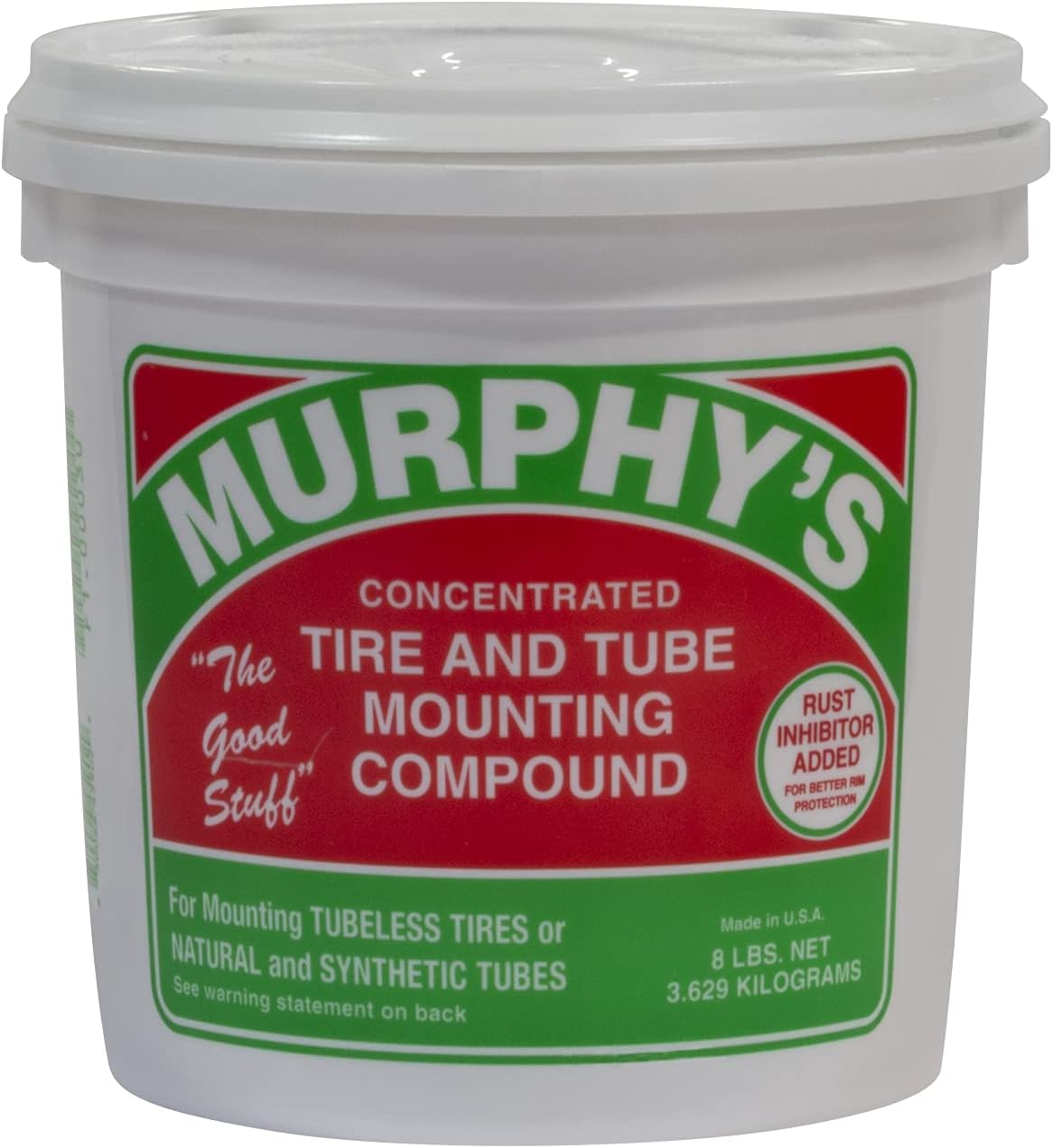
A concentrated tire and tube mounting compound designed to help simplify mounting rubber tires and tubes on passenger, semi truck, construction, and OTR applications. Its ultra-thick formula packs beads effectively and includes rust inhibitors to help protect against corrosion during use.

Monitor tire tread wear with a smart, color-coded depth gauge that shows clear condition ranges at a glance. The bar is range marked for fast, easy readings, helping you maintain safer traction and performance. Each gauge is portable with a pocket clip, and the set includes 20 units for daily use and sharing.

Steelman white tire marking crayons provide high-contrast, semi-permanent marks for repairing and inspecting tires and equipment. They write on wet or dry, smooth or coarse surfaces including rubber, metal, glass, and wood, making them ideal for puncture location and damage outlining. The lead- and zinc-free crayons resist weather and fading yet wipe away when you no longer need the marks.
Enhanced Safety Assurance
- Provides enough rated capacity for the load carried by each axle
- Reduces the chance of overloading the tire casing
- Supports stable braking and steering under load
- Helps control heat build-up when the tire is correctly inflated
- Protects the tire, wheel, suspension, and driveline from avoidable stress
Optimized Vehicle Performance
A suitable load index helps the tire maintain its intended shape and contact patch under load. However, selecting an unnecessarily heavy-duty tire can change ride comfort, weight, steering response, and rolling resistance. The best choice is not simply the highest number available. It is the approved specification that matches how your Hilux is built and used.
The load index is a capacity ceiling for one tire under specified conditions. It is not a substitute for the Hilux payload, axle, wheel, or towing limits.
How to Choose the Right Tires for Your Hilux
Use this process before ordering replacement tires:
- Read the vehicle label and manual. Record the approved tire size, load index, speed rating, and front and rear cold pressures.
- Check the complete service description. Do not compare load index alone.
- Match or exceed the specified load index. Never choose a lower index unless Toyota has approved that exact alternative fitment.
- Confirm the rim specification. The tire must fit the wheel width, diameter, and load rating.
- Consider the application. Highway, all-terrain, mud-terrain, commercial, towing, and severe off-road use place different demands on a tire.
- Keep the set compatible. Avoid mixing sizes, constructions, seasonal categories, or substantially different tread patterns unless the vehicle manufacturer explicitly allows it.
- Have changes checked professionally. This is especially important after installing larger wheels, suspension lifts, heavy accessories, or a slide-in load.
Pro Tip: Photograph the tire placard and save your exact Hilux model code before shopping. This prevents a seller from choosing tires based only on “Toyota Hilux,” which is too broad for a vehicle sold in many configurations and markets.
[Products Worth Considering]

This professional wheel and rim cleaning brush set lifts brake dust, grime, and dirt with soft, scratch-free microfiber and synthetic wool fibers. The rim brush bends up to 360 degrees for easy access to hard-to-reach areas around spokes, lips, and faces. Ideal for thorough cleaning of car, truck, motorcycle, bicycle, RV, and more wheel and tire surfaces.

These aluminum alloy tire valve stem caps with an O-ring seal help protect valve stems from corrosion while adding a clean, stylish look to your vehicle. The universal fit works across cars, trucks, motorcycles, bicycles, and more, making them an easy upgrade for everyday driving and off-road use. Installation is quick, and the included four-pack keeps all your tires dressed and protected.
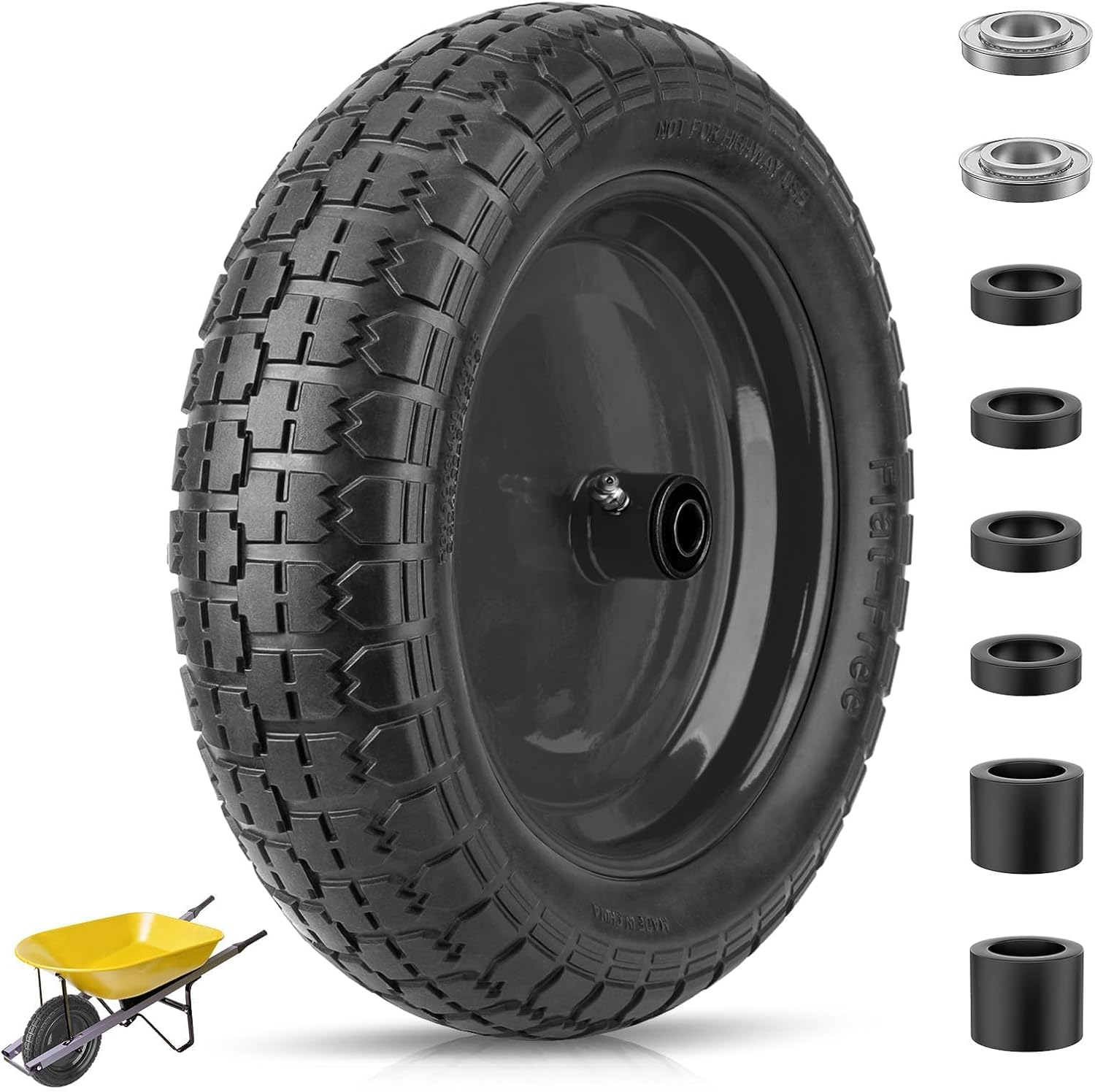
This flat-free TICONN wheelbarrow tire features durable polyurethane foam construction that never needs inflation, helping prevent punctures and reducing maintenance on rough outdoor terrain. With a 300 lb max load capacity and stable steel rim design, it supports safer transport for yard work and hauling tasks. An adapter kit with ball bearings and nylon spacers is included for easier fit and customization across common wheelbarrow and cart axle setups.
Comparing Load Index With GVWR and Axle Ratings
Gross Vehicle Weight Rating (GVWR) is the maximum permitted loaded weight of the complete vehicle. Gross Axle Weight Rating (GAWR) is the maximum permitted load on a specific axle. Payload is the weight you can add, including occupants, cargo, accessories, and applicable trailer tongue or drawbar load.
Do not prove tire suitability by multiplying one tire’s maximum load by four and comparing that number only with GVWR. Loads are not always distributed evenly. The rear axle may carry far more weight when the bed is loaded or a trailer is attached. Tire capacity must be adequate for the load on each axle, while the vehicle must remain within both axle ratings and GVWR.
A Safer Axle-Based Check
For a simple screening calculation, multiply the rated capacity of one tire by the number of tires on that axle. For example, two tires with load index 110 have a combined published maximum of 2,120 kg on a single-wheel axle. That does not authorize a 2,120 kg axle load by itself. The axle rating, wheel rating, approved fitment, tire construction, speed conditions, and load capacity at the specified pressure can impose lower limits.
When loading for work or travel, use a certified vehicle scale to measure the front axle, rear axle, and total vehicle weight. Compare each result with the labels and limits for your exact Hilux.
Warning: A higher load index does not increase your Hilux’s legal or manufacturer-rated payload, GVWR, GAWR, towing capacity, wheel capacity, or suspension capacity. Never use tire capacity to justify exceeding a vehicle limit.
Load Index and Inflation Pressure Work Together
A tire reaches its published maximum load only under the rating conditions specified for that tire. The correct operating pressure for your Hilux comes from the vehicle placard or owner’s manual, not from the maximum pressure molded on the tire sidewall.
Check pressure when the tires are cold. Toyota’s current Hilux manual also shows that recommended front and rear pressures can change with loading condition. Follow the values for your exact model and market instead of copying a pressure from another Hilux.
Top Tire Selection Mistakes to Avoid for Your Hilux
- Choosing a lower load index: This can leave the tire without enough rated capacity for the vehicle or axle load.
- Using a chart without checking the placard: The chart converts a code, but it cannot identify the correct specification for your exact Hilux.
- Comparing only with GVWR: The front or rear axle can exceed its limit even when total vehicle weight appears acceptable.
- Inflating to the sidewall maximum: That figure is not automatically the correct operating pressure for the truck.
- Ignoring the speed rating: Load and speed ratings form part of the complete service description.
- Mixing incompatible tires: Different sizes, constructions, or tread types can affect stability and driveline operation.
- Forgetting permanent accessories: Bull bars, winches, canopies, drawers, spare wheels, tanks, and tow equipment reduce remaining payload.
- Assuming a higher index upgrades the truck: Tires cannot raise the ratings assigned to the chassis, axles, wheels, brakes, or suspension.
[Products Worth Considering]

The SAFELIFE dial tire tread depth gauge measures tread depth in 1/32 inch increments with clear, easy-to-read 2-inch dial face. Color zones using a traffic light system help you quickly judge whether tread is low, marginal, or ample for safer driving. Built with a durable zinc cast body and a metal detect probe for precise, comfortable use across cars, motorcycles, trucks, and buses.

This metal-free wheel and tire cleaning brush uses dense, fluffy synthetic wool to safely clean rims, spokes, fenders, and engine areas without worrying about damaging surfaces. Its flexible, comfortable design helps you reach detailed areas while maintaining durability, and the extra absorbent fibers work well with wheel spray cleaners for faster cleanup. Reusable and washable performance helps prevent grime and build-up for cleaner vehicles and easier maintenance at home.

This heavy-duty tire pressure gauge combines measurement, inflation, and deflation in one compact tool for quick roadside and garage use. Its dual-head chuck helps reach inner and outer dual-wheel positions, while the clear indicator bar makes readings easy to see. Built for durability, it supports a wide pressure range and works across cars, trucks, RVs, SUVs, and motorcycles.
Expert Tips for Keeping Your Tires Healthy
- Check cold pressure regularly: Inspect all road tires and the spare at least monthly and before long, loaded, or towing trips.
- Use the correct loaded and unloaded pressures: Some Hilux specifications list different pressures depending on load.
- Rotate according to your manual: Toyota’s May 2026 Japanese Hilux manual recommends rotation at 10,000 km for that model, but your interval and pattern may differ.
- Inspect tread and sidewalls: Look for cuts, bulges, cracks, embedded objects, exposed cords, and uneven wear.
- Measure tread depth: Replace a tire at the legal limit in your location or earlier when traction, damage, or operating conditions require it. In the United States, NHTSA identifies 2/32 inch as the minimum tread threshold.
- Correct alignment or balance problems: Pulling, vibration, feathering, or one-sided wear needs professional inspection.
- Check tire age: Read the date code and follow the tire maker’s inspection and replacement guidance, even when tread remains.
- Recheck after modifications: Larger tires, different wheels, lifts, and heavy accessories can change clearance, handling, gearing, and available payload.
Toyota’s current Hilux tire guidance calls for cold-pressure checks, inspection for cracks, damage, tread depth, and abnormal wear, and the use of compatible tires. You can review the official Hilux tire inspection guidance for the current Japanese model.
Real-World Applications of the Toyota Hilux Tire Load Index
Carrying Tools or Cargo
Place heavy cargo low and as evenly as possible, secure it properly, and confirm the measured front axle, rear axle, and total weights. The rear tires may approach their limit first even when the truck remains below GVWR.
Towing a Trailer
Trailer tongue or drawbar load adds weight to the tow vehicle, usually with a strong effect on the rear axle. Include passengers, cargo, towing equipment, and accessories in your calculation. Follow Toyota’s towing pressure and speed instructions for your specific market and model.
Off-Road Driving
Reducing pressure off road can improve traction in some conditions, but it also reduces load-carrying capability and increases the risk of heat, sidewall damage, or the tire unseating from the rim. Use a pressure appropriate to the load, speed, terrain, tire, and wheel. Reinstate the specified road pressure before returning to normal-speed sealed-road driving.
Aftermarket Accessories and Payload
Permanent accessories count against payload. A canopy, steel bumper, winch, drawer system, long-range tank, roof rack, and extra spare tire can consume a large part of the available capacity before people or cargo are added. Weigh the finished vehicle rather than relying on estimates.
Frequently Asked Questions
How do I read a Toyota Hilux tire load index chart?
Find the number immediately before the speed-rating letter in the tire service description. Match that number to a standard load-index table to find the maximum load per tire. Then confirm that the complete tire size, index, speed rating, and cold pressure match your Hilux placard or owner’s manual.
What load index does my Toyota Hilux need?
The correct index depends on the model year, trim, tire size, axle rating, and sales market. Read the tire placard and owner’s manual for your exact vehicle. Do not choose a tire based only on a generic Hilux chart.
Can I use a higher load index than Toyota specifies?
A higher load index may be acceptable when the tire is otherwise an approved replacement size with a suitable speed rating, construction, rim fit, and pressure requirement. It does not increase the Hilux payload or axle ratings. Confirm non-standard changes with Toyota or a qualified tire professional.
Does a higher load index require higher tire pressure?
Not automatically. Load index and inflation pressure are related, but you should use the vehicle manufacturer’s specified cold pressure for the approved tire and loading condition. Do not inflate to the sidewall maximum unless that pressure is specifically required for the application.
Can I multiply one tire’s capacity by four and compare it with GVWR?
That calculation is only a rough total and can hide an overloaded axle. Check the combined tire capacity on each axle, the actual measured axle loads, the front and rear GAWR, the wheel ratings, the approved pressure, and the vehicle GVWR.
What does a marking such as 110/108S mean?
The two numbers are single and dual load indices, followed by the speed symbol. On a normal single-rear-wheel Hilux, the first number is generally the relevant load index. Always verify the tire manufacturer’s service description and Toyota’s approved specification.
Conclusion
The safest Toyota Hilux tire choice starts with the vehicle, not a generic chart. Read the placard and owner’s manual, decode the load index, match the complete approved specification, and check actual weight by axle when you carry heavy cargo or tow. Correct pressure and regular inspections then help the tires deliver the capacity, handling, and durability Toyota intended.
Sources
- Toyota Hilux maintenance specifications — current Japanese-market tire size, load index, wheel size, and cold-pressure data.
- Toyota Hilux tire inspection guidance — pressure checks, rotation, damage inspection, and tire compatibility warnings.
- Michelin tire load and speed ratings — standard load-index definitions and conversion values.
- NHTSA TireWise — cold inflation, tire replacement, tread, rotation, alignment, and tire-size guidance.
- 49 CFR § 571.120 — axle-based tire load-rating principles for covered vehicles in the United States.