113T on a tire is its service description: 113 is the load index, equal to 2,535 lb (1,150 kg) per tire on the standard load-index table, and T is the speed rating, equal to 118 mph (190 km/h). Those numbers are tire operating limits, not permission to load the vehicle to four times the tire rating or drive at the rated speed. Confirm the full tire size, vehicle-required load capacity, speed rating, and cold inflation pressure before using a 113T tire as a replacement.
Last updated: August 18, 2026 — load-index, speed-rating, placard, and U.S. tire-load guidance rechecked against current authoritative sources.
Quick Answer
113T means the tire has a 113 load index, equal to 2,535 pounds (1,150 kg) per tire on the standard load-index table, and a T speed rating of 118 mph (190 km/h). Use the vehicle placard and owner’s manual to confirm the approved tire size and cold pressure, and follow the vehicle manufacturer’s required load and speed specifications.
Key Takeaways
- 113 is the tire load index, which equals 2,535 pounds or 1,150 kg per tire.
- T is the speed rating, which means the tire is rated up to 118 mph or 190 km/h under proper service conditions.
- Do not choose tires by the sidewall code alone; compare the full tire size, load index, speed rating, tire type, and cold inflation pressure with the vehicle manufacturer’s approved specifications.
- A higher load index can be acceptable, but it does not increase your vehicle’s legal payload, GVWR, or axle ratings.
- Avoid a lower load index, and do not substitute a lower speed rating unless the vehicle manufacturer permits that replacement for your application.
- For U.S. MPVs, trucks, buses, and trailers using passenger-car tires, FMVSS 110 applies a 1.10 load-rating reduction for axle-load calculations; that rule is separate from the sidewall’s 113 marking.
At a Glance
| Time Required | About 5 minutes to check the tire sidewall, door placard, and owner’s manual |
| Difficulty | Easy, as long as you compare the full tire size and service description |
| Tools Needed | Vehicle tire placard, owner’s manual, tire pressure gauge, and the tire sidewall to inspect |
| Cost | Free to check; tire replacement cost depends on size, brand, tire type, and installation |
What Does 113T Mean on a Tire?
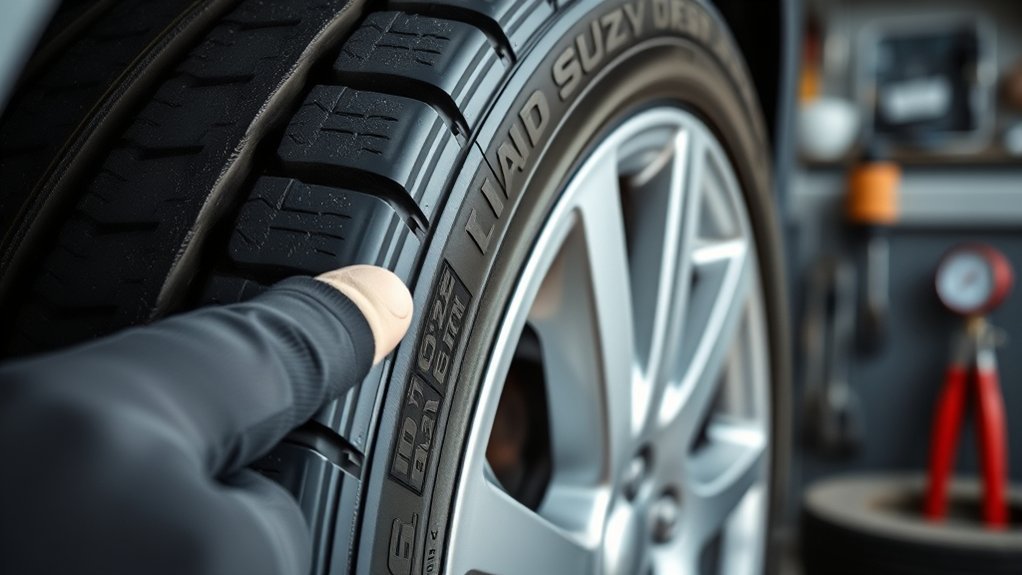
A tire marked 113T has a service description. In that service description, 113 is the load rating or load index, and T is the speed rating. The load index is a standardized code for how much load one tire can support under the required operating conditions. The speed rating is the maximum sustained speed category the tire is designed to handle under specified load and inflation conditions.
| Code | Meaning | 113T value |
|---|---|---|
| 113 | Load index | 2,535 lb per tire, or 1,150 kg |
| T | Speed rating | 118 mph, or 190 km/h |
You usually see the service description at the end of the tire size, such as 275/55R20 113T. That full code matters because the tire width, aspect ratio, construction, rim diameter, load index, and speed rating all work together. Michelin advises matching the vehicle manufacturer’s approved size and load requirements, while Continental explains that these sidewall markings identify the tire’s size, construction, load index, and speed rating.
Note: The tire’s maximum load rating is not the same as your vehicle’s payload rating. Your vehicle is still limited by its GVWR, GAWR, suspension, wheels, brakes, and manufacturer specifications.
How Much Weight Can 113T Carry?
A 113 load index corresponds to 2,535 pounds (1,150 kg) per tire on the standard load-index table when the tire is used under the required load and inflation conditions. Four 113 ratings total 10,140 pounds as raw tire-rating arithmetic, but that is not the vehicle’s payload, GVWR, or axle capacity.
There is an important U.S. rule for some SUVs, pickups, and similar vehicles. Under 49 CFR 571.110 (FMVSS 110), when a passenger-car tire is installed on an MPV, truck, bus, or trailer, its load rating is divided by 1.10 for the axle-load calculation. For a 2,535-pound rating, that calculation is about 2,305 pounds per tire. This federal calculation does not change the 113 code molded on the sidewall, and it is different from the rule applied to LT tires. Your actual operating limit still comes from the vehicle’s GAWR, GVWR, placard, approved tire specification, wheel rating, and inflation requirements.
A 113 load index corresponds to 2,535 pounds per tire on the standard table, but the vehicle’s safe load is controlled by its manufacturer limits and applicable tire-load rules, not by adding four sidewall ratings together.
To check whether a 113T tire is right for your vehicle, use this order:
- Find the tire and loading information placard, usually on the driver’s door jamb or B-pillar.
- Confirm the approved tire size, recommended cold inflation pressure, and any load- or speed-rating requirements in the owner’s manual or manufacturer fitment information.
- Compare the tire’s load index with the vehicle’s required load rating and axle needs.
- Do not use a tire with a lower load index unless the vehicle manufacturer explicitly approves that replacement.
- If you tow or haul cargo, stay within the vehicle’s payload, tongue weight, GVWR, and GAWR limits.
The National Highway Traffic Safety Administration tells drivers to use the vehicle’s Tire and Loading Information label or owner’s manual for the correct cold inflation pressure and to check pressure when the tires are cold. Federal placard rules also require key tire and loading information, including recommended cold inflation pressure and tire-size information.
Warning: Underinflation and overloading can create excess heat inside the tire. That heat can lead to rapid wear, tread damage, blowouts, and loss of vehicle control. Check pressure when tires are cold and never exceed your vehicle’s load limits.
What Does the T Speed Rating Mean?
The T speed rating means the tire is rated for sustained speeds up to 118 mph (190 km/h) under specified conditions. Tire Rack and tire manufacturers treat speed ratings as tested operating limits, not recommended driving speeds. Damage, underinflation, overloading, and other service conditions can reduce a tire’s safe capability, so treat 118 mph as a rating ceiling, not a target.
| Speed rating | Maximum speed | Common use |
|---|---|---|
| S | 112 mph / 180 km/h | Many family cars and vans |
| T | 118 mph / 190 km/h | Everyday highway use on many passenger, SUV, and light-duty applications |
| H | 130 mph / 210 km/h | Sport sedans, coupes, and some touring tires |
| V | 149 mph / 240 km/h | Higher-performance passenger vehicles |
| W | 168 mph / 270 km/h | High-performance vehicles |
| Y | 186 mph / 300 km/h | Ultra-high-performance vehicles |
| ZR | Over 149 mph / 240 km/h, with W or Y often giving the exact tested limit | Modern high-speed performance tires |
A T-rated tire can be perfectly appropriate when your vehicle calls for it. A higher speed rating, such as H, may offer a higher tested speed capability, but that does not automatically make it the best tire for your vehicle. Ride comfort, tread life, rolling resistance, winter traction, load capacity, and manufacturer fitment still matter.
Pro Tip: Treat the vehicle manufacturer’s approved specification as the baseline, not the rating on whatever tire happens to be installed now. A higher load index or speed rating can be acceptable when the full size, tire type, and fitment remain approved; a lower rating should be used only when the vehicle manufacturer permits that substitution.
How to Read Tire Size and Fitment
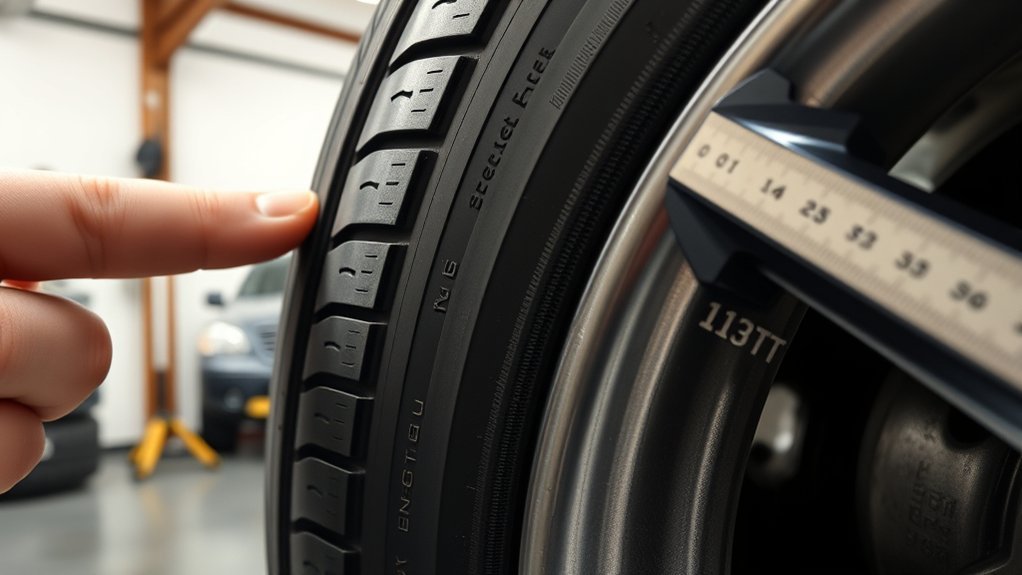
To understand a tire marked 275/55R20 113T, read it from left to right:
| Code part | Meaning |
|---|---|
| 275 | Nominal tire section width in millimeters |
| 55 | Aspect ratio; the sidewall height is 55% of the tire width |
| R | Radial construction |
| 20 | Wheel diameter in inches |
| 113 | Load index: 2,535 lb per tire |
| T | Speed rating: 118 mph / 190 km/h |
Continental’s tire-marking guide and Michelin both explain that the sidewall code identifies tire size, construction, load index, speed rating, and other details. The key is not reading one symbol in isolation: confirm the complete tire size and service description against the vehicle’s approved fitment.
Load Index vs. Load Range, XL, and LT
Load index and load range are related, but they are not the same thing. The load index is the numerical code, such as 113, that tells you the maximum load for one tire. Load range is a separate strength category often used on light-truck and trailer tires, such as Load Range C, D, or E.
- 113 load index: A specific load rating of 2,535 lb per tire.
- XL or Extra Load: A reinforced passenger tire designed to carry more load than a standard-load tire of the same size when inflated to the required pressure.
- LT tire: A light-truck tire type intended for heavier cargo and towing applications when the vehicle calls for it.
- P-metric or metric tire: Passenger-style sizing used on many cars, crossovers, SUVs, and light-duty pickups.
Do not assume that every 113T tire is an LT tire, an XL tire, or the right tire for towing. The full sidewall code and the product specifications must match the vehicle’s required size, load, speed, rim width, and inflation needs. In U.S. FMVSS 110 axle-load calculations, a passenger-car tire used on an MPV, truck, bus, or trailer is also subject to the 1.10 load-rating reduction described above; that rule should not be confused with load range or the XL marking.
[Products Worth Considering]

Secure your vehicle during transport with this 4-pack of heavy-duty tire tie down straps designed for trailers and hauling. The ratchet system with flat hooks and D-rings helps you tension the straps quickly, while the wheel-friendly design protects tires. With high break strength and corrosion-resistant hardware, these straps provide reliable, confidence-inspiring tie-down security for cars, trucks, and UTVs.
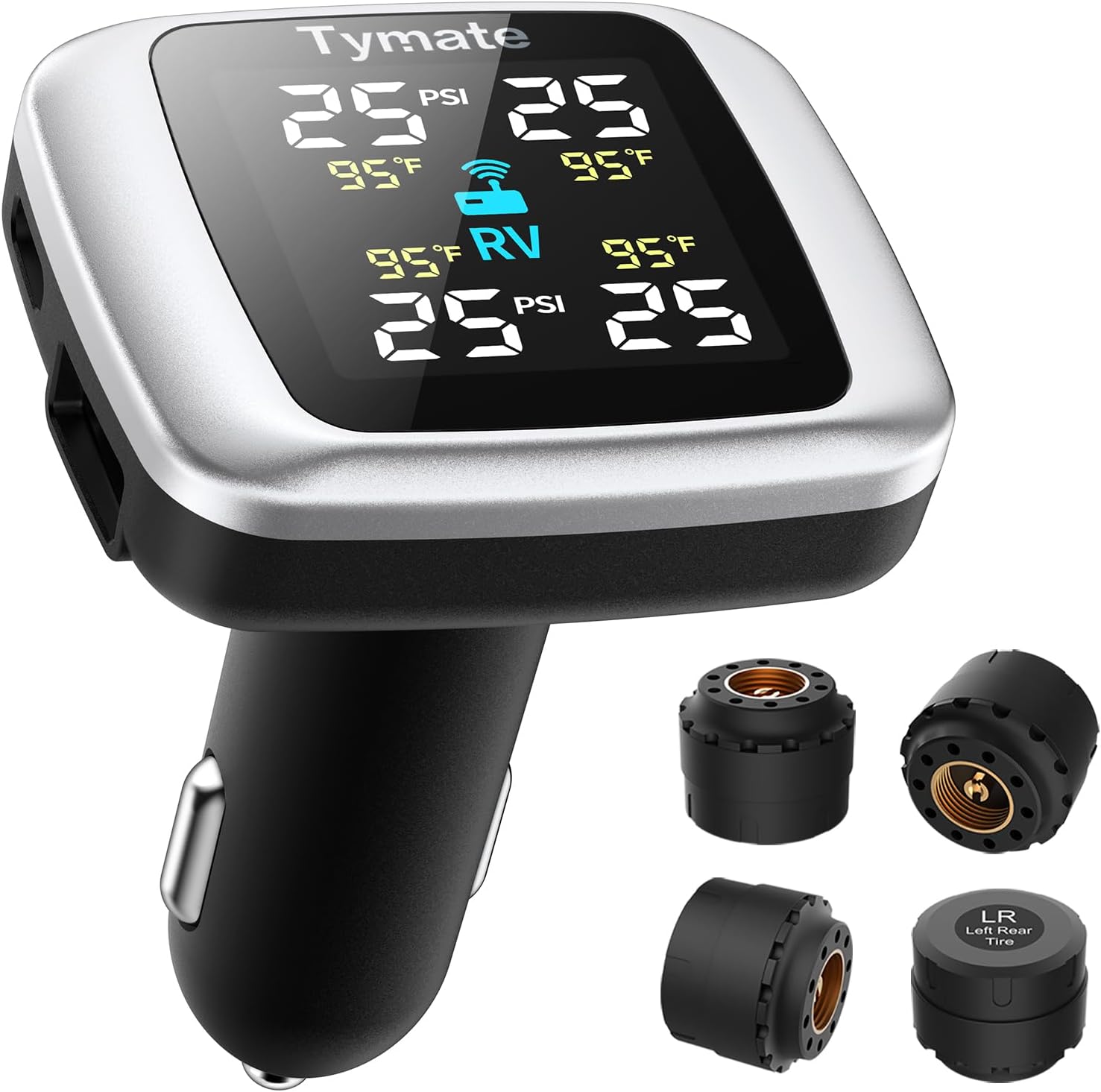
Tymate TM7 is a wireless tire pressure monitoring system that delivers real-time pressure and temperature readings for safer driving. It includes four external sensors, a bright color LCD display with adjustable backlight, and six alarm modes for high/low pressure, fast leakage, high temperature, and sensor signal or battery issues. The system covers a wide 0–144 PSI range and plugs into your vehicle’s cigarette lighter socket for quick DIY setup.

The Topeak SmartGauge D2 delivers precise digital tire pressure readings for bikes, motorcycles, and sports equipment up to 250 psi (17 bar). Its rotating SmartHead works with both Presta and Schrader valves, so you can check pressure quickly without adapters. The LCD display makes it easy to read results in psi, bar, or kg/cm² with an included CR2032 battery for immediate use.
How to Choose the Right 113T Tire
When you choose a 113T tire, start with your vehicle instead of the tire shelf. The correct tire is the one that matches your vehicle’s required size, load rating, speed rating, tire type, and cold inflation pressure.
- Check the vehicle placard. Look on the driver’s door jamb or B-pillar for the original tire size and recommended cold pressure.
- Check the owner’s manual and manufacturer fitment guidance. Confirm any required load index, speed rating, XL/LT construction, or seasonal-tire rules.
- Match the full size. For example, do not treat 275/55R20 113T as interchangeable with another 20-inch tire unless the full size and ratings are approved.
- Match or exceed the load index. A 113 tire can carry 2,535 lb per tire, but your axle and vehicle ratings still control the safe load.
- Follow the required speed rating. A T rating is 118 mph. If the vehicle calls for H, V, or another rating, do not step down unless the vehicle manufacturer permits that substitution.
- Choose the right tire category. Highway, touring, all-season, all-terrain, winter, and LT tires behave differently.
- Consider real use. Towing, hauling, gravel roads, snow, heavy cargo, and hot climates can change what tire design makes sense.
- Verify inflation pressure. Use the vehicle’s recommended cold pressure, not the tire sidewall’s maximum pressure, unless the vehicle manufacturer tells you otherwise.
For SUVs and pickups, a 113T tire may appear in several approved sizes, but the service description alone does not make it correct for every trim, wheel package, axle rating, or towing setup. Use the full fitment, not just “113T,” to make the decision.
[Products Worth Considering]

The ETENWOLF T600 digital tire pressure gauge delivers precise, manually calibrated readings to ANSI B40.7 Grade 2A standards with ±0.5% PSI accuracy. Its 360° rotating nozzle and display hold make it easy to check pressures from any angle, while a bleed button helps dial tires to the perfect level. With a 0–250 PSI range and support for PSI, BAR, and KPA, it’s a convenient tool for maintaining tire performance across many vehicles and seasons.

The Tymate TM2 RV tire pressure monitoring system keeps you informed with a color LCD display, automatic backlight, and solar charging for dependable operation. It supports up to 10 tire positions with four pre-paired sensors, while offering multiple alarm modes for fast leak detection, pressure extremes, temperature alerts, and low-signal warnings. Built-in monitoring uses accurate readings and reliable 433.92MHz communication to help protect your RV, trailer, truck, or SUV.

This VEVOR tire bead breaker uses a slide-hammer impact and wedge tip to separate tire beads from rims quickly and efficiently without damaging hub surfaces. The long handle and sturdy steel construction help reduce user strain while providing reliable, portable tire changing for cars, trucks, and more. Ideal for home mechanics and repair shops handling multiple vehicle tire sizes.
113T Replacement Decision Examples
| Vehicle requirement | Candidate tire | How to read the change |
|---|---|---|
| 113T | 113T | The service description matches; still confirm the full size, tire type, wheel fitment, and cold-pressure specification. |
| 113T | 113H | Same 113 load index, higher H speed rating. It can be acceptable when the full tire specification is an approved fitment. |
| 113H | 117T | Higher load index but lower speed rating. Do not treat this as an automatic upgrade; follow the vehicle manufacturer’s replacement guidance. |
| 113T | 111T | Lower load index. Do not use it unless the vehicle manufacturer explicitly approves that replacement. |
If you are comparing service descriptions rather than a specific vehicle fitment, our 103T tire-rating guide shows how the same T speed rating can pair with a different load index. Do not use that comparison to substitute tire sizes or load capacities without vehicle approval.
Note: The maximum PSI molded on a tire sidewall is not usually the recommended daily driving pressure for your vehicle. Use the vehicle placard and owner’s manual for normal cold inflation pressure.
Can You Use a Higher or Lower Rating Than 113T?
You can often use a tire with a higher load index or higher speed rating if the tire is otherwise an approved fitment for the vehicle. For example, the Goodyear load-index chart lists 113 at 2,535 lb and 115 at 2,679 lb per tire. Moving from 113T to 115T therefore raises the tire’s standard load-index value, but it does not increase the vehicle’s payload, GAWR, or GVWR.
Using a lower rating is different. Michelin’s replacement guidance says not to choose less load-carrying capacity than the original specification and explains that a lower speed-rated replacement reduces the vehicle’s speed capability to that tire’s rating. Follow any vehicle-specific restriction in the owner’s manual instead of assuming that a higher load index offsets a lower speed rating.
Mixing tire specifications can also change handling and stability. Michelin recommends the same size and tire type at all four wheel positions unless the vehicle was designed for a staggered setup, and it gives specific placement guidance when different speed ratings are unavoidable. For best control, follow the vehicle manufacturer’s tire-mixing rules, especially on four-wheel-drive and all-wheel-drive vehicles.
[Products Worth Considering]

This tire inflator with pressure gauge delivers long-lasting performance with a durable rubber-protected gauge and sturdy build. The longer hose and 360 swivel air chuck help you seal the valve securely and keep your hands free while measuring, inflating, or deflating. It’s battery-free for reliable use and provides ±2 PSI accuracy in the mid-range for most typical tires, with universal compatibility for 1/4 NPT compressor outputs.

Replace worn pool cleaner tires with this all-purpose C10 tire set made to fit compatible Polaris automatic pool cleaners. The tires are designed for maximum traction while helping protect your pool finish, and they match Polaris OEM size and material. Each pack includes three new tires in sealed bags.

This manual duck head tire changer kit makes tire installation and removal simpler by letting you embed the duck head into the tire with applied pressure. The integrated design and durable steel construction help reduce friction and improve efficiency and safety during use. Suitable for 16–21 inch wheels, it’s convenient for cars, trucks, SUVs, and ATV tires, with 24-hour after-sales support.
Common 113T Mistakes to Avoid
- Only checking “113T” and ignoring the full size. A 113T tire still has to match width, aspect ratio, rim diameter, and approved fitment.
- Multiplying 2,535 lb by four and calling it payload. The vehicle’s GVWR, GAWR, placard limits, and any applicable passenger-tire derating rules still apply.
- Using tire max PSI as normal PSI. The vehicle placard gives the recommended cold inflation pressure for normal use.
- Buying a lower speed rating to save money. Follow the vehicle manufacturer’s speed-rating requirements and any explicitly approved exception.
- Assuming 113T means heavy-duty. It gives a specific load and speed rating, but it does not automatically mean LT, Load Range E, or towing-approved.
- Ignoring tire condition. Cracks, bulges, puncture damage, uneven wear, and age can make a tire unsafe even if its load and speed ratings look correct.
Frequently Asked Questions
What Is the Difference Between 113T and 117T Tires?
The main difference is load capacity. A 113T tire carries up to 2,535 lb per tire, while a 117T tire carries up to 2,833 lb per tire. Both have the same T speed rating of 118 mph if both are marked with the letter T. Do not switch sizes or load ratings unless the full tire size and vehicle fitment are approved.
Which Tire Rating Is Better, H or T?
An H rating is higher than a T rating because H is rated up to 130 mph, while T is rated up to 118 mph. That does not automatically make H better for every vehicle. The better choice is the tire that meets or exceeds your vehicle manufacturer’s required size, load index, speed rating, and tire type.
What Is the Difference Between 113T and 115T?
The difference is load capacity. A 113T tire supports 2,535 lb per tire, while a 115T tire supports 2,679 lb per tire. Both are T-rated for 118 mph. A 115T tire may be acceptable if it matches the approved size and fitment, but it does not increase your vehicle’s GVWR or payload rating.
What Does 275/55R20 113T Mean?
275/55R20 113T means the tire is 275 mm wide, has a sidewall height equal to 55% of its width, uses radial construction, fits a 20-inch wheel, has a 113 load index rated at 2,535 lb per tire, and has a T speed rating of 118 mph.
Is 113T a Light-Truck Tire?
Not necessarily. 113T only tells you the load index and speed rating. A tire is light-truck rated only if the full tire size or specification indicates it, such as an LT prefix or an LT-type load range. Always check the complete sidewall code and product specifications.
Can Four 113T Tires Carry 10,140 Pounds?
Four 113 ratings add up to 10,140 lb as simple load-index arithmetic, but that number is not your vehicle’s safe payload or GVWR. Vehicle GAWR/GVWR, wheel ratings, suspension, brakes, placard limits, inflation requirements, and any applicable FMVSS 110 passenger-tire derating still control the safe operating limit.
Can I Replace 113T With 113H?
A 113H tire has the same 2,535-lb standard load-index value as 113T, but a higher speed rating of 130 mph. It can be acceptable when the full tire size, tire type, wheel fitment, load requirements, and vehicle manufacturer’s replacement guidance all match.
What Happens If I Use a Tire Below the Required Load Index?
Using a tire below the required load index can leave too little load capacity for the vehicle and increase heat and failure risk when the tire is overloaded. Use a load capacity that meets the vehicle manufacturer’s specification, and remember that U.S. MPV/truck applications may also require the FMVSS 110 passenger-tire derating calculation described above.
Conclusion
When you see 113T on a tire, read it as a service description: 113 corresponds to 2,535 pounds (1,150 kg) per tire on the standard load-index table, and T means 118 mph (190 km/h). Before buying, match the complete tire size, load capacity, speed rating, tire type, wheel fitment, and cold inflation pressure to the vehicle manufacturer’s approved specification. If the vehicle is an MPV, truck, bus, or trailer using passenger-car tires in the United States, also account for the FMVSS 110 load-rating reduction when applicable. If any fitment detail is unclear, verify it with the vehicle manufacturer or a qualified tire professional before installation.
Sources
- Michelin — Understanding Tire Load Rating and Speed Rating — supports load index, speed rating, placard, and replacement guidance.
- Tire Rack — How Do I Check a Tire’s Speed Rating? — supports T, H, V, W, Y, and ZR speed-rating explanations.
- Goodyear — Tire Load Index & Chart — supports 113 = 2,535 lb, 115 = 2,679 lb, 117 = 2,833 lb, and standardized load-index interpretation.
- NHTSA TireWise — Tire Safety Ratings and Awareness — supports tire safety, maintenance, and consumer tire-rating guidance.
- eCFR — 49 CFR 571.110 Tire Selection and Rims — supports vehicle placard, tire size, load, and recommended cold inflation pressure requirements.
- Continental — Tire Markings — supports sidewall decoding for tire width, aspect ratio, construction, rim diameter, load index, and speed rating.
- Michelin — Changing Tire Size or Specifications — supports replacement-size, load-capacity, speed-rating, and tire-mixing guidance.