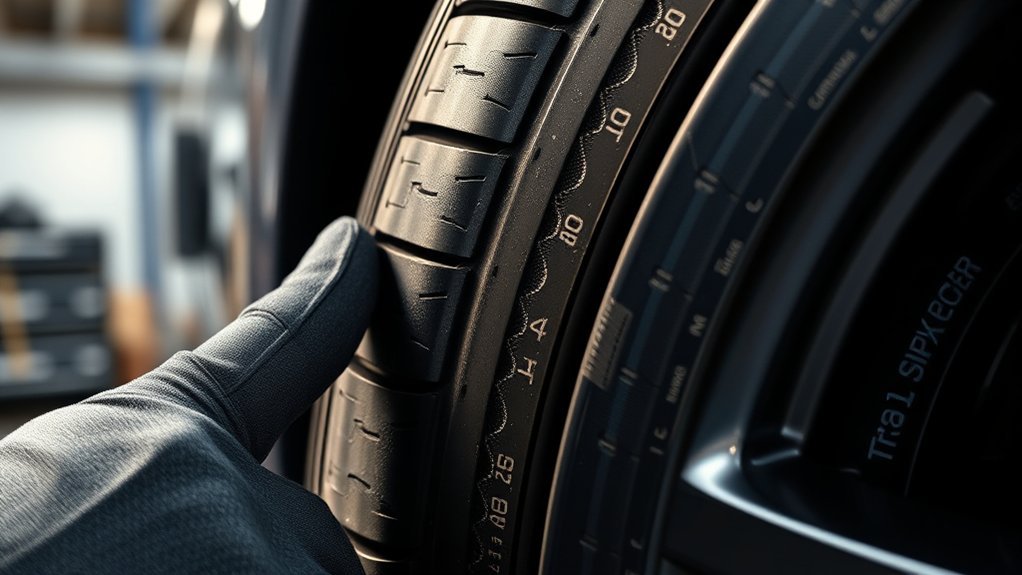
115T on a tire is the tire’s service description. The number 115 is the load index, and the letter T is the speed rating. Together, they tell you how much weight the tire can carry and the maximum speed category it was tested for under proper service conditions.
Quick Answer
A 115T tire has a load index of 115, which is commonly listed as about 2,679 pounds per tire, and a T speed rating, which means up to 118 mph under proper inflation, load, and tire condition. Always match 115T to your vehicle placard or owner’s manual before buying.
Key Takeaways
- 115 is the tire’s load index. It is commonly listed as about 2,679 pounds per tire, though some manufacturer charts round it to 2,680 pounds.
- T is the speed rating. It means the tire is rated for 118 mph under proper load, inflation, and tire condition.
- The 115T code usually appears after the tire size, such as 265/70R17 115T.
- Do not choose tires by the sidewall code alone. Match the tire size, load index, speed rating, and inflation requirements to the vehicle placard or owner’s manual.
- A higher load index or speed rating may be acceptable, but a lower rating can reduce safety, handling, or legal suitability for your vehicle.
What Does 115T Mean on a Tire?
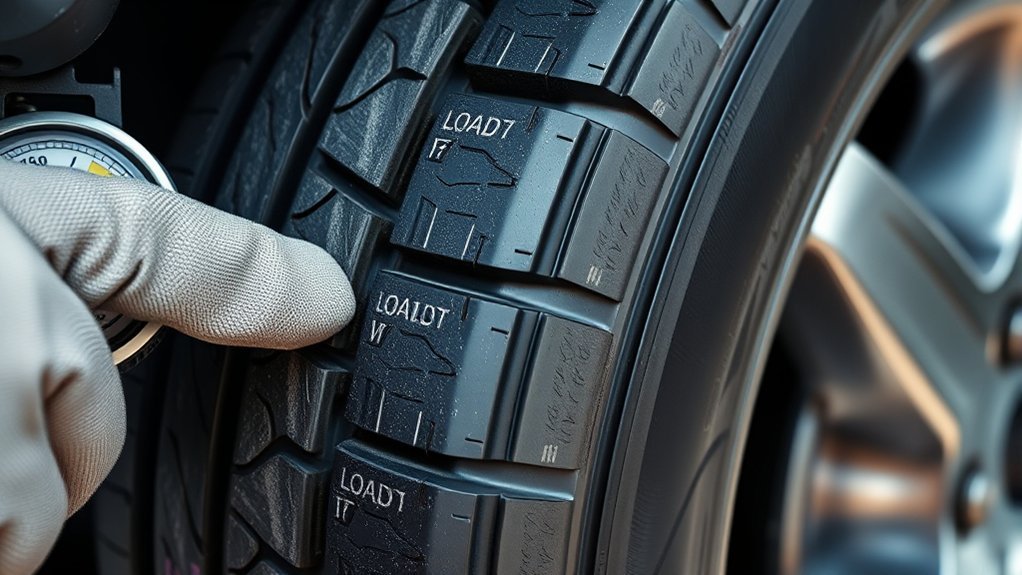
A tire marked 115T is showing two ratings in one service description. The 115 is the load index, which describes the tire’s maximum load capacity when used at the proper inflation pressure. The T is the speed rating, which identifies the tire’s tested speed category.
In practical terms, 115T means the tire is commonly rated to carry about 2,679 pounds per tire and has a T speed rating of 118 mph. Tire manufacturers and retailers may round load-index pound values slightly because the official values are based on kilogram-to-pound conversion. That is why you may see 115 listed as 2,679 pounds on some charts and 2,680 pounds on others.
You will usually see the service description immediately after the tire size. For example, in 265/70R17 115T, the tire size is 265/70R17 and the service description is 115T. Continental’s tire sidewall guide explains that the load index and speed rating are the numbers and letters that follow the tire size on the sidewall: Continental Tire sidewall guide.
Warning: A speed rating is not permission to exceed posted speed limits. It is a laboratory speed category for a tire in proper condition, properly inflated, and carrying the correct load. Damage, underinflation, overloading, repairs, heat, and road conditions can reduce real-world tire capability.
Where to Find 115T on the Sidewall
Look for the tire size on the outer sidewall. The 115T code normally appears right after the size marking.
- Find the main tire size, such as 265/70R17.
- Look immediately after the size for a number and letter, such as 115T.
- Read the number as the load index.
- Read the letter as the speed rating.
- Compare the full size and service description with the vehicle placard or owner’s manual.
If the code does not meet your vehicle’s requirements, do not install that tire without guidance from a qualified tire professional. The Tire Industry Association advises following the tire information placard, which typically lists the correct size, recommended pressure, load index, and speed rating: Tire Industry Association tire replacement guidance.
How Tire Load Index Works
The load index is a numerical code tied to the maximum load a tire can carry under the service conditions specified by the tire manufacturer. A higher load index means a higher load capacity, but you still need the correct tire size, construction, load range, and inflation pressure for your vehicle.
| Load Index | Common Listed Capacity | What It Means |
|---|---|---|
| 100 | About 1,764 lb | Lower load capacity than 115 |
| 110 | About 2,337 lb | Moderate SUV/crossover capacity |
| 115 | About 2,679 lb | The load index in 115T |
The load index does not tell the whole story by itself. A tire with the same load index can still differ by tire type, inflation requirement, construction, and intended use. For replacement tires, the U.S. Tire Manufacturers Association recommends using the same size, load index, and speed rating designation recommended by the vehicle or tire manufacturer: USTMA replacing tires guidance.
Note: Load index and load range are not the same thing. The load index is a numbered capacity code, while load range describes tire construction and pressure class, especially on LT and commercial tires.
What the T Speed Rating Means

The T speed rating means the tire is rated for speeds up to 118 mph, or 190 km/h, under proper service conditions. Toyo’s speed symbol and load index chart lists T at 190 km/h and 118 mph: Toyo Tires speed symbol and load index chart.
That does not mean every T-rated tire is safe at 118 mph in every real-world situation. Bridgestone’s tire maintenance and safety manual explains that actual speed capability can be affected by inflation pressure, load, tire condition, wear, vehicle condition, driving conditions, and how long the speed is sustained: Bridgestone Tire Maintenance and Safety Manual.
T Rating Speed Limit
A T-rated tire is generally suitable for normal street and highway driving when it matches the vehicle’s required tire specification. It is not a performance rating for aggressive driving, racing, or sustained high-speed use.
- Stay within legal speed limits.
- Keep tires inflated to the vehicle manufacturer’s recommended cold pressure.
- Do not exceed the tire’s load capacity.
- Replace damaged, repaired, or worn tires if their condition makes them unsafe.
- Use the speed rating required by your vehicle placard or owner’s manual.
Speed Rating Basics
Speed ratings are part of the tire’s service description. The speed rating tells you the tire’s maximum speed category under the correct load and inflation conditions. If tires with different speed ratings are installed on the same vehicle, the vehicle’s safe tire-related speed capability is limited by the lowest-rated tire.
A T rating is lower than H, V, W, and Y ratings. Higher ratings may bring more grip or sharper handling in some tire designs, but they can also come with trade-offs such as shorter tread life. Michelin notes that higher speed ratings typically improve grip and stopping power but may reduce tread life: Michelin tire speed rating guidance.
Performance and Safety
For most daily drivers, a 115T tire can be a practical choice only if it matches the vehicle’s required tire size, load index, speed rating, and inflation pressure. Do not treat the 115T code as a universal fit.
- Speed: T is rated up to 118 mph under proper conditions.
- Load: 115 is commonly listed as about 2,679 pounds per tire.
- Use: Best suited to everyday driving when it matches the vehicle specification.
- Safety: Avoid mixing sizes, load indexes, speed ratings, or tire types unless the vehicle manufacturer allows it.
Is 115T Enough for Your Vehicle?
115T is enough only when it meets or exceeds your vehicle’s required tire specification. The easiest place to check is the tire and loading information placard, usually found on the driver’s door jamb, door edge, glove box, or fuel door area. Your owner’s manual may also list tire requirements.
[Products Worth Considering]

Secure your vehicle during transport with this 4-pack of heavy-duty tire tie down straps designed for trailers and hauling. The ratchet system with flat hooks and D-rings helps you tension the straps quickly, while the wheel-friendly design protects tires. With high break strength and corrosion-resistant hardware, these straps provide reliable, confidence-inspiring tie-down security for cars, trucks, and UTVs.

Vigorder rubber cement glue delivers superior adhesion and cures quickly within about 30 seconds for seamless rubber bonding. Once cured, it helps provide a strong, durable, waterproof seal that holds up to vehicle weight, pressure, and heat. Suitable for cars, motorcycles, trucks, bicycles, and off-road tires, it’s designed for emergency patch and maintenance repairs.

Replace worn pool cleaner tires with this all-purpose C10 tire set made to fit compatible Polaris automatic pool cleaners. The tires are designed for maximum traction while helping protect your pool finish, and they match Polaris OEM size and material. Each pack includes three new tires in sealed bags.
Load Index Capacity
The 115 in 115T means the tire can carry about 2,679 pounds when properly inflated and used within the manufacturer’s service conditions. That sounds like a lot, but the right load index depends on your vehicle, passengers, cargo, towing load, and tire pressure requirements.
Before buying 115T tires, check:
- The exact tire size on the placard.
- The minimum load index required by the vehicle manufacturer.
- The required speed rating.
- The recommended cold tire pressure.
- Whether the vehicle requires P-metric, metric, XL, LT, or another tire type.
- Whether towing or hauling changes the recommended pressure or tire requirement.
Pro Tip: If your current tire says 115T, replace it with the same size and at least the same load index and speed rating unless your owner’s manual, vehicle placard, or tire professional confirms another option is suitable.
Speed Rating Limits
Even when the 115 load index is enough, the T speed rating still matters. If your vehicle originally requires an H-rated tire, for example, moving down to a T-rated tire can reduce the vehicle’s tire-related speed capability and may change handling. Michelin advises using equal or greater speed ratings than the original equipment tires when selecting replacements.
Winter tires are one common exception where a lower speed rating may sometimes be used, but speed must be reduced accordingly and all winter tires should follow the vehicle manufacturer’s guidance.
Load Index vs Load Range
Many drivers confuse load index with load range. They are related, but they are not the same rating.
| Rating | What It Tells You | Example |
|---|---|---|
| Load Index | A numerical code for maximum load capacity. | 115 = about 2,679 lb per tire. |
| Load Range | A construction and pressure class, often shown on LT tires. | Load Range E on many LT tires. |
| Speed Rating | A letter code for speed capability under proper service conditions. | T = 118 mph. |
Do not assume that a higher-looking load index automatically makes a tire correct for your vehicle. P-metric, metric, XL, and LT tires can have different pressure and load rules. When in doubt, use the vehicle placard and ask a qualified tire professional.
115T vs LT Tires
A 115T tire is often found on SUVs, crossovers, and some light-truck-sized passenger tire fitments. An LT tire is a light-truck tire built for heavier-duty service, higher pressures, towing, hauling, or tougher use, depending on its size and load range.
A 115T tire may be right for everyday driving, but an LT tire may be required for some trucks, towing setups, commercial use, or heavier loads. The correct choice is the one listed by your vehicle manufacturer.
| Feature | 115T Passenger/Metric Tire | LT Tire |
|---|---|---|
| Main purpose | Comfort, everyday driving, highway use. | Higher-duty truck, towing, hauling, or commercial use. |
| Ride feel | Usually smoother and lighter. | Often firmer due to tougher construction. |
| Load details | Uses a load index such as 115. | May show load range plus load index, sometimes with single/dual ratings. |
| Best choice | When the vehicle placard calls for this type and rating. | When the vehicle or load use requires LT construction. |
Do not switch between passenger-metric and LT tires based only on load index. The pressure requirements, ride, handling, and load calculations can change.
[Products Worth Considering]

Upgrade your vehicle’s style with sparkling rhinestone valve caps that add a unique luxury look. Built with an O-ring seal and rotating thread design, they help prevent air leakage while keeping dust and road grime out. The universal fit works on standard American tire valves for cars, trucks, SUVs, and motorcycles, and installs easily without special tools.
A concentrated tire and tube mounting compound designed to help simplify mounting rubber tires and tubes on passenger, semi truck, construction, and OTR applications. Its ultra-thick formula packs beads effectively and includes rust inhibitors to help protect against corrosion during use.

Protect tire valves from water, dust, and sand to help prevent leaks and support safe driving. These universal stem caps install quickly by hand and feature durable aluminum alloy construction with an inner sealing ring for better air retention. Compatible with cars, SUVs, trucks, motorcycles, and bicycles for everyday convenience.
Can You Mix 115T With Other Ratings?
It is best to use the same size, construction, load index, speed rating, and tire type on all four wheel positions unless your vehicle manufacturer specifies a staggered setup. Mixed tires can change steering response, braking, traction, and stability.
If you must use tires with different speed ratings, Michelin advises placing the lower speed-rated tires on the front axle to reduce oversteer risk. Even then, the vehicle’s tire-related speed capability is limited by the lowest-rated tire. For towing, hauling, off-road use, winter use, or all-wheel-drive vehicles, matching tires becomes even more important.
Warning: Never install a tire with a lower load index than the vehicle requires. A tire that cannot carry the required load can overheat, wear faster, handle poorly, or fail.
115T vs 113T vs 116T
The number changes the load capacity. The T speed rating stays the same.
| Rating | Load Index | Common Listed Load | Speed Rating |
|---|---|---|---|
| 113T | 113 | About 2,535 lb | T / 118 mph |
| 115T | 115 | About 2,679 lb | T / 118 mph |
| 116T | 116 | About 2,756 lb | T / 118 mph |
Moving from 113T to 115T adds about 144 pounds of capacity per tire. Moving from 115T to 116T adds about 76 to 77 pounds per tire, depending on how the chart rounds kilogram-to-pound conversion.
[Products Worth Considering]
Tymate TM7 is a wireless tire pressure monitoring system that delivers real-time pressure and temperature readings for safer driving. It includes four external sensors, a bright color LCD display with adjustable backlight, and six alarm modes for high/low pressure, fast leakage, high temperature, and sensor signal or battery issues. The system covers a wide 0–144 PSI range and plugs into your vehicle’s cigarette lighter socket for quick DIY setup.

The Milton S-693 straight foot dual head air chuck is designed for accurate tire pressure checks and quick, secure valve-core engagement with lock-on threads on both ends. With a 1/4" FNPT connection and a maximum 150 PSI rating, it’s built for use on inner duals and common vehicle tires, including trucks and RVs.

The Milton S-693-12 straight foot dual head air chuck provides extended 12-inch reach for efficiently inflating inner dual tires on trucks and semi trucks. It has 1/4" female NPT threading and locks securely onto valve core threads for reliable sealing up to 150 PSI. Designed for use on an air line with a cushioned grip handle for comfortable operation.
Frequently Asked Questions
Which is better, T or H speed rating?
H is the higher speed rating. T is rated for 118 mph, while H is rated for 130 mph. H may be better for vehicles that require it or for tires designed for sharper handling, but T is fine only when it matches your vehicle’s required specification. Do not choose a speed rating just because the letter is higher or lower; match the placard and owner’s manual.
What load range is 115?
115 is not a load range. It is a load index, which is commonly listed as about 2,679 pounds per tire. Load range is a separate construction and pressure category, often shown on LT tires with letters such as C, D, E, or F.
What is the difference between 113T and 115T?
113T and 115T have the same T speed rating, but 115T carries more weight. A 113 load index is commonly listed as about 2,535 pounds per tire, while 115 is commonly listed as about 2,679 pounds per tire. That gives 115T about 144 pounds more capacity per tire.
What is the difference between 115T and 116T tires?
115T and 116T differ mainly in load index. A 115 load index is commonly listed as about 2,679 pounds per tire, while 116 is commonly listed as about 2,756 pounds per tire. Both have the same T speed rating, so 116T adds a small load-capacity margin but no speed-rating increase.
Can I replace 115T tires with 115H tires?
Usually, a tire with the same load index and a higher speed rating may be acceptable if the tire size, type, load range, and inflation requirements also match your vehicle. A 115H tire has the same load index as 115T but a higher speed rating. Still, check the vehicle placard, owner’s manual, and tire professional before switching.
Is 115T good for highway driving?
Yes, 115T can be suitable for normal highway driving when it matches your vehicle’s required tire specification and the tire is properly inflated, undamaged, and not overloaded. It is not intended as a racing or sustained high-speed performance rating.
Conclusion
When you see 115T on a tire, read it as two ratings: 115 for load index and T for speed rating. The tire is commonly listed at about 2,679 pounds per tire and rated for 118 mph under proper service conditions. Before buying, compare the full tire size, load index, speed rating, tire type, and pressure requirements with your vehicle placard or owner’s manual. That check matters more than the sidewall code alone.
Sources
- Toyo Tires Speed Symbol and Load Index chart — backs load-index and speed-symbol values, including T = 118 mph.
- Bridgestone Tire Maintenance and Safety Manual — backs speed-rating safety caveats, inflation, load, and tire-condition warnings.
- Tire Industry Association Tire Replacement guidance — backs placard, owner’s manual, load index, and speed rating replacement guidance.
- U.S. Tire Manufacturers Association Replacing Tires guide — backs matching replacement tire size, load index, and speed rating.
- Continental Tire sidewall guide — backs where load index and speed rating appear on the sidewall.
- Michelin tire speed rating guidance — backs speed-rating replacement and mixed-rating cautions.