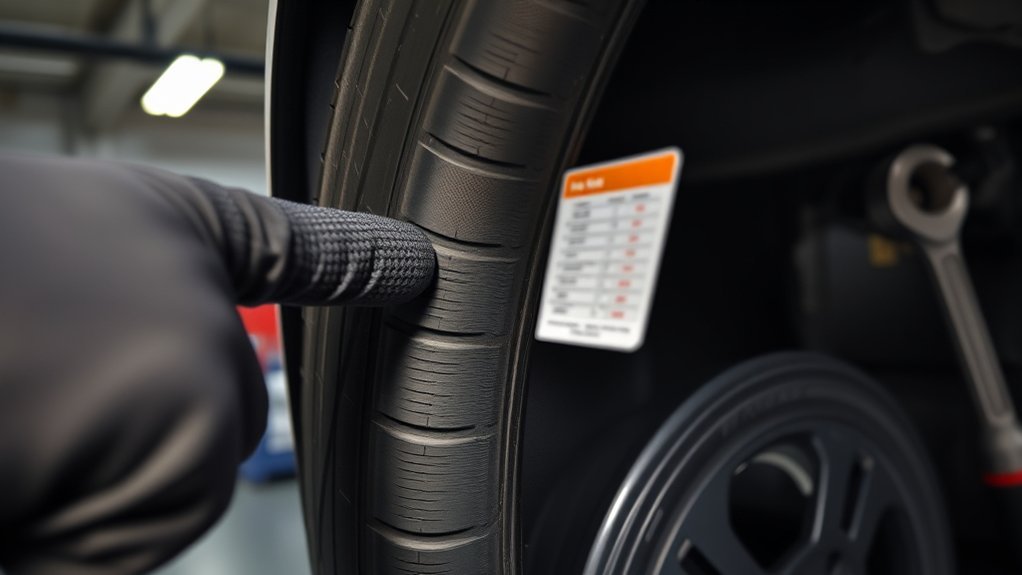
105T on a tire means the tire has a 105 load index and a T speed rating. In plain English, one properly inflated 105T tire can carry up to 2,039 pounds, and the T rating means the tire is rated for up to 118 mph under controlled test conditions.
That does not mean every 105T tire is right for every vehicle. You still need to match the tire size, load index, speed rating, and inflation pressure listed on your vehicle’s tire placard or owner’s manual. The marking is a quick way to check whether a replacement tire meets the basic load and speed requirements for your car, SUV, minivan, or light truck.
Quick Answer
A 105T tire has a load index of 105, meaning it can carry up to 2,039 pounds when properly inflated, and a T speed rating, meaning it is rated up to 118 mph under test conditions. For safety, match or exceed your vehicle maker’s required load index and speed rating.
Key Takeaways
- 105 is the tire’s load index, equal to 2,039 pounds per tire when properly inflated.
- T is the speed rating, equal to 118 mph under controlled test conditions.
- The speed rating is not permission to drive at that speed. Road laws, tire condition, load, weather, and vehicle limits still matter.
- Replacement tires should match or exceed the load index and speed rating listed by the vehicle maker.
- Use the driver’s door placard and owner’s manual before buying, towing, or carrying heavy loads.
At a Glance
| Time Required | About 5 minutes to check the tire sidewall, door placard, and owner’s manual |
| Difficulty | Easy |
| Tools Needed | Tire sidewall, tire placard, owner’s manual, and a tire pressure gauge |
| Cost | Free, unless you need a tire gauge or replacement tires |
What Does 105T Mean on a Tire?
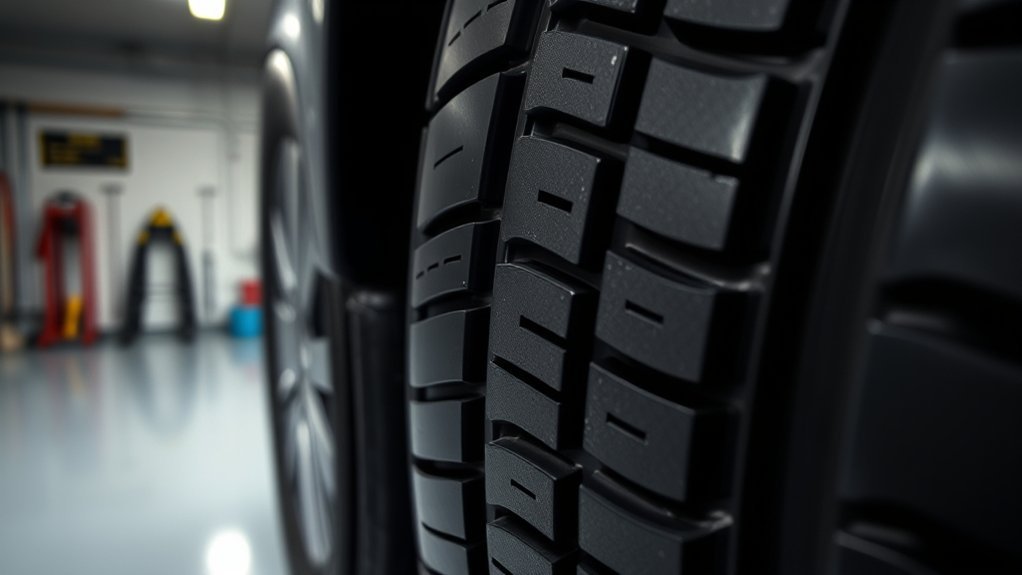
A tire marked 105T tells you two key things. The number 105 is the load index, which describes how much weight the tire can carry when it is inflated and used correctly. The letter T is the speed rating, which describes the tire’s tested speed capability.
| Marking | Meaning | What to Check |
| 105 | 2,039 lb maximum load per tire when properly inflated | Match or exceed the vehicle’s required load index |
| T | 118 mph speed rating under test conditions | Match or exceed the vehicle’s required speed rating |
When you choose replacement tires, the safest move is to match or exceed the tire size, load index, and speed rating listed by your vehicle maker. Check the sidewall, driver’s door placard, and owner’s manual instead of assuming that all tires with similar size markings perform the same. Additionally, ensuring your tires meet the manufacturer’s recommended tire sizes is crucial for optimal performance and safety.
Warning: A T speed rating is not a recommendation to drive 118 mph. It is a tire capability rating under controlled conditions. Always follow posted speed limits, your vehicle maker’s requirements, and the tire’s condition, load, and inflation limits.
How Much Weight Can 105T Carry?
A 105 load index means each tire can carry up to 2,039 pounds when it is properly inflated. A set of four 105T tires has a combined tire capacity of about 8,156 pounds, but that number does not mean your vehicle can safely carry that much weight.
Your vehicle’s legal and safe carrying ability depends on more than tire capacity. You also need to check the vehicle’s gross vehicle weight rating, gross axle weight ratings, payload limit, wheel rating, suspension rating, and the cold tire pressure listed on the placard.
105 Load Capacity
When you see a 105 load index on a 105T tire, it means the tire can carry up to 2,039 pounds at its rated load pressure. You should treat that as a tire limit, not a target payload number for the whole vehicle.
Use this specification to confirm the tire can support your vehicle, passengers, cargo, and tongue weight if you tow. If you exceed the tire’s rated load, you increase the risk of heat buildup, sidewall damage, uneven wear, and tire failure. For heavier vehicles or frequent towing, check the required load index before buying tires.
Weight Limits Explained
A 105T tire can carry 2,039 pounds per tire when used correctly, so four matching tires total 8,156 pounds of tire capacity. That total is useful for a quick check, but it does not replace your vehicle’s ratings.
The safest process is to compare the replacement tire to the original tire rating listed by your vehicle maker. If the original tire is 105T, a replacement should usually be 105T or higher, unless the owner’s manual approves a different rating. Check your owner’s manual or tire placard before you load cargo, tow, or carry passengers.
Speed Rating T Details
The T in 105T is the speed rating, and it means the tire is rated for speeds up to 118 mph (190 km/h) under controlled test conditions. The 105 load index tells you the tire’s carrying capacity. These two ratings work together because speed, load, heat, and inflation pressure all affect tire safety.
- Load index: 105 equals 2,039 pounds per tire.
- Speed rating: T equals 118 mph under test conditions.
- Best use: common on many passenger vehicles, crossovers, minivans, and some light-duty applications when approved by the vehicle maker.
Always verify inflation pressure. Low pressure reduces load-carrying ability and can increase heat inside the tire.
NHTSA reported 511 traffic deaths in tire-related crashes in 2024. Tire ratings, correct inflation, and regular tire checks all matter for safe driving.
What the T Speed Rating Means
The T speed rating means the tire is rated up to 118 mph when properly loaded and inflated. It is common on everyday touring, passenger, crossover, and minivan tires. A T-rated tire can be a good fit when your vehicle maker calls for T or lower, but it is not the right choice if your vehicle requires H, V, W, or another higher speed rating.
| Speed Rating | Rated Speed | Common Use |
|---|---|---|
| S | 112 mph | Some standard passenger tires |
| T | 118 mph | Many daily-driving tires |
| H | 130 mph | Touring and some performance-oriented tires |
| V | 149 mph | Performance cars and sportier trims |
| W | 168 mph | High-performance tires |
A higher speed rating is not automatically “better” for every driver. It may come with different ride comfort, tread life, price, and handling traits. The best rating is the one that matches or exceeds your vehicle maker’s requirement. Selecting tires with the right load ratings ensures optimal performance and safety for your vehicle.
Products Worth Considering

Milton S-921 pencil tire pressure gauge helps you maintain optimal tire pressure for passenger cars with accurate readings in PSI and kPa. It features a built-in deflator valve for convenient pressure adjustments, plus a single chuck head and nylon indicator bar for easy use on the go. Built from durable plated brass and designed for reliable performance, it’s a practical road trip and cold-weather maintenance tool.

Measure tyre tread depth precisely with a digital gauge that reads in both MM and inches, helping you monitor safe driving conditions. The large LCD screen is easy to operate, and the compact tool fits for cars, trucks, and motorcycles. It provides high accuracy with a 0-25.4mm range and includes a 1-year warranty for added peace of mind.

The SAFELIFE dial tire tread depth gauge measures tread depth in 1/32 inch increments with clear, easy-to-read 2-inch dial face. Color zones using a traffic light system help you quickly judge whether tread is low, marginal, or ample for safer driving. Built with a durable zinc cast body and a metal detect probe for precise, comfortable use across cars, motorcycles, trucks, and buses.
Is 105T Right for Your Vehicle?
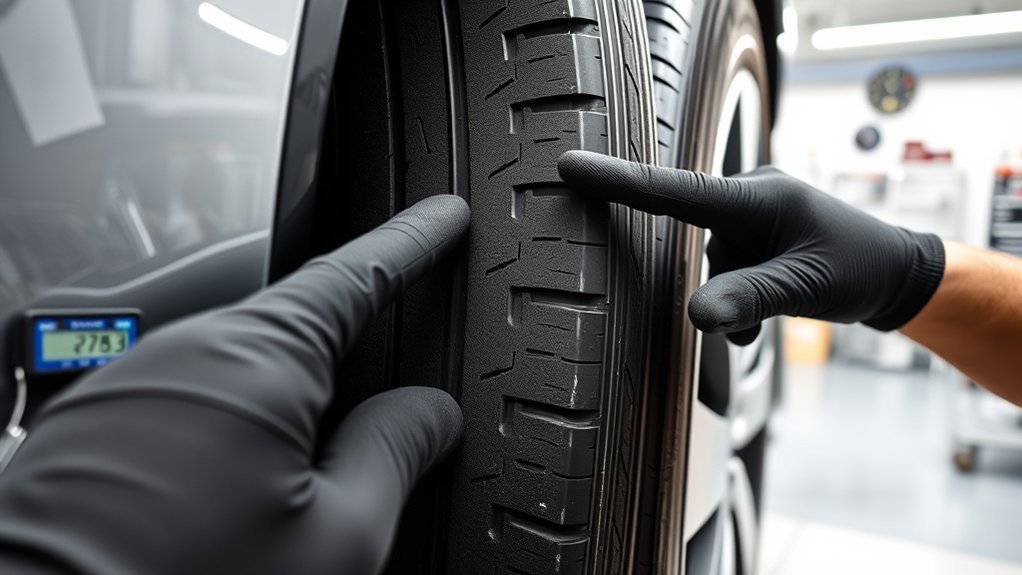
105T is right for your vehicle only if it matches or exceeds the tire rating required by your vehicle maker. The 105 load index supports up to 2,039 pounds per tire when inflated correctly, and the T speed rating is 118 mph under controlled test conditions.
- Check the tire size and rating on your driver’s door placard.
- Confirm the same information in the owner’s manual.
- Compare the current sidewall code to the required tire size, load index, and speed rating.
- Make sure all four tires match unless the vehicle maker specifies a staggered setup.
- Use the cold tire pressure listed by the vehicle maker, not the maximum pressure printed on the tire sidewall.
If your vehicle’s required capacity or speed rating is higher than 105T, a 105T tire is not the right replacement. If the placard or manual lists 105T, then a matching 105T tire can preserve the intended ride, braking, handling, and stability. Additionally, consider the load index and speed rating of your current tires to ensure optimal performance.
Pro Tip: The correct cold tire pressure is usually on the driver’s door placard or in the owner’s manual. NHTSA notes that the vehicle maker’s pressure is the proper target, not the maximum pressure printed on the tire.
Products Worth Considering

The Topeak SmartGauge D2 delivers precise digital tire pressure readings for bikes, motorcycles, and sports equipment up to 250 psi (17 bar). Its rotating SmartHead works with both Presta and Schrader valves, so you can check pressure quickly without adapters. The LCD display makes it easy to read results in psi, bar, or kg/cm² with an included CR2032 battery for immediate use.

Secure your trailer or RV tires with a scissor-style wheel chock stabilizer that applies opposing force to help prevent wheel shift. It fits tight wheel gaps from 3.5 inches up to 12 inches and works for travel trailers, campers, fifth wheels, toy haulers, and heavy-duty trucks. The surface uses new electrophoretic technology to help prevent rust for reliable travel use.

Measure tire tread depth quickly and accurately with this LUMITECO dial gauge that reads in 1/32" increments up to 14/32". The color-coded green/yellow/red zones make it easy to judge tire wear and know when replacement is needed. A rugged, compact design with a protective pouch helps keep the gauge ready for use on cars, trucks, motorcycles, and more.
Where to Find Tire Size Codes
You’ll usually find tire size codes molded into the tire’s sidewall. A common format looks like this: P225/60R16 105T. In that example, P identifies a passenger tire, 225 is the tire width in millimeters, 60 is the aspect ratio, R means radial construction, 16 is the wheel diameter in inches, 105 is the load index, and T is the speed rating.
If the sidewall is dirty or worn, check the Tire and Loading Information Label on the driver’s side door edge or post. You can also check your vehicle owner’s manual. Use these references to verify the correct tire size before you buy or install anything. Reading the code accurately helps you keep your vehicle compliant, safe, and fully under your control. Additionally, ensure the tire size aligns with RAV4 specifications to optimize performance.
Load Index vs. Load Range vs. Speed Rating
These tire terms are related, but they do not mean the same thing.
- Load index is the number, such as 105, that tells you the tire’s maximum weight capacity at its rated pressure.
- Load range is more common on light truck tires and describes how much pressure and load the tire is built to handle.
- Speed rating is the letter, such as T, that tells you the tire’s tested speed capability.
- Tire size tells you the tire’s width, sidewall ratio, construction, and wheel diameter.
Do not choose a tire based on only one of these markings. A tire can have the right size but the wrong load index. It can also have enough load capacity but the wrong speed rating for your vehicle.
Can You Mix Different Speed Ratings?
You should avoid mixing different speed-rated tires. A mismatch can change steering feel, braking balance, ride quality, and high-speed stability. When ratings differ, the lowest speed-rated tire sets the practical speed limit for the whole set. Additionally, it’s important to consider tire ratings to ensure optimal performance and safety.
Mixing Speed Ratings
Mixing different speed ratings is not recommended because it can make the vehicle less predictable. Even if the tires fit the same wheel size, their construction, heat tolerance, sidewall response, and handling feel may differ.
- Use matching tires whenever possible.
- Match or exceed the vehicle maker’s required load index and speed rating.
- If a temporary mismatch is unavoidable, follow the vehicle maker’s guidance or ask a qualified tire professional.
Do not use a mixed set as a long-term solution, especially for highway driving, towing, winter driving, or spirited driving.
Lowest Rating Wins
When different speed ratings are fitted together, the lowest-rated tire sets the safe practical limit for the entire vehicle. For example, if three tires are H-rated and one tire is T-rated, you should treat the set as T-rated until the mismatch is corrected.
The same logic applies to load index. One lower-rated tire can become the weak point in the set. For the safest setup, follow the manufacturer’s recommended speed rating and choose tires that match across the axle and, ideally, across all four positions.
Front Axle Placement
Do not rely on front axle placement as a cure for mismatched speed ratings. Tire placement can depend on the vehicle, drivetrain, tread depth, tire type, and manufacturer guidance. If a shop installs a temporary tire with a different rating, ask how it affects handling, speed limits, and replacement timing.
- Drive below the weakest tire’s speed rating.
- Avoid heavy loading, towing, and aggressive driving.
- Replace the mismatched tire or set with the correct rating as soon as practical.
Uniform tires usually deliver the most predictable response and the best protection.
When You Should Match the OEM Rating
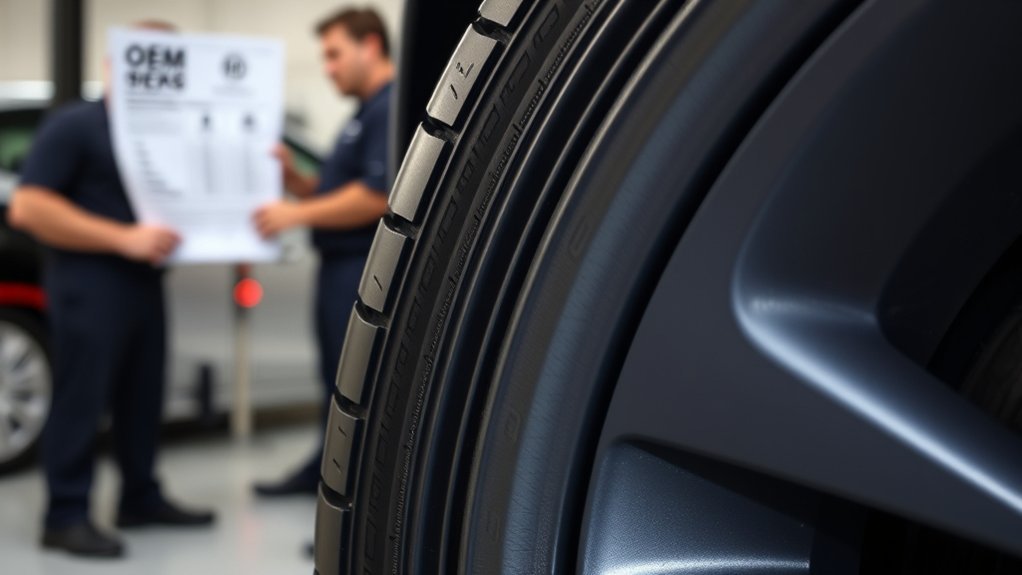
You should match the OEM tire rating whenever you replace tires, unless the vehicle maker or a qualified tire professional confirms that another rating is approved. The original load index and speed rating were selected for your vehicle’s weight, suspension, braking system, and handling goals.
A 105 load index supports 2,039 pounds per tire when inflated correctly, and a T speed rating covers 118 mph under test conditions. If you install a tire below the required rating, you can reduce braking stability, steering response, heat resistance, and safety margin.
Use the vehicle manual or tire placard to verify the correct numbers before you buy. You can exceed the original rating only when the replacement tire also fits the vehicle correctly and meets all other requirements, including size, load, speed, wheel rating, and pressure. Additionally, selecting tires with a proper treadwear warranty helps you maintain expected performance and longevity.
How to Choose the Right Replacement Tire
To choose the right replacement tire, start by matching or exceeding the original load index and speed rating. Then confirm the tire size, service description, load range if shown, and cold inflation pressure.
Match or exceed the factory load index and speed rating for safer, more predictable driving.
- Read the door placard. Look for the tire size, load rating, and recommended cold tire pressure.
- Check the owner’s manual. Confirm whether different trims, wheel sizes, or towing packages need different tires.
- Match the service description. If the original tire is 105T, look for 105T or a higher approved rating.
- Keep tires consistent. Use the same size, type, rating, and similar tread depth across the vehicle unless your vehicle maker specifies otherwise.
- Consider your driving conditions. Wet roads, winter temperatures, towing, gravel, and highway use can all affect which tire model is best.
Never choose a replacement tire simply because it fits the rim. The load index, speed rating, tire type, and pressure requirements all matter. Additionally, consider tread depth and road noise when selecting tires to ensure a comfortable driving experience.
Products Worth Considering

Accurately measure tire tread depth with a calibrated gauge marked from 0 to 1 inch in 1/32 inch increments. The color-coded bar helps you quickly identify tread condition ranges, supporting safe driving for trucks, motorcycles, automobiles, and passenger vehicles.

The ETENWOLF T600 digital tire pressure gauge delivers precise, manually calibrated readings to ANSI B40.7 Grade 2A standards with ±0.5% PSI accuracy. Its 360° rotating nozzle and display hold make it easy to check pressures from any angle, while a bleed button helps dial tires to the perfect level. With a 0–250 PSI range and support for PSI, BAR, and KPA, it’s a convenient tool for maintaining tire performance across many vehicles and seasons.

ETENWOLF T300 is a calibrated digital tire pressure gauge for accurate readings from 3 to 200 PSI across light and heavy-duty vehicles. It includes thermal compensation for reliable performance in extreme cold or heat, with an auto shut-off to extend battery life and an LED for easier reading. The sturdy design supports rugged everyday use, making it ideal for pickups, RVs, and industrial applications.
Common Mistakes to Avoid With 105T Tires
- Using the tire sidewall pressure as the target pressure: The sidewall often lists maximum pressure. Use the vehicle placard for normal cold tire pressure.
- Buying a lower load index to save money: A lower-rated tire may not safely support your vehicle and cargo.
- Assuming speed rating equals grip: Speed rating is not the same as wet traction, winter grip, or braking quality.
- Ignoring axle loads: The rear axle may carry more weight when towing or hauling, even if the total tire capacity looks high.
- Mixing ratings long term: Mismatched tires can make the vehicle less predictable.
- Replacing only one worn tire on AWD: Some AWD systems need closely matched tread depth to avoid drivetrain strain.
Frequently Asked Questions
What is the difference between 105H and 105T tires?
105H and 105T tires have the same load index, so both can carry up to 2,039 pounds per tire when properly inflated. The difference is the speed rating. H is rated up to 130 mph, while T is rated up to 118 mph. Use the speed rating your vehicle maker requires.
Which tire rating is better, H or T?
H has a higher speed capability than T, but that does not automatically make it the better tire for every vehicle. The better choice is the rating your vehicle maker specifies, combined with the right tire model for your climate, driving style, and load needs.
What is the difference between 105T and 107T tires?
105T and 107T tires have the same T speed rating, but different load capacities. A 105 load index equals 2,039 pounds per tire, while a 107 load index equals 2,149 pounds per tire. Choose the rating that matches or exceeds your vehicle maker’s requirement.
Which speed rating is better, S or T?
T has a higher speed rating than S. S is rated up to 112 mph, while T is rated up to 118 mph. Still, the right choice is not just the higher letter. You should follow your vehicle maker’s required rating and choose a tire model suited to your road conditions.
Can I replace 105T tires with 105H tires?
Usually, yes, if the tire is the correct size and meets all other vehicle requirements. A 105H tire keeps the same load index and has a higher speed rating than 105T. Check the owner’s manual, tire placard, and tire shop fitment guidance before installing.
Does 105T mean the tire is safe for towing?
Not by itself. A 105T tire has a known load and speed rating, but towing safety depends on your vehicle’s tow rating, axle ratings, tongue weight, tire pressure, wheel rating, and trailer setup. Check the owner’s manual before towing with any tire.
Conclusion
105T means your tire has a 105 load index and a T speed rating. The 105 rating equals 2,039 pounds per tire when properly inflated, and the T rating equals 118 mph under controlled test conditions.
For a safe replacement, do not rely on the sidewall code alone. Check your owner’s manual, driver’s door placard, correct cold tire pressure, and vehicle load limits. Choose tires that match or exceed the required load index and speed rating so your vehicle keeps the handling, braking, and stability it was designed to have.
Sources
- NHTSA TireWise Tire Safety Ratings and Awareness — supports tire placard, tire pressure, maintenance, and tire-related crash safety context.
- Discount Tire Load Range vs. Load Index — supports the explanation of load index, load range, and matching vehicle requirements.
- Discount Tire Speed Rating Guide — supports T, S, H, V, and W speed-rating values and the rule to match or exceed OE speed rating.
- Goodyear Tire Load Index Chart — supports how load indexes translate to tire weight capacity.