A tire marked 100H uses a short service-description code to tell you its load and speed limits. The 100 is the tire’s load index, and the H is the speed rating. Together, they help you confirm whether the tire matches your vehicle’s required size, load capacity, speed capability, and inflation guidance.
Quick Answer
On a tire, 100H means the tire has a 100 load index, rated for 1,764 pounds (800 kg) per tire when properly inflated, and an H speed rating, rated up to 130 mph (210 km/h) under specified conditions. Always match or exceed your vehicle’s tire placard requirements.
Key Takeaways
- 100 is the load index, meaning the tire can support 1,764 pounds (800 kg) per tire when properly inflated.
- H is the speed rating, meaning the tire is rated up to 130 mph (210 km/h) under specified test conditions.
- The load index applies to each tire, not to the vehicle’s total payload limit.
- Your owner’s manual, tire placard, and vehicle maker’s specifications matter more than the number on a replacement tire alone.
- Avoid installing tires with a lower load index or speed rating than the vehicle requires unless a qualified tire professional and the vehicle maker’s guidance allow it.
At a Glance
| Time Required | 2–5 minutes |
| Difficulty | Easy |
| Tools Needed | Tire sidewall, driver-door tire placard, owner’s manual, and a tire-pressure gauge |
| Cost | Free to check; tire replacement cost depends on size, brand, and vehicle requirements |
What Does 100H Mean on a Tire?
A tire marked 100H tells you two specifications. The number 100 is the load index, which means one tire can carry up to 1,764 pounds (800 kg) when it is the correct tire for the vehicle and is properly inflated. The letter H is the speed rating, which means the tire is rated up to 130 mph (210 km/h) under specified load and inflation conditions.
You will usually see this code near the end of the tire size, such as 235/55R18 100H. In that full code, 235/55R18 describes the tire size and construction, while 100H describes load and speed capability. The service description is small, but it matters because a tire can fit the wheel and still be wrong for the vehicle if the load index or speed rating is too low.
| Code Part | What It Means | 100H Value |
|---|---|---|
| 100 | Load index | 1,764 lb / 800 kg per tire |
| H | Speed rating | 130 mph / 210 km/h |
| 100H | Service description | Combined load and speed rating |
A 100H tire is rated for 1,764 pounds per tire and 130 mph, but those ratings only apply when the tire is properly inflated, undamaged, correctly loaded, and suitable for the vehicle.
Why the 100 Load Index Matters
The load index tells you the maximum weight a single tire can carry under the tire maker’s rated conditions. For 100, that maximum is 1,764 pounds (800 kg) per tire. This does not mean your car can automatically carry 7,056 pounds of people and cargo just because four tires together add up to that number. Your vehicle’s real limit is still controlled by its GVWR, GAWR, tire placard, suspension, brakes, and recommended cold tire pressure.
A correct load index matters because it helps the tire support the vehicle’s weight, passengers, cargo, and dynamic forces from braking, turning, and bumps. A tire with too low a load index can overheat, deform, wear faster, or fail, especially when the vehicle is heavily loaded.
- It helps maintain vehicle safety under real-world passenger and cargo loads.
- It reduces the risk of overload-related heat buildup.
- It supports predictable steering, braking, and cornering behavior.
- It gives you a clear number to compare against the vehicle maker’s required tire specification.
Note: The maximum pressure or maximum load molded on the tire sidewall is not the same as your vehicle’s recommended operating pressure. Use the cold tire pressure listed on the tire placard or in the owner’s manual.
What the H Speed Rating Means
An H speed rating means the tire is rated up to 130 mph (210 km/h) under specified test conditions. It sits above U at 124 mph and below V at 149 mph. You should match or exceed the speed rating your vehicle manufacturer specifies unless the owner’s manual or a qualified tire professional gives a specific approved exception.
Warning: A speed rating is not permission to drive at that speed. Always obey posted speed limits and reduce speed for traffic, weather, road conditions, tire wear, tire damage, and load.
H Speed Rating Basics
The H rating is part of the tire’s service description. It shows the tire’s speed capability when it is properly inflated, correctly loaded, and in good condition. Many H-rated tires are used on sedans, crossovers, touring tires, and some performance-oriented vehicles because they balance speed capability, comfort, and handling.
- H = rated up to 130 mph / 210 km/h.
- The tire must still match the correct size, load index, and load range for the vehicle.
- The rating assumes proper inflation and an undamaged tire.
- The vehicle’s recommended tire specification remains the final guide.
H Rating Limits
The H rating gives a maximum speed category, not a daily driving target. Real-world tire capability can be lower than the rating if the tire is underinflated, overloaded, worn, damaged, repaired, misaligned, or used in harsh conditions. That is why speed ratings and load ratings must be read together.
If your vehicle originally came with H-rated tires, replacing them with a lower speed rating can reduce the vehicle’s designed safety margin. If your vehicle requires a higher rating, such as V, W, or Y, do not downgrade to H unless the vehicle manufacturer allows it for a specific use case.
How to Read 100H on the Sidewall
On a tire sidewall, 100H usually appears immediately after the size code. For example, in 235/55R18 100H, the first part describes size and construction, and the final 100H describes the service rating.
- 235 = tire width in millimeters.
- 55 = sidewall height as a percentage of tire width.
- R = radial construction.
- 18 = wheel diameter in inches.
- 100 = load index of 1,764 lb / 800 kg per tire.
- H = speed rating of 130 mph / 210 km/h.
Use this marking to confirm that your replacement tire meets or exceeds the vehicle maker’s required load index and speed rating. Do not choose by size alone; two tires with the same size can have different service descriptions.
Why Load and Speed Ratings Work Together
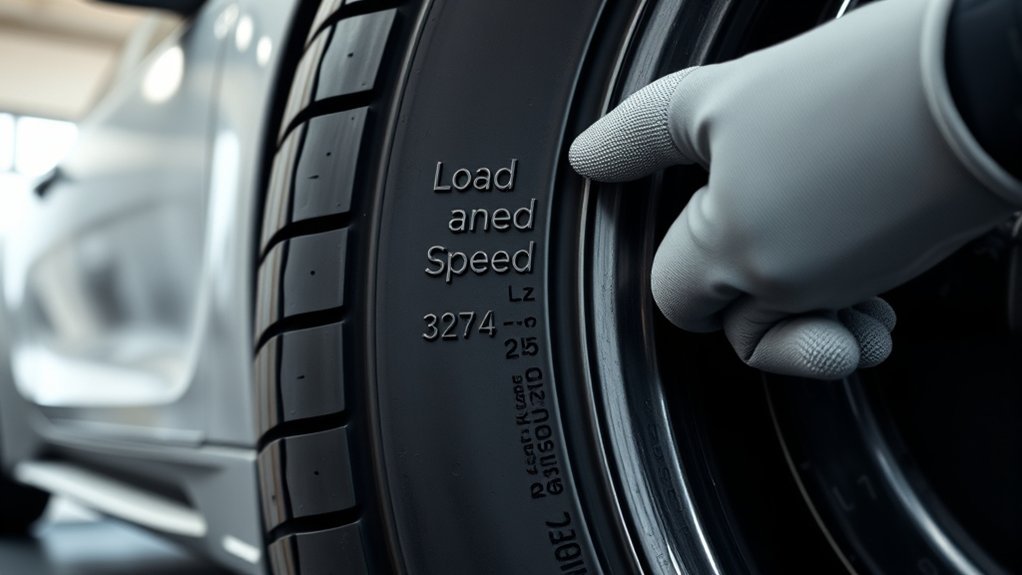
Load and speed ratings work as a pair because a tire must carry weight and manage heat, stress, and flex while rolling. A 100H tire is not just “strong” or “fast”; it is designed for a specific load and speed category when used correctly.
| Rating | What It Controls | Why It Matters |
|---|---|---|
| Load index | Weight capacity | Helps the tire support the vehicle, passengers, and cargo |
| Speed rating | Speed and heat capability | Helps the tire handle sustained rotation, flex, and heat |
| Both together | Service description | Confirms the tire fits the vehicle’s required performance envelope |
If one tire has a lower load index or speed rating than the others, that lower-rated tire can limit the set. For best stability and predictable handling, use tires that match the vehicle maker’s size, type, load index, and speed rating guidance.
Is 100H Right for Your Vehicle?
A 100H tire is right for your vehicle only if it meets or exceeds the vehicle’s required tire specification. The easiest way to check is to compare the tire sidewall against the tire placard, usually found on the driver-side door jamb, and the owner’s manual.
[Products Worth Considering]

Replace worn tires quickly with this universal 4.80/4.00-8 tire and inner tube set designed for wheelbarrows and outdoor utility carts. The ribbed tread helps reduce turf damage while the natural rubber construction supports longer service life. Compatible with 15.5-inch outer diameter, 4-inch width, and 8-inch rim diameter wheels, it uses a straight TR-13 valve stem for easy installation. For best results, inflate with a manual pump and do not exceed 25 PSI.

Measure tire tread depth quickly and accurately with this LUMITECO dial gauge that reads in 1/32" increments up to 14/32". The color-coded green/yellow/red zones make it easy to judge tire wear and know when replacement is needed. A rugged, compact design with a protective pouch helps keep the gauge ready for use on cars, trucks, motorcycles, and more.

Monitor tire tread wear with a smart, color-coded depth gauge that shows clear condition ranges at a glance. The bar is range marked for fast, easy readings, helping you maintain safer traction and performance. Each gauge is portable with a pocket clip, and the set includes 20 units for daily use and sharing.
Vehicle Fitment Needs
Before buying or installing a 100H tire, confirm these fitment points:
- The tire size matches the placard or an approved alternate size.
- The load index is equal to or higher than the vehicle’s required load index.
- The speed rating is equal to or higher than the original specification, unless an approved winter-tire exception applies.
- The tire type and load marking, such as SL, XL, Reinforced, or HL, match what the vehicle needs.
- The tire is inflated to the vehicle maker’s recommended cold pressure, not simply the tire’s maximum sidewall pressure.
Load Capacity Match
A 100H tire carries a load index of 100, so it can support 1,764 pounds per tire. Compare that number with the load index listed on your vehicle’s placard or in the owner’s manual. If the vehicle calls for a lower load index, 100 may meet or exceed the requirement. If it calls for a higher load index, 100 is not enough.
Do not divide vehicle weight by four and assume the tire is safe. Real vehicles do not always distribute weight evenly, and axle ratings matter. The placard and owner’s manual are more reliable than guesswork.
Speed Rating Suitability
The H rating works for many vehicles, but not all. If your vehicle originally requires an H rating, a 100H tire may be suitable if every other fitment detail also matches. If the vehicle calls for V, W, Y, or another higher speed rating, do not downgrade to H without written vehicle-maker guidance or professional approval.
Pro Tip: When comparing tires online, filter by your vehicle first, then confirm the size and service description on the product page before purchase. The same tire model can have different load indexes and speed ratings in different sizes.
How to Check Whether 100H Matches Your Vehicle
- Find the tire placard. Look on the driver-side door jamb or door edge for the tire size, cold inflation pressure, and load information.
- Check the owner’s manual. Confirm whether the vehicle requires a specific speed rating, load index, tire type, or winter-tire rule.
- Read the current tire sidewall. Find the full code, such as 235/55R18 100H.
- Compare the load index. The replacement tire must meet or exceed the required load index.
- Compare the speed rating. The replacement tire should meet or exceed the original rating unless an approved exception applies.
- Confirm the exact size and load marking. Check for SL, XL, Reinforced, HL, LT, or other markings that may affect fitment.
- Ask a tire professional if anything differs. This is especially important for AWD vehicles, staggered tire sizes, towing, winter tires, or non-original wheel sizes.
[Products Worth Considering]

This manual duck head tire changer kit makes tire installation and removal simpler by letting you embed the duck head into the tire with applied pressure. The integrated design and durable steel construction help reduce friction and improve efficiency and safety during use. Suitable for 16–21 inch wheels, it’s convenient for cars, trucks, SUVs, and ATV tires, with 24-hour after-sales support.
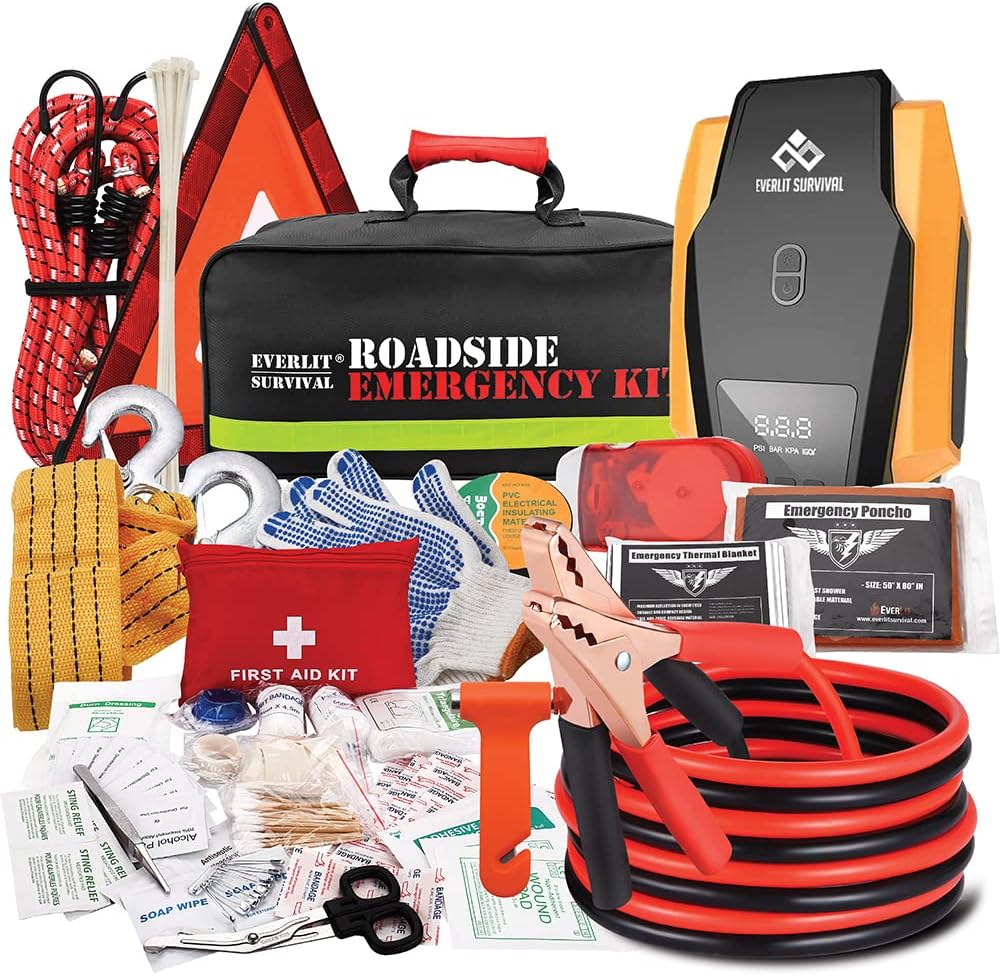
The Everlit Road Guardian emergency kit is designed for roadside breakdowns, combining essential safety gear and roadside tools in one compact bag. It includes a digital 12V auto tire inflator with preset and auto shutoff, plus 12-foot 8-gauge jumper cables to get you moving again. You also get a full 108-piece first aid kit, reflective warning tools, safety gloves, and emergency convenience items for safer travel.

The 22800 wheel stud installer makes replacing wheel studs quick and secure, saving time and effort during tire service. It uses a ratchet or impact wrench to pull new studs firmly into place, helping when existing studs are too long. Compatible with most automotive wheels and light-duty truck wheel studs, it’s designed for easy, tool-assisted installation.
Can You Upgrade or Downgrade Tire Ratings?
You can often choose a tire with a higher load index or higher speed rating if the tire still matches the vehicle’s approved size, load range, clearance, inflation needs, and wheel fitment. But higher is not automatically better. A higher-rated tire may cost more, ride firmer, or have different handling and wear characteristics.
Downgrading is different. A tire with a lower load index or speed rating can reduce the vehicle’s designed safety margin. If a lower speed-rated winter tire is allowed for your vehicle, drive within that lower rating and follow the owner’s manual. Do not downgrade load index below the vehicle requirement.
| Code | Load Capacity | Speed Rating | Main Difference |
|---|---|---|---|
| 100T | 1,764 lb / 800 kg | 118 mph / 190 km/h | Same load as 100H, lower speed rating |
| 100H | 1,764 lb / 800 kg | 130 mph / 210 km/h | Balanced touring/performance rating for many vehicles |
| 100V | 1,764 lb / 800 kg | 149 mph / 240 km/h | Same load as 100H, higher speed rating |
[Products Worth Considering]

This ecocstm ratchet wrench is designed to make emergency and routine tire changes faster with a 360° rotating head and quick forward/reverse switching. The extended handle provides extra leverage to reduce effort and hand fatigue, while the adapter helps fit many scissor jacks on cars, SUVs, trucks, and vans. Built for reliable performance with durable construction, it’s a practical travel essential for on-the-road preparedness.
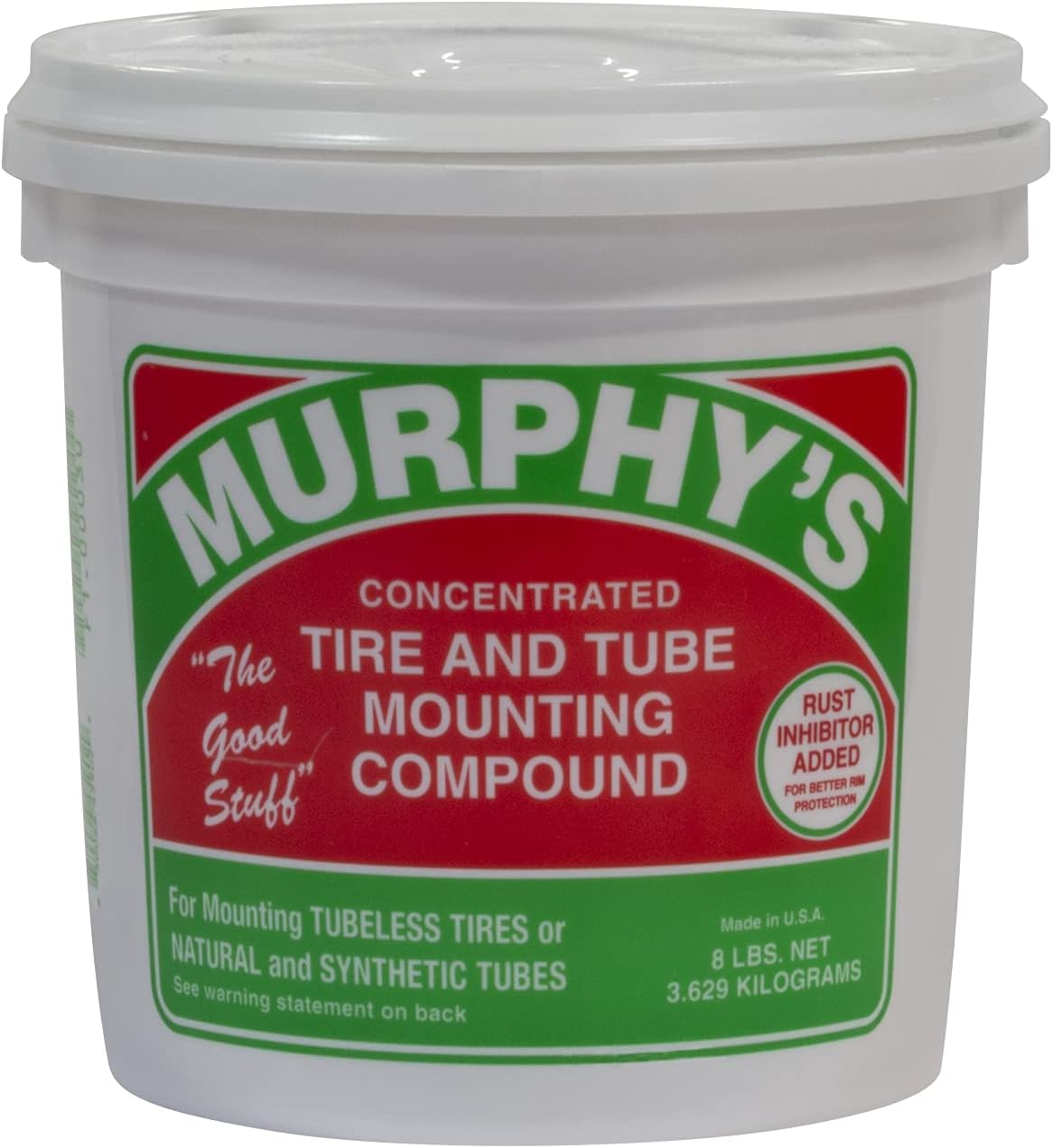
A concentrated tire and tube mounting compound designed to help simplify mounting rubber tires and tubes on passenger, semi truck, construction, and OTR applications. Its ultra-thick formula packs beads effectively and includes rust inhibitors to help protect against corrosion during use.
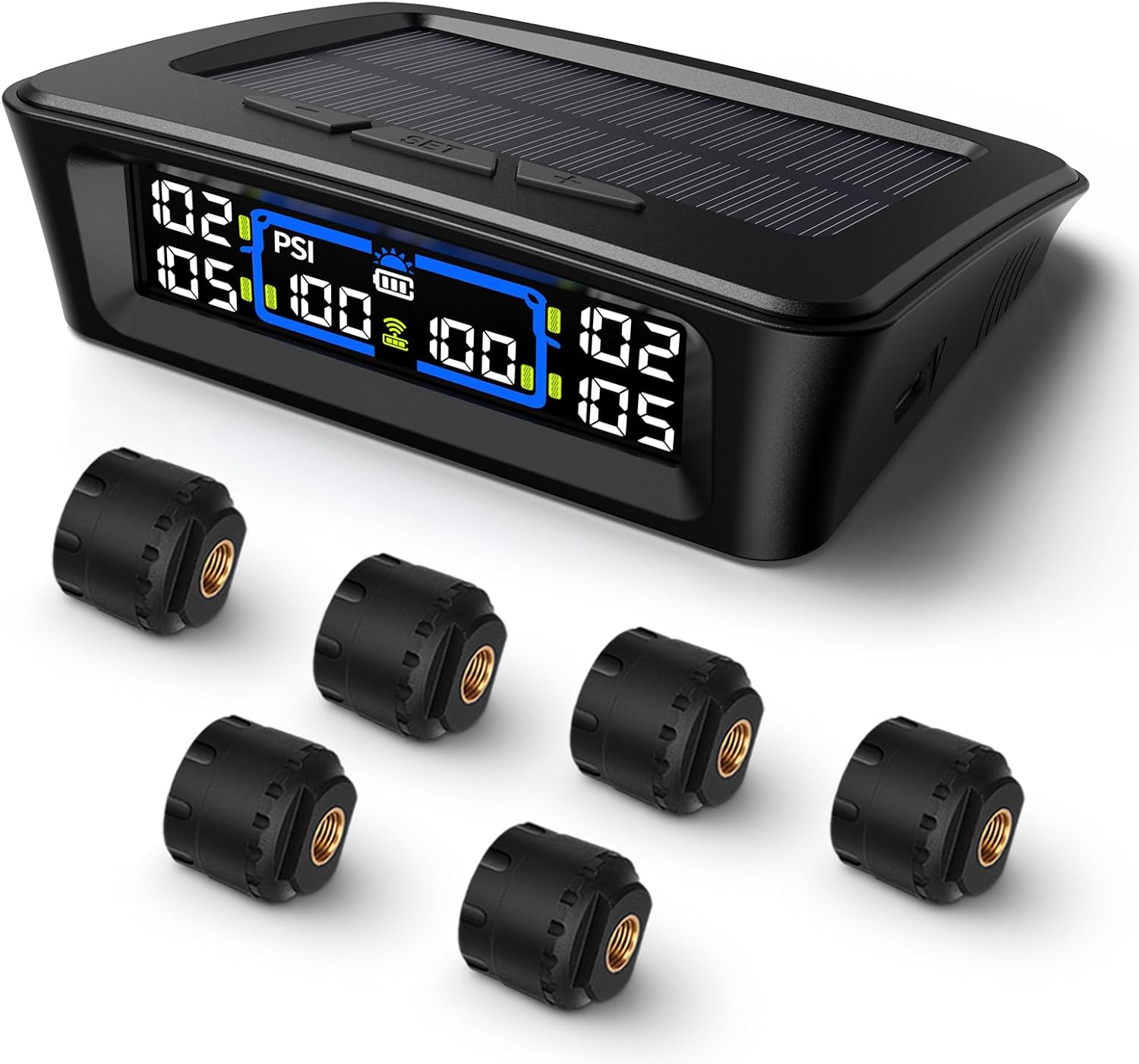
The Tymate TM12 RV TPMS delivers real-time tire pressure and temperature monitoring with a stable 433Hz display for safer long-distance driving. It supports simultaneous monitoring across vehicle and trailer zones, includes six alarm modes for pressure, temperature, leakage, battery, and signal loss, and features easy DIY installation with auto calibration. Power is supplied via USB-C charging or solar recharging, with a wide 0–144 PSI range and up to 50 ft signal coverage for RVs and towable trailers.
Risks of Mismatched Tire Ratings
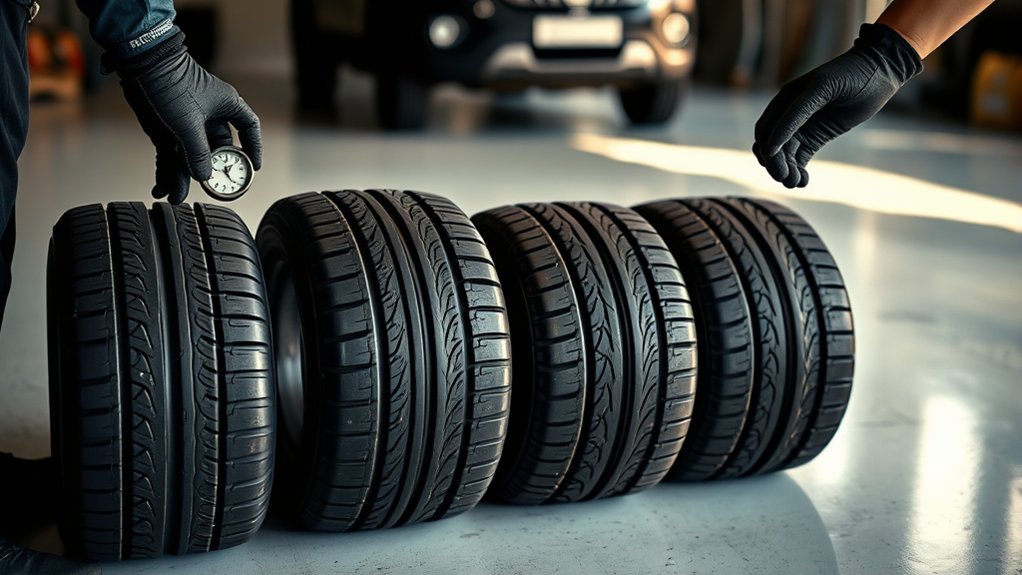
Mismatched tire ratings can reduce predictability. If one tire has a lower speed rating, lower load index, different construction, or different size than the others, it can change how the vehicle steers, brakes, corners, and responds in an emergency.
- Check every tire’s load index and speed rating before installation.
- Avoid mixing different ratings on the same axle.
- Do not install a tire with a lower load index than the vehicle requires.
- Remember that the lowest-rated tire can limit the set’s safe capability.
- For AWD and 4WD vehicles, follow the manufacturer’s tire replacement rules carefully.
Replacing tires in pairs or full sets can help preserve consistent grip and handling. When replacing only one tire, consult the vehicle manual or a tire professional, especially if the vehicle has all-wheel drive or uneven tread wear.
Frequently Asked Questions
What tire rating is better, H or V?
V has a higher speed rating than H: 149 mph for V versus 130 mph for H. That does not make V automatically better for every vehicle. The best rating is the one that matches or exceeds your vehicle maker’s required load index, speed rating, tire size, and load range.
What is the difference between 100T and 100H tires?
100T and 100H tires have the same load index, so both are rated for 1,764 pounds (800 kg) per tire. The difference is speed rating. T is rated up to 118 mph, while H is rated up to 130 mph. If your vehicle requires H, do not downgrade to T unless the vehicle maker allows it for a specific use, such as approved winter tires.
What does 235/55R18 100H mean?
235/55R18 100H means the tire is 235 mm wide, has a sidewall height equal to 55% of the tire width, uses radial construction, fits an 18-inch wheel, has a load index of 100, and has an H speed rating. The 100H part is the service description.
What does the 100H mean on a tire?
100H means the tire has a 100 load index and an H speed rating. The load index means the tire can carry 1,764 pounds (800 kg) per tire when properly inflated. The H speed rating means the tire is rated up to 130 mph (210 km/h) under specified conditions.
Can I replace a 100H tire with a 100V tire?
Usually, yes, if the tire size, load range, inflation requirements, wheel fitment, and vehicle maker guidance all match. A 100V tire has the same load index as 100H but a higher speed rating. It may also ride or handle differently, so check the vehicle manual or ask a tire professional before changing ratings.
Can I use a lower speed rating if I never drive fast?
Do not assume a lower speed rating is safe just because you drive at normal speeds. Speed ratings also reflect heat resistance and structural capability. Some winter tires may have a lower speed rating, but you must reduce speed accordingly and follow your vehicle maker’s guidance.
Conclusion
When you see 100H on a tire, read it as two ratings: 100 is the load index, rated for 1,764 pounds (800 kg) per tire, and H is the speed rating, rated for 130 mph (210 km/h) under specified conditions. Those numbers are useful only when they match your vehicle’s required tire size, load rating, speed rating, load range, and cold inflation pressure. For the safest choice, use the tire placard and owner’s manual first, then choose a tire that meets or exceeds those requirements.
Sources
- Tire Rack — What Is Load Index? — backs the load-index definition and the 100 = 1,764 lb / 800 kg load value.
- Michelin — Tire Load Rating & Speed Rating Explained — backs the load/speed rating definitions, H = 130 mph, and replacement-rating guidance.
- Michelin — Tire Markings Explained — backs sidewall-code reading and the note that sidewall max pressure is not the vehicle’s recommended operating pressure.
- NHTSA — Tire Safety Brochure — backs checking the vehicle tire placard, owner’s manual, and correct cold tire pressure.
- Bridgestone — Tire Maintenance and Safety Manual — backs speed-rating limits, slowest-tire limits, winter-tire exceptions, and high-speed safety warnings.