
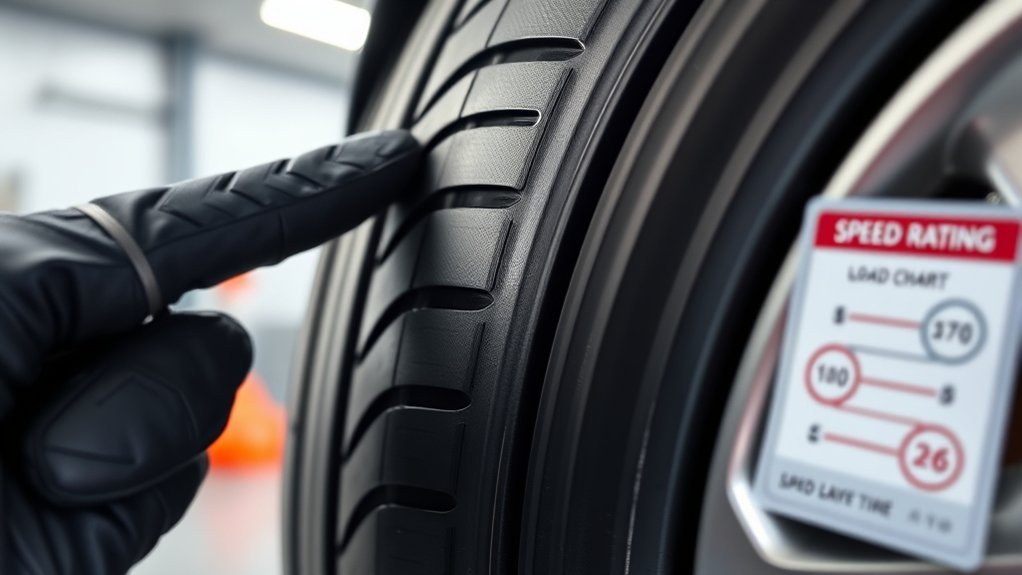
If you see 115T or 115 T on a tire sidewall, you are looking at the tire’s service description. The number tells you load capacity, and the letter tells you speed capability. For this code, 115 means 2,679 pounds per tire when properly inflated and used within rated conditions, while T means up to 118 mph.
Last updated July 7, 2026 · Reviewed for accuracy
Quick Answer
115T on a tire means the tire has a 115 load index and a T speed rating. Load index 115 equals 2,679 pounds per tire, and T means the tire is rated for speeds up to 118 mph under proper load, inflation, and operating conditions.
Key Takeaways
- 115 is the load index, and it equals 2,679 lb / 1,215 kg per tire when used correctly.
- T is the speed rating, and it means the tire is rated up to 118 mph / 190 km/h.
- The 115T code does not automatically tell you load range, ply rating, tread quality, or winter performance.
- Replacement tires should meet or exceed your vehicle’s required load index and speed rating unless the vehicle maker allows otherwise.
- A higher tire load index does not increase your vehicle’s GVWR, GAWR, payload rating, or towing limit.
At a Glance
| Time Required | 2 to 5 minutes |
| Difficulty | Easy |
| Tools Needed | Tire sidewall, owner’s manual or driver-door tire placard, and a tire pressure gauge |
| Cost | $0 to check; tire cost depends on size, brand, and vehicle requirements |
115T on a Tire: What It Means
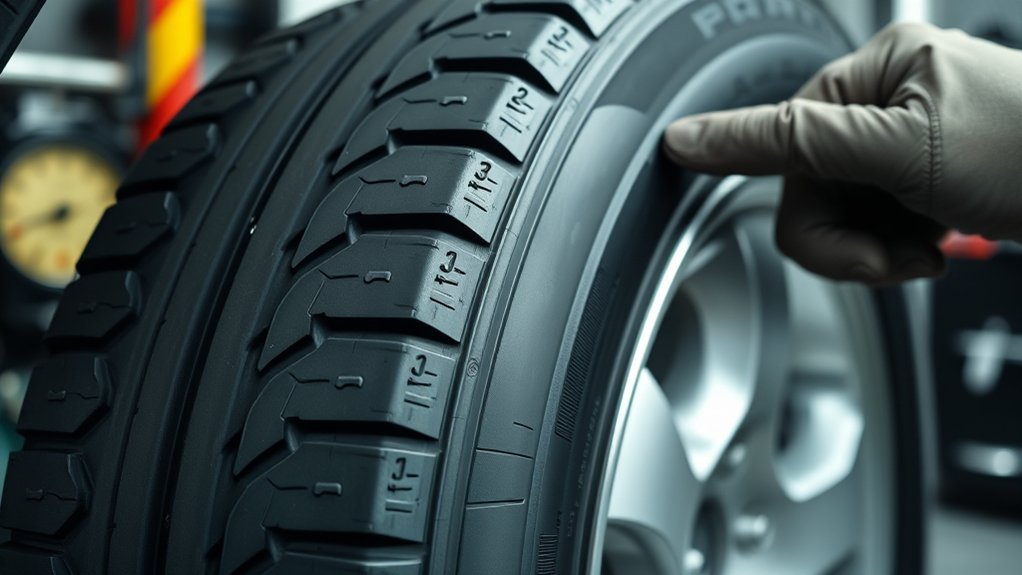
A tire marked 115T combines two ratings in one short code. The 115 is the tire’s load index, and the T is the tire’s speed symbol. Together, they form the tire’s service description, which appears near the tire size on the sidewall.
For this specific code, load index 115 equals 2,679 pounds per tire, according to standard load index charts. The T speed rating equals 118 mph, which is the tire’s rated speed capability under proper load, inflation, and condition.
Warning: Do not treat the speed rating as a recommended driving speed. Always follow posted speed limits, road conditions, vehicle limits, and tire condition. A damaged, underinflated, overloaded, or overheated tire may fail below its rated limit.
Tire Load Index Basics
The load index is a number that corresponds to the maximum weight one tire can support when it is properly inflated and used as designed. Goodyear’s load index chart lists load index 115 at 2,679 lb.
You should not guess this number from tire size alone. Two tires can share the same size but have different load indexes. That is why you need to check the full sidewall code and compare it with your vehicle’s required tire information.
The safest place to confirm the correct tire size and rating is your owner’s manual or the Tire and Loading Information Label on the driver-side door edge or door post. NHTSA also tells drivers to check that label or the owner’s manual when choosing the correct tire size for a vehicle.
What 115 Load Index Can Carry
A 115 load index means each tire can carry up to 2,679 pounds under its rated conditions. Four tires with this rating have a combined tire-load capacity of 10,716 pounds, but that does not mean your vehicle can safely carry that much weight.
Note: Tire capacity does not increase your vehicle’s GVWR, GAWR, payload rating, or towing rating. Your vehicle’s frame, suspension, brakes, axles, wheels, and manufacturer limits still control how much weight you can carry.
Load Capacity
To use the load index correctly, compare the tire’s rating with the vehicle’s required rating. A tire that meets the size requirement but falls below the required load index can be unsafe, especially with passengers, cargo, towing tongue weight, or heavy accessories.
- Find the required tire size and rating on the driver-door placard or in the owner’s manual.
- Read the full tire sidewall code, including the load index and speed symbol.
- Confirm the replacement tire meets or exceeds the required load index.
- Use the correct cold tire pressure from the vehicle placard for normal driving.
Do not inflate a tire to the maximum sidewall pressure unless the vehicle or tire documentation specifically calls for it. The sidewall maximum is not automatically the correct daily pressure for your vehicle.
Tire Weight Limits
The table below shows how 115 compares with nearby load indexes. This helps when you are comparing 113T, 114T, 115T, and 116T tires.
| Load Index | Per-Tire Capacity | Four-Tire Total |
|---|---|---|
| 113 | 2,535 lb | 10,140 lb |
| 114 | 2,601 lb | 10,404 lb |
| 115 | 2,679 lb | 10,716 lb |
| 116 | 2,756 lb | 11,024 lb |
Use these numbers as tire capacity references only. Your vehicle’s approved load limit may be much lower than the combined tire capacity.
What the T Speed Rating Means
The T speed rating means the tire is rated for speeds up to 118 mph / 190 km/h under proper test conditions. Discount Tire lists T at up to 118 mph, with S below it at 112 mph and H above it at 130 mph.
A T speed rating is a tire capability rating, not permission to drive 118 mph. Load, inflation, heat, road surface, tire age, and tire damage all affect real-world safety.
Speed ratings also relate to tire construction and heat resistance. A higher speed rating may use different materials or design features, but it does not automatically mean better tread life, better snow traction, or better wet braking. Those traits depend on the specific tire model, compound, tread pattern, and independent ratings.
| Speed Symbol | Rated Speed | Common Use |
|---|---|---|
| S | Up to 112 mph | Some standard touring tires |
| T | Up to 118 mph | Many passenger, SUV, and touring tires |
| H | Up to 130 mph | Higher-speed touring and performance tires |
| V | Up to 149 mph | Performance-oriented tires |
Why Load Index and Speed Rating Matter
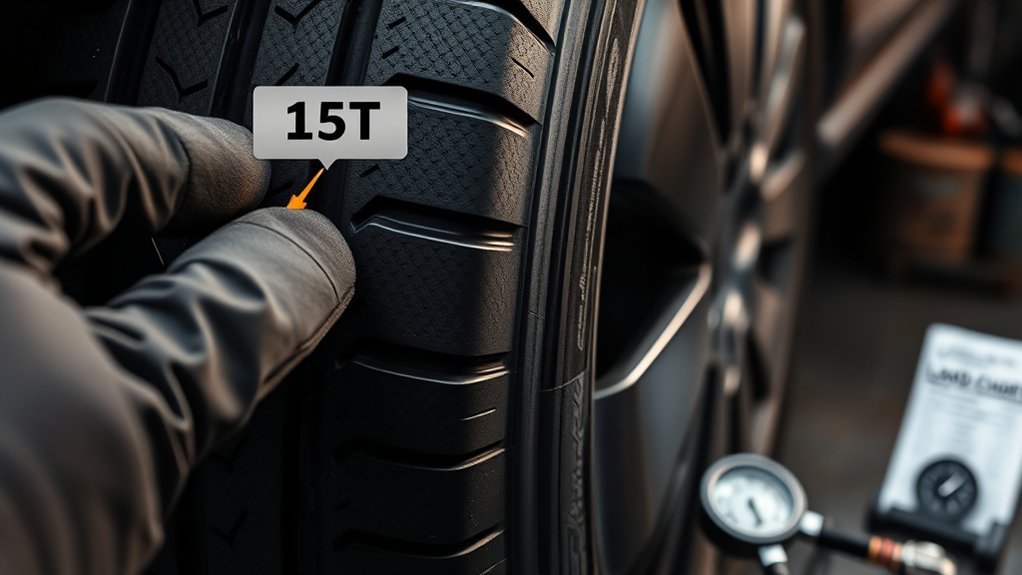
Load index and speed rating matter because they define the tire’s operating limits. Michelin explains that tire ratings identify the maximum weight a tire can carry and the maximum speed it can safely sustain when properly inflated and loaded.
If you overload a tire, heat and stress can build up inside the tire structure. That can lead to rapid wear, sidewall damage, tread separation, or a blowout. If you use a tire with a lower speed rating than your vehicle requires, you may also reduce the tire’s heat resistance and handling margin at highway speeds.
These ratings work together. A tire must support the load at the speed indicated by its speed symbol. That is why you should check both numbers, not just tire size.
Load Index vs Load Range
115T does not tell you the tire’s load range by itself. Load index and load range are related to load capacity, but they are not the same label.
- Load index is the number, such as 115, that converts to a weight capacity.
- Speed rating is the letter, such as T, that shows speed capability.
- Load range is a separate marking, such as C, D, E, XL, or another construction/load category, depending on tire type.
That means a 115T tire is not automatically 10-ply, Load Range C, Load Range D, or Load Range E. You need to read the full sidewall, including tire type, size, maximum load, maximum pressure, and any XL, LT, C, D, or E marking.
Pro Tip: If you are comparing tires for towing, hauling, or a light truck, check the tire’s full service description and sidewall load information. Some LT tires show two load indexes, such as 120/116, because single-wheel and dual-wheel applications can have different capacities.
Can You Use a Different Tire Rating?
You can sometimes use a different tire rating, but it must still match your vehicle’s requirements. As a general rule, a replacement tire should meet or exceed the original equipment load index and speed rating listed by the vehicle manufacturer.
- Do not go below the required load index unless the vehicle maker or a qualified tire professional confirms it is safe.
- Do not go below the required speed rating for normal replacements unless a permitted winter-tire exception applies and you obey the lower limit.
- Do not mix ratings casually because the lowest-rated tire can limit the safe capability of the set.
- Do not assume higher ratings raise vehicle capacity because the vehicle’s own ratings still apply.
Michelin notes that replacement ratings should be verified and followed using the vehicle tire placard, owner’s manual, or a trained tire professional. That is the safest path when you are unsure.
[Products Worth Considering]

The Big Rig Defense Tire Thumper is a truck tire pressure checker that lets you quickly check multiple tires by giving them a firm whack. Listen for a reassuring thump and feel the stick bounce when a tire is fully inflated, helping you get back on the road safely. It features a comfortable, glove-friendly handle and a secure wrist strap for confident use on busy routes.

The ETENWOLF T600 digital tire pressure gauge delivers precise, manually calibrated readings to ANSI B40.7 Grade 2A standards with ±0.5% PSI accuracy. Its 360° rotating nozzle and display hold make it easy to check pressures from any angle, while a bleed button helps dial tires to the perfect level. With a 0–250 PSI range and support for PSI, BAR, and KPA, it’s a convenient tool for maintaining tire performance across many vehicles and seasons.

The 22800 wheel stud installer makes replacing wheel studs quick and secure, saving time and effort during tire service. It uses a ratchet or impact wrench to pull new studs firmly into place, helping when existing studs are too long. Compatible with most automotive wheels and light-duty truck wheel studs, it’s designed for easy, tool-assisted installation.
Where to Find 115T on the Sidewall
You will usually find 115T on the tire’s outer sidewall in the same line as the tire size. It often appears immediately after the tire size, such as in a format like 265/70R17 115T. The exact tire size will vary by vehicle and tire model.
Sidewall Marking Location
Start by finding the largest tire-size marking on the sidewall. Then read the code from left to right. The service description usually comes after the wheel diameter. In the example 265/70R17 115T, the 17 is the wheel diameter, 115 is the load index, and T is the speed rating.
- Find the tire size on the sidewall.
- Look immediately after the rim diameter number.
- Identify the two- or three-digit load index.
- Read the speed rating letter after the load index.
Read Tire Code
A full tire code gives you more than the 115T rating. It can also show width, aspect ratio, construction, wheel diameter, tire type, DOT code, load range, maximum pressure, and other markings.
For example, in 265/70R17 115T:
- 265 is the tire width in millimeters.
- 70 is the aspect ratio.
- R means radial construction.
- 17 is the wheel diameter in inches.
- 115 is the load index.
- T is the speed symbol.
Find Load and Speed
Once you locate the load and speed rating, compare it with your vehicle’s required rating. If your current tires say 115T but your placard or manual calls for a different rating, follow the vehicle manufacturer’s requirement.
If the sidewall is dirty or worn, clean the tire and check again in good light. If you still cannot read the code, ask a tire shop to inspect it before you buy replacements.
How to Choose a Replacement Tire

When choosing a replacement tire, start with the vehicle, not with a random sidewall code. Your owner’s manual and driver-door tire placard give the correct tire size, pressure, and load requirements for the vehicle.
- Match the tire size. Use the size listed by the vehicle manufacturer unless you are making an approved fitment change.
- Match or exceed the load index. A 115 tire supports 2,679 lb, but your vehicle may require a lower or higher number.
- Match or exceed the speed rating. Use the required speed rating unless the vehicle maker allows an alternative.
- Match the tire category to your use. Touring, all-season, all-weather, winter, highway-terrain, and all-terrain tires behave differently.
- Check wheel capacity too. A tire’s load capacity does not help if the wheel is not rated for the same load and pressure.
For towing or hauling, include passengers, cargo, accessories, and trailer tongue weight in your real-world load picture. If you are close to a limit, ask a qualified tire professional to check the tire, wheel, axle, and vehicle ratings together.
[Products Worth Considering]
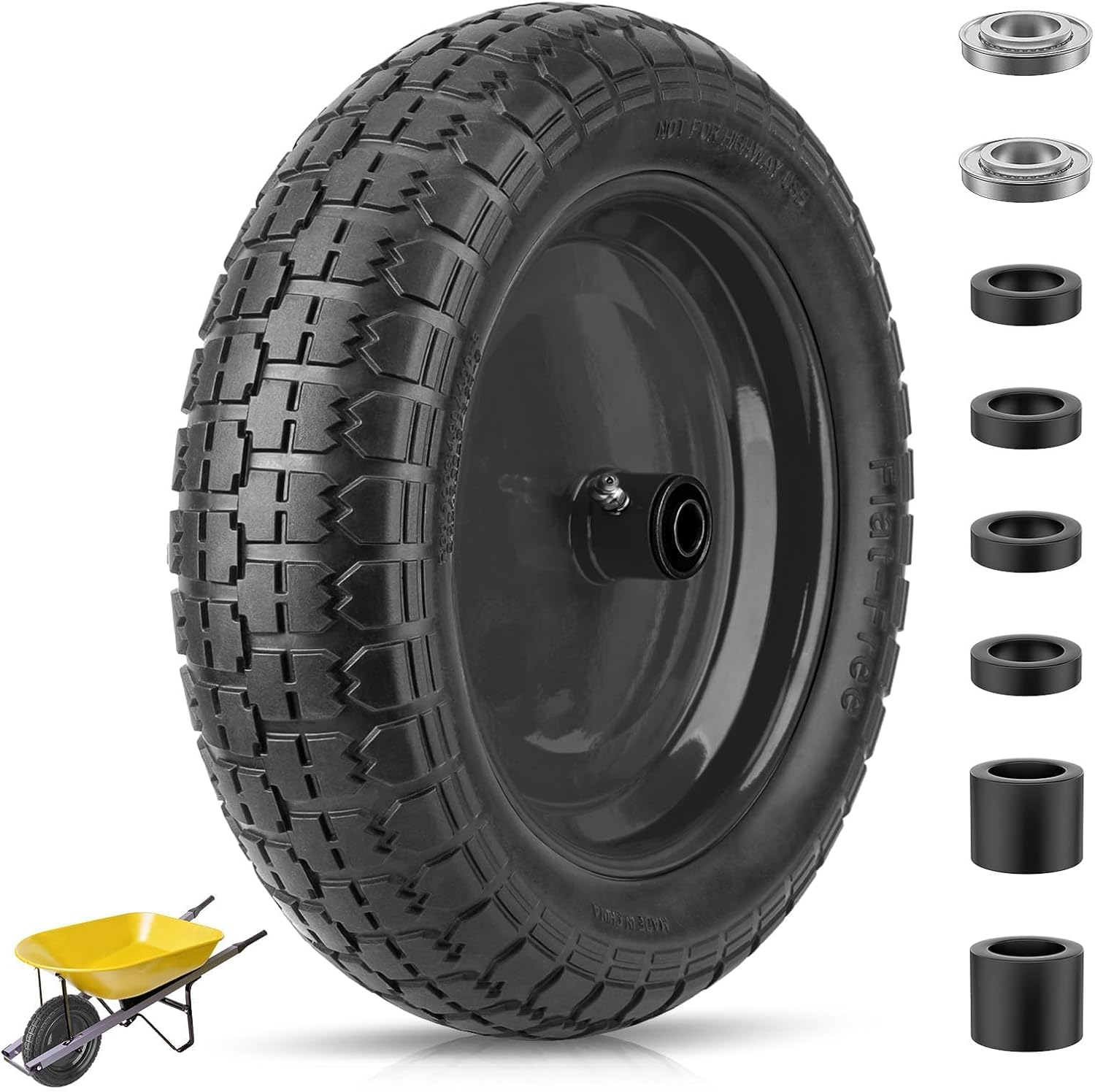
This flat-free TICONN wheelbarrow tire features durable polyurethane foam construction that never needs inflation, helping prevent punctures and reducing maintenance on rough outdoor terrain. With a 300 lb max load capacity and stable steel rim design, it supports safer transport for yard work and hauling tasks. An adapter kit with ball bearings and nylon spacers is included for easier fit and customization across common wheelbarrow and cart axle setups.

A concentrated tire and tube mounting compound designed to help simplify mounting rubber tires and tubes on passenger, semi truck, construction, and OTR applications. Its ultra-thick formula packs beads effectively and includes rust inhibitors to help protect against corrosion during use.

Slip the Powerbuilt tire step over your vehicle’s tire to reach roof racks, engine bays, truck boxes, and more without overreaching. Its adjustable, universal design fits tires with a cross tread width up to 13 inches, including car, truck, RV, and semi tires. The non-slip cheesegrater surface and anti-slip tape provide secure grip while the open design lets mud and debris pass through. Fold-flat storage with rubber bumpers helps keep your tire and the step protected between uses.
When 115T Tires Are Not a Match
A 115T tire is not always the right tire. It may be too low, too high, too slow-rated, the wrong size, or the wrong construction for your vehicle. The correct answer depends on what your vehicle maker requires.
[Products Worth Considering]

Steelman white tire marking crayons provide high-contrast, semi-permanent marks for repairing and inspecting tires and equipment. They write on wet or dry, smooth or coarse surfaces including rubber, metal, glass, and wood, making them ideal for puncture location and damage outlining. The lead- and zinc-free crayons resist weather and fading yet wipe away when you no longer need the marks.

AstroAI’s heavy-duty digital tire pressure gauge delivers quick, accurate readings with 0.1 increments and a secure valve-stem seal. It features a green backlit LCD and built-in flashlight for easy use in low light, plus an ergonomic non-slip stainless-steel design. The wide 0–230 PSI range works across common vehicle tires, with unit selection and an auto shut-off to save battery.

ETENWOLF’s calibrated tire pressure gauge delivers accurate readings for cars, trucks, motorcycles, bikes, SUVs, RVs, and ATVs across a 0–75 PSI range. The large glow dial improves visibility in low light, while the 360° swivel chuck makes it easy to check valve pressure from any angle. It’s designed to stay accurate even in extreme hot or cold weather.
Load Index Mismatch
A lower load index than required can reduce safety margin. For example, moving from 115 to 113 lowers capacity from 2,679 lb to 2,535 lb per tire. That is a drop of 144 lb per tire, or 576 lb across four tires.
A higher load index may be acceptable when the tire size, speed rating, load range, pressure requirements, and vehicle fitment all work together. However, it still does not increase the vehicle’s payload or towing rating.
Speed Rating Tradeoffs
A T-rated tire is rated up to 118 mph. If your vehicle requires H, V, W, or another higher rating, a T-rated replacement may not be suitable for normal use. A lower speed rating can reduce the tire’s heat and handling margin compared with what the vehicle manufacturer specified.
Some winter tire fitments may allow a lower speed rating, but only when permitted by the vehicle or tire guidance and when the driver respects the lower speed limit. For everyday replacement tires, match or exceed the original speed rating whenever possible.
When to Ask a Tire Expert
Ask a tire expert when the sidewall code does not clearly match your vehicle’s requirements. You should also get help if you tow, haul heavy cargo, use aftermarket wheels, change tire sizes, or see multiple load numbers on a light-truck tire.
- You cannot find the required rating on the door placard or in the owner’s manual.
- Your current tire says 115T, but the replacement tire has a different rating.
- You are comparing P-metric, XL, C-type, or LT tires.
- You are changing wheel size, tire size, load range, or tire category.
- You see cracking, bulges, puncture damage, uneven wear, or unreadable sidewall markings.
Do not guess when tire load, speed, and fitment affect braking, handling, and failure risk. A tire professional can check the tire size, service description, load range, pressure requirements, and wheel rating together.
Frequently Asked Questions
What load range is a 115T tire?
A 115T tire does not have one automatic load range. The 115 is the load index, and the T is the speed rating. Load range is a separate sidewall marking, such as XL, C, D, or E, depending on the tire type and construction. Check the full sidewall, not just 115T.
Which speed rating is better, H or T?
H has a higher speed rating than T. A T-rated tire is rated up to 118 mph, while an H-rated tire is rated up to 130 mph. That does not make H automatically better for every driver. Use the rating your vehicle requires, and compare the tire model’s traction, treadwear, ride comfort, noise, and weather performance separately.
Are 116T tires 10-ply?
No. A 116T tire is not automatically 10-ply. The 116 load index means 2,756 lb per tire, and T means up to 118 mph. Ply rating or load range must be checked separately on the tire sidewall or manufacturer specifications.
What is the difference between 113T and 115T?
The difference is load capacity. A 113T tire supports 2,535 lb per tire, while a 115T tire supports 2,679 lb per tire. That gives the 115T tire 144 lb more rated capacity per tire. Both have the same T speed rating if the final letter is T.
Can I replace a 115T tire with a 116T tire?
Usually, a higher load index can be acceptable if the tire size, speed rating, load range, wheel rating, pressure requirements, and vehicle fitment are correct. A 116T tire carries more load than a 115T tire, but it does not raise your vehicle’s payload, axle rating, or towing rating.
Does 115T mean the tire is for a truck or SUV?
Not always. A 115 load index is common on some SUVs, crossovers, vans, and light-duty applications, but 115T alone does not prove the tire is an LT tire or a truck tire. Read the full size marking, such as P-metric, LT, XL, or another type label, before deciding if it fits your vehicle.
Conclusion
115T on a tire means 115 load index and T speed rating. The correct 115 load index capacity is 2,679 pounds per tire, and the T speed rating is 118 mph under rated conditions. Before you buy a replacement, check your driver-door tire placard or owner’s manual and make sure the new tire matches the required size, load index, speed rating, and tire type.
Sources
- Goodyear Canada Tire Load Index — supports the 115 load index value of 2,679 lb and nearby load index values.
- Discount Tire Speed Rating Chart — supports the T speed rating of 118 mph and common speed rating comparisons.
- Michelin Tire Load Rating and Speed Rating Guide — supports replacement guidance, placard/manual checks, and the role of load and speed ratings.
- Tire Industry Association: Reading a Tire Sidewall — supports service description placement and sidewall code interpretation.
- NHTSA TireWise — supports tire placard guidance and tire safety rating context.

