
OEM tires on a Toyota Camry are the tires Toyota selected for the car’s original factory setup. They are chosen to match the Camry’s tire size, load rating, speed rating, comfort, handling, noise, and efficiency targets. The exact tire brand and size can vary by model year, trim, drivetrain, wheel package, and region, so the safest choice is always the size and pressure listed on your driver-door tire placard or in your Toyota owner’s manual.
Quick Answer
OEM tires on a Toyota Camry are original-equipment tires selected to fit the car’s factory wheel size, load capacity, speed rating, ride comfort, and handling goals. They are not automatically the longest-lasting option, but they are the closest match if you want to preserve the Camry’s original driving feel.
Key Takeaways
- OEM Camry tires are selected for the factory balance of comfort, road noise, handling, braking, and fuel efficiency.
- Do not buy by wheel diameter alone. Match the tire size, load index, speed rating, and tire type shown on your tire placard or owner’s manual.
- Replace tires when treadwear indicators show, tread reaches 2/32 inch, damage appears, the tire repeatedly loses air, or a technician finds age-related cracking or internal damage.
- Aftermarket tires can be a smart choice if you want longer tread life, better winter grip, lower cost, or sportier handling, but they must still match the Camry’s required specs.
At a Glance
| Time Required | 10–15 minutes to inspect your current tires; 45–90 minutes for professional replacement and balancing. |
| Difficulty | Easy for inspection; professional installation is recommended for mounting, balancing, and TPMS service. |
| Tools Needed | Tire pressure gauge, tread depth gauge or penny, flashlight, owner’s manual, and the driver-door tire placard. |
| Cost | Varies by tire size, brand, tread warranty, installation, balancing, valve stems, TPMS service, taxes, and road-hazard coverage. |
What Are OEM Tires on a Toyota Camry?
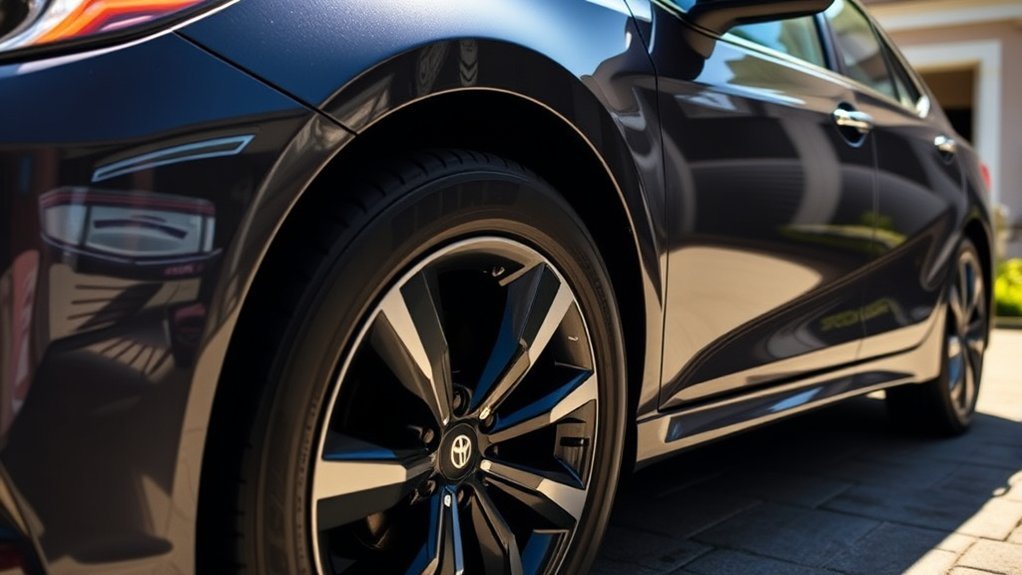
OEM stands for Original Equipment Manufacturer. In tire shopping, it usually means the tire model, size, load index, speed rating, and construction type that match the tire Toyota selected for the Camry when it was new. Some retailers also use terms such as “OE,” “factory fit,” or “original-equipment replacement” to describe tires designed to match the vehicle’s original specifications.
OEM tires are not just “Toyota-branded tires.” Toyota may equip Camry models with tires from major tire makers, and the exact brand can change by model year, trim, wheel package, manufacturing plant, and supply availability. That is why you should not rely on a brand name alone.
The best way to confirm the correct tire is to check these three places:
- Driver-door tire placard: Lists the original tire size and recommended cold inflation pressure for your specific vehicle.
- Current tire sidewall: Shows the tire size, load index, speed rating, DOT/TIN code, tire type, and other markings.
- Toyota owner’s manual or VIN-based lookup: Helps confirm factory specifications when the car has aftermarket wheels or used tires installed.
Note: The tire placard on your Camry is more important than any general tire-size chart. If the placard, owner’s manual, and current tire sidewall disagree, ask a Toyota dealer or qualified tire professional to verify the correct fitment before buying.
How OEM Tires Enhance Performance and Safety for Your Camry
The right OEM-style tire helps your Camry feel the way Toyota intended. A factory-matched tire can support predictable steering, braking, road noise, ride comfort, fuel economy, and wet-weather traction when it is properly inflated and maintained.
OEM tires are selected around the Camry’s weight, suspension tuning, wheel size, and intended use. For example, a Camry LE with smaller wheels may prioritize ride comfort and efficiency, while sportier trims with larger wheels may use lower-profile tires that feel sharper but can ride firmer and wear differently.
That does not mean OEM tires are always the best tire for every driver. If you drive in snow, travel rough roads, want a longer treadwear warranty, or prefer a sportier feel, a high-quality aftermarket tire may be a better match. The key is to keep the correct size, load index, speed rating, and tire type.
Key Specifications of OEM Tires for the Camry
Before buying OEM replacement tires for a Toyota Camry, compare more than the brand name. The sidewall and tire placard contain the details that matter most.
| Tire Size | Examples on recent Camrys may include 16-, 18-, or 19-inch tire fitments, but the correct size depends on year, trim, drivetrain, and wheel package. Always verify the placard. |
| Load Index | Shows how much weight the tire can carry. Do not choose a replacement with a lower load index than required for your Camry. |
| Speed Rating | The letter after the load index, such as H or V, indicates the tire’s tested speed capability. Match or exceed the required rating unless a tire professional confirms an approved alternative. |
| Tire Type | Most Camry owners use all-season touring tires, but winter tires may be better in severe snow and ice. M+S is not the same as a dedicated severe-snow tire. |
| DOT/TIN Date Code | The final four digits show the tire’s manufacturing week and year. Have older tires inspected even if the tread looks usable. |
| Recommended Pressure | Use the cold tire pressure on the Camry’s tire placard, not the maximum pressure printed on the tire sidewall. |
You can also compare the UTQG treadwear, traction, and temperature ratings on many passenger tires. These ratings help compare tires within a manufacturer’s lineup, but they are not a perfect mileage promise. Real tread life still depends on alignment, rotation, inflation, driving style, road surface, and climate.
[Products Worth Considering]

Measure tire tread depth quickly and accurately with this LUMITECO dial gauge that reads in 1/32" increments up to 14/32". The color-coded green/yellow/red zones make it easy to judge tire wear and know when replacement is needed. A rugged, compact design with a protective pouch helps keep the gauge ready for use on cars, trucks, motorcycles, and more.

Monitor tire tread wear with a smart, color-coded depth gauge that shows clear condition ranges at a glance. The bar is range marked for fast, easy readings, helping you maintain safer traction and performance. Each gauge is portable with a pocket clip, and the set includes 20 units for daily use and sharing.

The SAFELIFE dial tire tread depth gauge measures tread depth in 1/32 inch increments with clear, easy-to-read 2-inch dial face. Color zones using a traffic light system help you quickly judge whether tread is low, marginal, or ample for safer driving. Built with a durable zinc cast body and a metal detect probe for precise, comfortable use across cars, motorcycles, trucks, and buses.
How OEM Tires Stack Up Against Aftermarket Alternatives

OEM tires and aftermarket tires can both be good choices. The better option depends on what you want from your Camry: the original factory feel, longer tread life, lower cost, more comfort, quieter driving, stronger wet traction, or better winter performance.
| Choose OEM-style tires if… | You like the original ride, steering feel, cabin noise level, and fuel economy balance your Camry had when new. |
| Choose aftermarket tires if… | You want a specific improvement, such as longer treadwear, lower price, better wet braking, better winter grip, or a sportier response. |
| Avoid either option if… | The size, load index, speed rating, tire type, or pressure requirement does not match your Camry’s placard and owner’s manual. |
[Products Worth Considering]

Keep your tires properly inflated with this analog VONDIOR tire pressure gauge, designed for fast, easy readings without batteries. The swiveling, two-axis hose and large glow dial help you measure at any tire angle with instant visibility. Built with a protective rubber shield, it supports durable, low-maintenance use for cars and trucks.

Accurately measure tire tread depth with a calibrated gauge marked from 0 to 1 inch in 1/32 inch increments. The color-coded bar helps you quickly identify tread condition ranges, supporting safe driving for trucks, motorcycles, automobiles, and passenger vehicles.

Steelman white tire marking crayons provide high-contrast, semi-permanent marks for repairing and inspecting tires and equipment. They write on wet or dry, smooth or coarse surfaces including rubber, metal, glass, and wood, making them ideal for puncture location and damage outlining. The lead- and zinc-free crayons resist weather and fading yet wipe away when you no longer need the marks.
Performance Characteristics Comparison
OEM-style Camry tires usually aim for a balanced ride. They may feel quiet, predictable, and comfortable because they were chosen to work with the car’s factory suspension and steering calibration. Aftermarket tires can shift that balance. A grand-touring tire may be quieter and longer-lasting, a performance tire may feel sharper, and a winter tire may give much better snow and ice traction.
Cost Considerations and Value
OEM tires can cost more if you buy the same brand and model that came on the car. Aftermarket tires often give you more choices at different price points. When comparing value, include installation, balancing, valve stems, TPMS service, alignment needs, taxes, disposal fees, mileage warranty, road-hazard coverage, and rebates.
Longevity and Durability Factors
Do not judge tire life by the OEM label alone. Some OEM tires are tuned for comfort and low noise, while some aftermarket tires are built for longer treadwear. Your driving style, tire pressure, alignment, rotation schedule, road surfaces, and climate can shorten or extend the life of either type.
A tire with the correct size but the wrong load rating, speed rating, or pressure requirement is not a correct replacement tire.
Debunking Common Misconceptions About OEM Tires
- Misconception: OEM tires are always better. Not always. They are best when you want the original factory balance. A carefully chosen aftermarket tire may be better for winter, long tread life, or budget.
- Misconception: OEM tires are always worse. Also false. Many OEM tires are high-quality tires selected for a specific vehicle target.
- Misconception: The tire brand is all that matters. Size, load index, speed rating, tire type, pressure, and wheel fitment matter more than the logo on the sidewall.
- Misconception: M+S means true winter-tire performance. M+S usually indicates an all-season mud-and-snow marking. For serious winter driving, look for a dedicated winter tire with the severe-snow symbol and use a full matching set.
- Misconception: A tire is fine until it looks bald. Tires can need replacement because of tread depth, sidewall damage, bulges, cracks, vibration, repeated air loss, or age-related deterioration.
Identifying OEM Tires on Your Camry
To identify OEM tires on your Toyota Camry, start with the sidewall and the tire placard. The sidewall shows the tire size, service description, DOT/TIN code, construction, and sometimes the tire model name. The placard shows the tire size and cold inflation pressure Toyota specified for your exact vehicle.
Here is what to check:
- Size: Example format: 235/45R18. The first number is width, the second is aspect ratio, “R” means radial, and the last number is wheel diameter.
- Load index and speed rating: Example format: 94V or 95H. These must meet your Camry’s requirements.
- DOT/TIN code: The final four digits show the tire’s manufacture week and year.
- Tire type: Look for markings such as M+S on all-season tires, but do not treat M+S as a substitute for a dedicated winter tire in severe snow.
- OE markings or part references: These can help match the factory tire model, but they do not replace the tire placard and owner’s manual.
Pro Tip: Take a photo of your driver-door tire placard and each tire sidewall before shopping. This makes it easier to compare quotes and avoid buying a tire with the wrong load index or speed rating.
Signs It’s Time to Replace Your OEM Tires
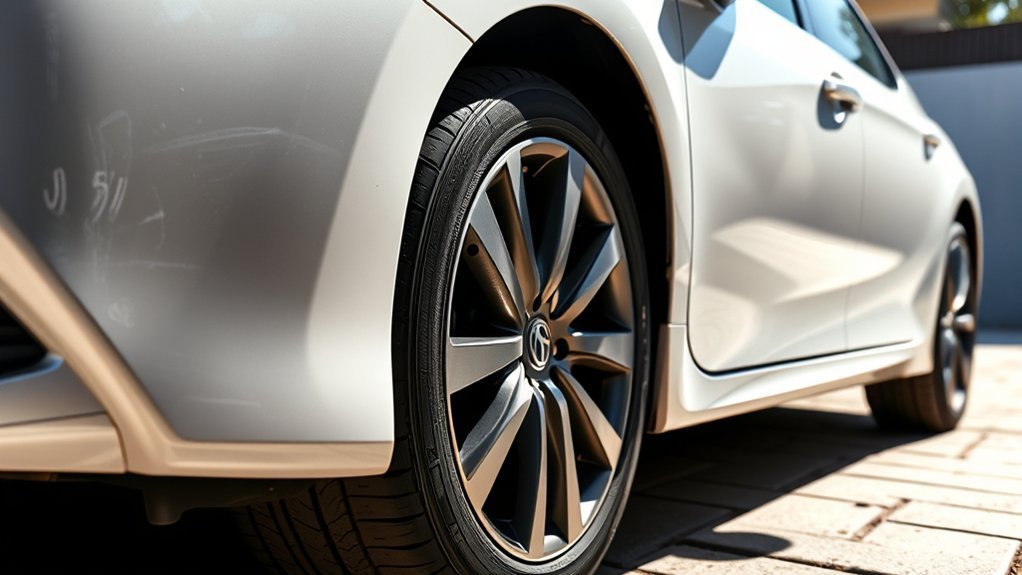
Replace your Camry’s OEM tires when they are worn, damaged, aged, or no longer holding air properly. Waiting too long can reduce wet traction, braking performance, steering response, and overall safety.
Warning: Do not ignore bulges, exposed cords, deep cuts, tread separation, repeated air loss, or strong vibration. These can indicate tire damage that needs immediate professional inspection.
Tread Wear Indicators
Treadwear indicators are small raised bars molded into the tire grooves. When the surrounding tread wears down level with those bars, the tire has reached the replacement point. In the U.S., these wear bars are tied to the 2/32-inch tread-depth level.
Use a tread depth gauge for the most accurate reading. A penny check can help in a pinch, but a gauge is better because it gives you an actual measurement across multiple grooves.
Uneven Tire Wear
Uneven wear can point to underinflation, overinflation, poor alignment, worn suspension parts, or skipped rotations. Watch for shoulder wear, center wear, cupping, feathering, or one edge wearing faster than the other.
If your Camry pulls to one side, the steering wheel is off-center, or the tires wear unevenly soon after rotation, have the alignment and suspension checked before installing new tires.
Reduced Performance Metrics
Replace or inspect your tires if you notice longer wet-weather stopping distances, hydroplaning, more road noise than usual, vibration, reduced steering response, or traction loss in rain. These symptoms can come from tread wear, tire age, damage, poor balance, or alignment issues.
Why Choosing OEM Tires Makes Sense for Your Ride
Choosing OEM-style tires makes sense when you like how your Camry drove from the factory. They help preserve the intended mix of comfort, steering feel, efficiency, noise control, and everyday traction. This is especially helpful if you do not want to research dozens of tire models and simply want a safe, familiar replacement.
OEM-style tires can also simplify shopping because you can ask a Toyota dealer or tire retailer to match your original fitment by VIN, tire placard, or the tire model currently installed on the car.
However, OEM-style tires are not the only good answer. If your priorities have changed, choose a replacement tire that fits your new needs while still meeting the Camry’s required specifications.
Tips for Extending the Life of Your OEM Tires
Good maintenance matters more than the OEM label. A premium tire can wear quickly if it is underinflated, misaligned, overloaded, or never rotated.
Regular Tire Pressure Checks
Check tire pressure at least once a month and before long trips. Use the Camry’s recommended cold tire pressure from the tire placard. Do not use the maximum pressure printed on the tire sidewall as your everyday target.
Temperature changes can affect pressure, so recheck when seasons change. If one tire repeatedly loses pressure, have it inspected for a puncture, valve-stem leak, bead leak, or wheel damage.
Proper Wheel Alignment
Alignment helps the tires contact the road evenly. If your Camry pulls to one side, the steering wheel is crooked, or the tires show edge wear, schedule an alignment check. You should also consider an alignment after hitting a hard pothole, replacing suspension parts, or installing new tires if the old tires wore unevenly.
Rotate Tires Frequently
Follow the maintenance schedule for your exact Camry model year. Toyota’s maintenance guidance commonly uses a 5,000-mile or six-month service rhythm, and tire rotation is a regular maintenance item. Rotation helps even out front-to-rear wear, especially on front-wheel-drive vehicles.
Use the rotation pattern in your owner’s manual. Some directional tires, staggered setups, or special wheel packages may require a different pattern.
Where to Buy OEM Tires for Your Camry
You can buy OEM-style Camry tires from a Toyota dealer, the Toyota Tire Center, tire manufacturers, and reputable tire retailers. Toyota dealers can help match tires to your Toyota model and may offer installation by factory-trained technicians, eligible road-hazard coverage, and manufacturer promotions.
Before you buy, ask these questions:
- Does this tire match my tire placard size, load index, speed rating, and tire type?
- Is this the same model as my factory tire or a factory-equivalent replacement?
- What is included in the installed price: mounting, balancing, valve stems, TPMS service, disposal, taxes, and alignment?
- Is there a mileage warranty, road-hazard warranty, or rebate?
- Are the tires a matching set, and are the DOT date codes reasonably recent?
- Will the shop reset or relearn the TPMS if needed?
If you are buying online, enter your year, trim, and tire size carefully, then confirm the results against the driver-door placard before paying.
[Products Worth Considering]

These universal tire valve stem caps help protect valve cores from dust, debris, and moisture while helping maintain stable tire pressure. The corrosion-resistant metal construction and sealed design provide reliable protection in road grime, mud, and winter conditions. Twist-on installation makes them quick to fit on cars, SUVs, trucks, and motorcycles.

Replace your worn or missing TPMS sensors with pre-programmed, direct-fit sensors for compatible Ford, Lincoln, and select Mazda models. Each sensor comes ready to activate with a scan tool, helping restore accurate tire pressure monitoring and trouble-free installation. Built with a long-life CR2032 battery and tested before factory release, this set provides dependable performance with a one-year warranty.

ETENWOLF’s tire pressure gauge helps you quickly and accurately check tire PSI across cars, trucks, motorcycles, bikes, and more. It’s manually calibrated to ANSI B40.1 Grade A for reliable readings, includes a large glow dial for easy nighttime viewing, and features a 360-degree swivel chuck for use at any valve angle. The gauge also works consistently in extreme hot or cold weather.
Frequently Asked Questions
What brand are Toyota OEM tires?
Toyota Camry OEM tire brands vary by model year, trim, wheel package, region, and factory supply. You may see major tire brands through Toyota dealers, but the only reliable way to match your original tire is to check your tire sidewall, driver-door placard, owner’s manual, or VIN-based tire lookup.
Are OEM tires better than aftermarket tires for a Camry?
OEM tires are better if you want the original factory ride and handling balance. Aftermarket tires can be better if you want a specific upgrade, such as longer tread life, better snow traction, stronger wet braking, quieter driving, or a lower price. Either option must match the Camry’s required tire specs.
How long do OEM Toyota Camry tires last?
There is no single mileage number for all OEM Camry tires. Tire life depends on tire model, treadwear rating, pressure, alignment, rotation, road surface, climate, and driving style. Inspect tread depth regularly and replace tires when wear bars show, damage appears, or a tire professional recommends replacement.
Where do I find the correct tire size for my Camry?
Check the tire information placard on the driver-door jamb first. You can also check the owner’s manual, your current tire sidewall, or a Toyota dealer’s VIN-based lookup. Do not rely only on the wheel diameter or a generic online chart.
Can I replace only two tires on a Toyota Camry?
You can sometimes replace two tires, but all tires should match in size, construction, and suitable load/speed rating. For best stability, many tire professionals recommend installing the newer pair on the rear axle. If your Camry has AWD, ask Toyota or a tire professional whether tread-depth differences are acceptable.
Do I need winter tires if my Camry has OEM all-season tires?
If you regularly drive in snow, ice, or freezing temperatures, dedicated winter tires can provide better cold-weather grip than typical all-season tires. The M+S marking helps identify many all-season tires, but it is not the same as a severe-snow-rated winter tire.
Conclusion
OEM tires on a Toyota Camry are about fitment and factory balance, not just brand name. They are a smart choice when you want to keep the Camry’s original comfort, handling, noise level, and efficiency feel. Still, the best tire is the one that matches your exact tire placard specs and your real driving conditions.
Before replacing your tires, confirm the size, load index, speed rating, tire type, pressure, DOT date code, and warranty details. If you are unsure, use your VIN and ask a Toyota dealer or qualified tire professional to confirm the correct replacement.
Sources
- Toyota Owners Manuals & Warranties — official source for Toyota owner’s manuals, warranty information, and model-specific maintenance guidance.
- Toyota 2025 Camry Hybrid Tires — Toyota guidance on tire inspection, treadwear indicators, uneven wear, and tire replacement signs.
- Toyota 2025 Camry Warranty & Maintenance Guide — scheduled maintenance intervals and tire rotation guidance.
- NHTSA TireWise — tire safety, tire buying, maintenance, labeling, aging, fuel efficiency, and recall information.
- NHTSA Interpretation on Treadwear Indicators — explains the 2/32-inch treadwear indicator requirement and traction concern.
- Toyota Tire Center — Toyota dealer tire shopping, installation, brand availability, offers, and eligible road-hazard coverage information.