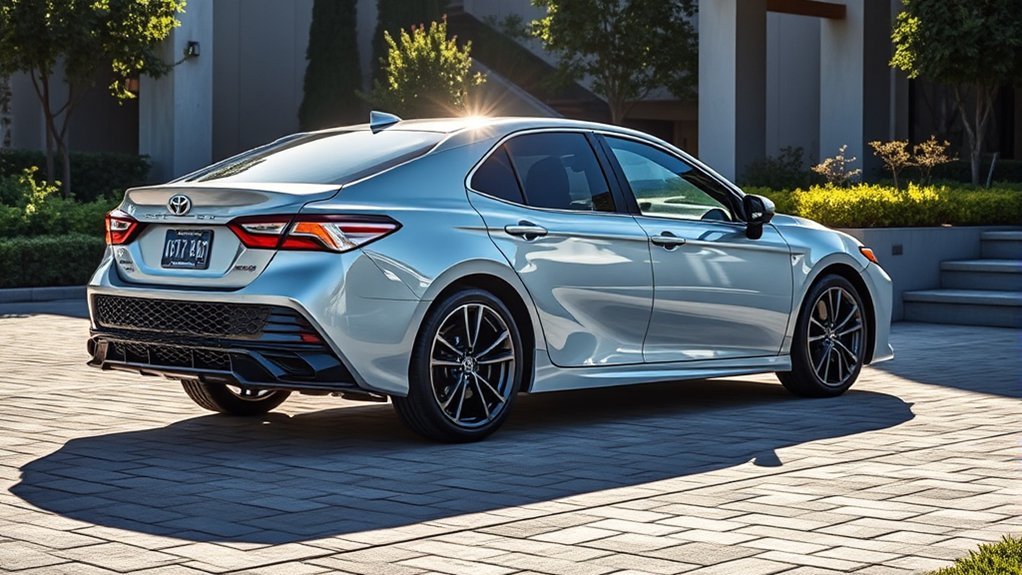
The Toyota Camry can look sharper and feel more responsive with 19-inch wheels, but the right choice depends on your model year, trim, roads, and comfort priorities. In general, 19-inch wheels are tied to sport-oriented Camry trims such as the XSE, TRD on 2018–2024 models, and newer Nightshade-style packages, while comfort-focused trims usually use smaller wheels. Before buying a set, verify the exact wheel size, tire size, load rating, offset, hub bore, TPMS compatibility, and brake clearance for your Camry.
Quick Answer
A Toyota Camry can use 19-inch wheels when the wheel and tire specs match the car. Factory 19-inch setups are most common on sportier trims such as XSE, TRD, and newer Nightshade models. A 2020 Camry can fit 19-inch rims, but you must confirm bolt pattern, hub bore, offset, tire size, load rating, and clearance first.
Key Takeaways
- 19-inch wheels are not universal across all Camry trims. Check your exact year, trim, and window sticker before assuming XLE, SE, or another trim has them.
- The common 19-inch Camry tire size is 235/40R19 on many late-model factory sport setups, but always verify the tire placard and owner information for your vehicle.
- Handling usually feels sharper, but the ride can feel firmer because 19-inch tires have shorter sidewalls than 17- or 18-inch tires.
- Fitment is more than bolt pattern. Hub bore, offset, wheel width, load rating, lug seat, TPMS sensors, brake clearance, and tire diameter all matter.
- For potholes, snow, or rough roads, 18-inch wheels may be the better daily-driver choice.
Understanding the Benefits of 19-Inch Wheels
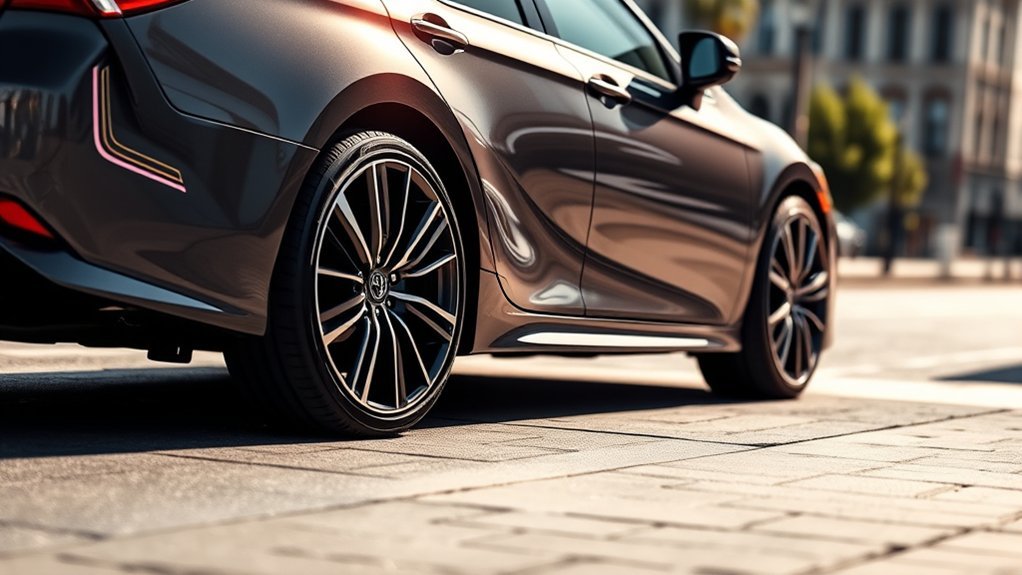
When you add 19-inch wheels to a Toyota Camry, the biggest changes are appearance and steering feel. A larger wheel fills the wheel arch better, gives the car a lower and sportier stance, and is often paired with a shorter-sidewall tire such as 235/40R19 on many late-model Camry sport setups.
That shorter sidewall can reduce tire flex during cornering, so the steering may feel quicker and more direct. This is one reason Toyota uses larger wheels on sport-oriented Camry trims. The trade-off is that the tire has less sidewall cushion, so sharp bumps, potholes, and broken pavement can feel more noticeable inside the cabin.
Think of 19-inch wheels as a style-and-response upgrade, not a comfort upgrade. They can make your Camry feel more planted, but they also make tire selection, wheel protection, and pressure checks more important.
Which Toyota Camry Trims Feature 19-Inch Wheels?
The Camry trim with 19-inch wheels depends on the model year and market. In the U.S., 2018–2024 Camry XSE and TRD models are the trims most commonly associated with factory 19-inch wheels. The SE usually uses 18-inch wheels, while XLE and LE trims are generally aimed more at comfort and efficiency.
For 2025 and newer Camry models, Toyota changed the lineup to a hybrid-focused generation. Shoppers should check the current Toyota build page, window sticker, or dealer spec sheet because wheel sizes can vary by trim, package, and market. The XSE remains the sport-luxury trim to check first for 19-inch wheels, and newer Nightshade-style models may also use 19-inch wheels.
Note: Do not rely on trim name alone. Always confirm the wheel size on the window sticker, tire sidewall, driver-door tire placard, owner information, or Toyota dealer parts lookup for your VIN.
| Camry model year | Trims to check for 19-inch wheels | What to verify |
|---|---|---|
| 2018–2024 | XSE and TRD are the main factory 19-inch candidates. | Check the wheel label, tire sidewall, window sticker, and VIN-based parts listing. |
| 2025–2026 and newer | XSE and Nightshade-style packages are the first places to check. | Confirm current Toyota specs because packages and markets can change. |
| Aftermarket upgrade | Any compatible Camry trim may be able to run 19s with the correct specs. | Verify bolt pattern, hub bore, offset, width, tire size, load index, TPMS, and clearance. |
How to Choose the Right 19-Inch Wheels?
Choosing the right 19-inch wheels for a Toyota Camry starts with fitment, not style. Many late-model Camrys use a 5×114.3 mm bolt pattern and a 60.1 mm hub bore, but you should still confirm those details for your exact year and trim before ordering wheels.
The common 19-inch tire size on many factory Camry sport setups is 235/40R19. This keeps the overall tire diameter close to stock on many late-model applications, which helps maintain speedometer accuracy, ABS behavior, and stability-control calibration. If you choose a different tire size, have a tire professional confirm the overall diameter and load rating.
Offset is another key point. Do not treat one number as universal. For many late-model OEM-style Camry 19-inch wheels, the offset is usually in the high positive range, often around the upper +40s to about +50 mm depending on wheel width and model year. A wheel that sits too far inward can rub suspension parts. A wheel that sits too far outward can rub the fender, stress wheel bearings, or throw road debris along the body.
Warning: Never buy wheels based only on “Camry compatible” in a listing title. Confirm wheel width, offset, center bore, lug seat type, load rating, tire size, TPMS compatibility, and brake clearance before mounting tires.
[Products Worth Considering]

Replace your worn or missing TPMS sensors with pre-programmed, direct-fit sensors for compatible Ford, Lincoln, and select Mazda models. Each sensor comes ready to activate with a scan tool, helping restore accurate tire pressure monitoring and trouble-free installation. Built with a long-life CR2032 battery and tested before factory release, this set provides dependable performance with a one-year warranty.

Upgrade your wheels with MIKKUPPA M12x1.5 mag seat lug nuts built for secure, corrosion-resistant performance. These closed-end chrome lug nuts are a direct replacement for select Toyota models, including Camry, Corolla, RAV4, Sienna, Avalon, Highlander, Matrix, Venza, and Prius. Triple-chromium plating and cold-forged, heat-treated steel help deliver strength for daily driving and replacement needs.

These M14x1.5 closed-end chrome lug nuts are a one-piece replacement designed for secure fitment on compatible GM, Ford, and select Chrysler/Dodge models. Featuring a 60-degree conical seat and anti-rust chrome plating, they help resist corrosion and maintain a bright look for everyday driving. Built for long-term durability, they include OEM-style part references and are backed by 12 months of support.
Factory vs. Aftermarket 19-Inch Wheels
You have two main choices: factory Toyota wheels or aftermarket wheels.
Factory wheels are usually the safest path if you want an OEM look and fewer fitment surprises. A used set of Camry XSE, TRD, or compatible Toyota takeoff wheels may already have the right hub bore, lug seat style, and brake clearance. Still, inspect them for bends, cracks, curb damage, and mismatched repairs before buying.
Aftermarket wheels give you more style options, but they require more checking. You may need hub-centric rings if the center bore is larger than the Camry hub. You may also need different lug nuts if the wheel uses a cone seat instead of the Toyota-style seat. If the wheel is lighter, heavier, wider, or lower-offset than stock, it can change steering feel, ride quality, tire wear, and clearance.
[Products Worth Considering]

These universal tire valve stem caps help protect valve cores from dust, debris, and moisture while helping maintain stable tire pressure. The corrosion-resistant metal construction and sealed design provide reliable protection in road grime, mud, and winter conditions. Twist-on installation makes them quick to fit on cars, SUVs, trucks, and motorcycles.

Replace worn or missing TPMS sensors with a pre-programmed 4-pack designed for compatible GM vehicles. These 315MHz sensors provide real-time tire pressure monitoring and alert you if pressure is too high, too low, or if a rapid air leak occurs. Most installations are ready with minimal relearn effort after mounting, helping improve safety and driving confidence.
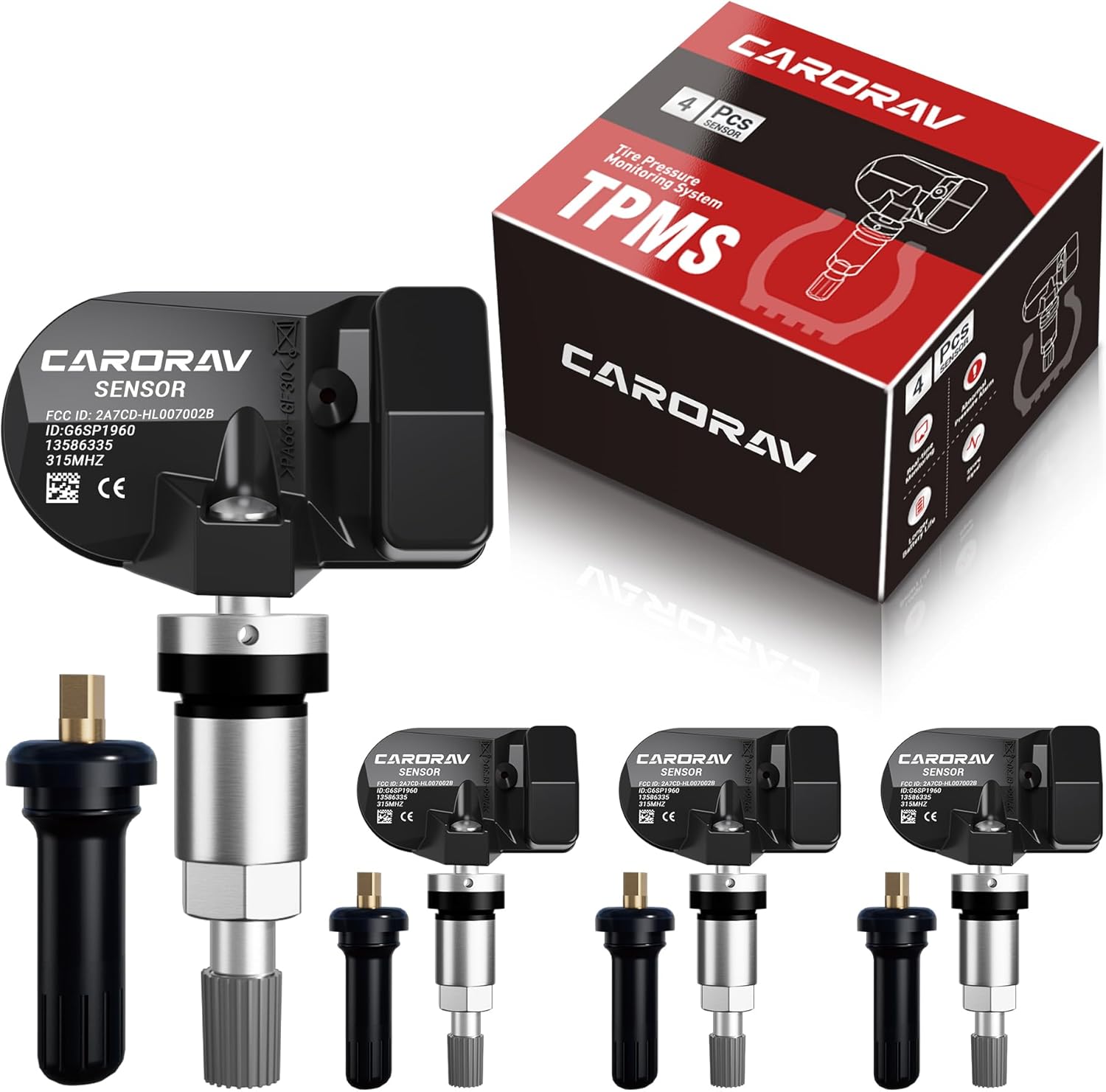
Replace worn or missing TPMS sensors with CARORAV pre-programmed GM-compatible sensors for a smoother installation experience. These 315MHz replacement sensors help monitor tire pressure in real time with long battery life, and they are designed to withstand harsh temperatures. Manual or OBDII relearn may be required to reset the system for proper recognition.
Impact of 19-Inch Wheels on Ride and Handling
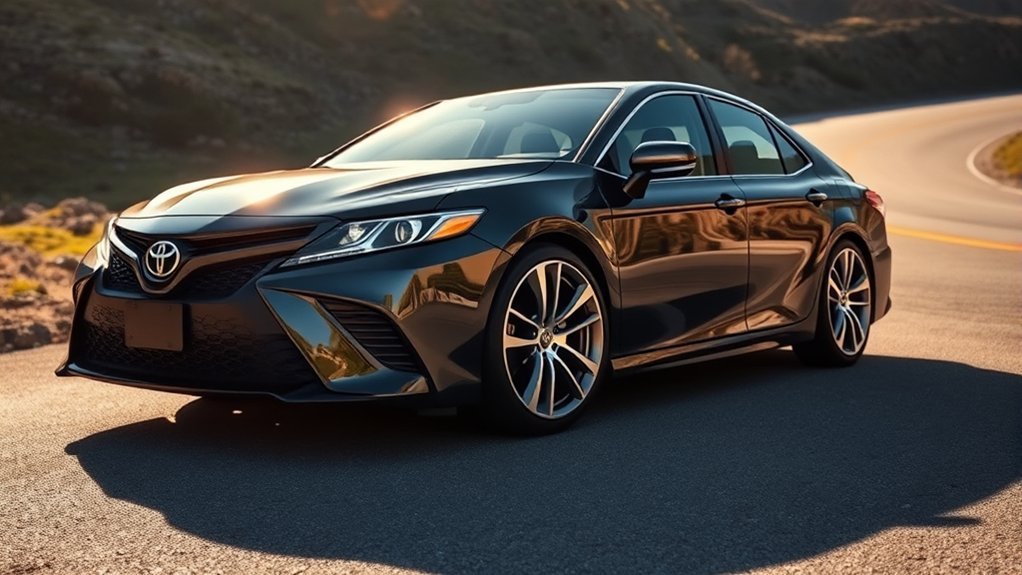
Upgrading to 19-inch wheels changes how your Camry feels because the tire sidewall gets shorter. A shorter sidewall can sharpen steering response and reduce squirm during quick lane changes. It can also make the ride feel firmer over expansion joints, potholes, and rough asphalt.
The change is not the same for every driver. A quality touring tire may ride better than a cheap performance tire. Proper tire pressure helps, too. Over-inflation can make the car feel harsher, while under-inflation can create heat, uneven wear, and a higher risk of tire damage. Use the pressure listed on your Camry’s tire placard or Toyota owner information, not the maximum pressure printed on the tire sidewall.
| Area | What 19-inch wheels usually change |
|---|---|
| Steering response | Often sharper because the tire sidewall flexes less. |
| Ride comfort | Can feel firmer on rough roads because there is less sidewall cushion. |
| Wheel protection | Lower-profile tires leave less cushion against curbs and potholes. |
| Fuel economy | May change based on tire rolling resistance, wheel weight, and trim, but the exact difference varies. |
| Tire cost | Often higher than 17- or 18-inch tires, especially for premium all-season or performance models. |
Essential Specifications for Choosing 19-Inch Rims
Before you buy 19-inch rims for a Camry, write down the exact specs you need. A wheel can have the right diameter and still be wrong for the car.
Bolt Pattern and Hub Bore
The bolt pattern tells you how many lug holes the wheel has and how far apart they are. Many late-model Toyota Camrys use a 5×114.3 mm bolt pattern. The hub bore is the center hole that fits over the vehicle hub, and many late-model Camrys use a 60.1 mm hub bore.
If the center bore is too small, the wheel will not fit. If it is larger than the hub, you may need quality hub-centric rings to reduce vibration. Avoid stacking adapters or using unknown spacers just to make a wheel fit.
Offset and Backspacing
Offset controls how far the wheel sits inward or outward. Backspacing measures the distance from the mounting pad to the inner wheel edge. Both affect fender clearance, brake clearance, suspension clearance, and steering feel.
For a daily-driven Camry, stay close to OEM-style fitment unless you are working with a wheel specialist. A very aggressive low-offset wheel may look flush, but it can rub over bumps, wear tires unevenly, and stress suspension parts.
Tire Size Compatibility
The common 19-inch size to check first is 235/40R19, which is used on many Camry 19-inch factory-style setups. This size provides a low-profile look while keeping the overall tire diameter close to the intended range for many late-model Camrys.
Also check the load index and speed rating. Do not choose a tire with a lower load rating than your vehicle requires. If you carry passengers often, drive at highway speeds, or live where roads are rough, load rating and sidewall strength matter as much as the brand name.
Fitment Checklist Before You Buy
Use this checklist before ordering wheels or tires:
- Year and trim: Confirm the exact Camry model year, trim, drivetrain, and market.
- Bolt pattern: Verify the lug pattern before buying.
- Hub bore: Confirm whether the wheel is hub-centric or needs rings.
- Wheel width: Make sure the width works with your tire and fender clearance.
- Offset: Stay close to OEM-style fitment for daily use.
- Tire size: Keep overall diameter close to the original tire size.
- Load index: Match or exceed the required load rating.
- Lug nut seat: Use the correct lug nuts for the wheel, not just any lug that threads on.
- TPMS: Confirm the sensors are compatible with your Camry and can be registered or relearned.
- Brake and suspension clearance: Test fit before final mounting when possible.
Pro Tip: If you are buying used OEM wheels, ask for clear photos of the inner wheel stamp, tire size, tread date code, bends, cracks, curb rash, and any previous repairs.
[Products Worth Considering]
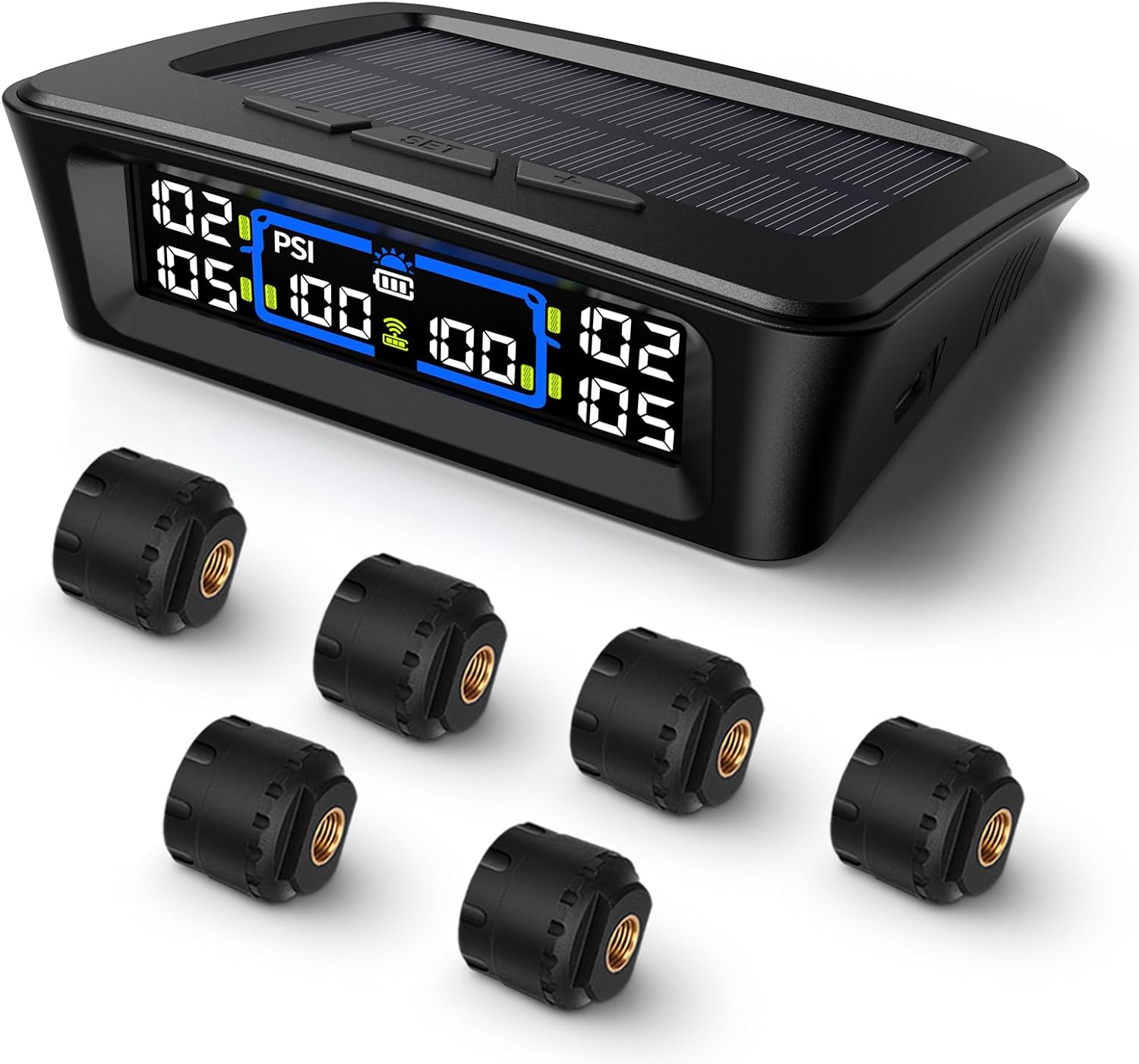
The Tymate TM12 RV TPMS delivers real-time tire pressure and temperature monitoring with a stable 433Hz display for safer long-distance driving. It supports simultaneous monitoring across vehicle and trailer zones, includes six alarm modes for pressure, temperature, leakage, battery, and signal loss, and features easy DIY installation with auto calibration. Power is supplied via USB-C charging or solar recharging, with a wide 0–144 PSI range and up to 50 ft signal coverage for RVs and towable trailers.

Keep your tires properly inflated with this analog VONDIOR tire pressure gauge, designed for fast, easy readings without batteries. The swiveling, two-axis hose and large glow dial help you measure at any tire angle with instant visibility. Built with a protective rubber shield, it supports durable, low-maintenance use for cars and trucks.

Replace worn or malfunctioning GM TPMS sensors with this 433MHz pre-programmed sensor set designed for compatibility with many Chevrolet, Buick, GMC, and Cadillac models. It includes guidance for proper OBDII relearning/pairing after installation and supports reliable long-term operation with a high-performance CR2032 battery. Quality tested for durability and performance to help restore accurate tire pressure monitoring.
Common Problems With 19-Inch Wheels and Tire Compatibility
Most problems with 19-inch wheels come from choosing the wrong specs or underestimating road conditions. The wheel may bolt on, but that does not mean it is safe or ideal.
Increased Ride Harshness
Shorter sidewalls leave less air and rubber between the road and rim. That can make the Camry feel firmer on rough roads. If comfort is your top priority, an 18-inch setup may be a better fit than a 19-inch setup.
Risk of Rim Damage
Lower-profile tires offer less cushion when you hit a pothole or scrape a curb. This can increase the chance of bent wheels, cracked rims, sidewall bubbles, and tire blowouts. Drivers in areas with rough winter roads should be especially careful.
Limited or Costlier Tire Options
There are plenty of 235/40R19 tires, but they often cost more than smaller Camry tire sizes. Premium all-season, touring, and performance tires can vary widely in comfort, noise, wet grip, winter ability, and tread life. Compare tire ratings before buying the cheapest option.
TPMS and Warning Light Issues
When you change wheels, your tire pressure monitoring system may need compatible sensors, a relearn procedure, or registration through a scan tool. If the TPMS light stays on after a wheel swap, have the sensors checked instead of ignoring the warning.
Evaluating the Value of Upgrading to 19-Inch Wheels
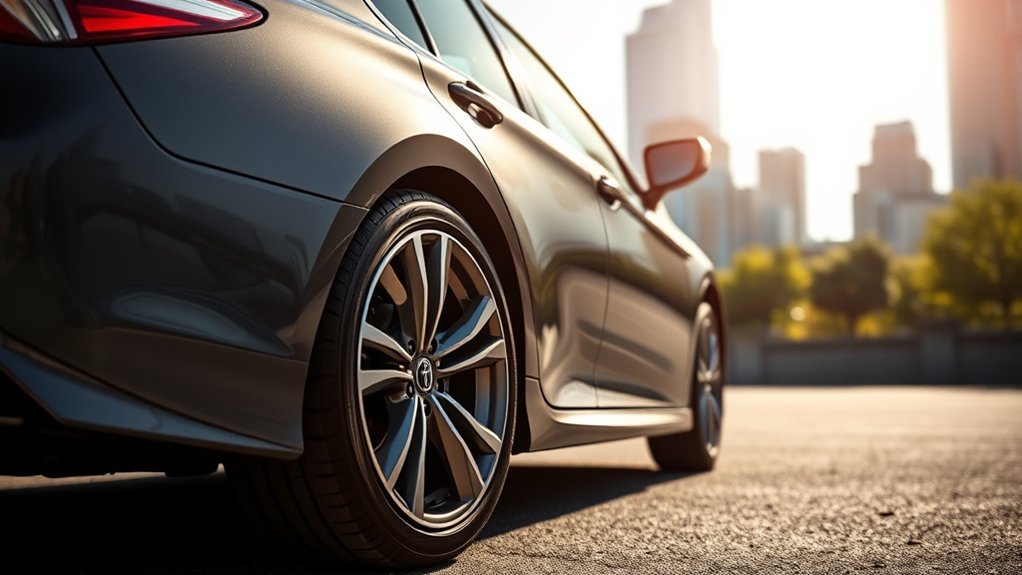
Upgrading to 19-inch wheels makes the most sense if you care about style and steering feel more than maximum ride comfort. On a Camry XSE, TRD, or Nightshade-style build, 19s match the sporty personality of the trim. On an LE, XLE, or comfort-focused daily driver, smaller wheels may be easier to live with.
Budget for more than the wheels. You may also need new tires, TPMS sensors, mounting and balancing, lug nuts, alignment, and possible wheel locks. If your current tires are still new, switching early can be expensive unless you sell the takeoff set.
For many drivers, the best value is an OEM takeoff set from a compatible Camry trim. It gives you a factory look with fewer fitment risks. For others, a high-quality aftermarket setup is worth it, as long as the specs are checked carefully.
Seasonal Factors to Consider for 19-Inch Wheels
Seasonal driving matters. A 19-inch setup can work well in warm weather, but winter roads add new concerns. Potholes, frost heaves, salt, and ice can be harder on low-profile tires.
- Snow and ice: Tire compound matters more than wheel size. A true winter tire usually beats an all-season tire in cold, snowy conditions.
- Potholes: Smaller wheels with taller sidewalls offer more cushion.
- Salt and corrosion: Clean wheels often during winter to protect the finish.
- Winter wheel package: Many owners use 18-inch winter wheels and save 19-inch wheels for warmer months.
- Pressure checks: Cold weather can lower tire pressure, so check it more often.
Top Maintenance Tips for 19-Inch Wheels
Maintaining 19-inch Camry wheels is simple, but it needs to be consistent. Low-profile tires give you less margin for neglect.
| Maintenance task | Why it matters | Suggested frequency |
|---|---|---|
| Check tire pressure cold | Protects tire life, handling, fuel economy, and sidewalls. | Monthly and before road trips |
| Inspect for bends, cracks, bubbles, and curb damage | Low-profile tires can hide impact damage until vibration or air loss appears. | Every wash or after a hard pothole hit |
| Rotate tires | Helps even out wear on front-wheel-drive and all-wheel-drive Camry models. | Follow Toyota maintenance schedule or tire maker guidance |
| Check alignment | Prevents uneven wear, pulling, and vibration. | After impacts, suspension work, or uneven wear |
| Retorque lug nuts | Improper lug torque can cause vibration, rotor issues, or unsafe wheel mounting. | After installation, then as recommended by the installer |
When 18-Inch Wheels May Be the Better Choice
Choose 18-inch wheels instead of 19s if you drive on rough roads, want a softer ride, need cheaper tire replacement, or plan to run a dedicated winter setup. An 18-inch wheel with a taller sidewall can still look sporty while adding more cushion against potholes and curb impacts.
If your Camry is a family commuter, rideshare vehicle, long-distance highway car, or winter daily driver, the practical choice may be 18 inches. If your Camry is a style-focused XSE, TRD, or weekend-friendly build, 19s can be worth it.
Frequently Asked Questions
Why get 19-inch wheels on a Toyota Camry?
Get 19-inch wheels if you want a sportier look, sharper steering feel, and a factory-style XSE, TRD, or Nightshade appearance. They are less ideal if your top priorities are ride comfort, low tire cost, and pothole protection.
Can a 2020 Camry fit a 19-inch rim?
Yes, a 2020 Toyota Camry can fit 19-inch rims when the specs are correct. Check for the proper bolt pattern, hub bore, offset, wheel width, tire size, load rating, lug nut type, TPMS compatibility, and brake clearance before installation.
Does the Toyota Camry XLE come with 19-inch wheels?
Do not assume every Camry XLE has 19-inch wheels. XLE trims are usually more comfort-focused, while XSE, TRD, and some Nightshade-style models are more closely tied to 19-inch sport wheels. Always check the exact model year, window sticker, and tire placard.
Are 19-inch wheels worse for ride comfort?
They can be. A 19-inch wheel usually uses a shorter-sidewall tire, which gives less cushion over bumps. Tire model, tire pressure, suspension tuning, and road quality all affect how firm the ride feels.
Should I use 19-inch wheels in winter?
You can use 19-inch wheels in winter with the right winter tires, but many drivers prefer 18-inch winter wheels because the taller sidewall adds pothole protection and often lowers tire replacement cost.
Conclusion
19-inch wheels can be a great upgrade for a Toyota Camry when you want a sportier look and quicker steering response. They make the most sense on XSE, TRD, Nightshade-style, or appearance-focused builds. For comfort-first driving, winter roads, or lower tire costs, 18-inch wheels may be the smarter choice.
Before buying, verify your exact year and trim, then match the wheel width, offset, hub bore, bolt pattern, tire size, load rating, lug seat, TPMS sensors, and clearance. The right 19-inch setup can look sharp and drive well. The wrong setup can cause rubbing, vibration, tire wear, or avoidable repair costs.
Sources
- Toyota Camry official model page — current Camry trim and feature reference.
- Toyota Owners manuals and warranties — owner information, tire placard guidance, and model-specific maintenance reference.
- NHTSA Tire Safety — tire pressure, tire condition, and safe tire maintenance guidance.
- 49 CFR § 571.138 — U.S. tire pressure monitoring system standard.
- 49 CFR § 575.104 — Uniform Tire Quality Grading standards.