
If your Toyota Camry has low tire pressure, do not ignore it. Underinflated tires can make steering feel dull, reduce stability, increase heat inside the tire, speed up uneven tread wear, and lower fuel economy. The safest move is simple: check all four tires with a reliable gauge, compare the readings with the driver-door tire label, and correct the pressure before normal driving.
Quick Answer
You can usually drive a Toyota Camry a short distance with mildly low tire pressure, but only to reach a safe place to check and add air. Do not keep driving if the tire looks flat, the car feels unstable, the sidewall is damaged, or the TPMS light stays on after inflation.
Key Takeaways
- Use the tire pressure printed on your Camry’s driver-door Tire and Loading Information Label, not the maximum pressure printed on the tire sidewall.
- Low tire pressure increases heat, rolling resistance, uneven tread wear, and blowout risk.
- A TPMS light means at least one tire may be significantly underinflated, but TPMS does not replace monthly gauge checks.
- Check pressure when the tires are cold, ideally before driving or after the car has been parked for at least three hours.
- If pressure keeps dropping after you add air, inspect for a puncture, leaking valve stem, bead leak, cracked wheel, or sidewall damage.
At a Glance
| Time Required | 5 to 10 minutes |
| Difficulty | Easy |
| Tools Needed | Tire pressure gauge, air compressor or portable inflator, and your Camry’s driver-door tire label |
| Cost | Usually free if you already have a gauge and inflator; some service-station air pumps may charge a small fee |
Can You Drive a Camry on Low Tire Pressure?
Yes, you may be able to drive a Toyota Camry with slightly low tire pressure, but you should only do it long enough to reach a safe place to check and inflate the tires. Low pressure changes how the tire supports the car’s weight. The sidewall flexes more, the tire builds more heat, and the tread can wear unevenly.
The safest target is the cold tire pressure listed on your Camry’s Tire and Loading Information Label, usually on the driver-side door jamb or B-pillar. Many Camry models fall in the low-to-mid 30s psi range, but your exact model year, tire size, trim, and load matter. Always follow the label on your car instead of guessing.
If the tire is only a little low and the car feels normal, drive slowly to the nearest safe air source. Avoid highway speeds, hard braking, sharp steering, and long trips until every tire matches the door-label pressure.
Warning: Do not keep driving if a tire looks flat, the car pulls hard to one side, you hear flapping or thumping, the sidewall is damaged, or you smell hot rubber. Pull over safely and use roadside help or a spare if your Camry has one.
How Low Is Too Low to Drive?
A few psi below the door-jamb pressure is not ideal, but it is usually not an emergency if the tire still looks normal and the car feels stable. A large pressure drop is different. The lower the pressure gets, the more the sidewall bends, the hotter the tire runs, and the greater the risk of internal damage.
Do not use a universal number such as 15 psi as a “safe” cutoff. A low-profile tire, a loaded car, highway speed, hot weather, or an existing puncture can make a low tire dangerous before it reaches any single number. If the tire is far below the label pressure, inflate it before normal driving.
| What you notice | What to do |
|---|---|
| A tire is slightly below the label pressure | Add air soon and avoid hard driving until corrected |
| TPMS light is on, but no tire looks flat | Stop at a safe place and check all four tires with a gauge |
| One tire is much lower than the others | Inflate it, then inspect for a slow leak or damage |
| Tire looks flat, bulged, cut, or noisy | Do not drive normally; use roadside help or the spare if equipped |
If you must move the car, drive slowly to the nearest safe air source only when the tire is not visibly flat or damaged. Avoid highways, hard cornering, and heavy braking until the pressure is corrected.
Why Camry Tire Pressure Drops
Tire pressure can drop for several reasons. Cold weather can lower pressure, and normal air seepage can reduce pressure slowly over time. A tire can also lose air from a nail, screw, leaking valve stem, bead leak, cracked wheel, or damage from a pothole or curb strike.
If all four tires are a little low after a cold night, temperature may be the main reason. If one tire is much lower than the others, treat it like a possible leak. Add air, check it again after driving, and inspect the tread and sidewall closely.
Do not ignore repeated pressure loss. A tire may look normal from the outside while a puncture or bead leak slowly lets air escape.
How Low Tire Pressure Affects Camry Safety
Low tire pressure affects safety because tires carry the vehicle, absorb road forces, and help the car steer, brake, and corner. When pressure drops, the tire’s shape changes under load. That can make your Camry feel slower to respond and less stable during lane changes or emergency maneuvers.
The National Highway Traffic Safety Administration warns that poor tire maintenance, including not having enough air in the tires, can lead to flat tires, blowouts, or tread separation. It also says tire pressure affects safety, tire durability, and fuel consumption.
Braking Distance Risks
Underinflated tires can make braking feel less predictable because the tread and sidewall flex more under load. Instead of holding its intended shape, the tire deforms as the car slows. That can reduce your margin in a sudden stop, especially on wet pavement, rough roads, or when the car is carrying passengers and luggage.
Avoid exact claims such as “20% longer” or “30% longer” unless you have a controlled test for the same tire, speed, surface, vehicle load, and temperature. The practical point is simpler: low pressure reduces the tire’s ability to work as designed, so you should correct it before normal driving.
Handling and Blowout Hazards
Low tire pressure can make your Camry feel soft, vague, or delayed when you steer. You may notice more body movement in corners, more road noise, or a pull if one tire is much lower than the others.
The bigger hazard is heat. When an underinflated tire flexes repeatedly, heat builds inside the tire structure. Sustained heat can weaken the tire and increase the chance of a blowout or tread separation, especially at highway speeds.
NHTSA reported 511 deaths in tire-related crashes in 2024, which is why tire pressure should be treated as a safety check, not just a maintenance chore.
Why Camry Braking Gets Worse
Your Camry’s brakes can only slow the car through the tires. If tire pressure is low, the tread may not sit on the road the way Toyota and the tire manufacturer intended. That can make hard braking feel less controlled, especially if one tire is lower than the others.
Low pressure also increases rolling resistance. Your engine works harder to keep the car moving, and the tire flexes more as it rotates. That extra flex creates heat and can reduce the crisp feel you expect during braking and steering.
Longer Stopping Distances
A mildly low tire may not feel dramatic during gentle neighborhood driving. The risk becomes clearer when you need a sudden stop. At that moment, you need stable tire contact, predictable grip, and even pressure across all four tires.
If your Camry’s TPMS light is on, treat it as a prompt to check pressure before you assume the car will brake normally. Inflate the tires to the cold pressure on the driver-door label, then recheck after the tires cool if you had to add air while they were warm.
Reduced Tire Grip
| Pressure state | What changes | Driving result |
|---|---|---|
| Correct cold pressure | Tire holds intended shape | Predictable steering and braking |
| Slightly low | More sidewall flex | Softer response and faster wear |
| Very low | Heat and distortion rise | Higher damage and blowout risk |
Check pressure with a gauge instead of judging by sight. Underinflated tires can be hard to spot visually, and TPMS is not meant to replace regular tire maintenance.
How Underinflation Hurts Fuel Economy
Underinflated tires create more rolling resistance, so your Camry needs more energy to maintain speed. That extra drag lowers fuel economy and can slowly raise your driving costs.
FuelEconomy.gov, the official fuel economy site from the U.S. Department of Energy and EPA, says properly inflated tires can improve gas mileage by 0.6% on average and up to 3% in some cases. It also says underinflated tires can lower gas mileage by about 0.2% for every 1 psi drop in the average pressure of all tires.
That means the old “3% per psi” claim is too high. The real savings depend on how low the tires are, fuel price, driving speed, temperature, and tire condition. Still, keeping pressure correct is one of the easiest ways to avoid wasting fuel.
How Low Pressure Wears Camry Tires
Low pressure changes how the tire touches the road. The sidewalls flex more, the footprint can spread, and the outer shoulder areas may carry more stress than intended. Over time, that can create uneven tread wear and shorten tire life.
Heat also matters. Extra flex turns into heat, and heat can weaken tire materials. If you keep driving on an underinflated tire, you may damage the inside structure before the problem looks obvious from the outside.
Look for uneven shoulder wear, sidewall scuffing, cuts, bulges, and vibration after a pothole hit. If you see a bulge or feel new vibration, have the tire inspected before highway driving.
Pro Tip: Check tire pressure before your first drive of the day. If you check after driving, the tires will be warm and the reading may be higher than the true cold pressure.
What Your Camry TPMS Light Means

Your Camry’s TPMS light means the tire pressure warning system has detected a possible pressure problem. According to NHTSA, TPMS warns when at least one tire is significantly underinflated, but you should still check tire pressure manually at least once a month.
If the TPMS symbol stays on, inspect the tires and check pressure as soon as possible. Inflate each tire to the cold pressure on the driver-door label. The light should turn off after the tires are properly inflated, although some vehicles may need a short drive or a reset procedure listed in the owner’s manual.
If the TPMS light flashes for about a minute and then stays on, that can indicate a system malfunction. In that case, check the pressure manually and have the TPMS inspected. Do not reset or initialize the system until the tire pressures are correct, unless your owner’s manual tells you to do so as part of the procedure.
Note: Cold mornings can trigger the TPMS light when pressure was already near the warning threshold. Do not ignore it. Check the tires with a gauge and correct the pressure when the tires are cold.
How to Check Toyota Camry Tire Pressure
Check your Toyota Camry tire pressure when the tires are cold. NHTSA defines cold tires as tires that have not been driven for at least three hours. This gives you the most accurate reading and helps you match the pressure listed on the vehicle label.
- Find the Tire and Loading Information Label on the driver-side door jamb or B-pillar.
- Write down the front and rear cold tire pressures listed on the label.
- Remove the valve cap from one tire.
- Press a reliable tire pressure gauge squarely onto the valve stem.
- Read the pressure and compare it with the door-label spec.
- Add air if the tire is low, or release a small amount if it is high.
- Recheck the tire after each adjustment.
- Repeat for all four tires, and check the spare if your Camry has one.
Keep the valve caps installed after checking. They help keep dirt and moisture out of the valve stem.
If you must check pressure after driving, remember that warm tires often read higher. If a warm tire still reads below the door-label pressure, add air before you drive farther. Do not bleed warm tires down to the placard number unless the tire is clearly overinflated.
[Products Worth Considering]

The Airmoto portable tire inflator quickly and accurately fills car, truck, SUV, motorcycle, and bicycle tires up to 120 PSI with auto shut-off when your target pressure is reached. Its large LCD, multi-unit pressure display, and digital gauge make it easy to dial in settings and verify readings, while the built-in LED flashlight helps in low light. The included polyurethane hard carrying case and storage mesh pocket keep the inflator and accessories protected and organized.

Keep your tires properly inflated with this analog VONDIOR tire pressure gauge, designed for fast, easy readings without batteries. The swiveling, two-axis hose and large glow dial help you measure at any tire angle with instant visibility. Built with a protective rubber shield, it supports durable, low-maintenance use for cars and trucks.

The JACO FlowPro Tire Inflator measures, inflates, and airs down tires up to 100 PSI with battery-free operation and ±2% accuracy after calibration. It features a glowing pressure dial for night visibility, a heavy-duty steel build with a hybrid hose, and a precision push-to-inflate thumb trigger. The patented Lightning Air Chuck locks on for a secure seal, and the kit includes quick-connect hardware for easy inline use with your air compressor.
What Pressure Should a Toyota Camry Have?
The correct Toyota Camry tire pressure is the cold pressure printed on your car’s driver-door Tire and Loading Information Label. It may be around the low-to-mid 30s psi on many Camry models, but you should not rely on a generic number from the internet.
Do not use the maximum pressure printed on the tire sidewall as your target. That number is the tire’s maximum cold inflation pressure, not Toyota’s recommended pressure for your Camry’s ride, handling, braking, and load rating.
Some labels may list different front and rear pressures, and the spare tire may have a different pressure if your Camry has one. Follow the label and your owner’s manual for your exact model year and tire size.
| Where to look | What it means |
|---|---|
| Driver-door tire label | Use this as your target cold pressure |
| Owner’s manual | Use for pressure-check steps, spare-tire guidance, and TPMS reset instructions |
| Tire sidewall | Do not use as the normal target pressure |
When to Add Air or Inspect the Tires
Add air when any tire is below the cold pressure listed on your Camry’s door label. If the TPMS light comes on while driving, slow down, avoid sudden steering, and stop somewhere safe to inspect the tires. If the tire does not look damaged, use a gauge and add air as soon as you can.
Inspect the tires more closely if one tire is much lower than the others, pressure drops again after inflation, or the TPMS light returns. Look for nails, screws, cuts, bulges, cracked rubber, bent wheel edges, or a leaking valve stem. A slow leak should be repaired before you rely on the car for commuting or highway driving.
If you recently hit a pothole or curb, inspect the sidewall and wheel even if the tire still holds air. Internal tire damage can be hard to see, so have a tire shop check it if you feel vibration, pulling, or repeated pressure loss.
[Products Worth Considering]

This tire inflator with pressure gauge delivers long-lasting performance with a durable rubber-protected gauge and sturdy build. The longer hose and 360 swivel air chuck help you seal the valve securely and keep your hands free while measuring, inflating, or deflating. It’s battery-free for reliable use and provides ±2 PSI accuracy in the mid-range for most typical tires, with universal compatibility for 1/4 NPT compressor outputs.

The ROCGORLD R8 portable tire inflator delivers fast, reliable inflation with a 40 L/min pump and up to 150 PSI pressure for cars, EVs, motorcycles, and bikes. A dual digital LED display shows real-time and preset pressure with auto-stop for easy one-key operation and safer monitoring. Durable design includes cooling and included accessories, making it a convenient emergency and everyday inflation device.

Upgrade your Toyota tire setup with these corrosion-resistant, leak-proof valve stem caps designed to help protect the valve core from water, snow, and road grime. The caps feature a snug rubber seal and durable copper alloy construction to resist rust and oxidation while maintaining stable tire pressure. Ideal for replacing worn original caps and keeping your wheels looking clean and stylish.
What to Do If the TPMS Light Comes On While Driving
- Stay calm and keep both hands on the wheel.
- Avoid hard braking or sharp steering unless traffic requires it.
- Pull into a safe parking lot, gas station, or shoulder when possible.
- Walk around the car and look for a visibly flat or damaged tire.
- Use a tire gauge to check all four tires.
- Inflate any low tire to the cold pressure on the driver-door label.
- Drive briefly only if needed for the TPMS to recheck pressure, then confirm the light goes off.
- If the tire will not hold air, install the spare if available or call roadside assistance.
Do not reset the TPMS light just to make the warning disappear. Correct the tire pressure first, then follow the owner’s manual if your Camry requires a reset or initialization procedure.
[Products Worth Considering]

AstroAI’s calibrated digital tire pressure gauge delivers precise readings across a 0–150 PSI range, with high clarity from a backlit LCD. Built for everyday road use, it features one-button operation, an anti-slip ergonomic grip, and support for multiple pressure units plus auto shutoff. Powered by AAA batteries, it’s an all-weather essential for checking tire health and TPMS warnings.

The Milton S-693 straight foot dual head air chuck is designed for accurate tire pressure checks and quick, secure valve-core engagement with lock-on threads on both ends. With a 1/4" FNPT connection and a maximum 150 PSI rating, it’s built for use on inner duals and common vehicle tires, including trucks and RVs.
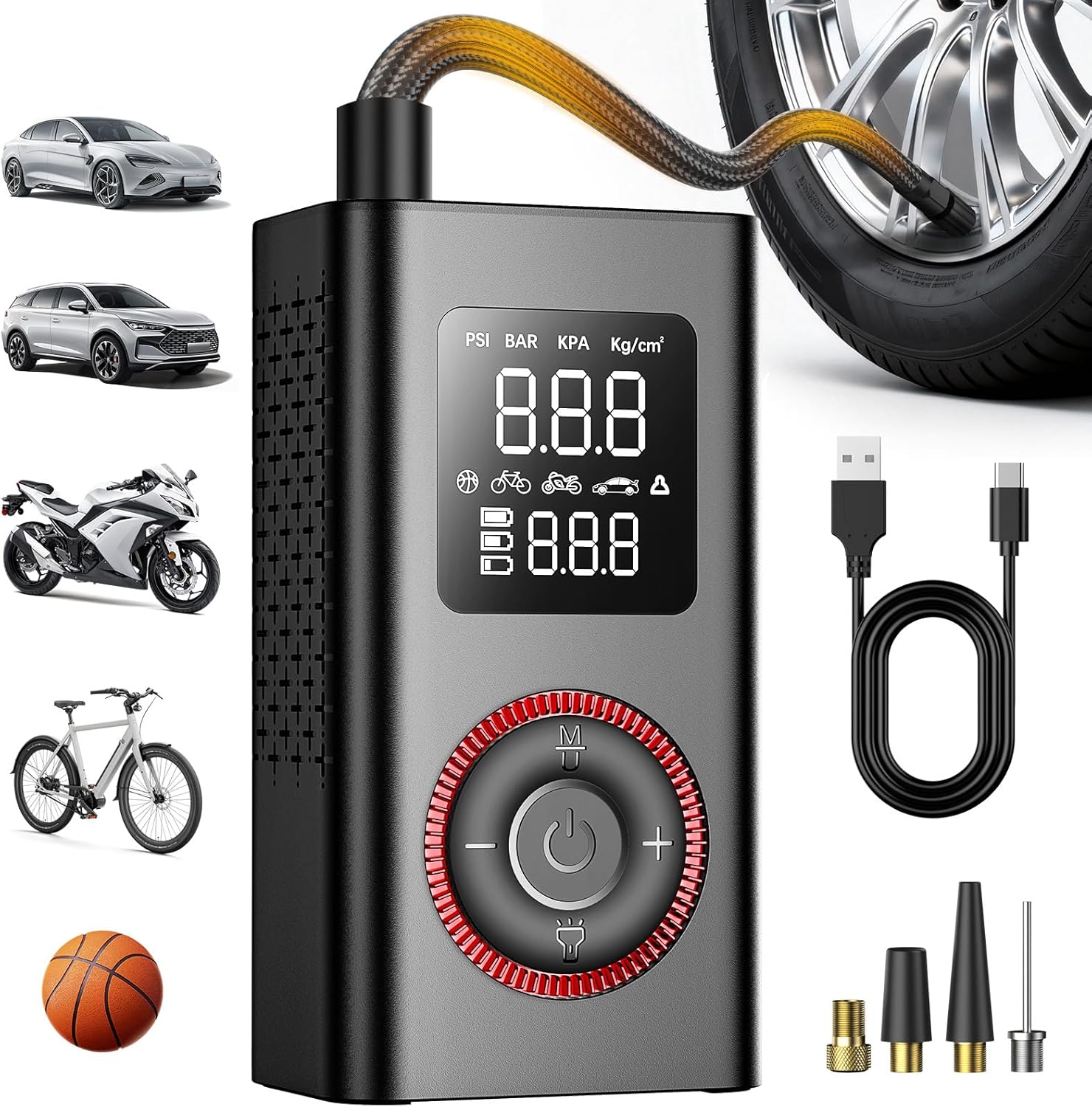
This portable tire inflator delivers fast, efficient inflation with a maximum 150 PSI rating and accurate pressure control for cars, motorcycles, bikes, and more. It features preset modes with automatic shutoff to help prevent overinflation, plus a real-time digital gauge and bright LED light for roadside use. Powered by a rechargeable 6000mAh battery with Type-C charging and a USB output, it’s also useful as an emergency power source for devices.
Can You Drive to a Gas Station With Low Pressure?
You can usually drive slowly to a nearby gas station if the tire is only slightly low, the car feels normal, and the tire does not look flat or damaged. Keep your speed low, avoid sudden moves, and choose the closest safe air source.
Do not drive to a gas station if the tire is visibly flat, the sidewall is bulging, you hear a thumping sound, or the car pulls strongly. Driving on a severely underinflated tire can destroy the tire and may damage the wheel.
A portable tire inflator can be a good backup if you use it carefully. Set the target pressure from the door label, inflate in small steps, and recheck with a separate gauge if the pump reading seems inconsistent.
Frequently Asked Questions
Is 30 psi too low for a Camry?
It may be low, but the answer depends on your Camry’s door-jamb label. If your label calls for 35 psi cold, then 30 psi is 5 psi low and should be corrected. Check all four tires with a gauge and inflate them to the listed cold pressure.
Can I drive with the TPMS light on?
You can drive only long enough to reach a safe place to check the tires. The TPMS light means at least one tire may be significantly underinflated. Inspect the tires, check pressure with a gauge, and inflate them to the door-label spec.
Should I use the psi on the tire sidewall?
No. The sidewall pressure is the tire’s maximum cold inflation pressure, not the recommended pressure for your Camry. Use the Tire and Loading Information Label on the driver-side door area or your Toyota owner’s manual.
Why does my TPMS light come on in cold weather?
Cold air can lower tire pressure enough to trigger the warning, especially if the tires were already near the threshold. Check the tires with a gauge when they are cold and inflate them to the door-label pressure.
Why does one tire keep losing air?
Repeated pressure loss usually points to a slow leak. Common causes include a nail or screw, leaking valve stem, damaged bead seal, cracked wheel, or tire damage from a pothole. Have the tire inspected before relying on it for highway driving.
How often should I check Camry tire pressure?
Check tire pressure at least once a month and before long trips. Also check after major temperature changes, before carrying a heavy load, and after hitting a pothole or curb.
Should I reset the TPMS after adding air?
Only reset or initialize TPMS after all tires are inflated to the correct cold pressure. Some Camry models may turn the light off after a short drive, while others may have a reset procedure in the owner’s manual.
Can I use a portable inflator on a Camry tire?
Yes, a portable inflator is fine if it can reach the needed pressure and you use it carefully. Inflate in small steps, check the reading with a reliable gauge, and stop if the tire will not hold air.
Conclusion
Low tire pressure in a Toyota Camry is not something to ignore. It can reduce handling, increase tire heat, speed up uneven wear, raise blowout risk, and waste fuel. If the TPMS light comes on, check all four tires with a gauge instead of relying on sight alone.
Use the cold tire pressure on your Camry’s driver-door label, not a generic number or the tire sidewall maximum. If a tire is severely low, visibly damaged, or losing air repeatedly, stop driving and get it inspected. A five-minute pressure check can protect your tires, your fuel economy, and your safety.
Sources
- NHTSA TireWise: Tire Safety Ratings and Awareness — supports tire pressure, TPMS, blowout, treadwear, cold-check, monthly inspection, and 2024 tire-related fatality guidance.
- FuelEconomy.gov: Keeping Your Vehicle in Shape — supports the fuel-economy impact of proper tire inflation and the 0.2% per 1 psi underinflation estimate.
- Toyota: How to Check Tire Pressure — supports using the driver-door sticker, owner’s manual, cold-tire checks, and Toyota tire-pressure maintenance steps.
- Toyota Owners: Manuals and Warranties — supports checking the owner’s manual for model-specific tire pressure, spare-tire guidance, and TPMS reset instructions.