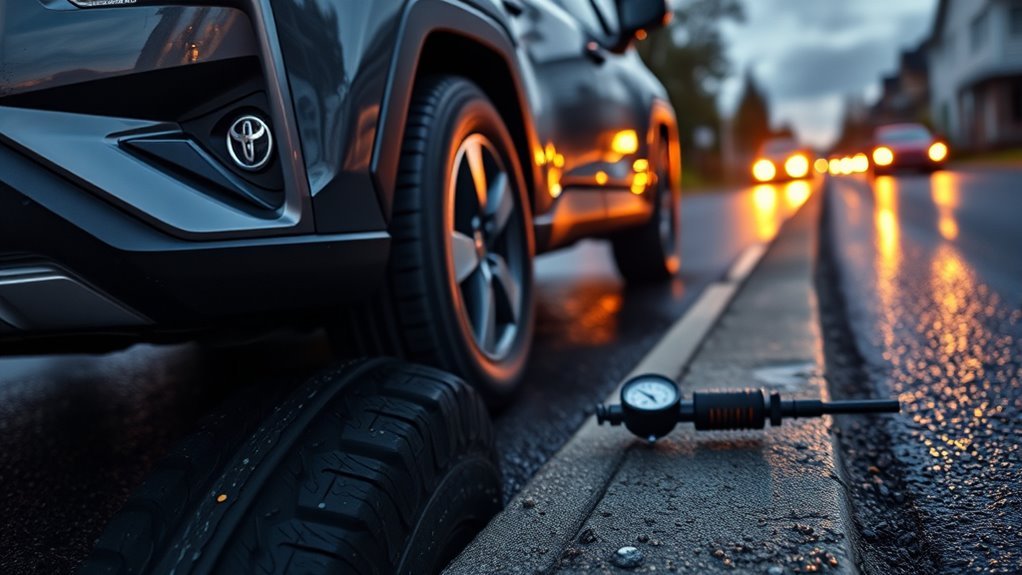
Low tire pressure in your RAV4 is more than a small maintenance issue. It can make the SUV feel sluggish, reduce fuel economy, increase tire heat, wear the tread unevenly, and raise the chance of tire failure. The safest fix is simple: check all tires when they are cold and inflate them to the pressure listed on your RAV4’s driver-side Tire and Loading Information Label or owner’s manual.
Quick Answer
If your RAV4 tire pressure is too low, the tires flex more, build heat, reduce handling, increase stopping distance, waste fuel, and wear faster. If the TPMS light comes on, check the pressure with a gauge, inflate to the cold PSI on the driver-side placard, and inspect for leaks or damage.
Key Takeaways
- Use the RAV4’s door-jamb tire placard or owner’s manual for the correct cold PSI, not the maximum PSI printed on the tire sidewall.
- Check tire pressure when the tires are cold, ideally before driving or after the vehicle has been parked for at least three hours.
- Do not rely only on TPMS. Federal standards allow the warning to appear only after pressure is significantly low, so manual checks still matter.
- If one tire keeps losing air, has sidewall damage, shows a bulge, or looks visibly flat, do not keep driving on it. Have it inspected.
At a Glance
| Time Required | 5–10 minutes for checking; longer if you need to inflate or inspect for leaks |
| Difficulty | Easy |
| Tools Needed | Tire pressure gauge, air compressor, valve caps, flashlight, and the RAV4 tire placard or owner’s manual |
| Cost | Usually free to a few dollars for air; about $5–$20 for a basic tire gauge |
The Dangers of Driving on Underinflated Tires

When a RAV4 tire is underinflated, the tire sidewall flexes more than it should. That extra flex creates heat, increases stress inside the tire, and can contribute to uneven wear, tread separation, or a blowout. The vehicle may also feel less stable during braking, cornering, lane changes, or emergency maneuvers.
The National Highway Traffic Safety Administration explains that only a few PSI below the vehicle manufacturer’s recommended pressure can affect handling and stopping distance, and that poor tire maintenance can increase blowouts and tread separations. NHTSA tire-pressure research also connects underinflation with reduced fuel economy and safety concerns.
Warning: Do not keep driving on a tire that is visibly flat, has a sidewall bulge, is smoking, smells hot, or has exposed cords. Pull over safely and use roadside assistance or install the spare only if it is safe and properly inflated.
Common Causes of Underinflated Tires in RAV4s
RAV4 tires can lose pressure for ordinary reasons, but pressure loss can also point to damage. The most common causes are temperature changes, slow leaks, punctures, valve-stem problems, wheel corrosion, and missed maintenance checks.
Natural Air Loss and Slow Leaks
Tire pressure can change over time even when the tire looks normal. A small puncture from a nail or screw, a damaged bead seal, a loose valve core, or an aging valve stem can also create a slow leak. If the same tire repeatedly drops more than the others, do not simply keep adding air. Have the tire and wheel inspected.
Temperature Fluctuations Effects
Cold weather can lower tire pressure, and warm weather can raise it. The U.S. Tire Manufacturers Association says tire pressure may increase or decrease by about one to two pounds for every 10°F change in temperature. That is why a RAV4 TPMS light often appears after a cold night.
In winter, the right move is not to guess or permanently overinflate. Instead, check the tires cold and bring them back to the cold PSI listed on the RAV4 tire placard.
Valve Stem Defects
Valve stems seal the air inside the tire. If a valve stem is cracked, loose, corroded, or improperly installed, it can leak slowly and trigger repeated low-pressure warnings. Valve stems should be inspected whenever a tire is repaired, replaced, or losing pressure without an obvious puncture.
| Defect Type | What It Can Cause | Best Action |
|---|---|---|
| Cracked valve stem | Slow air loss | Replace the valve stem |
| Loose valve core | Air leak near the valve | Tighten or replace the core |
| Corroded wheel bead area | Leak where tire meets wheel | Have the tire removed and bead cleaned |
| Puncture from nail or screw | Repeated pressure loss | Repair only if the puncture is in a repairable tread area |
| Missing valve cap | Dirt and moisture around valve | Install a clean valve cap |
What PSI Should RAV4 Tires Be?
The correct RAV4 tire pressure is the cold tire inflation pressure printed on your vehicle’s Tire and Loading Information Label, usually on the driver-side door edge or door jamb. Toyota also lists the specified tire size and pressure in the owner’s manual. RAV4 pressure can vary by model year, trim, tire size, and load, so do not assume every RAV4 uses the same PSI.
For the most accurate answer, open the driver’s door and read the placard. Match the listed front and rear tire pressures to your tire size, then use those numbers when the tires are cold. Toyota’s owner information explains that the recommended cold tire inflation pressure and tire size are displayed on the Tire and Loading Information Label. Toyota Owners tire inflation guidance also recommends regular pressure checks.
Note: The number molded into the tire sidewall is usually the tire’s maximum pressure, not the recommended pressure for your RAV4. Use the Toyota placard pressure unless the owner’s manual or a qualified tire professional tells you otherwise.
How Does Tire Underinflation Affect Your RAV4’s Performance?
Underinflated tires change how your RAV4 drives because the tire contact patch, sidewall flex, and heat buildup all change. Even if the SUV still feels drivable, low pressure can affect several systems at once.
- Fuel economy drops: Underinflated tires create more rolling resistance. FuelEconomy.gov says underinflated tires can lower gas mileage by about 0.2% for every 1 PSI drop in the average pressure of all tires.
- Handling feels slower: The RAV4 may feel less precise during turns or lane changes because the tire sidewalls flex more.
- Stopping distance can increase: NHTSA research states that underinflated tires can contribute to sluggish handling and longer stopping distances.
- Tires run hotter: More sidewall flex creates more heat, which can stress tire components.
- Tread wears unevenly: Low pressure often wears the outer shoulders faster than the center of the tread.
Keeping tires inflated to the proper pressure can improve gas mileage by 0.6% on average and up to 3% in some cases, according to FuelEconomy.gov.
Signs Your RAV4 Tires Are Underinflated
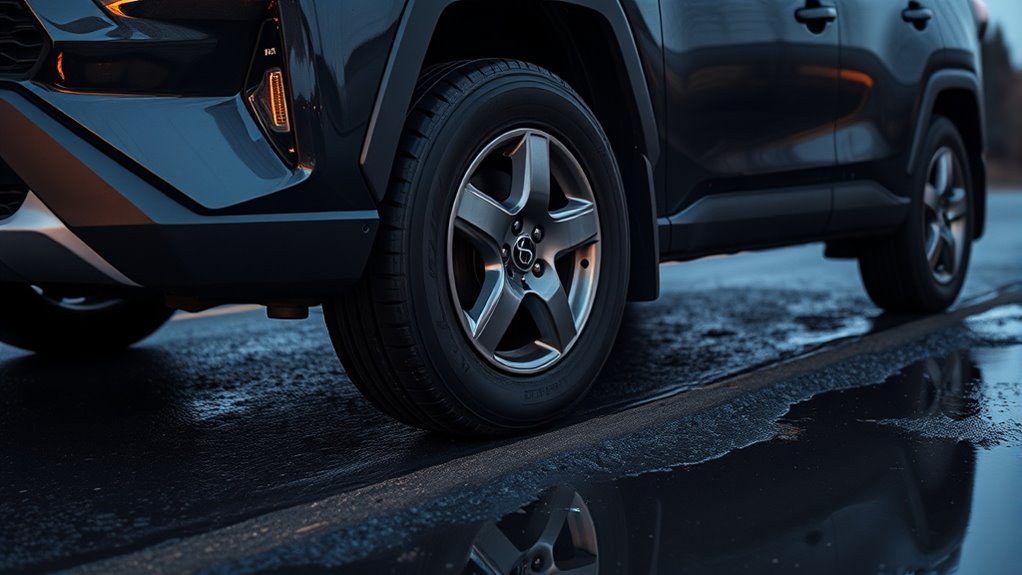
You may not notice a small PSI loss from the driver’s seat, so a gauge is always better than guessing. Still, these signs can point to low tire pressure:
- TPMS warning light: The low tire pressure symbol appears on the dashboard.
- Soft or sagging tire shape: The sidewall looks more compressed than the others.
- Sluggish steering: The RAV4 feels less responsive during turns.
- Longer braking feel: Stops feel less crisp than usual.
- Outer-edge tread wear: Both shoulders of the tire wear faster than the center.
- Lower fuel economy: MPG drops without another clear cause.
- Pulling or vibration: One tire may be much lower than the others or damaged.
Pro Tip: Walk around your RAV4 once a week before driving. A 20-second visual check can catch a visibly low tire, sidewall bulge, nail, or missing valve cap before it becomes a roadside problem.
How to Check Tire Pressure on Your RAV4
Checking tire pressure is simple, but accuracy depends on timing. For the best reading, check when the tires are cold. NHTSA defines cold tire pressure as the pressure before driving or after the vehicle has been parked for at least three hours.
[Products Worth Considering]

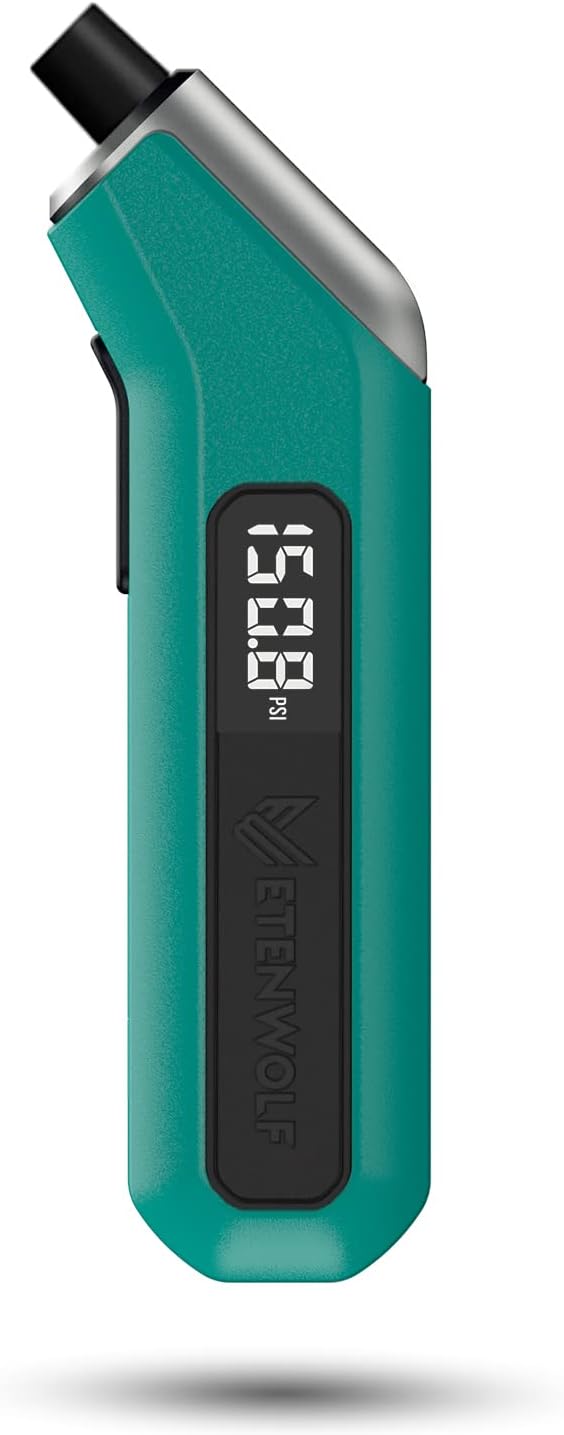
Keep your tires properly inflated with this analog VONDIOR tire pressure gauge, designed for fast, easy readings without batteries. The swiveling, two-axis hose and large glow dial help you measure at any tire angle with instant visibility. Built with a protective rubber shield, it supports durable, low-maintenance use for cars and trucks.

This tire inflator with pressure gauge delivers long-lasting performance with a durable rubber-protected gauge and sturdy build. The longer hose and 360 swivel air chuck help you seal the valve securely and keep your hands free while measuring, inflating, or deflating. It’s battery-free for reliable use and provides ±2 PSI accuracy in the mid-range for most typical tires, with universal compatibility for 1/4 NPT compressor outputs.

Monitor tire tread wear with a smart, color-coded depth gauge that shows clear condition ranges at a glance. The bar is range marked for fast, easy readings, helping you maintain safer traction and performance. Each gauge is portable with a pocket clip, and the set includes 20 units for daily use and sharing.
Tools Required
- Tire pressure gauge: Digital, dial, or pencil-style gauges can work if they are accurate.
- Air compressor: Use a home compressor, portable inflator, or gas-station air pump.
- RAV4 tire placard: Open the driver’s door and read the Tire and Loading Information Label.
- Valve caps: Replace missing or cracked caps to keep dirt and moisture away from the valve.
- Flashlight: Helpful for checking tread, sidewalls, nails, and valve stems.
Step-by-Step Tire Pressure Check
- Park the RAV4 safely and let the tires cool if you have been driving.
- Find the recommended cold PSI on the driver-side tire placard or in the owner’s manual.
- Remove the valve cap from one tire.
- Press the gauge firmly onto the valve stem until the hissing stops.
- Read the PSI and compare it with the placard number.
- If the tire is low, add air in short bursts.
- Recheck with the gauge and adjust until the tire matches the recommended cold PSI.
- If you add too much air, gently press the valve core to release a small amount, then recheck.
- Repeat for all four tires and the spare if your RAV4 has a serviceable spare.
- Reinstall the valve caps.
NHTSA’s TireWise guidance gives the same basic process: locate the recommended pressure, check every tire, add missing air if pressure is too low, and recheck.
Ideal Checking Frequency
Check RAV4 tire pressure at least once a month, before long trips, before carrying heavy loads, and before towing if your model is equipped for it. Also check after large temperature swings, because pressure can change with weather.
If your RAV4 has a compact spare, check that too. A spare tire that has been ignored for months may be too low to use safely when you need it.
What to Do If the TPMS Light Comes On
The TPMS light means at least one tire may be significantly low or the TPMS system may have a malfunction. Do not ignore it, especially if the vehicle feels unstable or one tire looks low.
- Slow down and drive smoothly. Avoid hard braking, sharp turns, and high speeds.
- Pull over safely if the vehicle feels abnormal. Check for a visibly flat tire, sidewall damage, smoke, or a puncture.
- Check all four tires with a gauge. Do not rely on appearance alone.
- Inflate to the placard PSI. Use the RAV4’s cold pressure number, not the tire sidewall maximum.
- Recheck after driving or the next morning. If one tire loses air again, have it inspected.
- Reset or initialize TPMS only if your owner’s manual says to do so. Some RAV4 systems update after driving; others may require an initialization step after rotation, replacement, or pressure adjustment.
[Products Worth Considering]
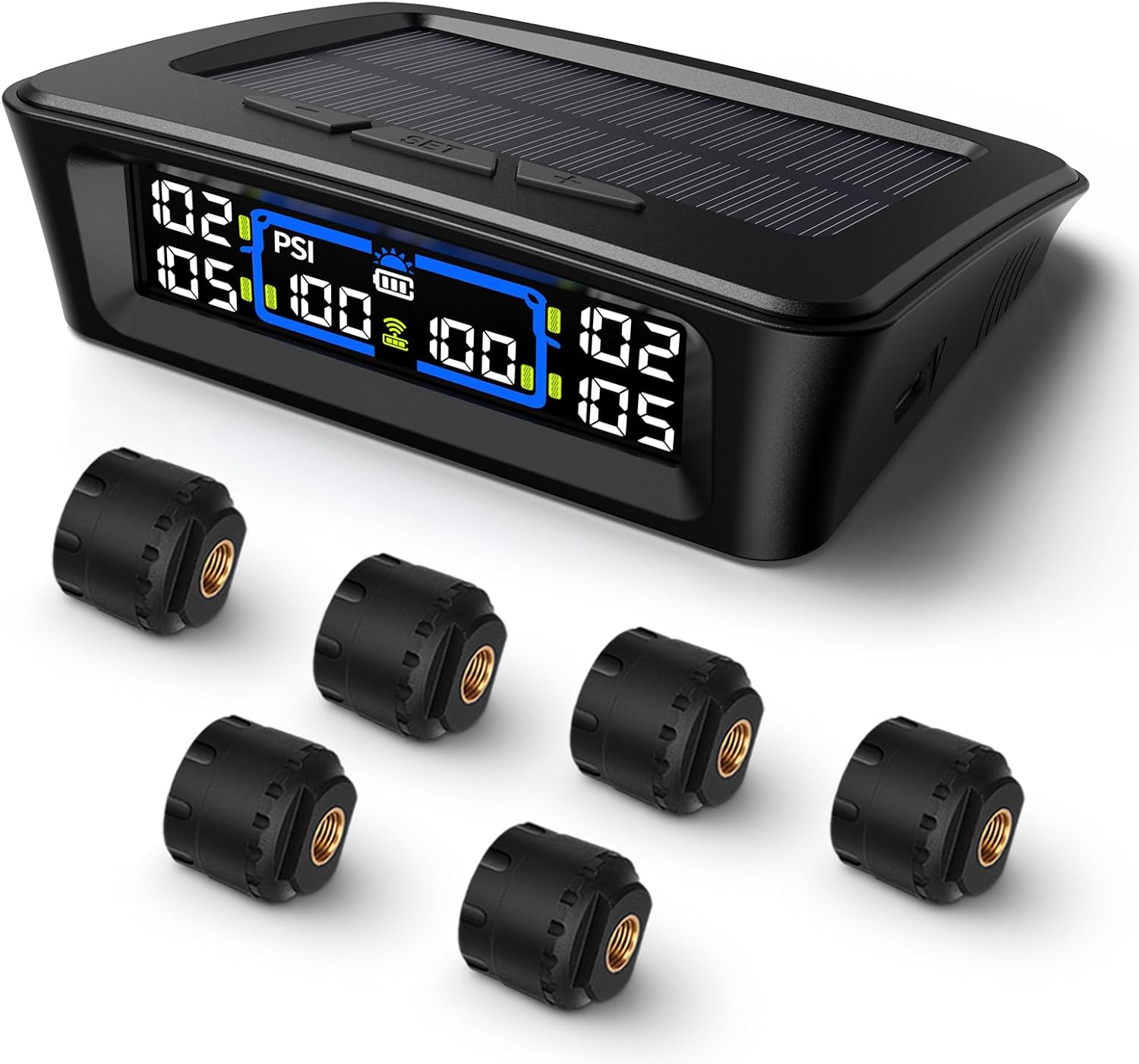
The Tymate TM12 RV TPMS delivers real-time tire pressure and temperature monitoring with a stable 433Hz display for safer long-distance driving. It supports simultaneous monitoring across vehicle and trailer zones, includes six alarm modes for pressure, temperature, leakage, battery, and signal loss, and features easy DIY installation with auto calibration. Power is supplied via USB-C charging or solar recharging, with a wide 0–144 PSI range and up to 50 ft signal coverage for RVs and towable trailers.

Measure tire tread depth quickly and accurately with this LUMITECO dial gauge that reads in 1/32" increments up to 14/32". The color-coded green/yellow/red zones make it easy to judge tire wear and know when replacement is needed. A rugged, compact design with a protective pouch helps keep the gauge ready for use on cars, trucks, motorcycles, and more.
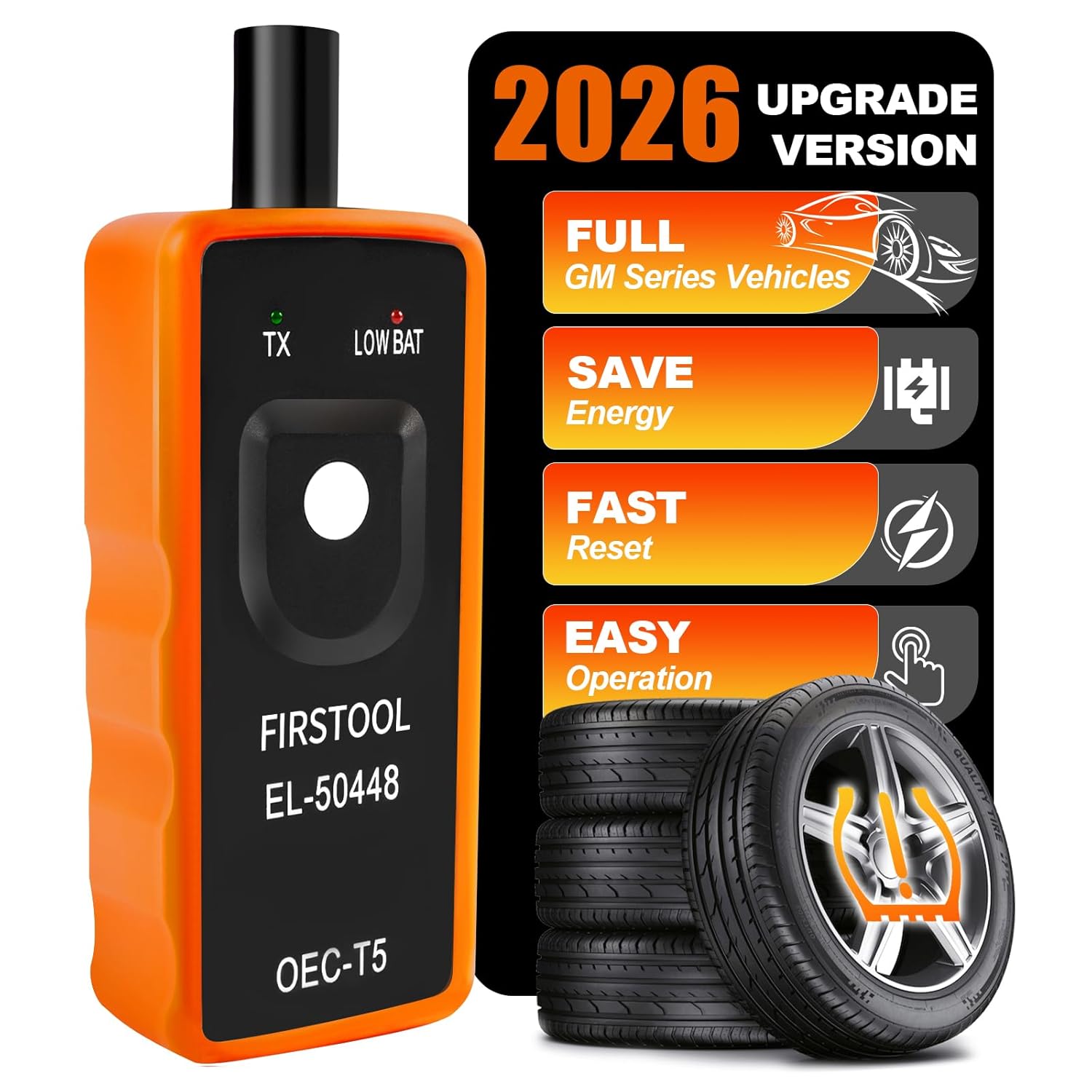
This TPMS relearn tool helps you quickly activate, match, and reset GM tire pressure sensors to keep the vehicle monitoring system working properly. It clears tire pressure alarms and dashboard warning lights after sensor replacement or tire rotation, and supports learning for common 315/433 MHz TPMS sensors. Designed for simple one-button operation, it can help you avoid unnecessary trips to repair shops.
Seasonal Impact on RAV4 Tire Pressure
Temperature changes are one of the most common reasons a RAV4 TPMS light appears. In colder weather, air contracts and tire pressure drops. In warmer weather, pressure rises. The U.S. Tire Manufacturers Association notes that tire pressure may change by one to two PSI for every 10°F temperature change.
Here is the safe seasonal routine:
- Check pressure when the tires are cold.
- Use the driver-side placard pressure as your target.
- Check more often during fall and winter temperature drops.
- Do not bleed air from a hot tire just because the reading is above the placard number after driving.
- Recheck cold pressure the next morning if you adjusted a warm tire in an emergency.
What You Need to Know About TPMS in Your RAV4
Your RAV4’s Tire Pressure Monitoring System helps warn you when pressure is low, but it is not a substitute for a tire gauge. Federal Motor Vehicle Safety Standard No. 138 requires TPMS to illuminate a low-pressure warning when one or more tires reach a defined low-pressure threshold, generally 25% below the vehicle manufacturer’s recommended cold inflation pressure or the regulatory minimum, whichever is higher.
That means TPMS may not warn you when a tire is only slightly low, when all tires lose pressure gradually, or before uneven wear begins. The federal TPMS standard is designed as a warning system, not a replacement for monthly maintenance.
Note: If the TPMS light flashes and then stays on, that often indicates a system malfunction rather than only low tire pressure. Check your owner’s manual and have the system inspected if the warning does not clear after proper inflation.
[Products Worth Considering]

Upgrade your Toyota tire setup with these corrosion-resistant, leak-proof valve stem caps designed to help protect the valve core from water, snow, and road grime. The caps feature a snug rubber seal and durable copper alloy construction to resist rust and oxidation while maintaining stable tire pressure. Ideal for replacing worn original caps and keeping your wheels looking clean and stylish.

Check tire pressure quickly and accurately with the Accutire MS-4021B digital gauge, featuring a large backlit LCD for easy visibility. The angled head and rubber-coated handle make it comfortable to grip, while unit switching lets you read psi, bar, kPa, or kg/cm2. An automatic shutoff helps preserve battery life, and it measures 5–150 PSI in small increments for confident tire maintenance.

Upgrade your tires with YUIQIEUY aluminum valve stem caps that provide an airtight, hermetically sealed fit to help keep moisture and debris out. The durable anodized finish helps protect against wear and corrosion, while the screw-in thread makes installation quick and secure. Designed for cars, SUVs, trucks, motorcycles, and bicycles, these caps help maintain valve performance and a clean, stylish look.
How Underinflated Tires Hurt Fuel Efficiency
Underinflated tires make your RAV4 work harder because more rubber deforms against the road. This increases rolling resistance, which uses more fuel.
Increased Engine Load
When tires are low, the engine must overcome extra drag. That does not usually feel dramatic during normal driving, but it adds up through more fuel use, extra heat in the tires, and faster tread wear.
Higher Fuel Costs
FuelEconomy.gov states that keeping tires inflated to the proper pressure can improve gas mileage by 0.6% on average and up to 3% in some cases. It also says underinflated tires can lower gas mileage by about 0.2% for every 1 PSI drop in the average pressure of all tires.
| Average Tire Pressure Drop | Estimated Gas Mileage Effect |
|---|---|
| 1 PSI low across all tires | About 0.2% lower gas mileage |
| 5 PSI low across all tires | About 1% lower gas mileage |
| 10 PSI low across all tires | About 2% lower gas mileage |
| Proper placard pressure | Can improve gas mileage by 0.6% on average and up to 3% in some cases |
When Low Tire Pressure Means You Should Stop Driving
A small pressure correction at home or a gas station is normal. However, some low-pressure situations are not safe to drive on. Stop driving and get help if you notice any of these:
- The tire is visibly flat or the rim is close to the ground.
- You hear flapping, thumping, or grinding from a tire.
- The vehicle pulls sharply to one side.
- The tire has a sidewall cut, bubble, bulge, or exposed cords.
- You smell burning rubber or see smoke.
- The tire loses air again soon after being inflated.
What If a Tire Blows Out While Driving?
A blowout can happen suddenly, even with good maintenance. If it happens, stay calm and focus on keeping the RAV4 stable.
- Hold the steering wheel firmly with both hands.
- Do not slam on the brakes.
- Gradually ease off the accelerator.
- Steer gently to keep the vehicle straight.
- Let the vehicle slow down, then pull off the road when safe.
- Turn on hazard lights and call for roadside assistance if needed.
NHTSA’s blowout guidance emphasizes smooth control, avoiding panic braking, and pulling over only after the vehicle is stable.
Legal and Insurance Risks of Driving With Underinflated RAV4 Tires
Driving with badly underinflated tires can become more than a maintenance issue if a crash occurs. Investigators, insurers, or repair professionals may look at tire condition, tread depth, maintenance records, and whether the vehicle was safe to operate. Laws and insurance decisions vary, so this is not legal advice, but keeping tires properly inflated is one of the simplest ways to show responsible vehicle maintenance.
Keep records for tire rotations, repairs, replacements, and recurring pressure problems. If a tire keeps losing air, fix the cause instead of repeatedly topping it off.
Top Tips for Ensuring Your RAV4 Tires Are Properly Inflated
- Check monthly: Use a gauge at least once a month and before long trips.
- Check cold: Measure before driving or after the RAV4 has been parked for at least three hours.
- Use the placard: Follow the PSI on the driver-side Tire and Loading Information Label.
- Inspect tread and sidewalls: Look for nails, cuts, bulges, uneven wear, and exposed cords.
- Check the spare: A spare tire is only useful if it is properly inflated and in good condition.
- Do not ignore repeated pressure loss: One tire that keeps dropping likely has a leak or wheel issue.
- Recheck after temperature swings: Cold mornings can lower pressure enough to trigger TPMS.
- Use valve caps: They help keep dirt and moisture out of the valve stem.
Frequently Asked Questions
What happens if my RAV4 tire pressure is too low?
Low tire pressure makes the tire flex more, build heat, wear unevenly, and create more rolling resistance. Your RAV4 may also have slower steering response, reduced fuel economy, longer stopping distance, and a higher risk of tire damage or failure.
What PSI should I use for my RAV4 tires?
Use the cold tire pressure listed on the Tire and Loading Information Label on the driver-side door edge or door jamb. RAV4 tire pressure can vary by model year, trim, tire size, and load, so the placard is more reliable than a generic number online.
Can I use the PSI printed on the tire sidewall?
No. The sidewall number is usually the tire’s maximum pressure, not Toyota’s recommended pressure for your RAV4. Use the vehicle placard or owner’s manual for normal driving.
Why does my RAV4 TPMS light come on when it gets cold?
Cold air contracts, which lowers tire pressure. A sharp overnight temperature drop can reduce PSI enough to trigger the TPMS light. Check the tires cold and inflate them to the placard pressure.
Is it safe to drive with the TPMS light on?
It depends on how low the tire is. If the RAV4 feels normal and no tire looks flat, drive carefully to a safe place and check pressure with a gauge. If the vehicle pulls, vibrates, or a tire looks flat or damaged, stop driving and get help.
Why does one RAV4 tire keep losing air?
A single tire that repeatedly loses pressure may have a nail, screw, leaking valve stem, damaged bead seal, cracked wheel, or previous repair problem. Have it inspected instead of repeatedly topping it off.
Conclusion
Underinflated RAV4 tires can reduce fuel economy, weaken handling, increase heat, wear the tread unevenly, and raise the risk of tire failure. The best prevention is quick and practical: check pressure monthly, use a reliable gauge, measure when tires are cold, and inflate to the PSI on the driver-side placard. If the TPMS light comes on or one tire keeps losing air, inspect it promptly rather than guessing.
Sources
- Toyota Owners — RAV4 tire inflation pressure — backs the use of the Tire and Loading Information Label and Toyota tire-pressure procedure.
- NHTSA TireWise — backs cold tire-pressure checks, placard PSI, TPMS basics, and blowout response.
- 49 CFR § 571.138 — Tire pressure monitoring systems — backs the federal TPMS warning threshold.
- FuelEconomy.gov — Gas Mileage Tips — backs the fuel-economy impact of underinflated tires.
- U.S. Tire Manufacturers Association — Tire Care Essentials — backs monthly cold checks and temperature-related pressure changes.
- NHTSA — Tire-Related Factors in the Pre-Crash Phase — backs tire-related crash risk context and the importance of tire maintenance.