If the yellow tire-shaped exclamation mark lights up on your Toyota RAV4, it usually means the tire pressure warning system has detected low tire pressure or a Tire Pressure Monitoring System (TPMS) problem. Start by checking all tires with a gauge, using the cold PSI listed on the driver-side door placard, not the number printed on the tire sidewall.
Quick Answer
The yellow tire/exclamation light on a Toyota RAV4 means at least one tire may be significantly underinflated, or the TPMS has a fault. Pull over safely, inspect the tires, check cold tire pressure with a gauge, inflate to the door-placard PSI, then reset or initialize TPMS only after pressure is correct.
Key Takeaways
- A solid yellow tire-pressure light usually points to low tire pressure; a light that flashes for about a minute and then stays on points to a TPMS malfunction.
- Use the RAV4’s tire and loading information label on the driver-side door area for the correct cold PSI.
- Check tire pressure when tires are cold, meaning the vehicle has been parked for at least three hours.
- Do not reset or initialize TPMS until all tires are inflated correctly and any leak or tire damage has been handled.
At a Glance
| Time Required | 5–10 minutes for a pressure check; longer if a tire needs repair |
| Difficulty | Easy |
| Tools Needed | Tire pressure gauge, air compressor or inflator, owner’s manual, valve caps |
| Cost | Usually free to check; a basic gauge often costs about $5–$20 |
What Does the Yellow Exclamation Mark Light Mean?
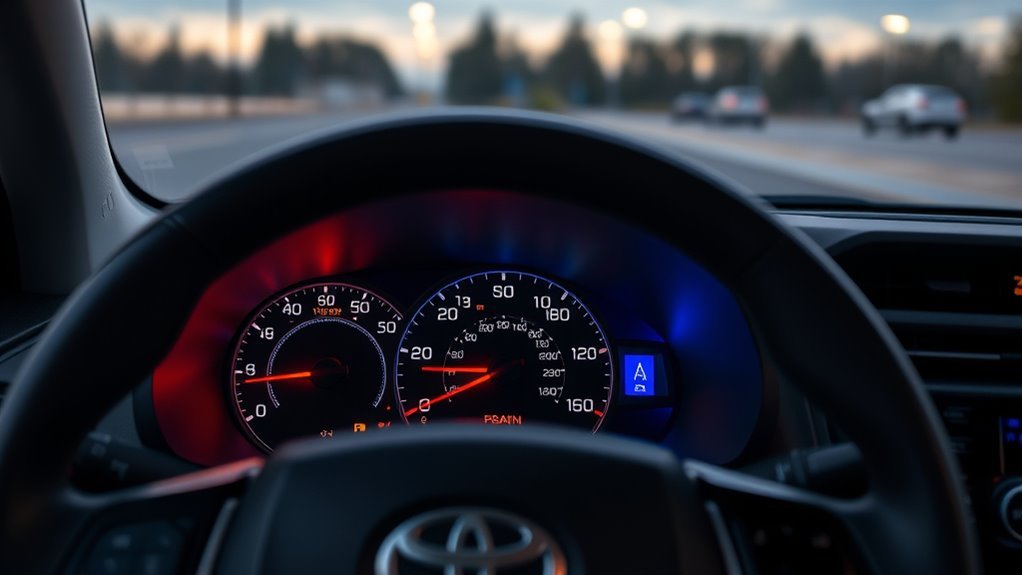
On a Toyota RAV4, the yellow tire-shaped symbol with an exclamation mark is the tire pressure warning light. Toyota explains that when the TPMS senses seriously low pressure in one or more tires, the low tire pressure icon appears and a message may show in the multi-information display. If the light stays on, check the tires and refill, repair, or replace any tire that is below the proper pressure. Toyota TPMS support
If the warning is a yellow triangle with an exclamation mark instead of the tire-shaped icon, that is usually a master warning indicator. In that case, read the message on the multi-information display because it may point to a different system.
Note: The TPMS light is not a substitute for a tire gauge. The system warns you when pressure is low enough to matter, but regular pressure checks still help catch slow leaks and seasonal pressure changes early.
Common Causes of the Tire Pressure Warning Light
The RAV4 tire pressure warning light can come on for several reasons. Some are simple, while others need a tire shop or Toyota dealer to inspect the system.
- Low tire pressure: This is the most common reason. Air can leave a tire slowly over time or after a sharp temperature drop.
- Cold weather: Tire pressure falls when air temperature drops. A cold morning after a warm day can be enough to trigger the warning.
- Puncture or slow leak: A nail, screw, damaged valve stem, or bead leak can make one tire keep losing air.
- Recent tire rotation or tire change: Some RAV4 models may need the tire pressure warning system initialized after tire service.
- TPMS sensor problem: A damaged sensor, low sensor battery, or unregistered sensor ID can trigger a malfunction warning.
- Incorrect tire pressure after service: A shop may have inflated tires to a generic number instead of your RAV4’s door-placard PSI.
How to Check Your Tire Pressure Safely
The safest way to respond to the warning light is to check actual tire pressure with a gauge. The National Highway Traffic Safety Administration recommends using the vehicle’s tire information label or owner’s manual, checking all tires, and measuring pressure when tires are cold.
[Products Worth Considering]

This TPMS sensor training and relearn reset tool is customized for Ford, Lincoln, and Mercury vehicles to help activate tire pressure programming after sensor replacement or tire rotation. It can activate individual tire pressure sensors with one-button operation, helping prevent TPMS warning light illumination. It is not a sensor programming tool and cannot program replacement sensors—use it to trigger/activate sensors only.

The VEHLIVE SU-50448 II TPMS relearn tool provides a fast activation reset to restore accurate tire pressure monitoring after sensor replacement or tire rotation. It supports 315 MHz and 433 MHz GM series sensors and helps clear dashboard pressure warnings. With simple two-button operation and horn-confirmed relearning order, you can reprogram sensors conveniently at home.
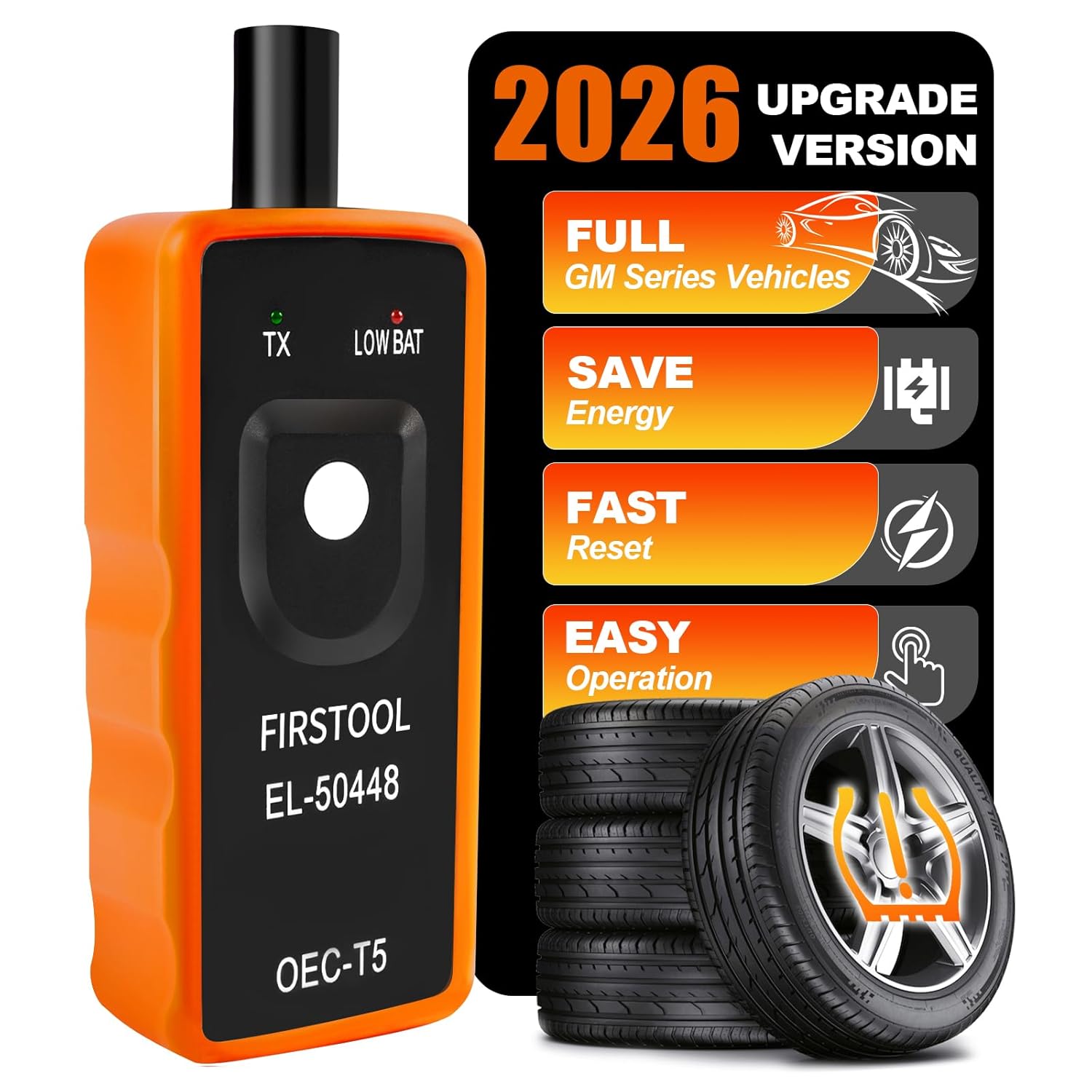
This TPMS relearn tool helps you quickly activate, match, and reset GM tire pressure sensors to keep the vehicle monitoring system working properly. It clears tire pressure alarms and dashboard warning lights after sensor replacement or tire rotation, and supports learning for common 315/433 MHz TPMS sensors. Designed for simple one-button operation, it can help you avoid unnecessary trips to repair shops.
Tools You Need
- A reliable digital or pencil-style tire pressure gauge
- An air compressor, gas-station air pump, or portable inflator
- Your RAV4 owner’s manual or the tire and loading information label on the driver-side door area
- Valve caps, if any are missing
Step-by-Step Tire Pressure Check
- Park safely. If the warning appears while driving, slow down and stop in a safe place when possible.
- Let the tires cool. For the most accurate reading, check pressure when the RAV4 has been parked for at least three hours.
- Find the correct PSI. Open the driver-side door and read the tire and loading information label. Toyota also says the recommended pressure is listed in the owner’s manual or vehicle placard. Toyota tire pressure guidance
- Remove the valve cap. Keep it in your pocket so it does not roll away.
- Press the gauge firmly on the valve stem. A short hiss is normal at first; a long hiss means the gauge is not sealed squarely.
- Compare the reading with the placard PSI. Add air if the tire is low. Release a small amount of air if it is too high.
- Recheck the pressure. Confirm each tire is at the correct cold PSI.
- Inspect each tire. Look for nails, cuts, bulges, cracked sidewalls, or uneven wear.
- Replace the valve cap. A missing cap can let dirt and moisture into the valve.
Pro Tip: Do not use the maximum PSI printed on the tire sidewall as your target. That number is the tire’s maximum cold pressure rating, not the recommended pressure for your RAV4.
Best Practices for Accurate Readings
| Action | Recommended Frequency |
|---|---|
| Check tire pressure | Every two weeks if possible, or at least monthly |
| Inspect tread and sidewalls | Monthly and before long trips |
| Recheck after adding air | Every time you inflate a tire |
| Check the spare tire | Monthly, if your RAV4 is equipped with one |
What’s the Right Tire Pressure for Your RAV4?
The right tire pressure for your Toyota RAV4 is the cold tire inflation pressure on your vehicle’s tire and loading information label. That label is usually on the driver-side door edge or door jamb. Toyota’s official guidance is to check the owner’s manual specifications or the tire information placard instead of relying on a generic PSI number.
Many passenger vehicles fall somewhere around the low-to-mid 30 PSI range, but the correct number can vary by model year, tire size, trim, load rating, and market. Some vehicles also use different front and rear pressures. Always use your own placard first.
[Products Worth Considering]
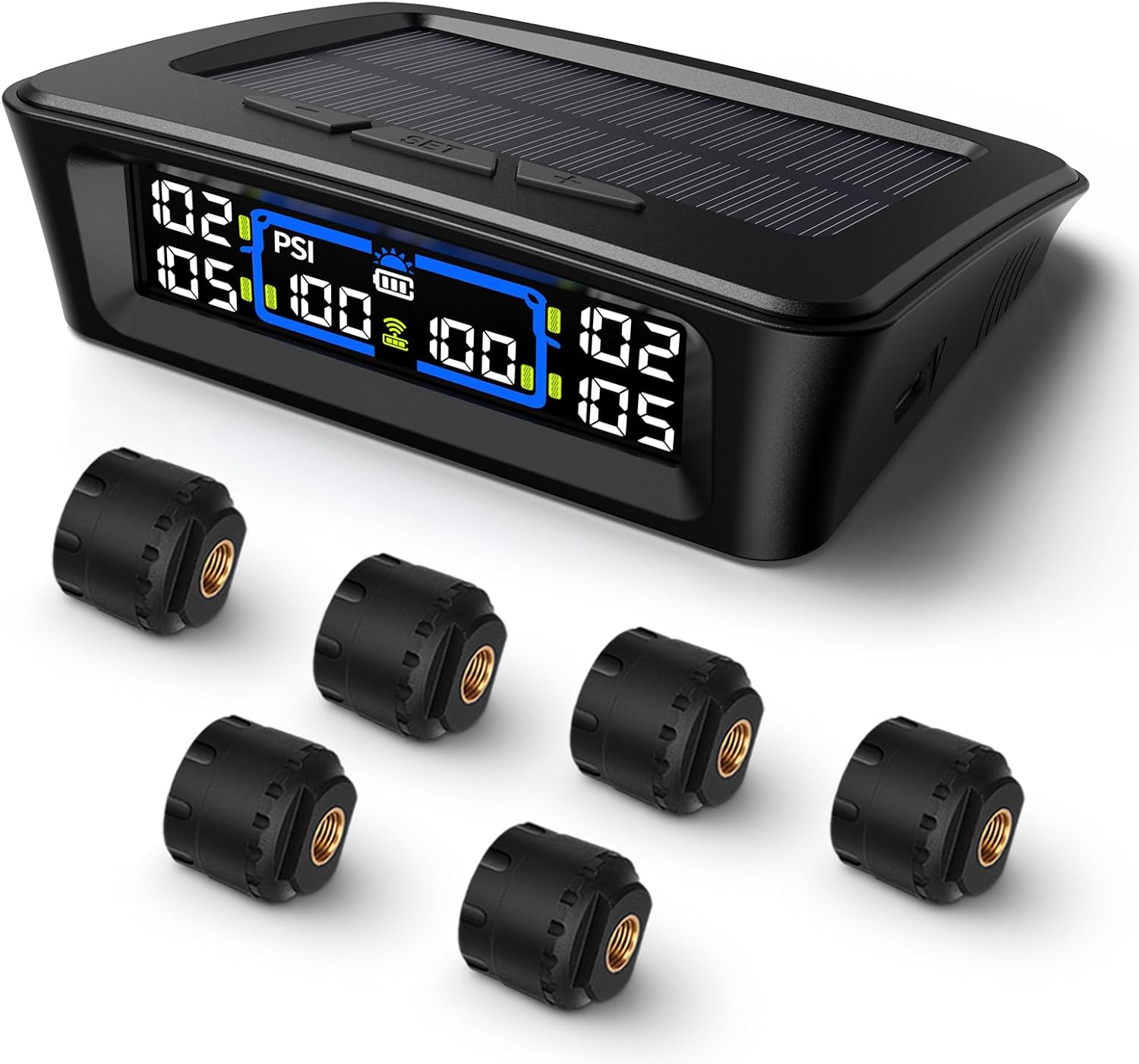
The Tymate TM12 RV TPMS delivers real-time tire pressure and temperature monitoring with a stable 433Hz display for safer long-distance driving. It supports simultaneous monitoring across vehicle and trailer zones, includes six alarm modes for pressure, temperature, leakage, battery, and signal loss, and features easy DIY installation with auto calibration. Power is supplied via USB-C charging or solar recharging, with a wide 0–144 PSI range and up to 50 ft signal coverage for RVs and towable trailers.

Milton S-921 pencil tire pressure gauge helps you maintain optimal tire pressure for passenger cars with accurate readings in PSI and kPa. It features a built-in deflator valve for convenient pressure adjustments, plus a single chuck head and nylon indicator bar for easy use on the go. Built from durable plated brass and designed for reliable performance, it’s a practical road trip and cold-weather maintenance tool.

Keep your tires properly inflated with this analog VONDIOR tire pressure gauge, designed for fast, easy readings without batteries. The swiveling, two-axis hose and large glow dial help you measure at any tire angle with instant visibility. Built with a protective rubber shield, it supports durable, low-maintenance use for cars and trucks.
Why Cold Tire Pressure Matters
Cold tire pressure means the vehicle has not been driven for at least three hours. Driving heats the tires and raises pressure temporarily, which can make a low tire look normal on the gauge. If you must add air to a warm tire, recheck it later when the tires are cold and adjust again.
Seasonal Pressure Adjustments
Seasonal changes can make the warning light appear even when nothing is punctured. Cold air lowers tire pressure, and warm air raises it. Check pressure at the start of winter, after major temperature swings, and before road trips.
Do not intentionally underinflate or overinflate tires for normal street driving. Keeping the RAV4 at the placard PSI helps braking, handling, tire life, and fuel economy.
Immediate Actions to Take When the Tire Pressure Light Activates

When the yellow tire pressure light comes on, respond based on how the RAV4 feels and what you can see.
- Slow down and find a safe place to stop. Avoid hard braking or sharp steering if the vehicle feels unstable.
- Look for an obviously flat tire. If a tire is flat, shredded, or the sidewall is damaged, do not keep driving on it.
- Check all four tires with a gauge. If your RAV4 has a spare, check it separately as part of regular maintenance.
- Inflate low tires to the placard PSI. Use the driver-side label, not the tire sidewall maximum.
- Drive normally for a short distance if the tires are safe. Some systems need a little driving time before the warning clears.
- Get help if the light stays on or returns. Repeated pressure loss usually means a leak, damaged tire, or TPMS issue.
Warning: Do not continue driving on a visibly flat tire or a tire with a bulge, exposed cords, or sidewall damage. Pull over safely and use roadside assistance, a spare tire, or towing if needed.
What You Need to Know About the Tire Pressure Monitoring System (TPMS)
The Tire Pressure Monitoring System is designed to warn you before low tire pressure becomes a bigger safety problem. Under U.S. federal rules, TPMS must illuminate the low tire pressure warning by the time one or more tires are at or below 25% under the manufacturer’s recommended cold inflation pressure, or the minimum pressure specified by the standard, whichever is higher. 49 CFR 571.138
Solid Light vs. Flashing Light
| What You See | Likely Meaning | What to Do |
|---|---|---|
| Light comes on and stays solid | One or more tires may be low | Check and inflate tires to placard PSI |
| Light flashes for about a minute, then stays on | TPMS malfunction may be present | Have the system checked by a Toyota dealer or qualified technician |
| Light comes back after inflation | Possible leak, sensor issue, or initialization problem | Recheck pressure cold and inspect for damage |
Does TPMS Show the Exact Tire?
It depends on your RAV4 model year and trim. Some newer RAV4 models can display tire pressure readings on the multi-information display. Older models may only show the warning light, which means you need to check each tire manually with a gauge.
Risks of Ignoring Tire Pressure Alerts
Ignoring the tire pressure warning light can affect safety, tire life, and fuel economy. Low pressure lets the tire flex more than it should, which creates heat and can damage the tire.
- Higher blowout risk: Underinflated tires can overheat, especially at highway speeds.
- Poor handling: A soft tire can make steering feel sluggish and braking less predictable.
- Uneven tire wear: Low pressure can wear the tire shoulders faster and shorten tire life.
- Lower fuel economy: FuelEconomy.gov says underinflated tires can lower gas mileage by about 0.2% for every 1 PSI drop in the average pressure of all tires, while proper inflation can improve gas mileage by 0.6% on average and up to 3% in some cases. FuelEconomy.gov tire inflation guidance
- Hidden tire damage: A tire driven while very low may be unsafe even after air is added.
Proper tire pressure is not just about turning off a dashboard light. It helps the RAV4 brake, steer, carry weight, and use fuel the way Toyota designed it to.
Resetting Your Tire Pressure Monitoring System
Only reset or initialize the TPMS after every tire is set to the correct cold pressure and any tire damage has been fixed. Resetting the system while a tire is low can teach the system the wrong baseline.
[Products Worth Considering]

This tire inflator with pressure gauge delivers long-lasting performance with a durable rubber-protected gauge and sturdy build. The longer hose and 360 swivel air chuck help you seal the valve securely and keep your hands free while measuring, inflating, or deflating. It’s battery-free for reliable use and provides ±2 PSI accuracy in the mid-range for most typical tires, with universal compatibility for 1/4 NPT compressor outputs.

The Airmoto portable tire inflator quickly and accurately fills car, truck, SUV, motorcycle, and bicycle tires up to 120 PSI with auto shut-off when your target pressure is reached. Its large LCD, multi-unit pressure display, and digital gauge make it easy to dial in settings and verify readings, while the built-in LED flashlight helps in low light. The included polyurethane hard carrying case and storage mesh pocket keep the inflator and accessories protected and organized.

Monitor tire tread wear with a smart, color-coded depth gauge that shows clear condition ranges at a glance. The bar is range marked for fast, easy readings, helping you maintain safer traction and performance. Each gauge is portable with a pocket clip, and the set includes 20 units for daily use and sharing.
General RAV4 TPMS Reset Steps
- Park in a safe place. Turn the vehicle off and let the tires cool if possible.
- Set all tires to placard PSI. Check each tire with a gauge.
- Use the correct reset method for your model year. Some RAV4 models use a physical TPMS SET button; others use the multi-information display or vehicle settings menu.
- Follow the owner’s manual wording exactly. Look for terms such as “tire pressure warning system,” “initialize,” “set pressure,” or “TPWS.”
- Drive normally if instructed. Some systems need driving time to complete calibration and clear the warning.
- Recheck if the light returns. A returning light usually means the original problem is not fixed.
Note: The exact RAV4 TPMS reset process varies by year, trim, display type, market, and tire sensor setup. Your owner’s manual is the best source for the exact button or menu path.
When to Get Professional Help With Your Tire Pressure System
Checking and adding air is easy, but some warning-light problems need a technician. Schedule service with a Toyota dealer, tire shop, or qualified mechanic if any of these happen:
- The light flashes, then stays on. Toyota uses this behavior to indicate a tire pressure warning system malfunction.
- One tire keeps losing pressure. This often means a puncture, bead leak, valve issue, or wheel damage.
- The RAV4 pulls, shakes, or feels unstable. Stop driving and inspect the tires before continuing.
- The light stays on after correct inflation. The sensor may be damaged, unregistered, or unable to communicate.
- You recently changed wheels or tires. The sensor IDs may need to be registered or the system initialized.
- A tire has sidewall damage or a bulge. Do not repair a damaged sidewall; replace the tire.
Tips for Maintaining Optimal Tire Pressure Year-Round
Good tire-pressure habits prevent most surprise TPMS warnings. Use this routine to keep your RAV4 ready for daily driving and long trips.
- Check pressure at least monthly. Toyota recommends checking tire inflation pressure at least once per month, and some Toyota manuals recommend every two weeks. Toyota RAV4 tire inflation pressure manual page
- Check before road trips. Highway speed and heavy cargo make proper pressure more important.
- Inspect tread while checking pressure. Look for uneven wear, cracks, cuts, nails, and bulges.
- Keep a gauge in the glove box. Gas-station gauges can be inaccurate or damaged.
- Watch seasonal changes. Recheck pressure when temperatures change sharply.
- Replace missing valve caps. They help keep dirt and moisture out of valve stems.
- Do not ignore repeated warnings. If the same tire keeps going low, find and fix the leak.
Frequently Asked Questions
How do you reset the tire pressure light on a Toyota RAV4?
First, inflate all tires to the cold PSI listed on the driver-side tire and loading information label. Then use the reset or initialization method for your specific model year. Some RAV4s use a physical TPMS SET button, while newer models may use a vehicle settings menu. Do not reset TPMS before correcting tire pressure.
Does a RAV4 tell you which tire is low?
It depends on the model year and trim. Some newer RAV4 models can show tire pressure readings on the multi-information display. Older models may only show the warning light, so you should check all four tires with a gauge.
At what point does the TPMS light come on?
Under U.S. TPMS rules, the warning must illuminate by the time one or more tires are at or below 25% under the vehicle manufacturer’s recommended cold inflation pressure, or the minimum pressure specified by the standard, whichever is higher. Some vehicles may warn earlier.
Can I drive with the Toyota RAV4 tire pressure light on?
You can usually drive a short distance to a safe place if the RAV4 feels normal and no tire looks flat. Do not keep driving if a tire is visibly flat, the vehicle pulls hard, the steering feels unstable, or you see tire damage.
Why is my tire pressure light still on after filling the tires?
The tires may not be at the correct cold PSI, the system may need driving time to update, or there may be a leak or TPMS sensor problem. Recheck pressure when the tires are cold. If the light flashes or comes back repeatedly, have the system inspected.
Should I inflate my RAV4 tires to the number on the tire sidewall?
No. The sidewall number is the tire’s maximum cold pressure rating, not the recommended pressure for your RAV4. Use the tire and loading information label on the driver-side door area or the owner’s manual.
Conclusion
The yellow tire-shaped exclamation mark on your Toyota RAV4 is a warning you should handle promptly, not ignore. In most cases, the fix starts with a simple cold tire pressure check and inflation to the PSI listed on the driver-side placard. If the light flashes, returns after filling, or appears with handling problems, get the tire or TPMS inspected before the problem becomes unsafe or expensive.
Sources
- Toyota Support: How TPMS works — backs up what the TPMS warning light means and what to check.
- Toyota Support: Recommended tire pressure — backs up using the owner’s manual or tire information placard.
- Toyota RAV4 Owner’s Manual: Tire inflation pressure — backs up pressure-check frequency and inspection procedure.
- NHTSA TireWise — backs up cold tire pressure checks, tire label use, and TPMS basics.
- 49 CFR 571.138: Tire pressure monitoring systems — backs up the federal TPMS warning threshold.
- FuelEconomy.gov: Keeping your vehicle in shape — backs up fuel-economy effects of proper tire inflation.