
If your Hyundai Sonata’s tires are underinflated, the safest first move is simple: slow down, avoid hard braking or sharp turns, and check the cold tire pressure against the PSI listed on the driver’s door-jamb placard. Low tire pressure can reduce fuel economy, make steering and braking less predictable, build heat inside the tire, and speed up shoulder wear. Inflate to the placard PSI, then repair or replace the tire if pressure keeps dropping, the sidewall is damaged, or the tread is worn out.
Quick Answer
Underinflated Hyundai Sonata tires mean the cold tire pressure is below the vehicle’s recommended placard PSI. Add air to the driver-door-jamb specification, check all four tires with a gauge, and do not keep driving on a tire that is flat, bulging, visibly damaged, or losing air quickly.
Key Takeaways
- Use the PSI on your Sonata’s driver-side door placard, not the maximum PSI printed on the tire sidewall.
- Check tire pressure when the tires are cold, ideally before driving or after the car has been parked for at least three hours.
- A TPMS warning means one or more tires may be significantly low, but it does not replace monthly manual pressure checks.
- A small tread-area puncture may be repairable; sidewall, shoulder, bulge, major air-loss, or worn-tread damage usually means replacement.
- If the tire looks flat or the car pulls, vibrates, or feels unstable, stop in a safe place and get service instead of continuing at highway speed.
At a Glance
| Time Required | 5–10 minutes for a pressure check; longer if a leak, puncture, TPMS fault, or tire replacement is needed. |
| Difficulty | Easy for checking and inflating; professional service recommended for puncture repair, TPMS faults, sidewall damage, or repeated air loss. |
| Tools Needed | Accurate tire pressure gauge, air compressor, valve-stem caps, tread-depth gauge or penny, and your Sonata’s door-jamb PSI label. |
| Cost | Often free or low-cost for adding air; repair and replacement costs vary by tire size, damage, shop labor, balancing, valve/TPMS parts, and road-hazard coverage. |
What “Underinflated” Means for a Hyundai Sonata
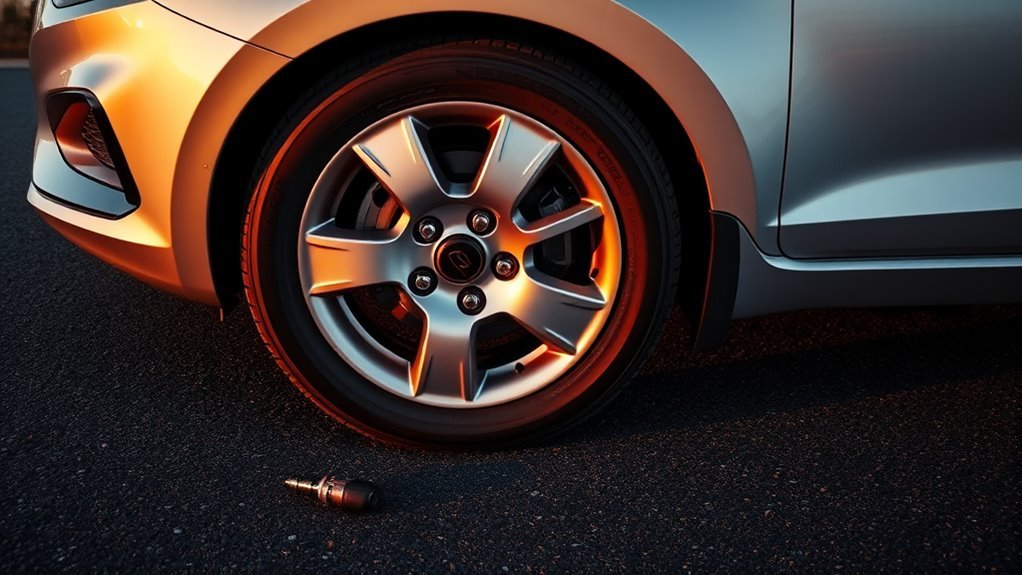
Underinflated on a Hyundai Sonata means the tire’s cold air pressure is below the pressure Hyundai specifies for that exact vehicle configuration. The correct number is on the tire information placard inside the driver’s door jamb and may also appear in the owner’s manual. Many Sonata trims use pressures in the low-to-mid 30 PSI range, but you should not guess by model name alone because the right PSI can vary by model year, tire size, trim, and load.
Low pressure lets the tire flex more than designed. That extra flex creates heat, increases rolling resistance, wears the outer shoulders faster, and can make steering, braking, and cornering feel less stable. The National Highway Traffic Safety Administration recommends checking pressure when tires are cold and inflating to the vehicle placard pressure, not the sidewall maximum.
Note: The number molded on the tire sidewall is the tire’s maximum pressure rating, not the recommended driving pressure for your Sonata. Use the door-jamb placard unless Hyundai or a qualified technician gives you a different instruction for your exact setup.
5 Immediate Safety Risks of Driving on Underinflated Sonata Tires
Driving on underinflated Sonata tires is not just a comfort issue. It changes how the tire supports the car, how the tread contacts the road, and how much heat builds inside the tire. The risk increases during highway driving, hot weather, heavy loads, and long trips.
| Risk | What Happens | Your Action |
|---|---|---|
| Blowout risk | Extra flex creates heat and can weaken tire components. | Slow down, stop safely, and inspect the tire before continuing. |
| Sluggish steering | The sidewall flexes more, so response can feel delayed. | Avoid sudden lane changes and check PSI. |
| Reduced braking confidence | The tire may not hold its intended shape under load. | Leave more following distance and correct pressure promptly. |
| Poor cornering stability | The contact patch and sidewall behavior become less predictable. | Avoid aggressive turns until pressure is corrected. |
| Shoulder wear | The outer edges of the tread wear faster than the center. | Check alignment, rotate tires, and replace tires with unsafe tread. |
Warning: Do not continue driving at highway speed on a tire that is flat, visibly sagging, bulging, cut, smoking, or losing pressure quickly. Pull over in a safe place and use roadside assistance, a spare tire, or the Tire Mobility Kit if your Sonata is equipped with one.
How Low Tire Pressure Affects Mileage, Braking, and Handling
Low tire pressure increases rolling resistance, which means your Sonata needs more energy to move. According to FuelEconomy.gov, underinflated tires can lower gas mileage by about 0.2% for every 1 PSI drop in the average pressure of all tires. That may sound small, but it adds up when pressure is ignored for weeks or months.
Correct tire pressure is a small maintenance habit with three payoffs: better fuel economy, more predictable handling, and longer tire life.
Underinflation also affects braking and handling. NHTSA research and safety guidance connect low tire pressure with reduced steering, stopping, traction, and load-carrying performance. Instead of treating PSI as a minor comfort setting, treat it as part of the car’s safety system.
The biggest changes you may feel are a dull steering response, more tire noise, a pull to one side, or a soft, unstable feeling in turns. If the TPMS light is on, correct the pressure first, then investigate leaks or sensor faults if the warning returns.
Can You Drive With Low Tire Pressure in a Sonata?
It depends on how low the tire is and whether there is visible damage. If a tire is only slightly low, the car feels normal, and the tire is not damaged, drive slowly to the nearest safe air source and inflate it to the placard PSI. If the tire is very low, visibly flat, damaged, or the car feels unstable, do not keep driving. Stop safely and get roadside help.
- Slightly low, no damage: Inflate soon and recheck after the tire cools.
- TPMS light on: Check all four tires with a gauge, not just the one that looks low.
- Repeated low reading: Suspect a nail, valve-stem leak, bead leak, wheel damage, or TPMS/sensor issue.
- Flat or damaged tire: Do not drive on it; use the spare or Tire Mobility Kit if equipped, or call roadside assistance.
Check Hyundai Sonata Tire Pressure: Step-by-Step
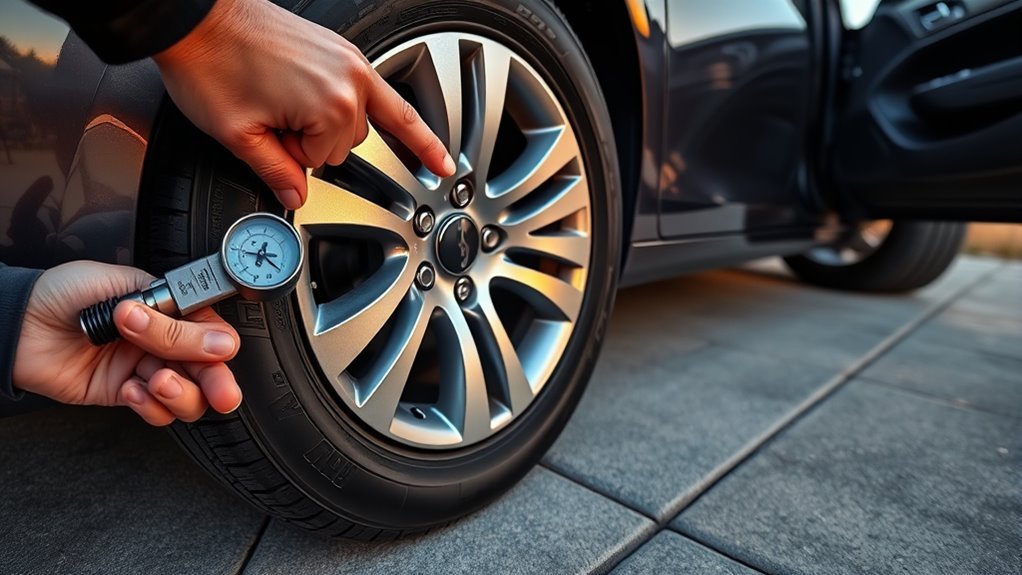
Checking tire pressure is quick, but the order matters. Check the tires cold, compare each tire with the driver-door placard, inflate in small bursts, and recheck with the gauge. Do not rely on the air pump gauge alone if you have your own accurate gauge.
Locate Recommended PSI
Open the driver’s door and find the tire information placard on the door jamb. It lists the recommended cold tire pressure for the original tire size and load conditions. If the placard and tire sidewall show different numbers, use the placard for normal driving. The sidewall number is a tire limit, not your Sonata’s recommended setting.
Use a Tire Gauge
- Park on a safe, level surface before the tires heat up from driving.
- Remove the valve cap from one tire.
- Press the gauge firmly onto the valve stem until the hissing stops.
- Read the PSI and write it down if you are tracking slow leaks.
- Repeat for all four tires. Check the spare too if your Sonata has one.
Inflate and Recheck
If a tire is below the placard PSI, add air in short bursts. Recheck with your gauge after each burst so you do not overinflate. Reinstall the valve cap when you are done because the cap helps keep dirt and moisture out of the valve stem.
Pro Tip: Keep a compact digital gauge in the glove box. A tire can look normal and still be several PSI low, especially on modern low-profile tires.
What If the TPMS Light Stays On?
If the tire pressure light stays on after inflation, first confirm all four tires are at the placard PSI while cold. Then drive normally for a short distance if your owner’s manual says the system relearns automatically. Some Hyundai systems also include a reset or set function in the cluster menu; procedures vary by model year, so follow the Hyundai owner manual TPMS guidance for your vehicle.
If the TPMS warning flashes, returns soon after inflation, or one tire keeps losing air, schedule service. The problem may be a puncture, a leaking valve stem, a damaged wheel, corrosion at the bead, or a sensor/battery issue.
How Often to Check Tire Pressure and How Temperature Affects PSI
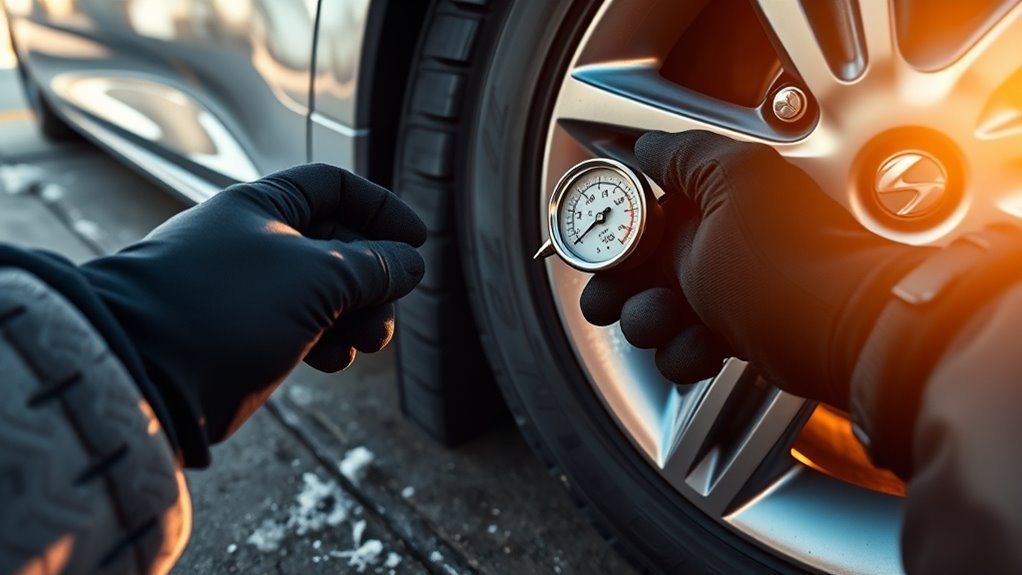
Check your Sonata’s tire pressure at least once a month and before long trips. U.S. TPMS regulations also include owner-manual language telling drivers to check each tire monthly when cold and inflate to the vehicle placard pressure.
Monthly Pressure Checks
Monthly checks catch slow leaks before they become roadside problems. They also help you spot patterns: one tire that drops faster than the others may have a small puncture, valve leak, bead leak, or wheel issue.
Before Long Trips
Before a long trip, check pressure, tread depth, and sidewalls. A tire that is safe around town may fail under sustained highway heat if it is underinflated or overloaded. Also check the spare or confirm your Tire Mobility Kit is present and usable if your Sonata came with one.
Temperature-Driven PSI Changes
Tire pressure changes with temperature. Tire Rack explains that pressure rises and falls by about 1 PSI for every 10°F change in temperature. That is why the TPMS light often appears after the first cold snap of the season.
- Check pressure monthly and before trips.
- Recheck after large temperature swings.
- Use a quality gauge when tires are cold.
- Inflate to the vehicle placard PSI, not the tire sidewall maximum.
How to Fix Low Pressure: Inflate, Patch, or Replace
The right fix depends on why the tire is low. A tire that is low from normal temperature change may only need air. A tire that loses air again needs inspection. A tire with sidewall damage, a bulge, exposed cords, or unsafe tread needs replacement.
| Action | When to Choose It | Important Limit |
|---|---|---|
| Inflate | Pressure is low, tire is not visibly damaged, and pressure holds after recheck. | Recheck later; a repeat drop means there is a leak. |
| Professional repair | Small puncture is in the repairable tread area. | USTMA recommends repair only when damage is in the tread area and no greater than 1/4 inch. |
| Replace | Sidewall damage, shoulder damage, bulge, exposed cords, large puncture, run-flat damage, or unsafe tread. | Do not patch sidewall or shoulder damage. |
| Monitor | Pressure was corrected after a temperature change and no leak is found. | Check again within a few days. |
For a puncture repair, ask the shop to remove the tire from the wheel and inspect the inside. The U.S. Tire Manufacturers Association recommends trained-technician repair only when the injury is limited to the tread area and is no greater than 1/4 inch in diameter.
[Products Worth Considering]

Keep your tires properly inflated with this analog VONDIOR tire pressure gauge, designed for fast, easy readings without batteries. The swiveling, two-axis hose and large glow dial help you measure at any tire angle with instant visibility. Built with a protective rubber shield, it supports durable, low-maintenance use for cars and trucks.

This tire inflator with pressure gauge delivers long-lasting performance with a durable rubber-protected gauge and sturdy build. The longer hose and 360 swivel air chuck help you seal the valve securely and keep your hands free while measuring, inflating, or deflating. It’s battery-free for reliable use and provides ±2 PSI accuracy in the mid-range for most typical tires, with universal compatibility for 1/4 NPT compressor outputs.

Monitor tire tread wear with a smart, color-coded depth gauge that shows clear condition ranges at a glance. The bar is range marked for fast, easy readings, helping you maintain safer traction and performance. Each gauge is portable with a pocket clip, and the set includes 20 units for daily use and sharing.
When to Replace Tires: Signs Specific to the Sonata
Replace Sonata tires when they can no longer hold pressure safely, have structural damage, or do not have enough tread. Low pressure can cause outer-edge wear, but the tire itself is only part of the story. If the same wear pattern returns after replacement, check alignment, suspension, rotation intervals, and inflation habits.
- Outer-edge wear: Often linked to underinflation, hard cornering, or alignment problems. Correct the cause before it ruins the next tire.
- Tread at or below 2/32 inch: Federal inspection guidance states passenger tire tread should not be less than 2/32 inch. Replace before traction becomes unsafe, especially if you drive in rain.
- Sidewall cracks, cuts, or bulges: These are structural warning signs and are not safe patch candidates.
- Repeated air loss: A tire that needs air every few days needs inspection, even if it looks normal.
- Noise, vibration, or pulling: These can point to uneven wear, wheel damage, tire separation, balancing problems, or alignment issues.
Note: Low pressure can make your Sonata pull or wear tires unevenly, but it does not usually change the wheel alignment angles by itself. If pressure is corrected and the pull remains, schedule an alignment and tire inspection.
[Products Worth Considering]

Measure tire tread depth quickly and accurately with this LUMITECO dial gauge that reads in 1/32" increments up to 14/32". The color-coded green/yellow/red zones make it easy to judge tire wear and know when replacement is needed. A rugged, compact design with a protective pouch helps keep the gauge ready for use on cars, trucks, motorcycles, and more.

The JACO FlowPro Tire Inflator measures, inflates, and airs down tires up to 100 PSI with battery-free operation and ±2% accuracy after calibration. It features a glowing pressure dial for night visibility, a heavy-duty steel build with a hybrid hose, and a precision push-to-inflate thumb trigger. The patented Lightning Air Chuck locks on for a secure seal, and the kit includes quick-connect hardware for easy inline use with your air compressor.

The SAFELIFE dial tire tread depth gauge measures tread depth in 1/32 inch increments with clear, easy-to-read 2-inch dial face. Color zones using a traffic light system help you quickly judge whether tread is low, marginal, or ample for safer driving. Built with a durable zinc cast body and a metal detect probe for precise, comfortable use across cars, motorcycles, trucks, and buses.
Where to Get Hyundai-Compatible Tires and Service in Davie
If you need Hyundai-compatible tires or pressure-related service in Davie, start with an authorized Hyundai service center or a reputable tire shop that can match your Sonata’s tire size, load rating, speed rating, TPMS needs, and alignment requirements. Rick Case Hyundai Davie states that it offers Hyundai tires installed by factory-trained technicians, and its local service pages list tire rotation, inspection, and pressure-setting services.
Before approving service, ask for an itemized quote. A complete tire quote should show the tire model and size, installation labor, mounting, balancing, valve stems or TPMS service kits, disposal fees, taxes, alignment recommendation, and any road-hazard coverage. For a puncture, ask whether the tire will be removed from the wheel and inspected internally before repair.
- Choose dealer service if you want Hyundai-specific tire fitment help, TPMS diagnosis, warranty documentation, or factory-trained technicians.
- Choose a tire specialist if you want broader tire-brand comparison, quick puncture inspection, or multiple price tiers.
- Choose roadside assistance if the tire is flat, damaged, or unsafe to inflate where the car is parked.
[Products Worth Considering]
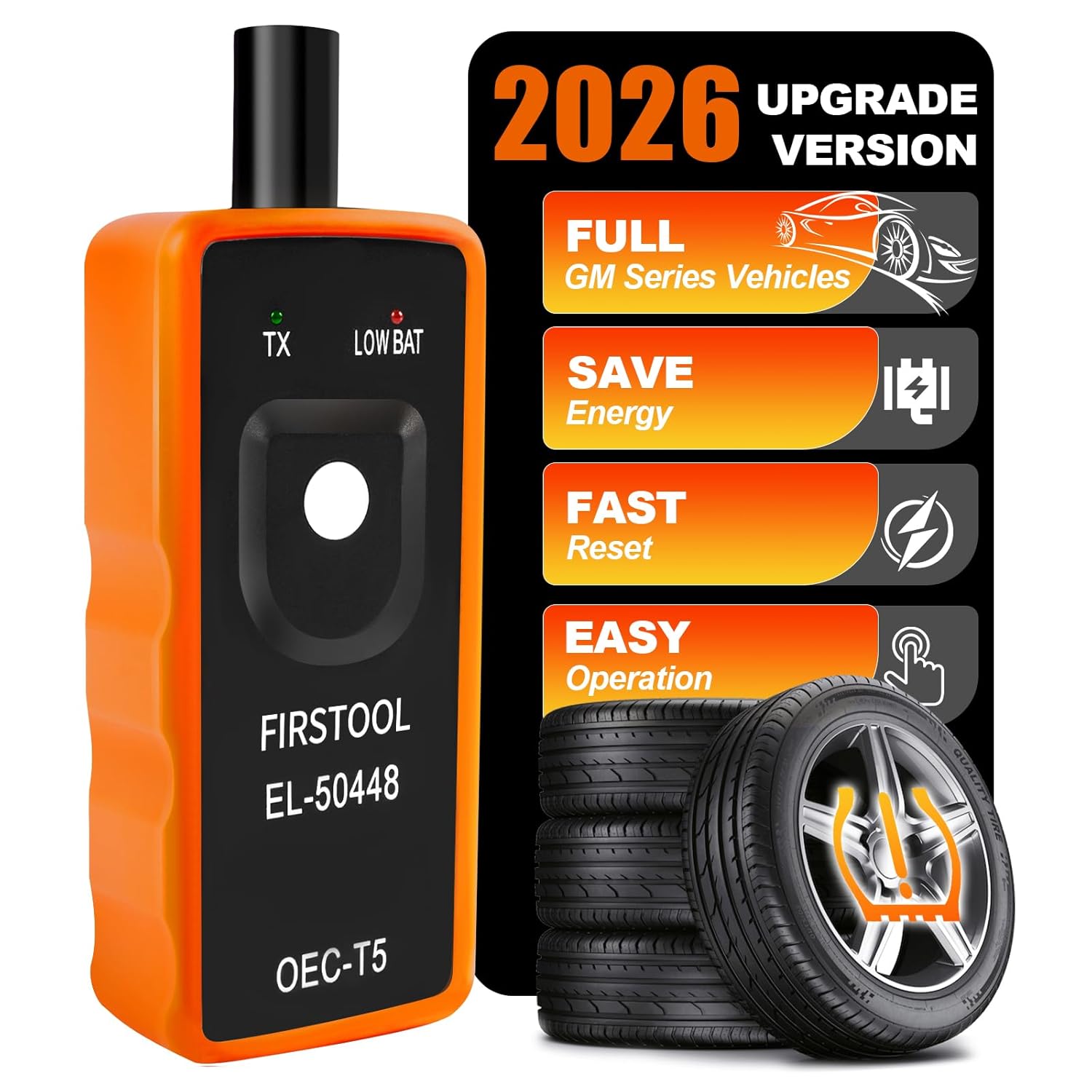
This TPMS relearn tool helps you quickly activate, match, and reset GM tire pressure sensors to keep the vehicle monitoring system working properly. It clears tire pressure alarms and dashboard warning lights after sensor replacement or tire rotation, and supports learning for common 315/433 MHz TPMS sensors. Designed for simple one-button operation, it can help you avoid unnecessary trips to repair shops.

Milton S-921 pencil tire pressure gauge helps you maintain optimal tire pressure for passenger cars with accurate readings in PSI and kPa. It features a built-in deflator valve for convenient pressure adjustments, plus a single chuck head and nylon indicator bar for easy use on the go. Built from durable plated brass and designed for reliable performance, it’s a practical road trip and cold-weather maintenance tool.

Replace worn or malfunctioning GM TPMS sensors with this 433MHz pre-programmed sensor set designed for compatibility with many Chevrolet, Buick, GMC, and Cadillac models. It includes guidance for proper OBDII relearning/pairing after installation and supports reliable long-term operation with a high-performance CR2032 battery. Quality tested for durability and performance to help restore accurate tire pressure monitoring.
Frequently Asked Questions
Can underinflation void my Hyundai Sonata warranty?
Underinflation does not automatically void the entire vehicle warranty. However, damage caused by neglect, improper tire pressure, road hazards, or unsafe tire use may not be covered as a related tire or wheel claim. Keep service records, tire rotations, pressure checks, and repair invoices if you need to support a warranty discussion.
Can low tire pressure damage wheel alignment?
Low tire pressure usually does not physically change alignment angles. It can make the car pull, create uneven shoulder wear, and mimic alignment symptoms. If the Sonata still pulls after all tires are set to the correct cold PSI, have the alignment, tires, suspension, and wheels inspected.
Do aftermarket sensors work with Sonata TPMS?
Yes, aftermarket TPMS sensors can work on many Hyundai Sonata models, but compatibility depends on model year, sensor frequency, programming, and installation quality. Use sensors listed for your exact Sonata and have them programmed or relearned by a qualified shop if the warning light does not clear.
Can underinflated tires trigger other dashboard warnings?
The most direct warning is the TPMS light. In some situations, a very low tire, mismatched tire diameter, wheel-speed issue, or sensor problem may also affect stability or traction-related warnings. Do not assume every warning is “just tire pressure.” Correct the PSI first, then diagnose any warning that remains.
Is roadside inflation safe with a portable compressor?
Roadside inflation can be safe if the car is well away from traffic, the tire is not visibly damaged, and you can stand in a safe position. Use the compressor only long enough to reach the placard PSI and then recheck with a gauge. If the tire is flat, shredded, bulging, or leaking fast, call roadside assistance instead.
Why does one Sonata tire keep losing air?
A single tire that keeps losing pressure may have a nail or screw, leaking valve stem, cracked valve core, bead leak, bent wheel, corrosion at the rim, or old tire damage. Inflate it to the placard PSI, mark the date and reading, and schedule inspection if it drops again.
Should I inflate my Sonata tires above the placard PSI in winter?
Set the tires to the placard PSI when they are cold. Because cold weather lowers pressure, you may need to add air more often in winter, but do not use the tire sidewall maximum as your target. If you set pressure indoors in a warm garage before driving into much colder weather, recheck outside when the tires are cold.
Conclusion
Underinflated tires can turn a safe Hyundai Sonata into a car that uses more fuel, wears tires faster, and feels less predictable when braking or steering. The fix is simple: check cold pressure monthly, use the driver-door placard PSI, correct low tires promptly, and do not ignore repeated air loss. If a tire has sidewall damage, a bulge, unsafe tread, or a puncture outside the repairable tread area, replace it instead of trying to stretch its life.
Sources
- NHTSA TireWise: Tire Safety Ratings and Awareness — cold pressure checks, placard PSI, and tire safety basics.
- FuelEconomy.gov: Keeping Your Vehicle in Shape — fuel-economy effect of underinflated tires.
- 49 CFR 571.138: Tire Pressure Monitoring Systems — TPMS warning and monthly tire-pressure language.
- Tire Rack: Tire Pressure and Temperature Changes — about 1 PSI per 10°F temperature change.
- U.S. Tire Manufacturers Association: Tire Repair Basics — professional puncture repair limits.
- 49 CFR 570.9: Tires — 2/32-inch minimum tread-depth inspection standard.