Overinflating your Toyota Hilux tires can reduce grip, create a harsher ride, accelerate center tread wear, and make the tires more vulnerable to pothole or curb damage. However, a tire is only overinflated when its cold pressure exceeds the value Toyota specifies for your particular vehicle, tire size, axle, and load condition. The correct target is on the vehicle’s tire-pressure placard or in its owner’s manual.
Quick Answer
Overinflating a Toyota Hilux tire means its cold pressure is above the value on the vehicle’s tire placard or owner’s manual. It can reduce grip, harden the ride, increase center tread wear, and make impact damage more likely. Check each tire cold, then release air gradually until it matches the specified front or rear pressure.
Key Takeaways
- Do not use one generic PSI range for every Toyota Hilux. Use the cold-pressure values on your vehicle’s placard or in its owner’s manual.
- Check pressure before driving or after the Hilux has been parked for about three hours.
- Excess pressure can reduce tire compliance, worsen ride comfort, reduce grip, and contribute to center tread wear.
- Do not use the maximum pressure molded into the tire sidewall as your normal driving target.
- A sidewall bulge is not a normal sign of overinflation. It may indicate internal damage that requires immediate professional inspection.
At a Glance
| Time Required | About 5 to 10 minutes after the tires are cold |
| Difficulty | Easy |
| Tools Needed | Accurate tire-pressure gauge and a gauge tip or valve tool for releasing air |
| Cost | No added cost if you already own a gauge or have access to a reliable air station |
Understanding Tire Overinflation on a Toyota Hilux
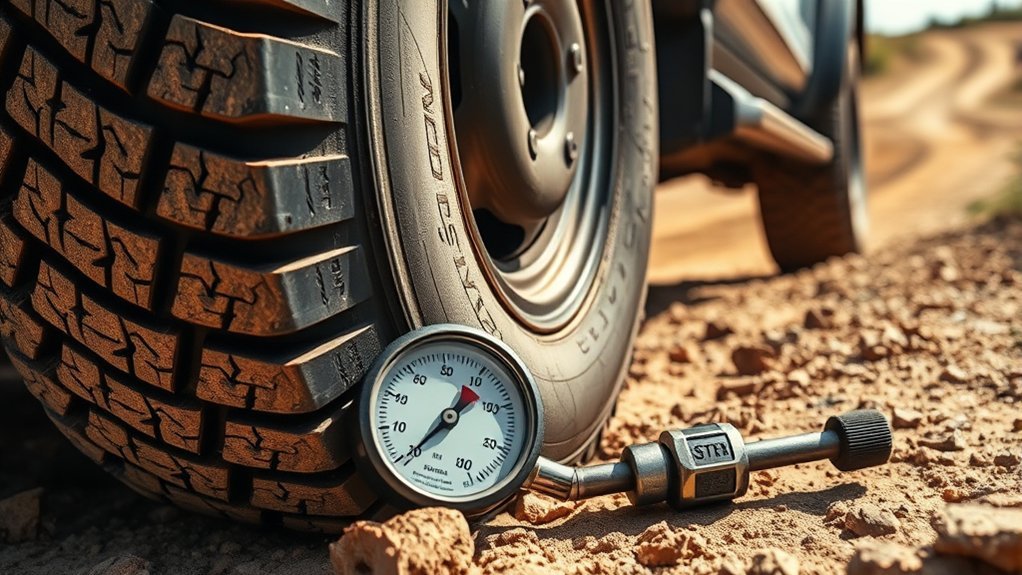
Your Hilux tires are overinflated when their pressure, measured cold, is higher than Toyota’s specified value for the vehicle. You can normally find that value on a label inside the driver’s door area or in the owner’s manual. Toyota Australia recommends checking the label or manual and measuring the tires while they are cold.
Do not assume every Hilux needs the same pressure. Specifications can change with the model year, market, tire size, front or rear axle, and load. For example, Toyota UK publishes different Hilux pressures for different factory tire sizes. These examples show why a generic 30 to 36 PSI range cannot replace your vehicle’s own placard.
Warning: Do not inflate your Hilux tires to the maximum pressure molded into the tire sidewall unless Toyota specifically requires that value for the vehicle and load. The sidewall figure is not the normal vehicle pressure recommendation. Use the cold-pressure value on the vehicle placard or in the owner’s manual.
The correct target is Toyota’s specified cold pressure for your vehicle, not a generic PSI range and not the maximum number printed on the tire.
How Overinflation Affects Safety and Performance
Excess pressure makes a tire stiffer and less able to absorb small bumps and road irregularities. You may notice a sharper, more unsettled ride, especially on broken pavement, gravel, or corrugated roads.
Overinflation can also reduce the effective contact between the tread and the road. According to Continental’s tire-pressure guidance, excessive pressure can reduce traction, affect directional stability, lengthen braking distances, and make the tire more vulnerable to damage from potholes, curbs, or sharp objects.
Over time, excessive pressure may concentrate more load near the center of the tread. This can produce faster center wear, although center wear is not proof of overinflation by itself. Tire construction, wheel fitment, alignment, rotation, vehicle load, and driving habits can also influence the pattern. Michelin recommends checking the cold pressure against the vehicle manufacturer’s value when center wear appears.
Overinflation does not automatically cause a blowout. However, an excessively stiff tire may absorb an impact less effectively, increasing the chance of damage when it strikes a pothole, curb, rock, or road debris. Any strong impact should be followed by a pressure and damage inspection.
How to Tell If Your Hilux Tires Are Overinflated
An accurate pressure reading is the only dependable way to confirm overinflation. Visual appearance and ride quality can alert you to a possible problem, but they cannot tell you the exact pressure.
- A cold gauge reading above the placard value: This is the clearest sign. Compare each tire with the specified front or rear value and any load-specific instructions.
- An unusually harsh ride: Excess pressure can make the tires feel rigid over bumps, joints, and rough surfaces.
- Persistent center tread wear: Faster wear through the middle of the tread can be associated with excessive pressure, but a tire professional should also check alignment, tire fitment, and rotation history.
- Recent inflation without a final gauge check: Tires are commonly overfilled when air is added quickly or when a service-station gauge is inaccurate.
- Pressure that appears high after driving: A warm tire normally reads higher than a cold tire. Do not immediately assume it is overinflated.
Note: A sidewall bulge, bubble, exposed cord, deep cut, or split is not a routine pressure symptom. It may indicate structural tire damage. Avoid driving on the damaged tire and arrange professional inspection or replacement.
How to Fix Overinflated Toyota Hilux Tires
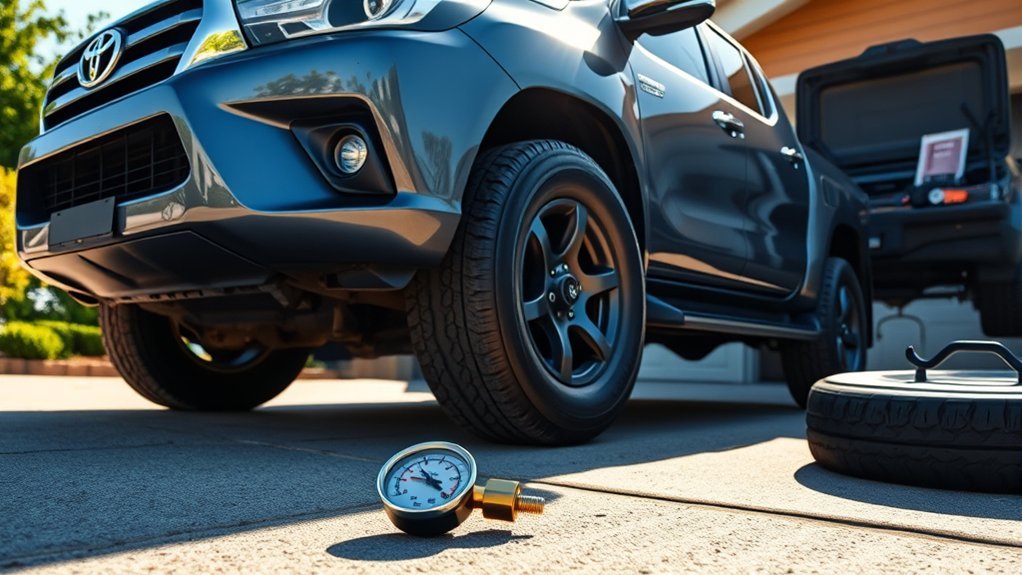
You can usually correct an overinflated tire in a few minutes. Make the final adjustment only when the tires are cold, preferably before driving or after the Hilux has been parked for about three hours.
- Park safely: Stop on firm, level ground, apply the parking brake, and keep away from moving traffic.
- Find the specified pressure: Read the tire placard in the driver’s door area or check the owner’s manual. Note any different front, rear, normal-load, or heavy-load values.
- Measure every tire: Remove the valve cap and press an accurate gauge firmly onto the valve stem. Record the reading for each tire separately.
- Release air in short bursts: If a cold tire is above the specified value, gently press the valve pin with the release tip on your gauge or a suitable valve tool.
- Recheck after each release: Measure again after every short burst. Stop when the reading matches Toyota’s specified cold pressure.
- Replace the valve cap: Refit it securely to help keep dirt and moisture away from the valve.
- Inspect the tire: Look for cuts, cracks, embedded objects, exposed cords, sidewall bulges, or impact marks.
- Repeat for the remaining tires: Do not assume every tire has the same pressure or that the front and rear targets are identical.
| Step | Action | Key Point |
|---|---|---|
| 1 | Check cold pressure | Use an accurate gauge before driving or after about three hours parked |
| 2 | Find Toyota’s value | Use the placard or owner’s manual, not the tire-sidewall maximum |
| 3 | Release air | Press the valve pin briefly rather than releasing a large amount at once |
| 4 | Measure again | Stop when the cold reading reaches the specified value |
| 5 | Inspect and finish | Check for damage and reinstall the valve cap |
Warning: Do not bleed a warm tire down to the cold placard value. Driving heats the tire and naturally raises its pressure. If the tire is not dangerously overfilled, allow it to cool and check it again before making the final adjustment.
Pro Tip: Keep a dependable handheld gauge in your Hilux. Public air-station gauges can be worn or inaccurate, so compare your gauge with a tire professional’s calibrated equipment if the readings seem inconsistent.
[Products Worth Considering]

This tire inflator with pressure gauge delivers long-lasting performance with a durable rubber-protected gauge and sturdy build. The longer hose and 360 swivel air chuck help you seal the valve securely and keep your hands free while measuring, inflating, or deflating. It’s battery-free for reliable use and provides ±2 PSI accuracy in the mid-range for most typical tires, with universal compatibility for 1/4 NPT compressor outputs.

Milton S-921 pencil tire pressure gauge helps you maintain optimal tire pressure for passenger cars with accurate readings in PSI and kPa. It features a built-in deflator valve for convenient pressure adjustments, plus a single chuck head and nylon indicator bar for easy use on the go. Built from durable plated brass and designed for reliable performance, it’s a practical road trip and cold-weather maintenance tool.

This 12-inch LUMITECO dual head tire pressure gauge features an integrated straight-on chuck and a 30° reverse chuck to reach hard-to-access dual wheel valves. Its 10–150 PSI / 1–10 BAR range with a clear, two-sided scale helps you quickly check tire pressure for safer, smoother driving. Heavy-duty construction and a simple no-battery design make it a reliable tool for trucks, cars, RVs, and motorcycles.
Common Tire-Pressure Mistakes to Avoid
- Using a generic online PSI number: Even Hilux models fitted with different factory tire sizes may have different pressure specifications.
- Using the tire-sidewall maximum: That figure is not the normal pressure Toyota selected for your vehicle.
- Bleeding warm tires: A higher reading after driving is normal. Recheck after the tires cool.
- Checking by sight alone: A tire can be several PSI high or low without looking obviously different.
- Assuming front and rear pressures match: Follow the placard if Toyota specifies different axle pressures.
- Adding pressure for towing by guesswork: Use only the load or towing instructions supplied by Toyota and remain within the vehicle’s tire, axle, and load limits.
- Ignoring the spare: Check the spare at the interval specified in the owner’s manual, especially before a remote trip.
- Ignoring impact damage: A tire can suffer internal damage after hitting a pothole or curb even if it still holds air.
Maintaining the Correct Hilux Tire Pressure
Check all road tires at least once a month and before long journeys, towing, carrying a heavy load, or driving in remote areas. NHTSA recommends checking every tire while cold and using the vehicle manufacturer’s pressure value.
- Use the same cold-check routine: Measure before driving whenever possible.
- Check after major temperature changes: Cold weather can lower the measured pressure, while warmer conditions can raise it. Restore cold tires to the placard value rather than inventing a seasonal target.
- Follow load-specific instructions: Some Hilux configurations may specify different values for heavy loads or sustained high-speed use.
- Inspect tread and sidewalls: Look for uneven wear, cuts, cracks, bulges, punctures, and embedded objects.
- Rotate and align as required: Rotation and alignment help separate pressure-related wear from suspension or geometry problems.
- Investigate repeated pressure changes: A tire that repeatedly gains an unusual reading or loses air may have a valve, gauge, wheel, or tire problem.
Do not intentionally run the pressure below Toyota’s specification to soften the ride. A softer feel does not mean the tire is operating safely, especially when the Hilux is loaded or traveling at highway speed.
[Products Worth Considering]

Upgrade your Toyota tire setup with these corrosion-resistant, leak-proof valve stem caps designed to help protect the valve core from water, snow, and road grime. The caps feature a snug rubber seal and durable copper alloy construction to resist rust and oxidation while maintaining stable tire pressure. Ideal for replacing worn original caps and keeping your wheels looking clean and stylish.

The Continental Grand Prix 5000 is an allround road bike tire engineered for faster rolling, improved ride comfort, and enhanced puncture protection. It features a Vectran Breaker cut-protection layer, Lazer Grip micro-profile tread for confident cornering control, and Active Comfort Technology to damp vibration for smoother rides. BlackChili compound optimizes grip and speed for everyday performance and long-lasting confidence.

This universal wheel alignment tool helps you accurately restore tire tilt angles after tire or suspension repairs using an adjustable camber gauge. It features a powerful magnetic base that firmly attaches to brake rotors for stationary, slip-free readings, improving consistency during measurement. Built from durable PC plastic, it resists wear and corrosion and is compact enough for car, truck, RV, and motorcycle alignment tasks.
When to Get Professional Tire Help
Stop using the affected tire and arrange professional inspection if you find a sidewall bulge, exposed cord, deep cut, split, severe cracking, or obvious impact damage. A pronounced sidewall bulge can indicate damaged internal cords and may require immediate replacement. See Continental’s guidance on tire impact damage and sidewall bulges.
You should also visit a tire professional if:
- The pressure changes repeatedly without an obvious temperature change.
- The vehicle pulls, vibrates, or handles differently after a pothole or curb impact.
- Center wear continues after the pressure is corrected.
- You cannot confirm the correct pressure for modified wheels or non-standard tires.
- The tire was operated far above its specified pressure for an extended period.
- The gauge reading exceeds the tire’s sidewall limit.
[Products Worth Considering]

The Topeak SmartGauge D2 delivers precise digital tire pressure readings for bikes, motorcycles, and sports equipment up to 250 psi (17 bar). Its rotating SmartHead works with both Presta and Schrader valves, so you can check pressure quickly without adapters. The LCD display makes it easy to read results in psi, bar, or kg/cm² with an included CR2032 battery for immediate use.

Upgrade your Toyota’s wheels with durable aluminum alloy valve stem caps that help protect valve cores from corrosion and direct exposure to road grime, clay, water, and snow. Rubber rings improve sealing to help prevent air leakage and maintain stable tire pressure for safer driving. These caps are easy to install or remove without tools and add a unique, stylish look to your car.
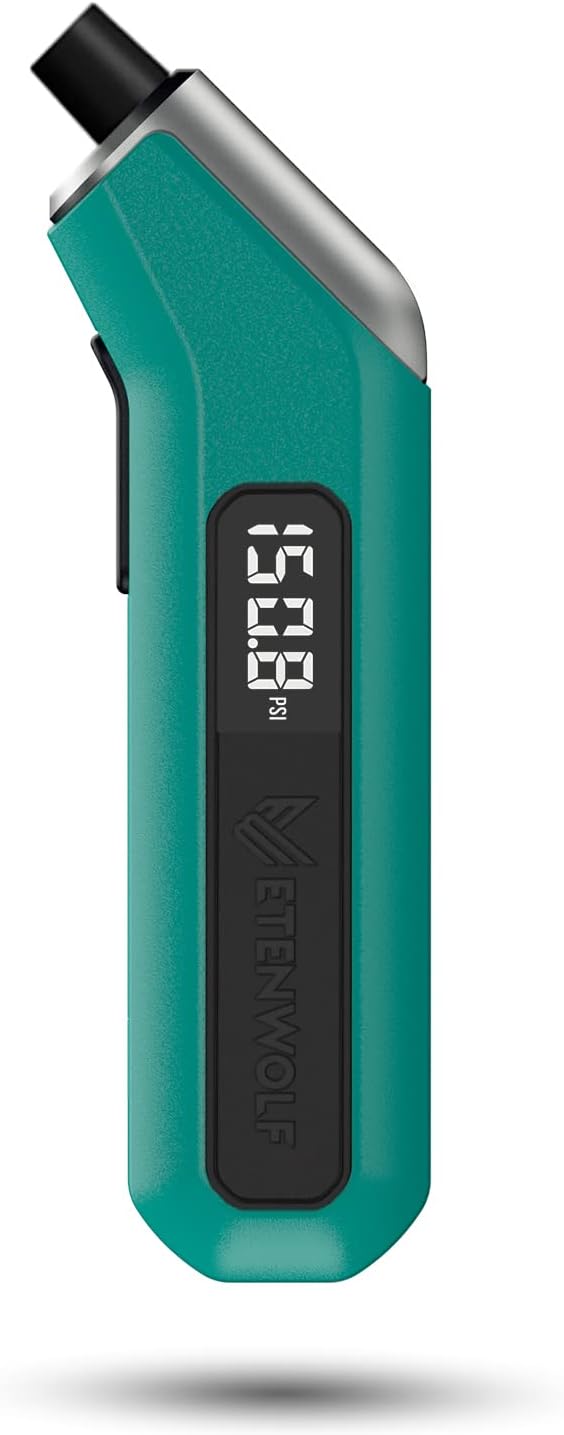
ETENWOLF T300 is a calibrated digital tire pressure gauge designed for reliable readings across low and high pressure ranges. It includes thermal compensation for stable performance in extreme cold or heat, an LED light for visibility, and an auto shut-off to help preserve battery life. Ideal for pickups, RVs, and heavy-duty vehicles, it delivers accurate PSI measurements with sturdy durability.
Frequently Asked Questions
Does overinflating Toyota Hilux tires damage them?
Consistently running above Toyota’s specified cold pressure can increase center tread wear, reduce ride comfort, alter grip, and make the tire more vulnerable to impact damage. The amount of risk depends on how far above the specification the tire is, how long it is driven, the load, speed, road conditions, and whether the tire has suffered an impact.
Is it okay to overinflate Hilux tires by 3 PSI?
If a cold tire is 3 PSI above Toyota’s placard value, release air until it reaches the specified pressure. A tire may read several PSI higher after driving because it has warmed up. Do not bleed a warm tire to the cold target. Let it cool and measure it again.
What happens if a Hilux tire is 10 PSI too high?
A cold pressure that is 10 PSI above Toyota’s specification is a substantial overinflation. It can create a very harsh ride, reduce tire compliance and grip, accelerate center wear, and increase vulnerability to impact damage. Park safely and reduce the cold pressure to the placard value before normal driving. Arrange an inspection if the tire exceeded its sidewall limit or suffered an impact.
Can I drive a short distance with overinflated tires?
Correct the pressure before driving when you can do so safely. Do not continue if the tire is extremely overfilled, above its sidewall limit, visibly damaged, bulging, or causing unstable handling. If the reading is only high because the tire is warm, wait for a cold reading before releasing air.
Should I add extra pressure when towing with a Toyota Hilux?
Use only the towing or heavy-load pressures listed on your vehicle’s placard or in the owner’s manual. Do not add an arbitrary number of PSI. You must also stay within Toyota’s payload, axle, towing, tire-load, and tow-ball limits.
Why is my tire pressure higher after driving?
The tire flexes and warms while the vehicle moves, which raises the internal air pressure. This increase is normal. Toyota’s placard values are cold-pressure specifications, so the most reliable comparison is made before driving or after the vehicle has been parked for about three hours.
Conclusion
Overinflating your Toyota Hilux tires can affect grip, ride comfort, tread wear, and resistance to road impacts. The safest approach is simple: ignore generic PSI ranges, find Toyota’s specified cold pressure for your exact vehicle, check every tire with an accurate gauge, and release excess air in short bursts.
Do not bleed warm tires to a cold specification, and never treat a sidewall bulge as a harmless pressure issue. Stop driving on a visibly damaged tire and have it inspected. Regular cold-pressure checks before long trips, towing, or carrying heavy loads will help your Hilux handle more predictably and protect its tires from avoidable wear.
Sources
- Toyota Australia FAQs and Support — supports checking the vehicle label or owner’s manual and measuring pressure while the tires are cold.
- Toyota UK Tire Pressure and Size Guide — demonstrates that Hilux pressure specifications vary among factory tire sizes.
- NHTSA TireWise — supports monthly cold-pressure checks, use of the vehicle placard, and gradual air release.
- NHTSA Summer Driving and Road Trip Tips — explains that the tire-sidewall pressure is not the vehicle’s recommended operating pressure.
- Michelin Center Tread Wear Guidance — supports the connection between excess pressure and accelerated center wear.
- Continental Tire Damage Guide — supports the warning that a pronounced sidewall bulge can indicate damaged internal cords.