When towing with your Toyota Hilux, the safest tire pressure is not one universal PSI. It depends on your Hilux model, tire size, load, trailer weight, tow ball download, and the cold pressures listed on your door placard or owner’s manual. Use those manufacturer figures first, then make load-based adjustments only within the tire, wheel, axle, and vehicle limits.
Quick Answer
For towing with a Toyota Hilux, start with the cold tire pressure shown on your driver-door placard or owner’s manual. Many Hilux models list different pressures by tire size, so do not assume 33 PSI fits every truck. If towing a heavy load, use the loaded-pressure guidance, tire load table, or a Toyota/tire professional’s recommendation.
Key Takeaways
- Use the Hilux door placard or owner’s manual as your starting point, not the tire sidewall maximum.
- Check pressures cold, before towing, before long trips, and before carrying heavy loads.
- Rear tire pressure may need to rise when the rear axle is heavily loaded, but only within the limits for the tire, wheel, and vehicle.
- Trailer tires need their own cold pressure setting based on the trailer placard, tire sidewall, and trailer axle load.
- Never exceed GVM, GCM, axle load, tow ball download, tire load index, wheel rating, or tow bar limits.
At a Glance
| Time Required | 10–15 minutes before a trip |
| Difficulty | Easy if your tires are cold and you know your load |
| Tools Needed | Accurate tire pressure gauge, air compressor, owner’s manual or door placard, trailer load details |
| Cost | Usually free; a good gauge typically costs $10–$30 |
Why Tire Pressure Matters When Towing
When you tow with a Toyota Hilux, the tires work harder than they do in normal driving. The rear axle may carry extra weight from passengers, cargo, accessories, and tow ball download. The tires also deal with more heat, longer braking distances, trailer sway forces, and side loads from crosswinds.
Correct tire pressure helps the tire keep its shape, carry the load it was designed for, and maintain stable handling. Under-inflated tires flex too much, build heat, wear unevenly, and can fail. Over-inflated tires can ride harshly, reduce grip, and become more vulnerable to impact damage.
Warning: Never use the tire sidewall maximum as your towing target unless the tire maker, trailer placard, or vehicle manufacturer specifically calls for it. The sidewall number is a limit, not a universal recommended pressure.
What Is the Recommended Tire Pressure for Towing With a Toyota Hilux?
The recommended Toyota Hilux tire pressure for towing is the cold pressure specified for your exact vehicle, tire size, and load condition. The best first source is the tire placard on the driver-side door area, followed by the owner’s manual.
Toyota’s published UK tire guide shows why one fixed number is risky: current Hilux general-use pressures vary by tire size. These figures are examples only, not a substitute for your own placard.
| Common Hilux Tire Size | Toyota UK General Pressure | What to Do Before Towing |
|---|---|---|
| 225/70 R17 | 2.4 bar / 35 psi front and rear | Confirm your placard, then check whether a loaded setting is listed. |
| 265/65 R17 | 2.0 bar / 29 psi front and rear | Do not jump to 35–40 psi unless load data or manufacturer guidance supports it. |
| 265/60 R18 | 2.0 bar / 29 psi front and rear | Check the placard and tire load rating, especially after fitting replacement tires. |
For a heavily loaded Hilux, the rear tires may need more pressure than the everyday setting, but that adjustment should be based on the loaded-pressure recommendation, actual axle load, or tire manufacturer load-inflation data. If you have changed tire size, moved to LT tires, added heavy accessories, or tow near the vehicle’s limit, ask a Toyota dealer or qualified tire professional to confirm the correct cold pressure.
How to Adjust Tire Pressure for Optimal Load Stability
Use this safe process before towing with your Hilux:
- Check the pressure when tires are cold. Cold means the vehicle has been parked for at least three hours or driven only a very short distance at low speed.
- Read the Hilux tire placard. Match the pressure to your tire size and load condition.
- Confirm your limits. Check GVM, GCM, axle ratings, tire load index, wheel rating, tow bar capacity, and tow ball download.
- Set front and rear pressures separately. The rear axle often carries more load when towing, but the front pressure still matters for steering and braking.
- Check the trailer tires. Trailer tires are separate from the Hilux tires and should be inflated to the trailer or tire maker’s cold-pressure guidance.
- Recheck before long highway runs. Look for uneven tire bulging, heat, vibration, or sway after the first stop.
Note: Hot tire pressure rises during driving. That is normal. Do not bleed air from hot tires just because the pressure is higher than the cold setting.
[Products Worth Considering]

The JACO FlowPro Tire Inflator measures, inflates, and airs down tires up to 100 PSI with battery-free operation and ±2% accuracy after calibration. It features a glowing pressure dial for night visibility, a heavy-duty steel build with a hybrid hose, and a precision push-to-inflate thumb trigger. The patented Lightning Air Chuck locks on for a secure seal, and the kit includes quick-connect hardware for easy inline use with your air compressor.
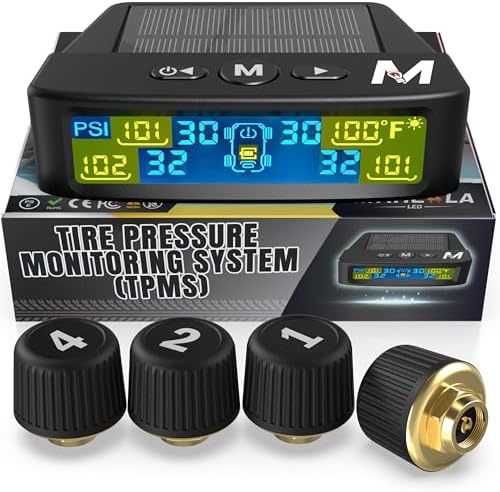
Marcala’s TPMS set of four sensors helps you monitor tire pressure and temperature in real time while driving, with updates every second. The bright color LCD uses auto-dimming for easy viewing, powered by dual solar and USB charging, and offers six alarm modes. Built for trailers, RVs, campers, trucks, and towing setups, the sensors support monitoring 1-4 wheels up to 98 PSI with IP67 waterproof protection.
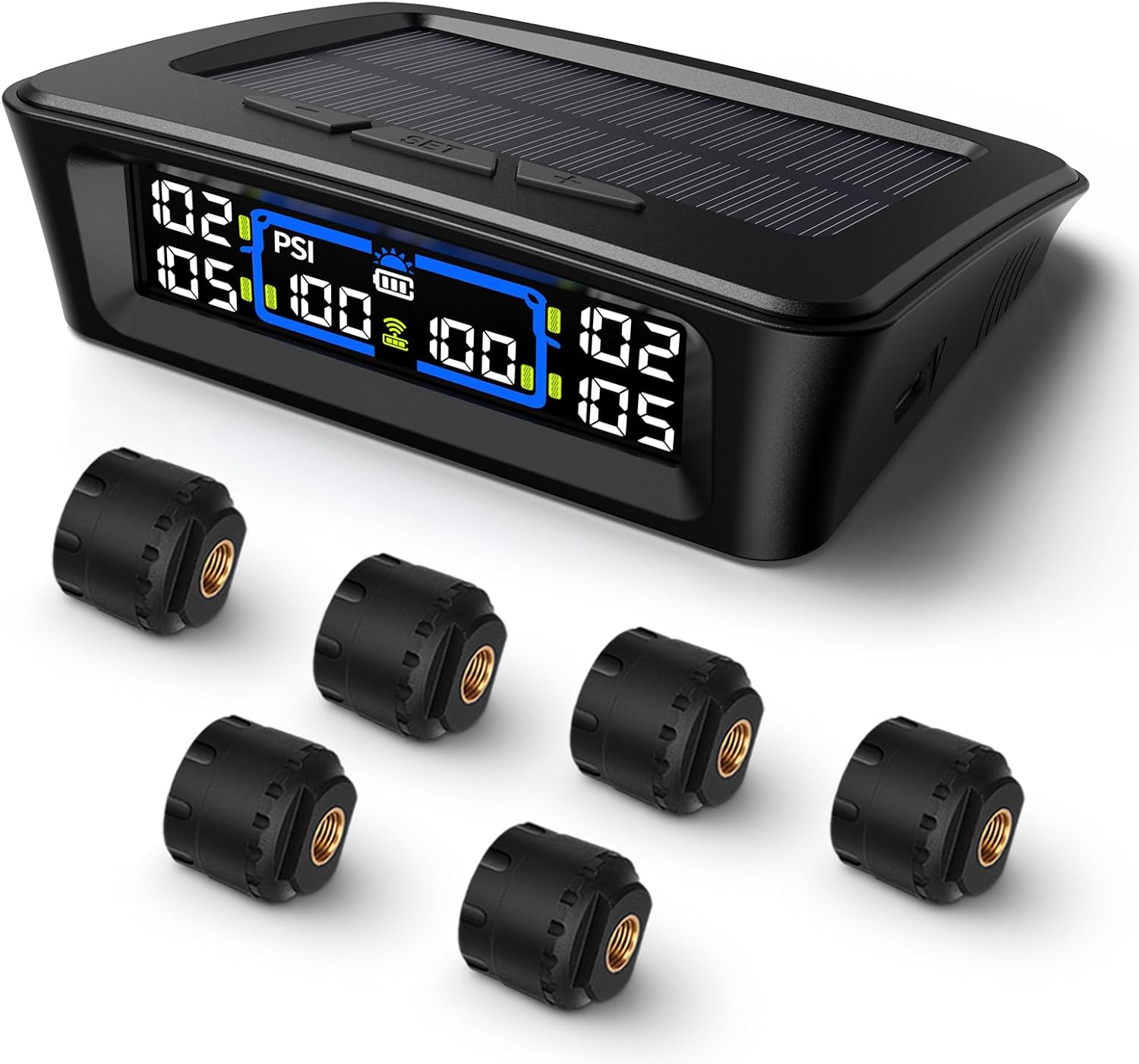
The Tymate TM12 RV TPMS delivers real-time tire pressure and temperature monitoring with a stable 433Hz display for safer long-distance driving. It supports simultaneous monitoring across vehicle and trailer zones, includes six alarm modes for pressure, temperature, leakage, battery, and signal loss, and features easy DIY installation with auto calibration. Power is supplied via USB-C charging or solar recharging, with a wide 0–144 PSI range and up to 50 ft signal coverage for RVs and towable trailers.
How Does Increased Tire Pressure Affect Handling?
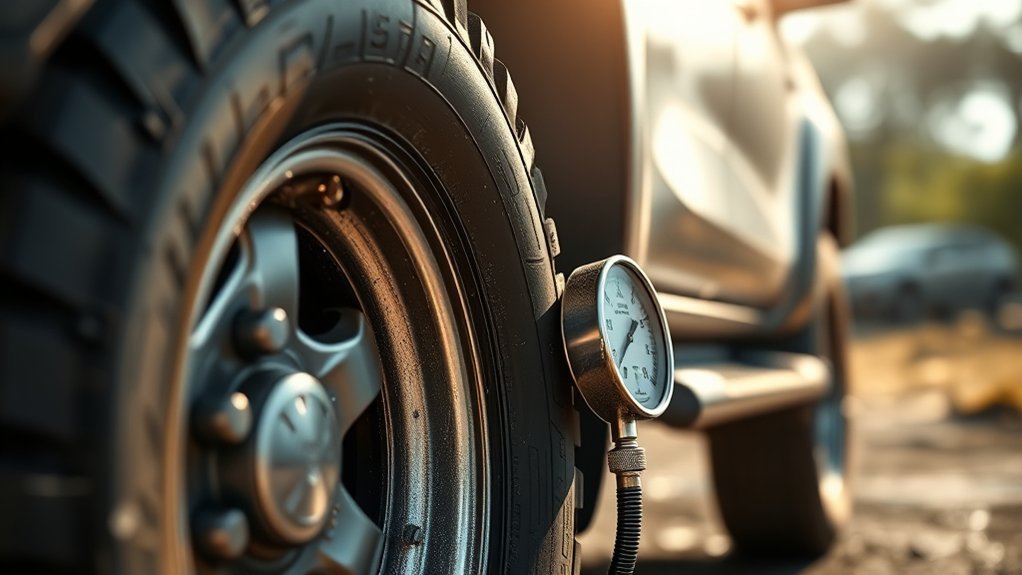
Increasing pressure can help a tire carry load and reduce sidewall flex, but more pressure is not always better. Too little pressure can make the Hilux feel loose, slow to respond, and unstable under load. Too much pressure can reduce the tire’s contact patch, make the ride harsh, and increase the risk of impact damage on potholes or corrugations.
| Situation | Safer Action | Why It Matters |
|---|---|---|
| Rear of Hilux squats after coupling trailer | Check tow ball download, rear axle load, and loaded rear tire pressure. | Squat can mean too much rear load, not just low tire pressure. |
| Trailer sway begins at highway speed | Slow down, check load distribution, tow ball download, and all tire pressures. | Sway is often a loading or speed problem, not just a PSI problem. |
| Tires feel hot or smell unusual | Stop safely, inspect tires, check pressure with a gauge, and reduce speed/load if needed. | Heat can indicate underinflation, overloading, damage, or excessive speed. |
| You fitted LT or non-standard tires | Use the tire maker’s load-inflation data or professional advice. | The original placard may not directly match a different tire construction. |
Common Tire Pressure Management Mistakes to Avoid
Avoid these common mistakes when preparing your Hilux for towing:
- Using one internet PSI for every Hilux. Tire size, trim, market, load, and replacement tires can change the correct pressure.
- Inflating to the sidewall maximum by default. The sidewall pressure is a limit tied to the tire’s maximum load, not automatically the correct Hilux towing pressure.
- Ignoring the trailer tires. A perfectly set Hilux can still tow poorly if the trailer tires are under-inflated, overloaded, aged, or damaged.
- Forgetting the spare. A soft spare is a problem if you get a puncture while towing far from service.
- Bleeding hot tires. Pressure rises as tires warm up. Set pressure cold, then investigate if hot pressure or temperature looks abnormal.
- Trying to fix overload with PSI. Tire pressure cannot make an overloaded Hilux, axle, tow bar, or trailer safe.
How to Monitor and Maintain Tire Pressure for Towing
Check all Hilux and trailer tires before every towing trip. Use a quality gauge, not just the service-station compressor display. Measure pressures cold, set them to the correct cold value, and replace the valve caps after checking.
A Tire Pressure Monitoring System can help warn you about pressure loss while driving, but it is not a replacement for manual checks. TPMS warnings may appear only after pressure has already dropped significantly, so a pre-trip gauge check is still essential.
Pro Tip: Keep a small log of cold pressures before towing, trailer weight, and how the rig handles. If one tire repeatedly loses pressure or runs hotter than the others, inspect it before the next trip.
[Products Worth Considering]

The TYAMATE TM8 solar-powered wireless TPMS delivers real-time tire pressure and temperature monitoring with six alarm modes for safer driving. A vibrant color LCD display shows readings clearly while windshield mounting keeps it hands-free and easy to read. With a wide 0–87 PSI range, strong 433.92 MHz signal transmission, and quick sensor pairing, it’s ideal for RV, sedan, SUV, MPV, and truck use.

AstroAI’s digital tire pressure gauge with inflator helps you quickly check, inflate, and deflate tires with an easy lock-on chuck and integrated bleed valve. It delivers calibrated accuracy within 1% for a clear PSI readout from 3 to 250 PSI, supporting dependable tire maintenance. Designed for many vehicle types, it connects to common compressor outputs and standard Schrader valves.

This tire inflator with pressure gauge delivers long-lasting performance with a durable rubber-protected gauge and sturdy build. The longer hose and 360 swivel air chuck help you seal the valve securely and keep your hands free while measuring, inflating, or deflating. It’s battery-free for reliable use and provides ±2 PSI accuracy in the mid-range for most typical tires, with universal compatibility for 1/4 NPT compressor outputs.
Understanding Load Ratings and Tire Specs
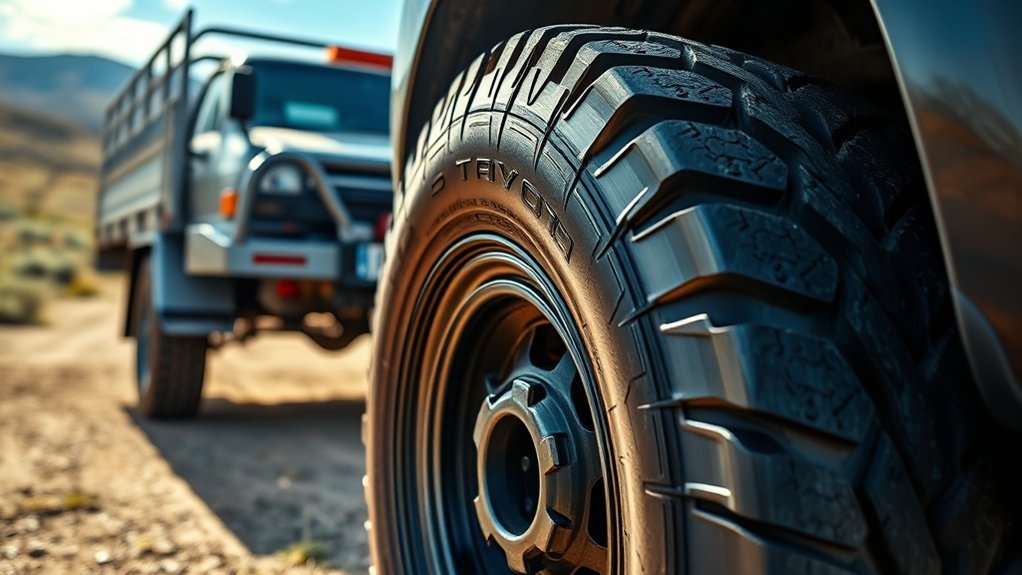
Tire pressure and load rating work together. The load index tells you how much weight one tire can carry at the correct pressure. For example, a load index of 112 corresponds to 1,120 kg per tire in common load index tables. That does not mean every Hilux with a 112-rated tire should use the same PSI; it means the tire has a defined load capacity when used correctly.
Also separate these markings:
- Tire size: For example, 265/65 R17 or 265/60 R18.
- Load index: A number such as 112, showing maximum load capacity.
- Load range: Often used on LT tires, such as Load Range C, D, or E.
- Speed rating: The maximum speed category for the tire.
- Maximum sidewall pressure: A limit, not your automatic target.
If your Hilux uses original-size tires, the door placard is usually the best guide. If you fitted LT tires, larger tires, all-terrain tires, or a different load range, confirm the new pressure using the tire maker’s load-inflation data and the actual axle load.
[Products Worth Considering]

This digital tire pressure gauge with built-in inflator helps you accurately check and adjust tire pressure for safer driving and better fuel efficiency. It supports multiple units (PSI, KPA, BAR, KG/CM²) and reads within 1% for reliable results. The 3-in-1 design inflates, deflates, and measures, with a quick-connect air chuck and compatible hose setup for cars, trucks, SUVs, RVs, and motorcycles.

Milton S-921 pencil tire pressure gauge helps you maintain optimal tire pressure for passenger cars with accurate readings in PSI and kPa. It features a built-in deflator valve for convenient pressure adjustments, plus a single chuck head and nylon indicator bar for easy use on the go. Built from durable plated brass and designed for reliable performance, it’s a practical road trip and cold-weather maintenance tool.

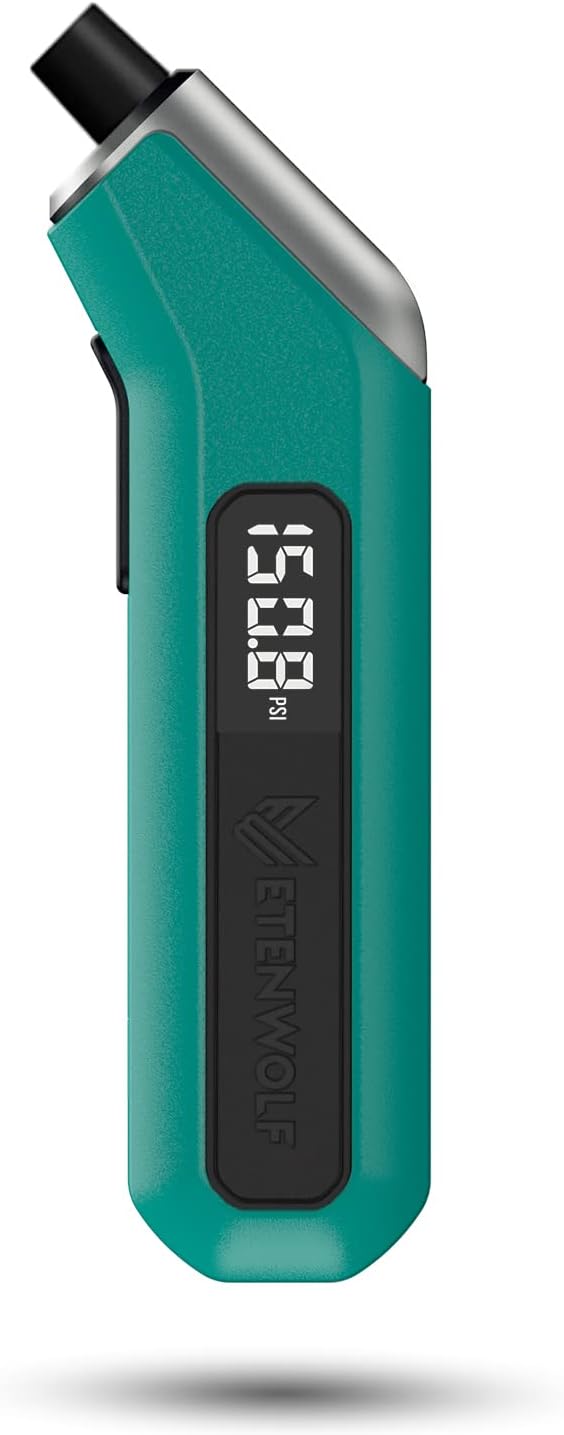
ETENWOLF T300 is a calibrated digital tire pressure gauge for accurate readings from 3 to 200 PSI across light and heavy-duty vehicles. It includes thermal compensation for reliable performance in extreme cold or heat, with an auto shut-off to extend battery life and an LED for easier reading. The sturdy design supports rugged everyday use, making it ideal for pickups, RVs, and industrial applications.
What Should You Know About Towing With Overloaded Tires?
Overloaded tires are dangerous because they flex too much, build heat, and can suffer internal damage. Towing also affects braking, handling, fuel use, and durability, so tire pressure is only one part of a safe towing setup.
Before towing, confirm that these stay within limits:
- GVM/GVW: The loaded weight of the Hilux, including people, cargo, accessories, and tow ball download.
- GCM/GCW: The combined loaded weight of the Hilux and trailer.
- GAWR/axle loads: The maximum permitted load on each axle.
- GTM/ATM: Trailer weight limits, depending on your market’s terminology.
- Tow ball download: Toyota Australia’s towing guide uses a 9–11% example for stable tow ball download, but your owner’s manual, tow bar plate, and local rules should be checked.
- Tire and wheel ratings: Each tire and wheel must be rated for the actual load and pressure.
Effects of Overloading Tires
Overloading can cause poor steering response, reduced lateral stability, excessive heat, uneven tread wear, longer stopping distances, and tire failure. It can also overload suspension, wheels, axles, and tow equipment.
Importance of Proper Inflation
Proper inflation helps the tire carry the load it was designed for. Under-inflation creates excessive deflection and heat. Over-inflation can reduce comfort and grip and increase impact damage risk. The goal is not the highest PSI; the goal is the correct cold PSI for the actual load.
User Insights on Tire Pressure Adjustments for Towing
Some Hilux owners increase rear tire pressure slightly when towing, especially with a loaded tub or heavy tow ball download. That can be reasonable when it matches the vehicle placard, tire maker guidance, or loaded axle weight. But copying another owner’s PSI can be risky because their tire size, trailer, accessories, and load may be different from yours.
Tire Pressure Recommendations
The safest recommendation is simple: use your Hilux placard or manual first. If your manual gives a loaded or towing pressure, use that. If it does not, weigh the loaded vehicle and trailer, then match tire pressure to the tire maker’s load-inflation guidance.
Adjustments Based On Load
Load changes pressure needs. A lightly loaded Hilux towing a small utility trailer may not need the same rear pressure as a Hilux carrying tools, passengers, roof gear, a full tub, and a heavy caravan. If the rear axle load is close to its limit, get the setup weighed and confirmed before a long trip.
User Experiences With Inflation
Drivers often report better stability after correcting low rear pressure, balancing trailer load, and checking trailer tires. However, good handling should come from the whole setup: correct pressure, correct load distribution, legal weights, sound suspension, suitable tires, and sensible speed.
Frequently Asked Questions
What is the correct PSI for a Toyota Hilux when towing?
The correct PSI is the cold pressure listed for your exact Hilux, tire size, and load condition. Start with the door placard or owner’s manual. If towing near the vehicle’s limit, use the loaded-pressure recommendation, actual axle weights, or a tire professional’s load-inflation advice.
Is 40 PSI too high for a Hilux?
It depends on the tire, wheel, load, and placard guidance. Forty PSI may be too high for some Hilux setups and acceptable for others under specific load conditions. Do not use 40 PSI just because you are towing; confirm it against the placard, manual, tire load data, and sidewall limits.
Is 50 PSI too much for trailer tires?
For trailer tires, 50 PSI may be correct for one tire and wrong for another. Use the trailer placard, tire sidewall, and tire manufacturer’s load-inflation guidance. Never exceed the tire or wheel pressure limit.
Should I lower tire pressure after highway driving because the PSI is higher?
No. Tire pressure rises as tires warm up. Set pressure when the tires are cold and do not bleed hot tires down to the cold number. If a tire gets unusually hot or pressure changes abnormally, stop safely and inspect the setup.
Do LT tires need different pressure on a Hilux?
They can. LT tires may need a different pressure from the original passenger or Euro-metric tire to carry the same load. If you changed tire construction, size, or load range, use the tire maker’s load-inflation data and confirm the pressure with a qualified tire professional.
Can higher tire pressure fix trailer sway?
Not by itself. Trailer sway can come from poor load distribution, incorrect tow ball download, excessive speed, worn suspension, crosswinds, wrong trailer tire pressure, or overloading. Correct the whole towing setup rather than using tire pressure as the only fix.
Conclusion
The best Toyota Hilux tire pressure for towing is the correct cold pressure for your exact vehicle, tire size, and load—not a number copied from another driver. Start with the door placard or owner’s manual, confirm your loaded weights, set both Hilux and trailer tires correctly, and stay within every tire, wheel, axle, tow bar, and vehicle rating. That approach gives you a safer, cooler-running, more stable towing setup.
Sources
- Toyota UK tyre pressure and size guide — supports Hilux tire-size pressure examples and the need to use model-specific pressure data.
- Toyota Australia Basic Towing Guide — supports towing weight limits, tow ball download, load distribution, and manufacturer-spec tire pressure guidance.
- Toyota UK Hilux technical specifications — supports current UK Hilux towing-capacity context and tire-size examples.
- NHTSA TireWise tire safety guidance — supports cold tire pressure checks, placard/manual guidance, and tire safety basics.
- U.S. Tire Manufacturers Association tire care essentials — supports checking pressure cold, before trips, before heavy loads, and before towing.
- Bridgestone light truck, truck and bus load inflation table — supports load-index context and load-based inflation principles.