
How Toyota Hilux Towing Capacity Affects Tire Pressure
Towing adds weight to your Toyota Hilux, but it does not create one universal tire-pressure setting. The correct pressure depends on your exact model, build year, factory tire size, load condition, and the pressure information supplied by Toyota. Start with the tire placard and owner’s manual, then confirm that the fully loaded vehicle remains within every weight and axle limit.
Quick Answer
Use the cold tire pressures printed on your Hilux tire placard or specified in its owner’s manual. If Toyota lists a separate full-load pressure, use that setting when your towing load meets the stated condition. Do not automatically add 4 to 6 PSI or use the maximum pressure molded on the tire sidewall.
Key Takeaways
- No single PSI setting applies to every Toyota Hilux, tire size, or towing load.
- Check pressure when the tires are cold and use Toyota’s placard or owner’s-manual value.
- Tow-ball download, passengers, cargo, and accessories all consume vehicle payload.
- Towing capacity alone does not determine pressure. Actual front and rear axle loads matter.
- Do not release air from a hot tire simply because its pressure increased while driving.
- Trailer tires need their own pressure setting based on the trailer and tire manufacturer’s instructions.
At a Glance
| Time Required | About 10 minutes for a pressure and visual check; longer if you need to weigh the loaded combination |
| Difficulty | Easy for routine checks; professional advice may be needed for non-standard tires or modified vehicles |
| Tools Needed | Accurate tire-pressure gauge, air compressor or service-station inflator, and your Hilux owner’s manual |
| Cost | Usually no cost if you own a gauge and compressor; weighbridge and service fees vary by location |
Recommended Tire Pressure Settings for Towing a Toyota Hilux
The safest answer is the pressure printed for your specific Hilux, not a general internet number. Look for the tire-information placard inside the driver’s door opening, on the door pillar, or in another location identified by the owner’s manual. You can also obtain the correct manual through the Toyota manuals portal.
The placard normally identifies the approved tire size and recommended cold inflation pressure. Some vehicles or manuals may show more than one pressure for different loads, speeds, or operating conditions. Follow the condition that matches your loaded vehicle.
Warning: Do not treat the pressure molded on the tire sidewall as your everyday towing target. That marking relates to the tire’s maximum rated load and pressure conditions. Your Hilux placard or manual provides the vehicle manufacturer’s operating recommendation.
[Products Worth Considering]

EVOULTES heavy duty tire inflator with an integrated gauge delivers accurate pressure readings from 10–120 PSI, helping you inflate, deflate, and check tires in one tool. The 16.5-inch extended dual-head air chuck with swivel base reaches hard-to-access dual wheel valves on trucks and RVs. A brass trigger core and side-mounted air release valve make operation smooth, with standard 1/4" NPT threading and quick-connect compatibility for easy setup.
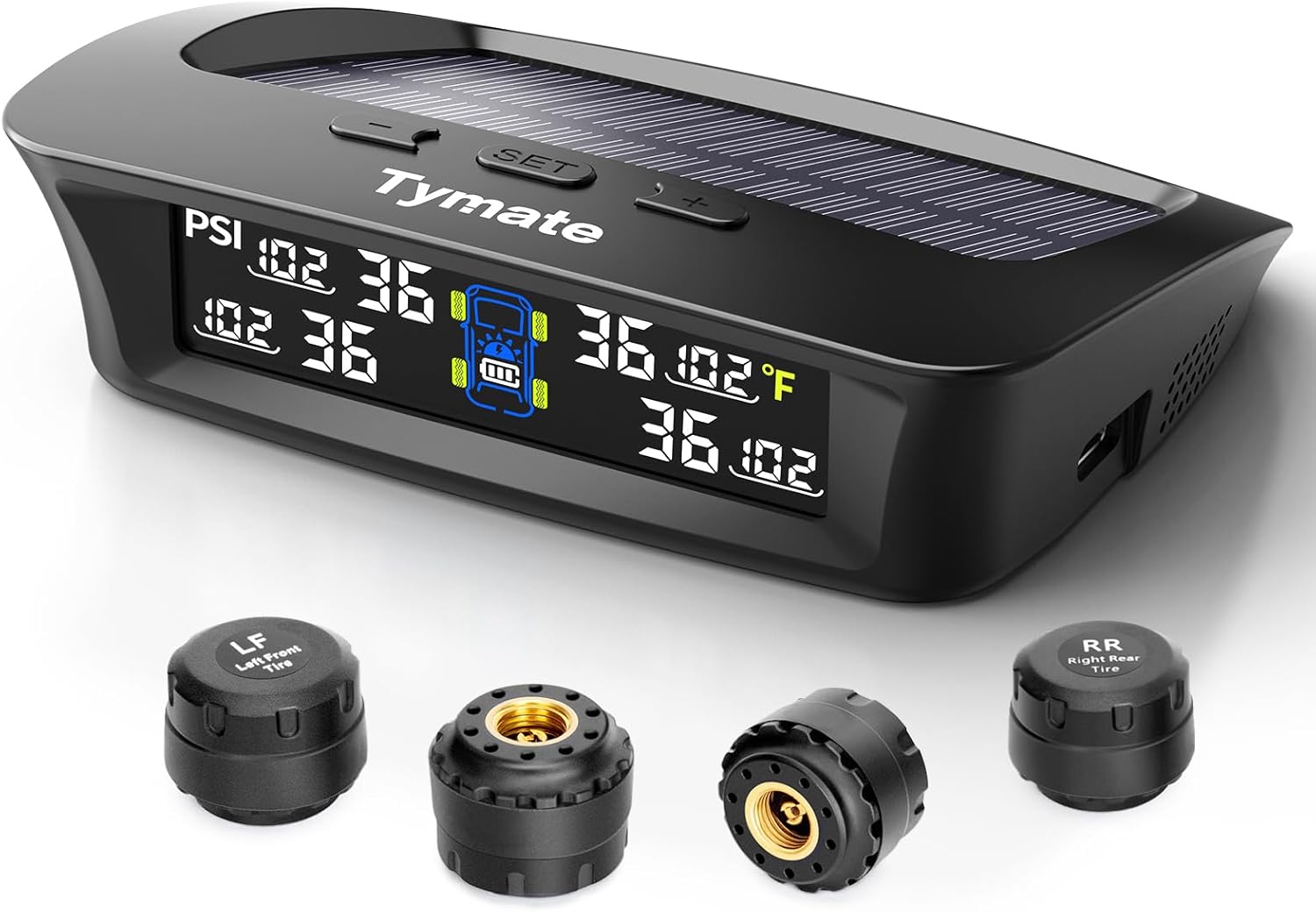
The Tymate TM3 RV TPMS delivers real-time tire pressure monitoring from 0 to 144 PSI with accurate readings and dependable wireless communication. It includes four external sensors with pre-pairing, six alarm modes for rapid leak, pressure extremes, temperature, and signal loss, plus an easy-reference setup for alert thresholds. Solar and USB-C charging help keep the display powered, while the color LCD and adaptive backlight improve visibility for safer driving and towing.

The JACO FlowPro Tire Inflator measures, inflates, and airs down tires up to 100 PSI with battery-free operation and ±2% accuracy after calibration. It features a glowing pressure dial for night visibility, a heavy-duty steel build with a hybrid hose, and a precision push-to-inflate thumb trigger. The patented Lightning Air Chuck locks on for a secure seal, and the kit includes quick-connect hardware for easy inline use with your air compressor.
How to Select the Correct Pressure
| Your Situation | Safe Starting Point |
|---|---|
| Factory-size tires and ordinary vehicle load | Use the normal-load cold pressure on the Hilux placard or in the owner’s manual. |
| Factory-size tires with a heavy towing load | Use Toyota’s full-load or towing-related pressure only when the placard or manual provides one and your load meets that condition. |
| No separate full-load pressure is shown | Do not invent an increase. Use the listed cold pressure and ask an authorized Toyota dealer or qualified tire specialist if actual axle loading raises a concern. |
| Different tire size, construction, or load rating | Have the required pressure calculated from the actual axle loads and the tire manufacturer’s approved load-inflation information. |
| Suspension, wheel, axle, or GVM modification | Follow the approved modification documentation and obtain advice from the modifier, Toyota, and tire manufacturer. |
Step-by-Step Pressure Check
- Park before checking: Leave the Hilux parked for at least three hours, or check it before it has travelled more than a short distance at low speed.
- Read the placard: Confirm the approved tire size and cold front and rear pressures.
- Match the load condition: Use a separate full-load setting only if Toyota provides one for your vehicle.
- Measure every tire: Check both front tires, both rear tires, and the spare with an accurate gauge.
- Add or release air: Adjust each tire to the applicable cold-pressure value.
- Inspect the tires: Look for cuts, bulges, cracking, punctures, damaged valve stems, exposed cords, and abnormal tread wear.
- Recheck the reading: Measure again after adjusting and reinstall each valve cap.
Pro Tip: Keep a dependable gauge in the Hilux. Service-station gauges receive frequent use and may not always agree with your own gauge.
Why Tire Pressure Matters When Towing
Towing adds vertical load through the tow ball and increases the forces placed on the vehicle during acceleration, braking, cornering, and crosswinds. Correct pressure helps the tire carry its assigned load while maintaining the contact patch and structural support intended by the vehicle and tire manufacturers.
Key Factors Impacting Stability
Tire pressure is only one part of towing stability. You must also consider:
- Actual front and rear axle loads: Tow-ball download can add rear-axle load and may reduce front-axle load.
- Trailer loading: Poorly positioned cargo can encourage sway even when every tire has the correct pressure.
- Vehicle payload: Passengers, tools, luggage, canopies, bull bars, drawers, fuel, and tow-ball download all count.
- Tire condition: A damaged, aged, overloaded, or unsuitable tire remains unsafe at the correct pressure.
- Speed and road conditions: Heat, impacts, sharp turns, wind, and rough surfaces increase tire and suspension stress.
- Suspension condition: Worn dampers, bushes, wheel bearings, or alignment problems can reduce control.
Towing capacity tells you how much the vehicle may be rated to tow. It does not provide a universal tire-pressure setting.
Safety Risks of Underinflation
An underinflated tire flexes more as it rolls. The extra flex creates heat, increases rolling resistance, and can damage the tire internally. It may also make the Hilux feel slow to respond, especially while changing lanes or controlling a loaded trailer.
Warning signs include:
- A tire-pressure warning light, if the vehicle has TPMS.
- One tire appearing lower than the others.
- Heavy or vague steering.
- The vehicle pulling to one side.
- Unusual shoulder wear.
- A tire repeatedly losing pressure.
- One tire becoming noticeably hotter than the tire on the opposite side.
If a tire has been driven while severely underinflated, adding air may not make it safe. Internal damage may already exist. Have the tire removed and inspected by a qualified tire professional.
Safety Risks of Overinflation
Excess pressure can reduce ride comfort and make the tire more sensitive to impact damage. It can also change grip and wear patterns. Adding pressure without checking Toyota’s instructions is not a reliable way to improve towing stability.
How Towing Capacity Influences Tire Pressure Needs
Towing capacity affects tire pressure indirectly. A heavier trailer can increase tow-ball download and the loaded rear-axle weight, but the trailer’s headline weight does not tell you how much load each Hilux tire carries.
For example, the June 2026 Toyota Australia Hilux specifications list different limits across the range. Listed 4×2 diesel models have a 2,900 kg braked towing capacity, while listed diesel 4×4 models reach 3,500 kg. Current battery-electric variants are listed separately at 2,000 kg. Other markets, generations, engines, and body styles may use different limits.
Before towing, verify all of these figures for your exact vehicle:
- Maximum braked or unbraked towing capacity.
- Gross Vehicle Mass, or GVM.
- Gross Combination Mass, or GCM.
- Maximum front-axle load.
- Maximum rear-axle load.
- Towbar and tow-ball limits.
- Trailer Aggregate Trailer Mass, or ATM.
- Trailer Gross Trailer Mass, or GTM.
- Tire and wheel load ratings.
Note: A vehicle’s maximum towing figure may not be fully usable after you add passengers, cargo, accessories, and tow-ball download. GCM, GVM, or an axle limit may become the controlling limit first.
Weigh the Loaded Combination
A public weighbridge gives you much better information than estimating from brochure figures. Load the Hilux and trailer exactly as they will travel, including passengers, fuel, water, food, tools, luggage, accessories, and trailer cargo.
Where the facility and local procedures allow, obtain:
- The loaded Hilux front-axle weight.
- The loaded Hilux rear-axle weight.
- The total loaded Hilux weight.
- The trailer axle weight while coupled.
- The total combination weight.
- The trailer weight or tow-ball download using an approved weighing method.
Compare every result with Toyota’s limits, the trailer plate, the towbar rating, and the tire and wheel ratings. Definitions for GVM, GCM, ATM, GTM, payload, and axle capacity are available in the Transport WA GVM and GCM guidance.
The Role of Tongue Weight in Adjusting Tire Pressure
Tongue weight, commonly called tow-ball download in Australia, is the part of the trailer’s loaded weight carried through the hitch by the Hilux. It becomes part of the vehicle’s payload and can substantially affect the rear axle.
Do not convert tow-ball download directly into a fixed 2, 3, or 4 PSI increase. The effect at each axle depends on the hitch position, wheelbase, cargo location, suspension, passengers, accessories, and trailer setup.
Use this process instead:
- Measure the loaded tow-ball download with suitable equipment or an approved weighing method.
- Include it in the vehicle payload along with occupants, accessories, and cargo.
- Measure the loaded axle weights rather than relying only on the trailer’s advertised weight.
- Compare the results with Toyota’s GVM, GCM, front-axle, rear-axle, and towing limits.
- Use the applicable Toyota cold-pressure setting for the approved tire and load condition.
Incorrect trailer loading cannot be repaired by adding tire pressure or installing a weight-distribution hitch. The trailer must first be loaded within its manufacturer’s limits and arranged for stable towing. General legal and safety principles are outlined in the Queensland Government safe-towing guidance.
How Load Ratings Affect Tire Pressure
A tire’s load index represents its load-carrying category under specified conditions. The full tire designation also includes its size, construction, and speed rating. These markings help determine whether the tire is suitable for the Hilux and its operating load.
Correct pressure and adequate load rating must work together. A high load index does not mean you should inflate the tire to its sidewall maximum, and extra air cannot make an underrated tire suitable for an overloaded axle.
Replacement and Non-Standard Tires
If the replacement tires match Toyota’s approved size, construction, service description, and intended use, the vehicle placard remains your normal starting point. Brand alone does not determine the required pressure.
Seek qualified advice when you change:
- Tire size or aspect ratio.
- Passenger, light-truck, reinforced, or extra-load construction.
- Load index or speed rating.
- Wheel diameter, width, or offset.
- Axle rating, suspension, or certified GVM.
- On-road tires to a substantially different off-road design.
The adviser should use the actual loaded axle weights and approved tire-manufacturer data. The calculated pressure must remain within the tire, wheel, valve, and vehicle limits.
Do Not Forget the Trailer Tires
The Hilux placard applies to the Hilux, not the trailer. Set trailer-tire pressure from the trailer manufacturer’s plate or manual and the tire manufacturer’s approved information. Check every trailer tire, including spares, before departure.
Also inspect the trailer tires for:
- Cracking or weather damage.
- Bulges and sidewall cuts.
- Uneven tread wear.
- Damaged or leaking valves.
- Incorrect load rating.
- Long periods of age-related deterioration, even when tread remains.
Top Mistakes to Avoid When Adjusting Tire Pressure for Towing
- Using one online PSI figure for every Hilux: Model years, tires, wheels, and load instructions differ.
- Automatically adding 4 to 6 PSI: Use a higher setting only when Toyota or an approved tire calculation calls for it.
- Using the tire-sidewall maximum as the target: It is not the normal vehicle operating recommendation.
- Checking only after driving: A warm tire gives a higher reading than the same tire when cold.
- Bleeding pressure from hot tires: This may leave them underinflated after they cool.
- Ignoring axle loads: The total vehicle weight may be legal while one axle is overloaded.
- Forgetting tow-ball download: It consumes payload and affects the rear axle.
- Trusting TPMS alone: A warning system does not replace routine gauge checks.
- Assuming pressure fixes trailer sway: Sway can result from loading, speed, mechanical faults, or an unsuitable combination.
- Ignoring recurring pressure loss: A leaking valve, puncture, cracked wheel, bead problem, or damaged tire needs repair.
[Products Worth Considering]
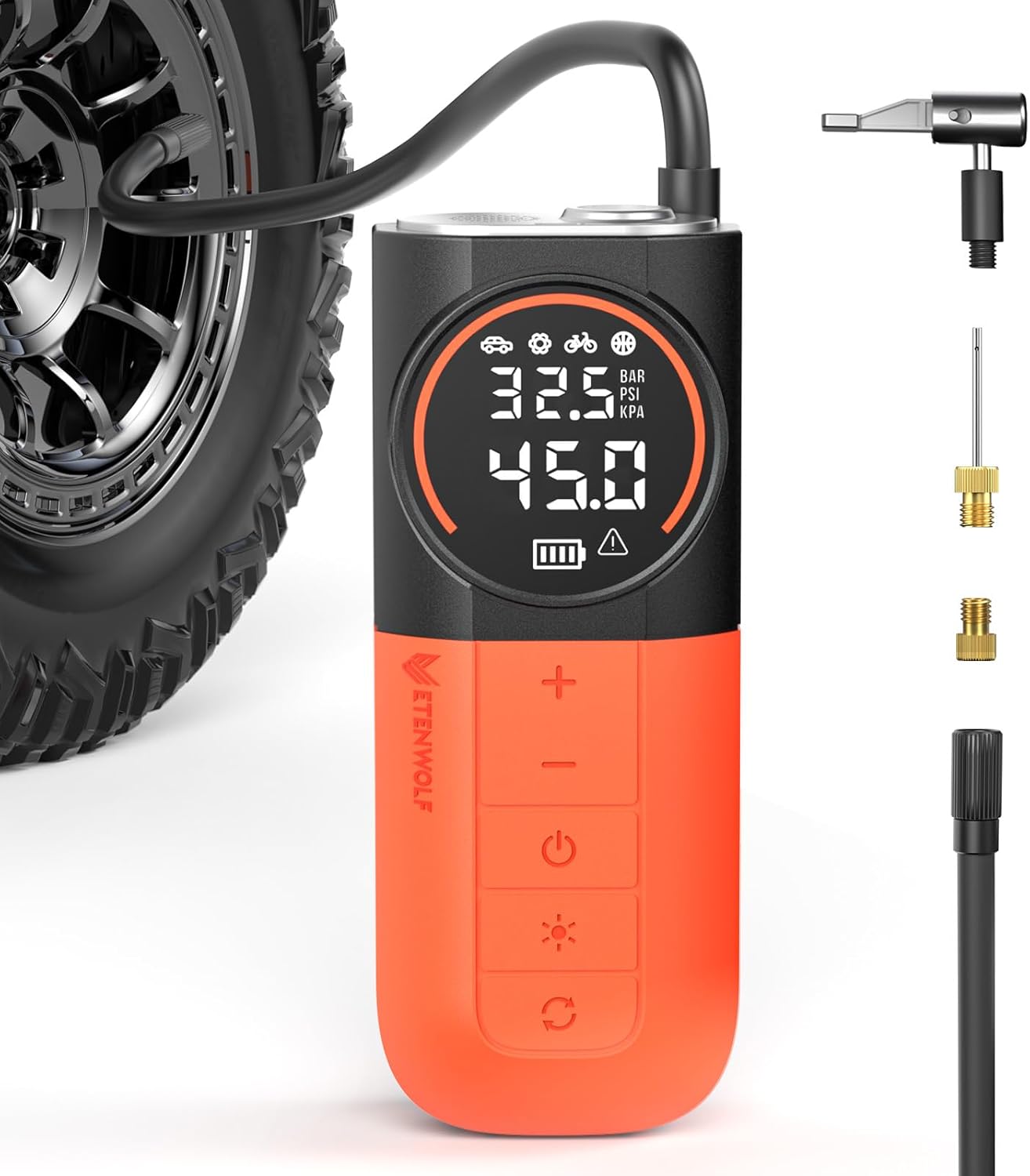
The ETENWOLF S1 cordless tire inflator delivers ultra-fast inflation with up to 160 PSI and a 20 L/min airflow for quicker tire top-offs. Its 5200mAh battery and cooling system support inflating many tires and sports balls on a single charge, while the digital pressure gauge and multi-unit display help you reach the right pressure accurately. With preset modes, pressure memory, an auto-stop feature, and an LED flashlight, it’s built for easy roadside and everyday use.

This portable cordless tire inflator delivers fast, efficient inflation for cars, motorcycles, bikes, and sports balls with a digital pressure gauge. Use the one-click PSI preset with auto shut-off for accurate, hands-free topping to your target pressure up to 150 PSI. It’s compact and rechargeable with a built-in emergency LED light plus valve adapters and accessories for quick, ready-to-go use.
Tire Pressure and Ambient Temperature Effects
Ambient temperature affects the pressure measured inside a tire. Colder conditions generally lower the reading, while warmer conditions and driving heat raise it. This is why the manufacturer’s value is specified as a cold pressure.
For a dependable cold reading, check the tires before driving or after the vehicle has remained parked for several hours. Michelin advises checking approved original-size tires against the vehicle placard or owner’s manual and warns against reducing pressure while the tires are hot. See the Michelin Australia tire-pressure guidance.
Warning: A pressure increase during a trip is normally expected as the tires warm. Do not bleed a hot tire back to the cold placard value. Recheck it after the tire has cooled.
If one tire’s pressure or temperature changes much more than the others, stop safely and inspect it. A puncture, internal damage, brake problem, wheel-bearing fault, or overload may be developing.
Best Practices for Tire Pressure Maintenance
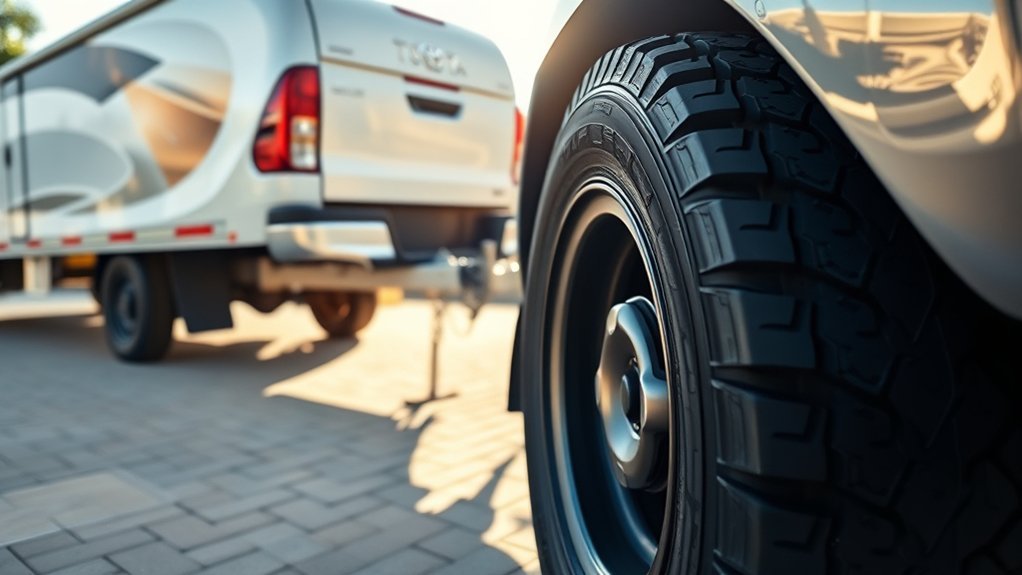
Check all tires at least monthly, before a long journey, and before towing. The NHTSA TireWise guidance recommends checking pressure when tires are cold and using the vehicle manufacturer’s placard or owner’s manual rather than the maximum molded on the tire.
Pre-Tow Tire Checklist
- Confirm the Hilux placard pressure and tire size.
- Check front, rear, spare, and trailer-tire pressures while cold.
- Inspect tread and sidewalls for damage.
- Check valve stems and replace missing valve caps.
- Confirm wheel nuts have been maintained to the correct specification.
- Verify the tires and wheels have adequate load ratings.
- Confirm the vehicle, trailer, towbar, and axles remain within their limits.
- Secure all cargo and check trailer load distribution.
- Test trailer lights, coupling, safety chains, and brakes.
- Carry a suitable spare, jack, wheel tools, gauge, and inflation equipment.
What to Do if Pressure Keeps Dropping
A tire that repeatedly needs air has a fault until proven otherwise. Common causes include a puncture, loose or damaged valve core, cracked valve stem, bead leak, wheel damage, or previous underinflation damage.
Do not keep topping it up and towing normally. Have the tire and wheel inspected. Replace or repair the affected component using an approved procedure before placing it back under towing load.
Using TPMS While Towing
If your Hilux has a tire-pressure monitoring system, treat it as a backup warning rather than your pressure-setting tool. TPMS availability and operation vary by model and year. The system may warn only after pressure has fallen significantly, and it does not confirm that your starting pressure or axle load is correct.
Safety Risks of Incorrect Tire Pressure While Towing
Incorrect pressure can contribute to poor handling, abnormal wear, excess heat, reduced grip, impact damage, and tire failure. The risk becomes more serious when the Hilux or trailer is heavily loaded, travelling quickly, or operating in hot weather.
Stop as soon as it is safe when you notice:
- A TPMS warning.
- Sudden vibration or thumping.
- The vehicle or trailer pulling to one side.
- A strong rubber smell.
- Visible smoke.
- Rapid pressure loss.
- A bulge, exposed cord, or damaged sidewall.
- Unusual trailer sway that does not settle when you reduce speed smoothly.
Avoid sudden steering, acceleration, or heavy braking when a tire problem develops. Slow down progressively, move away from traffic, and inspect the combination from a safe position. Use roadside assistance when the location, tire condition, vehicle load, or available equipment makes a roadside change unsafe.
Frequently Asked Questions
Should I add 4 to 6 PSI to my Toyota Hilux tires when towing?
Not automatically. Use the cold pressure listed on your Hilux placard or in the owner’s manual. Follow a higher full-load pressure only when Toyota provides that instruction for your exact vehicle and load condition.
What is the correct Toyota Hilux tire pressure for towing?
The correct value is vehicle-specific. Check the placard, owner’s manual, tire size, and stated load condition. A single pressure such as 33, 38, or 40 PSI cannot safely represent every Hilux.
Should the front and rear Hilux tires use the same pressure?
Only when Toyota specifies the same pressure. Some vehicles use different front and rear values or provide separate settings for different loads. Copy the values exactly from your vehicle’s placard or manual.
Can I use the maximum PSI printed on the tire sidewall?
Do not use it as your normal target. The sidewall marking identifies a tire limit under specified conditions. The vehicle manufacturer’s cold-pressure recommendation is the correct starting point for approved original-size tires.
Can tire pressure affect fuel efficiency while towing?
Yes. Underinflation increases tire flex and rolling resistance, making the vehicle work harder. Correct pressure supports safer handling, more even wear, and efficient operation.
How can I check tire pressure accurately?
Use an accurate gauge while the tires are cold. Press the gauge firmly onto the valve, compare the reading with the applicable placard value, adjust the pressure, and measure it again.
What tools are needed to adjust tire pressure?
Use an accurate tire-pressure gauge and an air compressor or service-station inflator. Carry valve caps, your wheel-changing equipment, and the owner’s manual when towing away from populated areas.
When should I check pressure during a towing trip?
Set it before departure while the tires are cold. During rest stops, inspect the tires for damage, visible deflation, unusual heat, or pressure warnings. Do not bleed expected heat-related pressure from a hot tire.
Does tire brand change the recommended pressure?
Brand alone normally does not change the placard pressure for an approved original-equipment-size replacement. A different size, construction, load index, or application may require advice based on actual axle loads and manufacturer data.
Conclusion
Your Toyota Hilux towing pressure should come from the vehicle, not from a universal PSI rule. Read the placard, check the owner’s manual, measure pressure while the tires are cold, and confirm that your loaded front axle, rear axle, GVM, GCM, towbar, and trailer remain within their limits.
When Toyota does not provide a separate towing or full-load pressure, do not guess. Use the listed cold value and obtain qualified advice for non-standard tires, modified vehicles, or unusual axle loads. This approach protects handling, tire life, and towing safety far better than automatically adding a fixed number of PSI.
Sources
- Toyota Australia HiLux Specification Table, June 2026 — towing capacities, GVM, GCM, tire sizes, axle-limit considerations, and payload guidance.
- Toyota Service Information and Repair Manuals — vehicle-specific owner and service information.
- NHTSA TireWise — cold-pressure checks, placard guidance, TPMS limitations, and tire inspection.
- Michelin Australia Car Tire FAQ — vehicle-manufacturer pressure guidance, cold checks, underinflation, and hot-tire precautions.
- Transport WA GVM and GCM FAQs — GVM, GCM, axle capacity, ATM, GTM, and payload definitions.
- Queensland Government Towing Vehicles and Trailers — loaded-mass limits and general safe-towing responsibilities.

Related Articles
Toyota Hilux Run-Flat Tires: What You Need to Know
Take control of your safety with Toyota Hilux run-flat tires; discover their benefits and hidden costs that could change your driving experience forever.
Read More
Effects of Underinflated Tires on the Toyota Hilux
Inadequate tire pressure in your Toyota Hilux can lead to serious safety issues and costly repairs; discover how to avoid these pitfalls.
Read More
The Risks of Overinflating Toyota Hilux Tires
Overinflating your Toyota Hilux tires can lead to dangerous blowouts and uneven wear, but understanding the risks is crucial for your safety.
Read More