
What PSI for Highway Driving on a Toyota Tacoma

For highway driving in a Toyota Tacoma, the safest answer is not one universal PSI number. Use the cold tire pressure printed on your driver-side door-jamb Tire and Loading Information Label for your exact Tacoma, tire size, and load. That label matters more than forum advice, dealer delivery pressure, or the maximum PSI molded into the tire sidewall.
Quick Answer
For normal highway driving on stock-size Tacoma tires, set tire pressure to the cold PSI listed on the driver-side door-jamb placard. Many Tacoma pressures are in the low-30 PSI range, but the exact number depends on model year, tire size, trim, and load. Do not use the tire sidewall maximum as your normal driving pressure.
Key Takeaways
- The correct Tacoma highway PSI is the cold pressure on your door-jamb placard, not a universal 35, 40, or 45 PSI rule.
- Check pressure when the tires are cold: after the truck has been parked for at least three hours or driven less than about one mile.
- Underinflation can reduce fuel economy, increase heat, and wear tires faster; overinflation can reduce comfort and shrink the tread contact patch.
- TPMS is a warning system, not a replacement for checking pressure with a gauge.
- If you air down for trails, reinflate to the correct highway pressure before returning to pavement speed.
At a Glance
| Time Required | 5–10 minutes for all four tires; add a few minutes for the spare or if you need to inflate. |
| Difficulty | Easy beginner maintenance. |
| Tools Needed | Accurate tire pressure gauge, air compressor or gas-station air pump, and your Tacoma’s door-jamb PSI label. |
| Cost | Usually free if you already have a gauge; about $10–$25 for a basic quality gauge. |
Find the Correct Toyota Tacoma Tire Pressure First
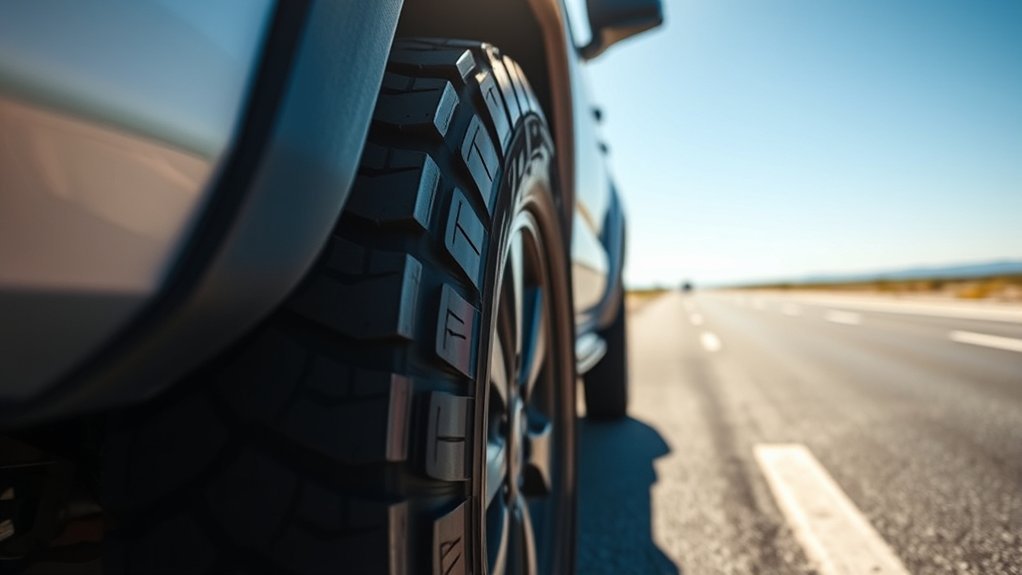
The correct Tacoma tire pressure is listed on the Tire and Loading Information Label, usually on the driver-side door jamb. Toyota’s owner manual guidance says the recommended cold tire inflation pressure and tire size are shown on that label, and NHTSA gives the same basic rule: use the vehicle manufacturer’s recommended pressure, not the maximum number printed on the tire.
That is why a single online answer like “run 40 PSI on the highway” can be wrong for your truck. A Tacoma with stock tires, a Tacoma with aftermarket load-range E tires, and a Tacoma carrying a bed full of gear may not all need the same pressure.
Warning: Do not use the tire sidewall’s “maximum cold inflation pressure” as your normal highway PSI. That number is a tire load limit reference, not the vehicle manufacturer’s recommended everyday pressure.
[Products Worth Considering]

EVOULTES heavy duty tire inflator with an integrated gauge delivers accurate pressure readings from 10–120 PSI, helping you inflate, deflate, and check tires in one tool. The 16.5-inch extended dual-head air chuck with swivel base reaches hard-to-access dual wheel valves on trucks and RVs. A brass trigger core and side-mounted air release valve make operation smooth, with standard 1/4" NPT threading and quick-connect compatibility for easy setup.

The AstroAI L7 Air Tire Inflator refills car tires quickly with up to 150PSI max pressure and a fast 1-minute inflation claim. It includes 5 preset modes for car, motorcycle, bicycle, balls, and manual use, along with an auto shutoff to help prevent overinflation. Designed for convenience, it features a digital gauge with unit switching, a top LED light with multiple modes, and USB-C/USB ports for backup power.
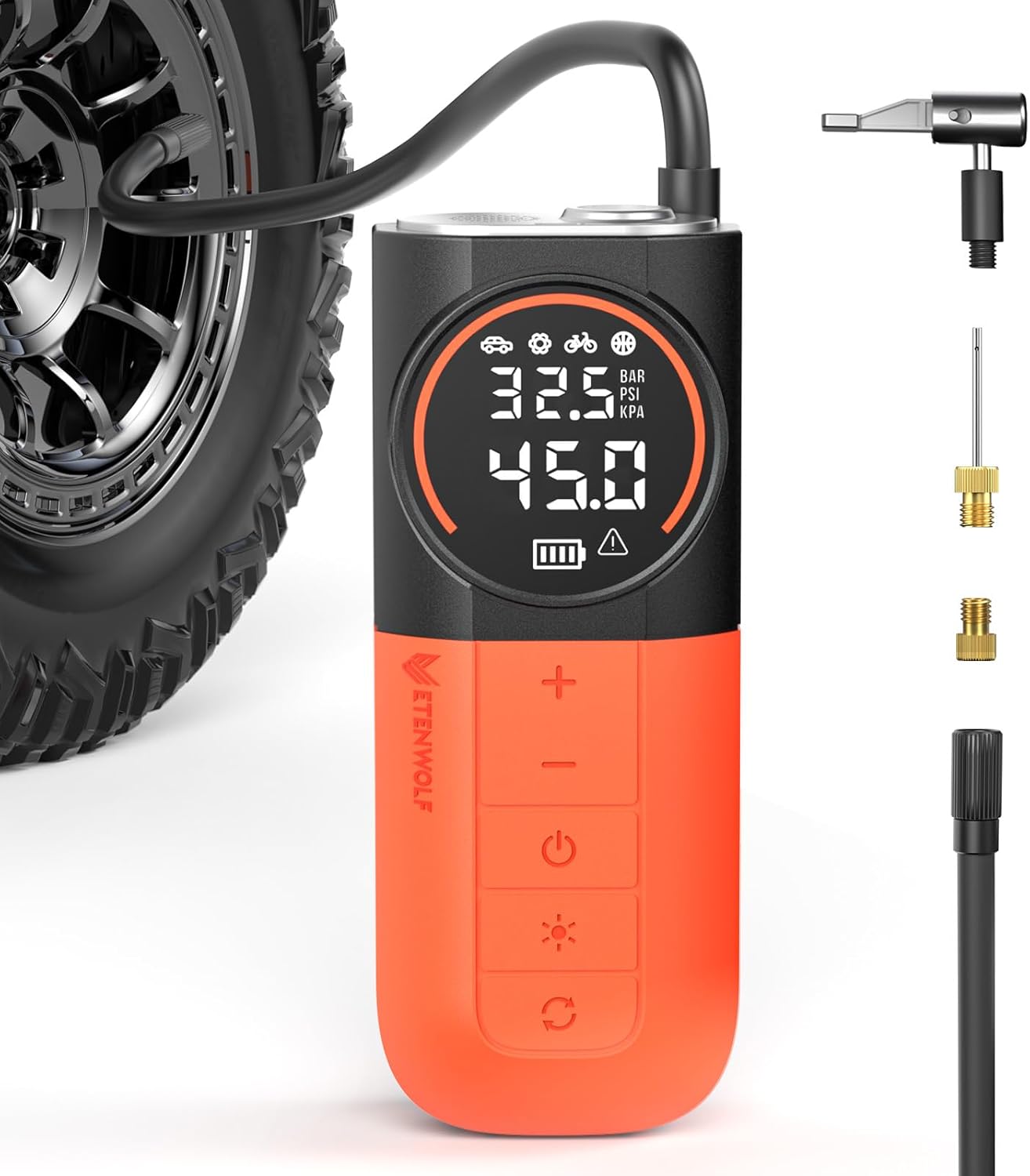
The ETENWOLF S1 cordless tire inflator delivers ultra-fast inflation with up to 160 PSI and a 20 L/min airflow for quicker tire top-offs. Its 5200mAh battery and cooling system support inflating many tires and sports balls on a single charge, while the digital pressure gauge and multi-unit display help you reach the right pressure accurately. With preset modes, pressure memory, an auto-stop feature, and an LED flashlight, it’s built for easy roadside and everyday use.
Door-Jamb Placard vs. Tire Sidewall PSI
| Door-jamb placard | Use this for normal cold tire pressure on the Tacoma’s approved tire size and load rating. |
| Owner’s manual | Use this for checking procedure, warnings, TPMS information, and maintenance intervals. |
| Tire sidewall maximum | Do not use this as your daily driving target. It is not the same as the Tacoma’s recommended PSI. |
| Forum or community PSI | Useful for context, but only after you know your placard PSI, tire size, and load. |
Why 40 PSI Is Not the Right Answer for Every Tacoma
Some Tacoma owners run higher pressures for certain tires, loads, or personal ride preferences, but that does not make 40 PSI the best highway pressure for every Tacoma. On a stock truck at normal load, the door placard is the baseline. Going well above it can make the ride harsher, reduce the tire’s ability to absorb bumps, and change how the tread contacts the road.
There is one real reason people chase higher PSI: fuel economy. Proper inflation does help. FuelEconomy.gov says keeping tires properly inflated can improve gas mileage by 0.6% on average and up to 3% in some cases. It also says underinflated tires can lower gas mileage by about 0.2% for every 1 PSI drop in the average pressure of all tires. The key phrase is properly inflated, not overinflated.
The best highway tire pressure for fuel economy, tire life, and handling is the Tacoma’s recommended cold PSI—not the highest PSI that feels acceptable.
The Impact of Incorrect Tire Pressure on Ride Quality and Safety
Overinflation Can Create a Harsh Ride
Overinflated tires can make your Tacoma feel skittish or stiff over expansion joints, potholes, gravel, and broken pavement. A few PSI above placard may not feel dramatic, but large jumps can reduce comfort and make the center of the tread carry more load than intended.
Underinflation Builds Heat and Wears Tires Faster
Underinflation is usually more dangerous than slight overinflation because the tire flexes more, creates more heat, and can wear the shoulders faster. Toyota warns that incorrect tire inflation pressure can reduce fuel economy, driving comfort, tire life, and safety. NHTSA also recommends monthly pressure checks because tires can lose pressure before they look low.
Uneven Tire Wear Is a Clue
Center wear can point to too much pressure, while both outer shoulders wearing faster can point to too little pressure. One-sided wear can also mean alignment or suspension problems, so do not assume PSI is the only cause.
Why a New Tacoma May Arrive With High Tire Pressure
Many owners check a newly delivered truck and find tire pressure above the door-jamb recommendation. That can happen when tires were set high during storage, transport, or dealer prep and were not corrected before delivery. Whatever the reason, your next step is simple: check all tires cold and adjust them to the placard pressure.
If a dealer, tire shop, or service center returns your Tacoma with pressures far above the label, ask why. Sometimes a shop may compensate for temperature, load, or a specific tire setup, but normal stock-tire highway pressure should still be based on the Tacoma’s label and Toyota’s instructions.
Pro Tip: Check tire pressure the morning after you bring home a new Tacoma, after tire service, and before the first long highway trip. It is one of the fastest ways to catch a dealer-prep miss.
How to Check and Adjust Tacoma Tire Pressure
- Park long enough for a cold reading. For best accuracy, check pressure after the truck has been parked for at least three hours or before driving more than about one mile.
- Find the placard PSI. Open the driver door and read the Tire and Loading Information Label. Note front and rear pressures if they differ.
- Remove the valve cap. Keep it somewhere clean so dirt does not enter the valve.
- Press the gauge straight onto the valve stem. A hissing sound usually means the gauge is not seated squarely.
- Compare the reading to the placard. Add air if low; release air if high.
- Recheck the pressure. Do not rely on the air pump’s built-in gauge alone if you have a trusted handheld gauge.
- Reinstall the valve cap. Toyota warns that missing caps can let dirt or moisture into the valve and contribute to air loss.
- Check the spare. Toyota recommends checking the spare too, even though some spares may not have a TPMS sensor.
Note: If the tires are hot from driving, pressure will read higher than the true cold setting. Do not bleed hot tires down to the placard PSI unless your owner’s manual or tire professional has given you a specific reason.
How to Adjust Tire Pressure Based on Terrain, Load, and Weather
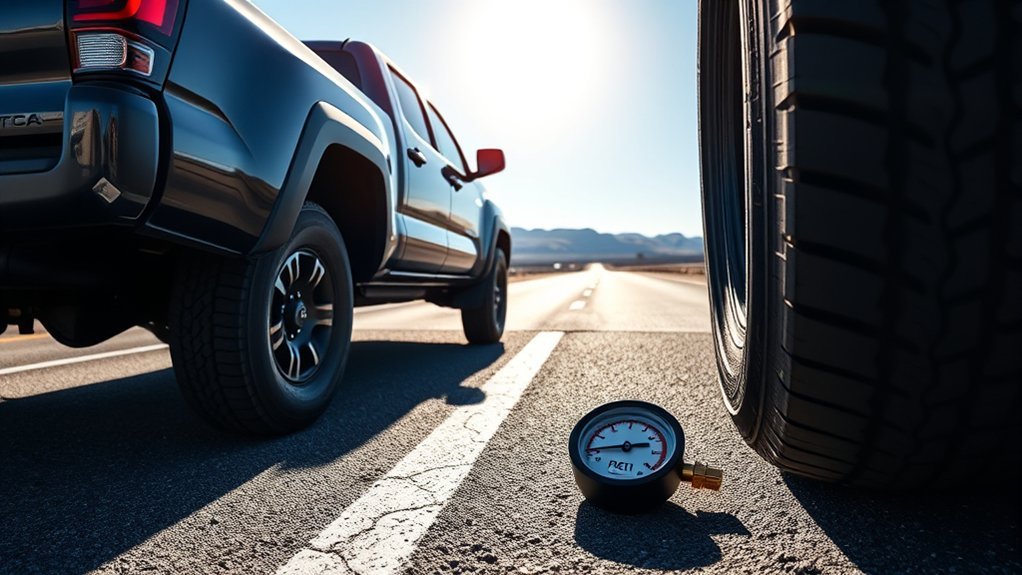
Highway and Everyday Driving
For normal highway driving on the Tacoma’s original tire size, use the door-jamb cold PSI. That pressure was selected to balance load capacity, handling, braking, ride comfort, fuel economy, and tire wear for the vehicle.
Heavy Loads and Towing
If you are carrying heavy cargo or towing, stay within the Tacoma’s payload and towing limits and check the owner’s manual. Do not guess by simply adding a large amount of air. If you run replacement tires with a different load range or size, ask the tire manufacturer or a qualified tire shop to calculate the right pressure using load-inflation data.
Off-Road Driving
Airing down can improve traction and ride comfort on sand, rocks, washboard roads, or trails, but it also increases sidewall flex and heat. Lower pressure is for slow off-road use, not highway speed. Reinflate to the correct highway pressure before driving fast on pavement.
Warning: Do not drive highway speeds on aired-down off-road tires. Low pressure at speed can overheat the tire, damage the sidewall, and increase the risk of failure.
Cold and Hot Weather
Tire pressure changes with temperature. Tire Rack explains that light-duty tires typically change by about 1 PSI for every 10°F change in air temperature. That means a Tacoma set correctly in warm weather can read several PSI low after a cold front.
Check more often when seasons change, before long trips, and after big temperature swings. Toyota recommends checking tire inflation pressure every two weeks or at least once a month.
Find Your Ideal PSI With the Chalk Test
The chalk test can help you see how evenly the tread is contacting the pavement, especially after changing tire size, tire type, or load. To do it, mark a straight chalk line across the tread, drive a short distance on flat pavement, and look at how the chalk wears away.
- If the chalk disappears mostly from the center, pressure may be too high.
- If the chalk disappears mostly from the shoulders, pressure may be too low.
- If it wears evenly, the tire is making more even contact.
Use the chalk test as a diagnostic tool, not as permission to ignore the Tacoma’s label. For stock highway driving, start with the placard PSI first.
[Products Worth Considering]

This portable cordless tire inflator delivers up to 160 PSI with fast 17 L/min airflow to help you quickly top up tires and get back on the road. It features dual power mode, running on a 21V rechargeable battery or a 12V DC adapter for convenient roadside use. An automatic shut-off with digital pressure gauge helps prevent overinflation, and a built-in LED light improves visibility in low-light conditions.

The JACO FlowPro Tire Inflator measures, inflates, and airs down tires up to 100 PSI with battery-free operation and ±2% accuracy after calibration. It features a glowing pressure dial for night visibility, a heavy-duty steel build with a hybrid hose, and a precision push-to-inflate thumb trigger. The patented Lightning Air Chuck locks on for a secure seal, and the kit includes quick-connect hardware for easy inline use with your air compressor.
Monitoring Tire Pressure on Your Toyota Tacoma for Safety and Performance
Your Tacoma’s Tire Pressure Monitoring System is useful, but it is not a substitute for a tire gauge. NHTSA notes that TPMS warnings activate when a tire is significantly underinflated, so a tire can be below your target before the warning light appears.
Use this simple routine:
- Every two weeks if possible: check all four tires cold.
- At minimum monthly: check all tires and inspect tread.
- Before road trips: check tire pressure, spare tire pressure, tread depth, and visible damage.
- After tire service: confirm the shop set the tires to the right pressure.
- After weather swings: recheck because temperature changes can move pressure several PSI.
Steps to Reset or Initialize Your TPMS After Adjustments
On many Tacomas, a simple pressure correction will display after the truck has been driven for a short time. A full TPMS initialization is usually needed when tire pressure settings change, tire positions are changed, wheels or sensors are replaced, or the owner’s manual tells you to initialize the system.
Because Tacoma TPMS procedures vary by model year and display type, use this model-year-safe process:
- Set the tires correctly first. Adjust all tires to the specified cold pressure on the placard.
- Check your owner’s manual. Newer Tacomas may use the multi-information display settings menu; older Tacomas may use a physical reset button.
- Initialize only when required. Do not initialize the system while the tires are set incorrectly, because the system may learn the wrong baseline.
- Drive as instructed. Follow the manual’s drive-speed and time requirements for your model year.
- Investigate a flashing light. A TPMS light that flashes and then stays on often points to a system malfunction or sensor issue, not just low air.
Note: Toyota’s newer Tacoma TPMS guidance says the system does not replace routine pressure checks, and displayed pressure can differ from a handheld gauge because tire pressure changes with temperature.
Community Experiences: Real Stories About Tire Pressure
Tacoma owners often share different highway pressures because their setups are different. One owner may be on stock passenger-rated tires, another may be using all-terrain tires, and another may be carrying tools, camping gear, armor, or towing weight. That is why community advice can sound contradictory.
Forums and owner groups are useful for learning what other people tried, but treat them as experience reports, not official pressure specs. Start with the door-jamb placard, watch for uneven wear, and adjust only when you have a clear reason based on tire type, load, and professional guidance.
Frequently Asked Questions
What PSI should I run in my Toyota Tacoma on the highway?
Use the cold PSI printed on the driver-side door-jamb Tire and Loading Information Label. That is the correct highway starting point for stock-size tires and normal load. Do not use a universal 40 PSI rule unless your placard, tire setup, or professional load calculation supports it.
How often should I check my Tacoma’s tire pressure?
Toyota recommends checking tire pressure every two weeks or at least once a month, including the spare. Also check before long highway trips, after big temperature swings, and after tire service.
Is 40 PSI too high for a Toyota Tacoma?
It depends on the truck, tire, and load. If your door placard lists a lower pressure for normal driving, 40 PSI may be higher than needed and can make the ride harsher. If you use aftermarket tires or carry heavy loads, have the pressure calculated using the tire’s load rating and your actual axle load.
Can I use a different PSI for off-road driving?
Yes, many drivers air down for low-speed off-road traction and comfort, but it must be done carefully. Lower pressure increases sidewall flex and heat. Reinflate to the proper highway pressure before driving at pavement speeds.
What tools do I need to adjust tire pressure?
You need a reliable tire pressure gauge and access to an air compressor. A portable 12-volt or battery compressor is helpful for road trips, trail days, and reinflating after airing down.
How does temperature affect Tacoma tire pressure?
As a rule of thumb, light-duty tire pressure changes by about 1 PSI for every 10°F change in air temperature. Pressure usually drops in cold weather and rises in warm weather or after driving.
What are the signs of underinflated tires?
Common signs include sluggish steering, lower fuel economy, shoulder wear, excess heat, and a TPMS warning. However, tires can be underinflated before they look low, so use a gauge instead of relying on appearance.
Conclusion
The best Toyota Tacoma tire pressure for highway driving is the cold PSI on your driver-side door-jamb placard. That number is safer and more accurate than a blanket 35–41 PSI range or a forum-favorite 40 PSI target. Check pressure cold, monitor it regularly, adjust for temperature changes, and get professional help if you changed tire size, load range, or regularly tow heavy weight. A few minutes with a gauge can improve ride quality, tire life, fuel economy, and safety.
Sources
- Toyota Owners — Tacoma tire inflation pressure — supports cold-pressure checking, adjustment procedure, and Toyota tire-pressure maintenance guidance.
- Toyota Owners — Tacoma tires and TPMS — supports TPMS limitations, tire-pressure display notes, and initialization context.
- NHTSA TireWise tire safety guide — supports using the manufacturer’s recommended pressure and checking tires monthly.
- FuelEconomy.gov gas mileage maintenance tips — supports the fuel-economy impact of proper tire inflation.
- Tire Rack — temperature and tire pressure — supports the 1 PSI per 10°F temperature-change rule of thumb.

Related Articles
How Tire Weight Affects Toyota Tacoma Performance
How does tire weight influence your Toyota Tacoma's performance and efficiency? Discover the surprising effects that could change your driving experience.
Read More
Tire Noise Levels by Tire Type on a Toyota Tacoma
A comprehensive look at how tire types affect noise levels in your Toyota Tacoma reveals surprising insights that could enhance your driving experience.
Read More
How To Choose Tires for a Dual Use Toyota Tacoma
Unlock the secrets to selecting the perfect tires for your dual-use Toyota Tacoma, ensuring optimal performance and comfort on every adventure. Discover more inside!
Read More