
Keeping your Honda Accord tires at the right pressure is one of the simplest ways to protect handling, fuel economy, tire life, and safety. The most important rule is to use the cold tire pressure listed on your Accord’s driver-side doorjamb label, not the maximum PSI printed on the tire sidewall.
Quick Answer
To properly inflate Honda Accord tires, check the pressure when the tires are cold, compare the reading with the driver-side doorjamb tire label, add or release air as needed, recheck each tire, reinstall the valve caps, and calibrate TPMS after adjusting pressure.
Key Takeaways
- Use the PSI on your Accord’s driver-side doorjamb label as the final authority.
- Check tire pressure when tires are cold: parked at least three hours or driven less than 1 mile.
- Do not inflate to the maximum PSI printed on the tire sidewall unless the vehicle label or manual calls for it.
- Calibrate TPMS after adjusting pressure, rotating tires, or replacing tires on models that require calibration.
- Check all tires monthly and before long trips, including the spare tire if your Accord has one.
At a Glance
| Time Required | 5–10 minutes |
| Difficulty | Easy |
| Tools Needed | Tire pressure gauge, air compressor, valve-stem caps |
| Cost | Usually free at home or low-cost at a gas station; a basic gauge is inexpensive |
What Tire Pressure Should a Honda Accord Have?
The correct Honda Accord tire pressure depends on the model year, trim, tire size, and whether the vehicle is a gas or hybrid model. For any Accord, the best source is the Tire and Loading Information label on the driver-side doorjamb. That label lists the proper cold tire pressure for the original tire size fitted to your vehicle.
For example, Honda’s 2025 Accord specifications list 33 psi front and 32 psi rear for the gas Accord with 225/50R17 tires. Honda’s 2025 Accord Hybrid specifications list 33 psi front and 32 psi rear for 225/50R17 tires and 35 psi front and 32 psi rear for 235/40R19 tires.
| Example Accord Model | Tire Size | Front Cold PSI | Rear Cold PSI |
|---|---|---|---|
| 2025 Accord gas | 225/50R17 94V | 33 psi | 32 psi |
| 2025 Accord Hybrid | 225/50R17 94V | 33 psi | 32 psi |
| 2025 Accord Hybrid | 235/40R19 96V | 35 psi | 32 psi |
Warning: Do not use the maximum pressure printed on the tire sidewall as your normal inflation target. That number is the tire’s maximum cold pressure rating, not necessarily the pressure Honda recommends for your Accord.
[Products Worth Considering]

The Topeak SmartGauge D2 delivers precise digital tire pressure readings for bikes, motorcycles, and sports equipment up to 250 psi (17 bar). Its rotating SmartHead works with both Presta and Schrader valves, so you can check pressure quickly without adapters. The LCD display makes it easy to read results in psi, bar, or kg/cm² with an included CR2032 battery for immediate use.

Keep your tires properly inflated with this analog VONDIOR tire pressure gauge, designed for fast, easy readings without batteries. The swiveling, two-axis hose and large glow dial help you measure at any tire angle with instant visibility. Built with a protective rubber shield, it supports durable, low-maintenance use for cars and trucks.

This tire inflator with pressure gauge delivers long-lasting performance with a durable rubber-protected gauge and sturdy build. The longer hose and 360 swivel air chuck help you seal the valve securely and keep your hands free while measuring, inflating, or deflating. It’s battery-free for reliable use and provides ±2 PSI accuracy in the mid-range for most typical tires, with universal compatibility for 1/4 NPT compressor outputs.
Understanding Cold Tire Pressure and Its Importance
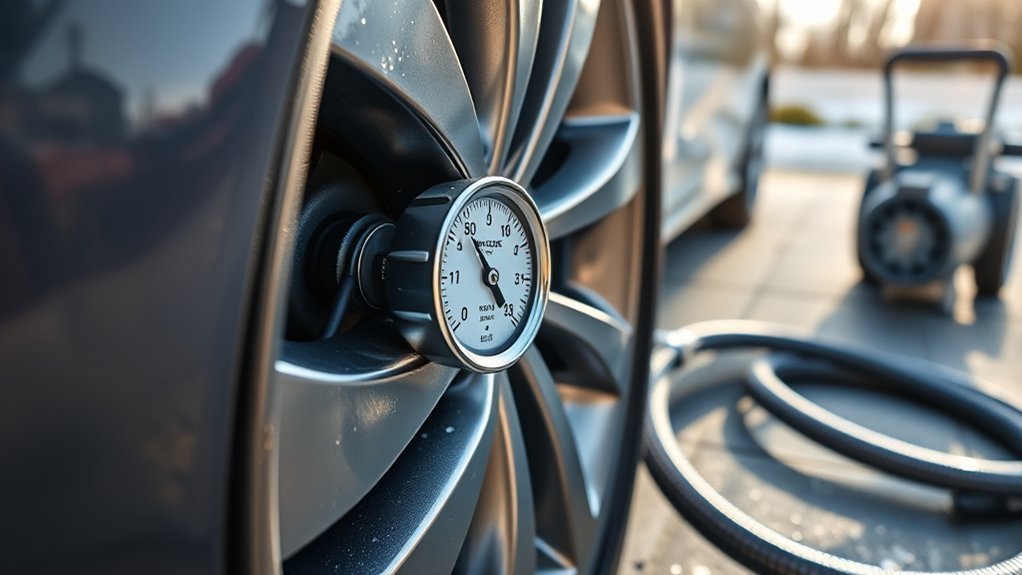
Cold tire pressure is the pressure measured before the tires heat up from driving. Honda says to measure tire pressure when the vehicle has been parked for at least three hours or driven less than 1 mile. If you check the tires when they are hot, the reading can be about 4–6 psi higher than a cold reading.
This matters because setting pressure based on a hot reading can leave the tires underinflated once they cool down. Underinflated tires can wear unevenly, reduce fuel economy, hurt handling, and run hotter than they should. Overinflated tires can ride harshly, wear unevenly, and be more vulnerable to road hazards.
A correct cold tire pressure reading is the baseline. Check cold, adjust to the doorjamb label, then recheck after adding or releasing air.
How to Measure Tire Pressure Correctly
Use a reliable tire pressure gauge, not a visual guess. Modern tires can look normal even when they are several PSI low.
- Park safely and let the tires cool. For the most accurate reading, check before driving or after the Accord has been parked for at least three hours.
- Find the recommended PSI. Open the driver’s door and read the Tire and Loading Information label on the doorjamb.
- Remove the valve cap. Keep it in your pocket so it does not roll away.
- Press the gauge straight onto the valve stem. A hissing sound means air is escaping; press more firmly and squarely.
- Read the PSI. Compare it with the front and rear pressures listed on the label.
- Repeat for all tires. Check the spare tire if your Accord has one.
Pro Tip: Keep a small digital gauge in the glovebox or trunk. Gas-station gauges can be convenient, but your own gauge gives you a consistent reference every month.
[Products Worth Considering]

The JACO FlowPro Tire Inflator measures, inflates, and airs down tires up to 100 PSI with battery-free operation and ±2% accuracy after calibration. It features a glowing pressure dial for night visibility, a heavy-duty steel build with a hybrid hose, and a precision push-to-inflate thumb trigger. The patented Lightning Air Chuck locks on for a secure seal, and the kit includes quick-connect hardware for easy inline use with your air compressor.

This 100-piece set of snap-in tubeless tire valve stems is designed for standard 0.453 in (11.5 mm) rim holes and helps maintain reliable, steady tire pressure. Made with ozone-resistant rubber and brass cores, the valves are built for durability and long-term use. Easy to install by hand, they support safe driving and are suitable for cars, light trucks, trailers, and more.
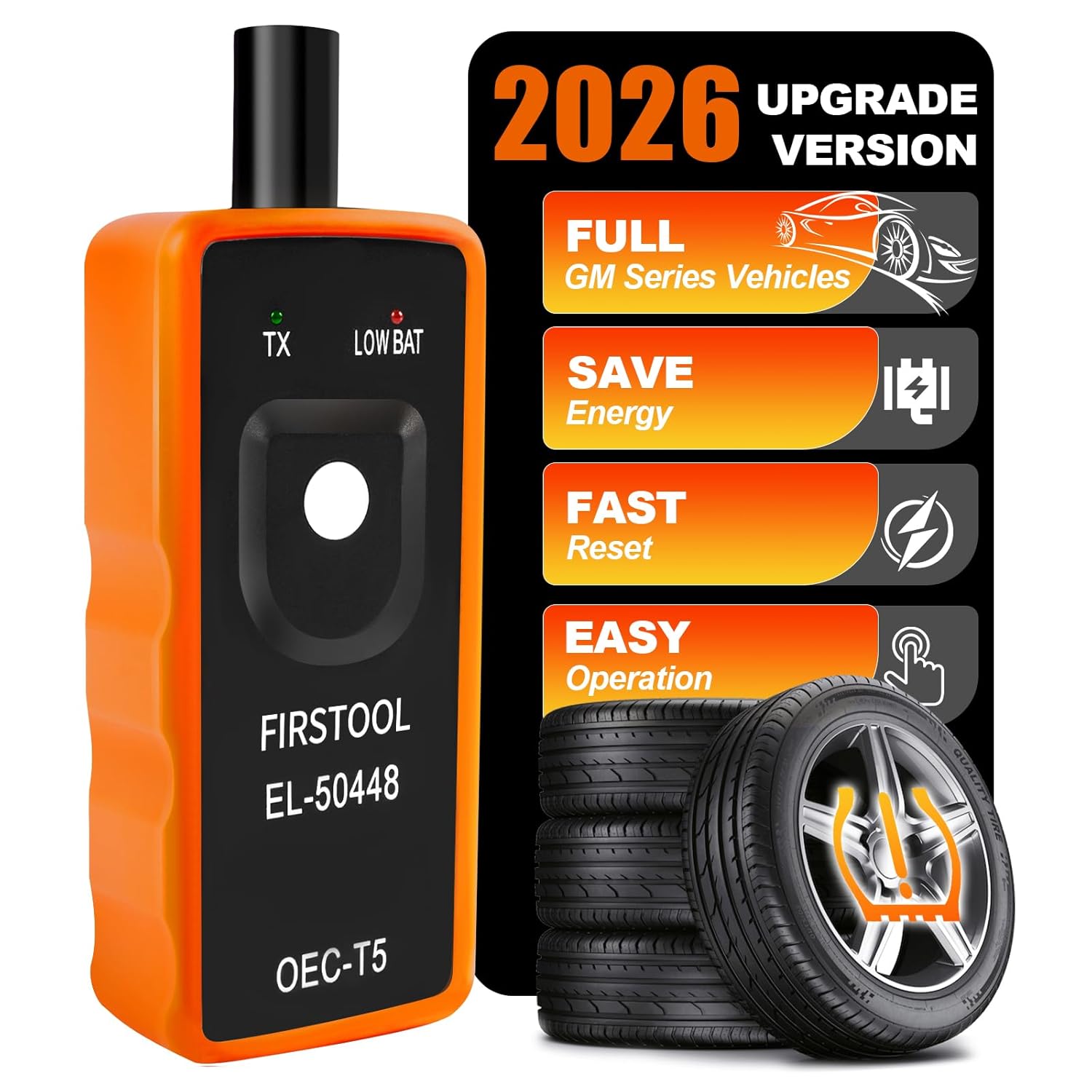
This TPMS relearn tool helps you quickly activate, match, and reset GM tire pressure sensors to keep the vehicle monitoring system working properly. It clears tire pressure alarms and dashboard warning lights after sensor replacement or tire rotation, and supports learning for common 315/433 MHz TPMS sensors. Designed for simple one-button operation, it can help you avoid unnecessary trips to repair shops.
Adjusting Tire Pressure: Step-by-Step Guide
Once you know the current PSI, inflate or deflate each tire until it matches the pressure on your Accord’s doorjamb label.
| Step | Action | Why It Matters |
|---|---|---|
| 1. Measure | Check each tire with a gauge while cold. | Cold readings match Honda’s recommended pressure method. |
| 2. Inflate | Add air in short bursts if the tire is low. | Short bursts prevent overshooting the target PSI. |
| 3. Deflate | Press the valve stem pin gently if the tire is high. | This brings the tire back to the doorjamb specification. |
| 4. Recheck | Measure again after each adjustment. | Air compressors and gauges can vary slightly. |
| 5. Finish | Reinstall valve caps and calibrate TPMS if required. | Valve caps help keep dirt and moisture out of the valve stem. |
If you must check pressure after driving, do not bleed air just because the reading is higher than the doorjamb label. Tires heat up while driving. Honda notes that hot tire pressure can read 4–6 psi higher than cold pressure, so recheck and fine-tune the tires later when they are cold.
[Products Worth Considering]

The Milton S-693 straight foot dual head air chuck is designed for accurate tire pressure checks and quick, secure valve-core engagement with lock-on threads on both ends. With a 1/4" FNPT connection and a maximum 150 PSI rating, it’s built for use on inner duals and common vehicle tires, including trucks and RVs.

The Big Rig Defense Tire Thumper is a truck tire pressure checker that lets you quickly check multiple tires by giving them a firm whack. Listen for a reassuring thump and feel the stick bounce when a tire is fully inflated, helping you get back on the road safely. It features a comfortable, glove-friendly handle and a secure wrist strap for confident use on busy routes.

Monitor tire tread wear with a smart, color-coded depth gauge that shows clear condition ranges at a glance. The bar is range marked for fast, easy readings, helping you maintain safer traction and performance. Each gauge is portable with a pocket clip, and the set includes 20 units for daily use and sharing.
Avoid These Common Tire Pressure Mistakes
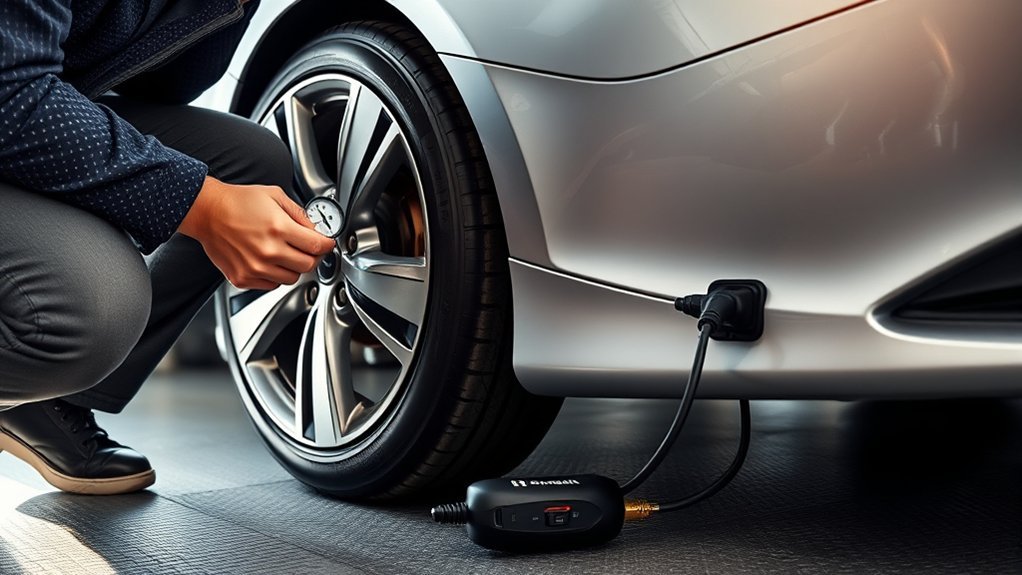
- Using the sidewall max PSI. The tire sidewall lists the tire’s maximum rating, not the Accord’s recommended daily driving pressure.
- Checking only one tire. Front and rear tires may have different recommended pressures, and one tire may lose air faster than the others.
- Ignoring cold-weather changes. Tire pressure drops when temperature falls, which can trigger the TPMS light on cold mornings.
- Forgetting TPMS calibration. Many Accord models require TPMS calibration after pressure changes, tire rotation, or tire replacement.
- Trusting TPMS instead of a gauge. TPMS is a warning system, not a substitute for monthly manual checks.
- Skipping the spare or repair kit. If your Accord has a compact spare, check its pressure. If it has a tire repair kit, make sure the kit is present and not expired.
Note: Honda lists separate higher cold pressures for sustained high-speed driving in some owner’s manuals. These are not your normal daily target unless your manual and driving conditions specifically call for them.
Ideal Times to Check Your Tire Pressure
Check your Honda Accord tire pressure at least once a month and before long trips. The best time is in the morning before driving, when the tires are cold.
You should also check tire pressure when:
- The TPMS light comes on.
- Outside temperatures change sharply.
- The vehicle feels like it pulls, wanders, or rides unusually harshly.
- You hit a pothole or curb.
- You notice one tire looks lower than the others.
- You are carrying passengers, luggage, or a heavier-than-normal load.
Honda notes that even tires in good condition can lose 1–2 psi per month, so a monthly check is still useful even when nothing looks wrong.
How TPMS Keeps Your Tires in Check
Recent Honda Accord TPMS systems do not necessarily measure the exact air pressure inside each tire. Honda describes the system as monitoring and comparing wheel rolling radius and rotational characteristics while driving to detect when one or more tires are significantly underinflated.
That means TPMS can warn you about a problem, but it does not replace a tire gauge. It may not warn immediately after a rapid pressure loss, may not warn about overinflation, and can be affected by tire size, tire type, tire chains, road conditions, or heavier uneven loads.
How to Calibrate Honda Accord TPMS
On many recent Accord models, TPMS calibration is started from the vehicle settings menu after the tires are set to the correct cold pressure. The exact menu wording can vary by model year and trim, but the process is generally:
- Set all four tires to the correct cold pressure.
- Turn the vehicle power mode to ON.
- Open the vehicle settings menu.
- Select TPMS Calibration.
- Select Calibrate.
- Drive normally so the system can complete calibration.
Honda notes that calibration on some Accord models completes automatically after roughly 30 minutes of cumulative driving at 30–60 mph. If the TPMS light stays on after the tires are properly inflated and calibrated, have the vehicle inspected.
Key Indicators Your Tires Need Inspection
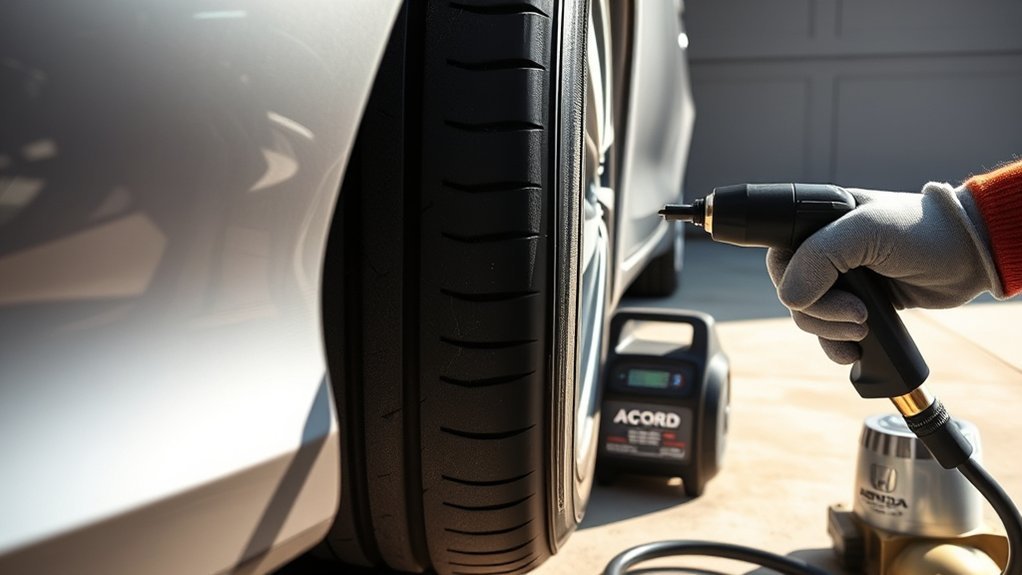
Every time you check tire pressure, inspect the tread, sidewalls, and valve stems. Tire pressure problems often point to a deeper issue such as a puncture, valve leak, alignment problem, or worn tire.
Uneven Tire Wear Patterns
Uneven tire wear can signal underinflation, overinflation, alignment problems, worn suspension components, or lack of rotation. Look for these patterns:
- Both edges worn: often linked to underinflation.
- Center tread worn: may point to overinflation.
- One side worn more than the other: may indicate alignment trouble.
- Cupping or scalloping: can suggest balance, suspension, or shock/strut issues.
- Tread wear indicators flush with the tread: the tire is due for replacement.
Visible Damage Signs
Inspect the sidewalls and tread for cuts, cracks, bubbles, bulges, exposed cord, nails, screws, or other foreign objects. A bulge or exposed cord is a safety concern and should be inspected immediately. Do not keep driving on a tire that appears structurally damaged.
Pressure Fluctuations Noted
If the same tire keeps losing pressure, treat it as a leak until proven otherwise. Common causes include a nail or screw in the tread, a leaking valve stem, corrosion or damage at the wheel bead, or prior tire damage. Repeated pressure loss should be checked by a tire professional.
Why Regular Tire Inspections Matter
Properly inflated and inspected tires help your Honda Accord brake, steer, and ride as designed. Underinflated tires flex more, build heat, wear unevenly, and can reduce fuel economy. Overinflated tires can ride harshly, wear unevenly, and be more prone to road-impact damage.
Regular inspections also help you catch issues before they turn into roadside problems. A quick monthly routine can reveal low pressure, uneven tread wear, cracking valve stems, embedded objects, or signs that your Accord needs balancing or alignment.
Benefits of Properly Inflated Tires for Safety and Performance
Enhanced Vehicle Stability
Correct tire pressure helps keep the tire’s contact patch working as intended. That improves steering response, braking consistency, and stability during everyday driving, cornering, and lane changes.
Improved Fuel Efficiency
Proper tire pressure can help fuel economy. FuelEconomy.gov says keeping tires inflated to the proper pressure can improve gas mileage by 0.6% on average and up to 3% in some cases. It also notes that underinflated tires can lower gas mileage by about 0.2% for every 1 psi drop in the average pressure of all tires.
Increased Tire Longevity
Correct pressure helps tires wear more evenly. That can extend usable tread life, reduce vibration, and lower the chance of premature replacement. Tire pressure is not the only factor in tire life, but it is one of the easiest to control.
Frequently Asked Questions
What air pressure should my Honda Accord tires be?
Use the cold tire pressure listed on the driver-side doorjamb label. As examples, some 2025 Accords list 33 psi front and 32 psi rear, while some 2025 Accord Hybrid models with 19-inch tires list 35 psi front and 32 psi rear. Your label is the final authority.
Should my Accord tires be 32 or 35 psi?
It depends on the model, tire size, and axle position. Some Accord rear tires are listed at 32 psi, while some front tires may be 33 or 35 psi. Check the doorjamb label and set each tire to the listed front or rear cold pressure.
Is 35 psi too high for a Honda Accord?
Not always. On some Accord trims and tire sizes, 35 psi is the correct cold pressure for the front tires. On other models, it may be higher than the normal target. Use the driver-side doorjamb label instead of guessing.
Do I need to reset TPMS after inflating Honda Accord tires?
On many Accord models, yes. Honda says TPMS calibration should be started after adjusting pressure, rotating tires, or replacing tires. Set the tires to the correct cold pressure first, then start TPMS calibration from the vehicle settings menu.
Can I drive if the TPMS light comes on?
Pull over when it is safe, inspect the tires, and check pressure with a gauge as soon as possible. If a tire is very low, visibly damaged, or losing pressure quickly, do not keep driving on it. Use roadside assistance or a professional tire service.
Why does my tire pressure light come on in cold weather?
Air pressure drops as outside temperature falls. A tire that was barely above the warning threshold in warm weather may trigger the TPMS light on a cold morning. Check and adjust pressure when the tires are cold.
Conclusion
To properly inflate your Honda Accord tires, start with a cold pressure reading, use the PSI on the driver-side doorjamb label, adjust each tire carefully, recheck with a gauge, and calibrate TPMS when required. Avoid using the sidewall maximum as your target, and do not rely on TPMS alone. A quick monthly tire-pressure check can improve safety, ride quality, fuel economy, and tire life.
Sources
- Honda 2025 Accord Specifications — gas Accord tire size and recommended cold PSI.
- Honda 2025 Accord Hybrid Specifications — hybrid Accord tire sizes and recommended cold PSI.
- Honda 2025 Accord Checking Tires — cold tire pressure, hot tire pressure difference, monthly checks, and inspection guidance.
- Honda 2025 Accord Hybrid TPMS — TPMS operation and calibration guidance.
- NHTSA TireWise — tire pressure safety, cold-pressure guidance, and TPMS limitations.
- FuelEconomy.gov Gas Mileage Tips — official fuel-economy impact of proper tire pressure.