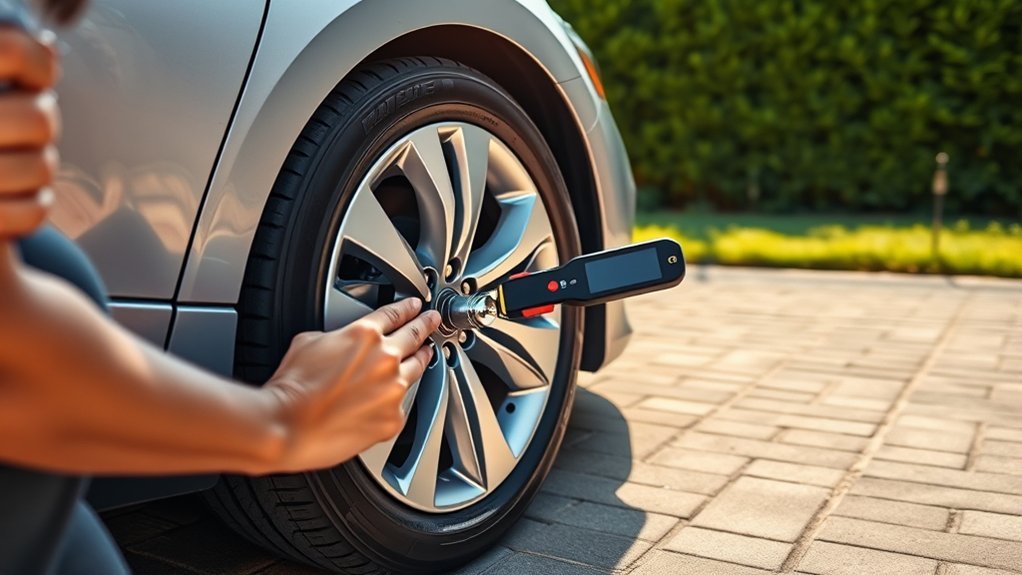
Checking your Honda Accord’s tire pressure is simple, but the most important rule is this: use the PSI listed on your own driver’s door-jamb tire label, not a universal number and not the maximum pressure printed on the tire sidewall. A tire pressure gauge gives the real answer; the TPMS light only warns you when the system detects a problem.
Quick Answer
To check Honda Accord tire pressure, park until the tires are cold, read the recommended PSI on the driver’s door-jamb label, press a tire pressure gauge firmly onto each valve stem, add or release air as needed, reinstall the caps, and calibrate TPMS if you adjusted pressure.
At a Glance
| Time Required | 5–10 minutes |
| Difficulty | Beginner |
| Tools Needed | Tire pressure gauge, air compressor or tire inflator, and your Accord’s door-jamb tire label |
| Cost | Free if you already have a gauge; usually $5–$25 for a basic gauge |
Key Takeaways
- Always use the PSI on your Honda Accord’s driver’s door-jamb label because pressure can vary by model year, tire size, and front/rear axle.
- Check pressure when the tires are cold, meaning the car has been parked for at least three hours or driven less than 1 mile.
- Do not rely on the TPMS light as a pressure gauge; use a real tire pressure gauge for each tire.
- Calibrate TPMS after adding air, releasing air, rotating tires, or replacing a tire on late-model Accords.
Why Tire Pressure Matters for Safety and Performance
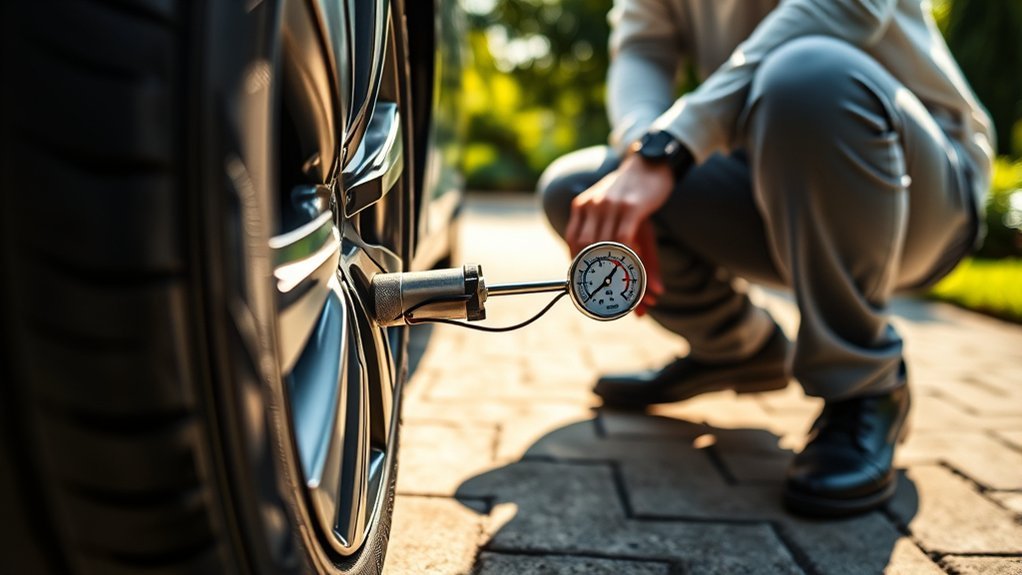
Proper tire pressure helps your Honda Accord handle, brake, ride, and wear its tires the way Honda intended. Honda warns that excessively worn or improperly inflated tires can increase crash risk, so pressure checks are not just a fuel-saving habit—they are basic safety maintenance.
Underinflated tires can wear unevenly, hurt handling, reduce fuel economy, and fail from overheating. Overinflated tires can make the ride harsh, increase vulnerability to road hazards, and also wear unevenly. Honda’s owner information recommends measuring tire pressure at least once a month or before long trips.
Keeping tires inflated to the proper pressure can improve gas mileage by 0.6% on average and up to 3% in some cases, according to FuelEconomy.gov.
The fuel-economy effect is real, but it is often overstated. FuelEconomy.gov says underinflated tires can lower gas mileage by about 0.2% for every 1 psi drop in the average pressure of all tires.
How to Identify Your Honda Accord’s Recommended Tire Pressure
The correct tire pressure for your Accord is on the tire and loading information label, usually on the driver’s side door jamb. Open the driver’s door and look for a sticker listing the original tire size and cold tire pressure. That label matters more than any general online PSI chart.
Warning: Do not use the “maximum pressure” molded into the tire sidewall as your target PSI. That number is the tire’s maximum limit, not your Accord’s recommended cold inflation pressure.
Many Accord owners see numbers around the low-to-mid 30s, but the exact front and rear pressures can differ. For example, Honda’s 2024 Accord Hybrid tire repair guidance lists 225/50R17 tires at front 33 psi/rear 32 psi and 235/40R19 tires at front 35 psi/rear 32 psi. Your own door-jamb label is still the final source because tire size, trim, and model year can change the specification.
Step-by-Step Guide to Checking Your Honda Accord’s Tire Pressure
Use this process when the tires are cold. Honda defines cold tires as tires on a vehicle that has been parked for at least three hours or driven less than 1 mile. If you check hot tires, the reading can be several PSI higher than the true cold pressure.
- Park safely on level ground. Set the parking brake and wait until the tires are cold if possible.
- Find the recommended PSI. Read the driver’s door-jamb tire label and note whether the front and rear tires have different pressures.
- Remove the valve cap. Put the cap in your pocket or a cupholder so it does not roll away.
- Press the gauge straight onto the valve stem. A brief hiss is normal, but a long hiss usually means the gauge is not sealed correctly.
- Read the pressure. Write down the reading for each tire: front left, front right, rear left, and rear right.
- Add or release air. Use a compressor to inflate low tires. If a tire is too high, press the valve pin briefly to release air.
- Recheck the pressure. Always confirm with the gauge after adding or releasing air.
- Inspect while you are there. Look for nails, cuts, cracks, bulges, uneven tread wear, and damaged valve stems.
- Reinstall every valve cap. The cap helps keep dirt and moisture out of the valve stem.
- Calibrate TPMS if you changed pressure. On late-model Accords, Honda says to start TPMS calibration whenever you adjust tire pressure.
Pro Tip: Use the same quality gauge each month. Readings can vary slightly between gauges, so consistency helps you spot real pressure loss sooner.
[Products Worth Considering]

ETENWOLF’s tire pressure gauge helps you quickly and accurately check tire PSI across cars, trucks, motorcycles, bikes, and more. It’s manually calibrated to ANSI B40.1 Grade A for reliable readings, includes a large glow dial for easy nighttime viewing, and features a 360-degree swivel chuck for use at any valve angle. The gauge also works consistently in extreme hot or cold weather.

This tire inflator with pressure gauge delivers long-lasting performance with a durable rubber-protected gauge and sturdy build. The longer hose and 360 swivel air chuck help you seal the valve securely and keep your hands free while measuring, inflating, or deflating. It’s battery-free for reliable use and provides ±2 PSI accuracy in the mid-range for most typical tires, with universal compatibility for 1/4 NPT compressor outputs.

Keep your tires properly inflated with this analog VONDIOR tire pressure gauge, designed for fast, easy readings without batteries. The swiveling, two-axis hose and large glow dial help you measure at any tire angle with instant visibility. Built with a protective rubber shield, it supports durable, low-maintenance use for cars and trucks.
Tire Pressure Adjustments: Best Practices
[Products Worth Considering]

The JACO FlowPro Tire Inflator measures, inflates, and airs down tires up to 100 PSI with battery-free operation and ±2% accuracy after calibration. It features a glowing pressure dial for night visibility, a heavy-duty steel build with a hybrid hose, and a precision push-to-inflate thumb trigger. The patented Lightning Air Chuck locks on for a secure seal, and the kit includes quick-connect hardware for easy inline use with your air compressor.
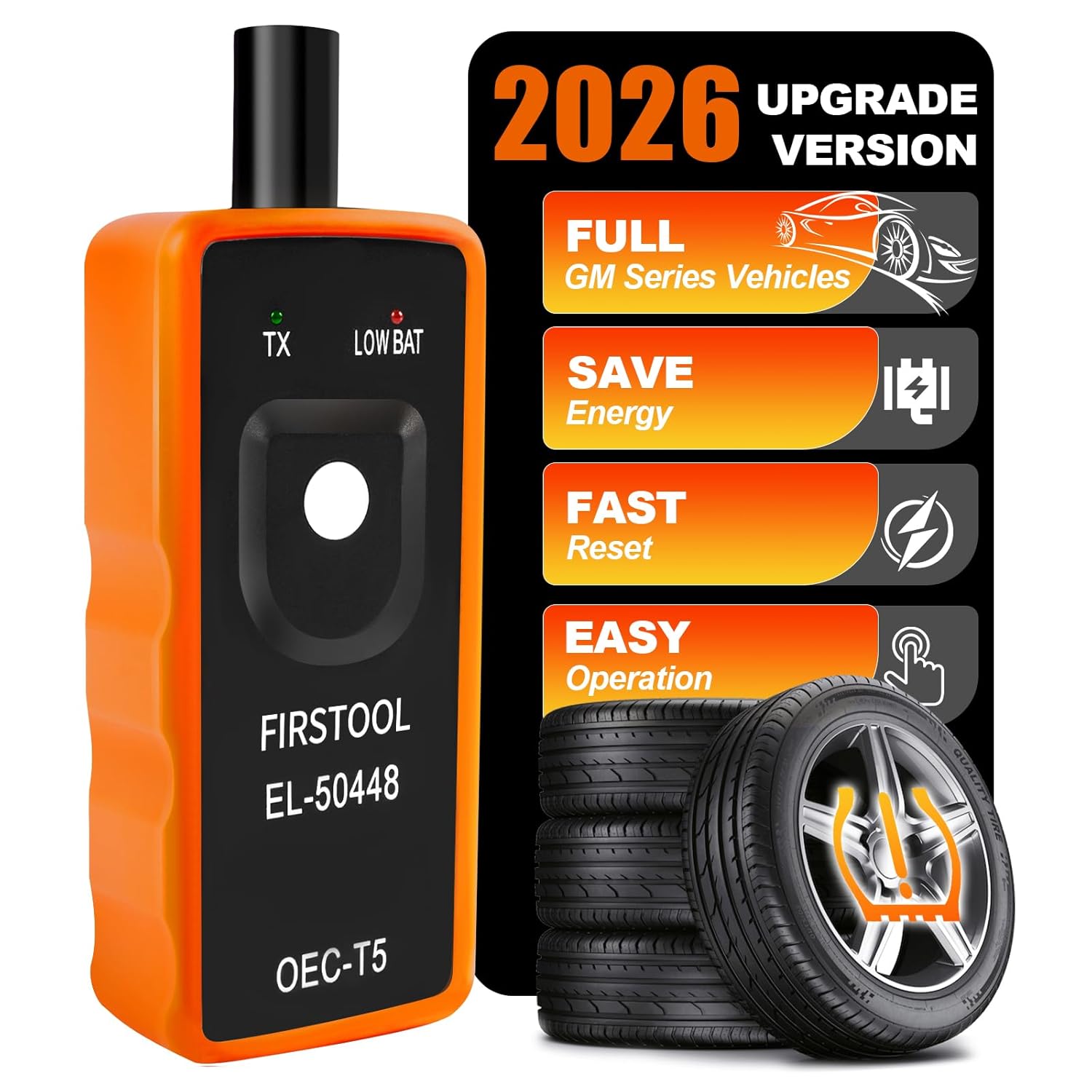
This TPMS relearn tool helps you quickly activate, match, and reset GM tire pressure sensors to keep the vehicle monitoring system working properly. It clears tire pressure alarms and dashboard warning lights after sensor replacement or tire rotation, and supports learning for common 315/433 MHz TPMS sensors. Designed for simple one-button operation, it can help you avoid unnecessary trips to repair shops.

These aluminum alloy tire valve stem caps protect the valve core from corrosion and help prevent air leakage for more stable tire pressure. The rubber ring design helps support a secure, safe seal while adding a stylish look to your Honda wheels. Easy to install by hand, these caps are ideal for everyday driving and weather exposure.
Recommended Pressure Levels
Set each tire to the cold PSI shown on your Accord’s label. If the front and rear numbers differ, match each tire to its axle. Do not “average” the numbers, and do not inflate every tire to the same value unless the label says all four tires use the same pressure.
If you recently drove more than a mile, the tires may be warm. In that case, avoid bleeding air down to the exact cold specification unless you know the proper hot-pressure adjustment. The safer choice is to recheck in the morning before driving.
Tools for Adjustment
You do not need many tools, but accuracy matters. A simple pencil gauge, dial gauge, or digital gauge can work if it is in good condition. Keep the gauge clean, avoid dropping it, and replace it if readings seem inconsistent.
| Tool | Purpose | Why It Helps |
|---|---|---|
| Tire pressure gauge | Measures PSI at each valve stem | Gives the real pressure, unlike the TPMS warning light |
| Air compressor or inflator | Adds air to low tires | Lets you correct pressure at home or at a service station |
| Door-jamb tire label | Shows the correct cold PSI | Prevents guessing or using the sidewall maximum |
| Valve caps | Protect valve stems from dirt and moisture | Helps reduce slow leaks and valve problems |
Monitoring and Maintenance Tips
Check tire pressure once a month, before long trips, after a major temperature swing, and any time the TPMS light comes on. Tires in good condition can still lose 1–2 psi per month, so waiting several months between checks can leave the tires low without obvious visual signs.
Note: Air pressure changes with temperature. Goodyear notes that tires can change about 1–2 psi for every 10°F change in ambient temperature, so cold mornings often trigger TPMS warnings.
What Should You Know About TPMS Warnings?
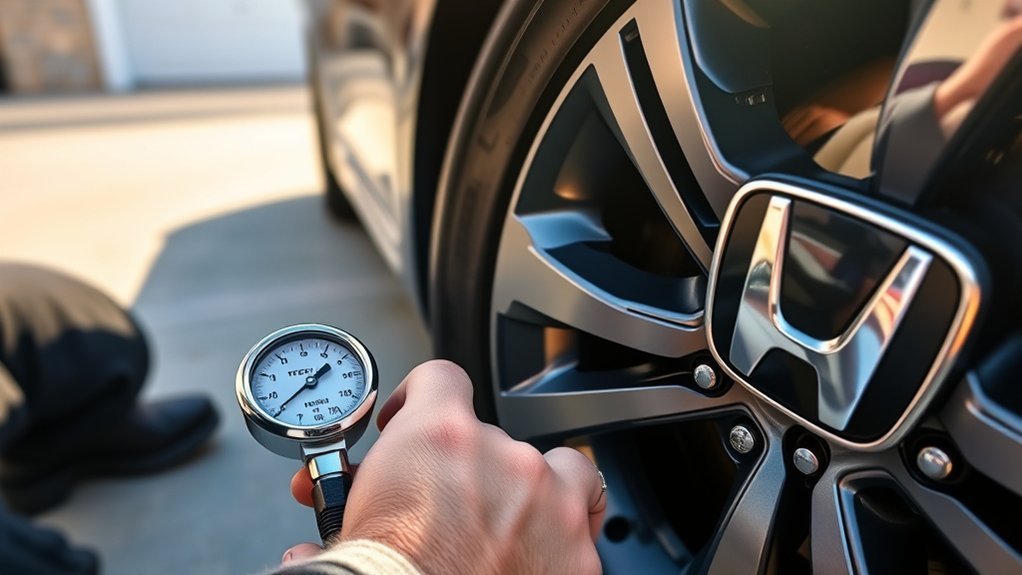
TPMS stands for Tire Pressure Monitoring System. On current Honda Accord models, the system does not directly measure the pressure in each tire. Honda explains that the Accord TPMS compares wheel and tire rolling characteristics while you drive to detect when one or more tires may be significantly underinflated.
That means the TPMS light is a warning system, not a replacement for a tire pressure gauge. If the light comes on, stop in a safe place when you can, check all four tires with a gauge, inflate them to the label pressure, and inspect for visible damage.
Honda also notes that TPMS may not monitor at low speed and that cold temperatures, altitude changes, a compact spare, tire chains, uneven load, rapid air loss, or mixed tire sizes can affect warnings. For current Accord TPMS details, use Honda’s official Tire Pressure Monitoring System guide.
How to Calibrate TPMS After Adjusting Pressure
On late-model Accords, start TPMS calibration after you adjust pressure, rotate tires, or replace a tire. The exact menu wording can vary, but Honda’s current Accord instructions follow this general flow:
- Set the cold tire pressure in all four tires.
- Stop the vehicle completely.
- Put the transmission in Park.
- Turn the power mode to ON.
- Use the vehicle settings menu to select TPMS calibration.
- Select Calibrate and confirm.
Honda says the calibration process finishes automatically and requires about 30 minutes of cumulative driving at 30–60 mph. TPMS cannot be calibrated if a compact spare tire is installed.
What’s Next If Your TPMS Light Stays On?
If your TPMS light stays on after you set the tires to the correct cold pressure, work through the problem in this order:
- Recheck all four tires cold. One tire may still be a few PSI low.
- Confirm front and rear PSI separately. Some Accord tire sizes use different front and rear pressures.
- Inspect for a slow leak. Look for nails, screws, sidewall damage, or a cracked valve stem.
- Calibrate TPMS again. Do this only after the tire pressures are correct.
- Drive long enough for calibration. A short neighborhood drive may not be enough.
- See a Honda dealer or qualified mechanic. If the warning remains with properly inflated regular tires, Honda recommends having the vehicle checked.
Warning: Do not keep driving on a tire that is visibly flat, has a bulge, shows exposed cord, or loses pressure again soon after inflation. Install the spare or call roadside assistance.
[Products Worth Considering]

Measure tire tread depth quickly and accurately with this LUMITECO dial gauge that reads in 1/32" increments up to 14/32". The color-coded green/yellow/red zones make it easy to judge tire wear and know when replacement is needed. A rugged, compact design with a protective pouch helps keep the gauge ready for use on cars, trucks, motorcycles, and more.

This digital tire pressure gauge with built-in inflator helps you accurately check and adjust tire pressure for safer driving and better fuel efficiency. It supports multiple units (PSI, KPA, BAR, KG/CM²) and reads within 1% for reliable results. The 3-in-1 design inflates, deflates, and measures, with a quick-connect air chuck and compatible hose setup for cars, trucks, SUVs, RVs, and motorcycles.

Milton S-921 pencil tire pressure gauge helps you maintain optimal tire pressure for passenger cars with accurate readings in PSI and kPa. It features a built-in deflator valve for convenient pressure adjustments, plus a single chuck head and nylon indicator bar for easy use on the go. Built from durable plated brass and designed for reliable performance, it’s a practical road trip and cold-weather maintenance tool.
The Impacts of Overinflation and Underinflation on Tire Wear

Underinflation and overinflation damage tires in different ways. A low tire flexes more than designed, which creates heat, increases shoulder wear, and can reduce fuel economy. A tire that is too high can ride harshly, wear unevenly, and become more vulnerable to road impacts.
Pressure problems can also hide alignment or suspension issues. If you keep correcting the same tire, or if the tread is wearing faster on one edge, have the tire and alignment checked before the problem ruins the tire.
How Often Should You Check Your Tire Pressure?
Check your Honda Accord’s tire pressure at least once a month and before long trips. Also check it after sudden cold snaps, after hitting a pothole, when carrying heavier loads, and whenever the TPMS light appears.
Best Practices Routine
- Pick one day each month to check all four tires.
- Check in the morning before driving when possible.
- Use the same gauge each time for consistent readings.
- Record unusual pressure loss so you can spot slow leaks.
- Inspect tread, sidewalls, and valve stems while checking PSI.
Seasonal Considerations
Pressure commonly drops as temperatures fall and rises as temperatures climb. If your TPMS light appears on the first cold morning of the season, do not ignore it as “just weather.” Check the tires cold and set them to the label pressure.
Seasonal tire changes also require extra attention. If you switch between winter and all-season tires, confirm the replacement tire size and pressure requirements, then calibrate TPMS after installation.
Resources for Ongoing Tire Maintenance and Education
For the most accurate Honda Accord tire-pressure information, start with your own vehicle label and owner information. General tire articles can help, but they should not override Honda’s pressure specification for your exact tire size.
- Use your driver’s door-jamb label for the correct cold PSI.
- Use Honda’s owner information for TPMS calibration steps.
- Use FuelEconomy.gov for fuel-economy claims related to tire pressure.
- Use NHTSA resources to understand what TPMS is designed to do.
- Ask a Honda dealer or trusted tire shop if the TPMS light stays on after correct inflation and calibration.
Frequently Asked Questions
How do I see which tire is low on a Honda Accord?
Some Accord displays may indicate that one tire or multiple tires are significantly underinflated, but the best way to identify the low tire is to check all four tires with a tire pressure gauge. Compare each reading with the front and rear PSI listed on the driver’s door-jamb label.
Should my Honda Accord tires be 32 or 35 PSI?
They should be set to the cold PSI printed on your Accord’s tire label. Some late-model Accords use different front and rear pressures, and some tire sizes call for higher front pressure than rear pressure. Do not choose 32 or 35 PSI by guessing.
Can I rely on TPMS instead of checking with a gauge?
No. TPMS is a warning system, not a precision gauge. It may not alert you until a tire is significantly underinflated, and it may not show exact PSI. Check each tire manually at least once a month.
Do I need to calibrate TPMS after adding air?
On late-model Accords, yes. Honda says to start TPMS calibration whenever you adjust tire pressure, rotate tires, or replace one or more tires. Set the cold pressure first, then calibrate through the vehicle settings menu.
Why did my TPMS light come on after a cold night?
Cold air lowers tire pressure. A tire that was barely acceptable in warm weather can drop below the warning threshold after a temperature change. Check the tires cold, inflate to the door-jamb label pressure, and recalibrate TPMS if pressure was adjusted.
Conclusion
Checking your Honda Accord’s tire pressure is one of the easiest maintenance jobs you can do at home. The key is to check the tires cold, use the PSI on your own door-jamb label, measure every tire with a gauge, correct the pressure carefully, and calibrate TPMS after changes. Do that monthly and before long trips, and you will protect your tires, fuel economy, handling, and safety.
Sources
- Honda 2025 Accord Owner Information: Checking Tires — cold tire definition, monthly checks, underinflation and overinflation effects.
- Honda 2025 Accord Owner Information: Tire Pressure Monitoring System — Accord TPMS behavior and calibration requirements.
- Honda 2024 Accord Hybrid Owner Information: If a Tire Goes Flat — examples of front/rear PSI differences by tire size.
- FuelEconomy.gov: Keeping Your Vehicle in Shape — fuel-economy effect of proper tire inflation.
- NHTSA: Tire Pressure Monitoring System Final Rule — federal TPMS purpose and warning-system background.
- Goodyear: Tire Pressure in Cold Weather — temperature effects on tire pressure.