
For city driving, the safest tire pressure for your Honda Accord is not one universal number. It is the cold tire pressure printed on the driver’s doorjamb tire label for your exact Accord, trim, tire size, and market. That label beats online charts, forum advice, and the maximum PSI printed on the tire sidewall.
Quick Answer
For a Honda Accord, use the cold tire pressure shown on the driver’s doorjamb label. Many Accord models fall in the low-to-upper 30 psi range, but the correct number can vary by tire size, trim, model year, and load. Check pressure when the tires are cold, not after city driving.
Key Takeaways
- The driver’s doorjamb tire label is the final authority for your Accord’s correct cold PSI.
- Check tire pressure when the car has been parked for at least three hours or driven less than 1 mile.
- Do not bleed hot tires down to the cold PSI number; hot tires normally read higher.
- After adjusting pressure, rotating tires, or replacing tires, many Honda Accord models need TPMS calibration.
- Proper inflation helps handling, tire life, comfort, and fuel economy.
At a Glance
| Time Required | 5–10 minutes |
| Difficulty | Easy |
| Tools Needed | Accurate tire pressure gauge and an air pump or compressor |
| Cost | Free at many air stations, or about $10–$25 for a basic gauge |
What’s the Ideal Tire Pressure for Your Honda Accord?

The ideal tire pressure for your Honda Accord is the cold PSI listed on the tire and loading information label, usually on the driver’s doorjamb. Honda’s owner information says properly inflated tires give the best mix of handling, tread life, and comfort, and it directs owners to the doorjamb label or specifications page for the specified pressure.
A number like 33 psi may be correct for some Accord setups, but it is not safe to treat it as the correct pressure for every Accord. Accord tire pressure can vary by model year, trim, tire size, hybrid or gas model, and driving condition. For example, Honda lists different cold-pressure values for some Accord Hybrid high-speed driving conditions with 17-inch and 19-inch tires, which shows why a single “one-size-fits-all” answer is not reliable.
Note: The PSI printed on the tire sidewall is usually the tire’s maximum pressure, not your Accord’s recommended operating pressure. Use the Honda doorjamb label, not the sidewall maximum.
| Driving Situation | What to Do |
| Daily city driving | Use the cold PSI on the driver’s doorjamb label. |
| After driving | Expect the reading to be higher. Recheck when cold if possible. |
| Full passenger or cargo load | Follow the doorjamb label and owner’s manual. Do not add pressure unless Honda specifies it for your model or driving condition. |
| Sustained high-speed driving | Use your owner’s manual. Honda provides separate high-speed pressure guidance for some Accord models. |
How to Find the Correct PSI on Your Accord
Open the driver’s door and look for the Tire and Loading Information label on the door edge or doorjamb. That label normally shows the original tire size and the correct cold tire pressure for the front and rear tires. Some Accords use the same front and rear pressure; others may not.
- Find the label on the driver’s doorjamb.
- Match the listed tire size to the tires on your Accord.
- Read the front and rear cold PSI values.
- Check all four tires with a gauge before driving or after the car has sat for at least three hours.
- Inflate or release air until each tire matches the listed cold PSI.
How to Check Your Tire Pressure Accurately
Use a good digital or dial tire pressure gauge. For the most accurate reading, check your Accord’s tire pressure when the tires are cold. Honda defines cold tires as tires on a vehicle that has been parked for at least three hours or driven less than 1 mile.
- Park on a safe, level surface.
- Remove the valve cap from one tire.
- Press the gauge firmly onto the valve stem until the hissing stops.
- Compare the reading with the doorjamb PSI for that tire position.
- Add air if the pressure is low, or release a small amount if the tire is over the specified cold pressure.
- Recheck the pressure, then reinstall the valve cap.
- Repeat for all four tires and the spare if your Accord has one.
Pro Tip: Keep a tire gauge in the glove box. TPMS is helpful, but it is not a replacement for checking tire pressure with a gauge.
[Products Worth Considering]

These aluminum alloy tire valve stem caps protect the valve core from corrosion and help prevent air leakage for more stable tire pressure. The rubber ring design helps support a secure, safe seal while adding a stylish look to your Honda wheels. Easy to install by hand, these caps are ideal for everyday driving and weather exposure.

Keep your tires properly inflated with this analog VONDIOR tire pressure gauge, designed for fast, easy readings without batteries. The swiveling, two-axis hose and large glow dial help you measure at any tire angle with instant visibility. Built with a protective rubber shield, it supports durable, low-maintenance use for cars and trucks.

This tire inflator with pressure gauge delivers long-lasting performance with a durable rubber-protected gauge and sturdy build. The longer hose and 360 swivel air chuck help you seal the valve securely and keep your hands free while measuring, inflating, or deflating. It’s battery-free for reliable use and provides ±2 PSI accuracy in the mid-range for most typical tires, with universal compatibility for 1/4 NPT compressor outputs.
Adjusting Tire Pressure for City Driving
City driving usually means stop-and-go traffic, potholes, speed bumps, tight parking, and short trips. These conditions make correct tire pressure especially important, but they do not create a special “city PSI” that replaces Honda’s recommended cold pressure.
For normal city driving, set the tires to the doorjamb PSI when cold. Avoid raising pressure just to chase fuel economy or sharper steering. Overinflated tires can ride harshly, wear unevenly, and become more vulnerable to road hazards. Underinflated tires can hurt handling, reduce fuel economy, wear unevenly, and overheat.
Warning: If one tire is repeatedly low, has a bulge, shows cracking, has exposed cord, or loses pressure quickly, do not rely on inflation alone. Have the tire inspected before normal driving.
[Products Worth Considering]
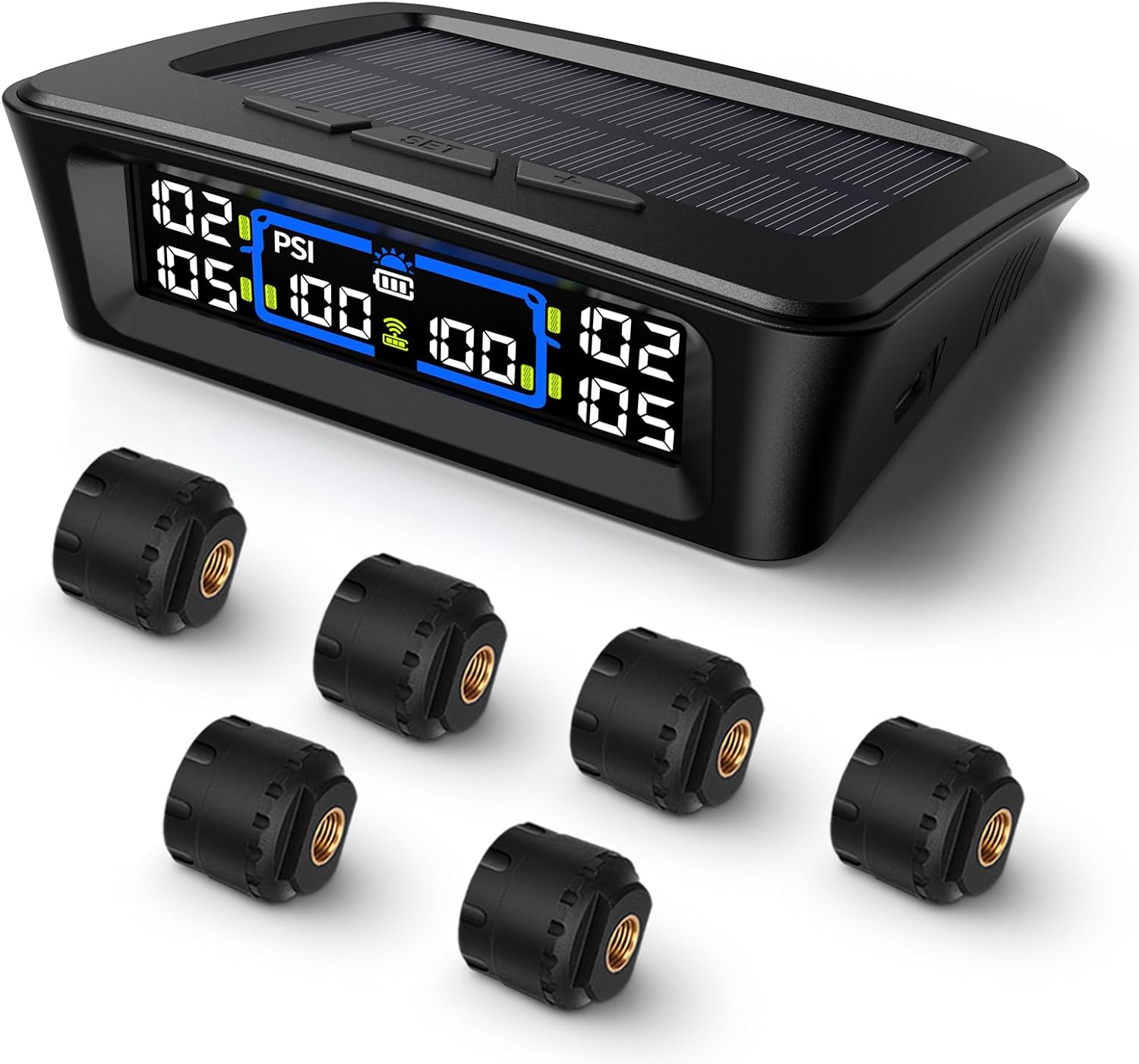
The Tymate TM12 RV TPMS delivers real-time tire pressure and temperature monitoring with a stable 433Hz display for safer long-distance driving. It supports simultaneous monitoring across vehicle and trailer zones, includes six alarm modes for pressure, temperature, leakage, battery, and signal loss, and features easy DIY installation with auto calibration. Power is supplied via USB-C charging or solar recharging, with a wide 0–144 PSI range and up to 50 ft signal coverage for RVs and towable trailers.

ETENWOLF’s tire pressure gauge helps you quickly and accurately check tire PSI across cars, trucks, motorcycles, bikes, and more. It’s manually calibrated to ANSI B40.1 Grade A for reliable readings, includes a large glow dial for easy nighttime viewing, and features a 360-degree swivel chuck for use at any valve angle. The gauge also works consistently in extreme hot or cold weather.

ETENWOLF’s calibrated tire pressure gauge delivers accurate readings for cars, trucks, motorcycles, bikes, SUVs, RVs, and ATVs across a 0–75 PSI range. The large glow dial improves visibility in low light, while the 360° swivel chuck makes it easy to check valve pressure from any angle. It’s designed to stay accurate even in extreme hot or cold weather.
Seasonal Tire Pressure Tips for Hot UAE Weather
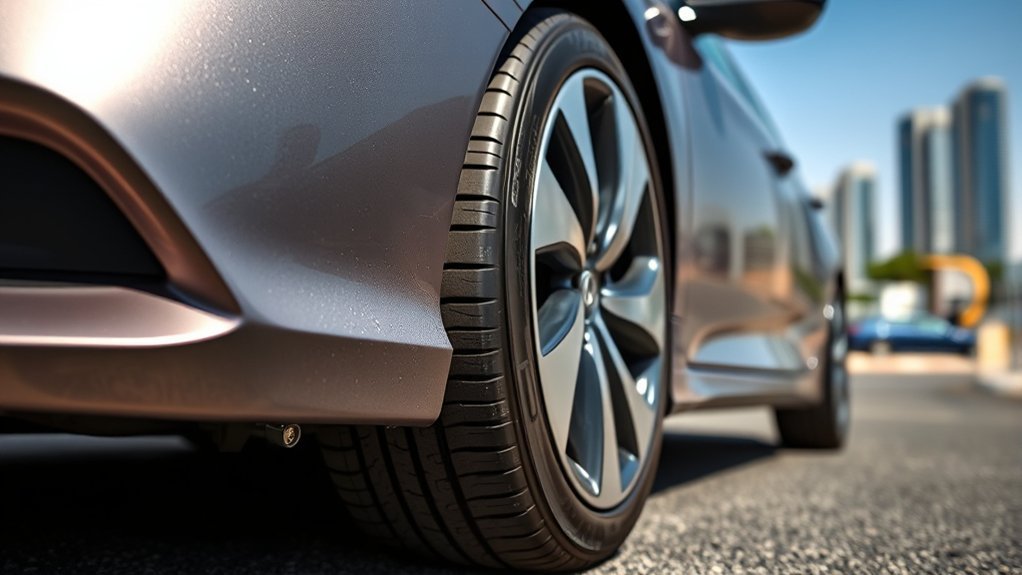
Hot weather makes tire-pressure checks more confusing because tire pressure rises as tires heat up. In very hot climates such as the UAE, the best habit is to check your Accord’s pressure early in the morning, before driving, and set it to the cold PSI on the doorjamb label.
Do not automatically reduce your tires by 3 psi in extreme heat. Also do not automatically add 3 psi just because the weather is hot. The safe target is still the recommended cold tire pressure for your specific vehicle.
Recommended PSI Adjustments
Use these rules instead of guessing:
- Cold morning check: Set pressure to the doorjamb PSI.
- Hot after-driving check: Expect a higher reading. Recheck cold later before releasing air.
- Long highway trip: Check the owner’s manual for any high-speed guidance for your Accord.
- Heavy load: Stay within Honda’s label/manual guidance. Do not exceed safe limits.
Weekly Pressure Checks
Honda and NHTSA recommend checking tire pressure at least monthly and before long trips. In very hot weather, weekly checks are a smart upgrade because small leaks, heat cycles, and curb impacts can change pressure faster than you expect.
When you check pressure, also inspect tread and valve stems. Look for nails, sidewall bubbles, uneven wear, cracks, cuts, and missing valve caps. Catching these problems early can prevent a small leak from turning into a roadside failure.
Benefits of Proper Tire Pressure and Inflation

Correct tire pressure helps your Honda Accord feel stable, predictable, and comfortable in city traffic. It also helps the tires wear more evenly and reduces the risk of heat buildup from underinflation.
FuelEconomy.gov says keeping tires inflated to the proper pressure can improve gas mileage by 0.6% on average and up to 3% in some cases.
Proper inflation is not only about fuel savings. It also supports braking, steering response, ride comfort, tread life, and TPMS accuracy. If your Accord feels rough, wanders, vibrates, or pulls to one side, tire pressure should be one of the first things you check.
What to Do About Low or High Tire Pressure?
If your tire pressure is too low or too high, correct it when the tires are cold whenever possible.
- If pressure is low: Add air until the tire reaches the doorjamb cold PSI for that position.
- If pressure is high while cold: Release air slowly and recheck with the gauge.
- If pressure is high after driving: Do not rush to bleed the tire down to the cold PSI. Let the tires cool and recheck.
- If one tire keeps dropping: Inspect for a nail, valve-stem leak, rim leak, or tire damage.
- If the TPMS light is on: Check all four tires with a gauge, adjust pressure, then calibrate TPMS if your Accord requires it.
Note: A tire can be dangerously low before it looks flat. Always use a gauge instead of judging pressure by sight.
[Products Worth Considering]
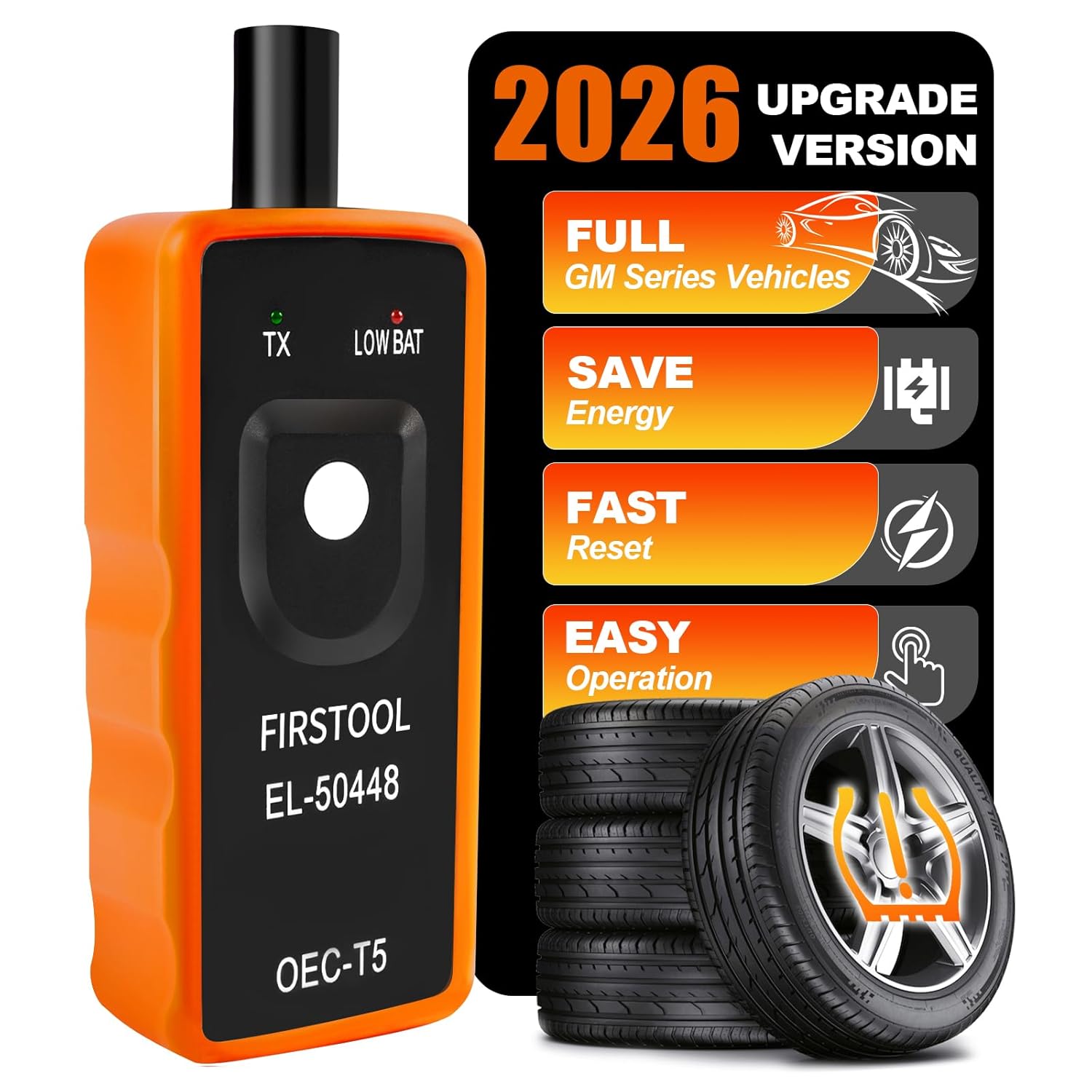
This TPMS relearn tool helps you quickly activate, match, and reset GM tire pressure sensors to keep the vehicle monitoring system working properly. It clears tire pressure alarms and dashboard warning lights after sensor replacement or tire rotation, and supports learning for common 315/433 MHz TPMS sensors. Designed for simple one-button operation, it can help you avoid unnecessary trips to repair shops.

Monitor tire tread wear with a smart, color-coded depth gauge that shows clear condition ranges at a glance. The bar is range marked for fast, easy readings, helping you maintain safer traction and performance. Each gauge is portable with a pocket clip, and the set includes 20 units for daily use and sharing.

The SAFELIFE dial tire tread depth gauge measures tread depth in 1/32 inch increments with clear, easy-to-read 2-inch dial face. Color zones using a traffic light system help you quickly judge whether tread is low, marginal, or ample for safer driving. Built with a durable zinc cast body and a metal detect probe for precise, comfortable use across cars, motorcycles, trucks, and buses.
Keeping Your TPMS in Top Shape
Many current Honda Accord models use an indirect Tire Pressure Monitoring System. Instead of directly showing the exact PSI in each tire, the system compares wheel speed and rolling characteristics to detect when one or more tires may be significantly underinflated.
After you adjust tire pressure, rotate tires, or replace tires, follow your Accord’s owner’s manual and start TPMS calibration. On many recent Accord models, calibration is done through the vehicle settings menu after the tires are set to the correct cold pressure.
TPMS is a warning system, not a tire-maintenance schedule. The light may not come on for overinflation, and it may not warn you about a slow pressure difference until the system detects a significant change. A monthly gauge check is still necessary.
Debunking Common Tire Pressure Myths
- Myth: 33 psi is correct for every Honda Accord. The correct number is on the doorjamb label for your exact car.
- Myth: Higher PSI always improves mileage. Too much pressure can reduce comfort, increase uneven wear, and make tires more vulnerable to impacts.
- Myth: You should lower pressure in hot weather. You should set the correct cold PSI. Hot readings normally rise after driving.
- Myth: TPMS means you can skip manual checks. TPMS warns about significant underinflation; it does not replace a gauge.
- Myth: The tire sidewall tells you the recommended pressure. The sidewall usually shows maximum pressure. The vehicle label shows the recommended pressure.
Frequently Asked Questions
Is 35 PSI too high for a Honda Accord?
Not always. It depends on your Accord’s model year, trim, tire size, and whether the tires are cold or hot. If your doorjamb label lists 35 psi for that tire position, it is correct when cold. If the label lists a lower number, 35 psi may be too high for normal driving.
What should be the air pressure in a Honda City compared with a Honda Accord?
The Honda City and Honda Accord are different vehicles, so do not use the Accord’s PSI for a City or the City’s PSI for an Accord. For either model, use the cold tire pressure printed on that vehicle’s driver-side doorjamb label.
Should I check Honda Accord tire pressure hot or cold?
Check it cold whenever possible. A cold check means the car has been parked for at least three hours or driven less than 1 mile. Hot tire pressure can read several PSI higher after driving.
Should I reduce tire pressure in UAE summer heat?
Do not reduce pressure by a fixed amount just because the weather is hot. Check the tires cold, preferably in the morning, and set them to the doorjamb PSI. If you check after driving, expect a higher reading and recheck cold later.
Do I need to reset TPMS after adding air to a Honda Accord?
On many recent Honda Accord models, yes. After setting all four tires to the correct cold pressure, start TPMS calibration through the vehicle settings menu. Also calibrate after tire rotation or tire replacement if your owner’s manual requires it.
Conclusion
The right Honda Accord tire pressure for city driving is the cold PSI listed on your driver’s doorjamb label. Do not rely on one universal number, the tire sidewall maximum, or fixed heat-weather adjustments. Check pressure when the tires are cold, inspect your tires regularly, and calibrate TPMS after pressure changes when your Accord requires it. That simple routine gives you better comfort, safer handling, longer tire life, and better fuel economy.
Sources
- Honda 2025 Accord Owner Information — Checking Tires — cold-pressure method, tire inspection, inflation guidance, and high-speed note.
- Honda 2025 Accord Hybrid Owner Information — Checking Tires — tire-size variation and Honda inflation guidance.
- Honda 2025 Accord Owner Information — TPMS — indirect TPMS behavior and calibration requirements.
- NHTSA TireWise — tire pressure checks, cold pressure, tread safety, TPMS basics, and tire maintenance.
- FuelEconomy.gov — Keeping Your Vehicle in Shape — fuel economy effect of proper tire inflation.
- 49 CFR § 571.138 — Tire Pressure Monitoring Systems — U.S. TPMS warning performance threshold.