
How to Fix a Leaking Tire Valve Stem on a RAV4
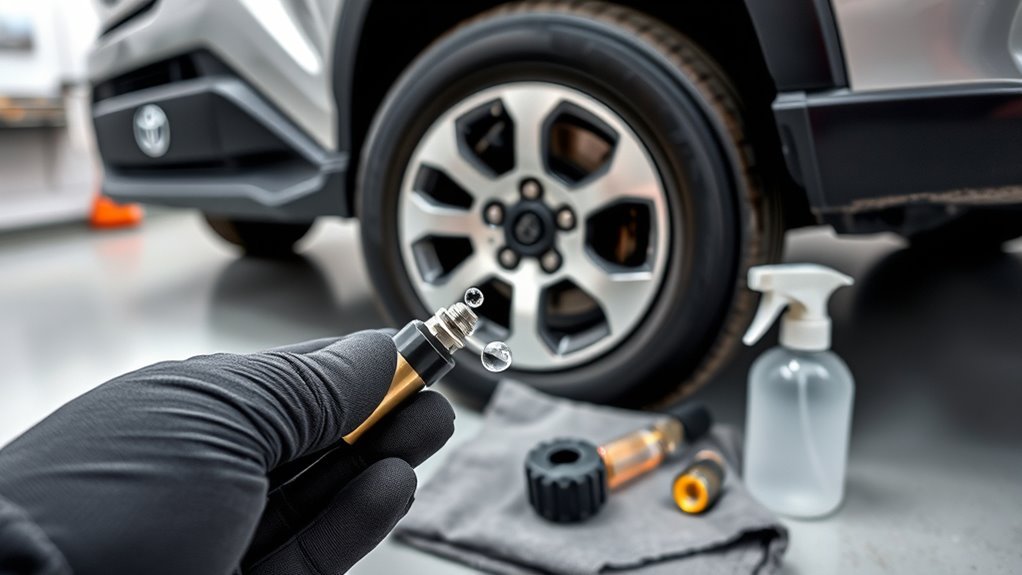
A slow leak at the tire valve stem on your RAV4 is usually caused by one of two things: a loose or damaged valve core, or a failed valve stem, seal, or TPMS valve assembly. Start with the simple leak test before removing the wheel. If bubbles form at the valve tip, you may only need a new valve core. If bubbles form at the stem base, rim bead, or TPMS hardware, plan on tire-shop service or a full valve-stem repair.
Quick Answer
To fix a leaking RAV4 tire valve stem, spray soapy water on the valve tip, stem body, and stem base. Replace the valve core if bubbles come from the tip. If bubbles come from the base, cracked rubber, rim bead, or TPMS hardware, the tire usually needs bead access or professional service.
Key Takeaways
- A valve-core leak is the easiest repair and can usually be fixed without removing the tire.
- A leak at the valve stem base, TPMS seal, rim bead, or cracked rubber stem usually requires bead access or a tire shop.
- Inflate the tire to the cold PSI listed on the RAV4 driver-door placard or owner’s manual, not the number molded into the tire sidewall.
- Do not drive on a tire that is losing air quickly; underinflation can damage the tire and affect handling.
At a Glance
| Time Required | 5–15 minutes for a valve core; 30–60+ minutes for full stem service if you have proper tire tools |
| Difficulty | Easy for valve-core replacement; moderate to professional-level for full valve-stem or TPMS stem replacement |
| Tools Needed | Soapy water, tire gauge, valve core tool, replacement valve core, air inflator; for wheel removal, add wheel chocks, jack, jack stands, lug wrench, and torque wrench |
| Cost | A valve core is usually inexpensive; shop cost rises if the tire must be dismounted, balanced, or fitted with TPMS service parts |
Confirming Your Tire Valve Stem Is Leaking
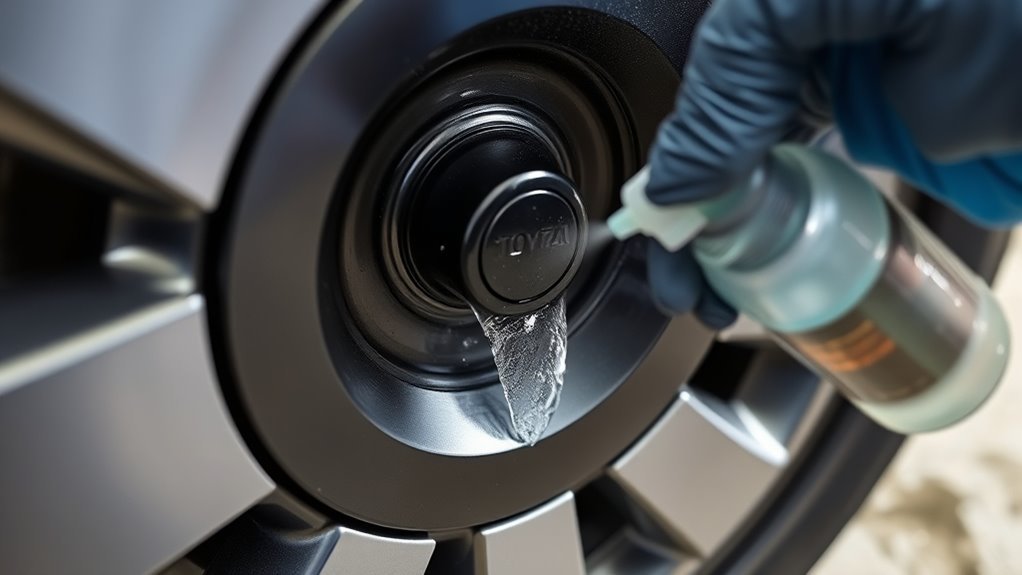
Before replacing anything, confirm exactly where the air is escaping. Remove the valve cap and inspect the valve stem for cracks, looseness, corrosion, missing seals, or damage from road debris. Then mix a small amount of dish soap with water and apply it with a spray bottle or small brush.
- Bubbles at the valve tip: the valve core may be loose, dirty, or worn.
- Bubbles around the cap threads: the core may still be leaking; the cap is not the main air seal.
- Bubbles at the stem base: the rubber stem, TPMS seal, or rim opening may be leaking.
- Bubbles at the tire bead: the leak is probably between the tire and wheel, not the valve core.
- Bubbles from the tread or sidewall: the tire itself may be punctured or damaged.
Note: The correct tire pressure for your RAV4 is listed on the Tire and Loading Information Label on the driver-door area and in the owner’s manual. Use that cold PSI setting, not the maximum PSI printed on the tire sidewall. The National Highway Traffic Safety Administration recommends checking tire pressure when the tires are cold.
[Products Worth Considering]

This multi-function tire valve stem removal tool set makes it fast to remove, install, bleed, and clean valve cores for easier tire maintenance. It includes valve core removers, a 4-way spool tool, replacement valve caps, and spare cores to handle replacements and repairs with confidence. Universal compatibility suits cars, trucks, motorcycles, bicycles, and more for roadside convenience.

This 4-in-1 tire valve core removal tool helps you deflate, unblock, and remove or install valve cores quickly for easier tire repair. The multifunction design also supports re-taping damaged threads and reaming inside the valve stem for smoother service. Included as a 2-pack, it’s compact for convenient carry and works for cars, bicycles, and motorcycles.

This compact capsule-style tire repair kit helps you quickly fix punctures and plug flats with minimal effort. The rugged stainless steel shell protects the contents for reliable roadside use, while the simple plug assembly makes repairs fast and tool-free. Suitable for motorcycles, cars, ATVs, UTVs, and even mountain bikes.
Essential Tools for Your Repair
The right tools depend on whether the leak is coming from the valve core or the full valve stem. Do not start by removing the tire unless your leak test shows that the core alone is not the problem.
Tools for a Valve Core Leak
- Valve core tool: removes and installs the small core inside the valve stem.
- Replacement valve cores: use standard automotive Schrader-type cores that match your valve stem.
- Tire pressure gauge: checks pressure after the repair.
- Air inflator or compressor: refills the tire to the proper cold PSI.
- Soapy water: confirms the repair after installation.
- Safety glasses: protects your eyes from escaping air and debris.
Tools for Wheel Removal or Full Stem Service
- Wheel chocks, jack, and jack stands: keep the RAV4 stable while the wheel is off.
- Lug wrench and torque wrench: remove and reinstall the wheel properly.
- Replacement valve stem or TPMS service parts: match the exact wheel and sensor style.
- Bead breaker or tire machine: needed to access many full valve stems safely.
Warning: Never work under a RAV4 supported only by a jack. Park on level ground, set the parking brake, chock the wheels that stay on the ground, and use jack stands at approved support points. If you need to break the tire bead or work around a TPMS sensor, use proper tire equipment or have a tire shop do the repair.
Fixing a Leaking Valve Core Without Removing the Tire
If the soap test shows bubbles at the valve tip, try the valve core first. This is the simplest and safest DIY repair for a leaking tire valve stem.
- Park safely: stop on level ground, set the parking brake, and keep your face away from the valve while deflating or inflating.
- Remove the valve cap: set it somewhere clean so dirt does not enter the stem.
- Check whether the core is loose: use a valve core tool to gently snug the core. Do not overtighten it.
- Retest with soapy water: if bubbles stop, the loose core was the issue.
- Replace the core if needed: if bubbles continue, slowly unscrew the old core with the valve core tool and let the tire deflate in a controlled way.
- Install the new core: thread it in straight and tighten it gently until seated.
- Inflate the tire: use the cold PSI listed on your RAV4 placard or owner’s manual.
- Recheck for leaks: apply soapy water again around the valve tip and stem.
- Install a clean valve cap: the cap helps keep dirt and moisture out of the core.
Pro Tip: If the same tire loses pressure again overnight after a new valve core, spray the entire valve stem base, tire bead, tread, and sidewall. A valve-core repair will not fix a cracked stem, bead leak, puncture, or TPMS seal leak.
How to Remove the Old Valve Stem: A Step-by-Step Guide
A full valve-stem replacement is different from replacing a valve core. On many RAV4 wheels, especially TPMS-equipped wheels, the stem may be part of the tire pressure warning valve/transmitter assembly or may use sensor-specific seals. If your leak is at the stem base, cracked rubber, metal stem nut, or TPMS seal, do not try to pry the bead loose with a basic tire iron.
Use this section as a safe overview of the process, not a substitute for a tire machine or professional tire service:
- Confirm the leak location: only proceed with full stem service if bubbles come from the stem base, cracked stem, TPMS hardware, or rim opening.
- Prepare the vehicle: park on level ground, set the parking brake, chock the opposite wheels, and loosen the lug nuts slightly while the tire is still on the ground.
- Lift and support the RAV4: use the correct lift point and support the vehicle with jack stands before removing the wheel.
- Remove the wheel: take off the lug nuts and wheel, then place the wheel flat on a safe work surface.
- Deflate the tire fully: remove the valve core with a valve core tool and allow all air to escape before bead work.
- Access the inside of the valve stem: use a proper bead breaker or tire machine to unseat the bead near the valve. Avoid damaging the rim, tire bead, or TPMS sensor.
- Remove the old stem: rubber snap-in stems are usually cut or pulled out; clamp-in TPMS stems use a nut, seal, washer, and sensor hardware. Keep track of the sensor position.
- Clean the rim hole: remove corrosion, dirt, and old rubber from the valve opening without gouging the wheel.
Note: Toyota RAV4 owner information warns that tire pressure warning valves and transmitters may not work properly with some non-genuine wheels. Use parts that match your RAV4 year, wheel style, and TPMS sensor design, or have a Toyota dealer or tire shop verify fitment.
Step-by-Step Instructions for Installing the New Valve Stem
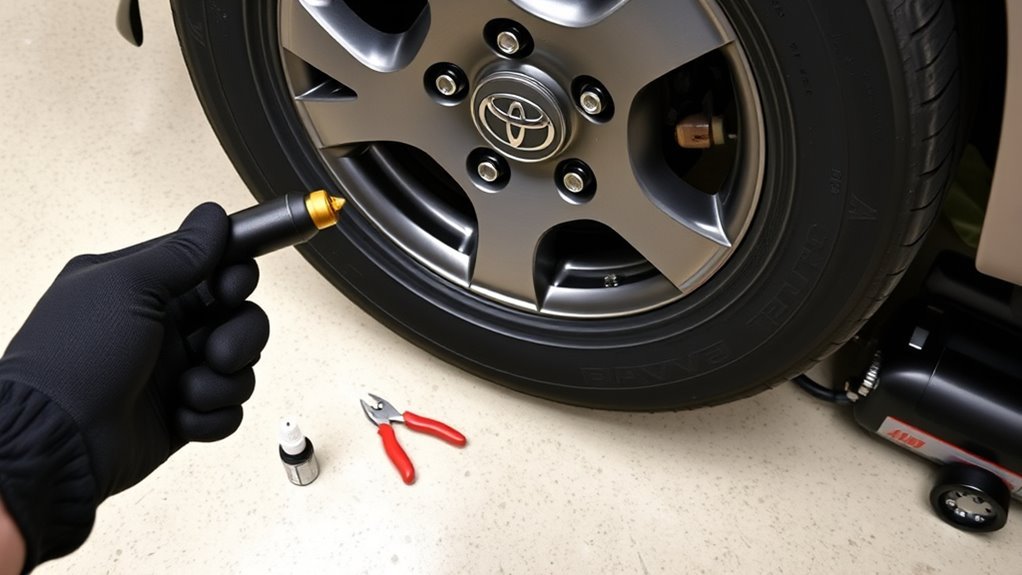
Once the old stem is removed and the rim hole is clean, install the correct replacement stem for your wheel. Standard rubber stems and TPMS clamp-in stems are not installed the same way.
For a Rubber Snap-In Valve Stem
- Lubricate lightly: use tire-safe lubricant or a small amount of soapy water on the rubber stem seat.
- Insert the stem correctly: push the stem through the rim hole from the inside of the wheel.
- Pull it into place: use the correct valve stem puller until the stem seats fully against the rim.
- Check the seating: the base should sit flat with no twist, gap, or torn rubber.
- Reinstall the valve core: install a clean core and cap after the tire is ready to inflate.
For a TPMS Valve Stem or Seal
- Use the correct service kit: match the stem, seals, nut, washer, screw, and valve core to the exact sensor style.
- Position the sensor carefully: keep the sensor body from contacting the tire bead or tire machine parts.
- Install seals in the right order: follow the sensor or service-kit instructions for the grommet, washer, and nut.
- Torque hardware to spec: TPMS nuts, screws, and valve cores can be damaged by overtightening.
- Have the TPMS checked if needed: if the TPMS light flashes or stays on after repair and pressure is correct, the sensor may need service, registration, or replacement.
After the stem is installed, reseat the tire bead, inflate the tire, and check for leaks before putting the wheel back on the RAV4. If you removed the wheel, reinstall the lug nuts by hand first, tighten them in a crisscross pattern, lower the vehicle, and torque the lug nuts to the specification in your RAV4 owner’s manual for your exact model year.
How to Test for Leaks After Installing the New Valve Stem
Do not assume the repair is finished as soon as the tire holds air. Inflate the tire to the recommended cold PSI, then test every likely leak point again.
[Products Worth Considering]

The JACO FlowPro Tire Inflator measures, inflates, and airs down tires up to 100 PSI with battery-free operation and ±2% accuracy after calibration. It features a glowing pressure dial for night visibility, a heavy-duty steel build with a hybrid hose, and a precision push-to-inflate thumb trigger. The patented Lightning Air Chuck locks on for a secure seal, and the kit includes quick-connect hardware for easy inline use with your air compressor.

EVOULTES heavy duty tire inflator with an integrated gauge delivers accurate pressure readings from 10–120 PSI, helping you inflate, deflate, and check tires in one tool. The 16.5-inch extended dual-head air chuck with swivel base reaches hard-to-access dual wheel valves on trucks and RVs. A brass trigger core and side-mounted air release valve make operation smooth, with standard 1/4" NPT threading and quick-connect compatibility for easy setup.
Visual Inspection for Bubbles
Spray soapy water on the valve tip, valve threads, stem body, stem base, rim bead, and nearby tire surface. Watch for at least 30 seconds in each area. Growing bubbles mean air is still escaping.
- No bubbles: wipe the area dry, install the valve cap, and recheck pressure later.
- Bubbles at the valve tip: the valve core may be loose, dirty, damaged, or cross-threaded.
- Bubbles at the stem base: the stem may not be seated, the TPMS seal may be damaged, or the rim hole may be corroded.
- Bubbles at the bead: the tire bead or rim sealing surface needs service.
Pressure Check After Installation
Use a tire gauge to confirm the tire is at the cold pressure listed on the driver-door placard or in the owner’s manual. If you checked the pressure after driving, recheck it again when the tire is cold. The Tire Industry Association recommends regular pressure checks and checking before long trips.
After the repair, check the tire pressure again the next day and again after a few days. A drop of a few PSI can mean the original leak was not fixed or there is another leak elsewhere on the tire or wheel.
A valve cap helps keep dirt and moisture out, but it should not be treated as the main seal. If air leaks when the cap is removed, fix the core, stem, or TPMS seal.
Troubleshooting After the Repair
| Problem | Likely Cause | What to Do |
| Bubbles still form at the valve tip | Loose, dirty, damaged, or cross-threaded valve core | Remove and reinstall a clean new valve core; inspect the internal threads |
| Bubbles form at the stem base | Cracked rubber stem, bad TPMS seal, corrosion, or improper seating | Have the tire dismounted or bead accessed and replace the stem or TPMS service parts |
| TPMS light stays on after inflation | Pressure still low, sensor fault, or system needs initialization depending on model year | Confirm all tires are at cold placard PSI, then follow the RAV4 owner’s manual or visit a shop |
| Pressure drops overnight | Hidden bead leak, puncture, cracked wheel, or stem leak not fully fixed | Repeat the soap test across the valve, bead, tread, and sidewall; get a tire inspection if the leak persists |
Keep Your Valve Stems and Tires in Top Shape
Good valve-stem care is simple and helps prevent slow leaks. Check tire pressure at least monthly, before long trips, and any time the TPMS light comes on. Modern RAV4s use a tire pressure monitoring system, but a TPMS warning is not a replacement for using a tire gauge.
- Use clean valve caps: caps keep moisture and grit away from the valve core.
- Avoid metal caps on metal TPMS stems unless they are compatible: cheap metal caps can corrode or seize on some stems.
- Inspect stems when washing the wheels: look for cracks, leaning stems, corrosion, or missing caps.
- Replace questionable stems during tire service: if the tire is already off the bead, it is a good time to service worn stems or seals.
- Do not ignore repeated pressure loss: a slow leak can become a roadside flat or damage the tire from underinflation.
Federal TPMS rules are designed to warn drivers about significant underinflation, but the safest habit is to keep all tires at the RAV4’s recommended cold PSI and repair leaks early. You can read the federal TPMS performance rule in 49 CFR § 571.138.
Frequently Asked Questions
How do you stop a valve stem seal from leaking?
First, find the exact leak location with soapy water. If bubbles come from the valve tip, tighten or replace the valve core. If bubbles come from the stem base or TPMS seal, the tire usually needs bead access so the stem, seal, or TPMS service parts can be replaced correctly.
Can you replace a valve stem without removing the tire?
You can usually replace the valve core without removing the tire or wheel. Replacing the complete valve stem is different. A full stem or TPMS stem normally requires the tire bead to be unseated, and many RAV4 owners should have that done by a tire shop.
How much does it cost to fix a valve stem leak?
A valve-core repair is usually the cheapest because the part is small and the wheel often stays on the vehicle. A full rubber stem, TPMS stem, sensor seal, tire dismount, balancing, or sensor replacement costs more. Ask the shop whether the quote is for a valve core, a stem service kit, or a full TPMS sensor.
Is it safe to drive with a leaking valve stem?
A very slow leak may let you drive carefully to a nearby tire shop after inflating the tire to the correct pressure. Do not keep driving if the tire is visibly low, losing air quickly, damaged, or triggering repeated TPMS warnings. Underinflation can overheat and damage a tire.
Why does my RAV4 TPMS light stay on after I fix the valve stem?
The pressure may still be low in one or more tires, the repair may still be leaking, or the TPMS sensor may have a fault. Check every tire with a gauge when cold, inflate to the placard PSI, and follow the TPMS instructions in your RAV4 owner’s manual. If the light flashes or returns, have the sensor system checked.
Conclusion
Fixing a leaking RAV4 tire valve stem starts with a careful diagnosis. If bubbles appear at the valve tip, a new valve core may solve the problem in minutes. If the leak is at the stem base, TPMS seal, rim bead, or cracked rubber, the safer fix is full stem service with proper tire equipment. After any repair, inflate the tire to the correct cold PSI, test again with soapy water, and monitor pressure over the next few days.
Sources
- NHTSA TireWise: Tire Safety Ratings and Awareness — cold tire pressure checks, door placard guidance, tire inspection, and TPMS basics.
- 49 CFR § 571.138: Tire Pressure Monitoring Systems — federal TPMS performance requirements.
- Tire Industry Association: Tire Inflation Pressure — tire pressure gauge use and regular pressure-check guidance.
- Toyota RAV4 Manuals & Warranties — model-specific owner’s manual access for tire pressure, TPMS, jacking, and wheel service instructions.
- Toyota RAV4 Owner’s Manual: Wheels — Toyota guidance on wheels and tire pressure warning valves/transmitters.

Related Articles

Why These 10 Wheel Locks Are Perfect for Your RAV4
Protecting your RAV4 starts before you lock the doors. Wheel theft is an avoidable cost and a hassle that interrupts your routine, and choosing…
Read More
10 Best 80000 Mile Tires for Rav4
You want tires that last, keep you safe, and save you money over the long run. Choosing 80,000 mile tires for your RAV4 matters…
Read More
10 Long Warranty Tires That Will Transform Your RAV4 Experience
You spend a lot of time behind the wheel of your RAV4, and the right tires change everything from ride comfort to fuel economy…
Read More