
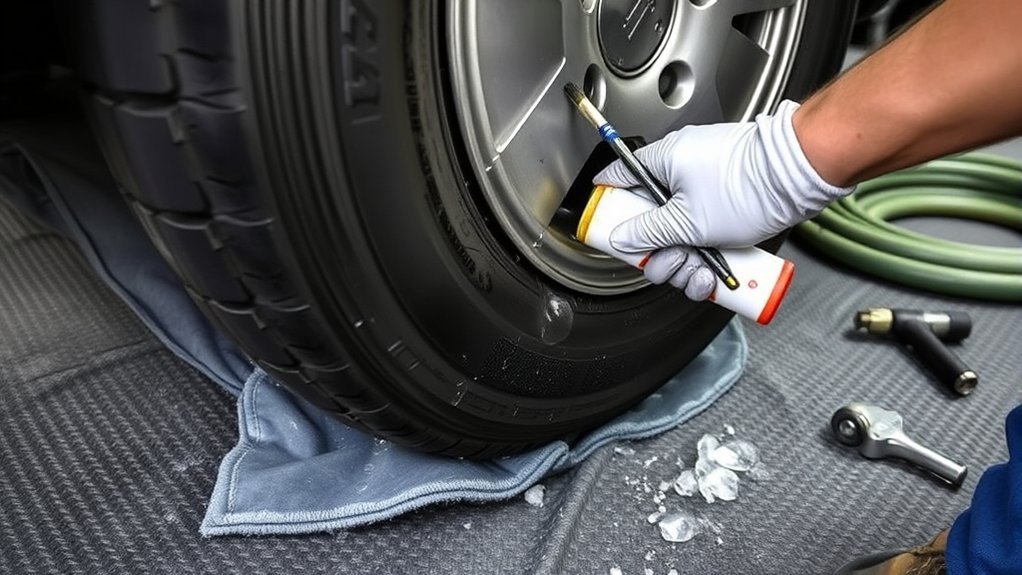
A slow tire bead leak happens where the tire no longer seals evenly against the wheel. Dirt, corrosion, bead damage, a bent rim, or contamination at the bead seat can cause it. You can diagnose many bead leaks at home with a tire-pressure gauge and soapy water, but breaking, demounting, cleaning, and remounting a passenger-car or highway tire should generally be handled by a trained tire professional with proper tire-service equipment. A valve-injected sealant may be another option only when its manufacturer specifically approves it for your tire type and a slow bead leak.
Last updated: August 18, 2026
Quick Answer
To reseal a tire bead, first confirm that bubbles form where the tire meets the rim. If the tire and wheel are otherwise undamaged, a tire technician can fully deflate and demount or unseat the tire, clean corrosion and residue from the bead seat, apply tire-approved bead sealer when appropriate, remount the tire, inflate it safely, and leak-test it again. For some slow bead leaks, a valve-injected automotive sealant may be used without breaking the bead if its label specifically allows bead-leak repair.
Key Takeaways
- Check for steady bubbles with soapy water before assuming the tire has a bead leak.
- Bubbles at the valve, tread, or wheel itself point to a different repair than bubbles at the tire-to-rim bead.
- For highway passenger tires, physical bead breaking, demounting, and remounting are best handled by a trained tire technician with proper equipment.
- Use the vehicle tire placard or certification label for final cold inflation pressure, not the tire sidewall maximum.
- Use only tire-approved bead sealer or a valve-injected product specifically labeled for bead leaks and your tire type.
- Replace or professionally inspect a tire or wheel with a torn bead, sidewall damage, exposed cords, cracks, severe corrosion, or structural wheel damage.
At a Glance
| Diagnosis | DIY-friendly: check cold pressure, inspect the tire and wheel, and use soapy water to locate bubbles. |
| Physical Bead Reseal | Professional service recommended for passenger-car and other highway tires because bead breaking, mounting, and inflation require proper equipment and technique. |
| DIY Diagnosis Tools | Tire-pressure gauge, soapy-water spray bottle, chalk or tape, gloves, and eye protection. |
| Cost | Varies with the cause. Cleaning and resealing is different from replacing a valve, repairing a wheel, or replacing a damaged tire. |
What Should You Do for a Tire Bead Leak?
Start by identifying exactly where the air is escaping. A bead reseal only addresses leakage at the tire-to-wheel sealing surface. A valve leak, tread puncture, cracked wheel, or damaged tire needs a different repair.
| What You Find | Likely Problem | Best Next Step |
| Steady bubbles where tire meets rim | Bead-seat leak | Inspect tire/wheel condition; professional cleaning and resealing is the standard path. |
| Bubbles at valve core or valve-stem base | Valve or TPMS sealing problem | Repair or replace the faulty valve component. |
| Bubbles from tread | Puncture | Have the tire inspected internally and repaired only if the injury is within tire-manufacturer and industry repair limits. |
| Bent/cracked wheel, torn bead, bulge, exposed cords, sidewall damage | Structural damage | Do not rely on bead sealer. Get professional inspection and repair or replacement. |
When a Tire Bead Reseal Makes Sense
A tire bead reseal makes sense when air is escaping where the tire bead meets the rim and the tire and wheel are otherwise serviceable. Common causes include light corrosion, dirt or residue between the bead and wheel, old bead sealer, or contamination that keeps the two surfaces from sealing evenly.
Michelin identifies corrosion, bends, foreign material, and bead-seat damage among the conditions that can interfere with the tire-to-wheel seal. Its current passenger-tire guidance also recommends trained professional mounting and demounting. See Michelin’s tire and wheel inspection guidance. If you want more background on the component itself, see what a tire bead does and how it seals to the wheel.
Do not treat every slow leak as a bead leak. A tire can also lose air through a nail or screw, a loose valve core, a cracked valve stem, a leaking TPMS valve seal, a damaged wheel, or internal tire damage. Find the leak first, then choose the repair.
Warning: Do not try to seal over sidewall damage, a bulge, a torn bead, exposed cords, severe wheel corrosion, a cracked or badly bent wheel, or a shoulder/sidewall puncture. Those conditions need professional inspection and may require tire or wheel replacement.
How to Find a Tire Bead Leak?
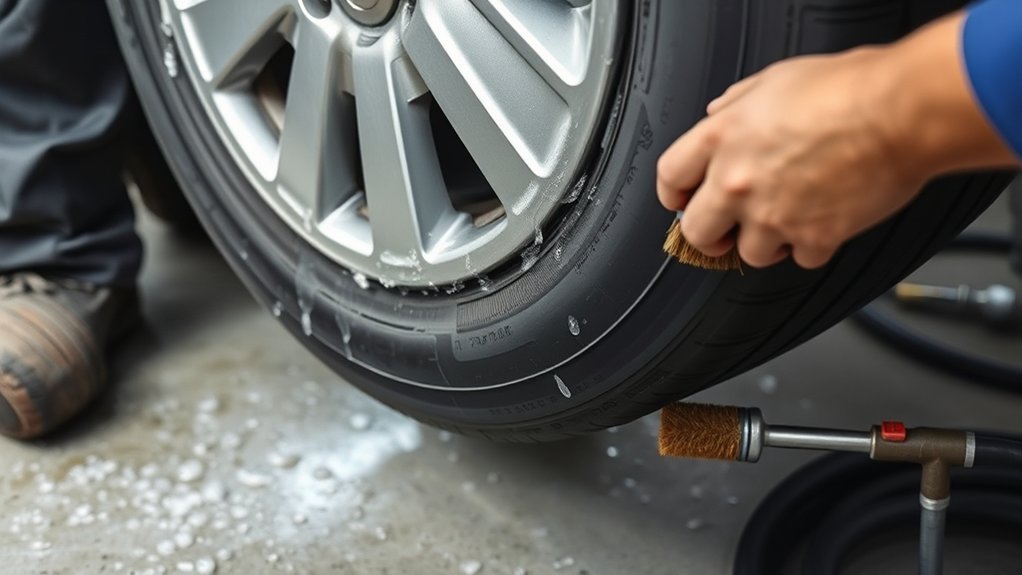
A bead leak usually reveals itself as steady bubbles where the tire meets the wheel. Start with the tire inflated to the vehicle’s recommended cold pressure if the tire is otherwise safe to inflate. Spray soapy water over the tread, valve core, valve-stem base, and the full bead area. Bubbles at the rim edge suggest a bead leak; bubbles at the valve point to a valve or TPMS sealing problem.
Check the whole wheel, not just one wet spot. Rotate the wheel slowly if it is safe and accessible, inspect both bead areas, and mark any bubbling location with chalk or tape. Also look for cuts, bulges, exposed cords, a bent rim lip, cracks, flaking finish, and corrosion.
Note: Soapy water is a diagnostic aid, not a permanent bead sealer. Do not use household soap, hair spray, WD-40, or another improvised product as a lasting highway-tire repair.
Tools and Materials for Resealing a Tire Bead
For home diagnosis, you mainly need a reliable tire-pressure gauge, soapy water, a spray bottle, chalk or tape, gloves, and eye protection. Those tools let you determine whether the air loss comes from the bead, valve, tread, or another visible area before anyone dismounts the tire.
A physical passenger-car bead reseal requires tire-service equipment such as a tire changer or bead breaker, approved mounting lubricant, cleaning tools, appropriate bead sealer when needed, a controlled inflation system, and equipment for inspecting and remounting the assembly. Michelin advises that passenger-tire mounting and demounting be performed by trained professionals. See Michelin tire-safety guidance.
If you are considering TireJect or another valve-injected product instead of physically breaking the bead, confirm that the exact formula is approved for highway use, your tire type, the leak type, and your TPMS setup. TireJect’s current on-road guidance permits its Automotive product for slow bead leaks and certain tread punctures up to 1/4 inch, but excludes shoulder or sidewall punctures, unknown leak locations, larger punctures, and other tire or rim damage.
[Products Worth Considering]

The Calvana Ultra-Durable Angled Tire Lube Bucket Kit provides reliable lubrication for faster, smoother tire changes. It includes an angled universal lube bottle and premium cotton swabs to help lubricate tire beads during removal and mounting. Built for rugged use with a reinforced handle and durable fiber design, it’s a direct replacement for Coats 8106259 to reduce downtime and compatibility concerns.

Malco tire mounting and demounting lubricant is a ready-to-use tire lube formulated to reduce friction during tire installation for passenger cars, light trucks, farm tires, and heavy-duty equipment. It provides rust-inhibiting protection to help reduce corrosion on rims and wheels, and helps support proper tire bead seating during inflation to reduce air leakage. The silicone-free, soap-free formula is whitewall safe to help prevent discoloration on whitewall tires and sensitive sidewall markings.

This VEVOR tire bead breaker uses a slide-hammer impact and wedge tip to separate tire beads from rims quickly and efficiently without damaging hub surfaces. The long handle and sturdy steel construction help reduce user strain while providing reliable, portable tire changing for cars, trucks, and more. Ideal for home mechanics and repair shops handling multiple vehicle tire sizes.
How to Deflate the Tire Safely
Do not remove the valve core simply because the tire is leaking. Remove it yourself only when the instructions for a valve-injected product specifically require that step and the tire and wheel show no structural damage. TireJect Automotive, for example, instructs the user to remove the valve core, inject the measured product, reinstall the core, reinflate, and then drive at low speed to distribute the sealant.
- Wear eye protection and keep your face away from the valve opening.
- Keep the valve-core tool under control so the core does not fly out or fall into dirt.
- Follow the exact automotive product instructions and dosage rather than guessing.
If the tire needs to be physically unseated or demounted for cleaning, have the tire-service technician perform the deflation and bead-breaking process with the proper equipment.
Break the Bead Loose From the Rim
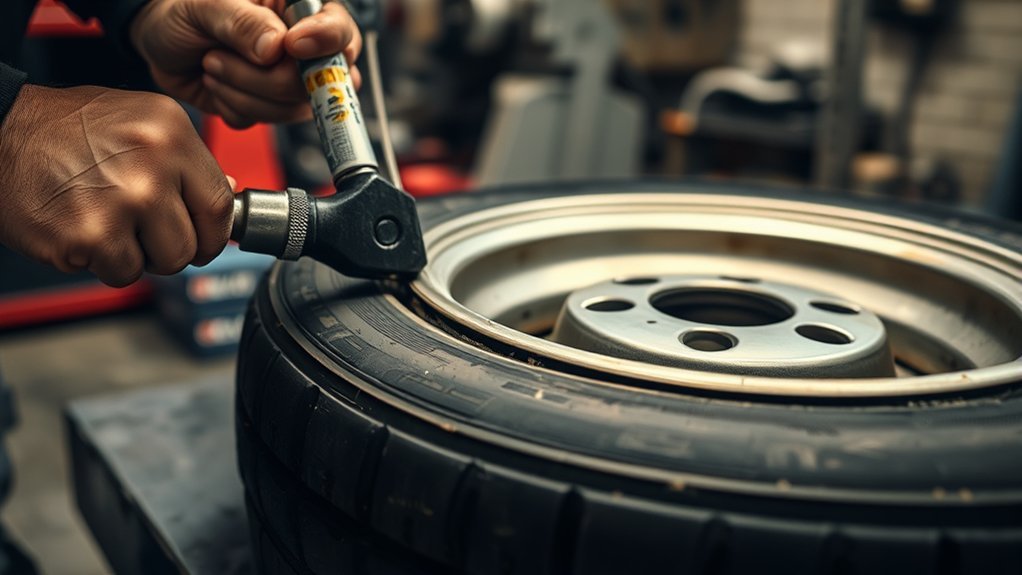
For a passenger-car or other highway tire, breaking the bead loose is a professional-service step. The assembly must be fully deflated before the bead is moved, and the technician uses tire-service equipment to separate the bead without damaging the wheel or tire.
Warning: Never use fire, starter fluid, or another flammable method to seat a tire bead. Do not apply heat to a damaged wheel. Multi-piece rim service requires specialized procedures and equipment and is not a home passenger-tire job.
Deflate the Tire Fully
Before a technician demounts or unseats the tire, all pressure must be released. The tire should never be forced off its bead seat while pressurized.
Break the Bead Safely
A tire changer or appropriate bead-breaking machine separates the tire from the bead seat in a controlled way. If corrosion, old sealer, or wheel damage has bonded the tire to the rim, forcing the assembly can damage the tire bead or wheel. That is another reason to use proper tire-service equipment rather than improvised tools on highway tires.
Inspect Rim And Bead
Once the tire is unseated or removed, both sealing surfaces need inspection. Michelin recommends checking the wheel for cracks, bends, corrosion, and bead-seat or flange damage and checking the tire bead for cuts, tears, or deformation.
- Replace the tire if the bead is torn, badly deformed, or exposes cords.
- Repair or replace the wheel as appropriate if the rim is cracked, badly bent, deeply pitted, or severely corroded.
- Service a leaking valve stem or TPMS valve seal instead of treating it as a bead leak.
Clean the Rim and Tire Bead
If the tire and wheel pass inspection, the bead seat must be clean before resealing. The technician removes loose corrosion, old sealer, dirt, rubber residue, and other contamination without removing unnecessary wheel material or damaging the sealing surface.
After cleaning, the mating surfaces should be dry and free of loose residue unless the tire-service product or mounting procedure calls for an approved lubricant. Grease, tire dressing, dirt, and deteriorated coating can interfere with an even seal.
Remove Corrosion
Light surface corrosion can create an uneven bead seat, particularly on older wheels exposed to moisture and road salt. Cleaning may restore a usable sealing surface when the underlying wheel remains sound. Deep pitting, cracks, major material loss, or structural deformation should not be hidden with more sealer.
- Remove loose contamination from the bead-seat area.
- Inspect the cleaned surface for pitting or structural damage.
- Replace or professionally repair a wheel that cannot provide a safe, even bead seat.
Prep Bead Surface
The tire bead should remain continuous and undamaged. A clean wheel cannot compensate for a torn, cut, stretched, badly deformed, or cord-exposing tire bead. If the bead is compromised, replace the tire rather than trying to seal over the damage.
Pro Tip: Mark the original bubbling spot before the tire is serviced. After the repair, leak-test that exact area again so you can confirm that the original leak path is gone.
Apply Bead Sealer or TireJect Sealant to the Tire Bead
Paint-on bead sealer and valve-injected sealant are two different approaches. Do not combine them casually or assume that one can correct structural wheel or tire damage.
[Products Worth Considering]

TireJect Off-Road Tire Sealant Kit provides 5-in-1 sealing to help fix tread punctures up to 3/8", sidewall punctures up to 3/8", bead leaks, slow leaks, and minor dry rot on low-speed tires. It permanently seals with liquid rubber, recycled tire particles, and Aramid fibers, making it ideal for flats caused by thorns, nails, and screws. The included dispensing cap attaches to the valve stem for a no-mess installation, along with a metal valve core remover tool and valve stem cap. This kit is for off-road use only.
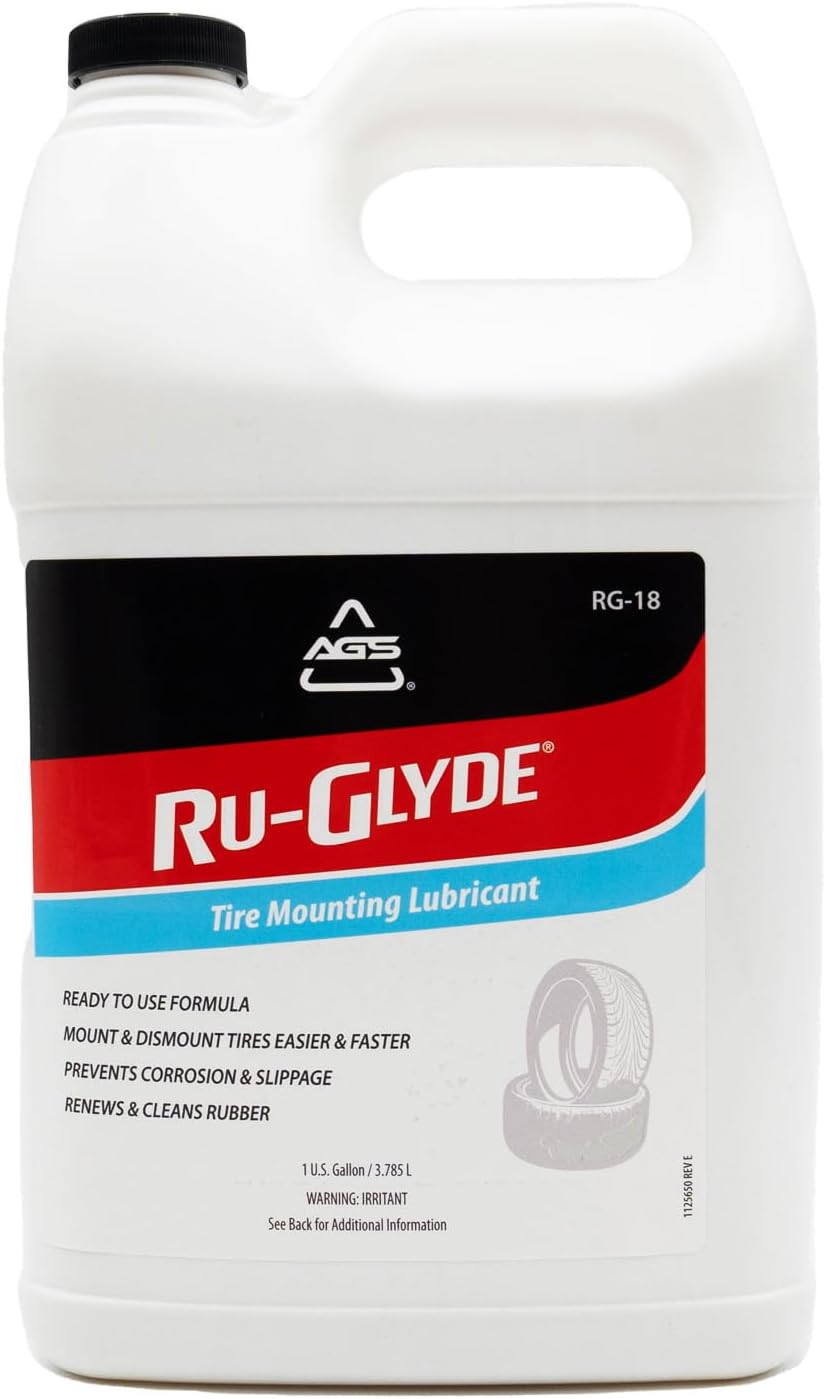
Ru-Glyde tire mounting lubricant from AGS seats tire beads smoothly on the first try with a thick, stay-put formula. It is ready to use with no mixing or dilution, helps prevent rim rust, and dries completely without causing bead slip residue. The water-based formula also conditions aged rubber, making it useful for sidewalls, gaskets, and door seals while remaining safe for tire, wheel, and technicians.

This professional wheel and rim cleaning brush set lifts brake dust, grime, and dirt with soft, scratch-free microfiber and synthetic wool fibers. The rim brush bends up to 360 degrees for easy access to hard-to-reach areas around spokes, lips, and faces. Ideal for thorough cleaning of car, truck, motorcycle, bicycle, RV, and more wheel and tire surfaces.
Method A: Clean and Reseal the Bead Seat
For a conventional bead reseal, the tire is unseated or demounted, the wheel and tire bead are inspected and cleaned, and tire-approved bead sealer may be applied when appropriate for the wheel, tire, and service procedure. The tire is then remounted and seated with proper tire-service equipment.
This method directly addresses corrosion, residue, and sealing-surface contamination because the technician can see the actual bead seat. If the wheel is bent, cracked, badly pitted, or the tire bead is damaged, sealer is not a substitute for correcting the underlying problem.
Method B: Use a Valve-Injected Product Only When Its Label Allows It
TireJect Automotive is one example of a product whose current manufacturer guidance specifically includes slow bead leaks on highway tires. Its automotive installation instructions call for removing the valve core, injecting the correct amount, reinstalling the core, reinflating to the recommended PSI, and immediately driving at low speed for 2–3 minutes.
The manufacturer also says its Automotive formula is designed to be tire-pressure-sensor safe. Even so, follow your tire, wheel, vehicle, and sealant instructions because compatibility policies can differ. For more general guidance, see how to use tire sealant for car tires.
Bead sealer can fill a minor sealing gap. It cannot make a cracked wheel, torn bead, damaged sidewall, or severely corroded rim structurally sound.
- Use a conventional bead reseal when the tire must be unseated so the sealing surfaces can be inspected and cleaned.
- Use a valve-injected sealant only when the exact product label approves your tire type and bead-leak condition.
- Follow the manufacturer’s dosage. Do not add repeated applications simply because the first application did not hold.
- Tell the tire technician if an internal sealant has been installed before the tire is serviced later.
Inflate the Tire to the Right PSI
After service, the final cold tire pressure should match the vehicle manufacturer’s recommendation. NHTSA directs drivers to the cold inflation pressure on the vehicle tire-information placard or certification label. The maximum pressure molded on the tire sidewall is not the routine target pressure for the vehicle. See NHTSA TireWise.
| Best Final PSI Source | Vehicle tire-information placard, certification label, or owner’s manual. |
| Tool to Verify | Reliable tire-pressure gauge used when the tire is cold. |
| What to Avoid | Do not use the tire sidewall maximum as the normal vehicle inflation target. |
Professional bead seating is performed according to the tire, wheel, and service-equipment limits before the technician sets the tire to its final vehicle-specified pressure. If a tire will not seat normally, shows abnormal movement, or has suspected damage, inflation should stop until the assembly is inspected.
Drive and Recheck the Tire Bead Leak
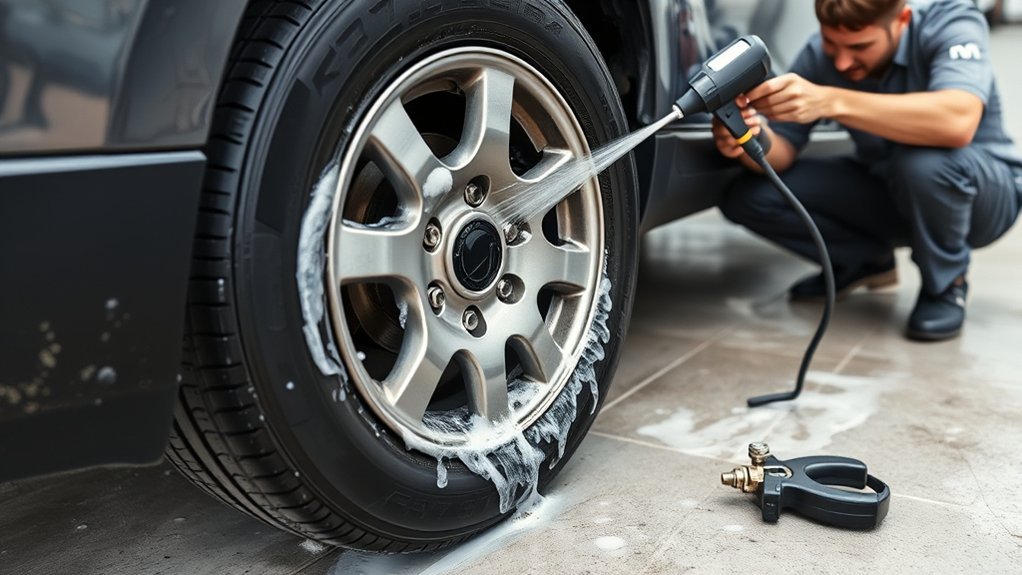
After the tire is at the correct cold pressure, spray the original leak location with soapy water again. No steady bubbles should appear. If a professional shop performed the reseal, follow any after-service instructions it gives you.
If you used TireJect Automotive, follow its current automotive instructions, including the low-speed distribution drive. Then recheck the tire pressure and repaired area. Tell any tire technician who later services the tire that an internal sealant was used.
- Recheck the original bead-leak location.
- Check cold tire pressure again after the repair.
- Continue monitoring the tire until you are confident the pressure is stable.
If the tire loses pressure again, do not keep adding random sealants. A repeat leak can indicate remaining corrosion, wheel damage, bead damage, a leaking valve or TPMS seal, or a second leak elsewhere.
Troubleshooting a Tire Bead That Still Leaks
If the repaired area still bubbles or the tire loses pressure again, identify the new leak path before doing anything else.
- Bubbles at the valve core: inspect and service the valve core.
- Bubbles at the valve-stem base: inspect the valve stem or TPMS valve sealing components.
- Bubbles along one rim section: inspect that area for corrosion, pitting, coating failure, or a bent rim lip.
- Bubbles around much of the bead: the wheel surface may still be contaminated or damaged, or the tire bead may not be serviceable.
- Pressure drops with no obvious external bubbles: the tire and wheel need a more complete inspection for another leak or internal damage.
Note: A bead reseal is not a substitute for a proper puncture repair. USTMA and the Tire Industry Association limit conventional repairable punctures to suitable tread-area injuries and do not consider shoulder or sidewall punctures repairable under their standard guidance.
[Products Worth Considering]

This multi-function tire valve stem removal tool set makes it fast to remove, install, bleed, and clean valve cores for easier tire maintenance. It includes valve core removers, a 4-way spool tool, replacement valve caps, and spare cores to handle replacements and repairs with confidence. Universal compatibility suits cars, trucks, motorcycles, bicycles, and more for roadside convenience.

This tire inflator with pressure gauge delivers long-lasting performance with a durable rubber-protected gauge and sturdy build. The longer hose and 360 swivel air chuck help you seal the valve securely and keep your hands free while measuring, inflating, or deflating. It’s battery-free for reliable use and provides ±2 PSI accuracy in the mid-range for most typical tires, with universal compatibility for 1/4 NPT compressor outputs.

Steelman white tire marking crayons provide high-contrast, semi-permanent marks for repairing and inspecting tires and equipment. They write on wet or dry, smooth or coarse surfaces including rubber, metal, glass, and wood, making them ideal for puncture location and damage outlining. The lead- and zinc-free crayons resist weather and fading yet wipe away when you no longer need the marks.
When to Call a Tire Pro
Have a tire professional inspect the assembly if a bead leak returns after one proper repair, the wheel is bent or heavily corroded, or the tire has a bulge, exposed cords, sidewall damage, a damaged bead, or evidence that it was driven while seriously underinflated.
Professional inspection is also the safer route for low-profile tires, run-flat tires, unfamiliar wheel designs, TPMS-related leaks, or any tire that loses pressure quickly. A technician can inspect the inner liner and bead, clean the wheel correctly, service the valve system, and determine whether the wheel or tire should remain in service.
Frequently Asked Questions
How do you seal a tire bead leak?
Confirm that steady bubbles appear where the tire meets the rim. If the tire and wheel are safe to service, a tire technician can unseat or demount the tire, inspect and clean the bead seat, apply tire-approved bead sealer when appropriate, remount the tire, set the final cold pressure to the vehicle specification, and leak-test it again.
Can you fix a bead leak without removing a tire?
Sometimes. A valve-injected automotive sealant may work for a slow bead leak when its manufacturer specifically approves that use. Corrosion, contamination, bead damage, or wheel damage usually requires the tire to be unseated or removed so the sealing surfaces can be inspected and cleaned.
Can you use WD-40 to seal a tire bead?
No. WD-40 is not a tire bead sealer and should not be used as a lasting highway-tire bead repair. Use a tire-approved bead-sealing product or a valve-injected product specifically labeled for your tire type and leak condition.
What can I use as a tire bead sealer?
Use a commercial tire bead sealer intended for the tire-to-rim sealing surface when that product is appropriate for the service procedure. A valve-injected automotive sealant may also be an option when its manufacturer specifically approves slow bead leaks. Do not use hair spray, WD-40, or soapy water as a permanent repair.
Is a bead leak safe to drive on?
Do not ignore a bead leak or continue routine driving on an underinflated tire. If the tire will not maintain the vehicle’s recommended pressure, loses air quickly, or has visible tire or wheel damage, use a safe spare or roadside service instead of driving on it. Repeated pressure loss needs diagnosis and repair.
Why does my tire bead keep leaking after resealing?
Common reasons include corrosion or residue left on the bead seat, wheel pitting or deformation, a damaged tire bead, a leaking valve or TPMS seal, or another leak elsewhere in the tire or wheel. If one proper reseal does not hold, have the assembly inspected again instead of repeatedly adding sealer.
Can a tire bead leak be permanently repaired?
A bead leak may remain sealed after the tire and wheel are properly inspected, the bead seat is cleaned, and the tire is correctly remounted when no structural damage is present. A cracked or badly bent wheel, severe pitting, or a damaged tire bead needs repair or replacement rather than more bead sealer.
Conclusion
To reseal a tire bead safely, first confirm that the leak is actually at the tire-to-rim seal. Check the valve, tread, tire condition, and wheel at the same time. For passenger-car and highway tires, the safest conventional repair is professional bead-seat inspection, cleaning, resealing when appropriate, remounting, inflation, and leak testing.
A manufacturer-approved valve-injected sealant can be another option for certain slow bead leaks, but only within the product’s stated limits. If the leak returns, the tire will not maintain pressure, or the tire or wheel shows structural damage, stop treating the symptom with more sealer and have the assembly inspected.
Sources
- NHTSA TireWise — supports using the vehicle tire-information placard or certification label for recommended cold inflation pressure and checking underinflated tires promptly.
- Michelin: Visual Tire Inspection Before Mounting — supports inspection of the wheel for cracks, bends, corrosion, bead-seat damage, and inspection of the tire bead for cuts, tears, and deformation.
- Michelin Tire Safety Tips — supports trained professional mounting/demounting and proper cleaning and preparation of rim and tire bead surfaces.
- U.S. Tire Manufacturers Association: Tire Repair Basics — supports tread-area puncture repair limits and the 1/4-inch maximum puncture guidance.
- Tire Industry Association: Tire Repair — supports puncture-repair limits and the warning that shoulder and sidewall damage is not repairable under standard puncture-repair guidance.
- TireJect Automotive Installation Guide — supports valve-core removal, injection, reinflation, the low-speed distribution drive, and the manufacturer’s TPMS-safety statement for its Automotive formula.
- TireJect On-Road Dosage Guidelines — supports on-road dosage and manufacturer-stated limits for slow bead leaks, tread punctures, and damaged tire or rim conditions.

