
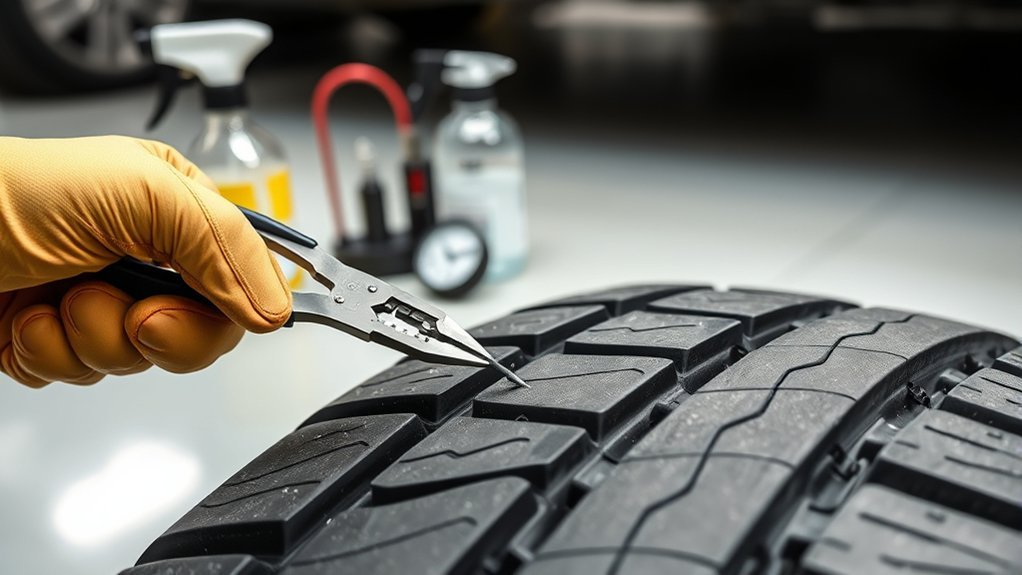
If you find a nail in your tire, do not pull it out right away. First, park safely, check the tire pressure, and inspect where the nail entered. If the tire still holds air and the nail is in the tread, you can usually drive slowly to a nearby tire shop. If the tire is flat, leaking fast, damaged near the sidewall, or unsafe to drive, use your spare or call roadside assistance.
Quick Answer
Remove a nail from a tire only when you are ready to seal the puncture or have the tire repaired. Check pressure first, confirm the nail is in the tread, pull it straight out with pliers, then use a plug only as a temporary fix before a proper patch-plug repair.
Key Takeaways
- Do not remove the nail until you know the tire is safe to handle and you are ready to repair or replace it.
- A puncture is usually repairable only when it is in the tread area and no larger than 1/4 inch, or 6 mm.
- Sidewall, shoulder, large, overlapping, or run-flat-damaged punctures usually require tire replacement.
- A DIY string plug can help in an emergency, but a proper long-term repair requires internal inspection and a patch-plug repair.
- If the tire is flat, leaking quickly, bulging, or hard to control, stop driving and use a spare or roadside assistance.
At a Glance
| Time Required | 10 to 20 minutes for inspection and a temporary plug; longer if you need a spare or shop repair. |
| Difficulty | Moderate. Safe inspection is simple, but permanent tire repair should be done by a trained technician. |
| Tools Needed | Tire pressure gauge, soapy water, marker, pliers or vice grips, portable inflator, temporary tire plug kit, gloves, and a spare tire if needed. |
| Cost | Varies by repair kit, tire shop, region, and whether the tire needs repair or replacement. |
Can You Drive With a Nail in Your Tire?
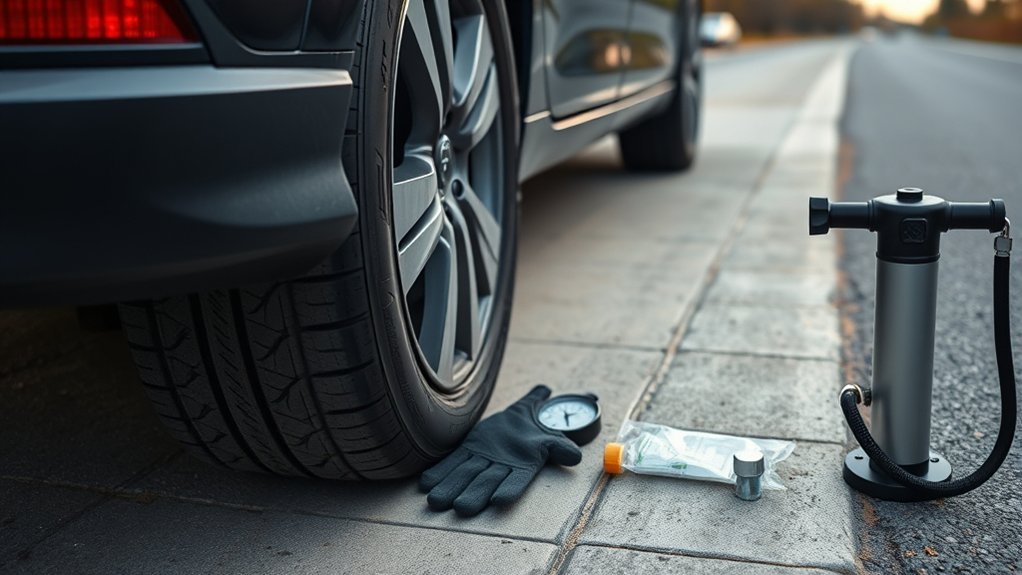
Yes, you can sometimes drive a short distance with a nail in your tire if the tire still holds air, the vehicle feels stable, and the puncture is in the tread. Treat that drive as a slow trip to a tire shop, not normal driving.
Before moving the vehicle, check the tire’s PSI with a gauge. The correct pressure is listed on the Tire and Loading Information Label on the driver-side door edge or in your owner’s manual, not on the tire sidewall. The National Highway Traffic Safety Administration also recommends checking tires when they are cold for the most accurate reading.
Warning: Do not drive if the tire is flat, losing air quickly, bulging, visibly shredded, or damaged near the sidewall. Install the spare tire if you can do so safely, or call roadside assistance.
If the tire is only slightly low, add enough air to reach the tire shop safely. Keep your speed low, avoid sharp turns, avoid hard braking, and do not carry heavy loads. A nail may be slowing the leak by staying in the hole, so pulling it out before you are ready can make the tire deflate faster.
Find the Nail in the Tire
Start by inspecting the tire in good lighting. Focus on the tread first because nails, screws, and small metal fragments usually enter through the part of the tire that contacts the road.
- Park on level ground away from traffic.
- Turn on your hazard lights if you are near a road.
- Look for shiny metal, a screw head, a dark spot, or a small cut in the tread.
- Move the vehicle a few inches if the nail is hidden against the pavement.
- Spray soapy water on the suspected area and watch for bubbles.
Bubbles show where air is escaping. Mark the spot with chalk or a marker so you do not lose it during repair. Keep your hands away from sharp metal edges and hot brake parts.
Note: A tire pressure monitoring system can help warn you about low pressure, but it does not replace a manual gauge. NHTSA says TPMS warnings usually activate only when a tire is significantly underinflated.
Check Tire Pressure for Leaks
Use a tire pressure gauge to check the current PSI. Compare it with the recommended pressure on the door-jamb label or in your owner’s manual. If the tire is far below that number, the puncture may be leaking enough to make driving unsafe.
Listen for hissing and look for bubbles after spraying soapy water around the nail. Also inspect the sidewall for cracks, cuts, bulges, or scuffing from driving while low. Sidewall damage matters because the sidewall flexes heavily while driving and usually cannot be safely repaired.
If the tire pressure drops quickly after you inflate it, stop trying to drive on it. Use the spare tire, a tow service, or roadside assistance. Driving on a very low tire can damage the inner liner and sidewall, even if the outside still looks repairable.
Remove the Nail Safely
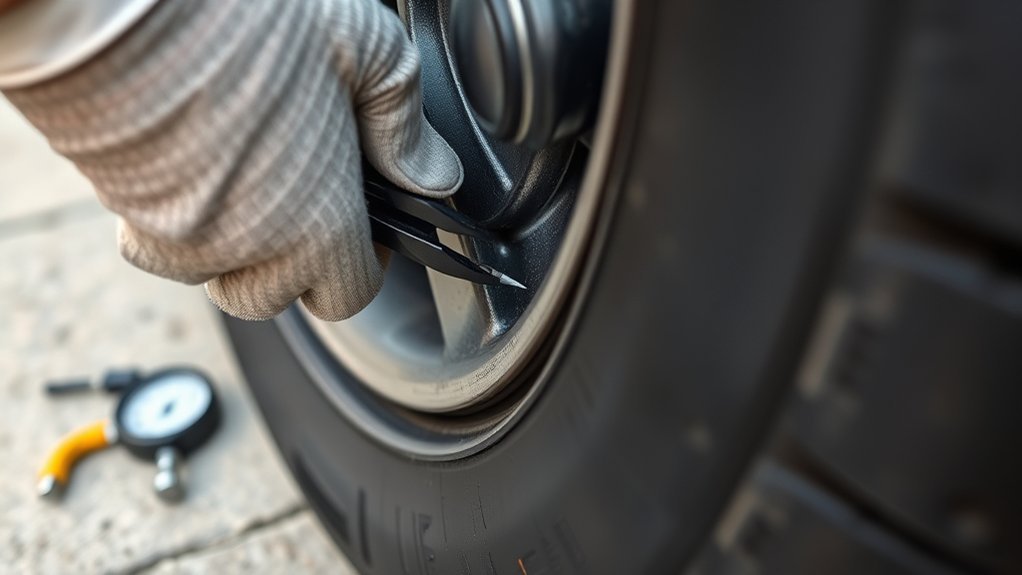
Remove the nail only when the tire is stable, the puncture is in the tread, and you are ready to seal the hole or take the tire for repair. If the tire holds air and the shop is nearby, leaving the nail in place is often safer than pulling it out on the roadside.
A nail in the tread may be slowing the leak. Pull it only when you are ready for the next step.
To remove a nail safely, grip it close to the tread with pliers, vice grips, or the claw of a hammer. Pull straight out with steady pressure. Do not twist aggressively, pry sideways, or yank so hard that you tear the rubber around the puncture.
- Park on level ground and set the parking brake.
- Check pressure before removing the nail.
- Confirm the puncture is in the tread, not the shoulder or sidewall.
- Grip the nail close to the tread surface.
- Pull straight out slowly and expect some air to escape.
- Immediately plug the hole temporarily or install the spare.
Pro Tip: If the object is a screw, back it out with the correct screwdriver instead of pulling it sideways. This reduces the chance of enlarging the puncture.
Plug a Nail Hole in the Tire
A tire plug kit can help you get off the roadside, but you should treat a string plug as a temporary emergency repair. The U.S. Tire Manufacturers Association says a proper puncture repair requires removing the tire from the wheel, inspecting the inside, filling the injury with a rubber stem or plug, and sealing the inner liner with a patch.
The Tire Industry Association also states that plug-only or patch-only repairs are not proper long-term repairs. That is why a tire shop should inspect the tire internally, especially if you drove on it while low.
[Products Worth Considering]

Mosconly tire repair glue and nail kit delivers an elastic, waterproof bond for quick sidewall puncture repairs. The adhesive cures securely to help prevent peeling, flaking, and tearing, while the included nails support a strong, seamless repair. Designed for easy roadside use, it works on car, motorcycle, bike, and other tire types, with full curing within 24 hours.

Use this tire repair rubber screw kit for fast, self-service flat fixes on the road. Choose the matching short or long nail size and twist it into the puncture without removing the tire from the rim. Compact storage keeps the emergency set organized for cars, motorcycles, electric bikes, and bicycles, helping you seal tubeless leaks quickly and reliably.

This tire repair screw plug kit includes 60 pieces in two sizes to help you fix punctures quickly on the road. Choose the right screw by puncture size, then drive it in with a screwdriver for an effective seal without needing a flaring tool. The coated screws help prevent leaks and are designed for convenient emergency use across cars, trucks, ATVs, motorcycles, and bicycles.
Locate and Prep Hole
Find the puncture again with soapy water, then mark it. Remove the nail and use the reaming tool from the plug kit to clean and roughen the channel. Keep the tool straight so you do not widen the injury more than needed.
- Find the leak by watching for bubbles.
- Mark the puncture so you do not lose it.
- Remove the nail with steady, straight pressure.
- Ream the hole according to your plug kit instructions.
- Keep dirt, water, and loose rubber out of the repair area.
Insert and Trim Plug
Thread the tire plug into the insertion tool and push it into the puncture until only a short amount remains above the tread. Pull the tool out straight so the plug stays in place. Trim the excess plug material close to the tread surface.
Inflate the tire to the recommended pressure, then spray the repair with soapy water. If bubbles still appear, the repair is not sealed. Do not keep driving on a leaking tire. Use the spare or have the vehicle towed.
Warning: Tire sealant and plug kits are emergency tools, not proof that the tire is safe for long-term driving. Sealants can also complicate later service and may affect TPMS components, so tell the technician if you used one.
Decide Between Repair and Replacement
The repair decision depends on the puncture location, size, tire condition, previous repairs, and whether the tire was driven while flat. A tire shop can confirm this by removing the tire and inspecting the inside.
[Products Worth Considering]

AUTOWN’s 68-piece tire repair kit helps you fix punctures and plug flats quickly and effectively. It includes a T-handle and spiral probe tool for easy insertion, while the steel patch and plug materials are designed for strong adhesion and long-lasting airtight performance. The compact case makes it convenient for roadside repairs across a wide range of vehicles.
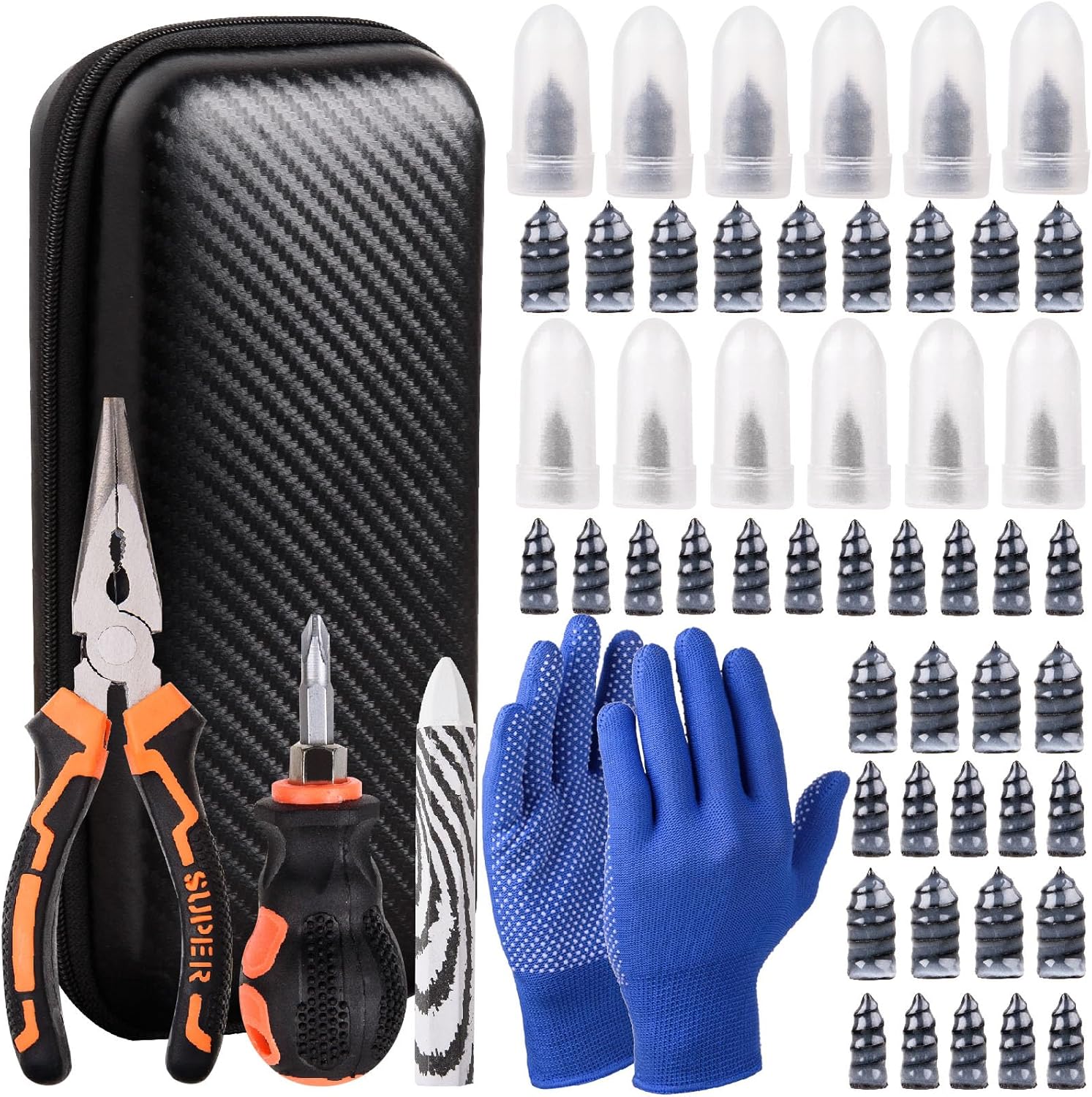
This tire sidewall puncture repair kit fixes flats fast without removing the tire, helping you get back on the road in minutes. It includes self-tapping repair nails, essential tools, gloves, and a portable storage bag for convenient roadside use. Designed for tubeless tires, it helps create a tight, leak-resistant seal for cars, motorcycles, trucks, SUVs, and ATVs.

This self-service tire repair nail kit includes 60 pieces (30 small + 30 large) to help seal punctures quickly without needing an auto shop visit. The nails are designed to fit different hole sizes and provide a tight connection with sealing glue to help prevent air and water intrusion. Suitable for cars, motorcycles, trucks, and other vehicles, it’s an easy, efficient way to patch roadside tire damage.
Assess Puncture Severity
Start with the visible damage, then think about what may have happened inside the tire. A small tread puncture can look harmless from the outside while the inner liner or sidewall has hidden damage from low-pressure driving.
| Condition | Likely Decision |
| Puncture in the center tread area and smaller than 1/4 inch, or 6 mm | May be repairable after internal inspection. |
| Puncture in the shoulder, sidewall, or outer edge of the tread | Usually not repairable. Replacement is the safer choice. |
| Hole larger than 1/4 inch, overlapping repairs, or multiple close punctures | Usually not repairable under industry guidance. |
| Tire driven flat, sidewall scuffed, inner liner damaged, or tread worn to 2/32 inch | Replacement is usually required. |
Repairable Tread Damage
When the nail sits in the tread and the puncture is under 1/4 inch, a repair may be possible. The repair still needs professional confirmation because the tire’s inner liner, belts, and sidewall must be inspected.
A proper repair normally uses a patch-plug or combination repair unit. The plug portion fills the puncture channel, while the patch seals the inner liner. Cooper Tire explains that proper repair should include both a plug and a patch, and that repairs should be handled by trained tire service professionals.
When To Replace
Replace the tire if the puncture is in the sidewall or shoulder, if the hole is larger than 1/4 inch, if repairs would overlap, or if the tire was damaged by being driven flat. Replacement is also safer if the tire is worn to its treadwear indicators or already has too many previous repairs.
- Measure the hole: Punctures larger than 1/4 inch, or 6 mm, are not considered safe repairs under common industry guidance.
- Check the location: Sidewall and shoulder damage usually means replacement.
- Review the history: Prior improper repairs, failed repairs, or repeated punctures can make a tire unsafe.
- Inspect tread depth: Tires worn to 2/32 inch should not be repaired.
Do not base the decision only on repair cost. A cheap emergency fix is not worth a tire failure at highway speed.
When to Visit a Tire Shop
Visit a tire shop as soon as possible if the tire still holds air and the vehicle is safe to drive. Leave the nail in place for the trip unless the tire is already leaking and you need to install a temporary plug to reach help.
A tire shop should inspect the tire from the inside before calling it safe. That internal inspection can reveal sidewall damage, liner damage, belt separation, or prior repair problems that you cannot see from outside the tire.
Go straight to a shop or stop driving if you notice any of these signs:
- The tire loses pressure again after inflation.
- The puncture is near the sidewall or shoulder.
- The steering pulls, shakes, or feels unstable.
- You hear loud hissing after removing the nail.
- The sidewall has a bulge, crack, cut, or scuffed ring.
- You used tire sealant or a temporary plug.
After the shop repairs or replaces the tire, recheck pressure the next day. If pressure drops again, return for another inspection.
[Products Worth Considering]

KEVWR self-service tire repair nails are made to firmly fix punctures with strong bite and reliable sealing, helping prevent water from entering the wound. The spiral rubber screws are easy to insert without removing the tire, providing a simple DIY repair for many vehicle and tire types. Suitable for cars, motorcycles, trucks, bikes, buses, and agricultural tires with two size options for different puncture nails.
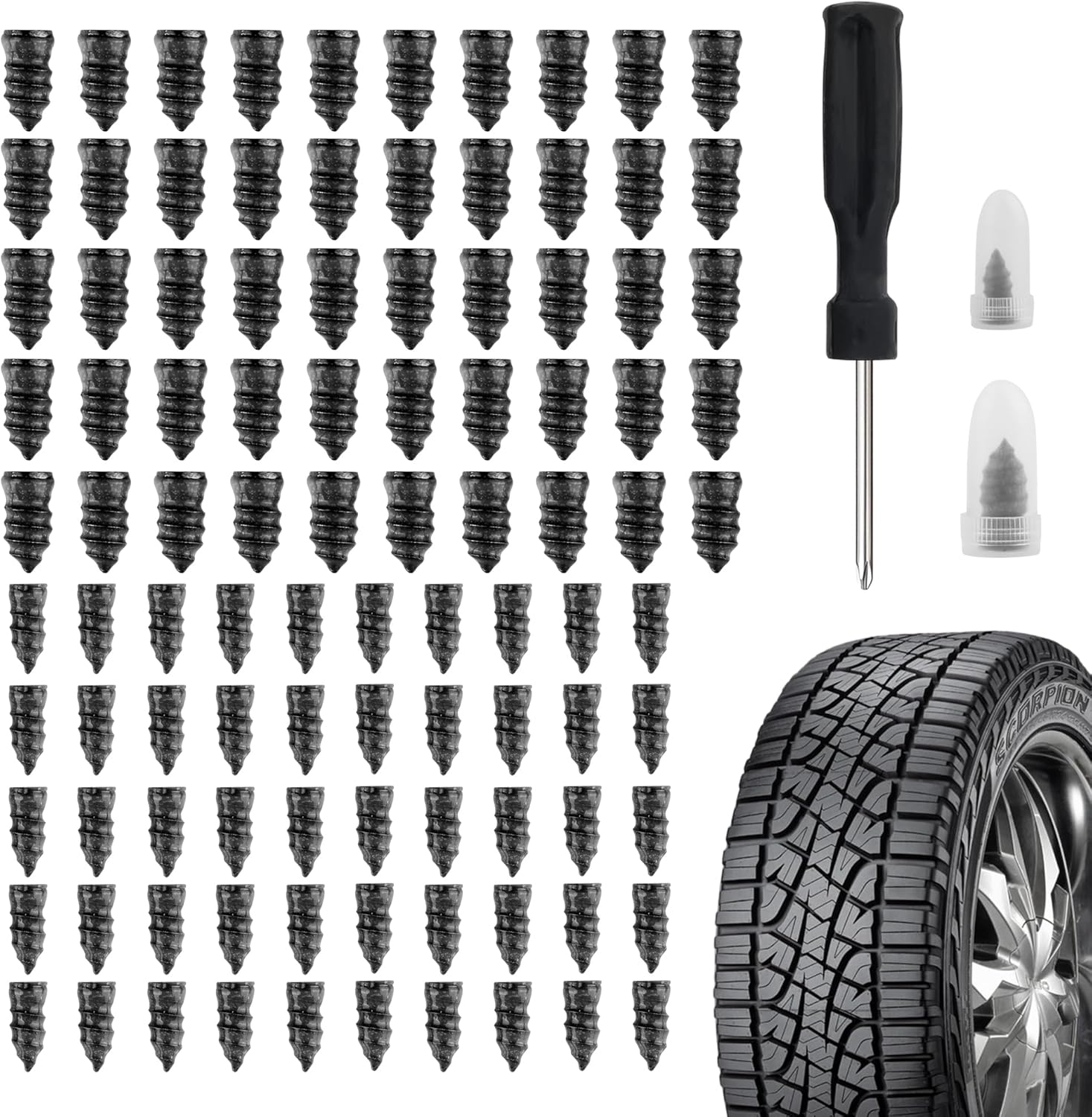
Salior’s tire plug kit provides a fast, reliable self-service fix for punctured or leaking tires without the need for flaring tools. Choose the correct plug size, then screw the nail into the puncture using the included screwdriver for an enhanced seal. The set is durable and convenient for on-the-go maintenance across multiple vehicle types.

TP-M13W combination repair unit kit includes wrapped stems with matching patches for fast, reliable tire repairs. It’s suitable for both radial and bias ply tires and is designed for chemical or heat vulcanization. Gray vulcanizing gum with blue backing helps create a strong bond, with the stem portion wrapped for added effectiveness.
What Not to Do With a Nail in Your Tire
A small nail can become a much bigger problem if you handle it the wrong way. Avoid these mistakes:
- Do not pull the nail immediately unless you are ready to seal the hole or change the tire.
- Do not drive normally on a punctured tire, even if it feels fine.
- Do not repair sidewall damage with a plug, patch, sealant, or glue.
- Do not drill beside a stuck nail because you can enlarge the injury and ruin the tire.
- Do not rely on tire sealant long term because it is meant to help you reach service, not replace inspection.
- Do not ignore repeated pressure loss after a temporary repair.
Frequently Asked Questions
How do you safely remove a nail from a tire?
Park safely, check the tire pressure, confirm the nail is in the tread, and make sure you are ready to seal the puncture. Grip the nail close to the tread with pliers or vice grips, then pull it straight out with steady pressure. If the tire leaks quickly afterward, install a spare or use a temporary plug only to reach professional service.
Should I pull a nail out of my tire before driving?
Usually, no. If the tire is holding air and the vehicle is stable, leave the nail in place and drive slowly to a tire shop. The nail may be slowing the air leak. Pull it only when you are ready to plug the hole temporarily, change the tire, or have the tire repaired.
What tool is used to pull a nail out of a tire?
Pliers, vice grips, or the claw end of a hammer can remove many nails. Pliers or vice grips give better control when the nail head is small or partly buried. If the object is a screw, use the correct screwdriver and back it out straight.
How do you remove a nail with no head from a tire?
Use vice grips if enough metal is exposed to grip. Pull straight out slowly. Do not drill beside the nail or dig into the tread with sharp tools. If you cannot grip the nail safely, leave it in place, install the spare if needed, and have a tire shop remove and inspect it.
Can a nail hole in a tire be repaired permanently?
Yes, but only if the puncture is in the repairable tread area, no larger than 1/4 inch, and the tire has no hidden internal damage. A proper long-term repair requires the tire to be removed from the wheel and repaired with a patch-plug or equivalent repair unit.
What is the 3 tire rule?
The “3 tire rule” is a practical replacement guideline, not a universal law. If three tires need replacement, many drivers replace all four to keep tread depth and traction balanced. This matters more on AWD and 4WD vehicles because mismatched tire diameter can strain drivetrain components. Always follow your vehicle manufacturer’s tire replacement guidance.
Sources
- U.S. Tire Manufacturers Association: Puncture Repair Procedures — supports the 1/4-inch limit, tread-area repair zone, internal inspection, and patch-plug repair method.
- Tire Industry Association: Tire Repair — supports avoiding sidewall/shoulder repairs and treating plug-only repairs as improper long-term repairs.
- NHTSA TireWise — supports pressure-check guidance, door-jamb PSI labels, cold tire pressure checks, and TPMS limitations.
- Cooper Tire: Proper Tire Puncture Repair — supports trained professional repair, plug-and-patch guidance, and sidewall repair limits.
- Discount Tire: Tire Repair Process — supports professional inspection, patch-plug repair, and common non-repairable conditions.
Conclusion
A nail in your tire is not always an emergency, but it is always a warning. Check pressure first, inspect the puncture location, and avoid pulling the nail until you are ready for the next step. If the tire holds air, drive slowly to a tire shop. If it is flat, leaking fast, or damaged near the sidewall, stop driving and use a spare or roadside assistance.
A temporary plug can help you reach safety, but it should not replace a proper inspection and patch-plug repair. When in doubt, let a trained tire technician decide whether the tire can be repaired or needs replacement.

