
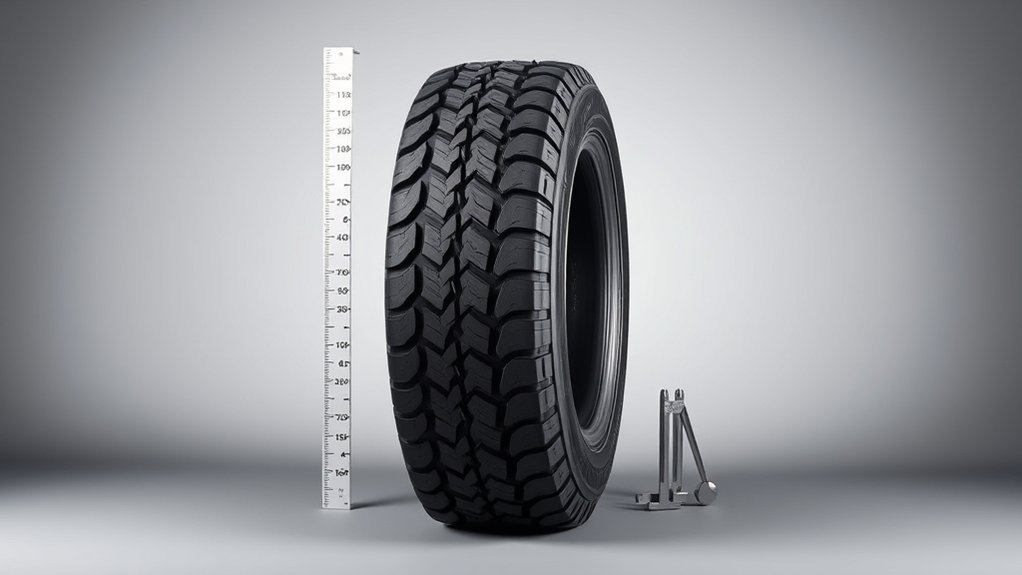
A 305/70R17 tire is a tall, wide truck and SUV tire size. On paper, it measures about 33.8 inches tall and 12.0 inches wide, so it sits closer to a 34-inch tire than a true 35-inch tire. Use the size math, rim-width guidance, and clearance checks below before you buy or mount this size.
Quick Answer
A 305/70R17 tire is about 33.8 inches tall, 12.0 inches wide, and has an 8.4-inch sidewall. It fits a 17-inch wheel. Actual inflated size, load rating, approved rim width, and clearance vary by tire model and vehicle setup.
Key Takeaways
- A 305/70R17 tire calculates to about 33.8 inches, or about 859 mm, in overall diameter.
- The 305 means the tire has a 305 mm nominal section width, which equals about 12.0 inches.
- The 70 aspect ratio gives a sidewall height of about 8.4 inches.
- It is closer to a 34-inch tire than a true 35-inch tire.
- Fitment depends on your vehicle, wheel width, wheel offset, suspension travel, fender clearance, and the specific tire model.
What Is a 305/70R17 Tire?
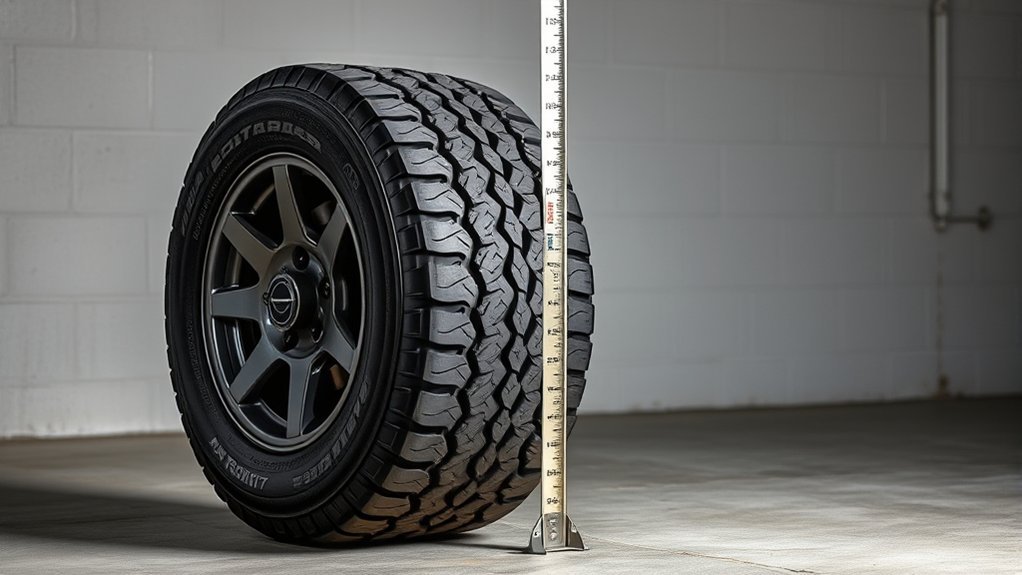
A 305/70R17 tire is a radial tire size commonly used on trucks, SUVs, and off-road builds. The size code tells you the tire’s main dimensions before you even check the manufacturer spec sheet.
In this size, 305 is the nominal section width in millimeters, 70 is the aspect ratio, R means radial construction, and 17 means the tire fits a 17-inch wheel. Tire makers and safety agencies explain tire width, aspect ratio, construction type, and rim diameter this way when teaching drivers how to read sidewall markings.
The important point is that the size code gives you a calculated size, not a guaranteed mounted measurement. Actual inflated diameter and width can change slightly by tread design, casing construction, load range, air pressure, and measuring rim width.
305/70R17 Size Specs at a Glance
| Size Marking | 305/70R17 |
| Overall Diameter | About 33.8 inches, or about 859 mm |
| Nominal Section Width | 305 mm, or about 12.0 inches |
| Sidewall Height | About 8.4 inches, or about 214 mm |
| Wheel Diameter | 17 inches |
| Common Class | Often treated as a 34-inch-class tire, not a true 35 |
How Tall Is a 305/70R17 Tire?
A 305/70R17 tire is about 33.8 inches tall when you calculate the size from the tire code. Many people round that number to 33.9 inches, and in real-world tire shopping you may see this size grouped with 34-inch-class tires.
Here is the math:
- Section width: 305 mm
- Aspect ratio: 70%
- Sidewall height: 305 mm × 0.70 = 213.5 mm
- Wheel diameter: 17 inches = 431.8 mm
- Overall diameter: 213.5 mm + 431.8 mm + 213.5 mm = 858.8 mm
- In inches: 858.8 mm ÷ 25.4 = 33.8 inches
The mounted tire may not measure exactly 33.8 inches. Manufacturers list dimensions based on a specific measuring rim, and the final mounted size can vary by tire line, tread depth, casing shape, air pressure, and load.
Note: Use 33.8 inches for basic planning, but check the exact tire model’s spec sheet before you decide on lift height, wheel offset, or fender trimming.
How Wide Is a 305/70R17 Tire?
A 305/70R17 tire has a nominal section width of 305 mm, which equals about 12.0 inches. Section width means the width from sidewall to sidewall, not necessarily the tread width that touches the road.
This matters for fitment because a wide tire can rub in more than one place. You need enough room near the upper control arm, sway bar, inner fender liner, mud flap area, bumper edge, and outer fender lip.
A wider wheel can also change the mounted section width. A narrower wheel may pull the sidewalls inward, while a wider wheel may spread the sidewalls outward. That is why the approved rim-width range from the tire manufacturer matters more than a generic tire-size chart.
What Is the Sidewall Height of a 305/70R17 Tire?
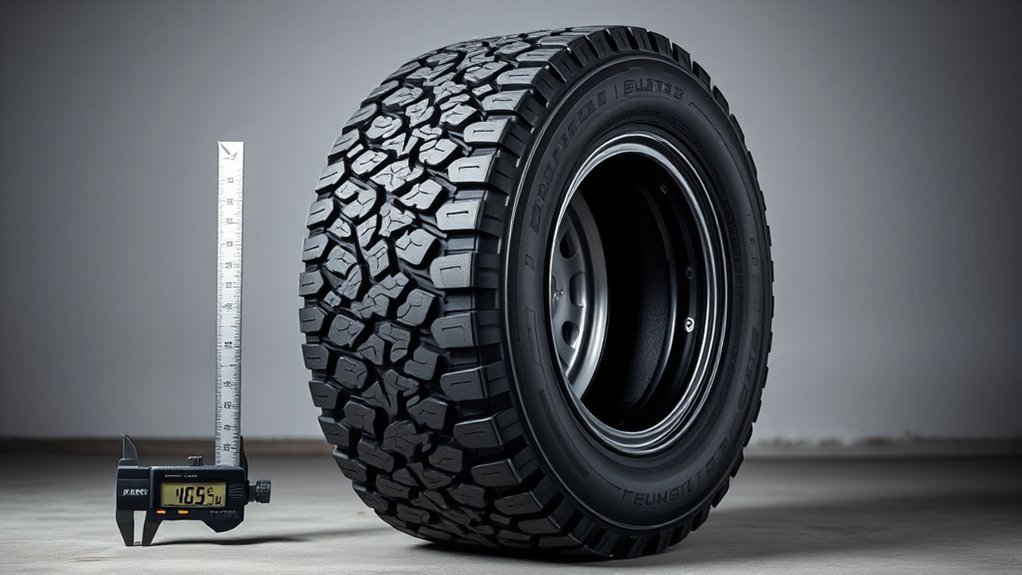
The sidewall height of a 305/70R17 tire is about 8.4 inches. You get that number by multiplying the 305 mm width by the 70% aspect ratio.
The formula is simple:
- 305 mm × 0.70 = 213.5 mm
- 213.5 mm ÷ 25.4 = 8.4 inches
A taller sidewall can help absorb bumps, rocks, ruts, and rough pavement. It can also create more sidewall flex than a lower-profile tire. That tradeoff is one reason this size is popular on off-road trucks but still needs proper wheel, load, and pressure matching.
Is a 305/70R17 a 33, 34, or 35-Inch Tire?
A 305/70R17 is best described as a 34-inch-class tire. It is taller than most tires people call “33s,” but it is still shorter than a true 35-inch tire.
Here is the practical comparison:
- 305/70R17: about 33.8 inches tall by calculation
- 33-inch tire: usually shorter than a 305/70R17, depending on brand
- 35-inch tire: usually around 34.5 to 35.0 inches by listed specs, depending on brand
If you are checking clearance, assume this tire behaves like a small 34, not a 35. If you are comparing it to a flotation size, it is closer to a 34×12.00R17 than a true 35×12.50R17.
Will 305/70R17 Tires Fit Your Truck?
A 305/70R17 tire may fit your truck, but you should not rely on tire height alone. Fitment depends on the truck model, trim, suspension height, wheel width, wheel offset, fender shape, alignment settings, and how much suspension travel you use.
Some trucks may clear this size with minor trimming or the right wheel offset. Others may need a lift, aftermarket control arms, bumper trimming, mud flap removal, or fender liner adjustment. A simple “3-inch lift” rule is too broad because two trucks with the same lift can rub differently if the wheels have different offsets.
Warning: Do not mount a 305/70R17 tire until you confirm rim width, load rating, speed rating, inflation pressure, and vehicle clearance. A tire that rubs, overloads the vehicle, or sits on the wrong rim can create a safety problem.
Clearance Points to Check
- Full steering lock: Turn left and right while checking the inner liner, sway bar, bumper edge, and mud flap area.
- Suspension compression: Leave enough room for the tire to move upward over bumps and off-road obstacles.
- Upper control arm clearance: Wider tires can sit close to suspension parts, especially with high-positive-offset wheels.
- Outer fender clearance: Low-offset wheels push the tire outward and can increase rubbing at the fender edge.
- Spare tire space: A 305/70R17 spare may not fit in the factory spare location on every vehicle.
- TPMS and wheel hardware: Make sure your wheels, sensors, valve stems, and lug hardware match the setup.
Wheel Offset and Backspacing
Wheel offset and backspacing can decide whether a 305/70R17 clears or rubs. More positive offset usually pulls the tire inward, which can create control arm or sway bar contact. Less positive offset pushes the tire outward, which can create fender and bumper contact.
Before buying wheels or tires, compare your current wheel size and offset to the new setup. Then check real fitment photos or notes from the same truck generation, trim, suspension height, and wheel offset.
305/70R17 Load, Speed, and Rim Requirements
The size code alone does not tell you the full load, speed, pressure, or rim-width requirement. You must check the exact tire model. The load index and speed symbol show the tire’s service description, while LT tires may also show a load range letter.
For rim width, many 305/70R17 tires land around the 8- to 10-inch range, but that is not a rule for every tire. Use the tire manufacturer’s approved rim-width range. Vehicle safety standards also treat proper tire-and-rim matching as part of safe fitment, so do not guess.
| Requirement | What to Check | Why It Matters |
|---|---|---|
| Approved rim width | Manufacturer spec sheet for the exact tire | Wrong rim width can distort the tire shape and affect wear, handling, and clearance. |
| Load index / load range | Sidewall, tire specs, and vehicle door placard | The replacement tire must support the vehicle, passengers, cargo, and towing needs. |
| Speed symbol | Sidewall service description | The speed rating should meet or exceed the vehicle’s requirement unless a tire professional advises otherwise. |
| Inflation pressure | Vehicle placard, tire shop load calculation, and tire sidewall maximum | Oversized LT tires may need a different pressure than the factory P-metric tire. |
[Products Worth Considering]
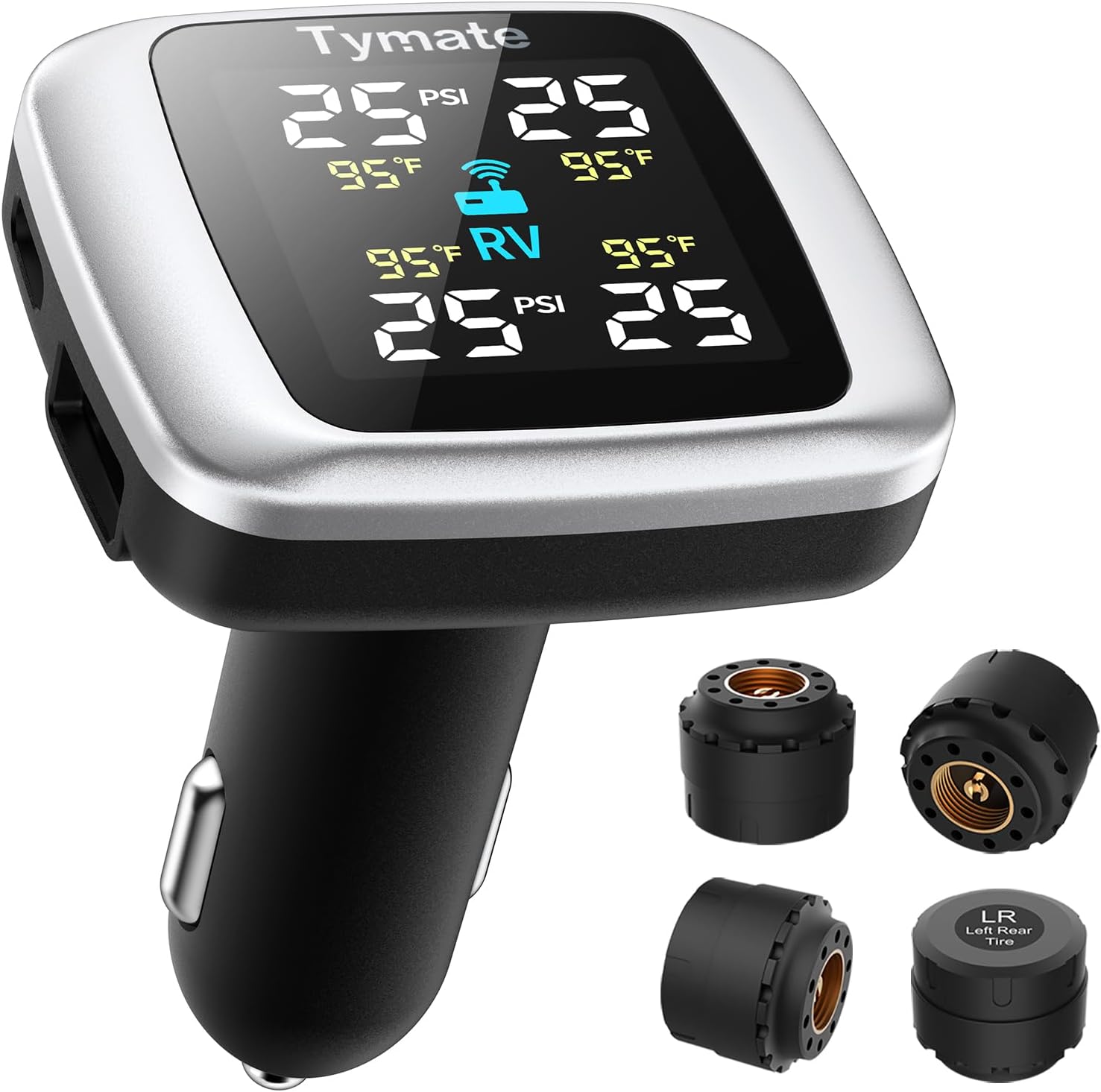
Tymate TM7 is a wireless tire pressure monitoring system that delivers real-time pressure and temperature readings for safer driving. It includes four external sensors, a bright color LCD display with adjustable backlight, and six alarm modes for high/low pressure, fast leakage, high temperature, and sensor signal or battery issues. The system covers a wide 0–144 PSI range and plugs into your vehicle’s cigarette lighter socket for quick DIY setup.

These M14x1.5 closed-end chrome lug nuts are a one-piece replacement designed for secure fitment on compatible GM, Ford, and select Chrysler/Dodge models. Featuring a 60-degree conical seat and anti-rust chrome plating, they help resist corrosion and maintain a bright look for everyday driving. Built for long-term durability, they include OEM-style part references and are backed by 12 months of support.

Protect your spare wheel with a waterproof, dustproof tire cover made to resist sun and harsh weather. The elastic band design makes it easy to install and remove without tools, while reinforced stitching helps it keep its shape. Available in multiple sizes, it fits common RV, trailer, Jeep, SUV, and truck spare tires.
Speedometer, Gearing, and Ride Effects
Upsizing to a 305/70R17 can change how your truck drives. If your original tire is smaller, the larger diameter travels farther with each rotation. That can make the speedometer read slower than your actual road speed unless the vehicle is recalibrated.
For example, moving from a tire around 31.6 inches tall to a 33.8-inch 305/70R17 increases diameter by about 7%. At an indicated 60 mph, your actual speed could be roughly 64 mph if the speedometer is not corrected.
The larger tire can also make the effective gearing feel taller. You may notice slower acceleration, more frequent downshifts, or a small fuel-economy drop, especially with heavy all-terrain or mud-terrain tires.
Pro Tip: If you upsize from a much smaller factory tire, ask your tire shop or dealer about speedometer recalibration. It can improve speed accuracy, shift behavior, and mileage tracking.
Best Uses for 305/70R17 Tires
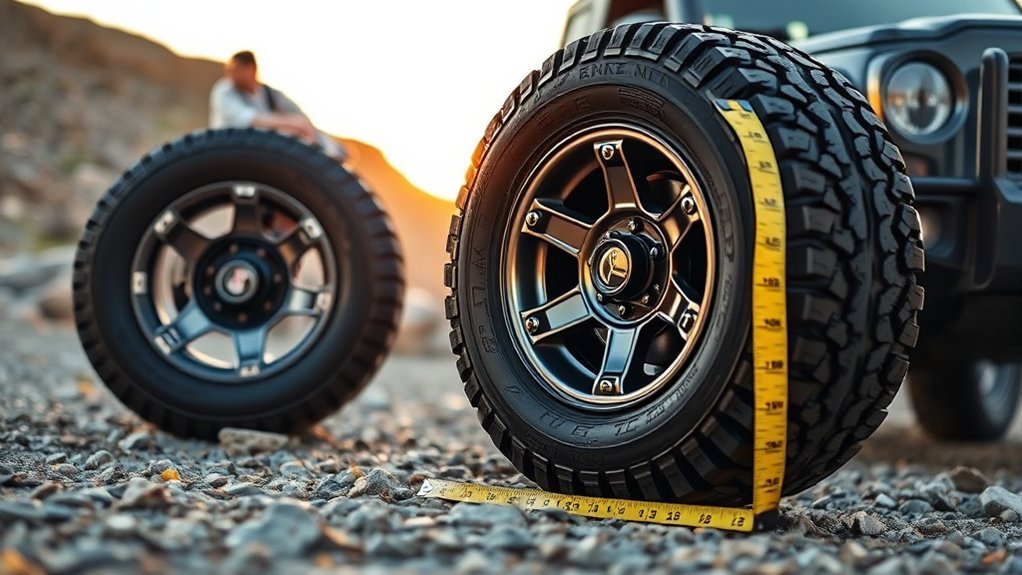
A 305/70R17 tire works best when you want a larger footprint, taller stance, and more sidewall than many factory truck tire sizes. It is common on lifted or leveled trucks that see mixed highway, trail, gravel, worksite, and bad-weather use.
This size can make sense for:
- All-terrain truck builds that need more sidewall and footprint.
- Off-road use where extra clearance and a taller profile help over rocks, ruts, and soft surfaces.
- Work trucks when the chosen tire’s load rating matches the vehicle and job.
- Daily-driven lifted trucks when clearance, alignment, wheel width, and speedometer correction are handled properly.
It may not be the best choice if your truck is stock height with tight wheel wells, if you want the lightest possible tire, or if you do not want to deal with rubbing checks and speedometer recalibration.
[Products Worth Considering]

ETENWOLF T300 is a calibrated digital tire pressure gauge for accurate readings from 3 to 200 PSI across light and heavy-duty vehicles. It includes thermal compensation for reliable performance in extreme cold or heat, with an auto shut-off to extend battery life and an LED for easier reading. The sturdy design supports rugged everyday use, making it ideal for pickups, RVs, and industrial applications.

This Dr.Roc tire valve stem puller tools set helps install or remove snap-in tubeless valve stems safely and efficiently. It includes ozone-resistant EPDM snap-in valve stems, a valve stem installer, and a valve core remover for quick core removal or installation during tire service. Designed for reliable tubeless tire repair on motorcycles, ATVs, lawn equipment, cars, and trucks.

Accurately measure tire tread depth with a calibrated gauge marked from 0 to 1 inch in 1/32 inch increments. The color-coded bar helps you quickly identify tread condition ranges, supporting safe driving for trucks, motorcycles, automobiles, and passenger vehicles.
Before You Buy Checklist
- Confirm your factory tire size and compare the diameter difference.
- Check the exact 305/70R17 tire model’s overall diameter and section width.
- Verify approved rim width for that tire.
- Match or exceed the vehicle’s required load rating.
- Check speed rating and intended use.
- Confirm proper tire pressure with a tire professional, especially when switching to LT tires.
- Measure inner and outer clearance at ride height.
- Check full-lock steering clearance.
- Check clearance during suspension compression.
- Confirm spare tire storage and TPMS compatibility.
[Products Worth Considering]

The SAFELIFE dial tire tread depth gauge measures tread depth in 1/32 inch increments with clear, easy-to-read 2-inch dial face. Color zones using a traffic light system help you quickly judge whether tread is low, marginal, or ample for safer driving. Built with a durable zinc cast body and a metal detect probe for precise, comfortable use across cars, motorcycles, trucks, and buses.

This digital tire pressure gauge with built-in inflator helps you accurately check and adjust tire pressure for safer driving and better fuel efficiency. It supports multiple units (PSI, KPA, BAR, KG/CM²) and reads within 1% for reliable results. The 3-in-1 design inflates, deflates, and measures, with a quick-connect air chuck and compatible hose setup for cars, trucks, SUVs, RVs, and motorcycles.

Monitor tire tread wear with a smart, color-coded depth gauge that shows clear condition ranges at a glance. The bar is range marked for fast, easy readings, helping you maintain safer traction and performance. Each gauge is portable with a pocket clip, and the set includes 20 units for daily use and sharing.
Frequently Asked Questions
Is a 305/70R17 a 35-inch tire?
No. A 305/70R17 tire calculates to about 33.8 inches tall, so it is closer to a 34-inch tire than a true 35-inch tire. Actual listed diameter can vary by tire model, but you should not plan fitment as if it were a full 35.
Is a 305 tire the same size as a 33?
Not by itself. The number 305 only tells you the nominal section width in millimeters. The full size matters. A 305/70R17 is about 33.8 inches tall, while a different 305 size could be shorter or taller depending on its aspect ratio and wheel diameter.
What is a 305/70R17 tire equivalent to?
A 305/70R17 is roughly equivalent to a 34×12.00R17 tire by calculated size. It is also often compared with 33×12.50R17 and 285/75R17 sizes, but those are not exact matches. Always compare actual manufacturer specs before choosing a substitute.
Is a 305 tire 35 inches tall?
No. A 305 tire is not automatically 35 inches tall. The 305 only gives the width. A 305/70R17 is about 33.8 inches tall, while a 305/75R17 is taller because it has a higher aspect ratio.
Do 305/70R17 tires need a lift?
Many trucks need a lift, leveling kit, trimming, or the right wheel offset to clear 305/70R17 tires, but there is no universal lift height. Fitment depends on the vehicle, suspension, wheel width, offset, alignment, and the exact tire model.
Will 305/70R17 tires affect my speedometer?
Yes, they can if they are taller than your original tires. A taller tire rotates fewer times per mile, so your speedometer may read slower than your actual speed. Recalibration can correct the speedometer and mileage reading.
Conclusion
A 305/70R17 tire gives you a serious size upgrade without reaching true 35-inch territory. It measures about 33.8 inches tall, about 12.0 inches wide, and has about 8.4 inches of sidewall. Before buying, confirm the exact tire specs, approved rim width, load rating, pressure needs, wheel offset, and vehicle clearance. Measure carefully, and you will avoid rubbing, speedometer errors, and expensive fitment surprises.
Sources
- Bridgestone Americas: How to Read & Determine Tire Size — supports tire width, aspect ratio, radial construction, rim diameter, and load index basics.
- NHTSA Tire Safety Brochure — supports official sidewall-marking definitions, load index, speed rating, and safety guidance.
- Tire Industry Association: Reading a Tire Sidewall — supports tire type, width, aspect ratio, radial construction, rim diameter, load index, and speed symbol definitions.
- Toyo Tires: Reading a Sidewall — supports section width, aspect ratio, radial construction, speed rating, LT tire notes, and UTQG context.
- BFGoodrich All-Terrain T/A KO3 Technical Notes — supports manufacturer variation in listed dimensions and LT tire pressure guidance.
- Transport Canada TSD No. 110 — supports matching rims to tire-manufacturer approved dimensions.

