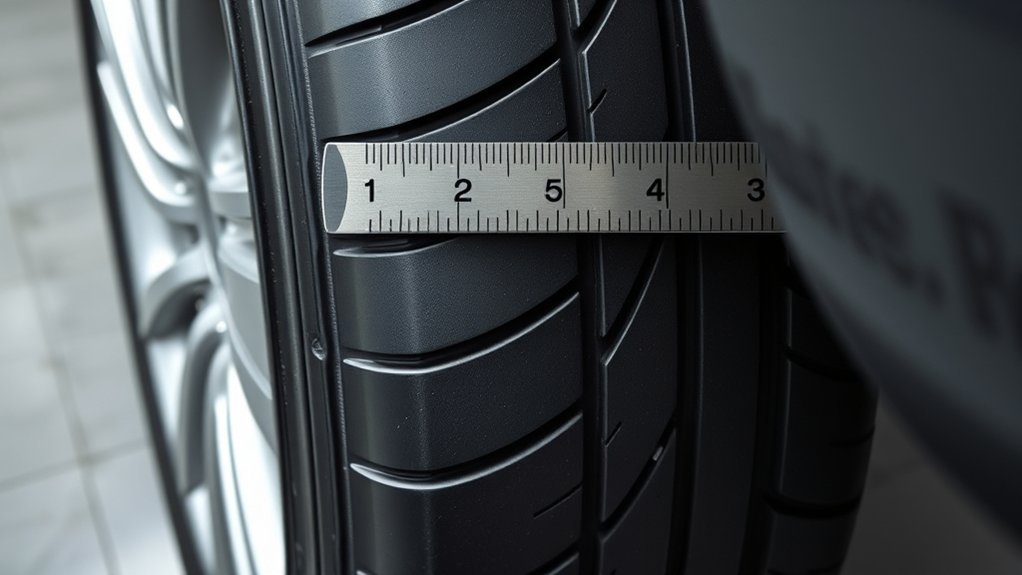
A 205 tire is about 205 millimeters wide, which converts to about 8.07 inches. That number is the tire’s nominal section width, measured from sidewall to sidewall on a specified measuring rim. It is a useful starting point, but it does not tell you the full tire height, rim diameter, load rating, or vehicle fitment by itself.
Quick Answer
A 205 tire is about 8.1 inches wide because 205 millimeters divided by 25.4 equals 8.07 inches. The exact mounted width can vary by tire model and rim width, so always check the full size code, tire spec sheet, vehicle placard, and owner’s manual before changing sizes.
Key Takeaways
- A 205 tire has a nominal section width of 205 mm, or about 8.1 inches.
- The number 205 only tells width. You still need the aspect ratio, construction, rim diameter, load index, and speed rating.
- Rim-width range depends on the full tire size and model. Do not treat 5.5 to 7.5 inches as universal for every 205 tire.
- A 205/75R15 example has a sidewall height near 6.1 inches and an overall diameter near 27.1 inches.
- Before upsizing to 215, 225, or 235 width, check clearance, offset, load rating, speedometer change, and the vehicle manufacturer’s approved sizes.
How Wide Is a 205 Tire?
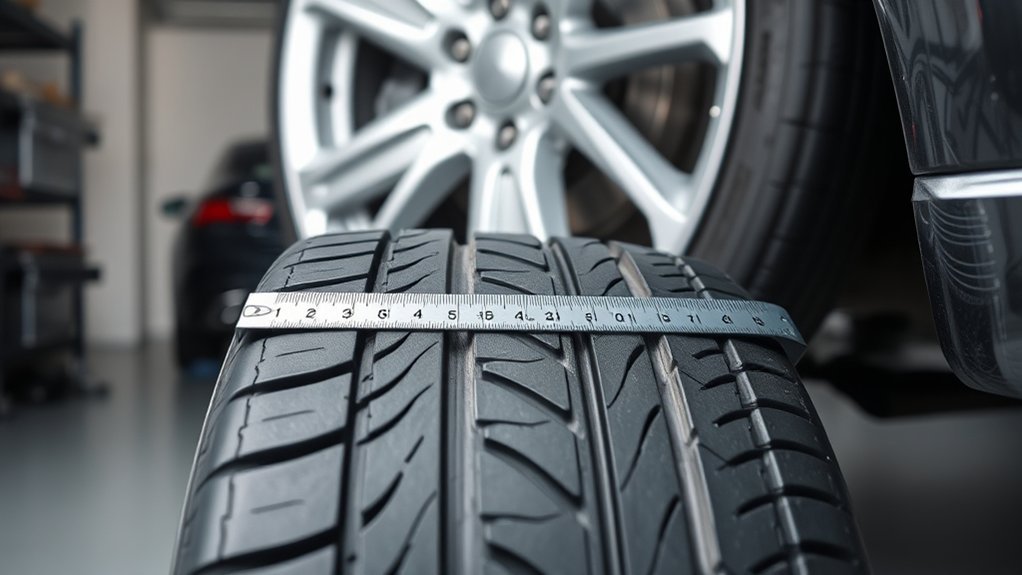
A 205 tire is 205 millimeters wide by its size label. In inches, that equals about 8.07 inches, usually rounded to 8.1 inches. Tire makers use this number as nominal section width, which means the width from one sidewall to the other when the tire is mounted on its specified measuring rim and inflated correctly.
You should treat 205 as a sizing label, not a perfect tape-measure result. Actual width can vary slightly by tire brand, tread design, casing shape, and rim width. A 205 tire mounted on a wider approved rim may measure a little wider than the same tire mounted on a narrower approved rim.
Note: The number 205 does not tell you the tire’s height. A 205/55R16 and a 205/75R15 can have the same nominal width but very different sidewall height and overall diameter.
What Does 205 Mean on the Sidewall?
The 205 on a tire sidewall means the tire’s nominal section width is 205 millimeters. In a size such as 205/75R15, the first number is width, the second number is aspect ratio, the letter shows construction, and the last number shows wheel diameter in inches.
| 205 | Nominal tire width in millimeters |
| 75 | Aspect ratio, or sidewall height as a percentage of width |
| R | Radial construction |
| 15 | Wheel diameter in inches |
That means a 205 tire is not automatically right for your vehicle just because the width looks close. You still need the complete size, load index, speed rating, and approved rim-width range.
205 Tire Width in Inches and Millimeters
A 205 tire measures 205 millimeters wide by its size code. To convert millimeters to inches, divide by 25.4:
205 ÷ 25.4 = 8.07 inches, so a 205 tire is usually described as about 8.1 inches wide.
205 Tire Width in Inches
In inch measurements, a 205 tire is about 8.1 inches wide from sidewall to sidewall. That width gives many cars, small SUVs, crossovers, vans, and light-duty trucks a balanced footprint for everyday driving.
However, tire width alone does not decide fitment. A tire’s overall height, rim diameter, wheel offset, suspension clearance, and load rating all matter. Always compare the complete tire size against the vehicle placard and owner’s manual.
205 Tire Width in Millimeters
In metric sizing, 205 means 205 millimeters. Many modern passenger and light-truck tire sizes use metric width labels, so the first number gives you a quick way to compare widths across sizes.
| Measurement | Value | What it means |
|---|---|---|
| Metric width | 205 mm | Nominal section width |
| Inch conversion | 8.07 in | Rounded to about 8.1 inches |
| Measured width | Varies slightly | Depends on rim width and tire model |
How a 205 Tire Fits Common Rim Sizes
A 205 tire can fit several rim widths, but the approved range depends on the complete tire size and the exact tire model. Many 205 passenger sizes fall near the 5.5- to 7.5-inch range, but that is not a rule for every 205 tire. Some 205/75R15 models list a narrower approved range.
That is why you should never choose a wheel by width alone. Check the tire manufacturer’s specification sheet for the approved rim-width range, measured rim width, section width, and overall diameter.
[Products Worth Considering]

This professional wheel and rim cleaning brush set lifts brake dust, grime, and dirt with soft, scratch-free microfiber and synthetic wool fibers. The rim brush bends up to 360 degrees for easy access to hard-to-reach areas around spokes, lips, and faces. Ideal for thorough cleaning of car, truck, motorcycle, bicycle, RV, and more wheel and tire surfaces.

Keep your tires properly inflated with this analog VONDIOR tire pressure gauge, designed for fast, easy readings without batteries. The swiveling, two-axis hose and large glow dial help you measure at any tire angle with instant visibility. Built with a protective rubber shield, it supports durable, low-maintenance use for cars and trucks.

Measure tire tread depth quickly and accurately with this LUMITECO dial gauge that reads in 1/32" increments up to 14/32". The color-coded green/yellow/red zones make it easy to judge tire wear and know when replacement is needed. A rugged, compact design with a protective pouch helps keep the gauge ready for use on cars, trucks, motorcycles, and more.
Rim Width Range
The rim width affects how the tire sits on the wheel. A rim that is too narrow can make the sidewalls bulge. A rim that is too wide can stretch the sidewalls and change how the tread contacts the road.
- Use the tire maker’s approved rim-width range for the exact tire size.
- Check wheel offset and inner clearance before mounting a wider tire.
- Use the vehicle placard or owner’s manual for the original tire size and cold tire pressure.
- Ask a qualified tire professional if the new size changes diameter, load rating, or speed rating.
Sidewall Stretch Fitment
Sidewall shape changes as rim width changes. Within the approved range, a narrower rim usually makes the sidewall look fuller, while a wider rim can square off the tread and sidewall. Outside the approved range, handling, wear, and bead seating can become unsafe.
Warning: Do not mount a 205 tire on a wheel outside the tire manufacturer’s approved rim-width range. Poor bead seating, abnormal sidewall stress, uneven wear, and loss of control can result.
Safe Fit Considerations
Safe fitment means more than matching the 205 width. You need to confirm diameter, wheel width, load rating, speed rating, offset, brake clearance, suspension clearance, and fender clearance.
| Fitment point | What to check |
|---|---|
| Rim width | Approved range for the exact tire size and model |
| Overall diameter | Speedometer change, gearing effect, and wheel-well clearance |
| Load index | Must meet or exceed the vehicle manufacturer’s requirement |
| Cold pressure | Use the vehicle placard, not the sidewall maximum pressure |
205 Tire Sidewall Height and Overall Diameter
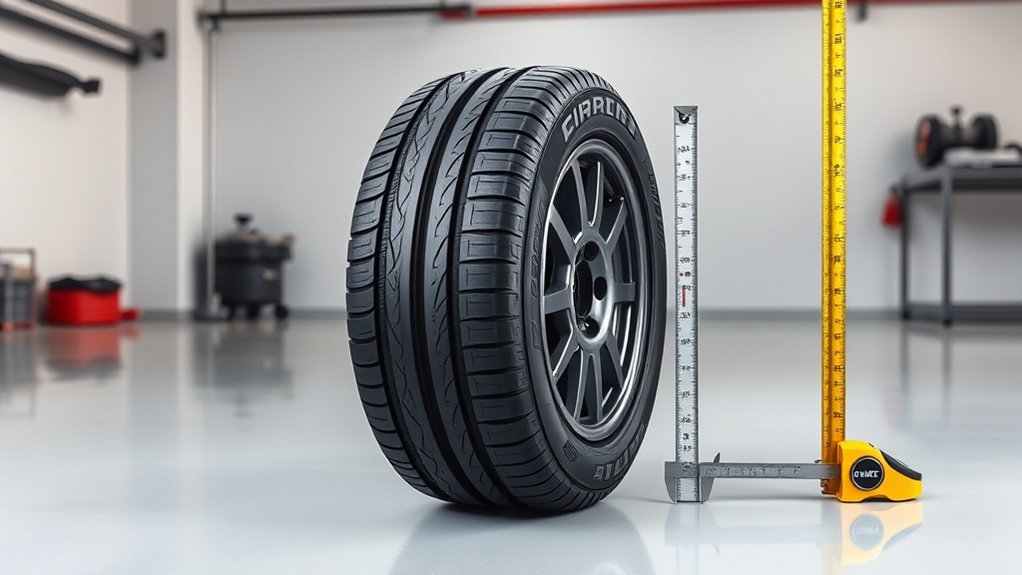
Sidewall height depends on the aspect ratio, not just the 205 width. For example, a 205/75R15 tire has a sidewall height equal to 75% of 205 mm.
Here is the basic formula:
- Sidewall height: 205 mm × 0.75 = 153.75 mm, or about 6.1 inches.
- Overall diameter: 15-inch wheel + two 6.1-inch sidewalls = about 27.2 inches before normal rounding and manufacturer variation.
- Real-world specs: a listed 205/75R15 tire may show an overall diameter close to 27.1 inches, depending on the model.
A lower aspect ratio gives you a shorter sidewall. A higher aspect ratio gives you a taller sidewall. That is why a 205/55R16 and a 205/75R15 can share the same nominal width but feel and fit very differently.
205 Tire Size Examples by Rim Diameter
Rim diameter changes the full tire package. The 205 width may stay the same, but the sidewall and overall diameter change with the aspect ratio and wheel size.
| Example size | Nominal width | Typical use note |
|---|---|---|
| 205/55R16 | About 8.1 in | Common passenger-car size with a shorter sidewall |
| 205/60R15 | About 8.1 in | Balanced sidewall height for comfort and handling |
| 205/75R15 | About 8.1 in | Taller sidewall; often used where load, comfort, or clearance matter |
| ST205/75R15 | About 8.1 in | Trailer-service size; not the same as a passenger or light-truck tire |
The prefix matters. A P-metric tire, LT tire, and ST trailer tire can share a 205 width but have different construction, load behavior, and intended use. Never substitute one type for another unless the vehicle or trailer manufacturer allows it.
How 205 Width Changes Grip and Steering
A 205 tire gives you a moderate contact patch. Compared with a narrower tire of the same general type, it may improve dry grip and steering stability. However, tire compound, tread design, pressure, alignment, vehicle weight, and road surface often matter more than width alone.
Grip and Traction
A wider tire can place more rubber on the road, but that does not guarantee better traction in every condition. In rain, tread depth and water evacuation matter. In snow, a narrower tire can sometimes cut through loose buildup better. On dry pavement, a well-matched 205 tire can feel stable without the extra weight and rolling resistance of a much wider tire.
- Dry roads: a 205 tire can offer stable everyday grip when matched to the vehicle.
- Wet roads: tread depth, groove design, pressure, and speed control matter more than width alone.
- Snow or loose surfaces: tire type and tread pattern usually matter more than a small width change.
Steering Response
A 205 tire can give predictable steering on many compact cars, sedans, crossovers, small SUVs, and light-duty setups. If you move from a narrower tire to a 205, steering may feel more planted. If you move from a wider tire down to a 205, steering may feel lighter and fuel economy may improve slightly.
Do not judge steering only by width. Sidewall height also matters. A 205/55R16 usually feels sharper than a 205/75R15 because the shorter sidewall flexes less.
When a 205 Tire Makes Sense
A 205 tire makes sense when your vehicle manufacturer lists that width or an equivalent size as approved. It can be a practical middle ground for daily driving because it is wide enough for stable road contact without being overly bulky.
Choose a 205 tire when:
- Your vehicle placard, owner’s manual, or tire professional confirms the size.
- The tire’s load index and speed rating meet or exceed the original specification.
- The overall diameter stays close enough to avoid clearance and speedometer problems.
- The approved rim-width range matches your wheels.
- The tire type matches the vehicle, such as passenger, LT, or trailer service.
Pro Tip: When comparing 205 tires, compare the complete size first. A 205/55R16, 205/65R16, and 205/75R15 do not fit or drive the same, even though all three are labeled 205 wide.
205 Tire Alternatives for More Clearance
If you want more clearance, a wider tire is not always the answer. Clearance usually comes from overall diameter, not section width alone. A 215/75R15 or 225/70R15 may be taller than some 205 sizes, but the real effect depends on the aspect ratio and wheel diameter.
Wider alternatives can also create new problems. A 225 tire is 20 mm wider than a 205 tire, which is about 0.8 inches. A 235 tire is 30 mm wider, or about 1.18 inches. That extra width may improve stance or dry grip, but it may also cause rubbing against fenders, struts, control arms, or inner liners.
Before upsizing, check:
- overall diameter difference
- section width difference
- wheel offset and backspacing
- turning clearance at full lock
- suspension compression clearance
- load index and speed rating
- speedometer and odometer change
[Products Worth Considering]
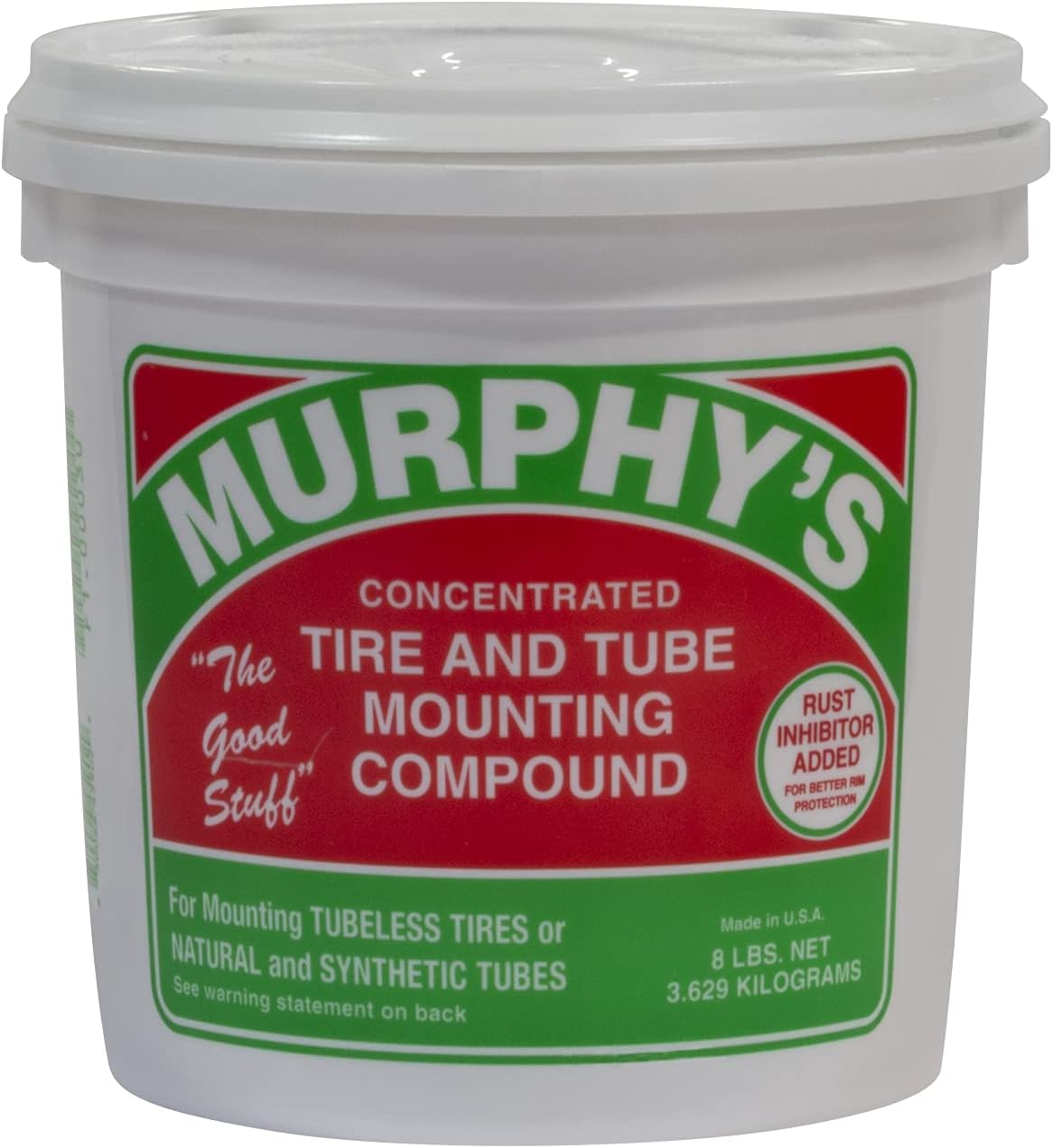
A concentrated tire and tube mounting compound designed to help simplify mounting rubber tires and tubes on passenger, semi truck, construction, and OTR applications. Its ultra-thick formula packs beads effectively and includes rust inhibitors to help protect against corrosion during use.

This 3-piece wheel brush set makes it easy to clean wheels and tires with soft, scratch-free brushes designed for lifting brake dust and grime. The flexible rim brush bends up to 360 degrees to reach hard-to-access areas for a thorough clean, while the comfortable grip helps control during detailing. A dedicated detailing brush supports gentle cleaning for sensitive surfaces, including interior use.
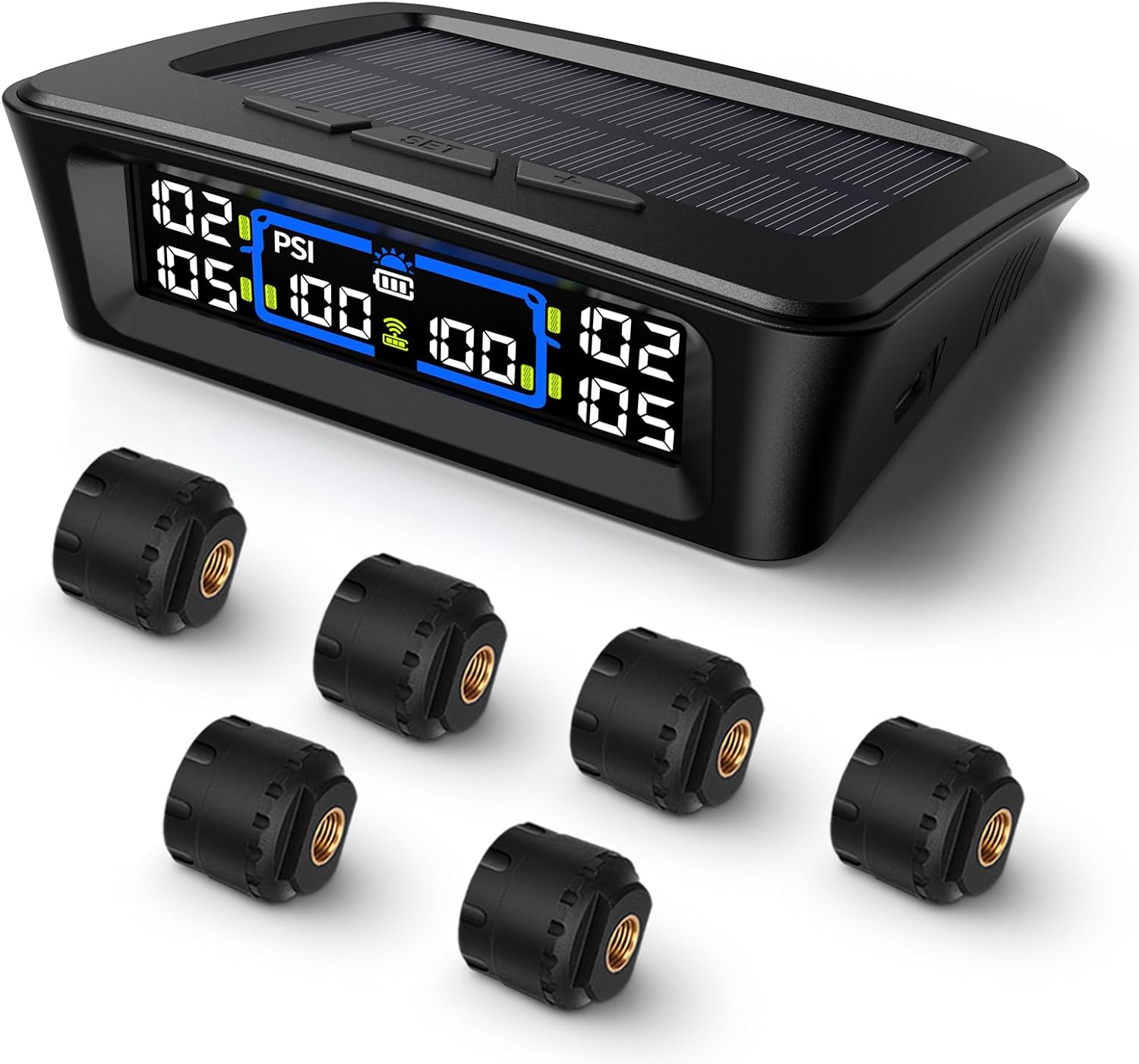
The Tymate TM12 RV TPMS delivers real-time tire pressure and temperature monitoring with a stable 433Hz display for safer long-distance driving. It supports simultaneous monitoring across vehicle and trailer zones, includes six alarm modes for pressure, temperature, leakage, battery, and signal loss, and features easy DIY installation with auto calibration. Power is supplied via USB-C charging or solar recharging, with a wide 0–144 PSI range and up to 50 ft signal coverage for RVs and towable trailers.
How to Check 205 Tire Fitment Safely
Before you mount a 205 tire, verify the full tire size and the vehicle requirements. The safest starting point is the vehicle tire placard, usually found on the driver’s door jamb, and the owner’s manual.
- Read the full current tire size. Do not stop at 205. Record the aspect ratio, construction letter, rim diameter, load index, and speed rating.
- Check the vehicle placard. Match the recommended size and cold tire pressure unless the vehicle or tire manufacturer approves another size.
- Compare overall diameter. A large diameter change can affect clearance, gearing, speedometer accuracy, and driver-assistance systems.
- Confirm rim-width range. Use the tire manufacturer’s spec sheet for that exact tire model and size.
- Match load and speed ratings. Replacement tires should meet or exceed the vehicle manufacturer’s required ratings.
- Inspect clearance. Check inside, outside, front, rear, and full-steering-lock clearance before normal driving.
- Set pressure cold. Use the placard pressure for normal replacement sizes unless a tire professional or manufacturer specifies otherwise.
If the new 205 tire is not the original size, have a tire professional confirm the change before installation. That one check can prevent rubbing, uneven wear, poor handling, and overload risk.
[Products Worth Considering]

Malco tire mounting and demounting lubricant is a ready-to-use tire lube formulated to reduce friction during tire installation for passenger cars, light trucks, farm tires, and heavy-duty equipment. It provides rust-inhibiting protection to help reduce corrosion on rims and wheels, and helps support proper tire bead seating during inflation to reduce air leakage. The silicone-free, soap-free formula is whitewall safe to help prevent discoloration on whitewall tires and sensitive sidewall markings.

The SAFELIFE dial tire tread depth gauge measures tread depth in 1/32 inch increments with clear, easy-to-read 2-inch dial face. Color zones using a traffic light system help you quickly judge whether tread is low, marginal, or ample for safer driving. Built with a durable zinc cast body and a metal detect probe for precise, comfortable use across cars, motorcycles, trucks, and buses.

Vigorder rubber cement glue delivers superior adhesion and cures quickly within about 30 seconds for seamless rubber bonding. Once cured, it helps provide a strong, durable, waterproof seal that holds up to vehicle weight, pressure, and heat. Suitable for cars, motorcycles, trucks, bicycles, and off-road tires, it’s designed for emergency patch and maintenance repairs.
Frequently Asked Questions
How much wider is a 225 than a 205?
A 225 tire is 20 mm wider than a 205 tire. In inches, that is about 0.79 inches wider. The extra width may change grip, steering feel, clearance, and fuel economy, so check wheel width and vehicle clearance before switching.
Are 205 tires wide?
A 205 tire is moderately wide. At about 8.1 inches, it is wider than many small-car tires but narrower than many performance, truck, and SUV tires. Whether it is “wide” depends on the vehicle and the original tire size.
Which tire is wider, 205 or 235?
A 235 tire is wider than a 205 tire. The difference is 30 mm, or about 1.18 inches. A 235 may need a wider rim and more clearance, so do not install it unless the vehicle, wheel, and suspension setup can accept it.
Will a 205 fit on a 7-inch rim?
Many 205 tires can fit a 7-inch rim, but you must check the exact tire’s approved rim-width range. Some 205 sizes include 7 inches in the approved range, while others may have a different limit.
Is a 205/55R16 the same width as a 205/75R15?
Both sizes have the same nominal 205 mm section width, but they are not the same overall size. The 205/75R15 has a taller sidewall and larger overall diameter than a 205/55R16, so the two sizes are not automatically interchangeable.
Can I replace a 205 tire with a 215 or 225 tire?
You can only replace a 205 tire with a 215 or 225 if the new full size is approved for your vehicle and wheel. Check diameter, rim width, load index, speed rating, offset, and clearance before making the change.
Conclusion
A 205 tire is 205 mm wide, or about 8.1 inches. That number gives you the nominal section width, but it is only one part of tire fitment. The complete size, such as 205/55R16 or 205/75R15, tells you far more about sidewall height, wheel diameter, and overall tire height.
For safe results, check the tire placard, owner’s manual, tire manufacturer’s spec sheet, and approved rim-width range. If you plan to change tire size, confirm clearance, load rating, speed rating, and speedometer impact before installation.
Sources
- Michelin: Tire Load Rating & Speed Rating Explained — supports tire sidewall code, width, aspect ratio, load index, speed rating, and placard guidance.
- Bridgestone: How to Read & Determine Tire Size — supports aspect ratio, construction, and tire-size decoding.
- NHTSA TireWise: Tire Safety Ratings and Awareness — supports tire pressure, placard, and tire-safety guidance.
- Tire Rack: What Is the Rim Width Range for a Tire? — supports approved rim-width range and rim-width effect on section width.
- Tire Rack: General Grabber A/TX 205/75R15 Specs — supports 205/75R15 example specs, including rim range, section width, load, and overall diameter.
- Discount Tire: Tire Size Calculator — supports section width, sidewall height, overall diameter, and speedometer comparison guidance.