
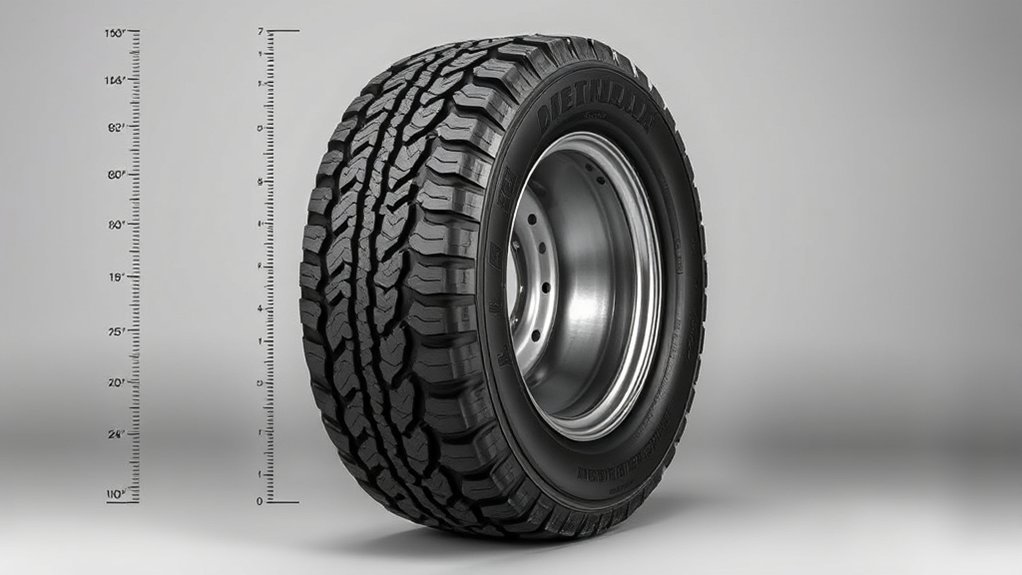
A 285/65R18 tire is a common truck and SUV size that measures about 32.6 inches tall, 11.2 inches wide, and 7.3 inches from rim to tread. Those numbers make it close to a 33-inch tire, but not exactly the same. Before you buy, compare it with your original tire size, wheel width, load rating, and available clearance so you know how it will affect fitment, ride height, and speedometer accuracy.
Quick Answer
A 285/65R18 tire is about 32.6 inches tall, 11.2 inches wide, and 7.3 inches in sidewall height. It fits an 18-inch wheel. Many versions work on 8- to 10-inch wide wheels, but exact rim width, load rating, and real tire dimensions vary by manufacturer.
Key Takeaways
- A 285/65R18 tire has a calculated overall diameter of about 32.6 inches, or 827.7 mm.
- Its section width is 285 mm, which equals about 11.2 inches.
- Its sidewall height is about 185.3 mm, or 7.3 inches, because the sidewall is 65% of the section width.
- The calculated circumference is about 102.4 inches, which equals about 619 theoretical revolutions per mile.
- Real-world specs can differ, so always check the exact tire model’s data sheet before you buy.
At a Glance
| Time Required | 10 to 20 minutes to compare size, wheel width, pressure label, and clearance |
| Difficulty | Easy for size conversion; moderate for full fitment checks |
| Tools Needed | Tape measure, tire pressure gauge, owner’s manual, tire spec sheet, and a speedometer calculator if changing from stock size |
| Cost | Free to calculate; installation cost depends on mounting, balancing, TPMS service, and any needed calibration |
How Tall Is a 285/65R18 Tire?
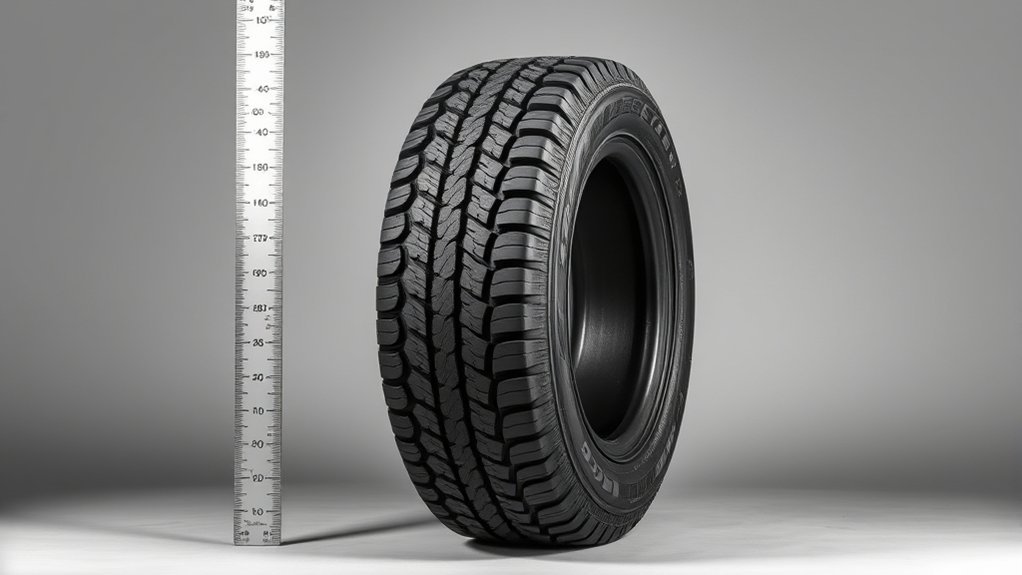
A 285/65R18 tire is about 32.6 inches tall when you use the standard tire-size formula. That height comes from two sidewalls plus the 18-inch rim. In metric terms, the calculated overall diameter is about 827.7 mm.
This size gives many light trucks and SUVs a taller stance than smaller factory sizes. It can also add ground clearance, but it may create rubbing if your wheel offset, suspension, fenders, or mud flaps leave limited room.
A 285/65R18 is close to a 33-inch tire, but the calculated height is about 32.6 inches. Treat it as “near 33,” not as an exact 33-inch tire.
285/65R18 Width, Sidewall, and Diameter
The size code breaks down into three main parts. The 285 is the section width in millimeters. The 65 is the aspect ratio, which means the sidewall height equals 65% of the section width. The 18 is the wheel diameter in inches. Tire sidewall codes also include construction and service information, so you should read the full sidewall before choosing a replacement tire. You can review how tire sidewall markings work through Les Schwab’s tire size guide.
| Measurement | Calculated Value | What It Means |
|---|---|---|
| Section width | 285 mm / 11.2 in | Approximate tire width from sidewall to sidewall |
| Sidewall height | 185.3 mm / 7.3 in | Distance from rim edge to tread |
| Overall diameter | 827.7 mm / 32.6 in | Total tire height |
| Circumference | 2,600.3 mm / 102.4 in | Distance traveled in one unloaded tire rotation |
| Theoretical revs per mile | About 619 | Simple calculation from circumference, not a tire-maker spec |
Note: Published tire dimensions can vary by brand, tread pattern, load range, and measuring rim. BFGoodrich notes that listed dimensions are average design values and that actual section height and width can vary by tire.
285/65R18 Dimensions in Inches and Millimeters
A 285/65R18 tire measures about 32.6 inches in overall diameter, 11.2 inches in section width, and 7.3 inches in sidewall height. In metric units, those same calculated values are about 827.7 mm, 285 mm, and 185.3 mm.
Tire Dimensions
Use these numbers as a starting point for fitment checks, not as a guarantee that every tire model will measure exactly the same after mounting and inflation.
| Measure | Metric | Inches |
|---|---|---|
| Section width | 285 mm | 11.2 in |
| Sidewall height | 185.3 mm | 7.3 in |
| Rim diameter | 457.2 mm | 18 in |
| Overall diameter | 827.7 mm | 32.6 in |
Metric To Inches Conversion
The conversion is simple once you know the formula. Start with the tire width, multiply it by the aspect ratio, then convert millimeters to inches.
- Sidewall height: 285 mm × 0.65 = 185.25 mm
- Sidewall in inches: 185.25 ÷ 25.4 = 7.29 inches
- Overall diameter: 18 inches + 7.29 inches + 7.29 inches = 32.59 inches
- Circumference: 32.59 × 3.1416 = 102.37 inches
That gives you a calculated tire height of about 32.6 inches. Real tire data sheets may show a slightly different diameter because manufacturers measure tires under controlled conditions on a specific rim width.
What Fits a 285/65R18 Tire?
A 285/65R18 tire fits an 18-inch wheel, but diameter alone does not confirm safe fitment. You also need the correct wheel width, offset, load index, speed rating, brake clearance, and space through the full steering and suspension range.
[Products Worth Considering]

The 22800 wheel stud installer makes replacing wheel studs quick and secure, saving time and effort during tire service. It uses a ratchet or impact wrench to pull new studs firmly into place, helping when existing studs are too long. Compatible with most automotive wheels and light-duty truck wheel studs, it’s designed for easy, tool-assisted installation.

Keep your tires properly inflated with this analog VONDIOR tire pressure gauge, designed for fast, easy readings without batteries. The swiveling, two-axis hose and large glow dial help you measure at any tire angle with instant visibility. Built with a protective rubber shield, it supports durable, low-maintenance use for cars and trucks.

This digital tire pressure gauge with built-in inflator helps you accurately check and adjust tire pressure for safer driving and better fuel efficiency. It supports multiple units (PSI, KPA, BAR, KG/CM²) and reads within 1% for reliable results. The 3-in-1 design inflates, deflates, and measures, with a quick-connect air chuck and compatible hose setup for cars, trucks, SUVs, RVs, and motorcycles.
Factory Fitment Options
You will most often see this size on trucks and SUVs that have enough wheel-well space for a 32.6-inch tire. Some vehicles may fit it at stock height. Others may need a leveling kit, different wheel offset, trimmed liners, or other changes.
| Fitment Check | What to Confirm | Why It Matters |
|---|---|---|
| Wheel diameter | 18 inches | The tire must match the wheel diameter exactly. |
| Wheel width | Usually around 8 to 10 inches, depending on tire model | The right width supports the sidewall and tread correctly. |
| Load index | Match or exceed your vehicle’s requirement | A tire with too little load capacity can be unsafe. |
| Wheel offset | Compare with your current wheel setup | Offset affects inner clearance and fender poke. |
| Turning clearance | Check full lock left and right | Rubbing often appears during turns, not while parked straight. |
Compatible Wheel Widths
Many 285/65R18 tires list an approved wheel width around 8 to 10 inches. Some LT versions may list a narrower approved range, such as 8.5 to 10 inches. Always follow the tire manufacturer’s specification for the exact model you plan to buy.
- 8-inch wheels: often give more sidewall bulge and rim protection.
- 8.5- or 9-inch wheels: usually give a balanced shape for road and trail use.
- 10-inch wheels: can create a wider stance but may increase fender or mud-flap clearance issues.
Warning: Do not choose a tire by size alone. Match the tire’s load index, speed rating, and inflation requirements to your vehicle. Never exceed the tire sidewall maximum or ignore the pressure listed on your vehicle’s door placard.
Common Size Alternatives
Several nearby tire sizes may work as alternatives, but each one changes height, width, clearance, gearing, and speedometer accuracy. Keep the total diameter change as small as possible unless you know your vehicle can handle the difference.
| Size | Calculated Diameter | Compared With 285/65R18 | Best For |
|---|---|---|---|
| 275/65R18 | 32.1 in | About 1.6% smaller | Slightly narrower fitment |
| 265/70R18 | 32.6 in | Nearly the same height | Similar height with less width |
| 295/65R18 | 33.1 in | About 1.6% larger | More width and slightly more height |
| 305/65R18 | 33.6 in | About 3.1% larger | Bolder stance, if clearance allows |
285/65R18 vs. 305/65R18
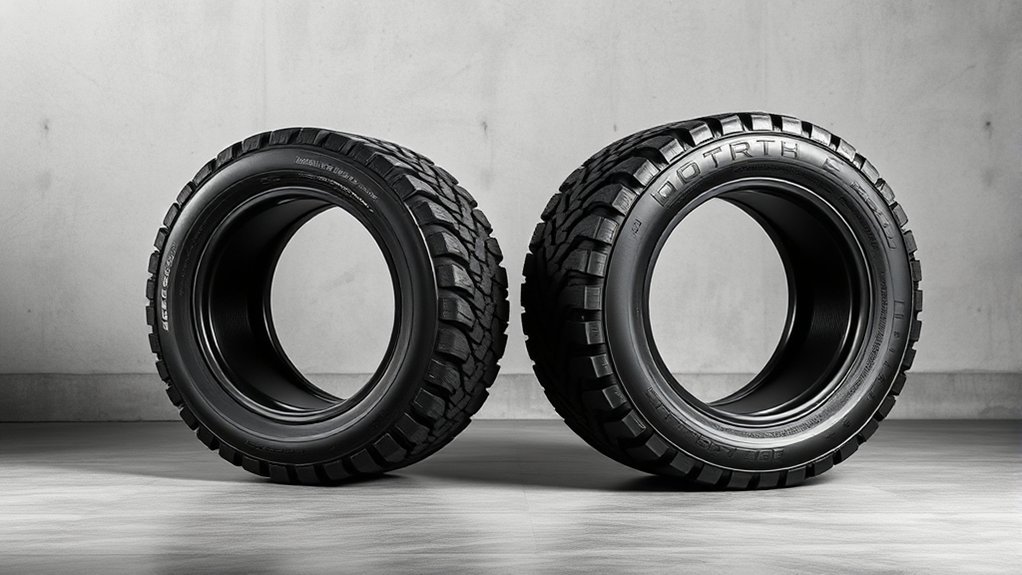
A 305/65R18 tire is wider and taller than a 285/65R18. The calculated diameter rises from about 32.6 inches to about 33.6 inches, and the section width grows from 285 mm to 305 mm. That extra size can fill the wheel well better, but it also raises the chance of rubbing.
| Measurement | 285/65R18 | 305/65R18 | Difference |
|---|---|---|---|
| Width | 285 mm / 11.2 in | 305 mm / 12.0 in | 305 is about 0.8 in wider |
| Sidewall | 7.3 in | 7.8 in | 305 adds about 0.5 in of sidewall |
| Overall diameter | 32.6 in | 33.6 in | 305 is about 1.0 in taller |
| Diameter change | Baseline | About +3.1% | Speedometer and clearance may change |
Choose 305/65R18 only if your vehicle has enough inner and outer clearance. Check the tire near the upper control arm, fender liner, mud flap, bumper edge, and rear wheel well under suspension compression.
How 285/65R18 Tires Affect Speedometer and MPG
A 285/65R18 tire affects your speedometer only when it differs from the size your vehicle is calibrated for. If the new tire is larger than stock, your actual speed will usually be higher than the speedometer shows. If the new tire is smaller than stock, your actual speed will usually be lower than the speedometer shows.
Use this formula:
Actual speed = indicated speed × new tire diameter ÷ original tire diameter
For example, if your original tire is a 275/65R18 at about 32.1 inches tall and you switch to a 285/65R18 at about 32.6 inches tall, the change is about 1.6%. At an indicated 60 mph, your actual speed would be about 61 mph.
Fuel economy is less predictable. A taller tire can lower engine rpm at a given road speed, but a heavier tire, aggressive tread, wider footprint, or poor gearing match can reduce efficiency. For the most accurate setup, recalibrate the speedometer after a significant size change and monitor real fuel use over several tanks.
Pro Tip: If your diameter change is close to or above 3%, check speedometer calibration, ABS behavior, transmission shift feel, and spare-tire compatibility before you commit.
Best Tire Types in 285/65R18
The best 285/65R18 tire type depends on where you drive, how much weight you carry, and how much road noise you can accept. Do not choose only by tread appearance. Match the tire’s load index, speed rating, winter rating, warranty, and terrain design to your vehicle.
- Highway-terrain tires: Best for daily driving, towing on pavement, and lower road noise.
- All-terrain tires: Best for mixed pavement, gravel, dirt roads, snow, and light trail use.
- Rugged-terrain tires: Best for drivers who want a tougher look and more off-road bite than a highway tire.
- Mud-terrain tires: Best for frequent mud, rocks, and deep trail use, but they can be louder and less efficient on pavement.
- Severe-snow-rated tires: Look for the Three-Peak Mountain Snowflake symbol if winter traction matters in your area.
Current all-terrain options vary widely. For example, Falken lists the Wildpeak A/T4W with up to a 65,000-mile limited tread life warranty for P-metric sizes and 60,000 miles for LT sizes on its official product page. Always confirm the warranty for your exact size, load range, and region before buying.
[Products Worth Considering]

AZUNO’s digital tire inflator delivers stable, accurate pressure readings with a bright LCD and a 0.1 resolution display for confident inflation. It supports one-handed operation for inflating and quick deflating, and it’s built with rugged steel and brass components for reliable shop or garage use. With multi-unit pressure display and compatibility across cars, SUVs, motorcycles, and trucks, it’s a convenient accessory for everyday tire maintenance.

ETENWOLF T300 is a calibrated digital tire pressure gauge for accurate readings from 3 to 200 PSI across light and heavy-duty vehicles. It includes thermal compensation for reliable performance in extreme cold or heat, with an auto shut-off to extend battery life and an LED for easier reading. The sturdy design supports rugged everyday use, making it ideal for pickups, RVs, and industrial applications.

Upgrade your 2024-2026 Tesla Model 3 Highland with REEVAA all-weather mud flaps designed for seamless fit along the original body lines. The set of four delivers strong splash protection against mud, gravel, and road debris while using OEM-grade durable materials. Installation is non-destructive with original hole positions and snap-in clips, and the aerodynamic design helps minimize impact on efficiency.
How to Check Tire Pressure the Right Way
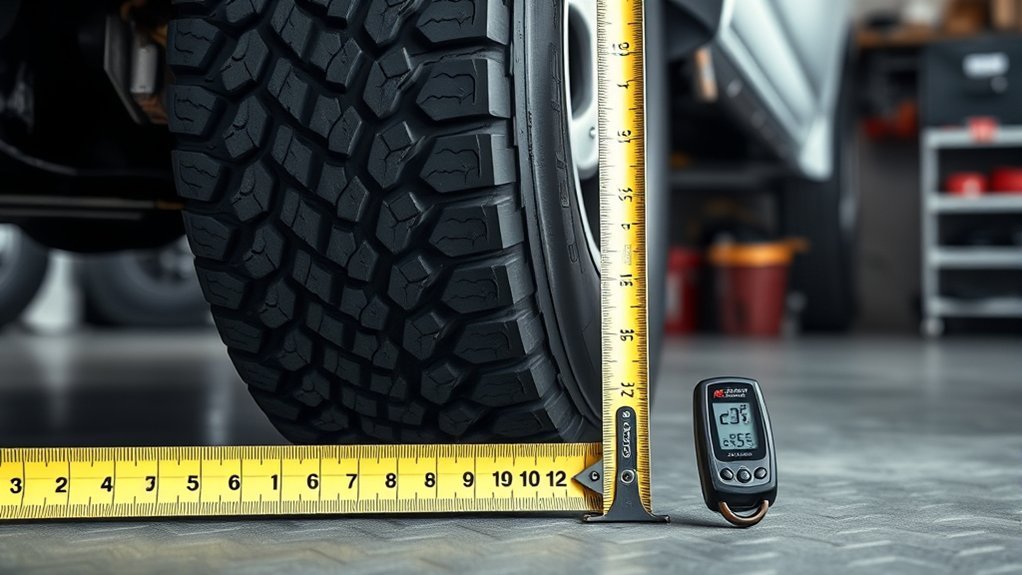
Check tire pressure when the tires are cold. NHTSA recommends checking all tires, including the spare, at least once a month when the vehicle has not been driven for at least three hours. You can read NHTSA’s tire-pressure guidance in its Tire Safety Month advisory.
- Park the vehicle for at least three hours.
- Find the recommended PSI on the driver’s door placard or in the owner’s manual.
- Remove the valve cap and press a reliable gauge firmly onto the valve stem.
- Add or release air until the tire matches the vehicle’s recommended pressure.
- Recheck the pressure and reinstall the valve cap.
- Repeat the process for all tires, including the spare if your vehicle has one.
Low pressure can increase heat, wear, and fuel use. Overinflation can reduce ride comfort and change tread contact. Your tire sidewall shows a maximum pressure, but that is not automatically the correct daily-use pressure for your vehicle.
How to Choose the Best 285/65R18 Tire
Choosing the best 285/65R18 tire starts with your vehicle’s requirements, not the tire size alone. A tire that fits the wheel may still be wrong if it has the wrong load index, wrong speed rating, or poor clearance.
- Check your original size: Compare the new diameter with your factory tire size.
- Match the load rating: Use a tire that meets or exceeds the vehicle manufacturer’s load requirement.
- Confirm wheel width: Check the tire model’s approved rim width range.
- Check clearance: Inspect fenders, liners, suspension parts, and mud flaps at full steering lock.
- Choose the right tread: Pick highway, all-terrain, rugged-terrain, mud-terrain, or winter-rated tires based on actual use.
- Plan for calibration: Recheck speedometer accuracy after a major size change.
Also compare real manufacturer specs. Tire Rack’s published data for a Goodyear Wrangler DuraTrac RT, for example, lists different dimensions and revolutions per mile for the standard 285/65R18 and LT285/65R18 versions. That is why your final choice should come from the exact tire model’s data sheet, not from the size code alone.
[Products Worth Considering]

Protect your spare wheel with a waterproof, dustproof tire cover made to resist sun and harsh weather. The elastic band design makes it easy to install and remove without tools, while reinforced stitching helps it keep its shape. Available in multiple sizes, it fits common RV, trailer, Jeep, SUV, and truck spare tires.

This calibrated digital tire pressure gauge delivers accurate readings within plus-minus 1 PSI for reliable tire maintenance. It features an illuminated nozzle and backlit LCD display to measure easily in dim areas, and offers four selectable units for versatile use. Automatic shutdown after 30 seconds helps conserve battery life for everyday convenience.

Check tire pressure with the Milton S-925 pencil gauge built for trucks, RVs, and bicycles. It features a single-head chuck with a built-in deflator valve, and it displays readings in both PSI and kPa for convenient use. The gauge is designed for accurate, repeatable pressure checks within its working range.
Frequently Asked Questions
Is a 285/65R18 the same as a 33-inch tire?
No. A 285/65R18 is close to a 33-inch tire, but its calculated diameter is about 32.6 inches. Some real tire models may measure slightly taller or shorter, so check the manufacturer’s published specs before using it as a true 33-inch replacement.
Which tire is taller, a 65 or 70 series?
A 70-series tire is taller than a 65-series tire when the tire width and wheel diameter stay the same. For example, a 285/70R18 is about 1.1 inches taller than a 285/65R18 because the sidewall is a larger percentage of the same width.
Which tire is taller, 285/65R18 or 295/65R18?
A 295/65R18 is taller. A 285/65R18 calculates to about 32.6 inches tall, while a 295/65R18 calculates to about 33.1 inches tall. The 295 is also wider, so you should check clearance before switching.
Are 285/65R18 tires good for trucks and SUVs?
Yes, 285/65R18 is a popular size for many trucks and SUVs, especially when drivers want a taller stance and more sidewall than smaller factory sizes. Fitment still depends on wheel width, offset, suspension setup, load rating, and available clearance.
Will 285/65R18 tires affect my speedometer?
They can, but only if they differ from your vehicle’s calibrated tire size. If the 285/65R18 is taller than your original tire, your actual speed will usually be slightly higher than the speedometer shows. Use the formula: actual speed = indicated speed × new diameter ÷ original diameter.
Conclusion
A 285/65R18 tire gives you a strong mix of height, width, and sidewall for many trucks and SUVs. The calculated size is about 32.6 inches tall, 11.2 inches wide, and 7.3 inches in sidewall height, making it close to a 33-inch tire without being exactly the same.
Before you buy, check your original tire size, wheel width, load rating, pressure label, and full steering clearance. Then compare the exact manufacturer specs for the tire model you want. That final check helps you avoid rubbing, inaccurate speed readings, poor ride quality, and unsafe load mismatch.
Sources
- Les Schwab Tire Size Guide — supports tire code, width, aspect ratio, construction, and wheel-diameter explanations.
- NHTSA TireWise — supports tire safety, tread checks, and maintenance guidance.
- NHTSA Tire Safety Month Advisory — supports monthly cold tire pressure checks and the safety role of proper inflation.
- Tire Rack Goodyear Wrangler DuraTrac RT Specs — supports real-world variation in diameter, rim width, load range, and revolutions per mile.
- Falken Wildpeak A/T4W — supports current all-terrain warranty and feature examples.
- BFGoodrich All-Terrain T/A KO3 — supports the note that tire dimensions are average design values and can vary by tire and measuring rim.

