
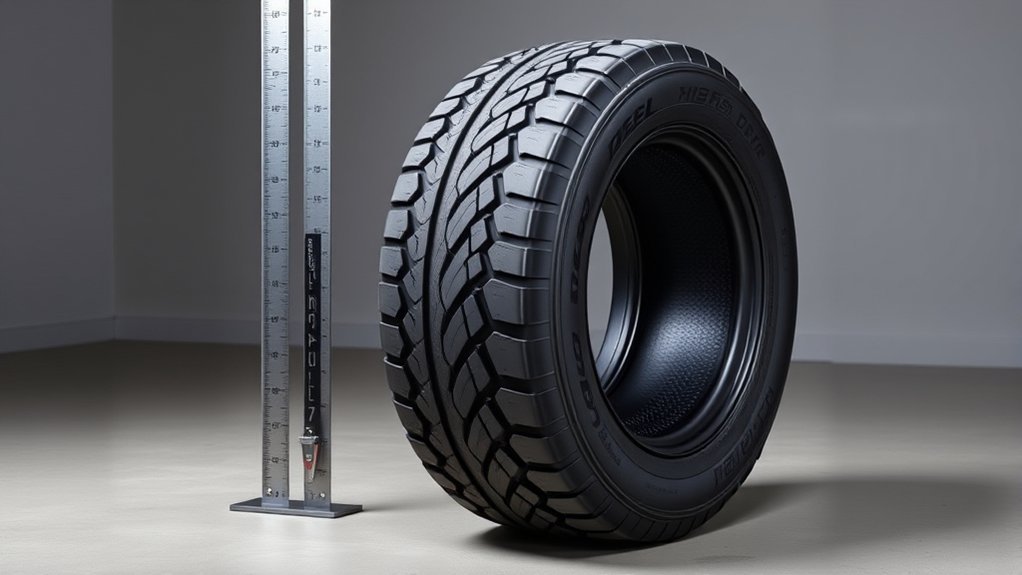
A 285/70R17 tire is a near-33-inch tire size commonly used on trucks, SUVs, and off-road builds with 17-inch wheels. Its nominal dimensions are about 32.7 inches tall, 11.2 inches wide, and 7.85 inches of sidewall. Those numbers are useful for comparing clearance, gearing, speedometer accuracy, and wheel fitment before you buy.
Quick Answer
A 285/70R17 tire is about 32.7 inches tall, 11.2 inches wide, and fits a 17-inch wheel. It is close to a 33-inch tire, but it is usually narrower and slightly shorter than a 33×12.50R17. Speedometer error depends on your original tire size, not the 285/70R17 size alone.
Key Takeaways
- A 285/70R17 tire has a nominal diameter of about 32.7 inches.
- Its section width is about 11.2 inches, based on 285 mm divided by 25.4.
- Its sidewall height is about 7.85 inches, because 70% of 285 mm equals 199.5 mm.
- A 285/70R17 is close to a 33-inch tire, but it is not the same as a 33×12.50R17.
- Fitment depends on vehicle year, trim, suspension, wheel offset, rim width, load rating, and clearance.
What Does 285/70R17 Mean?
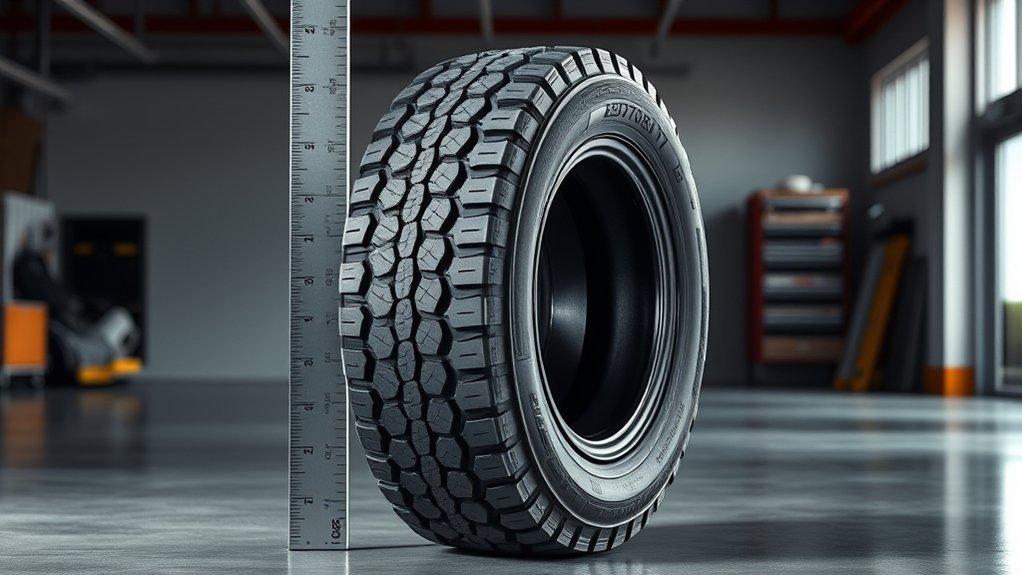
The tire code 285/70R17 breaks into four parts. The 285 is the tire’s nominal section width in millimeters. The 70 is the aspect ratio, meaning the sidewall height is 70% of the tire’s width. The R means radial construction. The 17 means the tire mounts on a 17-inch wheel.
This format follows the same basic sidewall logic used across many passenger and light-truck tires: width in millimeters, aspect ratio as a percentage, construction type, wheel diameter, and then the tire’s service description such as load index and speed rating. Michelin’s tire sidewall guide explains that the load rating and speed rating should also be checked before selecting replacement tires.
Note: Tire-size math gives nominal dimensions. The measured diameter and width can vary by tire brand, tread design, load range, wheel width, inflation pressure, and tread wear. Always check the exact manufacturer spec sheet for the tire you plan to buy.
How Tall Is a 285/70R17 Tire?
A 285/70R17 tire is about 32.7 inches tall. More precisely, the calculated unloaded diameter is about 32.71 inches. The same size is about 11.22 inches wide, with a sidewall height of about 7.85 inches.
| Measurement | 285/70R17 Nominal Size | How It Is Found |
|---|---|---|
| Section width | 285 mm / 11.22 in | 285 ÷ 25.4 |
| Sidewall height | 199.5 mm / 7.85 in | 285 × 0.70 ÷ 25.4 |
| Overall diameter | 32.71 in / about 831 mm | 17 + 7.85 + 7.85 |
| Circumference | About 102.76 in | Diameter × 3.1416 |
| Revolutions per mile | About 616–617 | 63,360 ÷ circumference |
These numbers line up with common tire-size calculators, but they should be treated as planning numbers rather than guaranteed physical measurements. Tire Rack’s tire-dimension guide notes that calculated tire dimensions are estimates and that real tire dimensions can differ from manufacturer specs.
Tire Size Breakdown
The easiest way to understand the size is to calculate one sidewall first. A 285 mm width multiplied by a 70% aspect ratio gives a sidewall of 199.5 mm. Divide that by 25.4 and you get 7.85 inches. Because the tire has one sidewall above the wheel and one below it, you double that sidewall height and add the 17-inch wheel.
285/70R17 diameter = 17 inches + 7.85 inches + 7.85 inches = about 32.71 inches.
Exact Height And Width
The exact calculated width is 11.22 inches, but tire makers may list slightly different published section widths depending on the measuring rim. Actual section width can also change when the tire is mounted on a narrower or wider wheel. That is why a tire listed as 285 mm wide may not measure exactly 285 mm once installed on your vehicle.
Fitment And Comparison
A 285/70R17 is often used as a practical “near-33” tire because it gives more sidewall and ground clearance than many factory truck sizes while staying narrower than a 33×12.50R17. That narrower footprint can help with fender clearance, steering clearance, and weight, but fitment still depends on the exact vehicle and wheel setup.
285/70R17 Width, Sidewall, and Diameter
A 285/70R17 tire gives you a wide footprint, a tall sidewall, and a diameter that sits just below many 33-inch tire listings. The width helps traction, the sidewall helps ride comfort and off-road compliance, and the overall diameter affects ground clearance, gearing, speedometer accuracy, and odometer accuracy.
For rim width, many LT 285/70R17 tires are commonly listed for about 7.5- to 9-inch wheels, while some passenger-style listings may show up to about 9.5 inches. TireSize.com’s 285/70R17 listing shows 7.5–9.5 inches for passenger tires and 7.5–9 inches for LT tires, with specs varying by manufacturer.
Warning: Do not choose a tire by diameter alone. Verify the tire size, load index, speed rating, wheel width, and inflation requirements against your vehicle’s tire placard, owner’s manual, and the tire manufacturer’s spec sheet.
285/70R17 vs 33-Inch Tires
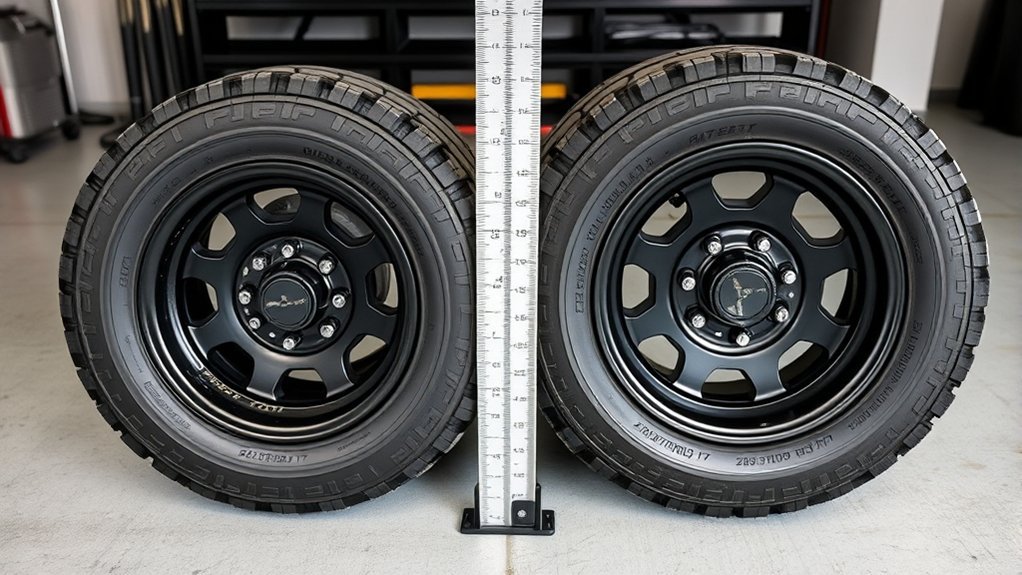
A 285/70R17 is close to a 33-inch tire, but it is not the same as a 33×12.50R17. The 285/70R17 is usually slightly shorter and much narrower. That difference can matter if you are trying to avoid rubbing, preserve steering clearance, or keep the tire lighter.
| Size | Approx. Diameter | Approx. Width | Main Difference |
|---|---|---|---|
| 285/70R17 | 32.7 in | 11.2 in | Narrower near-33 size |
| 33×12.50R17 | About 33 in | About 12.5 in | Wider, heavier, more clearance demand |
If you want the look of a 33-inch tire but need a narrower section width, 285/70R17 is often the cleaner fit. If you want the wider stance and footprint of a 33×12.50R17, plan for more clearance checks around the fender liner, upper control arm, sway bar, and mud flaps.
Will 285/70R17 Affect Speedometer Accuracy?
Yes, a 285/70R17 can affect speedometer and odometer accuracy if it is taller or shorter than your original tire. The direction is simple: a taller tire travels farther with each revolution, so the speedometer usually reads slower than your actual road speed. A shorter tire does the opposite.
The exact error depends on the original tire diameter. Use this formula:
Actual speed = indicated speed × new tire diameter ÷ original tire diameter.
Tire Rack’s light-truck fitment guide uses this same diameter comparison method to estimate actual speed after a tire-size change.
Speedometer Reading Difference
Here are examples using a 285/70R17 diameter of 32.71 inches and an indicated speed of 60 mph:
| Original Tire Size | Approx. Original Diameter | Actual Speed at 60 mph Indicated | Approx. Error |
|---|---|---|---|
| 265/70R17 | 31.6 in | 62.1 mph | About 3.5% fast actual speed |
| 245/75R17 | 31.5 in | 62.3 mph | About 3.8% fast actual speed |
| 265/65R17 | 30.6 in | 64.1 mph | About 6.9% fast actual speed |
This is why a blanket “7% slow” claim is not accurate for every vehicle. A 7% change is possible if your stock tire is much smaller, but it is not guaranteed.
Odometer Mileage Impact
If the 285/70R17 is taller than the factory tire, your odometer may record fewer miles than you actually travel. That can affect maintenance intervals, fuel-economy calculations, lease mileage, and resale records. If the tire is shorter than the factory tire, the odometer can overcount mileage instead.
Recalibration And Tolerance
Large tire-diameter changes can also affect ABS, traction control, stability control, transmission shift behavior, and driver-assist systems. Tire Rack’s plus-sizing guidance explains that large changes in overall diameter can alter speedometer accuracy and the effectiveness of ABS, traction control, and vehicle stability systems.
- Check the original tire size on the door placard and owner’s manual.
- Compare the original diameter with the 285/70R17 diameter.
- Use a GPS speed reading to verify real-world error after installation.
- Recalibrate the speedometer if the change is large enough to matter.
- Confirm that TPMS, ABS, ESC, and traction-control behavior remain normal.
Best 285/70R17 Equivalent Sizes
The best equivalent sizes stay close to the 285/70R17’s overall diameter while changing width, sidewall, or tire category. These sizes are not automatic fitments; they are comparison points to discuss with a tire shop or check against your vehicle’s clearance.
| Size | Approx. Diameter | Approx. Width | Best For |
|---|---|---|---|
| 285/70R17 | 32.71 in | 11.22 in | Baseline near-33 size |
| 255/80R17 | 33.06 in | 10.04 in | Narrow/tall “pizza cutter” setup |
| 295/70R17 | 33.26 in | 11.61 in | Slightly taller and wider stance |
| 33×10.50R17 | About 33 in | About 10.5 in | Narrow 33-inch fitment |
When comparing equivalent sizes, focus on diameter first, then width, load rating, wheel width, and clearance. A size that looks close on paper can still rub if the tread is wide, the sidewall is square, or the wheel offset pushes the tire outward.
285/70R17 vs 285/75R17 and 295/70R17
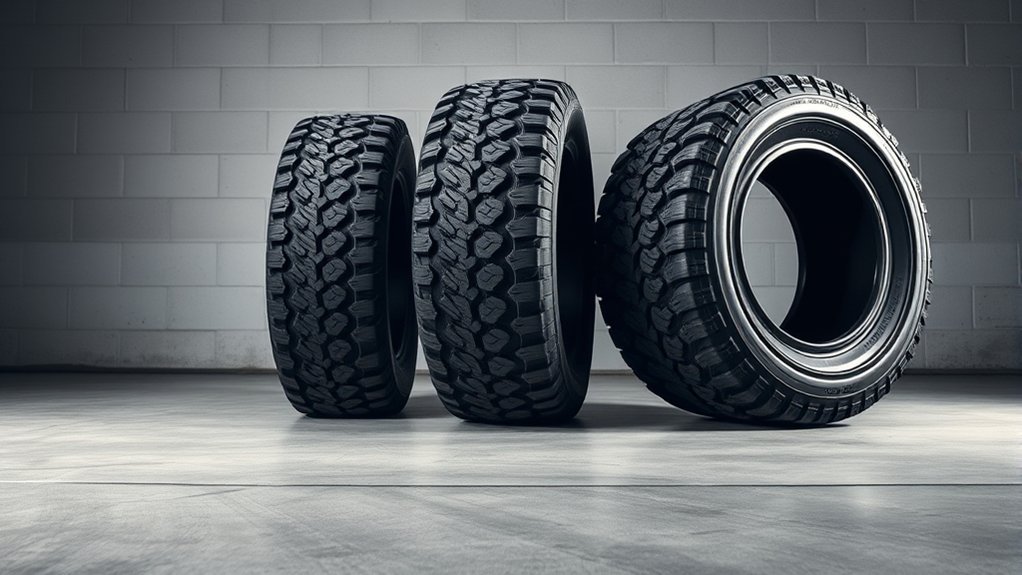
The 285/75R17 adds height without adding width. The 295/70R17 adds both height and width. The right choice depends on whether you want more ground clearance, more footprint, or the easiest fitment.
| Size | Approx. Diameter | Approx. Width | Compared With 285/70R17 |
|---|---|---|---|
| 285/70R17 | 32.71 in | 11.22 in | Baseline |
| 285/75R17 | 33.83 in | 11.22 in | About 1.12 in taller, same nominal width |
| 295/70R17 | 33.26 in | 11.61 in | About 0.55 in taller and 0.39 in wider |
Choose 285/70R17 if you want a near-33-inch tire with relatively manageable width. Choose 285/75R17 if height matters more than width. Choose 295/70R17 if you want a wider footprint and can confirm the extra clearance.
[Products Worth Considering]

Measure tire tread depth quickly and accurately with this LUMITECO dial gauge that reads in 1/32" increments up to 14/32". The color-coded green/yellow/red zones make it easy to judge tire wear and know when replacement is needed. A rugged, compact design with a protective pouch helps keep the gauge ready for use on cars, trucks, motorcycles, and more.

Protect your spare wheel with a waterproof, dustproof tire cover made to resist sun and harsh weather. The elastic band design makes it easy to install and remove without tools, while reinforced stitching helps it keep its shape. Available in multiple sizes, it fits common RV, trailer, Jeep, SUV, and truck spare tires.

The SAFELIFE dial tire tread depth gauge measures tread depth in 1/32 inch increments with clear, easy-to-read 2-inch dial face. Color zones using a traffic light system help you quickly judge whether tread is low, marginal, or ample for safer driving. Built with a durable zinc cast body and a metal detect probe for precise, comfortable use across cars, motorcycles, trucks, and buses.
What Vehicles Fit 285/70R17 Tires?
285/70R17 tires are commonly used on light trucks and SUVs such as certain Jeep Wrangler, Toyota Land Cruiser, Toyota 4Runner, Toyota Tacoma, Ford F-150, Chevrolet Silverado, GMC Sierra, Ram 1500, and Nissan Frontier builds. That does not mean the size fits every year, trim, wheel, or suspension setup without changes.
Before installing 285/70R17 tires, check:
- Factory tire size on the driver-door placard.
- Owner’s manual or manufacturer-approved alternate sizes.
- Wheel diameter and rim width.
- Wheel offset and backspacing.
- Upper control arm, sway bar, mud flap, fender liner, and bumper clearance.
- Brake clearance and spare-tire storage.
- Load index, speed rating, and LT or P-metric construction.
NHTSA tire safety guidance advises choosing the same size as the vehicle’s original tires or another size recommended by the manufacturer, and checking the tire placard, owner’s manual, or the tire sidewall if you are unsure.
Pro Tip: Test clearance at full steering lock in both directions and with the suspension compressed. Many rubbing problems show up only while turning, reversing, braking, or flexing off-road.
[Products Worth Considering]

The 22800 wheel stud installer makes replacing wheel studs quick and secure, saving time and effort during tire service. It uses a ratchet or impact wrench to pull new studs firmly into place, helping when existing studs are too long. Compatible with most automotive wheels and light-duty truck wheel studs, it’s designed for easy, tool-assisted installation.

These aluminum alloy tire valve stem caps with an O-ring seal help protect valve stems from corrosion while adding a clean, stylish look to your vehicle. The universal fit works across cars, trucks, motorcycles, bicycles, and more, making them an easy upgrade for everyday driving and off-road use. Installation is quick, and the included four-pack keeps all your tires dressed and protected.

This digital tire pressure gauge with built-in inflator helps you accurately check and adjust tire pressure for safer driving and better fuel efficiency. It supports multiple units (PSI, KPA, BAR, KG/CM²) and reads within 1% for reliable results. The 3-in-1 design inflates, deflates, and measures, with a quick-connect air chuck and compatible hose setup for cars, trucks, SUVs, RVs, and motorcycles.
How to Choose a 285/70R17 Tire
Choosing the right 285/70R17 tire is not just about the size stamped on the sidewall. Two tires with the same size can have different weight, tread width, load range, speed rating, sidewall stiffness, snow rating, road noise, and actual measured diameter.
- Match or exceed the required load index. Do not go below the vehicle manufacturer’s required load rating.
- Check the speed rating. The tire’s speed rating should meet the vehicle’s requirement and your driving use.
- Choose LT or P-metric carefully. LT tires are often stronger and heavier; P-metric tires may ride softer but may not suit heavier truck use.
- Pick the tread for your terrain. Highway terrain is quieter, all-terrain is balanced, mud terrain is more aggressive, and winter-rated tires perform better in snow and cold.
- Check real manufacturer specs. Compare actual diameter, tread width, weight, tread depth, and approved rim width.
- Plan for calibration. If the new diameter differs much from stock, verify speedometer and odometer accuracy.
For speedometer planning, Discount Tire’s speedometer accuracy guide explains that replacing OE tires with a different tire size can affect the accuracy of the speedometer.
[Products Worth Considering]

Upgrade your 2024-2026 Tesla Model 3 Highland with REEVAA all-weather mud flaps designed for seamless fit along the original body lines. The set of four delivers strong splash protection against mud, gravel, and road debris while using OEM-grade durable materials. Installation is non-destructive with original hole positions and snap-in clips, and the aerodynamic design helps minimize impact on efficiency.

Monitor tire tread wear with a smart, color-coded depth gauge that shows clear condition ranges at a glance. The bar is range marked for fast, easy readings, helping you maintain safer traction and performance. Each gauge is portable with a pocket clip, and the set includes 20 units for daily use and sharing.

Accurately measure tire tread depth with a calibrated gauge marked from 0 to 1 inch in 1/32 inch increments. The color-coded bar helps you quickly identify tread condition ranges, supporting safe driving for trucks, motorcycles, automobiles, and passenger vehicles.
Frequently Asked Questions
Is 285 the same as 33-inch tires?
No. A 285/70R17 is about 32.7 inches tall, so it is close to a 33-inch tire but not exactly the same. The common 33×12.50R17 size is usually wider and slightly taller than a 285/70R17.
How much taller is a 35-inch tire than a 285/70R17?
A 35-inch tire is about 2.3 inches taller in overall diameter than a 285/70R17. Because only half of that increase sits below the axle, the ground-clearance gain is roughly half the diameter difference, or about 1.15 inches before real-world tire deflection.
What is the actual height of a 285/70R17 tire?
The calculated height is about 32.71 inches, or about 831 mm. Actual measured height can vary by manufacturer, tread pattern, load range, inflation pressure, wheel width, vehicle weight, and tread wear.
Is 285/70R17 the same as 33×12.50R17?
No. A 285/70R17 is about 32.7 inches tall and 11.2 inches wide. A 33×12.50R17 is typically about 33 inches tall and 12.5 inches wide. The 33×12.50R17 usually needs more clearance because it is much wider.
Will 285/70R17 tires fit on stock wheels?
They may fit some stock 17-inch wheels, but you must confirm the wheel width, offset, and tire manufacturer’s approved rim range. Many LT 285/70R17 tires list a 7.5- to 9-inch rim range, but exact specs vary by tire model.
Do I need to recalibrate my speedometer for 285/70R17 tires?
You may need recalibration if the 285/70R17 is meaningfully taller or shorter than your original tire. Compare the new diameter to your factory tire diameter, then verify actual road speed with GPS or a professional calibration tool.
Are 285/70R17 tires good for off-road driving?
They can be, especially in all-terrain or mud-terrain tread designs. The tall sidewall can help ride comfort and off-road compliance, while the 11.2-inch nominal width gives a useful footprint. Off-road performance still depends on tread design, load range, pressure, vehicle weight, and terrain.
Conclusion
A 285/70R17 tire is a strong near-33-inch option if you want more height, more sidewall, and a wider footprint than many factory truck and SUV tire sizes. Its nominal 32.7-inch diameter, 11.2-inch width, and 7.85-inch sidewall make it useful for clearance and off-road performance, but it still needs careful fitment checks. Before buying, compare it with your original tire size, confirm rim width and load rating, check for rubbing, and plan for speedometer recalibration if the diameter change is significant.
Sources
- Michelin USA Tire Load Rating & Speed Rating Guide — backs up tire sidewall code, load rating, and speed rating guidance.
- NHTSA Tire Safety Brochure — backs up checking the tire placard, owner’s manual, and manufacturer-recommended sizes.
- Tire Rack Tire Dimension Calculation Guide — backs up the tire diameter calculation method and nominal-size warning.
- Tire Rack Light Truck Tire Fitment Guide — backs up speedometer, gearing, and ground-clearance formulas.
- Tire Rack Revolutions Per Mile Guide — backs up the note that revs per mile vary with tire deflection and real-world conditions.
- TireSize.com 285/70R17 Size Listing — backs up nominal 285/70R17 diameter, width, circumference, revolutions per mile, and rim-width ranges.
