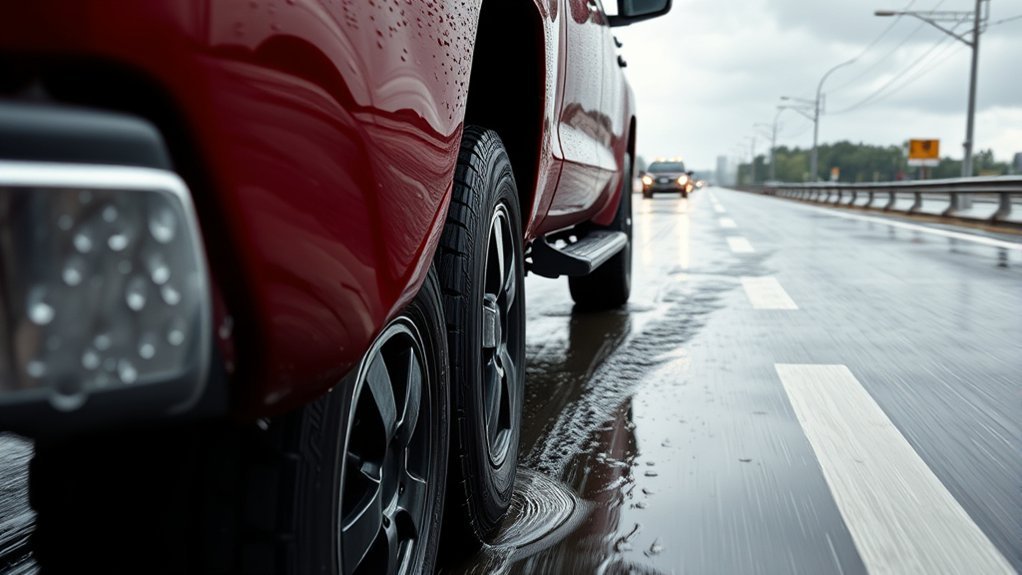
Hydroplaning in a Toyota Tundra happens when water builds between the tires and the road, reducing the tire’s contact with the pavement. You cannot control the rain, but you can reduce the risk by keeping the tires in good condition, using the correct cold tire pressure, slowing down early, and avoiding sudden steering or braking on wet roads.
Quick Answer
To reduce hydroplaning risk in a Toyota Tundra, check tread depth, keep tires inflated to the driver-door placard pressure, slow down before standing water, avoid cruise control in rain, and leave extra following distance. If hydroplaning starts, ease off the accelerator, keep steering smoothly, and avoid hard braking.
Key Takeaways
- Use 4/32 inch of tread as a wet-weather warning point; do not wait until the legal minimum if you often drive in rain.
- Set tire pressure when the tires are cold, using the Tundra’s tire placard or owner’s manual—not the maximum number on the tire sidewall.
- Slow down more than usual in heavy rain, puddles, ruts, and standing water because hydroplaning risk rises with speed and water depth.
- Do not use cruise control in wet weather because you may need to reduce speed immediately if traction drops.
At a Glance
| Time Required | 5–10 minutes for a basic tire pressure and tread check |
| Difficulty | Easy for inspection; professional help recommended for alignment, balancing, or tire replacement |
| Tools Needed | Tire pressure gauge, tread depth gauge or coins, flashlight, and your Tundra tire placard/owner’s manual |
| Cost | Usually under $15 for a gauge; tire service or replacement varies by tire size and condition |
Top Tips to Reduce Hydroplaning Risk in Your Tundra
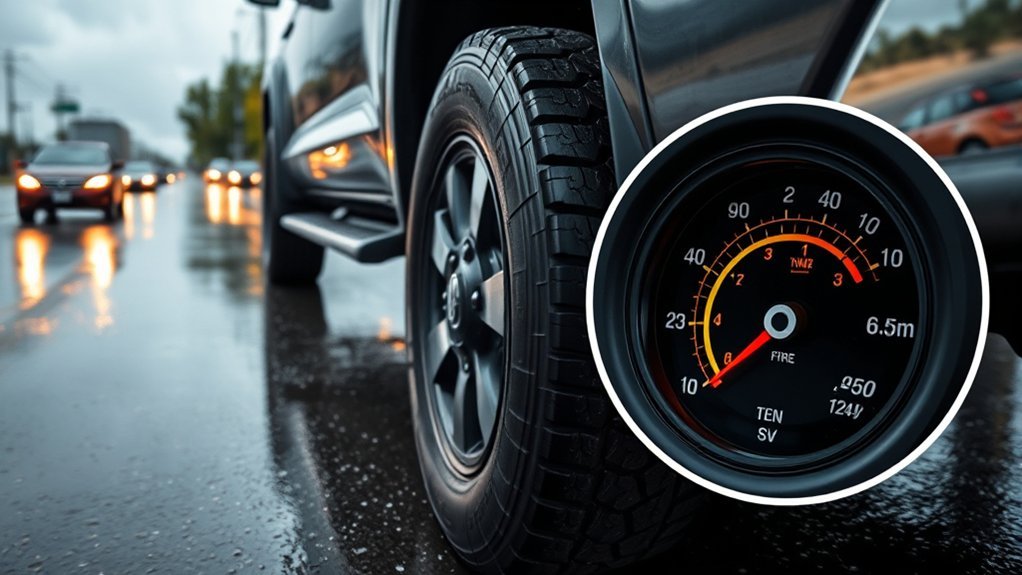
Hydroplaning is not only a car problem. A Toyota Tundra is a heavy pickup, but weight, four-wheel drive, traction control, and a tall ride height do not guarantee grip when the tires ride on top of water. Once the tire tread cannot move water away fast enough, steering and braking response can drop quickly.
- Check tread depth before rainy driving. Tread grooves help move water away from the contact patch. Shallow tread leaves less room for water to escape.
- Use the correct cold tire pressure. Look at the tire and loading information label on the driver’s door jamb or your Toyota owner’s manual. Do not use the maximum pressure molded on the tire sidewall as your normal setting.
- Slow down before puddles and shiny pavement. Hydroplaning risk rises as speed and water depth increase.
- Increase following distance. Wet roads can lengthen stopping distance, especially with worn tires or a loaded truck.
- Turn off cruise control in rain. You need direct control of the accelerator if traction changes suddenly.
Warning: Never drive through flooded roads or standing water when you cannot judge the depth. Hydroplaning is only one risk; deep water can also hide road damage, stall the engine, or sweep a vehicle off the roadway.
How Hydroplaning Happens on Wet Roads
Hydroplaning occurs when the tire tread and road surface cannot clear water quickly enough. A wedge of water forms in front of the tire and can lift part of the tire away from the pavement. The exact speed where this happens is not fixed because it depends on water depth, tread depth, tire inflation pressure, vehicle speed, pavement texture, and road drainage.
The Texas Department of Transportation notes that hydroplaning potential increases as roadway water depth increases. AAA also warns that even at speeds as low as 35 mph, new tires can lose some contact with the road in wet conditions.
The safer habit is simple: slow down before the water, not after the truck starts to slide.
Why Tire Tread Depth Matters for Hydroplaning Prevention
Tire tread depth is one of your Tundra’s main defenses against hydroplaning. The grooves in the tread give water a path to escape. As tread wears down, those channels become shallower and less effective, especially at highway speeds or during heavy rain.
Use these practical tread-depth levels for rainy driving:
| 6/32 inch or deeper | Generally better wet-road confidence, assuming the tires are properly inflated and not damaged. |
| 4/32 inch | A wet-weather caution point. Plan replacement soon if you drive often in rain, tow, or travel at highway speeds. |
| 2/32 inch | Replace now. This is the tread-wear indicator level and should not be treated as a wet-weather target. |
The National Highway Traffic Safety Administration explains that tires should be replaced when tread is worn to 1/16 inch, which equals 2/32 inch. AAA tire testing also found that tires worn to 4/32 inch had much longer wet stopping distances than new tires, including a 44% increase for the Ford F-150 test vehicle.
Pro Tip: A tread depth gauge is more reliable than a coin test and costs very little. Check the inner, center, and outer tread grooves on each tire because uneven wear can hide on one side.
[Products Worth Considering]

Measure tire tread depth quickly and accurately with this LUMITECO dial gauge that reads in 1/32" increments up to 14/32". The color-coded green/yellow/red zones make it easy to judge tire wear and know when replacement is needed. A rugged, compact design with a protective pouch helps keep the gauge ready for use on cars, trucks, motorcycles, and more.

Monitor tire tread wear with a smart, color-coded depth gauge that shows clear condition ranges at a glance. The bar is range marked for fast, easy readings, helping you maintain safer traction and performance. Each gauge is portable with a pocket clip, and the set includes 20 units for daily use and sharing.

The SAFELIFE dial tire tread depth gauge measures tread depth in 1/32 inch increments with clear, easy-to-read 2-inch dial face. Color zones using a traffic light system help you quickly judge whether tread is low, marginal, or ample for safer driving. Built with a durable zinc cast body and a metal detect probe for precise, comfortable use across cars, motorcycles, trucks, and buses.
How to Check Tread Depth on a Toyota Tundra
- Park safely on level ground. Set the parking brake and turn the front wheels slightly if you need a better view of the front tires.
- Use a tread depth gauge. Insert the gauge into a main tread groove and read the depth in 32nds of an inch.
- Check several spots on each tire. Measure the inner edge, center, and outer edge because alignment or suspension issues can cause uneven wear.
- Look for tread-wear bars. If the raised bars across the grooves are level with the surrounding tread, the tire is at the replace-now point.
- Use the penny test only as a quick backup. Place a penny into the groove with Lincoln’s head upside down. If you can see the top of Lincoln’s head, the tire is ready for replacement.
If your Tundra’s tires show cupping, feathering, cracks, bulges, exposed cords, or repeated pressure loss, have them inspected by a qualified tire professional before driving in heavy rain.
[Products Worth Considering]

Accurately measure tire tread depth with a calibrated gauge marked from 0 to 1 inch in 1/32 inch increments. The color-coded bar helps you quickly identify tread condition ranges, supporting safe driving for trucks, motorcycles, automobiles, and passenger vehicles.
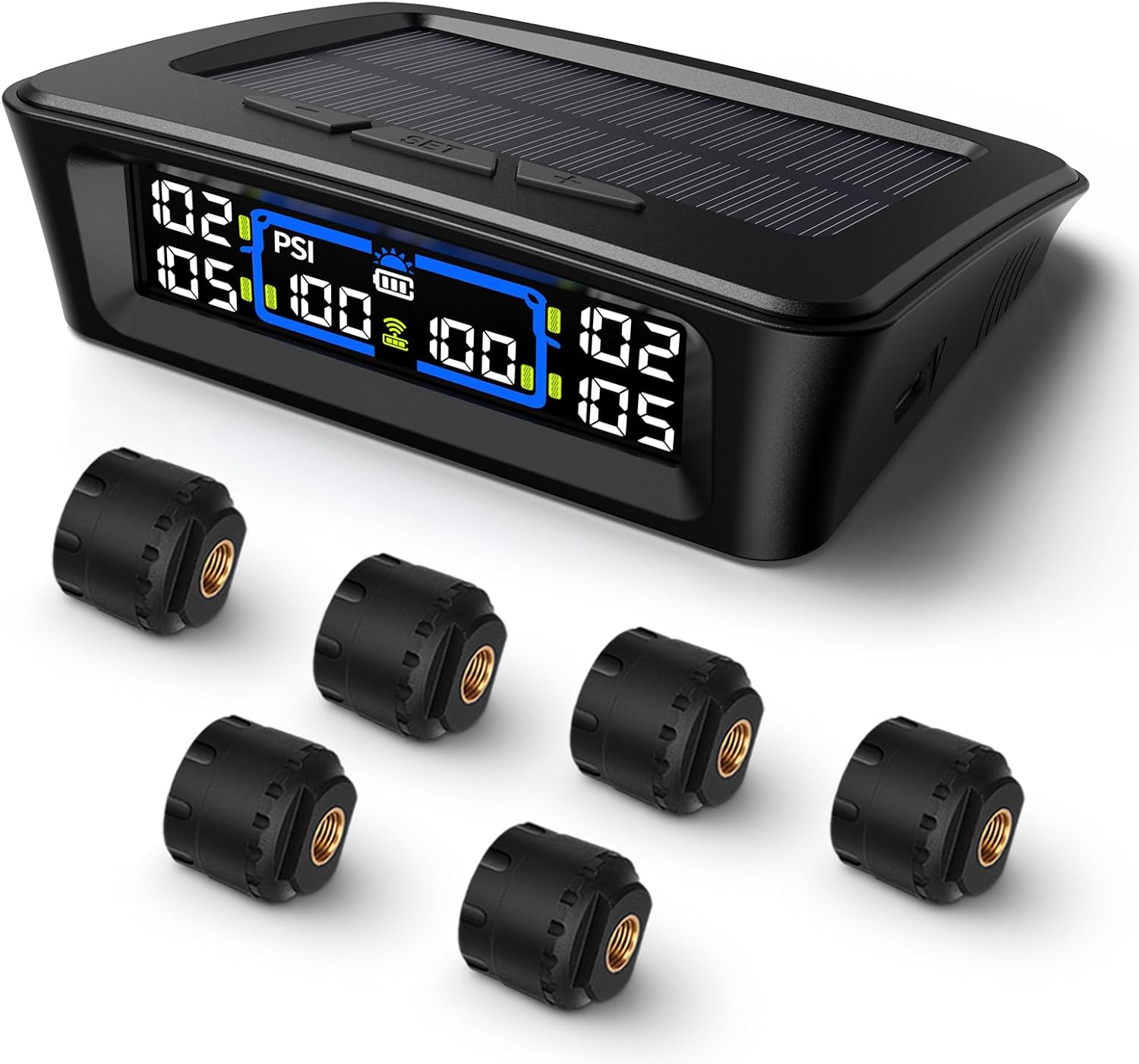
The Tymate TM12 RV TPMS delivers real-time tire pressure and temperature monitoring with a stable 433Hz display for safer long-distance driving. It supports simultaneous monitoring across vehicle and trailer zones, includes six alarm modes for pressure, temperature, leakage, battery, and signal loss, and features easy DIY installation with auto calibration. Power is supplied via USB-C charging or solar recharging, with a wide 0–144 PSI range and up to 50 ft signal coverage for RVs and towable trailers.

These universal tire valve stem caps help protect valve cores from dust, debris, and moisture while helping maintain stable tire pressure. The corrosion-resistant metal construction and sealed design provide reliable protection in road grime, mud, and winter conditions. Twist-on installation makes them quick to fit on cars, SUVs, trucks, and motorcycles.
Maintaining Proper Tire Pressure for Safety
Correct tire pressure helps the tread keep its intended shape on the road. Underinflation can reduce handling, create extra heat, and distort the contact patch. Overinflation can reduce the amount of tread contacting the road. Both can hurt wet-road grip.
For a Toyota Tundra, use the recommended cold tire inflation pressure shown on the tire and loading information label or in the owner’s manual. Toyota’s owner resources for the Tundra direct owners to the vehicle’s tire inflation pressure information, and NHTSA explains that the vehicle manufacturer—not the tire sidewall maximum—determines the correct pressure for the vehicle.
- Check pressure when the tires are cold. A cold tire has usually been parked for at least three hours.
- Check at least monthly. Check more often during rainy seasons, sharp temperature swings, towing, hauling, or long trips.
- Do not rely only on TPMS. The tire pressure monitoring system is a warning system, not a substitute for a manual gauge check.
- Recheck after adding air. Small pressure differences can matter more when roads are slick.
Note: The pressure printed on the tire sidewall is the tire’s maximum permissible pressure under specified conditions. It is not the same as your Tundra’s recommended everyday cold tire pressure.
How to Manage Speed to Avoid Hydroplaning
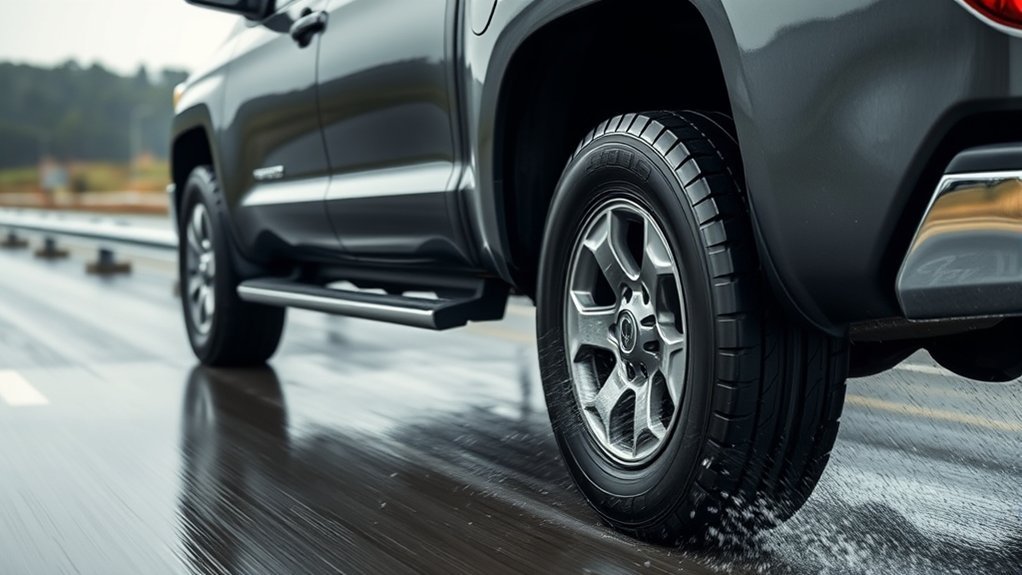
Speed is one of the biggest factors you can control. A common rule is to reduce speed by 5–10 mph in rain, but that may not be enough in heavy rain, standing water, worn pavement ruts, or when towing. Match your speed to the amount of water on the road, not just the posted limit.
Recognize Wet Conditions
Hydroplaning risk is higher when you see:
- Standing water across the lane
- Shiny pavement or water flowing over the road
- Deep wheel ruts filled with rainwater
- Puddles at lane edges or near clogged drains
- Spray coming from vehicles ahead
When possible, drive in the tire tracks of the vehicle ahead because those tracks may have less standing water. Keep enough distance so you can see and react.
Adjust Speed Accordingly
Reduce speed before you reach water. Do not brake hard once your tires are already in a puddle. A smooth speed reduction gives the tires more time to clear water and helps the truck stay settled.
| Road Condition | Safer Tundra Driving Response |
|---|---|
| Light rain, no puddles | Slow slightly, increase following distance, and stay alert for slick spots. |
| Heavy rain or road spray | Slow more, turn off cruise control, and avoid sudden lane changes. |
| Standing water or puddles | Avoid if safe. If unavoidable, slow before the water and keep steering steady. |
| Towing or heavy payload | Leave much more stopping room and slow earlier because added weight changes braking and handling. |
Avoid Sudden Movements
Sudden steering, acceleration, or braking can make a traction loss worse. Keep your inputs smooth:
- Accelerate gently.
- Brake early and progressively.
- Steer with small corrections.
- Avoid abrupt lane changes around puddles.
- Do not use cruise control in wet weather.
What to Do If Your Tundra Starts Hydroplaning
If your Toyota Tundra begins to hydroplane, you may feel the steering go light, hear the engine rev, or notice the truck drifting. The right response is calm and smooth.
- Do not panic. Keep your eyes on the path you want to travel.
- Ease off the accelerator. Let the truck slow naturally instead of making a sudden input.
- Do not slam the brakes. Hard braking can upset the vehicle and make control harder.
- Steer gently where you want to go. Avoid sharp corrections.
- Wait for grip to return. Once the tires reconnect with the road, continue at a lower speed.
Warning: Four-wheel drive helps with traction when power is being applied, but it does not shorten wet braking distance or prevent hydroplaning when the tires are riding on water.
Essential Tire Maintenance Tips for Optimal Wet-Weather Performance
Tire maintenance matters even more on a pickup because a Tundra may carry cargo, tow trailers, or use all-terrain tires with different wet-road behavior than highway tires. Build these checks into your regular routine:
- Rotate tires on schedule. Follow your Toyota maintenance guide or tire manufacturer’s schedule to help even out tread wear.
- Inspect for uneven wear. More wear on one edge may point to alignment, suspension, or inflation problems.
- Keep matching tires on the truck. Avoid mixing tires with different sizes, load ratings, speed ratings, or tread patterns unless Toyota and the tire manufacturer approve it.
- Watch tire age and damage. Cracks, bulges, punctures, and sidewall damage can make a tire unsafe even if tread depth looks acceptable.
- Check load limits. Heavy payloads and trailers change how your Tundra stops and handles on wet pavement.
The NHTSA TireWise program emphasizes tire pressure, rotation, tread checks, load limits, and tire inspection as core parts of tire safety.
[Products Worth Considering]

Measure tyre tread depth precisely with a digital gauge that reads in both MM and inches, helping you monitor safe driving conditions. The large LCD screen is easy to operate, and the compact tool fits for cars, trucks, and motorcycles. It provides high accuracy with a 0-25.4mm range and includes a 1-year warranty for added peace of mind.
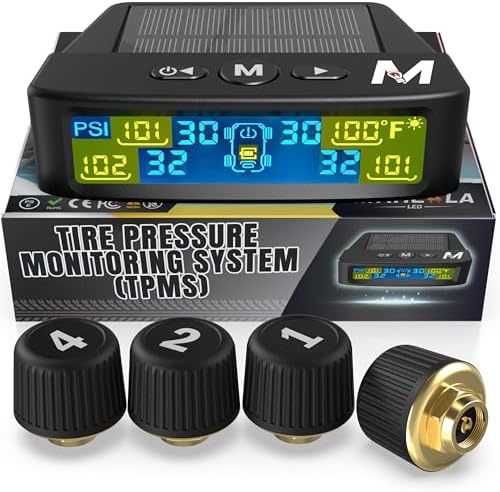
Marcala’s TPMS set of four sensors helps you monitor tire pressure and temperature in real time while driving, with updates every second. The bright color LCD uses auto-dimming for easy viewing, powered by dual solar and USB charging, and offers six alarm modes. Built for trailers, RVs, campers, trucks, and towing setups, the sensors support monitoring 1-4 wheels up to 98 PSI with IP67 waterproof protection.

Get precise tire readings with the ETENWOLF T300 Plus digital gauge, calibrated to ANSI B40.7 Grade 2A for reliable accuracy. It measures across a wide 3–200 PSI range and includes thermal compensation for dependable performance from extreme cold to heat. The bright LED display, LED illumination, and replaceable AAA batteries make it easy to check pressures quickly, even in low light.
Driving Techniques to Enhance Control in Rain
Maintain Steady Steering Control
Keep both hands on the wheel and steer smoothly. If you need to change lanes, do it gradually and only after checking for puddles, spray, and traffic around you. Sharp steering can overload the available grip on wet pavement.
Adjust Speed Gradually
Lift off the accelerator early when approaching traffic, intersections, curves, or standing water. Brake before the curve or puddle, not while turning through it. This keeps the truck more balanced and gives the tires a better chance to maintain contact.
Increase Following Distance
Leave at least 5–10 seconds of following distance in heavy rain. Use a fixed object, such as a sign or light pole, and count the seconds after the vehicle ahead passes it. Increase the gap more when towing, carrying heavy cargo, driving at highway speed, or using tires near the 4/32 inch tread-depth range.
Frequently Asked Questions
What speed prevents hydroplaning in a Toyota Tundra?
There is no single speed that prevents hydroplaning. Risk depends on water depth, tire tread, tire pressure, road surface, and speed. In rain, reduce speed at least 5–10 mph and slow even more for standing water, heavy spray, worn tires, towing, or poor visibility.
Is higher or lower tire pressure better for rain?
Neither extreme is best. Use the Toyota-recommended cold tire pressure shown on your Tundra’s tire placard or owner’s manual. Underinflation and overinflation can both reduce wet-road control.
Can four-wheel drive stop hydroplaning?
No. Four-wheel drive can help a Tundra move on low-traction surfaces, but it cannot create tire grip when water lifts the tires away from the road. Tire condition, speed, pressure, and water depth still matter.
At what tread depth should I replace Tundra tires for rainy driving?
Replace tires immediately at 2/32 inch. For frequent rain, highway driving, towing, or heavy loads, start planning replacement around 4/32 inch because wet braking and hydroplaning resistance decline before tires reach the legal minimum.
Should I brake if my Tundra starts hydroplaning?
Avoid slamming on the brakes. Ease off the accelerator, keep steering gently in the direction you want to go, and wait for the tires to regain contact. Brake smoothly only after traction returns.
Conclusion
Preventing hydroplaning in a Toyota Tundra starts before the rain: keep enough tread depth, set the correct cold tire pressure, inspect tires for uneven wear, and respect load limits when towing or hauling. On wet roads, slow down early, avoid cruise control, leave extra space, and steer smoothly. These habits cannot remove every risk, but they give your Tundra the best chance to stay controlled when the pavement turns slick.
Sources
- NHTSA Tire Safety Brochure — tire pressure, tread depth, tread-wear indicators, and tire inspection basics.
- NHTSA TireWise — tire maintenance, tire safety, and consumer tire guidance.
- AAA Wet Weather Driving Tips — cruise control, speed reduction, following distance, and skid response guidance.
- AAA All-Season Tire Testing — wet stopping-distance data for new tires versus tires worn to 4/32 inch.
- FHWA Road Weather Management — current weather-related crash and rain/mist crash data.
- TxDOT Hydraulic Design Manual: Hydroplaning — factors that influence hydroplaning risk.