Driving a Toyota Tacoma through mud is mostly about preparation: the right tires, safe tire pressure, smooth throttle input, legal trail choice, and a plan for getting unstuck. Mud can be fun, but it can also hide rocks, ruts, water, brake issues, and soft ground that will stop even a well-built truck.
Quick Answer
For muddy terrain, set your Tacoma up with suitable all-terrain or mud-terrain tires, use the tire pressure listed on the door placard for road driving, air down only temporarily off-road when conditions call for it, keep steady momentum, avoid hard steering, and inspect the wheels, brakes, tires, and undercarriage afterward.
Key Takeaways
- Use the tire pressure on your Tacoma’s driver-door placard or owner’s manual for street driving; do not treat 30 psi as universal for every Tacoma, tire, and load.
- Air down only for low-speed off-road use, then re-inflate before driving at highway speeds.
- Mud-terrain tires help because their open tread can clear mud better, but they do not replace careful driving and recovery planning.
- Stop spinning early if you get stuck; digging deeper usually makes recovery harder.
- After mud driving, clean and inspect the wheels, brakes, brake hoses, sidewalls, suspension, steering parts, and underbody.
At a Glance
| Time Required | 10–20 minutes for pre-trail checks; longer if airing down, recovering, or cleaning after the drive. |
| Difficulty | Moderate. Easy mud can be simple, but deep ruts, hidden rocks, and poor recovery points raise the risk quickly. |
| Tools Needed | Tire gauge, portable compressor, tire deflator, shovel, recovery boards, gloves, tow strap or kinetic rope rated for the vehicle, and safe recovery points. |
| Cost | Free if you already have gear; roughly $30–$250+ for basic tire and recovery tools; tire costs vary widely by size and brand. |
Understanding Mud-Terrain Tires: Features and Benefits
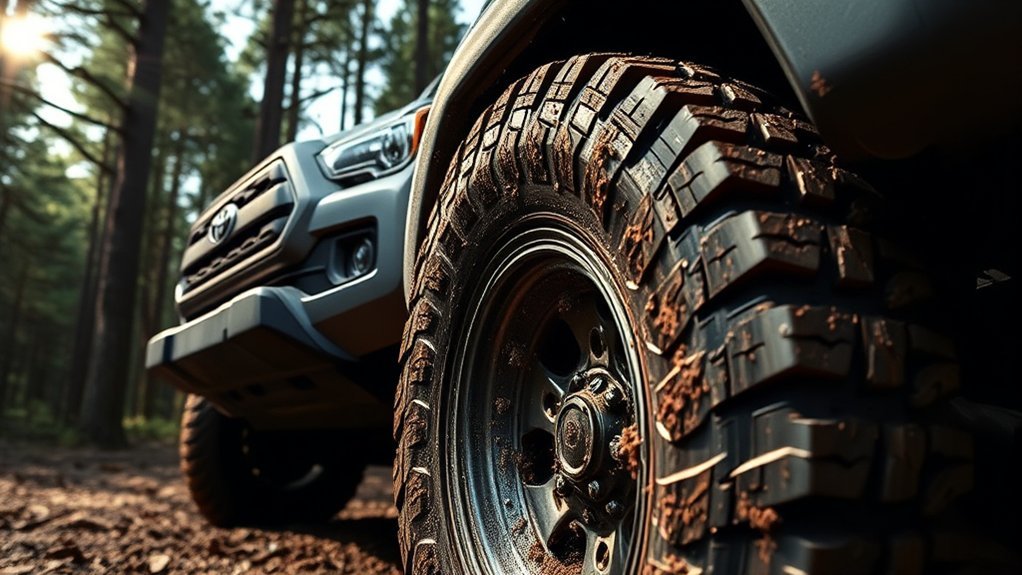
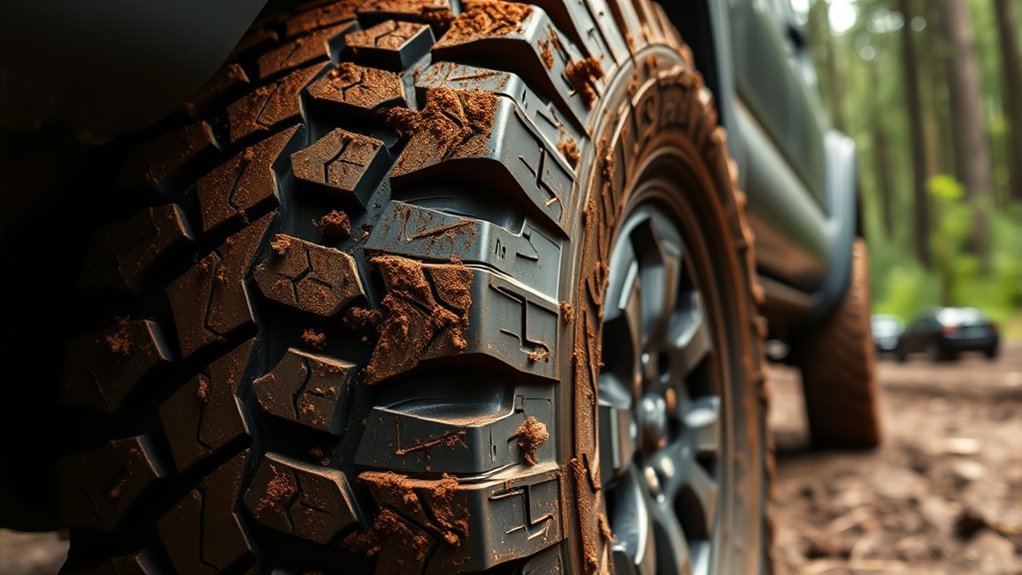
Mud-terrain tires are built to bite into soft ground and clear mud from the tread as the tire rotates. Their large tread blocks, wide voids, and shoulder lugs can help your Tacoma keep moving where highway tires or mild all-terrains pack up with mud.
The tradeoff is that mud-terrain tires can be louder on pavement, may ride firmer, and may wear faster than less aggressive tires. If your Tacoma spends most of its time commuting, a strong all-terrain tire may be the better daily-driver choice. If mud, clay, ruts, and wet trails are common, a true mud-terrain tire makes more sense.
Note: Tire choice is only one part of mud driving. Driver input, trail choice, ground clearance, recovery gear, and post-drive inspection matter just as much.
[Products Worth Considering]

This ALL-TOP auto-stop tire deflator valve kit lets you air down off-road tires quickly without watching pressure, automatically stopping when your preset PSI is reached. Each valve is individually calibrated for reliable performance with an acceptable +/- 2 PSI tolerance. The adjustable deflator range covers 10 to 30 PSI and includes four valves plus valve caps and a zipper pouch for easy setup on trucks, SUVs, RVs, UTVs, and powersports.
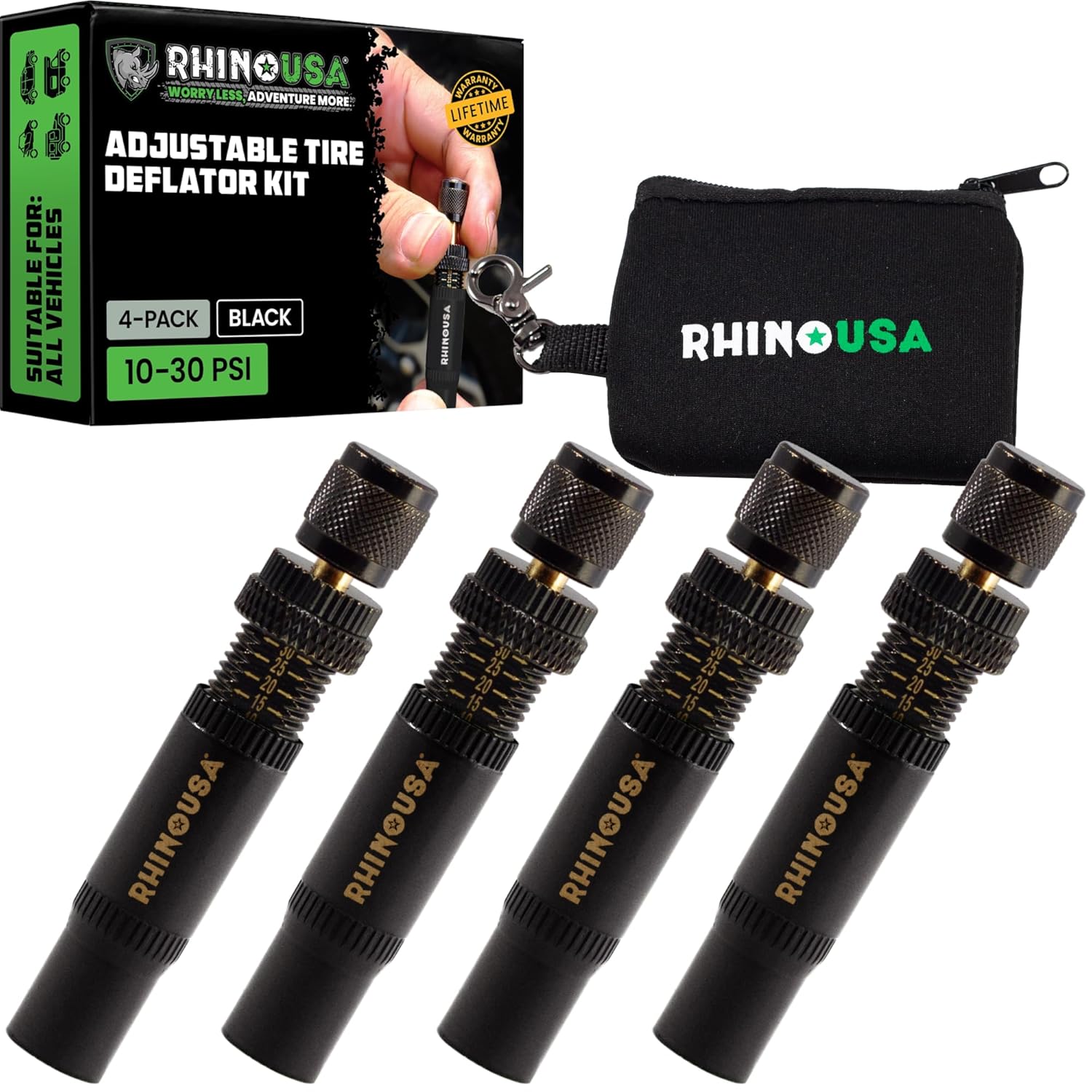
Use the Rhino USA adjustable tire deflators to air down all four tires at once by screwing one deflator onto each valve stem, letting you step away while the tires reach your preset pressure. Each deflator independently adjusts across a 10–30 PSI range with laser-etched indicators for quick setup and verification, making it ideal for beach, sand, and rocky off-road trails.

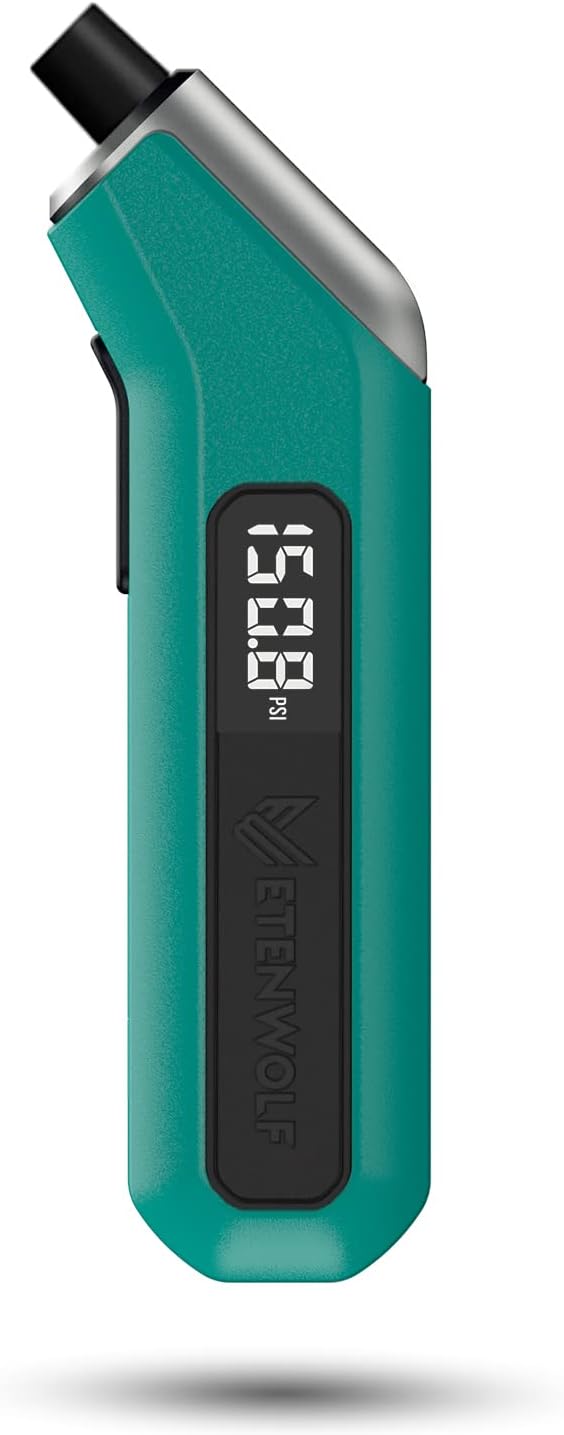
Keep your tires properly inflated with this analog VONDIOR tire pressure gauge, designed for fast, easy readings without batteries. The swiveling, two-axis hose and large glow dial help you measure at any tire angle with instant visibility. Built with a protective rubber shield, it supports durable, low-maintenance use for cars and trucks.
Why Tire Pressure Matters in Muddy Conditions
Tire pressure changes how much rubber contacts the ground. On pavement, your Tacoma should be set to the cold tire pressure listed on the driver-door tire placard or in the owner’s manual. The National Highway Traffic Safety Administration explains that the correct pressure is the vehicle manufacturer’s recommended cold pressure, not the maximum pressure printed on the tire sidewall.
For low-speed off-road driving, some drivers temporarily air down to increase the tire’s footprint and soften the ride. That can help in mud, but the safe amount depends on tire size, load, wheel width, speed, sidewall stiffness, and whether the tire is at risk of debeading. Avoid making a large pressure drop just because someone online uses a certain number.
| Situation | Safer Tire Pressure Choice |
|---|---|
| Street and highway driving | Use the Tacoma’s placard/manual cold PSI. |
| Slow off-road mud driving | Air down gradually only if needed for traction and ride comfort. |
| After leaving the trail | Re-inflate before highway speeds. |
| Heavy load or towing | Follow the placard/manual and tire load-rating guidance. |
Warning: Do not drive at highway speeds on tires that are aired down for the trail. Low pressure can create heat, poor handling, sidewall damage, and tire failure.
Essential Features of Effective Mud-Terrain Tires
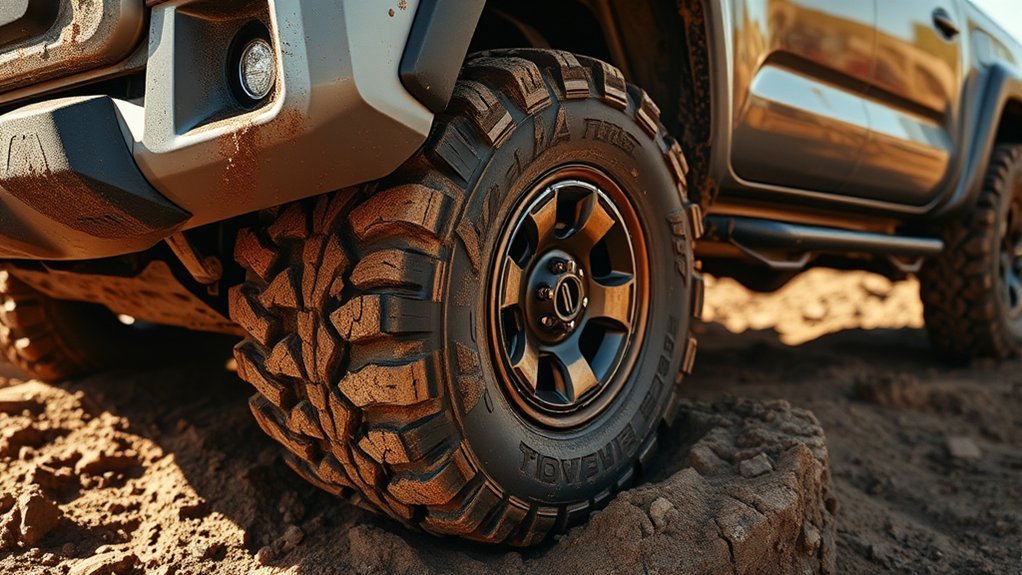
Good mud-terrain tires usually share a few traits: deep tread voids, aggressive shoulder blocks, durable sidewalls, and a rubber compound that can grip wet dirt, clay, and slick rocks. A self-cleaning tread is especially important because packed mud turns even an aggressive tire into a slick tire.
Sidewall strength matters too. Mud often hides rocks, roots, ruts, and debris. Reinforced sidewalls can reduce the chance of cuts and punctures, but they do not make the tire indestructible. Always inspect your sidewalls after a muddy trail.
- Open tread pattern: helps clear mud instead of holding it.
- Strong shoulder lugs: helps the tire claw out of ruts.
- Sidewall protection: helps resist cuts from hidden trail hazards.
- Correct load rating: supports your Tacoma, passengers, gear, and any added armor or camping equipment.
[Products Worth Considering]

These aluminum alloy tire valve stem caps with an O-ring seal help protect valve stems from corrosion while adding a clean, stylish look to your vehicle. The universal fit works across cars, trucks, motorcycles, bicycles, and more, making them an easy upgrade for everyday driving and off-road use. Installation is quick, and the included four-pack keeps all your tires dressed and protected.

Monitor tire tread wear with a smart, color-coded depth gauge that shows clear condition ranges at a glance. The bar is range marked for fast, easy readings, helping you maintain safer traction and performance. Each gauge is portable with a pocket clip, and the set includes 20 units for daily use and sharing.

The SAFELIFE dial tire tread depth gauge measures tread depth in 1/32 inch increments with clear, easy-to-read 2-inch dial face. Color zones using a traffic light system help you quickly judge whether tread is low, marginal, or ample for safer driving. Built with a durable zinc cast body and a metal detect probe for precise, comfortable use across cars, motorcycles, trucks, and buses.
Preparing Your Tacoma for Muddy Adventures
Before you enter mud, check the basics: tire pressure, tread condition, sidewall damage, recovery gear, weather, trail status, and fuel range. If you are on public land, confirm that the route is open to motor vehicles. The U.S. Forest Service advises riders and drivers to stay on designated routes and avoid wet, muddy areas that are easily damaged.
Pro Tip: Walk the mud first when it is safe. Look for depth, bottom firmness, hidden rocks, ruts, water flow, and a clear exit. If you cannot see a safe line, turn around.
If your Tacoma has selectable 4WD, Multi-Terrain Select, Crawl Control, or a locking rear differential, read your owner’s manual before the trail. Toyota’s Multi-Terrain Select guidance notes that Mud, Sand, and Deep Snow modes change how the vehicle manages drive force and stability control on rough roads.
- Check tire pressure cold before leaving home.
- Bring a tire gauge, deflator, and portable compressor.
- Pack recovery boards, a shovel, gloves, and a rated recovery strap or rope.
- Confirm your Tacoma has safe recovery points before you need them.
- Travel with another vehicle when the mud is deep, remote, or unfamiliar.
- Do not enter closed trails, wetlands, stream banks, or areas where your tires will cause damage.
Warning: Some 2024–2025 Tacoma vehicles were included in a Toyota safety recall related to mud and dirt buildup inside the rear wheels damaging rear brake hoses. Toyota says affected vehicles can develop a brake-fluid leak that increases crash risk. Check your VIN at Toyota’s recall page or NHTSA recalls before off-road use.
Techniques for Navigating Muddy Terrain Successfully
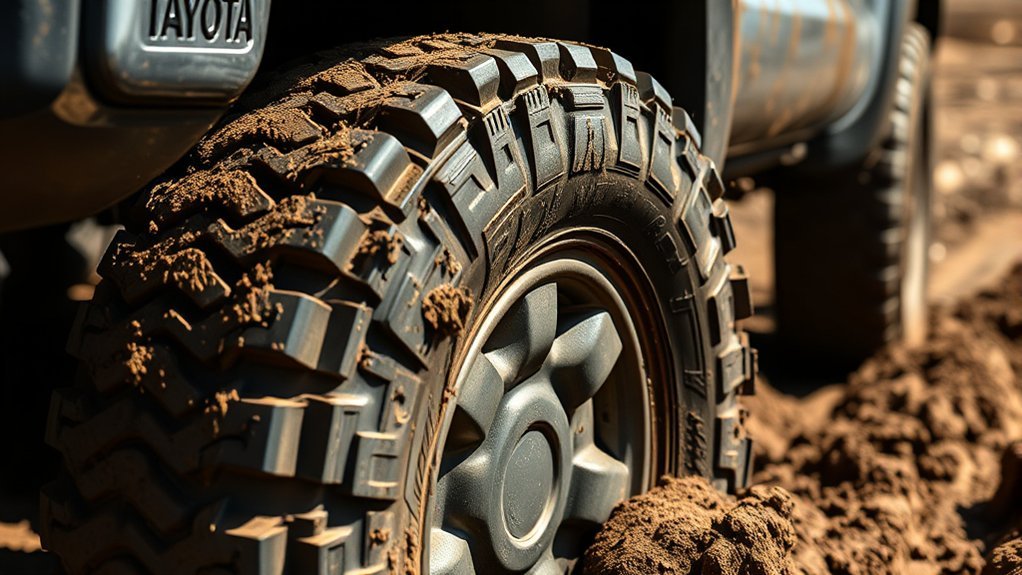
Good mud driving is smooth, not aggressive. Enter the mud with a plan, choose the straightest safe line, and keep steady momentum. Too much throttle spins the tires, fills the tread with mud, and digs holes. Too little momentum can stop the truck before the tires reach firmer ground.
- Choose the line first: Avoid deep ruts if they may high-center the truck or drag the underbody.
- Use steady throttle: Let the tires pull instead of spinning wildly.
- Keep steering inputs small: Sharp turns increase drag and can push the front tires sideways.
- Avoid sudden braking: Ease off the throttle and let the truck slow naturally when possible.
- Look where you want to go: Keep your eyes on the exit, not just the mud in front of the bumper.
Common Mistakes to Avoid When Driving in Mud
The most common mud-driving mistake is treating wheelspin like progress. If the truck is not moving forward, spinning harder usually digs the tires deeper and packs the tread.
- Entering too fast: Speed can hide impacts with ruts, rocks, or water holes.
- Turning sharply in deep mud: This increases resistance and can push the truck into ruts.
- Ignoring tire pressure: Overinflated tires can skate; underinflated tires can overheat or debead if driven too fast.
- Going alone without recovery gear: A mild trail can become a recovery problem after rain.
- Driving closed or soft trails: Mud ruts can cause erosion and lead to trail closures.
What to Do If Your Tacoma Gets Stuck in Mud
If your Tacoma stops moving, pause before you make it worse. Spinning the tires deeper can bury the axles, frame, skid plates, or differential.
- Stop spinning: Take your foot off the throttle and assess the situation.
- Straighten the wheels: Straight tires roll out more easily than turned tires.
- Clear the tires: Use a shovel to remove mud from in front of and behind the tires.
- Add traction: Place recovery boards, sticks, or safe traction material under the drive tires. Avoid loose objects that can shoot out.
- Try gentle rocking: Shift carefully between forward and reverse only if your owner’s manual allows it and you can do it without harsh throttle or transmission abuse.
- Use rated recovery gear: Attach only to proper recovery points. Never hook to suspension parts, bumpers not rated for recovery, or a trailer ball.
- Call for help early: If the truck is bellied out, water is rising, brakes feel wrong, or you lack safe recovery points, stop and get help.
Warning: Stand clear during any strap or rope recovery. A failed attachment point or overloaded strap can become dangerous fast.
How to Keep Your Mud-Terrain Tires in Top Shape
After a mud run, rinse the tires, wheels, brakes, and undercarriage before the mud dries into hard clay. Pay special attention to the inside of the wheels, brake areas, and sidewalls. Toyota’s off-road precautions tell owners to perform a maintenance inspection after off-road driving through rough terrain, sand, mud, or water.
Inspect tread blocks for chunking, sidewalls for cuts or bulges, and valve stems for leaks. Check pressure again when the tires are cold. Rotate tires according to your Tacoma’s maintenance guide and driving conditions, and shorten the interval if you see uneven wear.
For tread depth, do not wait until the tire is nearly bald if you rely on it for mud. A tread-depth gauge is better than guessing. The legal wear-bar danger zone is commonly 2/32 inch, but mud performance often drops well before that. For off-road use, plan replacement earlier if the tire no longer clears mud or grips safely.
Choosing the Right Tire Size for Mud
Larger tires can improve ground clearance and help a Tacoma roll through ruts, but tire size is not just about height. A tire that is too large can rub the fenders, body mount, suspension, or upper control arm. It can also affect gearing, speedometer accuracy, braking, fuel economy, and spare-tire fitment.
- Start with factory size: Check the door placard and owner’s manual for approved tire sizes.
- Match the load rating: Choose a tire that can safely carry the truck, passengers, gear, and accessories.
- Check wheel offset and clearance: Test full steering lock and suspension compression before the trail.
- Keep the spare in mind: A mismatched spare can create problems, especially off-road.
- Recheck alignment: New tire size or suspension changes may require an alignment.
[Products Worth Considering]

Measure tire tread depth quickly and accurately with this LUMITECO dial gauge that reads in 1/32" increments up to 14/32". The color-coded green/yellow/red zones make it easy to judge tire wear and know when replacement is needed. A rugged, compact design with a protective pouch helps keep the gauge ready for use on cars, trucks, motorcycles, and more.

The Milton S-693 straight foot dual head air chuck is designed for accurate tire pressure checks and quick, secure valve-core engagement with lock-on threads on both ends. With a 1/4" FNPT connection and a maximum 150 PSI rating, it’s built for use on inner duals and common vehicle tires, including trucks and RVs.

The Big Rig Defense Tire Thumper is a truck tire pressure checker that lets you quickly check multiple tires by giving them a firm whack. Listen for a reassuring thump and feel the stick bounce when a tire is fully inflated, helping you get back on the road safely. It features a comfortable, glove-friendly handle and a secure wrist strap for confident use on busy routes.
Enhancing Traction in Muddy Conditions
Traction comes from tire contact, tread clearing, throttle control, and choosing a line that keeps the truck on the firmest ground. If available, use your Tacoma’s terrain systems as described in the owner’s manual, but do not expect electronics to overcome poor judgment or the wrong tires.
The best mud-driving technique is to keep the tires turning just fast enough to clean the tread and move forward, but not so fast that they dig holes.
- Use smooth throttle instead of sudden bursts.
- Keep momentum steady through the softest section.
- Follow existing legal tracks instead of widening the trail.
- Avoid crossing muddy water if you cannot judge depth, bottom firmness, or exit traction.
- Turn around when continuing would damage the trail or risk the truck.
When Should You Call for Help? Recognizing Limitations
Call for help when the risk becomes larger than the reward. That includes a Tacoma stuck to the frame, mud above the hubs, water entering unsafe areas, a brake warning light, a soft brake pedal, visible brake-fluid leak, no safe recovery point, or a recovery angle that could roll or slide the truck.
You should also stop if recovery would damage the trail. Responsible off-roading means knowing when to turn around, even when the truck could possibly push through.
Post-Mud Cleanup and Inspection Checklist
Mud left on a Tacoma can hide damage and hold moisture against metal parts. Clean the truck soon after the trail, then inspect it in good light.
- Rinse the wheels, wheel wells, brake areas, skid plates, frame, suspension, and steering components.
- Check brake feel at low speed after washing; brakes may need gentle drying.
- Inspect rear brake hoses, especially on 2024–2025 Tacoma models that may be affected by the mud/dirt recall.
- Check tire sidewalls, tread, valve stems, and bead areas for leaks or damage.
- Remove mud from the radiator, grille area, and underbody if buildup is heavy.
- Re-inflate tires to road pressure before highway driving.
- Listen for new vibration, grinding, scraping, or pulling during the drive home.
Frequently Asked Questions
How do you make mud tires ride smoother?
Start by setting the tires to the correct cold pressure on your Tacoma’s door placard for road driving. Rotate the tires on schedule, keep them balanced, check alignment, and inspect for uneven wear. Mud-terrain tires may still ride louder and firmer than all-terrain or highway tires because of their aggressive tread.
How do you make a Toyota Tacoma ride better?
Use the correct tire pressure, choose tires that match your real driving mix, keep the suspension in good condition, and avoid overly stiff load-rated tires unless you need them for weight or trail durability. If you add armor, bumpers, a winch, or camping gear, consider suspension upgrades matched to the added weight.
Should I air down Tacoma tires for mud?
Sometimes, but only for low-speed off-road use. Airing down can increase the footprint and improve comfort, but going too low can damage tires or unseat a bead. Use a gauge, lower pressure gradually, avoid high speeds, and re-inflate before pavement.
Are mud-terrain tires better than all-terrain tires in mud?
In deep mud, yes, a true mud-terrain tire usually clears mud and bites better than an all-terrain. For daily driving, towing, rain, snow, and highway comfort, an all-terrain may be more balanced. Choose based on how often your Tacoma actually sees mud.
What should I inspect after driving my Tacoma through mud?
Inspect the tires, wheels, valve stems, brakes, brake hoses, suspension, steering parts, skid plates, radiator area, and undercarriage. If your Tacoma is a 2024–2025 model, check whether it is included in Toyota’s mud/dirt-related brake hose recall.
Conclusion
Mastering mud driving in a Toyota Tacoma is not about flooring the throttle. It is about choosing the right tires, using the correct road pressure, airing down carefully when conditions call for it, reading the trail, keeping smooth momentum, and knowing when to stop. Add recovery gear, respect trail closures, clean the truck afterward, and inspect the brakes and tires before the next drive. With the right setup and judgment, your Tacoma will be far more capable and far less likely to get stuck or damaged.
Sources
- Toyota Owners — 2026 Tacoma Tire Inflation Pressure — supports checking and adjusting tire pressure to the recommended level.
- NHTSA TireWise — supports cold tire pressure, placard-based inflation, tire size, and tire safety guidance.
- Toyota Owners — 2026 Tacoma Off-Road Precautions — supports post-off-road maintenance inspection after mud, sand, water, or rough terrain.
- Toyota Owners — Tacoma Multi-Terrain Select — supports Tacoma terrain-mode guidance for rough roads and mud-related modes.
- Toyota Newsroom — 2024–2025 Tacoma Brake Hose Recall — supports the mud/dirt buildup brake hose warning.
- U.S. Forest Service — Off-Highway Vehicle Touring — supports designated-route use and avoiding wet, muddy areas susceptible to erosion.