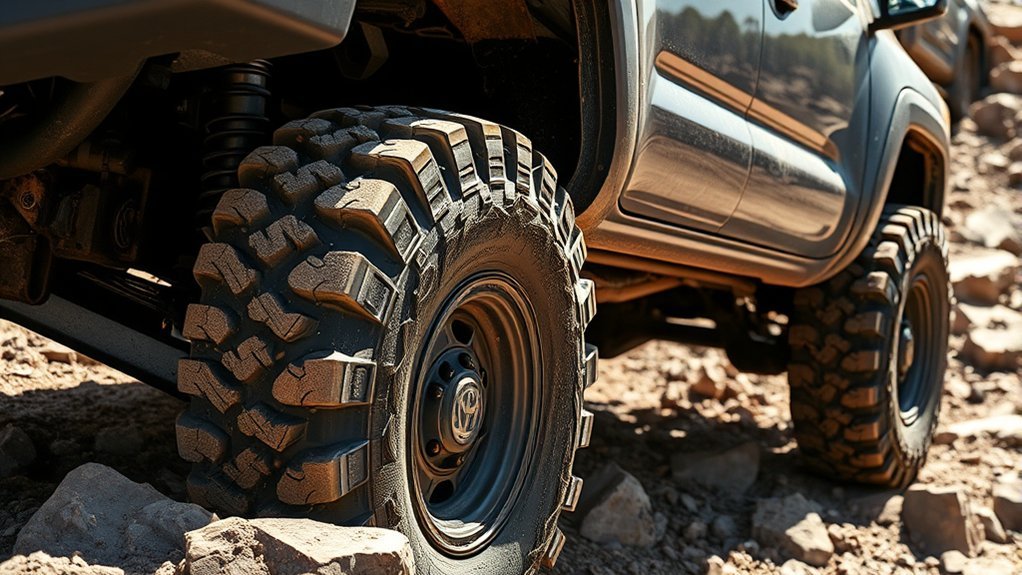
Choosing tires for Toyota Tacoma rock crawling is not just about buying the most aggressive tread you can find. The right tire has to match your Tacoma’s weight, wheel size, lift, trail difficulty, road use, and the way you air down on the trail. A strong mud-terrain tire can make rocky ledges easier to climb, but the wrong size, load range, or pressure can create rubbing, harsh ride quality, poor braking, or sidewall damage.
Quick Answer
For serious Tacoma rock crawling, choose a mud-terrain or aggressive hybrid tire with reinforced sidewalls, large shoulder lugs, good stone ejection, and a load rating that meets your truck’s weight needs. Popular choices include BFGoodrich KM3, Falken WILDPEAK M/T, Nitto Mud Grappler, Mickey Thompson Baja Boss M/T, and Yokohama Geolandar M/T G003.
Key Takeaways
- For rocky trails, prioritize sidewall strength, tread block stability, shoulder bite, and cut resistance over highway comfort.
- A 33-inch tire is the common sweet spot for many lifted Tacomas; 35-inch tires usually need more lift, trimming, offset planning, and sometimes gearing changes.
- Load Range E is not automatically better. Choose a tire that meets or exceeds your Tacoma’s required load capacity without making the ride unnecessarily harsh.
- Airing down can improve traction, but you must reinflate before highway driving and avoid pressures that risk bead loss or wheel damage.
At a Glance
| Time Required | 30–60 minutes to compare tires; longer if checking lift, wheel offset, spare fit, and rubbing points. |
| Difficulty | Moderate. The hard part is matching size, load range, wheel offset, and trail use. |
| Tools Needed | Tire pressure gauge, tread depth gauge, flashlight, owner’s manual or door placard, and fitment notes from your wheel/tire installer. |
| Cost | Varies widely by size and brand; larger LT mud-terrain tires usually cost more and may also require wheels, trimming, lift work, or a full-size spare. |
Understanding the Importance of Tire Selection for Rock Crawling
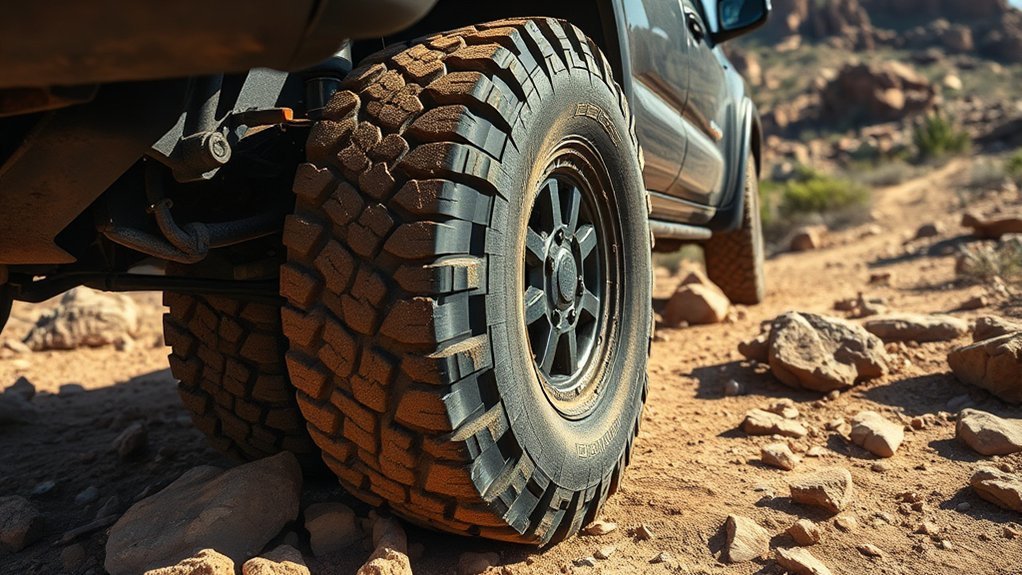
Rock crawling asks more from a Tacoma tire than normal trail driving. The tire has to grip slow, uneven surfaces, flex around sharp edges, resist cuts, and hold the truck steady when the sidewall is loaded on an off-camber obstacle.
The best Tacoma rock crawling tires usually share four traits:
- Reinforced sidewalls: Strong sidewalls help resist cuts and punctures from sharp rock edges.
- Aggressive shoulder lugs: Shoulder and sidewall lugs add bite when the tire is squeezed against rock or used in ruts.
- Large tread voids: Open tread helps clear mud, gravel, and loose debris so the tire can keep biting.
- Stable tread blocks: Strong blocks reduce squirm and improve control while crawling slowly over ledges.
For example, BFGoodrich describes the Mud-Terrain T/A KM3 as using CoreGard Max technology for tougher sidewalls and Krawl-TEK compound for grip. Nitto highlights the Mud Grappler’s sidewall lugs as added biting edges for rocky terrain, along with three-ply polyester sidewall construction for puncture resistance.
Warning: Never use the tire’s sidewall maximum pressure as your normal driving pressure. For pavement, use the cold tire pressure listed on your Tacoma’s door placard or owner’s manual, unless a qualified tire professional has recalculated pressure for a non-stock size.
Top Mud-Terrain Tires for Toyota Tacoma Off-Road Adventures
The best tire depends on whether your Tacoma is a daily driver, weekend crawler, overland build, or dedicated trail truck. Mud-terrain tires usually offer the most grip and sidewall strength for rock crawling, but they also tend to be louder, heavier, less fuel-efficient, and less comfortable than all-terrain tires.
| Tire | Best For | Strengths | Tradeoff |
|---|---|---|---|
| BFGoodrich Mud-Terrain T/A KM3 | Rock crawling and technical trails | Strong sidewall focus, excellent grip, proven off-road reputation | Can be louder and wear faster than less aggressive tires |
| Falken WILDPEAK M/T | Mixed rock, dirt, gravel, and mud | Durable off-road design, multiple load range options, good value | No mileage warranty; M+S but not 3PMSF severe-snow rated |
| Nitto Mud Grappler | Aggressive trail builds and mud/rock use | Large side lugs, high void ratio, strong puncture-resistance features | Often too loud for drivers who want a quiet daily commute |
| Mickey Thompson Baja Boss M/T | Drivers who want off-road bite with better road manners | Asymmetrical tread, Sidebiters, puncture-resistance-focused construction | Premium pricing in many sizes |
| Yokohama Geolandar M/T G003 | Off-road traction with more highway comfort | GEO-SHIELD construction, pitch variation for quieter highway ride, strong wear focus | Still an M/T, so expect more noise than a true all-terrain |
If your Tacoma sees mostly pavement with occasional mild rock trails, a hybrid rugged-terrain tire or aggressive all-terrain may be smarter than a full mud-terrain. If your weekends include ledges, boulders, ruts, and sharp desert rock, a true M/T is usually the better tool.
[Products Worth Considering]

Monitor tire tread wear with a smart, color-coded depth gauge that shows clear condition ranges at a glance. The bar is range marked for fast, easy readings, helping you maintain safer traction and performance. Each gauge is portable with a pocket clip, and the set includes 20 units for daily use and sharing.

The SAFELIFE dial tire tread depth gauge measures tread depth in 1/32 inch increments with clear, easy-to-read 2-inch dial face. Color zones using a traffic light system help you quickly judge whether tread is low, marginal, or ample for safer driving. Built with a durable zinc cast body and a metal detect probe for precise, comfortable use across cars, motorcycles, trucks, and buses.

These aluminum alloy tire valve stem caps with an O-ring seal help protect valve stems from corrosion while adding a clean, stylish look to your vehicle. The universal fit works across cars, trucks, motorcycles, bicycles, and more, making them an easy upgrade for everyday driving and off-road use. Installation is quick, and the included four-pack keeps all your tires dressed and protected.
Impact of Tread Patterns on Traction
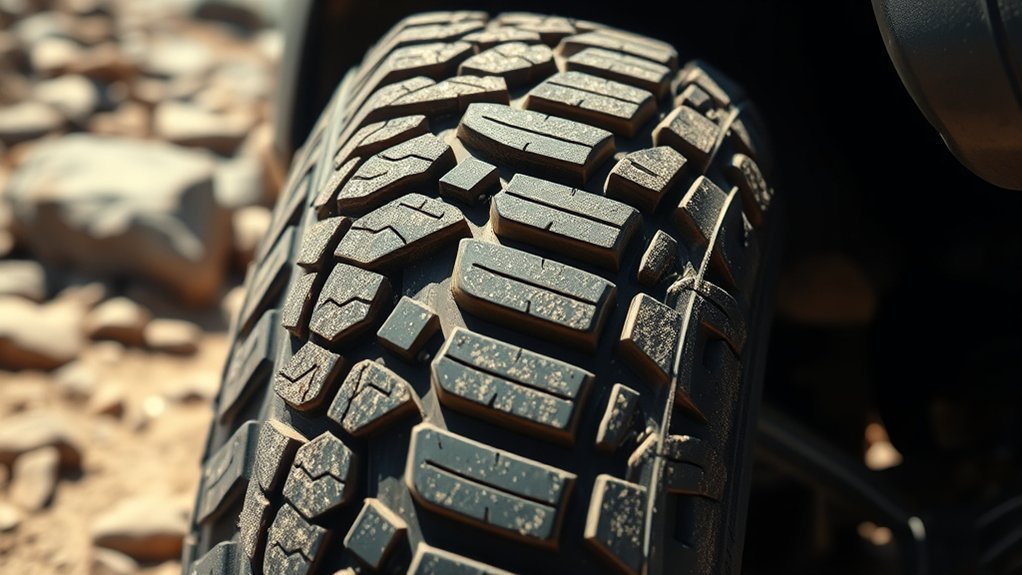
Tread pattern changes how your Tacoma climbs, brakes, and holds a line on rock. Deep lugs alone are not enough. For rock crawling, look at how the whole tire works: center tread, shoulder blocks, sidewall lugs, siping, and stone ejectors.
- Large shoulder lugs: These help when the tire is partly on its side, such as in ruts or against a rock wall.
- Open voids: Open tread channels clear loose dirt, gravel, and mud so the lugs can contact rock instead of sliding on debris.
- Stone ejectors: These reduce the chance of sharp stones drilling into the tread area.
- Siping: Small cuts in the tread can help wet-road braking, but too much siping can make tread blocks feel softer under heavy crawling loads.
- Sidewall tread: Wraparound lugs add bite when aired down and can protect the sidewall from some scraping.
A softer off-road compound can conform better to rock, but it may also wear faster on pavement. A harder compound can last longer but may not stick as well on slickrock or wet stone. This is why the best choice depends on your trail-to-highway split.
How to Check Tire Durability for Tough Conditions
Durability is more than ply rating. A tire can have an impressive load range and still be the wrong choice if it is too stiff, too heavy, or poorly matched to your Tacoma’s suspension and use. Before buying, check these points:
- Load index and load range: Make sure the tire meets or exceeds the truck’s required load capacity. Do not assume Load Range E is always better for a midsize truck.
- Sidewall construction: Look for reinforced sidewall technology, three-ply construction, or strong sidewall lugs if you crawl in sharp rock.
- Tread depth and block design: More depth can help off road, but block stability matters for steering and braking.
- Cut and chip resistance: Important for desert rock, shale, and gravel roads.
- Warranty details: Many M/T tires have limited workmanship/material warranties but no treadwear mileage warranty because off-road use varies so much.
Pro Tip: If your Tacoma is a daily driver, compare the same tire in different load ranges when available. A Load Range C or D tire may ride better and flex more easily, while Load Range E may make sense for heavier builds, towing, armor, bed racks, or repeated sharp-rock use.
Essential Features for Rock Crawling Tires
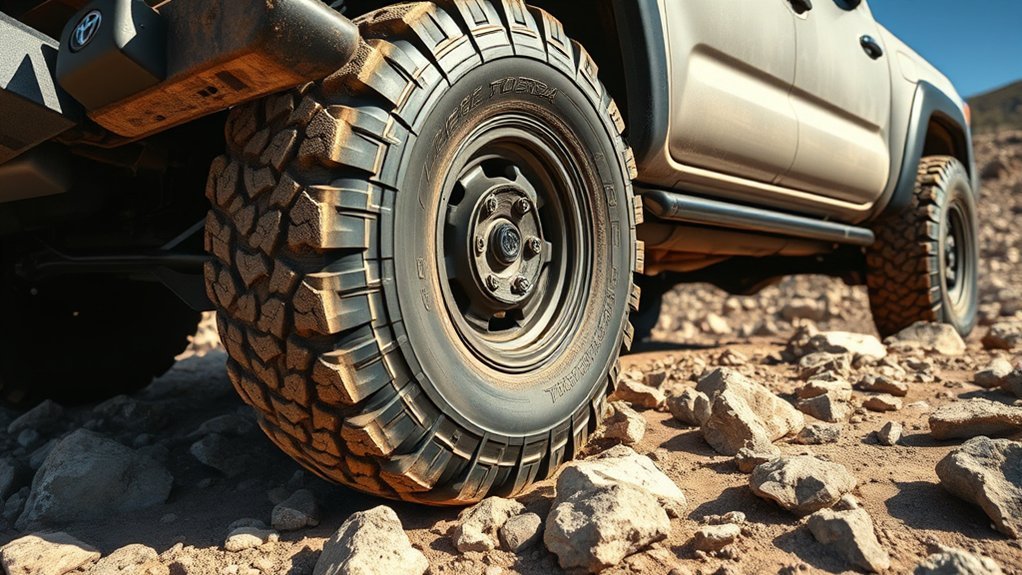
When choosing Toyota Tacoma rock crawling tires, focus on the features that help at low speed under high stress. Highway traction ratings and looks matter less than sidewall strength, contact patch, and predictable control.
[Products Worth Considering]

Accurately measure tire tread depth with a calibrated gauge marked from 0 to 1 inch in 1/32 inch increments. The color-coded bar helps you quickly identify tread condition ranges, supporting safe driving for trucks, motorcycles, automobiles, and passenger vehicles.

Keep your tires properly inflated with this analog VONDIOR tire pressure gauge, designed for fast, easy readings without batteries. The swiveling, two-axis hose and large glow dial help you measure at any tire angle with instant visibility. Built with a protective rubber shield, it supports durable, low-maintenance use for cars and trucks.

Measure tire tread depth quickly and accurately with this LUMITECO dial gauge that reads in 1/32" increments up to 14/32". The color-coded green/yellow/red zones make it easy to judge tire wear and know when replacement is needed. A rugged, compact design with a protective pouch helps keep the gauge ready for use on cars, trucks, motorcycles, and more.
Key Tread Patterns
The best tread patterns for rocky trails usually include:
- Aggressive outer lugs: These help the tire grab uneven rock faces.
- Alternating shoulder blocks: These add extra edges for climbing and side-hilling.
- Self-cleaning voids: These clear mud and gravel between rocks.
- Stone ejectors: These help protect the tread from trapped rock damage.
A very open mud-terrain tread can be excellent in loose terrain, but it may also be louder on pavement. A tighter hybrid pattern can be easier to live with but may not clean out as well in mud or bite as hard on ledges.
Sidewall Strength Importance
Sidewall strength is one of the biggest differences between a casual off-road tire and a tire you can trust on rock. Sharp edges can cut a weak sidewall quickly, especially when the tire is aired down and bulging around obstacles.
| Feature | Why It Matters on Rock |
|---|---|
| Reinforced sidewalls | Help resist cuts, bruises, and punctures from sharp rock edges. |
| Sidewall lugs | Add bite when the tire is aired down or pressed against a ledge. |
| Correct load range | Supports the truck safely without creating unnecessary harshness. |
| Cut-resistant compound | Reduces chunking and damage from gravel, shale, and dry rock. |
| Airing-down stability | Allows more contact patch on the trail while keeping the bead seated. |
Traction on Rocky Terrain
Traction comes from the tire, the surface, and the pressure you run. On dry rock, a flexible tread and larger contact patch help the tire conform to uneven surfaces. In loose rock, bigger voids and strong shoulder blocks help the tire dig and clear debris. On wet rock, even a good M/T can slide, so throttle control and careful line choice matter as much as tire choice.
For most Tacoma owners, the best rock-crawling setup is a tire that can air down safely, hold the truck’s weight, and still drive home without overheating or wearing unevenly.
Choosing Tire Size for a Toyota Tacoma Rock Crawling Setup
Tire size affects ground clearance, gearing, braking, rubbing, spare storage, and fuel economy. A taller tire can improve approach over rocks, but it also adds weight and changes how the truck accelerates.
- 32-inch tires: Good for mild trails and near-stock trucks. Easier to fit and easier on factory gearing.
- 33-inch tires: A common Tacoma upgrade for trail use. Often needs lift, careful wheel offset, and possible trimming depending on generation and trim.
- 34-inch tires: A middle-ground option for builds that need more clearance but want less compromise than 35s.
- 35-inch tires: Strong for serious crawling, but usually require more lift, trimming, offset planning, spare-fit planning, and may benefit from gearing changes.
Note: Always verify fitment for your exact Tacoma year, trim, suspension, wheel width, wheel offset, and alignment. The same tire size can rub on one Tacoma and fit another because of bumper shape, cab mount clearance, suspension height, and wheel offset.
[Products Worth Considering]
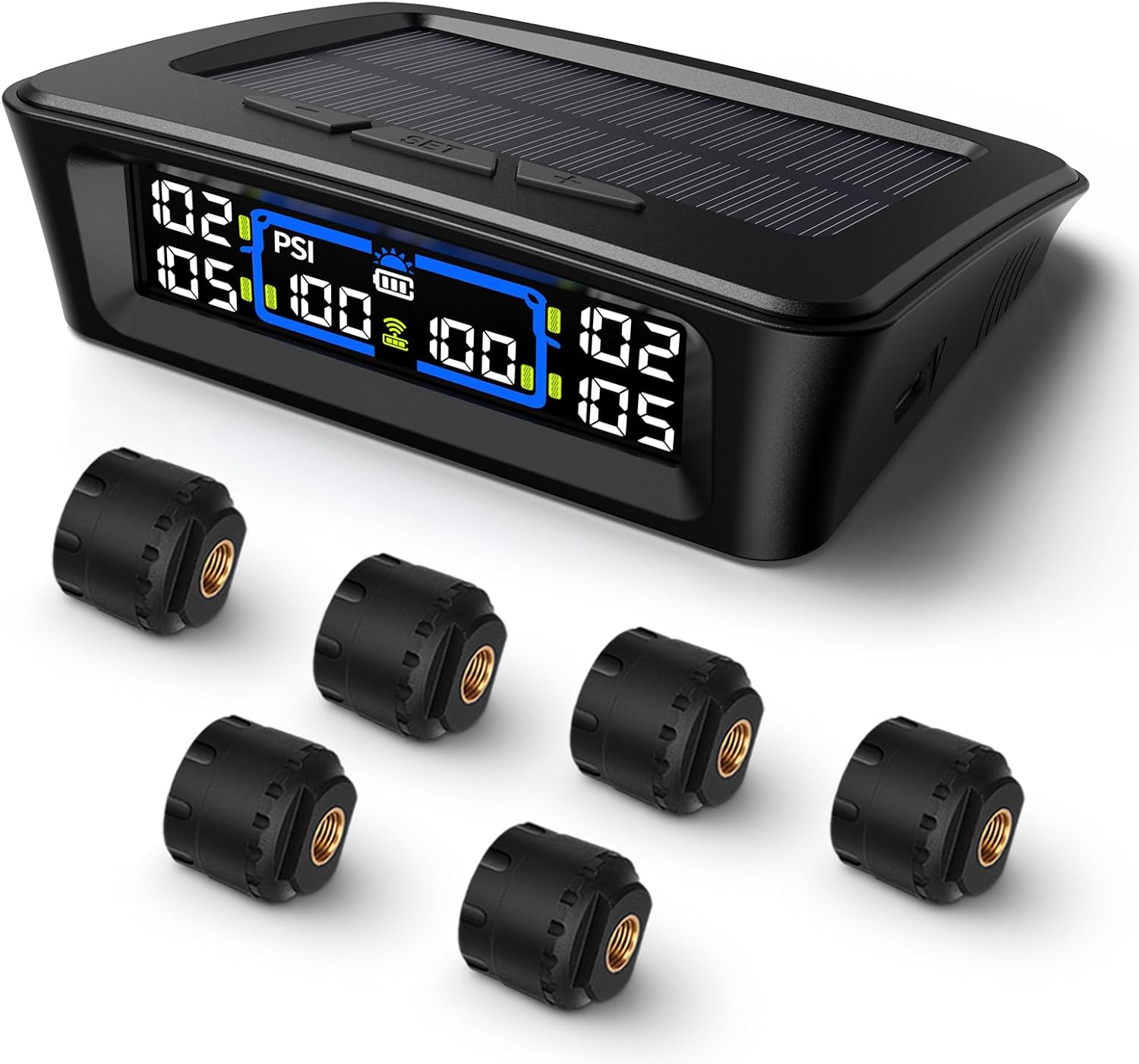
The Tymate TM12 RV TPMS delivers real-time tire pressure and temperature monitoring with a stable 433Hz display for safer long-distance driving. It supports simultaneous monitoring across vehicle and trailer zones, includes six alarm modes for pressure, temperature, leakage, battery, and signal loss, and features easy DIY installation with auto calibration. Power is supplied via USB-C charging or solar recharging, with a wide 0–144 PSI range and up to 50 ft signal coverage for RVs and towable trailers.

This ALL-TOP auto-stop tire deflator valve kit lets you air down off-road tires quickly without watching pressure, automatically stopping when your preset PSI is reached. Each valve is individually calibrated for reliable performance with an acceptable +/- 2 PSI tolerance. The adjustable deflator range covers 10 to 30 PSI and includes four valves plus valve caps and a zipper pouch for easy setup on trucks, SUVs, RVs, UTVs, and powersports.

The TYAMATE TM8 solar-powered wireless TPMS delivers real-time tire pressure and temperature monitoring with six alarm modes for safer driving. A vibrant color LCD display shows readings clearly while windshield mounting keeps it hands-free and easy to read. With a wide 0–87 PSI range, strong 433.92 MHz signal transmission, and quick sensor pairing, it’s ideal for RV, sedan, SUV, MPV, and truck use.
How Tire Pressure Adjustments Affect Off-Road Performance
Airing down reduces tire stiffness and increases the contact patch. On rock, this can improve grip and help the tire wrap around obstacles. Many Tacoma drivers air down before a trail, but there is no single safe pressure for every truck.
Start conservative. A heavy Tacoma with armor, camping gear, and a bed rack may need more pressure than a lighter truck. Wheel width, tire size, sidewall stiffness, speed, and trail type also matter.
- Before the trail: Check cold pressure, inspect sidewalls, and make sure your spare is usable.
- At the trailhead: Air down gradually and test steering, sidewall bulge, and bead stability.
- On the trail: Drive slowly, avoid sharp throttle, and recheck pressure if the tire looks overly folded.
- After the trail: Reinflate to road pressure before highway speeds.
For normal road driving, follow the cold tire pressure on your Tacoma’s door placard or Toyota owner’s manual. Toyota’s Tacoma manual resources and NHTSA tire safety guidance both point drivers back to proper pressure, load limits, and tire maintenance.
Warning: Very low pressure can unseat a bead, damage a wheel, overheat a tire, or trigger unstable handling. Do not drive highway speeds while aired down.
Road Noise in Popular Mud-Terrain Tires
Road noise is the tradeoff many Tacoma owners notice first. Large tread voids, staggered shoulder blocks, and sidewall lugs are excellent off road, but they usually create more hum on pavement. If your Tacoma is your commuter, this matters.
In general, expect this pattern:
- Most aggressive: Tires like the Nitto Mud Grappler deliver strong off-road bite but can be loud on pavement.
- Balanced M/T: Tires like the BFGoodrich KM3, Falken WILDPEAK M/T, and Mickey Thompson Baja Boss M/T aim to balance trail grip with tolerable road use.
- Quieter M/T choices: Tires such as the Yokohama Geolandar M/T G003 use pitch variation and comfort-focused design features to reduce highway noise compared with more aggressive mud tires.
If you drive long highway miles, do not shop by tread aggression alone. Read current owner feedback for your exact tire size because noise can change between a 33-inch C-load tire and a heavier 35-inch E-load version.
User Recommendations for Tacoma Tires
Owner recommendations are useful, but they should not be treated as universal proof. A tire that works beautifully on a light access-cab Tacoma may feel harsh or underbuilt on a long-bed overland truck with steel bumpers, sliders, a rack, recovery gear, and camping weight.
Use user reviews to answer practical questions:
- Does this size rub on my generation of Tacoma?
- How loud is it after 10,000 miles?
- Does it balance easily?
- How does it behave when aired down?
- Are sidewall cuts common in the terrain I drive?
- Can I fit a matching spare?
For rock crawling, the most useful reviews come from owners who list their Tacoma generation, wheel size, offset, lift height, tire size, load range, terrain, and whether the truck is a daily driver.
Maintaining Tires for Optimal Off-Road Performance
Good tires still fail if they are overloaded, underinflated, poorly aligned, or ignored after trail damage. Build tire checks into your off-road routine.
Tire Pressure Monitoring
Check pressure before every trail day, after airing down, and before driving home. A tire pressure monitoring system is helpful, but it does not replace a reliable gauge. If you change tire size or load range, ask a qualified installer how to set safe road pressure for the new setup.
NHTSA recommends proper tire pressure, observing tire and vehicle load limits, avoiding road hazards, and inspecting for cuts, slashes, and irregularities as core tire-safety habits. That advice matters even more for off-road tires because rock crawling can damage sidewalls in a single trip.
Regular Tread Inspection
Inspect the tread and sidewalls after every rocky trail. Look for:
- Sidewall cuts, bubbles, exposed cords, or deep gouges.
- Missing tread chunks or cuts between tread blocks.
- Stones trapped in the tread.
- Uneven wear from alignment, suspension issues, or wrong pressure.
- Plug repairs near the shoulder or sidewall, which may not be safe.
Replace an off-road tire when it reaches unsafe tread depth, develops sidewall damage, shows exposed cords, has a bulge, repeatedly loses air, or ages beyond the tire manufacturer’s guidance. Do not replace tires every 3,000–6,000 miles by default; that range is more appropriate as a frequent inspection or rotation reminder, not a replacement rule.
Frequently Asked Questions
What tire size is best for my Toyota Tacoma rock crawling setup?
For many Tacoma builds, 33-inch tires are the practical starting point because they add clearance without the larger compromises of 35s. Serious rock crawlers may prefer 35-inch tires, but they usually need more lift, trimming, wheel-offset planning, spare-fit planning, and sometimes gearing changes. Always confirm fitment for your exact year, trim, wheels, and suspension.
How do tire pressure adjustments affect off-road performance?
Lowering pressure can improve the contact patch and help the tire conform to rocks, which improves slow-speed traction. The tradeoff is higher risk of bead loss, sidewall damage, heat buildup, and poor handling if pressure is too low. Reinflate to safe road pressure before highway driving.
Are studded tires beneficial for rock crawling?
Studded tires are designed for ice, not dry rock crawling. They are not the right choice for most rocky trails and may be restricted on public roads depending on local law. For snow and ice, consider a proper winter tire or a tire with the 3PMSF severe-snow marking instead of relying on studs for rock performance.
Can I use all-season tires for occasional rock crawling?
All-season tires can handle light dirt roads, but they are not built for repeated rock crawling. They usually lack the sidewall strength, tread voids, shoulder bite, and puncture resistance needed for rocky trails. For occasional mild trails, use an all-terrain tire. For ledges and sharp rock, choose a mud-terrain or rugged-terrain tire.
How often should I replace my off-road tires?
Replace off-road tires based on tread depth, sidewall damage, age, repairs, uneven wear, and manufacturer guidance—not a fixed 3,000–6,000-mile rule. Inspect them after every rocky trail and rotate them on a regular maintenance schedule if your tire and vehicle setup allows it.
Is Load Range E better for a Toyota Tacoma?
Not always. Load Range E can help heavier builds, towing setups, and sharp-rock use, but it can also ride harsher and flex less easily on a midsize truck. Choose a tire with enough load capacity for your Tacoma and gear, then balance durability with ride quality and trail performance.
Conclusion
The best Toyota Tacoma tires for rock crawling are the ones that match your terrain, truck weight, wheel setup, and driving habits. A mud-terrain tire with reinforced sidewalls, aggressive shoulder lugs, strong puncture resistance, and the correct load rating will give you the most confidence on rocky trails. Before buying, confirm your tire size, load capacity, wheel offset, spare fit, and road-pressure plan. Then maintain the tires with regular pressure checks, rotations, and sidewall inspections so your Tacoma is ready for the next trail.
Sources
- Toyota Tacoma Owner’s Manual: Tire Inflation Pressure — supports checking Toyota guidance for normal cold tire pressure.
- NHTSA TireWise — supports tire pressure, load limit, inspection, and tire-safety guidance.
- BFGoodrich Mud-Terrain T/A KM3 — supports KM3 sidewall and traction feature descriptions.
- Falken WILDPEAK M/T — supports load range, M+S, mileage-warranty, and severe-snow clarification.
- Nitto Mud Grappler — supports sidewall lug, high-void tread, and puncture-resistance feature descriptions.
- Yokohama Geolandar M/T G003 — supports GEO-SHIELD construction, quiet-ride, off-road durability, and tread-life feature descriptions.