
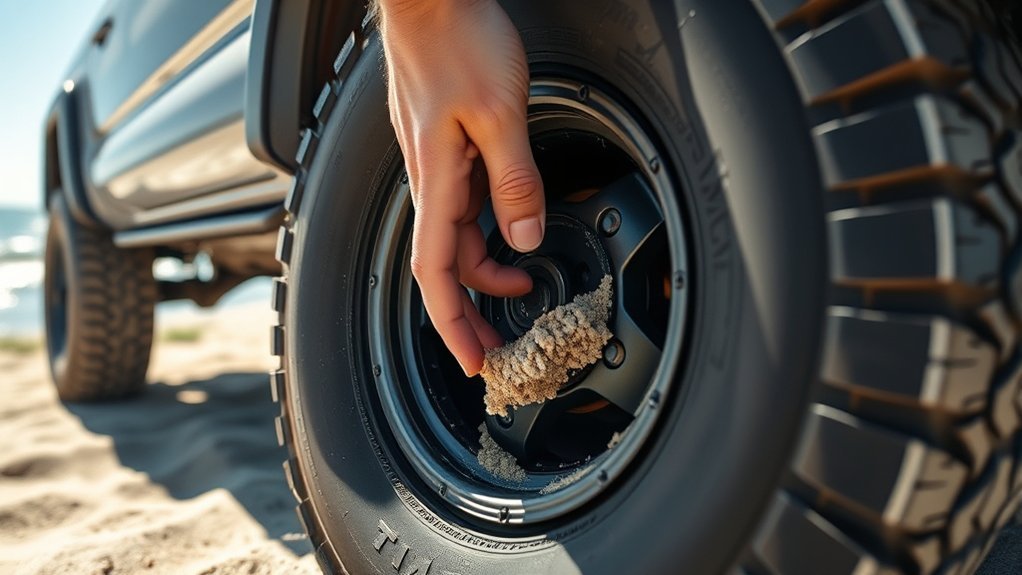
Driving a Toyota Tacoma on beach sand can be easier and safer when you lower tire pressure before leaving the pavement. Airing down increases the tire footprint, which helps the truck stay on top of soft sand instead of digging in. The right pressure is not one fixed number, though; it depends on your tires, wheel setup, load, sand conditions, and local beach rules.
Quick Answer
Start around 20 PSI in all four Tacoma tires before entering approved beach-driving areas. If the truck still digs into soft sand, reduce pressure evenly in 2 PSI steps while driving slowly. Reinflate to the cold pressure on the driver-door placard before normal paved-road travel.
Key Takeaways
- About 20 PSI is a practical starting point, not a universal final setting.
- Very low pressure raises the risk of unseating a tire bead, damaging a sidewall, or overloading the tire.
- Use 4WD High and Sand mode when your Tacoma is equipped for them; follow the owner’s manual for your exact model year and trim.
- Keep speed low, use smooth throttle, avoid sharp turns, and stop wheelspin early.
- Reinflate before driving normally on pavement, using the driver-door placard rather than a generic PSI range.
At a Glance
| Time Required | About 15–25 minutes total for airing down and reinflating |
| Difficulty | Easy to moderate |
| Tools Needed | Accurate pressure gauge, tire deflator, air compressor, shovel, traction boards or sturdy boards, spare tire, and jack base |
| Cost | No added cost if you already carry the equipment; otherwise cost varies by tool quality |
Warning: Beach access, permits, seasonal closures, speed limits, tides, and equipment rules vary by location. Check the managing agency’s current rules and tide forecast before entering the sand. Never drive through dunes, vegetation, nesting areas, surf, or closed routes.
Why Airing Down Is Crucial for Beach Driving
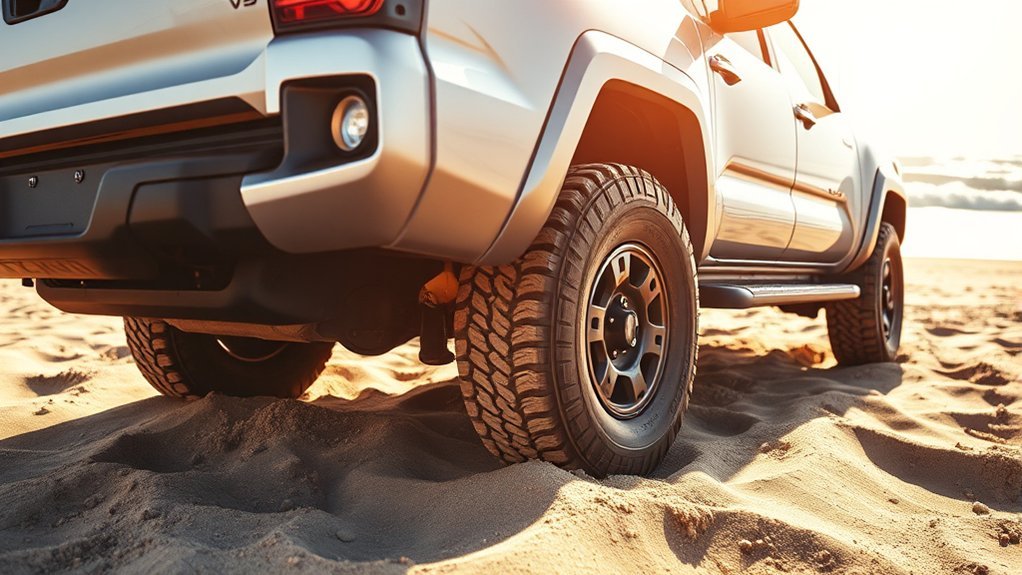
Soft sand gives a tire much less support than pavement. Lowering pressure lets the sidewall flex and lengthens the tire’s footprint, spreading the Tacoma’s weight over a larger area. That added flotation can reduce digging and improve traction. Tire manufacturer BFGoodrich explains that airing down improves the footprint and ride on soft or uneven terrain, while also warning that there is no universal pressure for every vehicle.
Airing down can also soften impacts from ruts and washboard sand. It does not make the tire puncture-proof, protect the suspension from all damage, or eliminate the chance of getting stuck. Too little pressure may let the bead separate from the wheel, increase sidewall flex and heat, reduce load capacity, or expose the wheel to impact damage.
The safest beach pressure is the highest pressure that still provides enough flotation and traction for the current sand.
How to Determine the Best Tire Pressure for Beach Driving
For most Tacoma drivers, 20 PSI in all four tires is a sensible starting point. The National Park Service recommends less than 20 PSI for many vehicles on Cape Hatteras ORV routes, while Cape Lookout advises 20–25 PSI before entering the sand. Those ranges show why local conditions and vehicle setup matter more than a single “perfect” number.
Recommended Sand PSI
| Condition | Practical Approach |
|---|---|
| Firm, packed sand | Start around 20–25 PSI and use the highest pressure that maintains traction. |
| Typical soft beach sand | Start near 20 PSI. If the truck digs, reduce all four tires evenly in 2 PSI steps. |
| Very soft sand or recovery | A lower setting may help, but remain at very low speed and confirm that tire load, wheel fit, and bead retention are adequate. |
| Normal paved-road travel | Reinflate to the cold pressure on the driver-door Tire and Loading Information label. |
Michelin states that 20 PSI is its minimum general recommendation for passenger and light-truck tires. It allows lower pressure off-road only at speeds below 15 mph and when the tire can still carry the vehicle’s load. That is a better safety boundary than treating 10–15 PSI as a routine target.
Tire and Wheel Considerations
Your Tacoma’s safe air-down pressure depends on more than tread type. Consider the truck’s loaded weight, tire size and load range, wheel width, sidewall height, tire construction, and the condition of the bead and rim. A heavily loaded truck generally needs more pressure than an empty one. A short sidewall usually gives you less room to air down than a tall off-road sidewall.
Beadlock wheels can improve bead retention at low pressure, but they do not make every low-PSI setting safe. BFGoodrich warns that excessive air-down can unseat a tire and cause serious damage. Unless your wheel and tire manufacturers provide a lower approved setting, avoid treating pressure below 15 PSI as normal beach-driving pressure.
How to Air Down Safely
- Stop on a firm, level area before the beach entrance and set the parking brake.
- Record the pressure in all four tires with an accurate gauge.
- Deflate each tire to about 20 PSI so the truck remains balanced.
- Recheck every tire; do not rely only on automatic deflators or the dashboard display.
- Enter the sand slowly and watch for digging, excessive sidewall bulge, steering heaviness, or bead leakage.
- If more flotation is needed, lower all four tires in 2 PSI steps and recheck them.
- Replace every valve cap and keep the compressor ready for the return trip.
Pro Tip: Write down the pressure that works for your exact tire size, load, and beach conditions. It gives you a safer starting point on your next trip, but you should still adjust for temperature, cargo, and changing sand.
Prepare Your Tacoma Before Driving on Sand
Before you air down, confirm that the beach is open to vehicles and check permits, current closures, weather, and tides. The National Park Service beach-driving checklist recommends checking forecasts and tide tables and carrying a gauge, air pump, shovel, spare tire, jack support, traction boards, water, first-aid supplies, and other emergency equipment.
- Inspect the tires: Do not enter deep sand with a damaged sidewall, exposed cords, a leaking bead, or an unreliable spare.
- Reduce unnecessary weight: Extra cargo increases the pressure each tire must support.
- Secure the load: Loose cargo can shift during turns or recovery.
- Know the route: Identify legal entrances, firm travel lanes, turnaround points, and safe exits before the tide changes.
- Keep distance: Leave enough space to avoid stopping in another vehicle’s churned-up sand.
[Products Worth Considering]

These aluminum alloy tire valve stem caps with an O-ring seal help protect valve stems from corrosion while adding a clean, stylish look to your vehicle. The universal fit works across cars, trucks, motorcycles, bicycles, and more, making them an easy upgrade for everyday driving and off-road use. Installation is quick, and the included four-pack keeps all your tires dressed and protected.
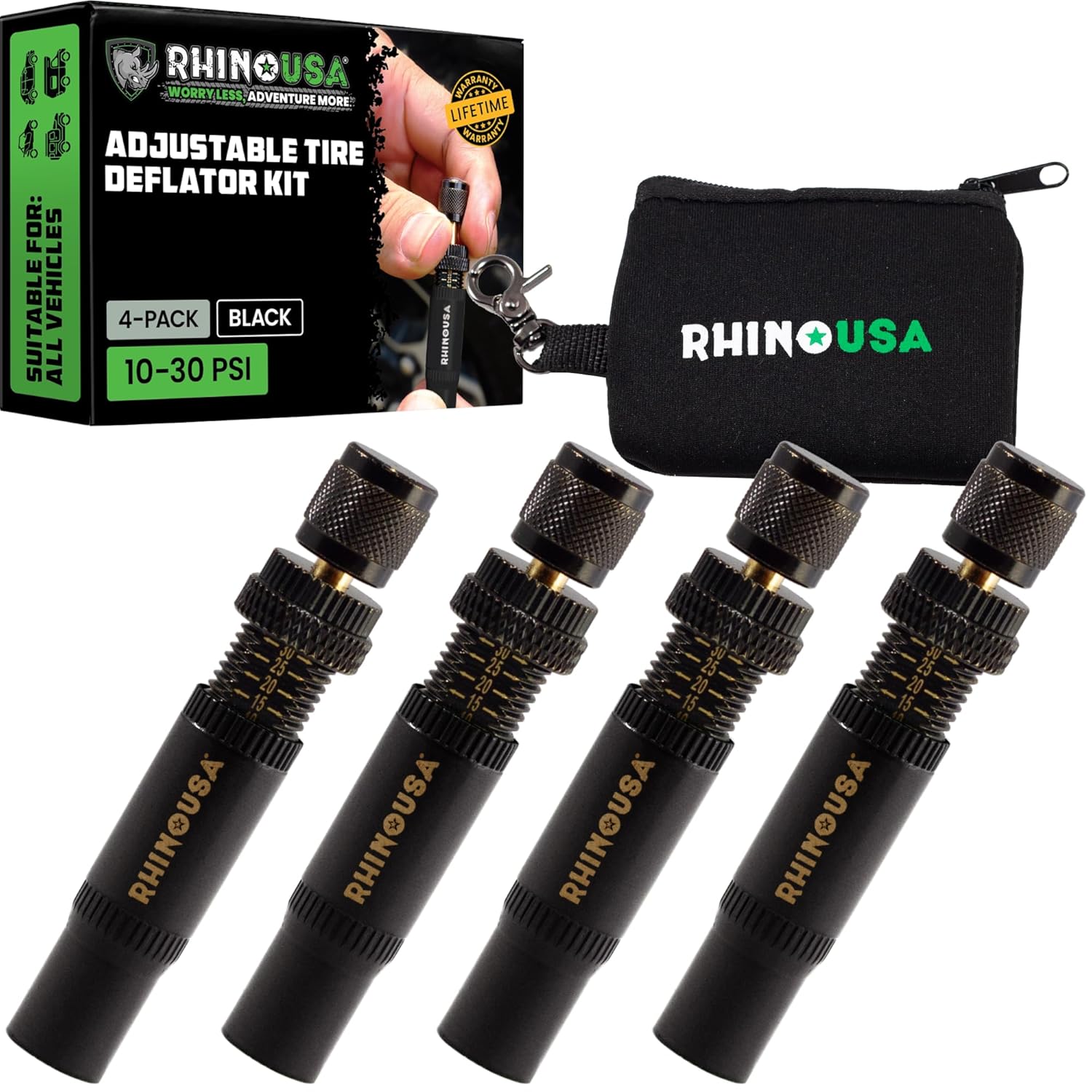
Use the Rhino USA adjustable tire deflators to air down all four tires at once by screwing one deflator onto each valve stem, letting you step away while the tires reach your preset pressure. Each deflator independently adjusts across a 10–30 PSI range with laser-etched indicators for quick setup and verification, making it ideal for beach, sand, and rocky off-road trails.

This ALL-TOP auto-stop tire deflator valve kit lets you air down off-road tires quickly without watching pressure, automatically stopping when your preset PSI is reached. Each valve is individually calibrated for reliable performance with an acceptable +/- 2 PSI tolerance. The adjustable deflator range covers 10 to 30 PSI and includes four valves plus valve caps and a zipper pouch for easy setup on trucks, SUVs, RVs, UTVs, and powersports.
4WD, Sand Mode, and Traction Control
Use the systems fitted to your exact Tacoma rather than following one rule for every model year. On part-time 4WD models, 4WD High is generally appropriate for normal sand travel because the surface allows tire slip. Toyota reserves 4WD Low for maximum power and hard pulling in deep sand, mud, or steep terrain. Consult the Toyota owner’s manual for your model year before changing transfer-case modes.
On equipped 2024-and-newer Tacomas, Multi-Terrain Select includes a Sand setting that helps manage wheelspin in 4WD High or 4WD Low. Start with the vehicle’s intended sand or off-road mode instead of automatically disabling every stability aid. If traction control repeatedly cuts power and prevents progress, switch it off only as your owner’s manual directs, use gentle throttle, and turn it back on when normal traction returns.
Note: Four-wheel drive improves the chance of maintaining motion, but it does not improve braking on sand or guarantee recovery. Two-wheel-drive vehicles may be allowed on some beaches, yet they have less reserve traction and should avoid deep, churned, or steep sand.
Proven Techniques for Driving on Soft Sand
Good beach driving is smooth and deliberate. Use enough momentum to keep moving, but never confuse momentum with speed. Cape Lookout National Seashore sets a 25 mph beach limit and reduces it to 15 mph near people; other beaches may be slower. Always follow the posted local limit.
- Accelerate gently: Sudden throttle spins the tires and digs holes.
- Use steady momentum: Maintain a consistent low speed through soft sections.
- Choose the right gear: Use a gear that lets the engine pull smoothly without lugging or spinning the tires. Starting in second gear is not a universal rule.
- Make wide, gradual turns: Sharp steering pushes sand in front of the tires and can unseat a bead at low pressure.
- Brake early and lightly: Abrupt braking can bury the front tires.
- Follow established tracks when permitted: Compacted tracks are often firmer, but avoid deep ruts that may contact the underbody.
- Avoid unnecessary stops: Stop on firm, level sand when possible and point toward your planned exit.
- Ease off when tires spin: Continuing to add throttle usually makes the truck sink faster.
How Airing Down Improves Safety While Beach Driving
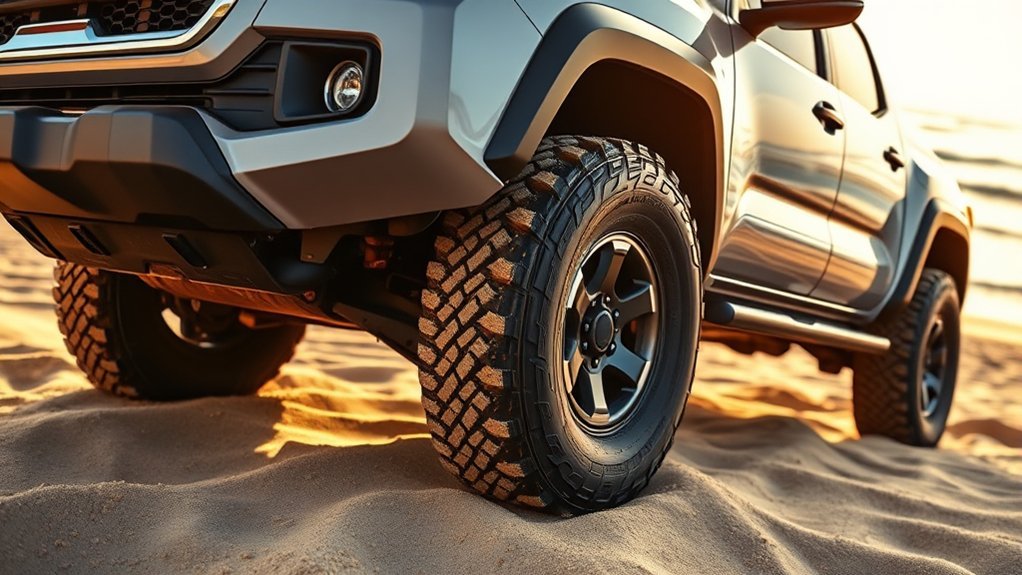
When pressure is matched to the vehicle and conditions, the larger footprint can improve flotation, reduce wheelspin, and make the Tacoma easier to control at low speed. A softer tire can also absorb small ridges and ruts, improving ride comfort.
The safety benefit disappears when pressure is too low for the load or speed. Underinflated tires flex more, build heat, respond more slowly to steering, and can lose their bead during a sharp turn. That is why airing down must always be paired with low speed, smooth inputs, regular pressure checks, and prompt reinflation before pavement.
Warning: Do not drive normal road speeds on aired-down tires. Low pressure can reduce braking and maneuverability, overheat the tire, damage the sidewall, and allow the bead to separate from the wheel.
Must-Have Tools for Airing Down and Pumping Up
You do not need a specific brand, but you do need reliable equipment that can handle all four Tacoma tires. Carry the following before entering a remote beach route:
- Accurate tire-pressure gauge: Use a separate gauge to verify every tire.
- Controlled tire deflator: A valve-core or preset deflator speeds up the process, but readings still need verification.
- 12-volt or hardwired compressor: Confirm that it can reach the placard pressure and has a duty cycle suitable for four light-truck tires.
- Shovel: Remove sand from in front of and behind the tires and from high-centered areas.
- Traction boards or sturdy boards: Provide a firm ramp without sacrificing vehicle floor mats.
- Full-size spare, jack, and wide jack base: A standard jack can sink into sand without a support board.
- Recovery equipment: Carry only properly rated gear and use manufacturer-approved recovery points. Seek professional help if you are not trained in kinetic or tow-strap recovery.
- Emergency supplies: Bring water, first-aid supplies, a flashlight, fire extinguisher, sun protection, and a charged phone or radio.
Pro Tip: Test the compressor at home before the trip. Confirm that the power cord reaches every tire and that the compressor does not overheat before all four tires return to road pressure.
[Products Worth Considering]

Milton S-921 pencil tire pressure gauge helps you maintain optimal tire pressure for passenger cars with accurate readings in PSI and kPa. It features a built-in deflator valve for convenient pressure adjustments, plus a single chuck head and nylon indicator bar for easy use on the go. Built from durable plated brass and designed for reliable performance, it’s a practical road trip and cold-weather maintenance tool.

The JACO FlowPro Tire Inflator measures, inflates, and airs down tires up to 100 PSI with battery-free operation and ±2% accuracy after calibration. It features a glowing pressure dial for night visibility, a heavy-duty steel build with a hybrid hose, and a precision push-to-inflate thumb trigger. The patented Lightning Air Chuck locks on for a secure seal, and the kit includes quick-connect hardware for easy inline use with your air compressor.
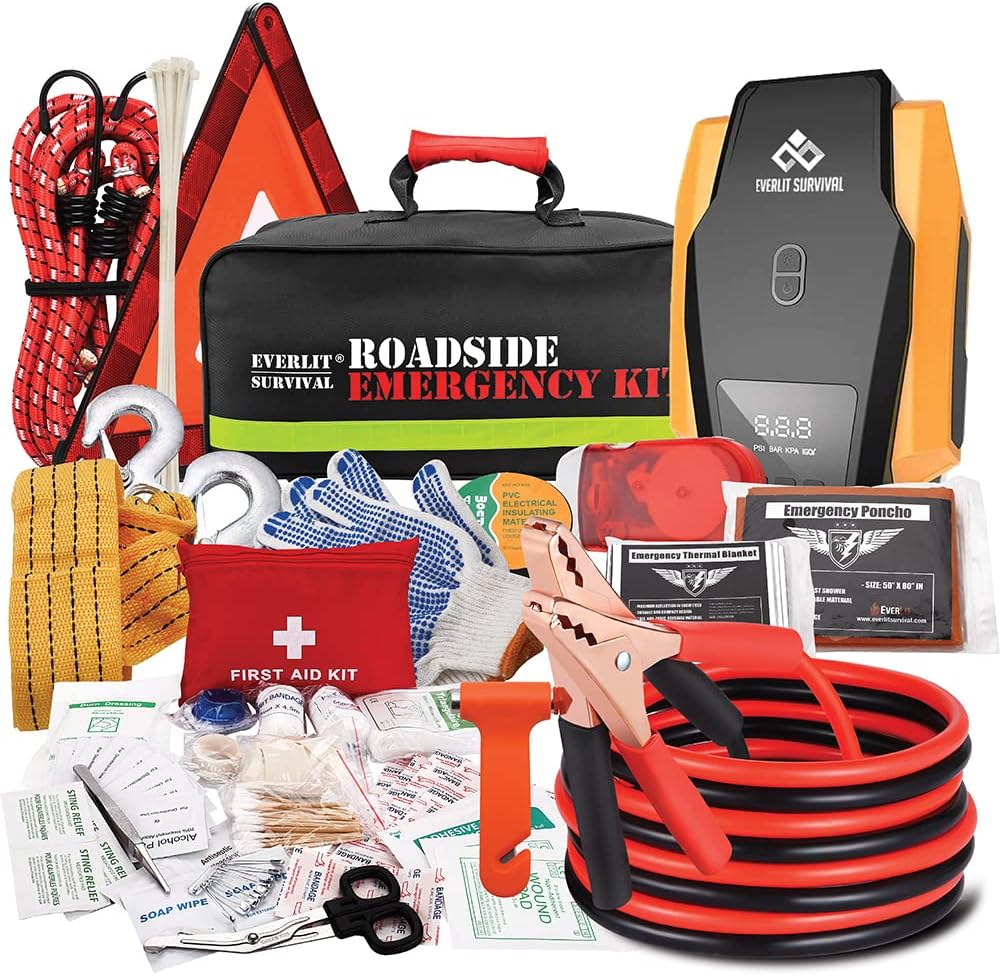
The Everlit Road Guardian emergency kit is designed for roadside breakdowns, combining essential safety gear and roadside tools in one compact bag. It includes a digital 12V auto tire inflator with preset and auto shutoff, plus 12-foot 8-gauge jumper cables to get you moving again. You also get a full 108-piece first aid kit, reflective warning tools, safety gloves, and emergency convenience items for safer travel.
What to Do If You Get Stuck in Soft Sand
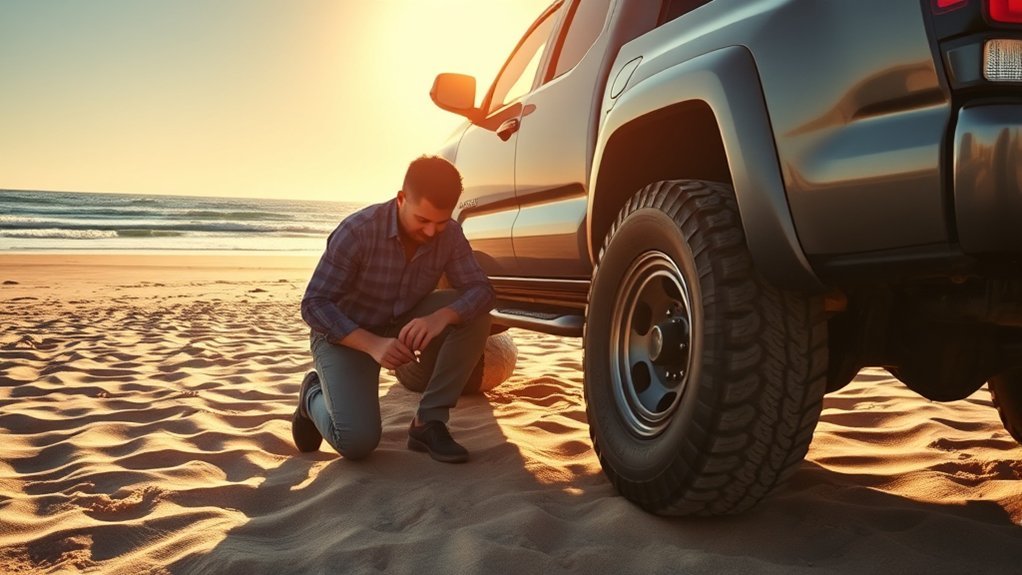
The moment forward motion stops, stop spinning the tires. Wheelspin digs the truck deeper and can overheat the drivetrain. Then work through these steps:
- Set the parking brake, place the transmission in Park or Neutral as required, and make sure passengers stand well clear.
- Straighten the steering so the front tires do not have to plow sideways through the sand.
- Use a shovel to clear sand from in front of and behind all four tires and from beneath the axles, differential, skid plates, or frame if the truck is high-centered.
- If your current pressure is still relatively high, reduce all four tires evenly by another 2 PSI while staying within the limits of your tire, wheel, load, and experience.
- Place traction boards or sturdy boards tight against the drive tires in the intended direction of travel.
- Select the appropriate 4WD or Sand mode. Use 4WD Low only when the owner’s manual and conditions call for maximum low-speed pulling power.
- Apply gentle throttle. Try a short, controlled reverse or forward movement rather than long wheelspin.
- If the truck does not move after a few careful attempts, stop and call a commercial recovery service before the tide or weather creates a larger emergency.
Warning: A stuck vehicle can lunge suddenly when it regains traction. Keep bystanders away from the front, rear, tires, boards, and recovery line. Never place hands or feet near a tire while the driver applies power.
[Products Worth Considering]

The Big Rig Defense Tire Thumper is a truck tire pressure checker that lets you quickly check multiple tires by giving them a firm whack. Listen for a reassuring thump and feel the stick bounce when a tire is fully inflated, helping you get back on the road safely. It features a comfortable, glove-friendly handle and a secure wrist strap for confident use on busy routes.

Upgrade your Toyota tire setup with these corrosion-resistant, leak-proof valve stem caps designed to help protect the valve core from water, snow, and road grime. The caps feature a snug rubber seal and durable copper alloy construction to resist rust and oxidation while maintaining stable tire pressure. Ideal for replacing worn original caps and keeping your wheels looking clean and stylish.

The Milton S-693 straight foot dual head air chuck is designed for accurate tire pressure checks and quick, secure valve-core engagement with lock-on threads on both ends. With a 1/4" FNPT connection and a maximum 150 PSI rating, it’s built for use on inner duals and common vehicle tires, including trucks and RVs.
Reinflating Tires After Beach Driving
Reinflate before normal paved-road travel. Do not assume every Tacoma needs 30–35 PSI. The correct road pressure is the manufacturer’s recommended cold pressure on the driver-door Tire and Loading Information label or in the owner’s manual. NHTSA advises using that placard pressure, checking tires cold, and not using the maximum pressure molded into the tire sidewall as the vehicle target.
- Park on firm ground before the paved road whenever possible.
- Inflate all four tires to the driver-door placard setting.
- Check for cuts, bulges, damaged valve stems, sand between the bead and rim, or a tire that will not hold pressure.
- Tighten valve caps and confirm that the spare and compressor are secured.
- Drive cautiously and recheck pressure when the tires are cold, usually after the truck has been parked for at least three hours.
- Rinse salt and sand from the underbody, wheels, brakes, and recovery equipment with fresh water after the trip.
A warm tire may read above the cold placard pressure. Do not release air merely to force a hot tire down to the cold number. Let the tires cool, then make the final adjustment.
Frequently Asked Questions
What PSI should Toyota Tacoma tires be for beach driving?
Start around 20 PSI in all four tires. Use the highest pressure that provides enough flotation, then reduce evenly in 2 PSI steps if the truck still digs. Tire size, wheel design, load, and sand firmness can change the safe setting.
Should I turn off traction control for beach driving?
Not automatically. Use Sand mode or the normal off-road settings provided for your Tacoma first. Turn traction control off only when the owner’s manual allows it and the system is cutting power enough to prevent progress, then re-enable it when traction improves.
Do I need four-wheel drive to drive a Tacoma on the beach?
Four-wheel drive is strongly recommended for deep or changing sand. Some managed beaches allow capable two-wheel-drive vehicles, but local rules vary and a 2WD truck has less reserve traction. Check the managing agency’s requirements before entering.
Can I drive on pavement with my tires aired down?
Only at very low speed for the shortest practical distance needed to reach a safe inflation point. Aired-down tires have reduced steering and braking response and can overheat or suffer sidewall and bead damage on pavement. Reinflate before normal road travel.
What should I do if a tire bead comes off the wheel?
Stop driving. Fit the spare or arrange professional recovery. Do not attempt improvised bead-seating methods with flammable chemicals, and do not keep driving on a partly unseated tire because the tire and wheel may be damaged.
Sources
- Cape Lookout National Seashore: Tips for Beach Driving — tire-pressure range, speed limits, preparation, and recovery equipment.
- National Park Service: ORV Frequently Asked Questions — airing down below 20 PSI on soft sand and reinflating after leaving the beach.
- NHTSA TireWise — correct cold road pressure, tire placard use, and pressure-checking guidance.
- Toyota: 2024 Tacoma Off-Road Systems — Multi-Terrain Select Sand mode, 4WD operation, and available recovery features.
- BFGoodrich Off-Road Tire Selection Guide — air-down benefits, pressure variables, and bead-unseating risk.
- Michelin Tire FAQ — minimum general pressure guidance and conditions for lower off-road pressure.
Conclusion
Airing down can make a Toyota Tacoma much more capable on soft beach sand, but the goal is controlled flotation—not the lowest possible number on the gauge. Start near 20 PSI, adjust evenly and gradually, keep speed low, use your Tacoma’s proper 4WD or Sand settings, and stop wheelspin before the truck buries itself. Most importantly, reinflate to the driver-door placard pressure before normal pavement driving.
