
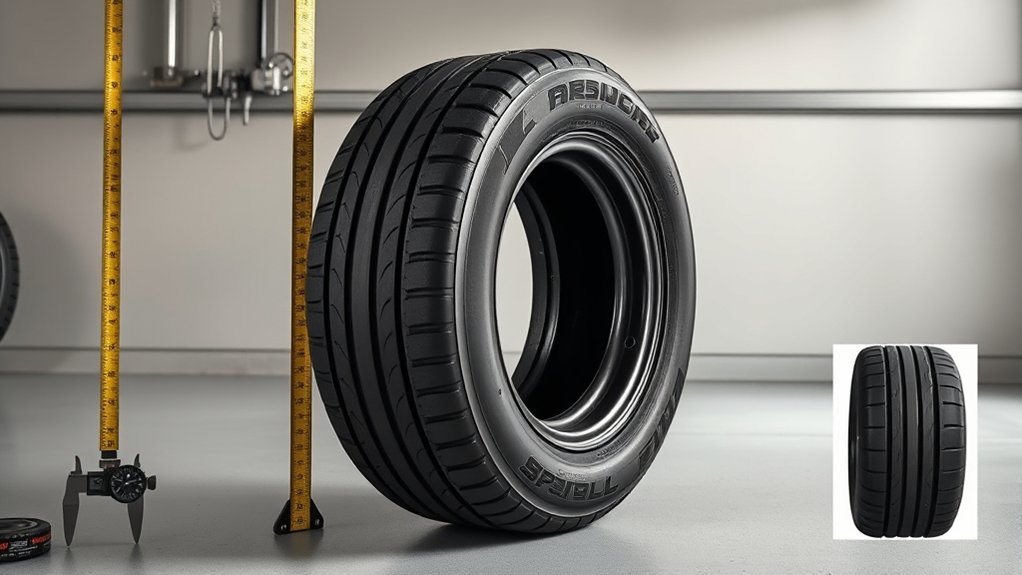
A 265 tire is 265 millimeters wide, or about 10.4 inches wide. That number alone does not tell you the tire height. To find the overall diameter, you need the full tire size, such as 265/70R17. A 265/70R17 tire is about 31.6 inches tall, which makes it closer to a 32-inch tire than a true 33-inch tire.
Quick Answer
A 265 tire is about 10.4 inches wide. If the full size is 265/70R17, it is about 31.6 inches tall, with a 7.3-inch sidewall and a 99.3-inch circumference. It is not a true 33-inch tire.
Key Takeaways
- The number 265 means the tire is 265 mm wide, or about 10.4 inches.
- A 265/70R17 tire is about 31.6 inches tall, so it is closer to a 32-inch tire than a 33-inch tire.
- The 70 aspect ratio means each sidewall is 70% of 265 mm, or about 7.3 inches.
- A 265/70R17 tire has a circumference of about 99.3 inches and turns about 638 times per mile.
- Speedometer change depends on your original tire size. If the new tire is taller than stock, your speedometer may read lower than your actual speed.
What Is a 265 Tire Size?
A 265 tire size tells you the tire’s nominal section width. In simple terms, the tire is about 265 millimeters wide from sidewall to sidewall when mounted on its measuring rim. Converted to inches, that is about 10.4 inches wide.
The key point is that 265 does not mean tire height. The tire’s height depends on the full code. In a size like 265/70R17, each part matters:
- 265 means the tire is about 265 mm wide.
- 70 means the sidewall height is 70% of the tire width.
- R means radial construction.
- 17 means the tire fits a 17-inch wheel.
You can use that full code to estimate overall diameter, sidewall height, circumference, and speedometer change. That is why a complete tire size is more useful than saying “a 265 tire” by itself. Once you know the full code, you can compare size, clearance, gearing, and tire selection based on performance with much less guesswork.
Note: Tire dimensions are usually calculated from the size code, but the real measured size can vary slightly by brand, tread design, load range, air pressure, and measuring rim width. Always check the tire maker’s spec sheet before buying.
How Big Is a 265 Tire in Inches?
A 265 tire is about 10.4 inches wide. If you mean the common size 265/70R17, the tire is about 31.6 inches tall. It spans a little over 2.6 feet from top to bottom.
Here is the simple formula for a 265/70R17:
Sidewall height = 265 mm × 0.70 = 185.5 mm, or about 7.3 inches. Overall diameter = 17 inches + 7.3 inches + 7.3 inches = about 31.6 inches.
The circumference is about 99.3 inches, so each full revolution moves the vehicle a little over 8 feet. That equals roughly 638 revolutions per mile. These numbers help when you compare tire wear, gearing, odometer change, and speedometer accuracy.
A specific tire model, such as the Fullway HP108, still needs to be checked by its published size, load index, speed rating, and approved rim width. The size code gives you the starting point, but the product spec sheet gives you the final fitment details.
265 Tire Width, Sidewall, and Diameter Explained
When you break down a 265/70R17, the width comes first. 265 millimeters is about 10.4 inches. That width affects the tire’s footprint, steering feel, clearance near suspension parts, and how the tire sits on the wheel.
The second number, 70, controls the sidewall. A 70 aspect ratio means the sidewall is 70% of 265 mm. That gives you a sidewall of about 185.5 mm, or 7.3 inches. Sidewall height matters because it affects ride comfort, wheel protection, steering response, and off-road flex.
The wheel size is the final number. In 265/70R17, the tire fits a 17-inch wheel. Add the top sidewall, the wheel diameter, and the bottom sidewall, and you get an overall diameter of about 31.6 inches.
| Measurement | 265/70R17 Approximate Size |
| Width | 265 mm, or 10.4 in |
| Sidewall height | 185.5 mm, or 7.3 in |
| Overall diameter | 31.6 in |
| Circumference | 99.3 in |
| Revolutions per mile | About 638 |
Width can help traction and stability, but it does not automatically make a tire safer in every condition. Tread pattern, rubber compound, pressure, and vehicle setup also matter, especially for wet traction and hydroplaning resistance.
Is a 265 Tire a 33-Inch Tire?
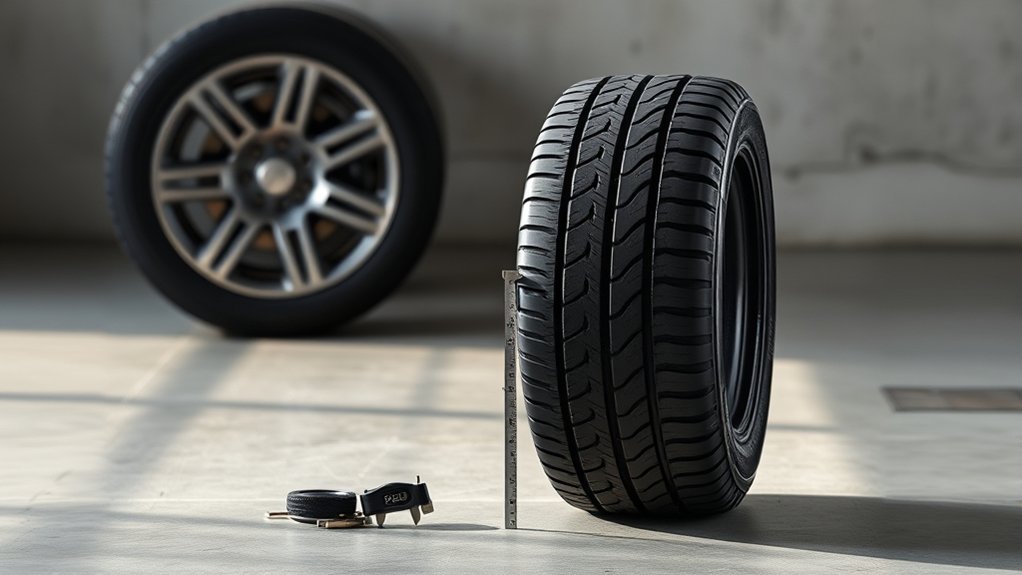
No, a common 265/70R17 is not a true 33-inch tire. It measures about 31.6 inches tall by the standard size formula. That makes it closer to a 32-inch tire.
Some drivers may group it near 33-inch tires in casual conversation, but that is not precise enough for buying, lifting, trimming, or speedometer calibration. If you want a tire that is closer to 33 inches, a common comparison size is 285/70R17, which calculates to about 32.7 inches tall.
That size difference affects wheel-well clearance, suspension travel, gearing, braking feel, and optimal handling characteristics. Always compare real diameter instead of relying only on rounded tire-size labels.
[Products Worth Considering]
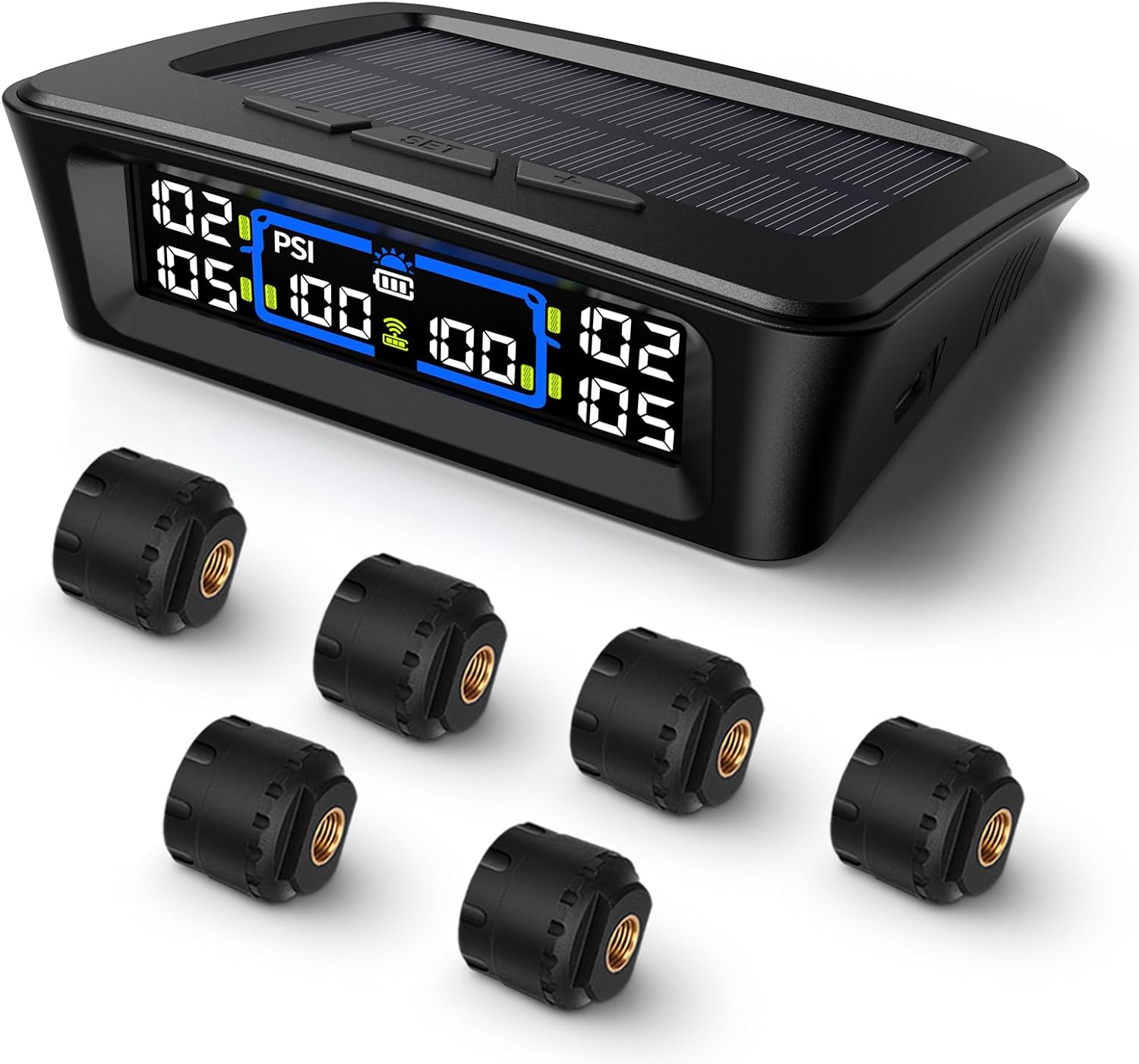
The Tymate TM12 RV TPMS delivers real-time tire pressure and temperature monitoring with a stable 433Hz display for safer long-distance driving. It supports simultaneous monitoring across vehicle and trailer zones, includes six alarm modes for pressure, temperature, leakage, battery, and signal loss, and features easy DIY installation with auto calibration. Power is supplied via USB-C charging or solar recharging, with a wide 0–144 PSI range and up to 50 ft signal coverage for RVs and towable trailers.

Protect your spare wheel with a waterproof, dustproof tire cover made to resist sun and harsh weather. The elastic band design makes it easy to install and remove without tools, while reinforced stitching helps it keep its shape. Available in multiple sizes, it fits common RV, trailer, Jeep, SUV, and truck spare tires.

Keep your tires properly inflated with this analog VONDIOR tire pressure gauge, designed for fast, easy readings without batteries. The swiveling, two-axis hose and large glow dial help you measure at any tire angle with instant visibility. Built with a protective rubber shield, it supports durable, low-maintenance use for cars and trucks.
265 Tire Diameter
A 265/70R17 tire has an approximate diameter of 31.6 inches. The 265 tells you the width, not the height. The height comes from the 70 aspect ratio and the 17-inch wheel size.
If you need more ground clearance, a taller tire size may help, but it can also cause rubbing, heavier steering, slower acceleration, and speedometer error. A larger tire is not always a direct bolt-on upgrade.
33-Inch Tire Comparison
Use this table as a quick comparison. These are approximate calculated dimensions, and real-world measurements can vary by tire model.
| Size | Approx. Diameter | Approx. Width |
|---|---|---|
| 265/70R17 | 31.6 in | 10.4 in |
| 285/70R17 | 32.7 in | 11.2 in |
| True 33-inch tire | About 33.0 in | Varies by tire |
Real-World Size Difference
The real-world difference between a 265/70R17 and a true 33-inch tire is about 1.4 inches in diameter. Because half of that difference sits below the axle, the ground-clearance gain from a true 33-inch tire over a 31.6-inch tire is roughly 0.7 inch, before tire load and inflation are considered.
That may sound small, but it can be enough to change rubbing, spare-tire fit, gearing, and speedometer readings. For precise fitment, treat a 265/70R17 as a strong 32-inch option, not a true 33.
265 Tire Sizes by Rim Diameter
A 265 tire is about 10.4 inches wide, but the overall height changes with the aspect ratio and wheel diameter. The sidewall usually gets shorter as wheel size increases, but not always enough to keep the same total diameter.
| Tire Size | Approx. Diameter | Best Use Case |
|---|---|---|
| 265/75R16 | 31.6 in | Common truck and SUV fitment with more sidewall |
| 265/70R17 | 31.6 in | Balanced height, width, and sidewall for many SUVs and trucks |
| 265/65R18 | 31.6 in | Similar height to 265/70R17 with an 18-inch wheel |
| 265/60R20 | 32.5 in | Taller 20-inch setup with less sidewall than 16- or 17-inch options |
| 265/70R18 | 32.6 in | Near-33-inch upgrade range for some trucks and SUVs |
This is why you should not assume all 265 tires are the same height. A 265/65R18 and 265/70R17 are nearly the same diameter, while a 265/60R20 is taller. Match the full size code to your vehicle, not just the first number.
After size, tread category and compound still matter. A tire with the right dimensions may still perform differently in rain, snow, heat, or gravel, so compare tire performance in rain and snow before choosing a final set.
[Products Worth Considering]

Measure tire tread depth quickly and accurately with this LUMITECO dial gauge that reads in 1/32" increments up to 14/32". The color-coded green/yellow/red zones make it easy to judge tire wear and know when replacement is needed. A rugged, compact design with a protective pouch helps keep the gauge ready for use on cars, trucks, motorcycles, and more.

Replace your worn or missing TPMS sensors with pre-programmed, direct-fit sensors for compatible Ford, Lincoln, and select Mazda models. Each sensor comes ready to activate with a scan tool, helping restore accurate tire pressure monitoring and trouble-free installation. Built with a long-life CR2032 battery and tested before factory release, this set provides dependable performance with a one-year warranty.
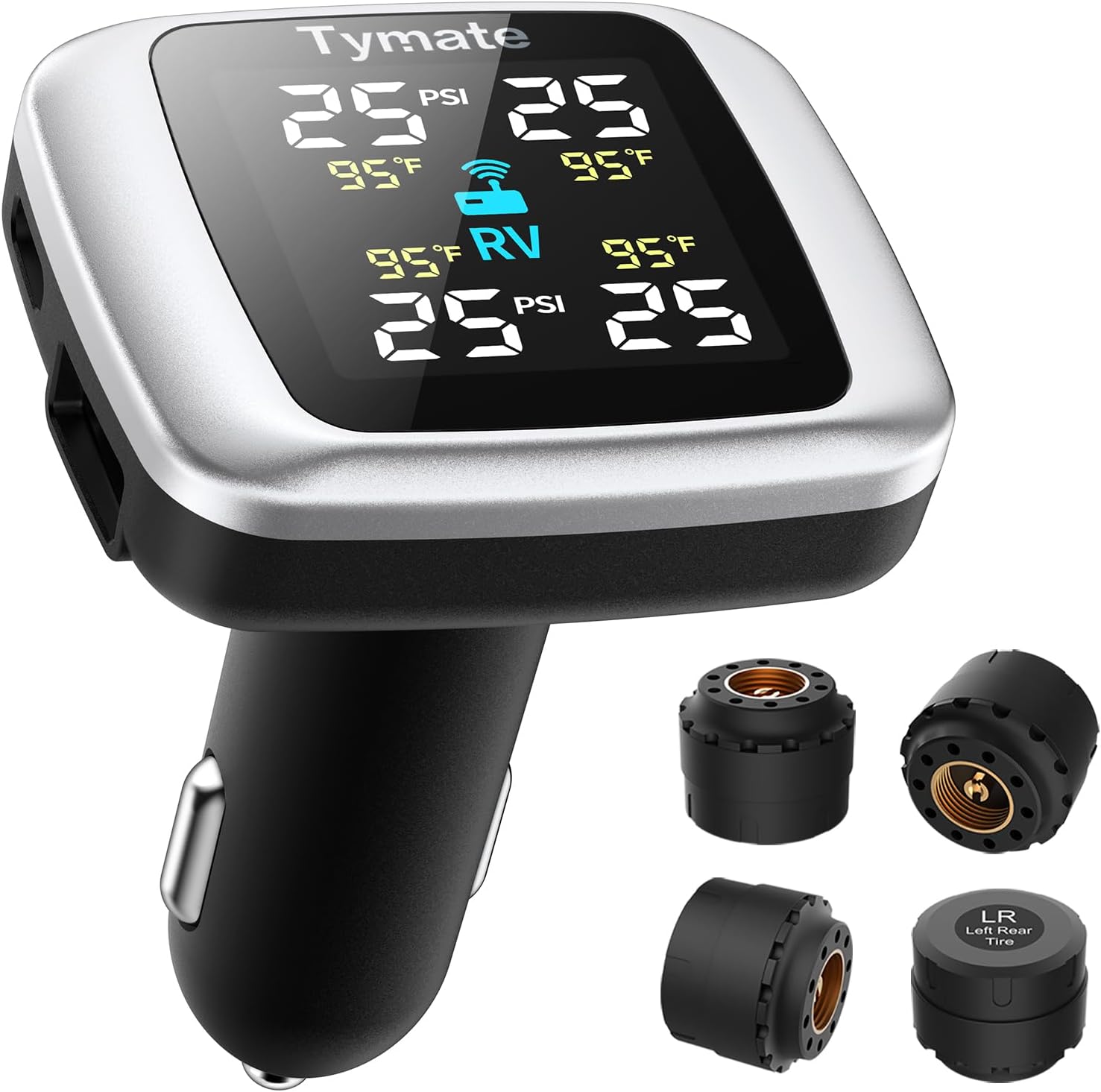
Tymate TM7 is a wireless tire pressure monitoring system that delivers real-time pressure and temperature readings for safer driving. It includes four external sensors, a bright color LCD display with adjustable backlight, and six alarm modes for high/low pressure, fast leakage, high temperature, and sensor signal or battery issues. The system covers a wide 0–144 PSI range and plugs into your vehicle’s cigarette lighter socket for quick DIY setup.
How a 265 Tire Changes Speedometer Readings
A 265 tire changes your speedometer only if its overall diameter is different from the tire size your vehicle is calibrated for. The width by itself is not the main issue. The rolling diameter and circumference are what affect the speedometer and odometer.
If the new tire is taller than stock, it travels farther with each wheel revolution. In that case, the speedometer may read lower than your real speed. For example, if your vehicle was calibrated for 265/65R17 tires and you move to 265/70R17, the diameter increase is about 3.4%. When the speedometer shows 65 mph, your actual speed may be about 67 mph.
If the new tire is shorter than stock, the opposite can happen. The tire turns more times per mile, and the speedometer may read higher than your real speed.
Pro Tip: Compare the new tire diameter with your original tire diameter, not with a generic 32-inch or 33-inch label. A small percentage change can still matter for speed, odometer readings, shift behavior, and driver-assistance systems.
Some vehicles can be recalibrated through a scan tool, tuner, dealer service procedure, or vehicle settings. Others may need no correction if the tire diameter stays close to stock. If you depend on exact speed readings, towing performance, or all-season performance, confirm the size change before installation.
What to Check Before Installing 265 Tires
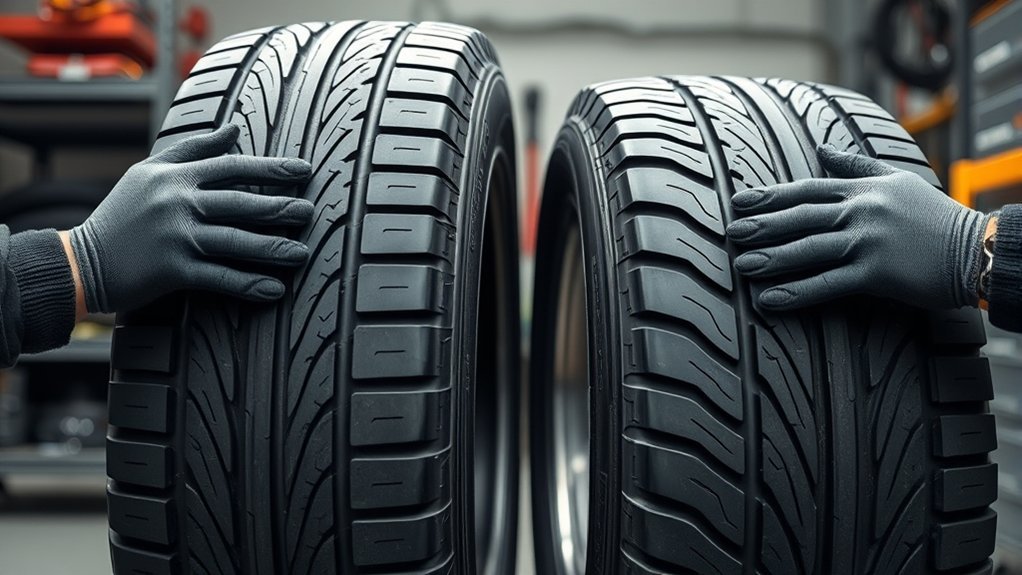
Before you install 265 tires, check the full tire size against your vehicle’s recommended tire sizes, wheel specs, and available clearance. A wider or taller tire can look right while still rubbing during turns, bumps, braking, or suspension compression.
Warning: Do not install a tire unless its load index, speed rating, approved rim-width range, and clearance are safe for your vehicle. A tire mounted on an unapproved rim or with too little clearance can create handling problems, tire damage, or loss of control.
Use this checklist before buying:
- Original tire size: Compare your stock size with the new 265 size.
- Overall diameter: Check how much taller or shorter the new tire will be.
- Section width: Make sure the 10.4-inch width clears fenders, struts, control arms, and liners.
- Wheel offset: Offset can move the tire inward or outward and change rubbing points.
- Suspension travel: Check clearance at full lock and during compression, not just while parked.
- Approved rim width: Use the tire maker’s spec sheet for the exact tire model.
- Load index and speed rating: Match or exceed your vehicle’s requirements.
- Spare tire size: A much different spare can create drivetrain stress on some vehicles.
- TPMS and calibration: Confirm tire pressure monitoring and speedometer behavior after the change.
If you drive off-road, tow, or carry heavy loads, be even more careful. Extra width and height can improve stance and off-road capability, but only when the tire fits safely and matches the vehicle’s load needs.
[Products Worth Considering]
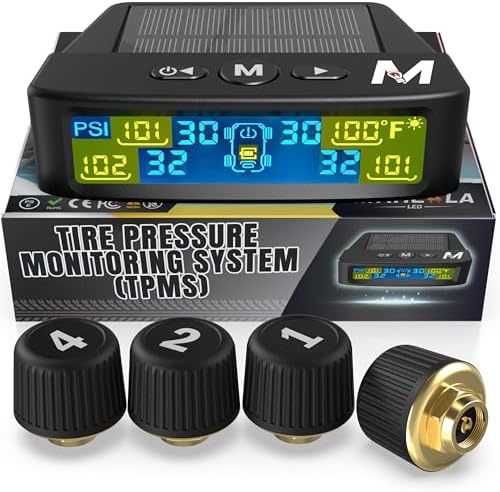
Marcala’s TPMS set of four sensors helps you monitor tire pressure and temperature in real time while driving, with updates every second. The bright color LCD uses auto-dimming for easy viewing, powered by dual solar and USB charging, and offers six alarm modes. Built for trailers, RVs, campers, trucks, and towing setups, the sensors support monitoring 1-4 wheels up to 98 PSI with IP67 waterproof protection.
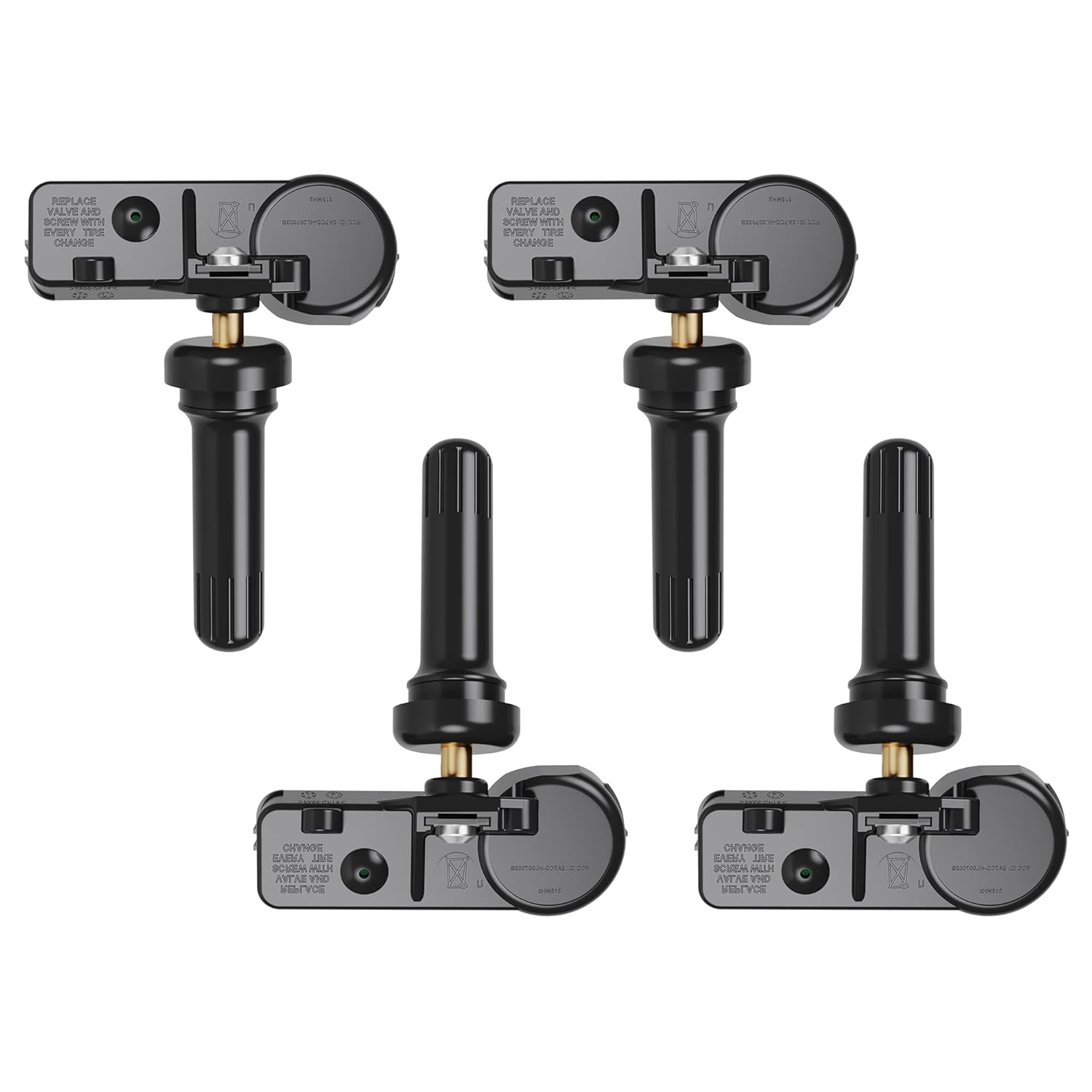
Replace worn or faulty TPMS sensors with this brand new 315MHz GM-compatible replacement set for select Chevy, GMC, Buick, Cadillac, and similar vehicles. These sensors are pre-programmed for your make/model/year and typically only require activation with a scan tool. Built for long service life with a high-temperature battery, they help maintain reliable tire pressure monitoring for safer driving.

The TYAMATE TM8 solar-powered wireless TPMS delivers real-time tire pressure and temperature monitoring with six alarm modes for safer driving. A vibrant color LCD display shows readings clearly while windshield mounting keeps it hands-free and easy to read. With a wide 0–87 PSI range, strong 433.92 MHz signal transmission, and quick sensor pairing, it’s ideal for RV, sedan, SUV, MPV, and truck use.
Frequently Asked Questions
Is a 265 tire the same as a 31?
No. A 265 tire is not automatically the same as a 31-inch tire. The number 265 means width in millimeters. A 265/70R17 is about 31.6 inches tall, while other 265 sizes can be shorter or taller. Always check the full size code.
Is a 265 or 275 tire better?
Neither is always better. A 265 tire is usually easier to fit, slightly lighter, and may help fuel economy. A 275 tire is wider and may add grip or stability, but it can also increase rubbing risk, weight, and rolling resistance. Choose based on your vehicle clearance and driving needs.
Is a 285 taller than a 265 tire?
Usually, yes, when the aspect ratio and wheel size are similar. For example, a 285/70R17 is about 32.7 inches tall, while a 265/70R17 is about 31.6 inches tall. The 285 is also wider, so check clearance before upgrading.
Are 265 tires the same as 32?
A 265/70R17 is close to a 32-inch tire, but it is not exactly 32 inches. It calculates to about 31.6 inches tall. Other 265 sizes may be closer to 30, 31, 32, or 33 inches depending on aspect ratio and wheel diameter.
What is the formula for 265/70R17 tire height?
Multiply 265 mm by 0.70 to get the sidewall height: 185.5 mm. Convert that to inches by dividing by 25.4, which gives about 7.3 inches. Add both sidewalls to the 17-inch wheel: 17 + 7.3 + 7.3 = about 31.6 inches.
Conclusion
A 265 tire is about 10.4 inches wide, but its height depends on the full tire code. The common 265/70R17 size is about 31.6 inches tall, with a 7.3-inch sidewall, 99.3-inch circumference, and about 638 revolutions per mile. That makes it closer to a 32-inch tire than a true 33-inch tire.
Before installing 265 tires, compare the new size with your original tire size, check wheel and suspension clearance, confirm approved rim width, and make sure the load index and speed rating match your vehicle. The right 265 tire can improve stance, grip, and ground clearance, but only if it fits safely.
Sources
- NHTSA Tires — tire safety, tire labels, and consumer tire guidance.
- Bridgestone: How to Read Tire Size — tire width, aspect ratio, construction, and wheel diameter basics.
- Tire Rack: Calculating Approximate Tire Dimensions — tire-diameter calculation method.
- The Tire and Rim Association — tire and rim standards reference organization.
- 49 CFR § 574.5 Tire Identification Requirements — U.S. tire identification requirements.

