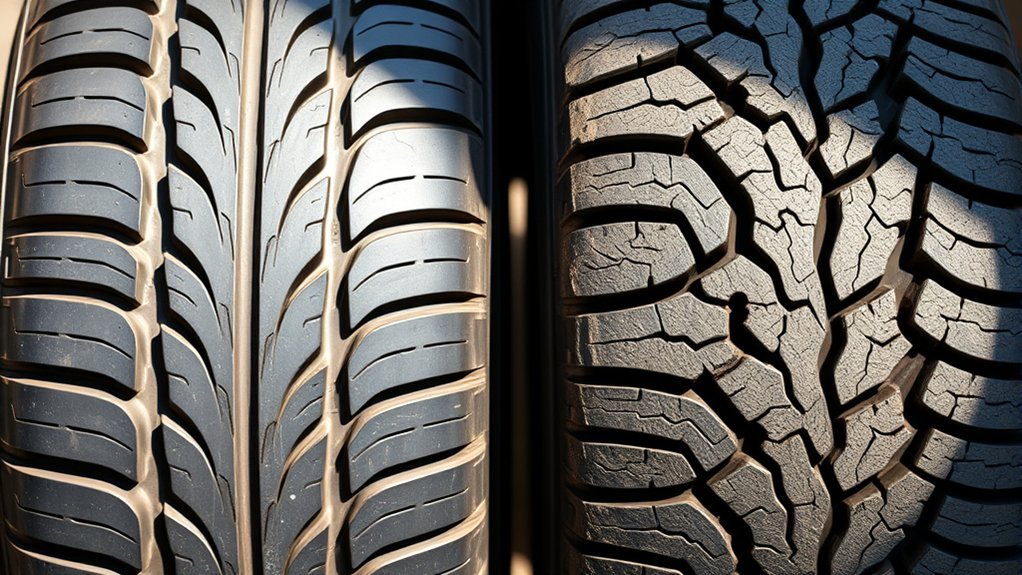
Tires can age out before the tread looks worn. Rubber, belts, and other tire materials change over time, especially when a tire sits unused, runs underinflated, or spends years in heat and sunlight. That is why tire age matters for your daily tires, spare tire, RV tires, trailer tires, and any used tires you are thinking about buying.
Quick Answer
Tire age matters because older rubber is more prone to cracking, air loss, tread separation, and blowouts. Start checking tires closely at six years, follow your vehicle or tire maker’s age limit, and replace any tire with cracks, bulges, vibration, pressure loss, or tread worn to 2/32 inch.
Key Takeaways
- A tire can be unsafe from age even when the tread still looks usable.
- The last four digits of the DOT Tire Identification Number show the week and year the tire was made.
- NHTSA says some vehicle and tire manufacturers recommend replacing tires at six to 10 years old, regardless of treadwear.
- Heat, sunlight, poor storage, underinflation, and low-mileage use can speed up tire aging.
- Check tire pressure, tread, sidewalls, recalls, and your spare on a regular schedule.
At a Glance
| Time Required | 5 to 10 minutes for all four tires, plus the spare |
| Difficulty | Easy, but use a tire professional if the code is hard to see or you find damage |
| Tools Needed | Flashlight, tire-pressure gauge, tread-depth gauge or penny, and your owner’s manual |
| Cost | $0 if you already have a gauge, usually under $15 for a basic pressure gauge |
Why Tire Age Matters for Safety
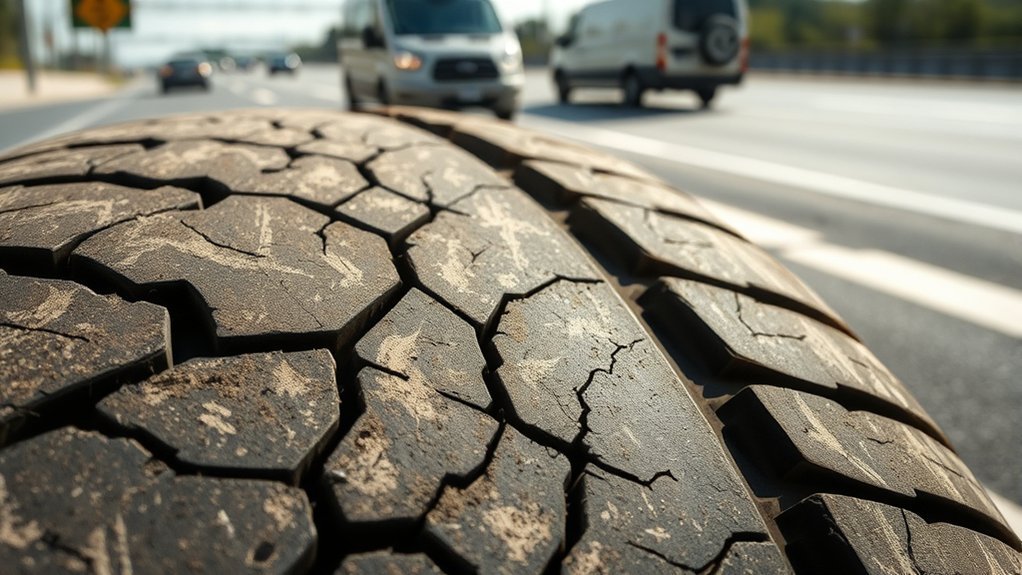
When you think about tire safety, tread depth is only part of the story. According to NHTSA TireWise, tire aging happens when rubber and other tire components change over time because of service, storage, and environmental conditions.
That aging can happen even on a low-mileage car, a weekend vehicle, a collector car, an RV, a trailer, or a spare tire that has barely touched the road. Heat, sunlight, underinflation, overloading, poor storage, and long periods of sitting can all make the problem worse.
NHTSA reports that 511 people died in tire-related crashes in 2024, which is why tire age, pressure, tread, and damage checks deserve regular attention.
Warning: Do not judge an older tire by tread depth alone. A tire with deep tread can still be unsafe if it is old, cracked, bulging, losing air, vibrating, or showing sidewall damage.
How Old Is Too Old for Tires?
There is no single age limit that applies to every tire in every situation. NHTSA says some vehicle and tire manufacturers recommend replacing tires that are six to 10 years old, regardless of treadwear. Your safest move is to check your owner’s manual, your tire maker’s warranty or service guidance, and the tire’s condition.
Use this simple age guide:
| Tire Age | What to Do |
| 0 to 5 years | Inspect monthly for pressure, treadwear, cuts, cracks, punctures, and bulges. |
| 6 to 9 years | Inspect closely and have a tire professional evaluate them, especially before road trips or highway driving. |
| 10 years or older | Plan replacement unless your vehicle or tire manufacturer gives different written guidance. Replace sooner if any damage appears. |
| Any age with damage | Do not keep driving on it. Have it inspected or replaced immediately. |
Risks of Driving on Old Tires
Driving on old tires can raise the risk of blowouts, tread separation, weak grip, vibration, and pressure loss. The danger is higher when tires are also underinflated, overloaded, damaged, or driven at highway speeds in hot weather.
Old tires can also hurt braking and steering confidence. Tread provides the grip that keeps your vehicle from sliding, especially on wet, icy, or rough roads. Once the tread is worn to 2/32 inch, NHTSA says the tire is not safe and should be replaced. In wet or winter conditions, many drivers choose to replace sooner because traction can drop before the legal minimum is reached.
Heat is especially hard on tires. NHTSA notes that sustained high temperature can cause a tire to deteriorate and may lead to blowouts or tread separation. If you live in a hot climate, park outside, tow heavy loads, or drive long highway trips, check tire age and condition more often.
How to Spot Tires That Are Past Their Prime
You cannot always see tire aging from the outside, but visible damage is a clear warning sign. Check every tire, including the spare, for these problems:
- Sidewall cracks: Small cracks can signal dry, aging rubber. Deep cracks need immediate professional inspection.
- Bulges or bubbles: These can point to internal damage and may lead to sudden tire failure.
- Repeated air loss: A tire that will not hold pressure needs repair or replacement.
- Uneven wear: One-sided wear, cupping, or bald patches can point to alignment, suspension, balance, or inflation problems.
- Noise or vibration: A new shake, thump, or pull can mean tire damage or separation.
- Low tread: Replace the tire when tread reaches 2/32 inch, or sooner if wet or winter traction is poor.
Pro Tip: Check tire age when buying a used car or used tires. A low-mileage vehicle can still have old tires, and a used tire with an unknown history may have hidden damage.
How to Check Your Tire’s Age
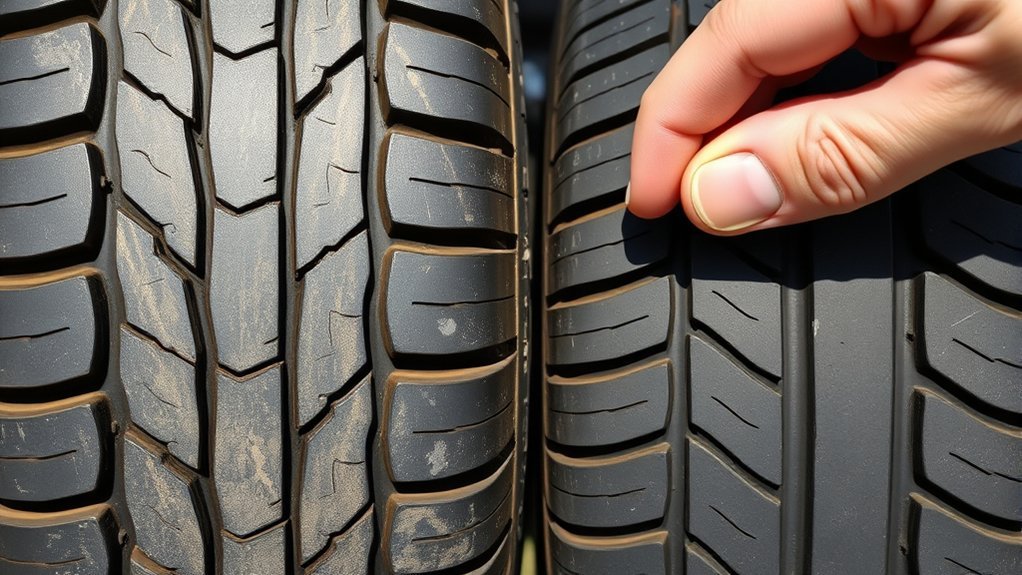
The easiest way to check tire age is to read the DOT Tire Identification Number, also called the TIN. Federal tire identification rules in 49 CFR 574.5 require the date code to identify the week and year of manufacture.
- Find the DOT code. Look for the letters “DOT” on the tire sidewall. The full code may be on only one side of the tire, so check the inner sidewall if you do not see the full number outside.
- Read the last four digits. The first two digits show the week, and the last two digits show the year.
- Use a simple example. A tire ending in “2323” was made in the 23rd week of 2023. A tire ending in “0619” was made in the 6th week of 2019.
- Check all five tires. Your spare may be much older than the four tires on the road.
- Compare age with condition. Age alone matters, but cracks, bulges, vibration, and pressure loss matter even more.
Note: If you see only a three-digit date code, the tire was made before 2000. That tire is far beyond normal service age and should not be used for road driving.
Essential Steps to Take With Aging Tires
As tires age, maintenance becomes more important. Use these steps to reduce risk and catch problems early.
[Products Worth Considering]

Milton S-921 pencil tire pressure gauge helps you maintain optimal tire pressure for passenger cars with accurate readings in PSI and kPa. It features a built-in deflator valve for convenient pressure adjustments, plus a single chuck head and nylon indicator bar for easy use on the go. Built from durable plated brass and designed for reliable performance, it’s a practical road trip and cold-weather maintenance tool.

Measure tire tread depth quickly and accurately with this LUMITECO dial gauge that reads in 1/32" increments up to 14/32". The color-coded green/yellow/red zones make it easy to judge tire wear and know when replacement is needed. A rugged, compact design with a protective pouch helps keep the gauge ready for use on cars, trucks, motorcycles, and more.

The SAFELIFE dial tire tread depth gauge measures tread depth in 1/32 inch increments with clear, easy-to-read 2-inch dial face. Color zones using a traffic light system help you quickly judge whether tread is low, marginal, or ample for safer driving. Built with a durable zinc cast body and a metal detect probe for precise, comfortable use across cars, motorcycles, trucks, and buses.
1. Check Tire Pressure Monthly
Proper tire pressure affects safety, tire life, and fuel use. NHTSA recommends checking all tires, including the spare, at least once a month when the tires are cold. Use the pressure on the driver’s doorjamb label or in the owner’s manual, not the maximum pressure printed on the tire sidewall.
Newer vehicles have Tire Pressure Monitoring Systems, but TPMS is not a replacement for manual checks. NHTSA explains that TPMS alerts usually appear only after a tire is significantly underinflated.
2. Inspect Tread and Sidewalls
Look for cuts, cracks, nails, bulges, bald spots, and uneven wear. Use a tread-depth gauge if you have one. You can also use the penny test: place a penny into the tread with Lincoln’s head upside down and facing you. If you can see the top of Lincoln’s head, NHTSA says the tire should be replaced.
3. Rotate, Balance, and Align When Needed
Rotation helps reduce irregular wear. NHTSA says to follow your owner’s manual and, if recommended by the manufacturer, rotate tires every 5,000 to 8,000 miles or sooner if uneven wear appears. Balance and alignment also help prevent vibration, pulling, and uneven treadwear.
4. Check Your Spare Tire
Spare tires age too. A full-size spare should not be treated as a long-term replacement for worn tires unless it is the correct size, properly inflated, in good condition, and within the tire or vehicle maker’s service guidance. Compact spare tires are temporary and must be used only within the speed and distance limits in your owner’s manual.
5. Check Tire Recalls
Tires can be recalled just like vehicles and car seats. Use the NHTSA recall lookup to search for tire recalls, investigations, complaints, and manufacturer communications. If you buy new tires, register them so the manufacturer can contact you about a safety recall.
6. Store Seasonal Tires Correctly
If you store winter or summer tires, keep them in a cool, dry, shaded place away from direct sunlight, electric motors, chemicals, and heat sources. Clean and dry them before storage. If they are mounted on wheels, store them inflated to the vehicle maker’s recommended pressure and recheck pressure before installation.
What to Do If a Tire Is Too Old
If a tire is past the age limit in your owner’s manual or tire maker’s guidance, replace it even if it still has tread. If it is six years or older and still looks good, have it inspected by a qualified tire professional, especially before a road trip, towing, high-speed driving, or hot-weather travel.
Replace the tire immediately if you find cracks, bulges, exposed cords, tread separation, repeated air loss, vibration, or a puncture near the sidewall. Do not try to “use up” an old tire on the rear axle or as a spare if it is damaged or past service age.
[Products Worth Considering]

Keep your tires properly inflated with this analog VONDIOR tire pressure gauge, designed for fast, easy readings without batteries. The swiveling, two-axis hose and large glow dial help you measure at any tire angle with instant visibility. Built with a protective rubber shield, it supports durable, low-maintenance use for cars and trucks.

Monitor tire tread wear with a smart, color-coded depth gauge that shows clear condition ranges at a glance. The bar is range marked for fast, easy readings, helping you maintain safer traction and performance. Each gauge is portable with a pocket clip, and the set includes 20 units for daily use and sharing.

Accurately measure tire tread depth with a calibrated gauge marked from 0 to 1 inch in 1/32 inch increments. The color-coded bar helps you quickly identify tread condition ranges, supporting safe driving for trucks, motorcycles, automobiles, and passenger vehicles.
What to Do If a Tire Blows Out While Driving
A blowout can feel sudden and loud, but the safest response is calm and steady. NHTSA recommends keeping the vehicle balanced and controllable.
- Hold the steering wheel firmly with both hands.
- Do not slam on the brakes.
- Keep the vehicle moving straight if possible.
- Gradually ease off the accelerator.
- Correct the steering gently as needed.
- Once the vehicle is stable, slow down and pull off the road where it is safe.
Warning: If you suspect a tire is separating, vibrating, bulging, or losing air, stop driving as soon as it is safe. A short trip to “make it home” can still end in a blowout.
[Products Worth Considering]

The TYAMATE TM8 solar-powered wireless TPMS delivers real-time tire pressure and temperature monitoring with six alarm modes for safer driving. A vibrant color LCD display shows readings clearly while windshield mounting keeps it hands-free and easy to read. With a wide 0–87 PSI range, strong 433.92 MHz signal transmission, and quick sensor pairing, it’s ideal for RV, sedan, SUV, MPV, and truck use.

The Airmoto portable tire inflator quickly and accurately fills car, truck, SUV, motorcycle, and bicycle tires up to 120 PSI with auto shut-off when your target pressure is reached. Its large LCD, multi-unit pressure display, and digital gauge make it easy to dial in settings and verify readings, while the built-in LED flashlight helps in low light. The included polyurethane hard carrying case and storage mesh pocket keep the inflator and accessories protected and organized.

Secure a full-size spare on your trailer with this powder-coated steel spare tire mount bracket. It fits most 4-, 5-, and 6-lug wheel bolt patterns and mounts to trailer tongues up to 4 in wide and 5 in tall. Built for reliable carry with a max 150 lb load rating and includes zinc-plated hardware for straightforward installation.
Frequently Asked Questions
Can tire age affect fuel efficiency?
Yes, mostly through pressure loss, uneven wear, and poor maintenance. FuelEconomy.gov says properly inflated tires can improve gas mileage by 0.6% on average and up to 3% in some cases. Underinflated tires can also wear faster and run hotter.
Are there specific tire brands that age faster?
Brand alone is not enough to judge tire aging. Tire design, rubber compound, storage, climate, inflation, load, alignment, and driving habits all matter. Choose tires that match your vehicle and driving conditions, then follow the tire maker’s care and age guidance.
How do extreme temperatures impact tire aging?
High heat speeds up rubber aging and can increase the risk of deterioration, blowouts, and tread separation. Cold weather can also make older rubber feel harder and less flexible. If you live in a hot climate or store tires outdoors, inspect them more often.
Do tire warranties consider age?
Yes, many tire warranties include time limits as well as treadwear limits. A tire may no longer qualify for coverage once it passes a certain number of years from purchase or manufacture. Read the tire maker’s warranty terms and keep your purchase and maintenance records.
Can I use old tires for winter storage or winter driving?
You can store seasonal tires if they are in good condition, but old tires should not be trusted for winter driving just because they still have tread. Winter driving needs flexible rubber and strong tread edges. Check the DOT date code, sidewalls, tread depth, and pressure before each season.
How old can a spare tire be?
A spare tire ages even if it is never used. Check its DOT date code, pressure, tread, and sidewalls at least a few times a year and before long trips. Replace it if it is damaged, will not hold air, or is past the service age recommended by the vehicle or tire maker.
Should I buy used tires if they look new?
Be careful with used tires. Check the DOT date code, look for repairs or sidewall damage, and avoid any tire with unknown history, cracks, bulges, exposed cords, uneven wear, or missing date information. A tire professional can inspect it before installation.
Conclusion
Tire age is a safety factor you should not ignore. Check the DOT date code, inspect the sidewalls and tread, keep the correct cold tire pressure, and include the spare in your routine. Six years is a smart point to start paying closer attention, and many vehicle or tire makers set replacement guidance somewhere between six and 10 years. If a tire is old, damaged, losing air, vibrating, or worn to 2/32 inch, replace it before it puts you at risk.
Sources
- NHTSA TireWise — tire aging, tire pressure, tread depth, tire rotation, TPMS, blowout response, and 2024 tire-related crash fatality data
- 49 CFR 574.5, Tire Identification Requirements — DOT/TIN date-code requirements and week/year format
- FuelEconomy.gov, Keeping Your Vehicle in Shape — tire pressure and fuel economy impact
- NHTSA Recalls Lookup — tire recall checks and safety complaint information