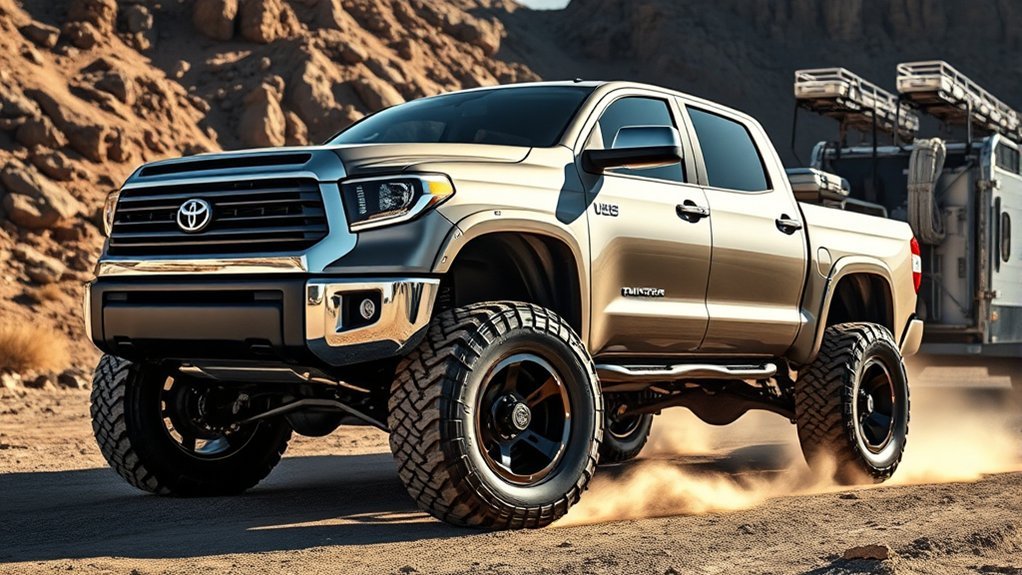
Upsizing the tires on your Toyota Tundra can improve ground clearance, stance, and off-road grip, but it can also make towing feel harder. Bigger tires change the truck’s effective gearing, add rotating weight, affect speedometer accuracy, and can reduce your real-world safety margin if the tires, wheels, hitch, payload, and trailer weight are not matched correctly.
Quick Answer
Bigger tires do not automatically change Toyota’s published tow rating, but they can reduce real-world towing performance. A taller tire makes the gearing feel taller, can slow acceleration, change shift behavior, lower MPG, and increase strain under load. Safe towing depends on tire load rating, payload, tongue weight, axle ratings, hitch rating, and proper pressure.
Key Takeaways
- A tire jump from 32 inches to 34.3 inches makes a 4.30 axle feel closer to about 4.01, which can reduce low-speed pulling power.
- Your Toyota Tundra’s safe towing limit is the lowest limit among TWR, GCWR, GVWR, GAWR, payload, hitch, wheels, tires, and trailer parts.
- LT tires can be a better choice for frequent towing, but only if the exact load index, load range, wheel rating, and pressure match your truck.
- Toyota’s current Tundra can tow up to 12,000 pounds when properly equipped, but your exact rating depends on trim, drivetrain, options, passengers, cargo, and tongue weight.
At a Glance
| Time Required | 15 to 30 minutes for basic checks; longer if weighing the truck and trailer at a public scale |
| Difficulty | Moderate; you need tire, payload, hitch, and trailer numbers, not just tire size |
| Tools Needed | Tire pressure gauge, tread gauge, owner’s manual, door-jamb labels, tire load chart, torque wrench, and access to a scale if towing near limits |
| Cost | Free for inspection; usually a small fee for public-scale weighing; more if recalibration, LT tires, or re-gearing are needed |
How Larger Tires Affect Towing Capacity and Safety Margin
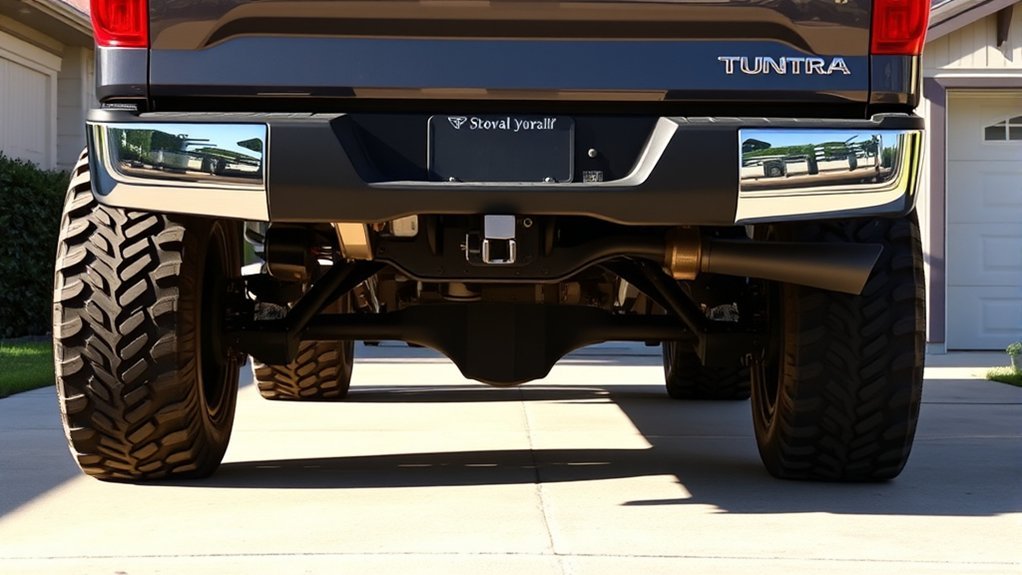
When you increase tire size, the biggest change is not always the published tow rating. Toyota’s official rating still comes from the truck’s configuration, equipment, and rating labels. The real issue is that bigger tires can reduce the margin you feel while towing.
A taller, heavier tire can make the Tundra slower to get moving, change transmission shift timing, increase braking demand, and add heat during long grades. If the new tire has a lower adjusted load capacity than the factory tire, or if the wheel is not rated for the load, the setup can also reduce your safe usable payload.
Warning: Never tow beyond the lowest-rated part of your setup. Check the Toyota owner’s manual, Tire and Loading Information Label, certification label, tire load rating, wheel rating, receiver hitch, ball mount, hitch ball, trailer coupler, GVWR, GAWR, GCWR, and TWR before towing.
Toyota states that towing capacity depends on base vehicle weight plus cargo, occupants, and added equipment, and that you should follow the owner’s manual and never tow beyond published capacities. That matters more after a tire upgrade because larger tires and wheels often add weight to the truck before the trailer is even attached.
The Impact of Increased Tire Diameter on Gearing
Bigger tires make your effective gearing taller. The axle gears inside the differential do not physically change, but the taller tire travels farther with each rotation. That reduces mechanical advantage at the ground.
Here is the simple formula:
Effective axle ratio = original axle ratio × original tire diameter ÷ new tire diameter.
For example, if your Tundra has a 4.30 axle ratio and you move from a 32-inch tire to a 34.3-inch tire, the math is:
- 4.30 × 32 ÷ 34.3 = about 4.01
- That means your truck now feels closer to a 4.01 gear ratio, even though the axle still contains 4.30 gears.
That drop can be noticeable when pulling away from a stop, climbing hills, backing a trailer, or towing into a headwind. It can also make the transmission downshift more often because the engine has to work harder to stay in its best torque range.
Tire-size changes also affect the speedometer and odometer. In the same 32-inch to 34.3-inch example, the tire is about 7.2% taller. If the truck is not recalibrated, the speedometer can read low. When it shows 60 mph, your actual road speed may be closer to 64 mph.
Note: Gear-ratio calculators are useful for planning, but mounted tire height can vary by brand, tread, air pressure, wheel width, and load. Measure your real tire height or use the manufacturer’s revolutions-per-mile data when accuracy matters.
Published Rating vs. Real-World Towing Margin
A common mistake is to look only at the headline tow number. A newer Toyota Tundra may be advertised with a maximum towing capacity of up to 12,000 pounds when properly equipped, but not every Tundra has that rating. Trim, cab, bed, drivetrain, powertrain, tow package, options, passengers, cargo, and hitch setup all matter.
For real towing, check these numbers before you blame the tire size:
- TWR: Trailer Weight Rating, which is the maximum gross trailer weight your truck is rated to tow.
- GCWR: Gross Combined Weight Rating, which is the maximum allowed weight of the loaded truck and loaded trailer together.
- GVWR: Gross Vehicle Weight Rating, which is the maximum allowed weight of the loaded truck.
- GAWR: Gross Axle Weight Rating, especially the rear axle rating.
- Payload: The amount left for passengers, cargo, accessories, hitch hardware, and trailer tongue weight.
- Tire and wheel load rating: The actual load each tire and wheel can carry at the correct pressure.
Large tires can hurt this equation in two ways. First, they can make the truck feel weaker because of the gearing change. Second, heavier tire-and-wheel packages reduce payload because they add weight to the vehicle. If you tow near your truck’s limit, that extra weight matters.
Choosing the Right Tire Type: LT vs. P-Metric
Choosing between LT and P-metric tires is not only about comfort. It is about load capacity, sidewall stiffness, pressure range, ride quality, and how often you tow.
[Products Worth Considering]

ETENWOLF T300 is a calibrated digital tire pressure gauge for accurate readings from 3 to 200 PSI across light and heavy-duty vehicles. It includes thermal compensation for reliable performance in extreme cold or heat, with an auto shut-off to extend battery life and an LED for easier reading. The sturdy design supports rugged everyday use, making it ideal for pickups, RVs, and industrial applications.

Keep your tires properly inflated with this analog VONDIOR tire pressure gauge, designed for fast, easy readings without batteries. The swiveling, two-axis hose and large glow dial help you measure at any tire angle with instant visibility. Built with a protective rubber shield, it supports durable, low-maintenance use for cars and trucks.
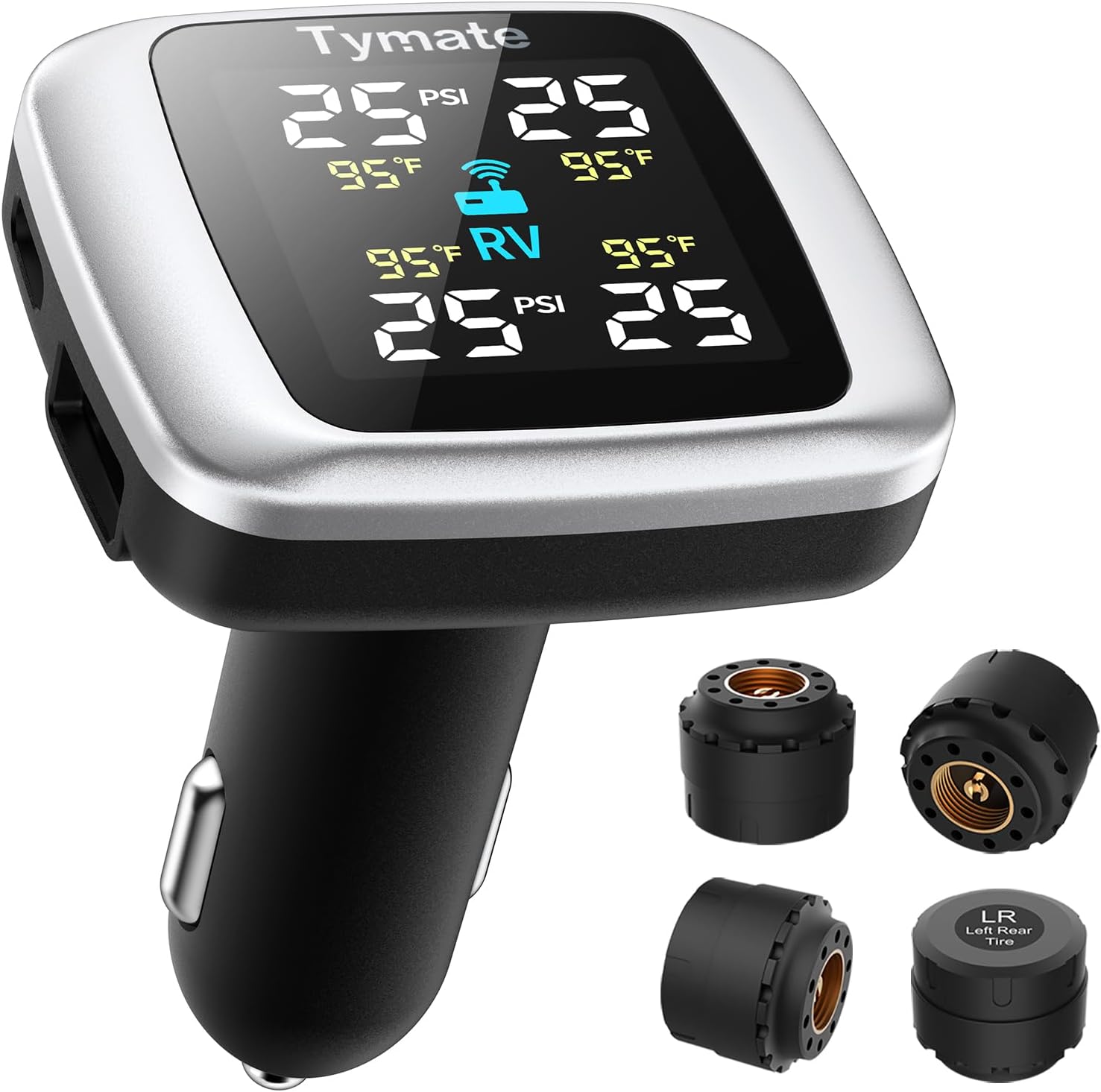
Tymate TM7 is a wireless tire pressure monitoring system that delivers real-time pressure and temperature readings for safer driving. It includes four external sensors, a bright color LCD display with adjustable backlight, and six alarm modes for high/low pressure, fast leakage, high temperature, and sensor signal or battery issues. The system covers a wide 0–144 PSI range and plugs into your vehicle’s cigarette lighter socket for quick DIY setup.
LT Tires Advantages
LT, or Light Truck, tires are often the better choice if you tow heavy trailers, haul near payload limits, drive rough roads, or want a firmer sidewall. Many LT tires come in load ranges such as C, D, E, or F, depending on size and construction. Load Range E tires often allow higher inflation pressure than standard passenger tires, but you must still follow the tire manufacturer’s load table and wheel-pressure rating.
The main towing benefit is stability. A properly chosen LT tire can reduce sidewall flex, improve control with tongue weight on the hitch, and feel more stable during lane changes or crosswinds. The trade-off is that LT tires are often heavier, firmer, and less fuel-efficient than comparable P-metric tires.
P-Metric Tires Limitations
P-metric tires are common on half-ton trucks and SUVs because they ride smoothly and can be lighter than LT tires. They are not automatically unsafe for towing. The key is whether the tire’s adjusted load capacity meets or exceeds the load required by your truck.
When a P-metric tire is used on a pickup or SUV, its load capacity is commonly reduced to 91% of the sidewall value. For example, a P-metric tire listed at 2,756 pounds would count as about 2,508 pounds on a light truck. That is why you should compare the exact tire load index and adjusted capacity, not just the tire size.
Pro Tip: Before buying bigger tires for towing, write down your factory tire size, factory load index, new tire load index, new tire weight, wheel rating, and expected cold PSI. The new setup should meet or exceed the factory load requirement without exceeding the wheel’s pressure rating.
Towing Performance: Real-World Impact of Larger Tires
Upsizing tires affects towing in several ways. Some drivers barely notice a mild tire increase, while others notice frequent downshifts and slower acceleration with heavy 34-inch or 35-inch all-terrain tires.
- Acceleration: Taller tires reduce effective torque at the ground, so the truck may feel slower from a stop.
- Shift behavior: The transmission may downshift more often on grades or in headwinds.
- Braking feel: Heavier tires and wheels add rotating mass, which can make the truck feel less responsive when slowing down.
- Stability: Tire sidewall, pressure, tread pattern, load rating, and wheel offset all affect trailer control.
- Cooling margin: More throttle and more downshifting can add heat to the engine and transmission under hard towing.
- Speed accuracy: A taller tire can make the speedometer read lower than actual speed unless recalibrated.
If your Tundra has tow/haul mode, use it when pulling a trailer. It helps the transmission hold gears more appropriately and can improve engine braking on descents. On long climbs, watch coolant temperature, transmission temperature if available, and how often the truck hunts between gears.
Fuel Efficiency: What to Expect While Towing?
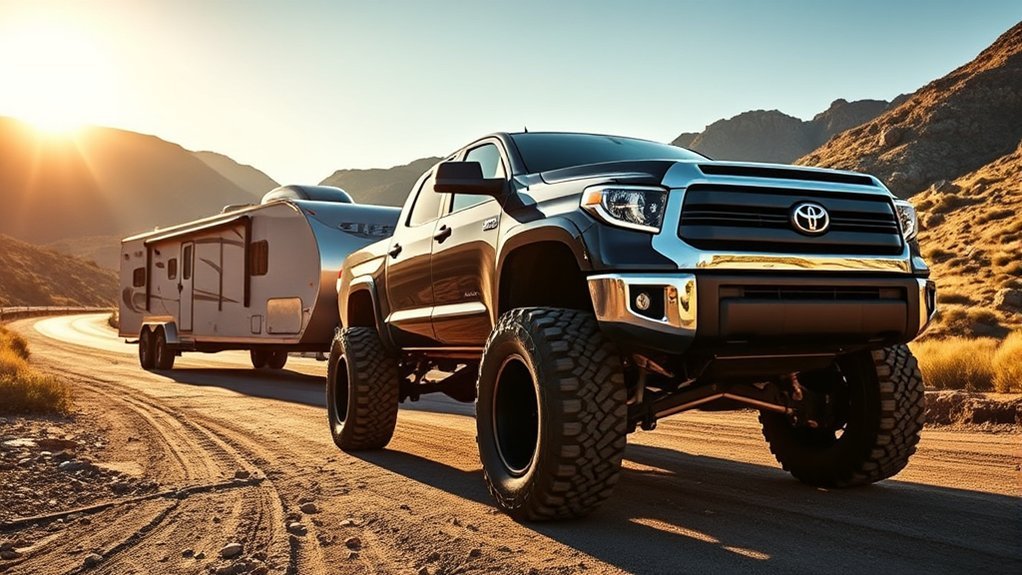
Bigger tires can reduce fuel economy while towing, but the exact drop depends on tire weight, tread design, trailer shape, trailer weight, road speed, wind, grades, axle ratio, and driving style. A heavy all-terrain tire usually costs more fuel than a lighter highway tire in the same diameter.
When towing a tall travel trailer, aerodynamic drag can matter as much as weight. At highway speed, a strong headwind or a boxy trailer may hurt MPG more than the tire size alone. Still, larger tires often add rolling resistance and make the engine work harder to stay in its power band.
To protect fuel economy and towing control:
- Use the correct cold tire pressure for the load.
- Keep trailer tires inflated to the trailer manufacturer’s recommended pressure.
- Do not exceed the tire’s speed rating.
- Use tow/haul mode when appropriate.
- Slow down when fighting wind or grades.
- Keep the trailer level and loaded correctly.
Optimizing Tire Pressure and Load Distribution for Towing
Tire pressure and load distribution become more important after installing bigger tires. NHTSA advises using the vehicle manufacturer’s recommended cold tire pressure from the Tire and Loading Information Label or owner’s manual, not the sidewall maximum pressure. The sidewall number is a tire limit, not an automatic towing pressure.
For modified tire sizes, you may need to consult the tire manufacturer’s load-and-inflation table. The goal is to carry the load safely without overinflating the tire or exceeding the wheel’s rated pressure.
- Check pressure cold: Measure before driving, or after the truck has been parked long enough for the tires to cool.
- Match pressure to load: Use the tire maker’s load chart if your tire size or type changed from stock.
- Set tongue weight correctly: Toyota’s Tundra manual guidance for conventional towing calls for tongue weight around 9% to 11% of gross trailer weight.
- Use the right hitch: Toyota recommends sway control above 2,000 pounds and a weight-distributing hitch above 5,000 pounds for many Tundra applications. Confirm your exact manual.
- Weigh the setup: Use a public scale to confirm loaded truck weight, trailer weight, front axle weight, rear axle weight, and combined weight.
Remember that tongue weight counts against payload. A 7,000-pound trailer at 10% tongue weight adds about 700 pounds to the truck before passengers, cargo, tools, bed gear, and the hitch itself are counted.
Re-Gearing: Unlocking Your Tundra’s Towing Potential
Re-gearing can help restore lost towing feel after a large tire upgrade, especially on older Tundras with larger tire jumps. It changes the differential gears so the truck regains some of the mechanical advantage lost to taller tires.
Using the earlier example, a 4.30 axle with 32-inch tires feels like about 4.01 after moving to 34.3-inch tires. To restore the original feel, the math works the other way:
- New gear ratio needed = original ratio × new tire diameter ÷ old tire diameter
- 4.30 × 34.3 ÷ 32 = about 4.61
In the real world, you would choose the closest available gear ratio and talk with a qualified drivetrain shop. Re-gearing can improve low-speed pull, reduce gear hunting, and make towing feel more controlled, but it is not always necessary. Mild tire upsizes may only need speedometer recalibration and careful load setup.
Re-gearing also has trade-offs. It costs money, can affect warranty coverage, may change highway RPM, and should be done correctly on both axles for 4WD trucks. If your Tundra is still under warranty, speak with a Toyota dealer before changing gears.
[Products Worth Considering]

The Topeak SmartGauge D2 delivers precise digital tire pressure readings for bikes, motorcycles, and sports equipment up to 250 psi (17 bar). Its rotating SmartHead works with both Presta and Schrader valves, so you can check pressure quickly without adapters. The LCD display makes it easy to read results in psi, bar, or kg/cm² with an included CR2032 battery for immediate use.
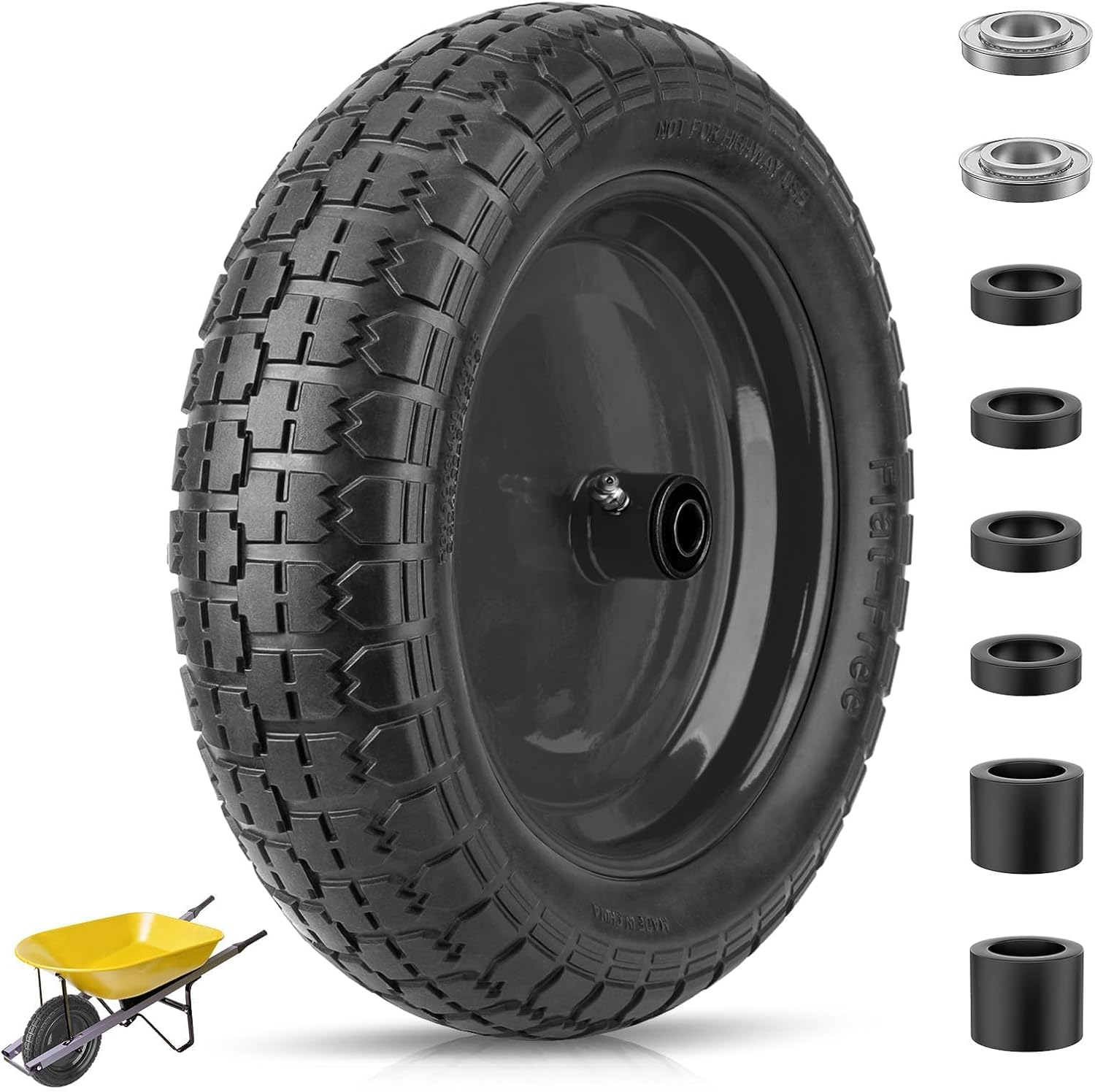
This flat-free TICONN wheelbarrow tire features durable polyurethane foam construction that never needs inflation, helping prevent punctures and reducing maintenance on rough outdoor terrain. With a 300 lb max load capacity and stable steel rim design, it supports safer transport for yard work and hauling tasks. An adapter kit with ball bearings and nylon spacers is included for easier fit and customization across common wheelbarrow and cart axle setups.
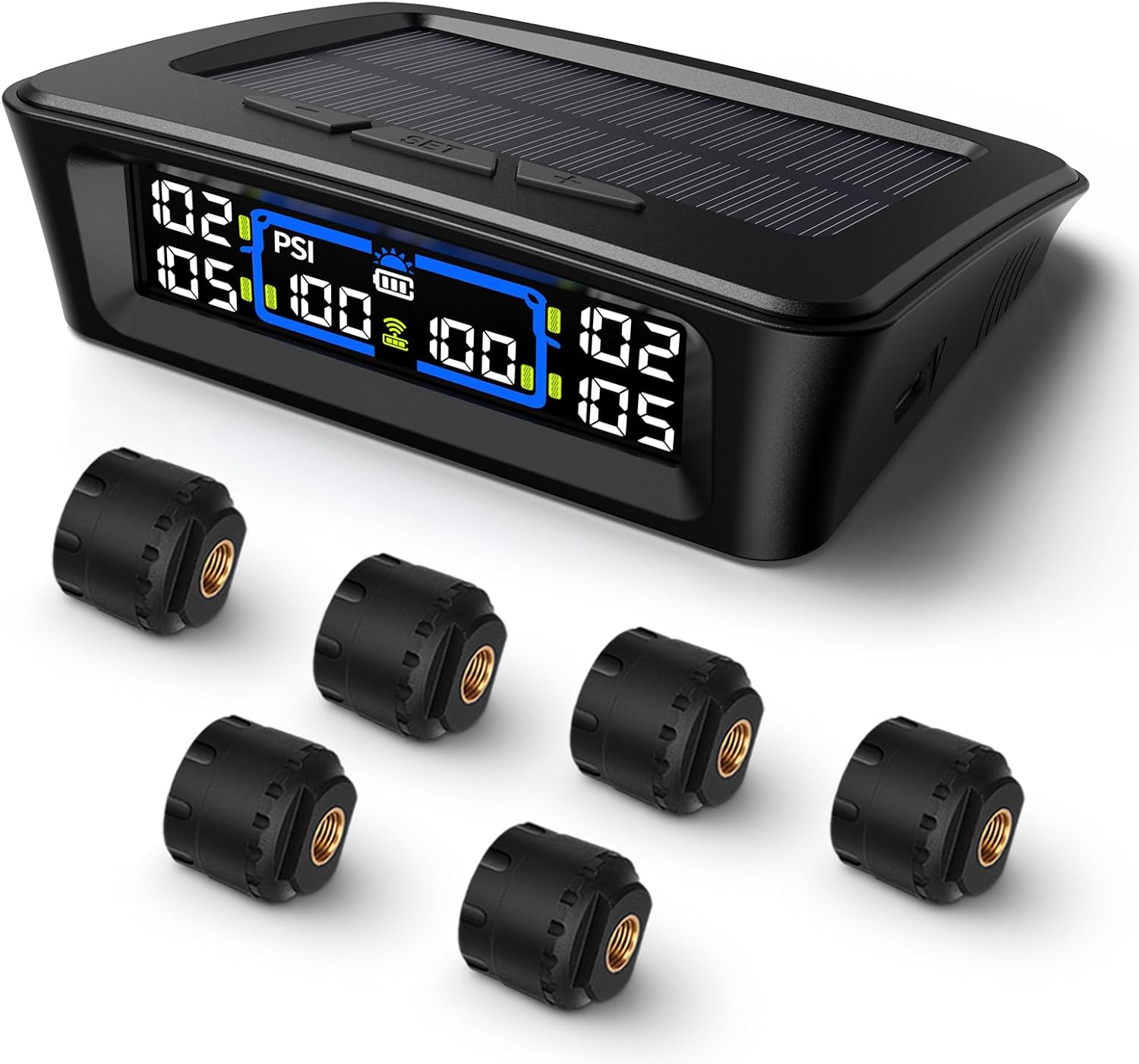
The Tymate TM12 RV TPMS delivers real-time tire pressure and temperature monitoring with a stable 433Hz display for safer long-distance driving. It supports simultaneous monitoring across vehicle and trailer zones, includes six alarm modes for pressure, temperature, leakage, battery, and signal loss, and features easy DIY installation with auto calibration. Power is supplied via USB-C charging or solar recharging, with a wide 0–144 PSI range and up to 50 ft signal coverage for RVs and towable trailers.
Top Tips for Towing With Bigger Tires
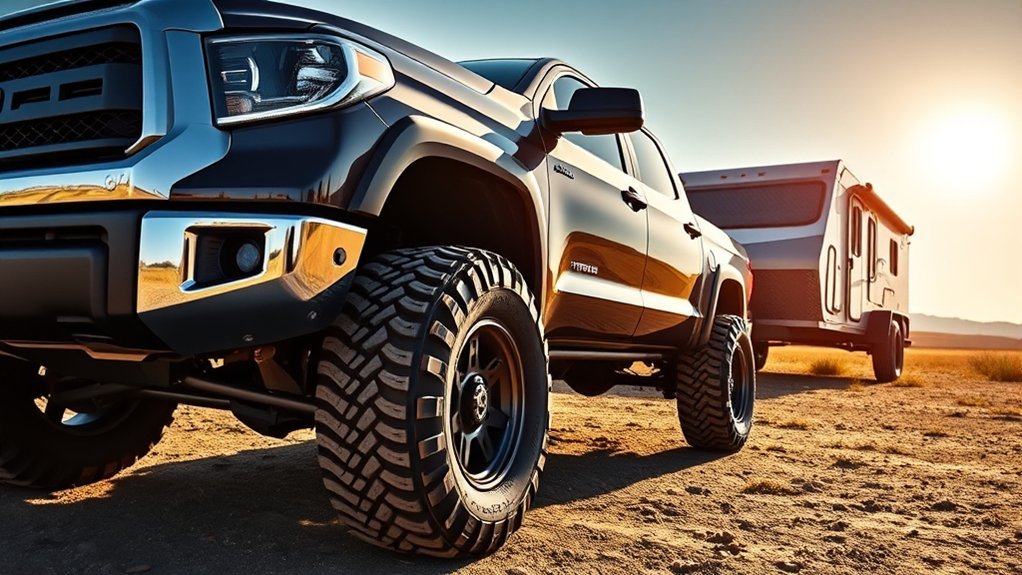
Towing with bigger tires is manageable when the setup is matched to the truck and trailer. Use this checklist before a long trip:
- Confirm ratings: Check TWR, GCWR, GVWR, front GAWR, rear GAWR, payload, hitch rating, wheel rating, tire load rating, and trailer ratings.
- Calculate effective gearing: A large tire jump can make the truck feel like it has a numerically lower axle ratio.
- Recalibrate the speedometer: This helps speed, mileage, shift logic, and driver awareness.
- Check tire clearance: Look for rubbing at full steering lock, full suspension compression, and when backing a trailer.
- Use proper pressure: Set cold pressure based on the tire, wheel, load, and manufacturer guidance.
- Watch tongue weight: Aim for the Toyota-recommended range for your trailer type and do not exceed payload or rear GAWR.
- Avoid cruise control in difficult conditions: Turn it off on steep grades, strong winds, heavy rain, or rolling terrain.
- Test before the trip: Do a short local tow, check for sway, braking feel, heat, rubbing, and downshift behavior.
Are 17-Inch or 20-Inch Wheels Better for Towing?
For many towing setups, 17-inch or 18-inch wheels are better than 20-inch wheels because they allow more tire sidewall in the same overall tire diameter. More sidewall can improve ride comfort and wheel protection, especially on rough roads. Smaller wheels can also be lighter, depending on the model.
That does not mean 20-inch wheels are unsafe. Many Tundras tow well on factory 20-inch wheels when the tire load rating, pressure, wheel rating, and trailer setup are correct. The best towing wheel is the one that provides enough load capacity, correct offset, brake clearance, stable tire behavior, and safe fitment.
[Products Worth Considering]

Secure your vehicle during transport with this 4-pack of heavy-duty tire tie down straps designed for trailers and hauling. The ratchet system with flat hooks and D-rings helps you tension the straps quickly, while the wheel-friendly design protects tires. With high break strength and corrosion-resistant hardware, these straps provide reliable, confidence-inspiring tie-down security for cars, trucks, and UTVs.

Protect your spare wheel with a waterproof, dustproof tire cover made to resist sun and harsh weather. The elastic band design makes it easy to install and remove without tools, while reinforced stitching helps it keep its shape. Available in multiple sizes, it fits common RV, trailer, Jeep, SUV, and truck spare tires.

AstroAI’s digital tire pressure gauge inflates and measures with high accuracy, reading within 1% and supporting four pressure units from 3 to 250 PSI. The heavy-duty brass air chuck locks securely on valve stems, while the 19.7-inch stainless braided hose and 360° rotatable dial improve comfort and control for faster single-hand operation. Battery-saver behavior and an integrated flashlight add convenience and safety for everyday roadside and garage use.
Frequently Asked Questions
Do bigger tires reduce Toyota Tundra towing capacity?
Bigger tires do not automatically change Toyota’s published tow rating, but they can reduce real-world towing performance and safety margin. Taller tires reduce effective gearing, heavier tires add rotating weight, and the wrong load rating can reduce safe payload or axle margin.
Can a Toyota Tundra tow 10,000 pounds with bigger tires?
Some Tundra configurations can tow 10,000 pounds or more when properly equipped, but bigger tires make the setup more sensitive. Confirm your exact TWR, GCWR, GVWR, GAWR, payload, hitch rating, tire load rating, wheel rating, tongue weight, and trailer weight before towing 10,000 pounds.
Are LT tires better than P-metric tires for Tundra towing?
LT tires are often better for frequent heavy towing because they usually have stronger construction and firmer sidewalls. P-metric tires can still work for lighter towing if their adjusted load capacity meets the truck’s needs. Always compare the exact load index, pressure, and wheel rating.
Do I need to re-gear my Tundra after installing 34-inch or 35-inch tires?
You may not need to re-gear for a mild tire increase, but 34-inch and 35-inch tires can make towing feel noticeably weaker, especially on older trucks or heavy trailers. Re-gearing is worth considering if the truck hunts between gears, struggles on grades, runs hotter, or feels sluggish under load.
Will bigger tires affect my Tundra’s speedometer?
Yes. Taller tires can make the speedometer read lower than your actual speed. Moving from a 32-inch tire to a 34.3-inch tire is about a 7.2% increase, so an indicated 60 mph may be closer to 64 mph if the truck is not recalibrated.
Are 17-inch or 20-inch wheels better for towing?
Seventeen-inch or 18-inch wheels are often preferred for towing because they allow more sidewall with the same tire height. More sidewall can improve ride comfort and wheel protection. However, 20-inch wheels can tow safely if the tire and wheel load ratings, pressure, offset, and trailer setup are correct.
Conclusion
Larger tires can make a Toyota Tundra look better and perform better off-road, but towing adds stricter demands. The main risks are taller effective gearing, extra rotating weight, speedometer error, possible payload loss, and incorrect tire or wheel load capacity. Before towing with bigger tires, check your exact Toyota ratings, tire load index, wheel rating, cold pressure, tongue weight, hitch setup, and axle weights. If the truck feels weak, hunts for gears, or runs hot with a heavy trailer, recalibration or re-gearing may be the right next step.
Sources
- Toyota Tundra official specifications — current Tundra towing and payload context.
- Toyota Vehicles for Towing — Toyota towing-capacity warnings and setup guidance.
- Toyota Tundra Owner’s Manual: Trailer towing — tongue weight, GCWR, GVWR, GAWR, TWR, sway control, and weight-distributing hitch guidance.
- NHTSA TireWise — tire pressure, tire size, loading, TPMS, and tire safety guidance.
- Tire Rack: What Is Maximum Load for a Tire? — P-metric tire load reduction on light trucks and LT load range pressure context.
- SAE J2807 — tow-vehicle GCWR and trailer weight rating methodology.