Do Bigger Tires Hurt Gas Mileage on a Toyota 4Runner
Upgrading to bigger tires on your Toyota 4Runner can lower MPG, but the size number alone does not tell the whole story. The real fuel hit comes from a mix of tire weight, tread pattern, rolling resistance, width, load range, air pressure, and speedometer error. A mild jump from stock 265s to a lightweight 275 may be barely noticeable. Heavy, aggressive 285s can cost more, especially in city driving.
Quick Answer
Yes, bigger tires usually lower 4Runner MPG, but the loss varies. A light all-terrain tire may cost about 0.5 MPG, while heavy E-rated or aggressive mud-terrain tires can cost 1–3 MPG. Recalculate your MPG after upsizing because taller tires make the speedometer and odometer read low.
Key Takeaways
- Tire weight and tread pattern usually hurt MPG more than diameter alone.
- A 285/70R17 is about 3.5% taller than a 265/70R17, so your odometer will read low unless corrected.
- City driving takes the bigger hit because you keep re-accelerating heavier rotating tires.
- Use the door-jamb placard or owner’s manual for pressure guidance, not the tire sidewall maximum.
- Re-gearing can improve drivability with larger tires, but it is not a guaranteed MPG fix.
At a Glance
| Time Required | 10–20 minutes to estimate the MPG impact; longer if checking fitment or recalibrating |
| Difficulty | Easy for MPG math; moderate for fitment and calibration decisions |
| Tools Needed | Tire pressure gauge, tire size calculator, fuel receipts, GPS speed check or calibration tool |
| Cost | $10–$25 for a gauge; calibration and re-gearing costs vary widely by vehicle and shop |
How Much Will Bigger Tires Drop Your 4Runner MPG?
Most 4Runner owners should expect some fuel economy loss after upsizing, but the range is broad. A light all-terrain tire close to stock weight may only cost a small amount. A heavier, wider, E-rated tire with aggressive tread can cost much more because it takes more energy to accelerate and keep rolling.
A practical expectation is:
- 265/70R17 to a mild 275/70R17: often a small MPG change if tire weight stays reasonable.
- 265/70R17 to 285/70R17: commonly noticeable, especially if the tire is heavier or more aggressive.
- Stock highway tire to heavy all-terrain or mud-terrain: the tread and construction may matter as much as the size jump.
The important point is that there is no single MPG number for every 4Runner. A 285/70R17 passenger-rated all-terrain and a 285/70R17 E-rated mud-terrain are not the same tire. They may share the same size, but their weight, tread depth, compound, sidewall stiffness, and rolling resistance can be very different.
Note: After installing taller tires, your odometer usually records fewer miles than you actually traveled. If you calculate MPG from the uncorrected odometer, your fuel economy may look worse than it really is.
[Products Worth Considering]

Accurately measure tire tread depth with a calibrated gauge marked from 0 to 1 inch in 1/32 inch increments. The color-coded bar helps you quickly identify tread condition ranges, supporting safe driving for trucks, motorcycles, automobiles, and passenger vehicles.

Keep your tires properly inflated with this analog VONDIOR tire pressure gauge, designed for fast, easy readings without batteries. The swiveling, two-axis hose and large glow dial help you measure at any tire angle with instant visibility. Built with a protective rubber shield, it supports durable, low-maintenance use for cars and trucks.

Monitor tire tread wear with a smart, color-coded depth gauge that shows clear condition ranges at a glance. The bar is range marked for fast, easy readings, helping you maintain safer traction and performance. Each gauge is portable with a pocket clip, and the set includes 20 units for daily use and sharing.
Why Tire Weight Hits 4Runner MPG Harder Than Diameter
Bigger tire diameter matters, but tire weight and tread design often matter more in daily driving. Tires affect fuel economy mainly through rolling resistance, which is the energy lost as the tire flexes and rolls under the vehicle. The National Academies explains that this rolling deformation turns some useful energy into heat, so the vehicle needs more fuel to keep moving.
Rotational Mass Matters Most
Every extra pound in a tire has to be spun up every time you leave a stop. That is why heavy tires can make a 4Runner feel slower even when the engine has not changed. The farther that weight sits from the hub, the more it affects rotational inertia.
This is where some tire upgrades punish MPG:
- Heavier construction: E-rated and reinforced tires can weigh much more than stock-style tires.
- More aggressive tread: large tread blocks create more squirm, noise, and rolling drag on pavement.
- Wider footprint: a wider tire can increase rolling resistance and aerodynamic drag.
You cannot see all of this from the size printed on the sidewall. Before buying, compare the listed tire weight, tread depth, load range, and intended use.
Unsprung Weight Penalty
Tires and wheels are unsprung weight, meaning they sit below the suspension. More unsprung weight can hurt ride quality, steering response, braking feel, and acceleration. On a 4Runner, the effect is most obvious when you jump from a relatively light stock tire to a heavy all-terrain or mud-terrain setup.
The MPG loss is not just from cruising down the highway. It also comes from repeated starts, stops, turns, and speed changes. That is why a heavy tire can feel acceptable on a steady highway drive but costly in town.
Acceleration Energy Drain
Acceleration is where bigger, heavier tires take the most from your fuel tank. Your engine must overcome the tire’s weight, rolling resistance, and larger effective gearing at the same time. This can make the throttle feel softer and can cause more downshifts on hills.
If MPG matters, choose the lightest tire that still meets your real trail, load, and durability needs. You do not need a maximum-duty tire for every daily-driven 4Runner.
Do E-Rated 4Runner Tires Destroy Daily-Drive MPG?
E-rated tires do not automatically destroy MPG, but they often reduce it on a daily-driven 4Runner because they are usually heavier and stiffer than passenger-rated or C-rated alternatives. The stronger construction can be useful for towing, hauling, sharp rocks, and repeated trail abuse. On pavement, that same construction can make the tire harder to accelerate and less efficient.
Use an E-rated tire when you actually need the durability or load capacity. If most of your driving is commuting, school runs, errands, and occasional dirt roads, a lighter all-terrain may be the better MPG choice.
Warning: Never choose tire pressure by copying another owner’s setup or by using the maximum pressure printed on the tire sidewall. Check the driver-door placard and owner’s manual, then adjust only within safe tire and vehicle limits.
Stock vs. 285s: What the Numbers Really Mean
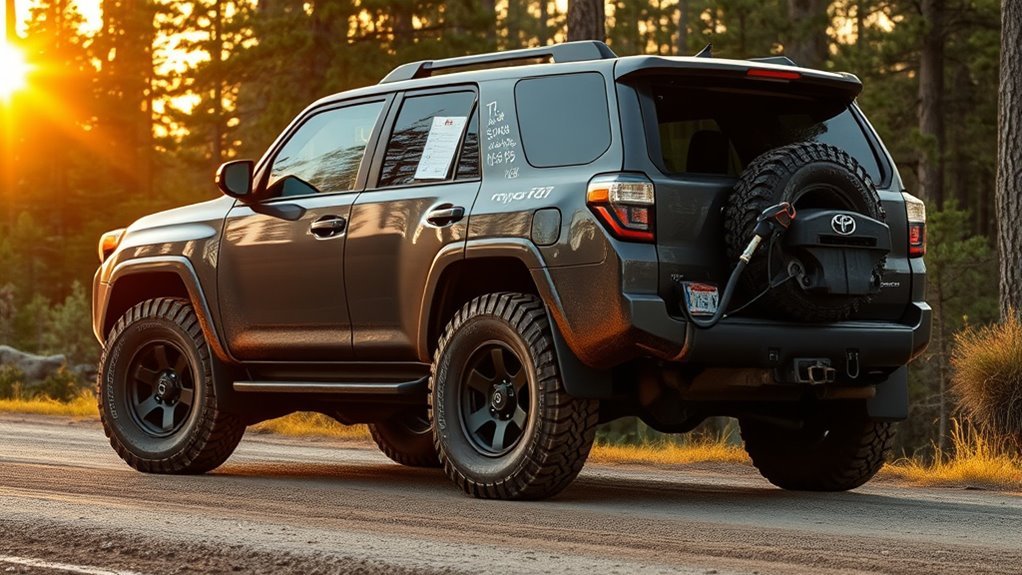
The common 4Runner comparison is stock 265/70R17 tires versus 285/70R17 tires. Using standard tire-size math, the 285 is about 1.10 inches taller overall. Because only half of that height sits below the axle, the real axle/ground-clearance gain is about 0.55 inches.
| Tire Size | Approx. Diameter | Change vs. 265/70R17 | Actual Speed at 60 MPH Indicated | Best Use |
|---|---|---|---|---|
| 265/70R17 | 31.6 in. | Baseline | 60.0 MPH | Best MPG and easiest fitment |
| 275/70R17 | 32.2 in. | +1.7% diameter, about +0.28 in. clearance | 61.0 MPH | Balanced daily/trail setup |
| 285/70R17 | 32.7 in. | +3.5% diameter, about +0.55 in. clearance | 62.1 MPH | More clearance and presence, higher MPG/fitment risk |
Measured MPG Drops
Owner-reported MPG changes usually fall into a range, not a single exact result. A mild 285 may show a small drop. A heavy 285 with aggressive tread may show a larger one. Driving style, roof racks, lift height, wheel weight, tire pressure, fuel blend, elevation, and city/highway mix can all change the final number.
For annual cost, use this simple estimate:
At 12,000 miles per year and $3.50 per gallon, dropping from 17.4 MPG to 16.9 MPG costs about $70 more per year. Dropping from 17.4 MPG to 15.4 MPG costs about $310 more per year.
Weight vs. Diameter
Diameter changes your effective gearing. A taller tire travels farther per revolution, so the engine may run slightly lower RPM at the same road speed. That sounds good, but it can hurt drivability if the tire is heavy enough to make the engine work harder or downshift more often.
That is why two 285/70R17 tires can feel completely different. A lighter all-terrain may be manageable. A heavy mud-terrain may feel sluggish, loud, and thirsty.
Real-World Comparisons
When comparing real-world MPG reports, check these details before trusting the number:
- Was the odometer corrected? Taller tires make the odometer read low.
- Was the tire model listed? Size alone is not enough.
- Was the wheel weight listed? Heavy wheels add to the same problem.
- Was the drive cycle similar? City-heavy driving loses more than steady highway driving.
- Was pressure checked cold? Pressure changes rolling resistance and tire wear.
How to Calculate True MPG After Installing Bigger Tires
If you have not recalibrated the speedometer, correct the odometer before judging MPG. The formula is simple:
Corrected miles = odometer miles × new tire diameter ÷ old tire diameter
Example: if your 4Runner moved from 265/70R17 tires at about 31.6 inches tall to 285/70R17 tires at about 32.7 inches tall, the correction factor is about 1.035. If the odometer shows 280 miles, you actually traveled about 290 miles.
Then calculate:
True MPG = corrected miles ÷ gallons used
Pro Tip: Track three full tanks before judging the result. One tank can be skewed by idle time, wind, towing, trail use, fuel pump shutoff differences, or weather.
3 Ways to Recover 4Runner MPG Without Downsizing
You cannot erase all the fuel cost of bigger tires, but you can reduce the damage.
- Set tire pressure correctly. FuelEconomy.gov says underinflated tires can lower gas mileage by about 0.2% for every 1 PSI drop in the average pressure of all tires, and properly inflated tires are safer and last longer. Use the vehicle placard and check pressure when the tires are cold.
- Correct the speedometer and odometer. Recalibration does not magically improve MPG, but it makes your speed, distance, maintenance intervals, and MPG math accurate.
- Reduce unnecessary drag and weight. Remove unused roof racks, recovery boards, cargo boxes, and heavy gear when you do not need them. A heavy tire setup plus constant extra cargo makes the MPG hit worse.
Smoother driving also helps. Roll into the throttle instead of launching from every stop, keep speeds reasonable, and avoid carrying trail gear all week for one weekend trip.
Will Re-Gearing Actually Fix Your 4Runner MPG?
Re-gearing can help a 4Runner feel stronger after bigger tires, but it is not a guaranteed fuel-economy fix. Taller tires effectively make the gearing taller. That can make the engine feel lazy, especially with heavy 285s, hills, towing, armor, or extra cargo.
Proper gearing can restore throttle response, reduce gear hunting, and make the vehicle easier to drive. MPG may improve in some situations if the transmission stops hunting and the engine operates in a better range. But re-gearing also costs real money, and the fuel savings alone usually do not pay back quickly.
Think of re-gearing as a drivability upgrade first. If you only want better MPG, start with tire choice, tire pressure, calibration, and weight reduction before opening the differentials.
[Products Worth Considering]

Measure tire tread depth quickly and accurately with this LUMITECO dial gauge that reads in 1/32" increments up to 14/32". The color-coded green/yellow/red zones make it easy to judge tire wear and know when replacement is needed. A rugged, compact design with a protective pouch helps keep the gauge ready for use on cars, trucks, motorcycles, and more.

The SAFELIFE dial tire tread depth gauge measures tread depth in 1/32 inch increments with clear, easy-to-read 2-inch dial face. Color zones using a traffic light system help you quickly judge whether tread is low, marginal, or ample for safer driving. Built with a durable zinc cast body and a metal detect probe for precise, comfortable use across cars, motorcycles, trucks, and buses.

This 12-inch LUMITECO dual head tire pressure gauge features an integrated straight-on chuck and a 30° reverse chuck to reach hard-to-access dual wheel valves. Its 10–150 PSI / 1–10 BAR range with a clear, two-sided scale helps you quickly check tire pressure for safer, smoother driving. Heavy-duty construction and a simple no-battery design make it a reliable tool for trucks, cars, RVs, and motorcycles.
Where 4Runner MPG Drops Most: Highway or City?
The MPG drop usually shows up more in city driving. Stop-and-go traffic forces the engine to repeatedly accelerate heavier rotating tires. Each green light, turn, and merge costs energy.
Highway driving can be less punishing because the tires are already moving, but the loss does not disappear. Wider tires, aggressive tread, roof accessories, and lift height can all increase drag or rolling resistance. Taller tires also make the speedometer read low if the vehicle is not recalibrated.
That is why one owner may report a tiny highway MPG change while another sees a large city MPG hit with the same size. Their tires, wheels, routes, speeds, and driving styles may be completely different.
Is the MPG Trade-Off Worth the Off-Road Upgrade?
The trade-off is worth it when you actually use the added capability. Bigger tires can give you more clearance, a larger footprint, tougher sidewalls, and better confidence on rocks, ruts, sand, and rough forest roads. If your 4Runner spends most of its life on pavement, the same upgrade may mostly give you higher fuel bills, more road noise, and possible fitment work.
Use this decision filter:
- Mostly commuting: stay close to stock size or choose a lighter all-terrain.
- Mixed daily driving and weekend trails: consider 275/70R17 or a lighter 285/70R17 if clearance works.
- Frequent rocks, ruts, remote trails, or loaded trips: a heavier tire may be worth the MPG loss.
Be honest about your miles. A tire built for sharp rocks is excellent on sharp rocks. It is not always the best tire for a 40-mile daily commute.
Which Tire Size Hits the Sweet Spot for 4Runner MPG?
For many daily-driven 4Runners, 275/70R17 is the practical middle ground. It is taller than stock, adds about 0.28 inches of axle clearance, and keeps speedometer error smaller than a 285/70R17. It also tends to create fewer fitment headaches, although wheel offset, suspension, trim, mud flaps, and liner clearance still matter.
If you want the best MPG and easiest ownership, stick with a stock-style 265/70R17. If you want the classic bigger 4Runner stance and more trail clearance, 285/70R17 can make sense, but choose the tire model carefully. A lighter, less aggressive 285 is easier to live with than the heaviest E-rated mud-terrain in the same size.
Note: NHTSA recommends choosing the original tire size or another manufacturer-recommended size and checking the owner’s manual or Tire and Loading Information Label. If you are outside those recommendations, confirm load rating, clearance, rubbing, speedometer accuracy, and local inspection rules before buying.
Frequently Asked Questions
Does gas mileage get worse with bigger tires?
Usually, yes. Bigger tires can reduce MPG because they are often heavier, wider, and higher in rolling resistance. The exact loss depends on tire model, tread pattern, load range, wheel weight, pressure, and driving style.
How much MPG will 285 tires cost on a 4Runner?
A mild 285/70R17 may cost around half an MPG in some setups, while a heavy E-rated or aggressive tire can cost 1–3 MPG. Correct your odometer before calculating because 285s make the odometer read low compared with stock 265/70R17 tires.
Do E-rated tires hurt 4Runner MPG?
They can. E-rated tires are often heavier and stiffer, which can increase rolling resistance and reduce acceleration efficiency. They make sense for heavy loads, towing, or rough trail use, but they are often overkill for mostly pavement driving.
Does recalibrating the speedometer improve MPG?
No, recalibration does not reduce fuel use by itself. It makes your speedometer, odometer, and MPG calculations accurate after changing tire diameter. That matters because taller tires make the vehicle travel farther per tire revolution.
Is 275/70R17 better than 285/70R17 for MPG?
In most cases, yes. A 275/70R17 is closer to stock diameter and is often lighter than a comparable 285/70R17. It gives a small clearance gain while reducing the MPG, fitment, and speedometer penalties of a larger 285.
Should I regear my 4Runner after installing 285s?
Re-gearing can help if the 4Runner feels sluggish, hunts gears, tows often, or carries extra weight. It is mainly a drivability upgrade, not a guaranteed MPG upgrade. Compare the cost against how often you need the added performance.
Conclusion
Bigger tires can lower your 4Runner’s MPG, but the smartest answer is not just “bigger equals worse.” Tire weight, tread pattern, load range, pressure, and speedometer correction all matter. A 275/70R17 is often the best daily-driver compromise. A 285/70R17 gives more clearance and stance, but it can bring more fuel cost, rubbing risk, and calibration needs. Choose the tire that matches how you actually drive, not just how you want the truck to look.
Sources
- FuelEconomy.gov — Gas Mileage Tips — tire pressure and fuel economy impact
- NHTSA TireWise — tire size, pressure, placard, and tire safety guidance
- National Academies: Tires and Passenger Vehicle Fuel Economy — rolling resistance and fuel economy relationship
- Tire Rack: Plus Size Wheels & Tires — tire diameter, gearing, speedometer, and stability-system considerations
- Tire Rack: Speedometer Accuracy — how tire diameter changes speedometer readings
- Toyota Owners Manuals and Warranties — model-specific owner’s manual reference
[Products Worth Considering]

Milton S-921 pencil tire pressure gauge helps you maintain optimal tire pressure for passenger cars with accurate readings in PSI and kPa. It features a built-in deflator valve for convenient pressure adjustments, plus a single chuck head and nylon indicator bar for easy use on the go. Built from durable plated brass and designed for reliable performance, it’s a practical road trip and cold-weather maintenance tool.
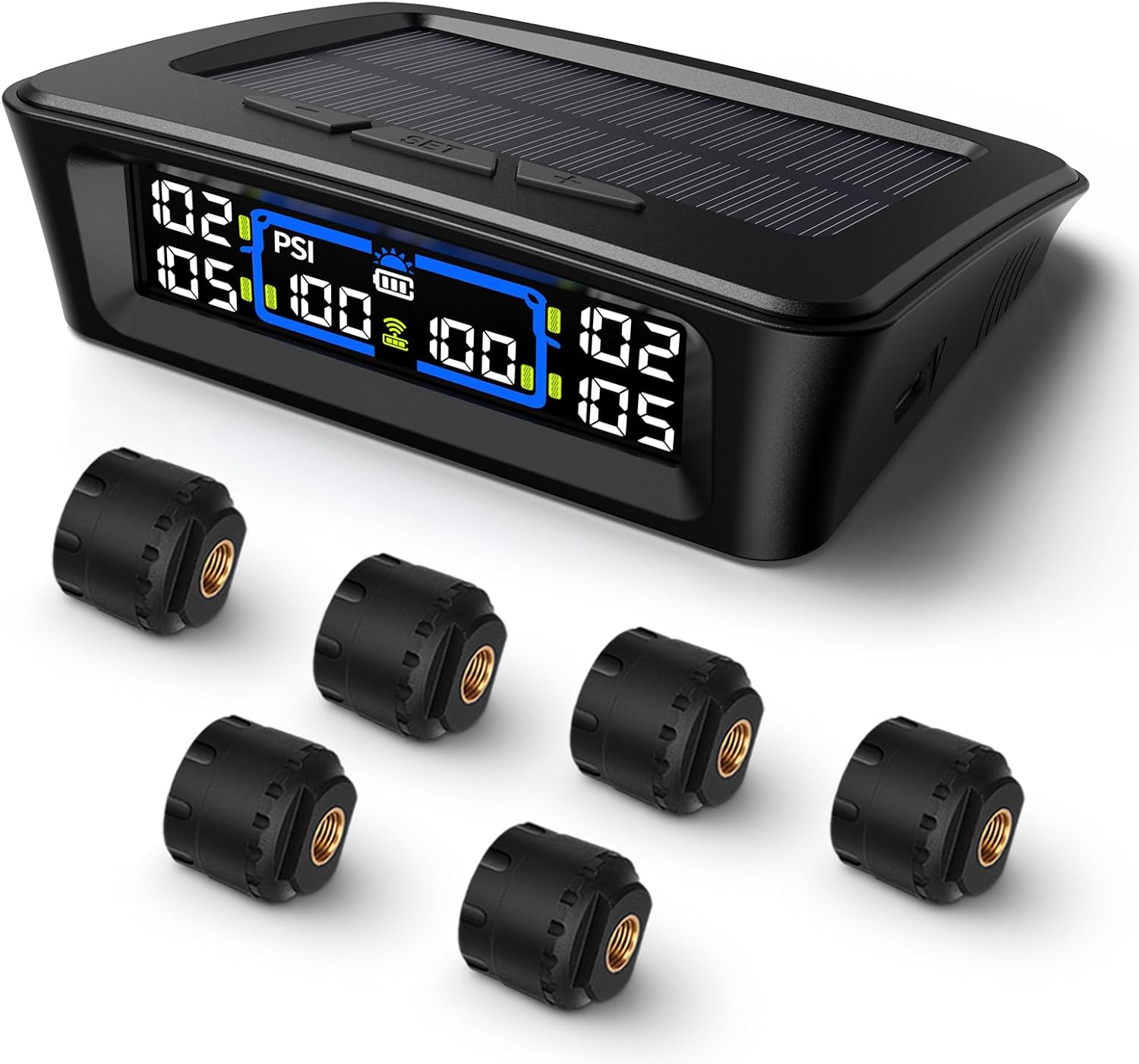
The Tymate TM12 RV TPMS delivers real-time tire pressure and temperature monitoring with a stable 433Hz display for safer long-distance driving. It supports simultaneous monitoring across vehicle and trailer zones, includes six alarm modes for pressure, temperature, leakage, battery, and signal loss, and features easy DIY installation with auto calibration. Power is supplied via USB-C charging or solar recharging, with a wide 0–144 PSI range and up to 50 ft signal coverage for RVs and towable trailers.
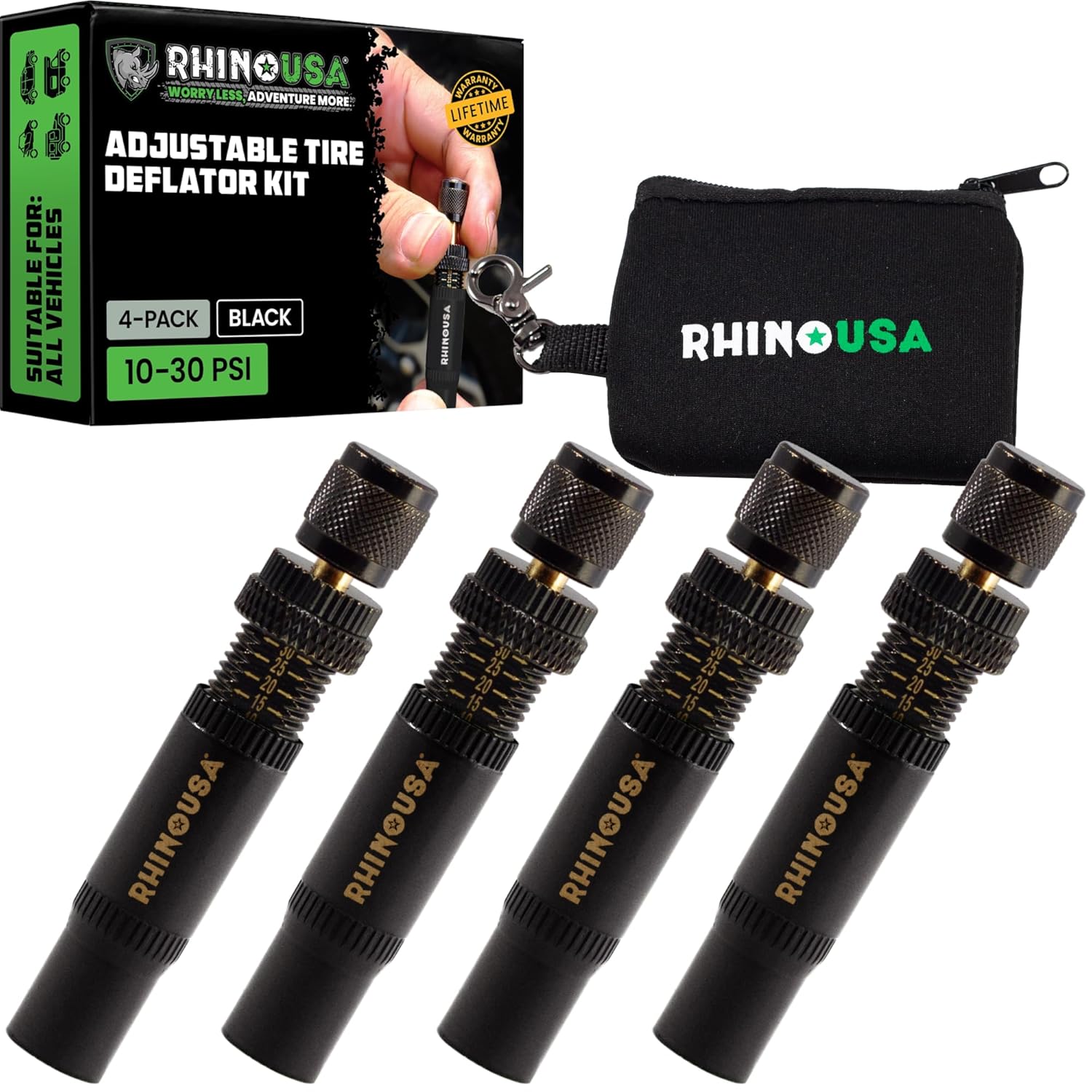
Use the Rhino USA adjustable tire deflators to air down all four tires at once by screwing one deflator onto each valve stem, letting you step away while the tires reach your preset pressure. Each deflator independently adjusts across a 10–30 PSI range with laser-etched indicators for quick setup and verification, making it ideal for beach, sand, and rocky off-road trails.

Related Articles

Best Toyota 4Runner Tires Under $150 2026 – Top Budget All-Terrain Tires
You use your Toyota 4Runner for a mix of highway miles and off-road adventures, so choosing capable all‑terrain tires that cost less than $150…
Read More
Best Budget Tires for Toyota 4Runner 2026 – Top Affordable Performance Tires
You rely on your Toyota 4Runner for a mix of daily driving and weekend adventures, and the tires you choose shape safety, comfort, and…
Read More
Best On Road All Terrain Tires for Toyota 4Runner 2026 – Top Highway-Friendly A/T Tires
You want all-terrain tires that let your 2026 Toyota 4Runner feel planted and quiet on the highway while still offering capable off-road traction when…
Read More