
There is no single universal Toyota 4Runner tire rotation pattern. Use the tire-rotation diagram in your exact Toyota owner’s manual first, because Toyota says rotation frequency and pattern are vehicle-specific. Then confirm whether your tires are directional, the same size front and rear, and whether a matching full-size spare is approved for the rotation cycle. Generic RWD, 4WD, or AWD charts are useful background guidance, but they should not override Toyota’s diagram for your model year.
Last updated: August 18, 2026
Quick Answer
For a Toyota 4Runner, follow the rotation diagram in your exact owner’s manual. Do not choose a pattern from drivetrain alone. Directional tires normally move front-to-back on the same side, staggered tire sizes restrict front-to-rear rotation, and a full-size spare should enter the cycle only when the Toyota manual and tire manufacturer allow it. Toyota maintenance schedules commonly include tire rotation at 5,000-mile service intervals.
Key Takeaways
- The correct 4Runner tire rotation pattern is the pattern shown in the Toyota owner’s manual for your exact model year and tire/spare configuration.
- Do not assume a rearward cross, forward cross, or Double X pattern applies simply because the 4Runner is RWD, 4WD, or full-time 4WD.
- Directional tires normally stay on the same side and move front-to-rear unless the tire manufacturer specifies a different procedure involving remounting.
- A matching full-size spare is not automatically part of the rotation. Include it only when the vehicle and tire guidance permit it.
- Toyota maintenance schedules include tire rotation at recurring 5,000-mile service intervals. Inspect sooner after hard trail use, towing, heavy loads, pothole impacts, or visible uneven wear.
- If a tire is at or below 2/32 inch tread depth, damaged, bulged, showing cords, or otherwise unsafe, replacement or repair takes priority over rotation.
At a Glance
| Time Required | 30–60 minutes at home, or less at a tire shop |
| Difficulty | Moderate DIY job; safe lifting and accurate wheel torque are required |
| Tools Needed | Owner’s manual, wheel chocks, lug wrench, floor jack, jack stands, torque wrench, tire pressure gauge, tread depth gauge or penny |
| Cost | No parts needed if the tires are serviceable; shop cost depends on local labor and whether balancing or TPMS service is needed |
Warning: Never work under or beside a 4Runner supported only by a jack. Use level ground, set the parking brake, chock the wheels that stay on the ground, support the vehicle with jack stands, and tighten lug nuts with a torque wrench to the specification in your exact owner’s manual.
Is It Time to Rotate Your 4Runner Tires? (Reading the Wear Signs)
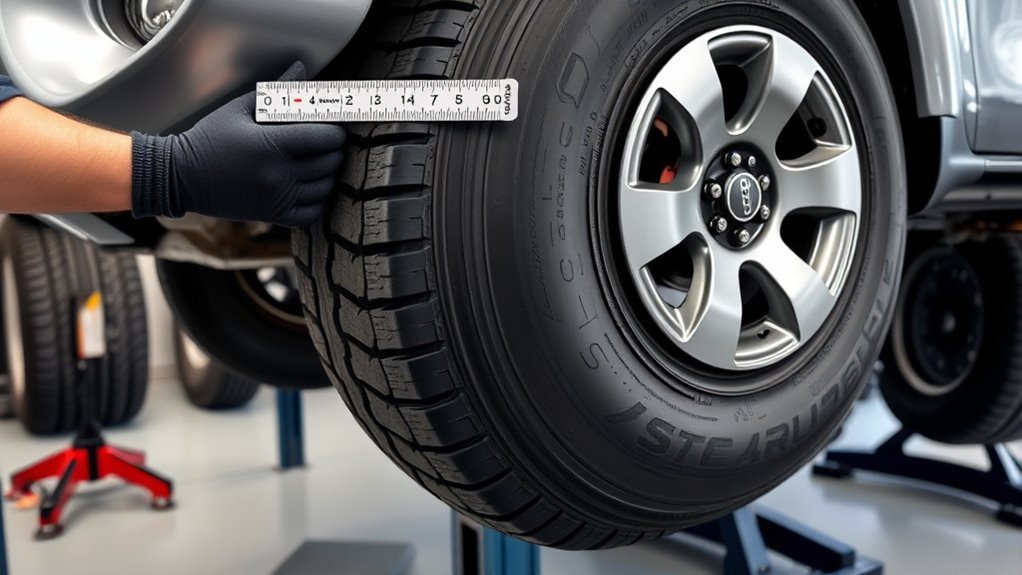
Before choosing a pattern, inspect every tire across the inner edge, center tread, and outer edge. Mileage alone does not tell you whether a tire is safe to move to another wheel position.
- Feathering can be consistent with an alignment problem.
- Cupping or scalloping can point to balance, suspension, or other mechanical problems.
- Center wear can be associated with excessive inflation pressure.
- Both-shoulder wear can be associated with insufficient inflation pressure.
- Localized bald spots require closer inspection for braking, balance, suspension, or tire damage.
Use a tread depth gauge if you have one. For a quick screen, use the penny test: place a penny into a main tread groove with Lincoln’s head facing down. If the top of Lincoln’s head remains fully visible, the tread is about 2/32 inch or less. The National Highway Traffic Safety Administration TireWise guidance says tires should be replaced when tread reaches 2/32 inch.
A tire that has reached the wear bars or fails the penny test should be replaced, not moved to another corner of the vehicle.
Also pay attention during a straight, smooth drive. Vibration, steering-wheel shake, or pulling left or right can be associated with uneven tire wear, wheel imbalance, alignment issues, or a suspension problem. Diagnose those symptoms before assuming rotation alone will solve them.
Which 4Runner Tire Rotation Pattern Fits Your Setup?
The correct 4Runner tire rotation pattern is chosen by Toyota’s instructions for your exact vehicle, then by the restrictions of the tires and wheels installed on it. Toyota’s Tire Rotation Guide states that rotation frequency and pattern are vehicle-specific and that the vehicle manufacturer’s recommendation should be followed even when it differs from general guidance.
Decision rule: Use your exact Toyota owner’s-manual diagram first. Next check tire direction, front/rear tire size, wheel compatibility, and spare eligibility. Use a generic drivetrain chart only as background guidance when it does not conflict with Toyota or the tire manufacturer.
| Your setup | What to check first | What it means |
| Stock or factory-size 4Runner setup | Exact Toyota owner’s-manual diagram | Do not substitute a pattern from another 4Runner model year or a generic drivetrain chart. |
| Same-size, non-directional tires; no spare included | Toyota diagram; drivetrain guidance is secondary | The Tire Industry Association gives general patterns by drivetrain, but those patterns do not override Toyota’s vehicle-specific instructions. |
| Directional tires | Front-to-back on the same side unless manufacturer guidance says otherwise | Directional tires carry an arrow or rotation marking and must keep rolling in the designed direction unless properly demounted and remounted. |
| Different front and rear tire sizes | Tire and vehicle manufacturer restrictions | Do not move a staggered-size tire onto an axle where that size does not belong. Side-to-side rotation may be possible when the tires are non-directional and the manufacturer permits it. |
| Matching full-size spare | Toyota’s five-tire instructions, if provided for your setup | Do not include a spare simply because it is full-size. Confirm size, type, wheel fitment, load rating, condition, TPMS compatibility, and Toyota’s instructions first. |
[Products Worth Considering]

Measure tire tread depth quickly and accurately with this LUMITECO dial gauge that reads in 1/32" increments up to 14/32". The color-coded green/yellow/red zones make it easy to judge tire wear and know when replacement is needed. A rugged, compact design with a protective pouch helps keep the gauge ready for use on cars, trucks, motorcycles, and more.

The VEHLIVE SU-50448 II TPMS relearn tool provides a fast activation reset to restore accurate tire pressure monitoring after sensor replacement or tire rotation. It supports 315 MHz and 433 MHz GM series sensors and helps clear dashboard pressure warnings. With simple two-button operation and horn-confirmed relearning order, you can reprogram sensors conveniently at home.

This TPMS sensor training and relearn reset tool is customized for Ford, Lincoln, and Mercury vehicles to help activate tire pressure programming after sensor replacement or tire rotation. It can activate individual tire pressure sensors with one-button operation, helping prevent TPMS warning light illumination. It is not a sensor programming tool and cannot program replacement sensors—use it to trigger/activate sensors only.
Why Generic RWD and 4WD Rotation Charts Can Mislead
The Tire Industry Association generally describes rearward cross for RWD vehicles and Double X for 4WD/AWD vehicles. Bridgestone also publishes general rotation patterns for uniform-size, non-directional tires. Those charts are useful for understanding the logic of tire rotation, but Toyota’s model-specific diagram remains the controlling instruction for a 4Runner.
This is why forward cross, rearward cross, and Double X should not be presented as universal 4Runner answers. If your Toyota manual, tire sidewall, or tire manufacturer gives a different instruction from a generic chart, follow the vehicle and tire-specific guidance.
How to Apply the Correct 4Runner Rotation Pattern Safely
Once you have confirmed the pattern, mark the current positions before removing anything: LF for left front, RF for right front, LR for left rear, RR for right rear, and S for the spare if Toyota’s diagram includes it. For the complete tool-by-tool process, see our step-by-step guide to rotating 4Runner tires.
- Park safely. Use level, solid ground, set the parking brake, and chock the wheels.
- Confirm the pattern. Check your exact Toyota manual plus tire direction, size, and spare restrictions before lifting the vehicle.
- Loosen lug nuts slightly. Break them loose while each tire is still supported by the ground.
- Lift and support the vehicle. Use the lift points specified by Toyota and support the 4Runner securely with jack stands.
- Move the tires. Follow the confirmed Toyota diagram while keeping directional, staggered, and spare-tire restrictions in mind.
- Inspect while the wheels are off. Check for cuts, nails, cracks, bulges, exposed cords, uneven wear, damaged valve stems, and visible brake problems.
- Reinstall correctly. Hand-start the lug nuts, seat the wheel evenly, and snug the nuts in a star pattern.
- Torque and set pressure. Use a torque wrench at the exact specification for your model year and wheel type, then set cold tire pressure to the vehicle placard or owner’s-manual specification.
Pro Tip: Keep a tire log with date, mileage, tread depth, pressure, and final wheel position. Comparing those measurements at each rotation makes uneven wear easier to spot before it ruins a tire set.
[Products Worth Considering]

Monitor tire tread wear with a smart, color-coded depth gauge that shows clear condition ranges at a glance. The bar is range marked for fast, easy readings, helping you maintain safer traction and performance. Each gauge is portable with a pocket clip, and the set includes 20 units for daily use and sharing.

These aluminum alloy tire valve stem caps with an O-ring seal help protect valve stems from corrosion while adding a clean, stylish look to your vehicle. The universal fit works across cars, trucks, motorcycles, bicycles, and more, making them an easy upgrade for everyday driving and off-road use. Installation is quick, and the included four-pack keeps all your tires dressed and protected.

The Dr.Roc spare tire tool kit helps you release, lower, or raise your spare tire with reliable extension tools and a lug nut wrench. It is made from rustproof automotive-grade steel and includes an organized carry case for convenient storage. Designed for compatibility with select GM models from the late 1990s through 2019, it uses upgraded extension components to install and remove spare tires with less hassle.
Should You Rotate Your 4Runner’s Full-Size Spare?
Do not put the spare into the rotation solely because it is full-size. Include it only when it is a matching tire and wheel and your Toyota manual permits that spare in the rotation cycle. A compatible five-tire rotation can keep tread wear more even, but an incompatible spare can create tire, handling, drivetrain, or TPMS problems.
Before including the spare, verify:
- The spare tire size matches the road tires.
- The wheel has compatible fitment for regular road use.
- The tire construction, load rating, and intended use are compatible.
- The tire is not marked as a temporary-use spare.
- The spare is not cracked, damaged, excessively old, or severely different in tread depth.
- Any directional-tire restrictions can still be followed.
- The TPMS/TPWS configuration is compatible with your model year.
- Your exact Toyota manual permits the spare in its rotation diagram.
Bridgestone’s tire rotation guidance describes full-size-spare rotation patterns when the vehicle setup allows them and notes that TPMS relearning may be necessary when a sensor-equipped spare enters service. Vehicle-specific Toyota instructions still take priority.
[Products Worth Considering]

This TPMS relearn tool helps you quickly activate, match, and reset GM tire pressure sensors to keep the vehicle monitoring system working properly. It clears tire pressure alarms and dashboard warning lights after sensor replacement or tire rotation, and supports learning for common 315/433 MHz TPMS sensors. Designed for simple one-button operation, it can help you avoid unnecessary trips to repair shops.

Upgrade your wheels with MIKKUPPA closed-end lug nuts designed for reliable fit and corrosion resistance. The one-piece, cold-forged and heat-treated steel construction helps resist rust and stripping, while the integrated finish delivers a durable black appearance. Built to OEM standards with a conical 60-degree seat, these nuts provide a secure solution for compatible Ford, Honda, Jeep, and Chevrolet models.

These M14x1.5 closed-end chrome lug nuts are a one-piece replacement designed for secure fitment on compatible GM, Ford, and select Chrysler/Dodge models. Featuring a 60-degree conical seat and anti-rust chrome plating, they help resist corrosion and maintain a bright look for everyday driving. Built for long-term durability, they include OEM-style part references and are backed by 12 months of support.
What Should You Do With TPMS After a 4Runner Tire Rotation?
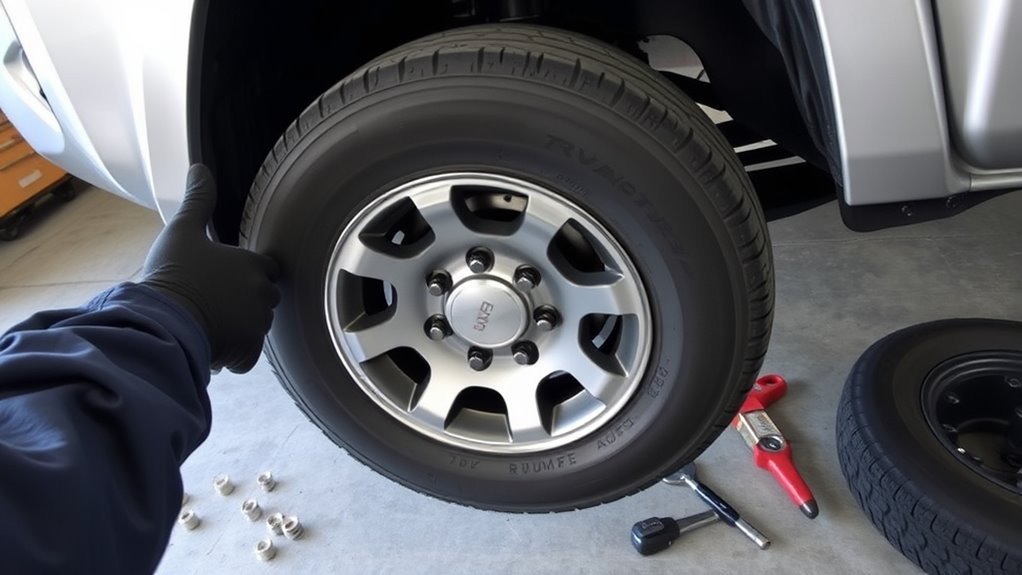
Start by setting all road tires, and the spare if applicable, to the correct cold inflation pressure shown on the driver-door placard or in your owner’s manual. Do not use the maximum pressure molded into the tire sidewall as the vehicle’s normal inflation setting.
Do not assume every 4Runner needs the same TPMS reset after rotation. Depending on model year and system design, Toyota may describe an initialization procedure, tire-pressure setting, wheel-position registration, or another process. Follow the procedure in your exact owner’s manual rather than using instructions from a different year.
Use this sequence:
- Set every applicable tire to the specified cold pressure.
- Check whether your owner’s manual requires TPMS/TPWS initialization or wheel-position registration after rotation.
- Follow the exact menu, button, or driving procedure specified for that model year.
- If the warning remains after pressure and the required procedure are correct, inspect for a low tire, sensor fault, or other TPMS problem.
For a deeper explanation of initialization, position relearning, and sensor registration, see our 4Runner TPMS guide after tire rotation. Toyota’s TPMS support guidance also emphasizes that the pressure-monitoring system is not a substitute for checking tire pressure with a gauge.
How Often Should You Rotate 4Runner Tires?
Toyota’s maintenance schedule is the correct starting point. The 2025 4Runner Warranty & Maintenance Guide lists tire rotation throughout its recurring 5,000-mile maintenance intervals. The 2024 4Runner Warranty & Maintenance Guide likewise lists tire rotation throughout the maintenance schedule and tells owners to rotate according to the Owner’s Manual.
Condition still matters. Inspect the tires sooner after hard off-road trips, towing, heavy loads, pothole impacts, or any new vibration or pulling. Earlier inspection does not automatically mean you must perform a full rotation, but it can reveal pressure, alignment, balance, suspension, or tire problems before the next scheduled service.
- Routine use: follow the recurring 5,000-mile Toyota maintenance schedule and the time interval in your exact guide.
- Off-road, towing, or heavy-load use: inspect after demanding trips and act sooner if wear becomes uneven.
- Cupping, feathering, vibration, or pulling: investigate pressure, alignment, balance, tire condition, and suspension before treating rotation as the fix.
- 2/32 inch tread, exposed wear bars, bulges, cords, or serious damage: replace or repair the tire instead of simply rotating it.
Common Mistakes After a 4Runner Tire Rotation
A correct rotation should not introduce a new vibration, pull, warning, rubbing problem, or loose-wheel feeling. If something changes immediately after the work, stop and check the basics.
- Using a generic pattern instead of Toyota’s diagram: confirm the exact owner’s-manual pattern before moving the wheels again.
- TPMS light stays on: recheck cold pressure first, then complete only the TPMS/TPWS procedure specified for your model year.
- Steering wheel shakes: check wheel torque, balance, bent wheels, mud or debris inside the wheel, and tire damage.
- Vehicle pulls after rotation: compare tire pressures and tread condition, then inspect alignment and tire wear if the pull remains.
- Noise gets louder: cupped or chopped tread can become more noticeable after the tire moves to a different position.
- Rubbing after an aftermarket tire or wheel change: check clearance through full steering lock and suspension movement rather than assuming the rotation itself created the fitment problem.
Frequently Asked Questions
What tire rotation pattern should I use on a Toyota 4Runner?
Use the rotation diagram in the owner’s manual for your exact 4Runner model year and configuration. Toyota says tire-rotation patterns are vehicle-specific. Tire direction, front/rear sizing, wheel compatibility, and whether a full-size spare is included can all change the correct pattern.
How often should I rotate Toyota 4Runner tires?
Toyota 4Runner maintenance schedules include tire rotation at recurring 5,000-mile service intervals. Follow the mileage and time schedule in the maintenance guide for your exact model year, and inspect the tires sooner after hard off-road use, towing, heavy loads, or abnormal wear.
Is forward cross the correct 4Runner tire rotation pattern?
Do not assume it is. Forward cross, rearward cross, and Double X are generic rotation patterns used for different vehicle and tire configurations. The correct 4Runner pattern is the diagram Toyota specifies for your exact model year and tire/spare setup.
Can I rotate directional tires on a 4Runner?
Yes, when the vehicle and tire guidance permit it, but directional tires normally move front-to-back on the same side so they continue rolling in the designed direction. Check the rotation arrow on the tire sidewall and follow the tire manufacturer’s instructions.
Should I include the full-size spare in my 4Runner tire rotation?
Only when the spare is compatible with the road tires and your Toyota manual permits it in the rotation cycle. Confirm tire size, wheel fitment, construction, load rating, direction, condition, tread-depth difference, and TPMS compatibility. Never put a temporary-use spare into a normal rotation.
Do I need to reset TPMS after rotating 4Runner tires?
Not always. Set all applicable tires to the specified cold pressure first. Then check the owner’s manual for your exact model year to see whether Toyota requires initialization, tire-pressure setting, wheel-position registration, or another TPMS/TPWS procedure after rotation.
Can I rotate 4Runner tires at home?
Yes, if you can identify the correct rotation pattern and safely lift and support the vehicle. Use proper wheel chocks, a suitable jack, jack stands, and a torque wrench. Follow Toyota’s lift-point and wheel-torque specifications for your exact model year and wheel type.
Conclusion
The safest 4Runner tire rotation pattern is the one Toyota specifies for your exact vehicle. Before moving a wheel, open the correct owner’s manual, check the tire sidewalls and sizes, and confirm whether the spare belongs in the cycle. Then inspect tread, support the vehicle safely, torque the wheels to specification, set cold tire pressure, and complete any TPMS/TPWS procedure your manual requires. Following that sequence avoids the biggest mistake in 4Runner tire rotation: applying a generic pattern to a vehicle or tire setup that calls for something different.
Sources
- Toyota Tire Rotation Guide — Toyota guidance that tire-rotation frequency and pattern are vehicle-specific and manufacturer recommendations take priority.
- Toyota 4Runner Manuals and Warranties — official Toyota access point for model-specific owner documentation.
- 2025 Toyota 4Runner Warranty & Maintenance Guide — current maintenance-chart support for recurring tire rotation.
- 2024 Toyota 4Runner Warranty & Maintenance Guide — Toyota maintenance schedule and instruction to rotate according to the Owner’s Manual.
- NHTSA TireWise — tire-pressure, tread-depth, penny-test, wear, balance, alignment, and rotation safety guidance.
- Tire Industry Association Tire Rotation Guidance — general drivetrain-based rotation-pattern guidance.
- Bridgestone Tire Rotation Guide — general directional, staggered, drivetrain, and full-size-spare rotation guidance.