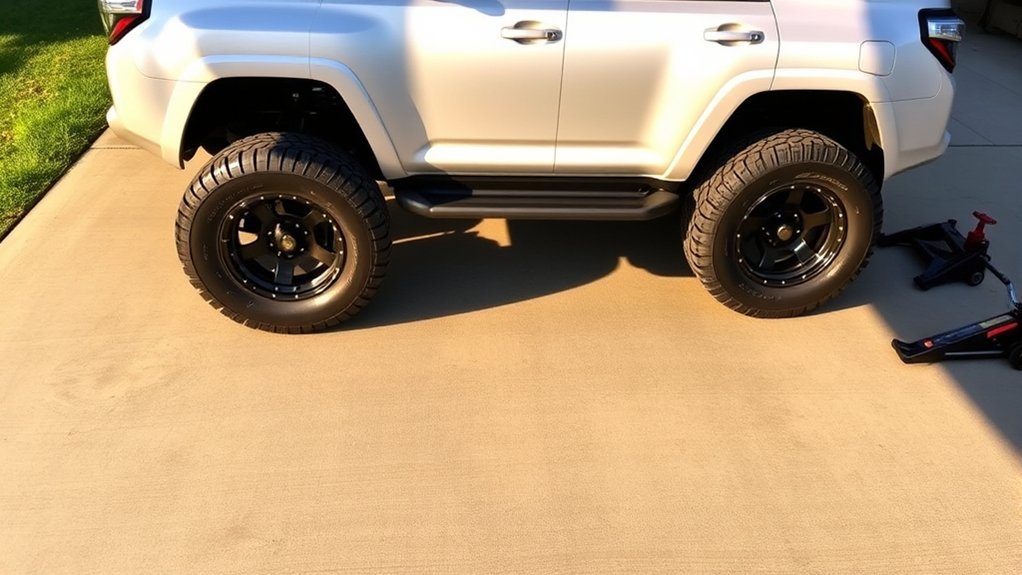
Rotating all five tires on a Toyota 4Runner can help the spare wear evenly with the four tires on the road, but only when the spare is a full-size matching tire and wheel. For most 4Runners with same-size, non-directional tires, the safest DIY pattern is a five-tire rearward cross. Always verify the pattern, tire pressure, and wheel-nut torque in your exact Toyota owner’s manual before you start.
Quick Answer
To do a five-tire rotation on a 4Runner with a matching, non-directional full-size spare, use the rearward-cross pattern: spare to right rear, right rear to right front, left rear to left front, right front to left rear, and left front to spare.
Key Takeaways
- Only include the spare if it is full-size, matching, roadworthy, and not labeled for temporary use.
- For most same-size, non-directional tires on a 4Runner, use a five-tire rearward-cross pattern.
- Toyota’s maintenance schedule commonly calls for service every 5,000 miles or six months; check your model-year guide for the exact interval.
- Use jack stands, wheel chocks, and a torque wrench. Never rely on a jack alone while working around the wheels.
- If your 4Runner has a tire-pressure warning system with wheel-position registration, complete the reset or registration steps after rotating.
At a Glance
| Time Required | 45–75 minutes for a careful DIY rotation |
| Difficulty | Moderate; basic hand-tool skill and safe lifting are required |
| Tools Needed | Floor jack, jack stands, wheel chocks, breaker bar, correct lug-nut socket, torque wrench, tire-pressure gauge, tread-depth gauge, gloves, and chalk or tape for marking tire positions |
| Cost | $0 if you already own the tools; typically more if you need to buy a jack, stands, or torque wrench |
Step-By-Step Tire Rotation Guide
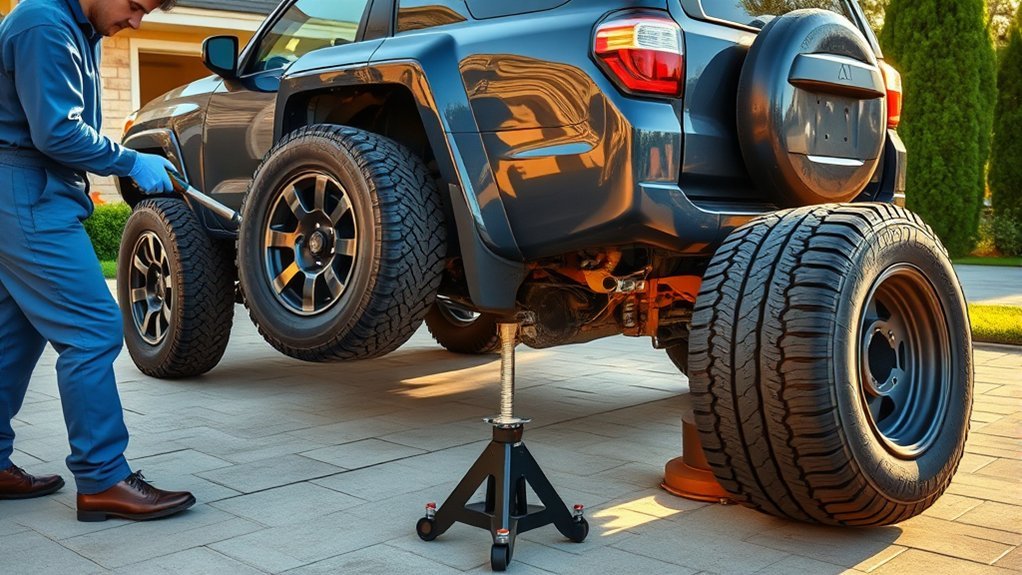
Warning: Work on a flat, solid surface. Set the parking brake, chock the wheels that stay on the ground, and support the 4Runner with jack stands before removing any tire. Never place any part of your body under a vehicle supported only by a jack.
Use this pattern only when all five tires and wheels are the same size and type, the spare is safe for road use, and the tires are non-directional. If your spare is temporary, smaller, a different wheel type, or badly mismatched in tread depth, do not include it in the rotation.
- Check the spare first. Confirm that the spare is full-size, properly inflated, free of sidewall damage, and not labeled “temporary use only.”
- Park safely and loosen the lug nuts. Before lifting, slightly loosen each lug nut with the tires still touching the ground. Do not remove the nuts yet.
- Lift and support the vehicle. Use the jacking points listed in your owner’s manual, then place jack stands securely under approved support points.
- Remove the wheels and mark positions. Use chalk or tape to mark left front, right front, left rear, right rear, and spare so you do not lose track of the pattern.
- Move the tires using the five-tire rearward-cross pattern. Place the spare on the right rear, move the right rear to the right front, move the left rear to the left front, move the right front to the left rear, and move the left front to the spare location.
- Hand-thread every lug nut. Start each lug nut by hand to avoid cross-threading. Do not use an impact wrench to start lug nuts.
- Snug the lug nuts in a star pattern. Tighten lightly while the wheel is still off the ground, using a crisscross pattern so the wheel seats evenly.
- Lower and torque to the correct spec. Lower the 4Runner until the tires just contact the ground, then use a torque wrench set to the exact wheel-nut torque listed for your model year and wheel type in the owner’s manual.
- Set tire pressures cold. Check all five tires, including the spare, against the Tire and Loading Information Label on the driver-side doorjamb or your owner’s manual.
- Reset or register TPMS/TPWS if required. Newer 4Runner models may need tire-position registration after rotation so the display matches the new wheel locations.
| Current Position | New Position |
|---|---|
| Spare | Right rear |
| Right rear | Right front |
| Left rear | Left front |
| Right front | Left rear |
| Left front | Spare location |
Essential Tools for a Successful Tire Rotation
Gather everything before lifting the 4Runner. You will need a floor jack rated for the vehicle, two to four jack stands, wheel chocks, a breaker bar, the correct lug-nut socket, and a calibrated torque wrench. A tire-pressure gauge and tread-depth gauge are also useful because rotation is the right time to inspect all five tires.
- Floor jack and jack stands: Use equipment rated for the vehicle’s weight.
- Wheel chocks: Prevent the 4Runner from moving while you lift one end or one side.
- Breaker bar: Loosens tight lug nuts before lifting.
- Torque wrench: Required for final tightening. Do not guess by feel.
- Tire-pressure gauge: Check all five tires when cold.
- Tread-depth gauge: Helps spot uneven wear and tires that are too worn to keep in service.
- Chalk or tape: Mark each tire’s current position before moving it.
Pro Tip: Clean dirt and rust from the wheel mounting surface before reinstalling each wheel. A wheel that does not sit flat can cause vibration and uneven clamping force.
[Products Worth Considering]

Secure a full-size spare on your trailer with this powder-coated steel spare tire mount bracket. It fits most 4-, 5-, and 6-lug wheel bolt patterns and mounts to trailer tongues up to 4 in wide and 5 in tall. Built for reliable carry with a max 150 lb load rating and includes zinc-plated hardware for straightforward installation.

The Trivd Frol 1/2" air impact wrench delivers high performance torque up to 1500 ft-lbs with a twin hammer impact mechanism for strong, balanced blows. It features an ergonomic grip, compact lightweight design, and quick-stop control with 3 forward speeds up to 8000 RPM plus a reverse speed. Built for demanding automotive repair and tire shop work, the rear exhaust helps keep debris away from the surface.

This 1/2-inch drive breaker bar delivers powerful leverage for loosening and tightening stubborn lug nuts and automotive fasteners. The 180-degree flex head helps you reach tight spaces at the angle you need, making tire and brake jobs easier. A spring-loaded ball detent design holds 1/2-inch sockets securely while the chrome-moly head provides durable strength for everyday use.
Best Practices for Spare Tire Rotation
Including the spare can be helpful because it keeps all five tires closer in tread depth. That matters on a 4Runner because large tread-depth differences can affect traction, handling, and drivetrain smoothness. However, the spare must be suitable for regular road use.
Before using the spare in the rotation, confirm these points:
- The spare is the same size as the four installed tires.
- The spare wheel is compatible with normal road use.
- The spare is not a compact or temporary-use tire.
- The tire is not cracked, bulging, punctured, or badly aged.
- The tread depth is close enough to the other tires to avoid a major mismatch.
- The tire is non-directional, or it is mounted so it can rotate in the correct direction at the new position.
Toyota’s 2024 4Runner maintenance guide recommends scheduled maintenance every 5,000 miles or six months, whichever comes first, and the maintenance log includes tire rotation at regular service intervals. For severe use, frequent off-road driving, or aggressive all-terrain tires, inspect wear sooner and rotate as needed.
[Products Worth Considering]

Upgrade your wheels with MIKKUPPA M12x1.5 mag seat lug nuts built for secure, corrosion-resistant performance. These closed-end chrome lug nuts are a direct replacement for select Toyota models, including Camry, Corolla, RAV4, Sienna, Avalon, Highlander, Matrix, Venza, and Prius. Triple-chromium plating and cold-forged, heat-treated steel help deliver strength for daily driving and replacement needs.

Monitor tire tread wear with a smart, color-coded depth gauge that shows clear condition ranges at a glance. The bar is range marked for fast, easy readings, helping you maintain safer traction and performance. Each gauge is portable with a pocket clip, and the set includes 20 units for daily use and sharing.

Upgrade your wheels with MIKKUPPA closed-end lug nuts designed for reliable fit and corrosion resistance. The one-piece, cold-forged and heat-treated steel construction helps resist rust and stripping, while the integrated finish delivers a durable black appearance. Built to OEM standards with a conical 60-degree seat, these nuts provide a secure solution for compatible Ford, Honda, Jeep, and Chevrolet models.
Understanding Different Tire Rotation Patterns: Which One to Use?
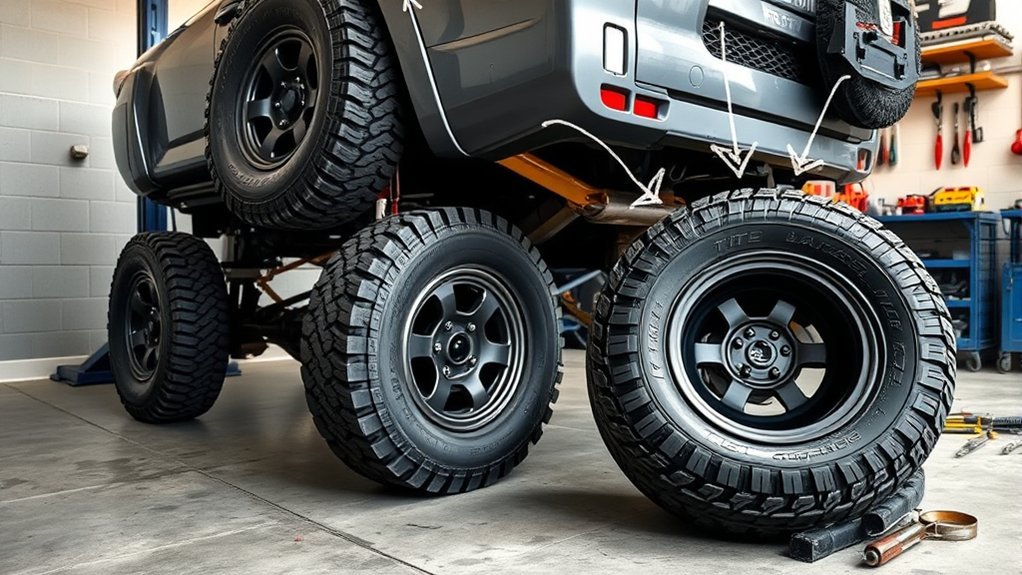
The right rotation pattern depends on tire direction, tire size, wheel type, and whether the spare matches the other four tires. If your owner’s manual gives a specific pattern for your model year, follow it first.
[Products Worth Considering]

These M14x1.5 closed-end chrome lug nuts are a one-piece replacement designed for secure fitment on compatible GM, Ford, and select Chrysler/Dodge models. Featuring a 60-degree conical seat and anti-rust chrome plating, they help resist corrosion and maintain a bright look for everyday driving. Built for long-term durability, they include OEM-style part references and are backed by 12 months of support.

The Dr.Roc spare tire tool kit helps you release, lower, or raise your spare tire with reliable extension tools and a lug nut wrench. It is made from rustproof automotive-grade steel and includes an organized carry case for convenient storage. Designed for compatibility with select GM models from the late 1990s through 2019, it uses upgraded extension components to install and remove spare tires with less hassle.

The Tymate TM12 RV TPMS delivers real-time tire pressure and temperature monitoring with a stable 433Hz display for safer long-distance driving. It supports simultaneous monitoring across vehicle and trailer zones, includes six alarm modes for pressure, temperature, leakage, battery, and signal loss, and features easy DIY installation with auto calibration. Power is supplied via USB-C charging or solar recharging, with a wide 0–144 PSI range and up to 50 ft signal coverage for RVs and towable trailers.
Rotation Methods Overview
For a 4Runner with four-wheel drive or rear-wheel drive and five matching, non-directional tires, the five-tire rearward-cross pattern is the practical choice. The rear tires move straight forward, the front tires cross toward the rear, and the spare enters at the right rear.
If the spare does not match, use a four-tire rotation pattern instead and keep the spare for emergencies only. If the vehicle has different front and rear tire sizes, aftermarket wheels with different offsets, or other non-standard equipment, ask a qualified tire shop before rotating.
Directional vs. Non-Directional
Directional tires have arrows or wording on the sidewall showing the required rolling direction. Do not cross directional tires from one side of the vehicle to the other unless the tire is dismounted and remounted correctly on the wheel.
Non-directional tires can usually be crossed side-to-side, which is why the rearward-cross pattern works for many 4Runner setups. When in doubt, read the sidewall and confirm the pattern with the tire manufacturer or Toyota manual.
Recommended Patterns for 4Runner
Use these general rules for a Toyota 4Runner:
- Five matching, non-directional tires: Use the five-tire rearward-cross pattern.
- Four matching tires plus temporary spare: Do not rotate the spare into service.
- Directional tires: Rotate front-to-rear on the same side unless the tire is remounted.
- Different-size or mismatched tires: Do not use a standard cross pattern without professional guidance.
- Newer TPWS-equipped models: Complete the tire-position registration or reset procedure listed in the manual after rotation.
Note: The best pattern is always the one in your exact owner’s manual. Toyota’s online manuals cover different model years, and newer 4Runner systems may include wheel-position registration steps after rotation.
Safety Tips During Tire Rotation
Tire rotation looks simple, but the safety risk comes from lifting the vehicle and tightening the wheels correctly. Take your time and do not skip the setup.
- Park on level concrete or another hard, stable surface.
- Set the parking brake before lifting.
- Use wheel chocks on tires that remain on the ground.
- Lift only at approved jacking points.
- Support the 4Runner with jack stands before removing wheels.
- Keep hands and feet clear when lowering the vehicle.
- Do not work under the vehicle during a tire rotation unless it is properly supported for underbody work.
- Stop and call a professional if a lug nut is seized, cross-threaded, rounded, or unusually loose.
How to Properly Tighten Lug Nuts After Rotation
Proper lug-nut tightening is a safety step, not a finishing detail. The exact torque specification depends on model year and wheel type, so use the value in your owner’s manual rather than a broad estimate.
- Inspect the studs and lug nuts. Replace damaged hardware before driving.
- Start every lug nut by hand. This helps prevent cross-threading.
- Snug in a star pattern. Bring the wheel evenly against the hub.
- Use a torque wrench for final tightening. Set it to the owner-manual specification for your exact 4Runner.
- Avoid lubricating wheel studs unless the manual says to. Lubrication can change clamping force and lead to over-tightening.
- Recheck if recommended. If your wheel maker, installer, or manual recommends a recheck after driving, follow that instruction.
A torque wrench is the only reliable way to confirm wheel-nut tightness. “Good and tight” is not a safe torque specification.
Monitoring Tire Health: Signs You Need a Rotation

Regular rotation helps reduce irregular wear, but it does not fix a tire that is damaged, unsafe, or worn out. NHTSA recommends checking tire pressure and tread at least monthly, including the spare, and replacing tires when tread reaches 2/32 inch.
Rotate or inspect sooner if you notice:
- Uneven tread depth between front and rear tires.
- Cupping, feathering, or sawtooth wear.
- Vibration after a previous rotation.
- The vehicle pulling left or right on a straight road.
- New road noise that changes with speed.
- Sidewall cracks, bulges, exposed cords, or puncture damage.
If the wear pattern is severe, rotation alone is not enough. Check tire pressure, wheel balance, alignment, suspension parts, and wheel bearings before continuing to drive long distances.
Common Tire Rotation Questions
- How often should I rotate 4Runner tires? A common Toyota maintenance interval is every 5,000 miles or six months, whichever comes first. Check your model-year maintenance guide.
- Why include the spare? A matching full-size spare can wear evenly with the other four tires, so it is ready for normal use when needed.
- What if the spare is brand new and the other tires are worn? Do not force a badly mismatched spare into rotation. Ask a tire professional whether the set is still safe to use together.
- Should I rotate before or after off-road trips? Inspect before and after off-road use. Rotate early if you see uneven wear, chunking, or pressure differences.
How to Extend the Lifespan of Your Tires Through Regular Rotation
Regular rotation spreads the work among all tire positions. Front tires handle more steering and braking force, while rear tires on a 4Runner can see different load and drive forces. Moving each tire through different positions helps reduce irregular wear and keeps the set more balanced.
For the best results:
- Rotate on schedule instead of waiting for obvious wear.
- Keep all five tires inflated to the correct cold pressure.
- Inspect tread depth across the inside, center, and outside of each tire.
- Balance tires if vibration appears after rotation.
- Fix alignment or suspension problems that cause rapid uneven wear.
- Replace tires that are damaged, too old, or worn to 2/32 inch.
Frequently Asked Questions
What is a 5 tire rotation with a spare?
A five-tire rotation uses the full-size spare as part of the normal rotation instead of leaving it unused. On a 4Runner with five matching, non-directional tires, the spare usually enters at the right rear, and the left front becomes the new spare.
What is the 50/50 rule on spare tires?
The “50/50 rule” is not an official Toyota tire-rotation rule. People usually use it informally to mean the spare should not be treated as a forgotten tire. It should be checked, inflated, inspected, and rotated when it is a matching full-size spare so tread depth stays close to the rest of the set.
Can I include a temporary spare in a 4Runner tire rotation?
No. A compact, temporary-use, different-size, or incompatible spare should not be rotated into normal service. Keep it for emergency use only and follow the speed and distance limits printed on the spare or listed in the owner’s manual.
Do directional tires change the 5 tire rotation pattern?
Yes. Directional tires must keep rotating in the direction shown on the sidewall. That usually means front-to-rear rotation on the same side unless the tire is dismounted and remounted correctly. Do not cross directional tires side-to-side while still mounted on the wheels.
Do I need to reset TPMS after rotating 4Runner tires?
Some 4Runner models only need pressure checked and corrected, while newer models with tire-position display may require wheel-position registration after rotation. Use the procedure in your exact owner’s manual so the display matches the new tire locations.
Conclusion
A five-tire rotation is a smart maintenance step for a Toyota 4Runner when the spare is full-size, matching, and safe for regular road use. Use the rearward-cross pattern for most same-size, non-directional tire sets, tighten the lug nuts with a torque wrench to the exact manual specification, and check pressure and tread on all five tires. If the spare is temporary, mismatched, directional in the wrong orientation, or badly different in tread depth, leave it out of the rotation and get professional advice.
Sources
- Toyota Manuals and Warranties — official owner’s manual and maintenance guide lookup by model year.
- Toyota 2024 4Runner Warranty & Maintenance Guide — maintenance interval and tire-rotation schedule reference.
- Toyota 2026 4Runner Tires Manual Page — tire, spare-wheel, tire-pressure warning system, and position-registration reference.
- NHTSA TireWise — tire pressure, tread depth, rotation, and safety guidance.
- Tire Rack Tire Rotation Instructions — tire-industry rotation patterns, including five-tire rearward-cross guidance.