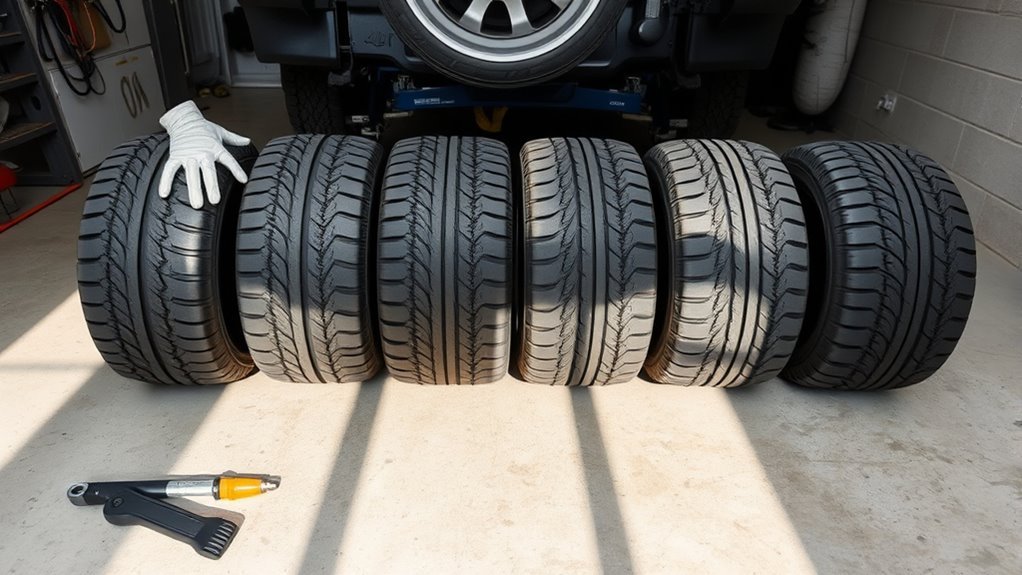
Including the spare tire in your Toyota 4Runner’s rotation can be a smart move, but only when the spare is a true match for the four tires already on the road. The right answer depends on tire size, tread pattern, tread depth, tire age, wheel compatibility, TPMS setup, and the rotation diagram in your exact owner’s manual.
Quick Answer
Yes, rotate your 4Runner’s full-size spare if it matches the other four tires in size, type, tread pattern, wheel fitment, condition, and tread depth. Do not rotate in a temporary, mismatched, old, damaged, or much-newer spare. If the spare stays out of rotation, check its pressure and condition at every service.
Key Takeaways
- Toyota schedules tire rotation as regular maintenance, but the exact pattern should come from your model-year owner’s manual.
- A five-tire rotation works only with a matching full-size spare, not a temporary spare or a different off-road backup tire.
- Measure tread depth before rotating the spare in; a big tread-depth mismatch can affect handling and drivetrain stress.
- Directional tires usually rotate front-to-rear on the same side unless they are demounted and remounted.
- After rotation, set cold tire pressures, torque the lug nuts to your manual’s spec, and complete any TPMS reset or wheel-position registration your 4Runner requires.
At a Glance
| Time Required | 45–75 minutes for a careful DIY five-tire rotation |
| Difficulty | Moderate; the lifting and torque steps matter more than the pattern itself |
| Tools Needed | Owner’s manual, wheel chocks, lug wrench or breaker bar, floor jack, jack stands, torque wrench, tire pressure gauge, tread-depth gauge, and the spare-tire lowering tools |
| Cost | No parts if your spare already matches; shop labor varies by location and tire service provider |
Should You Include Your 4Runner’s Spare in the Rotation?
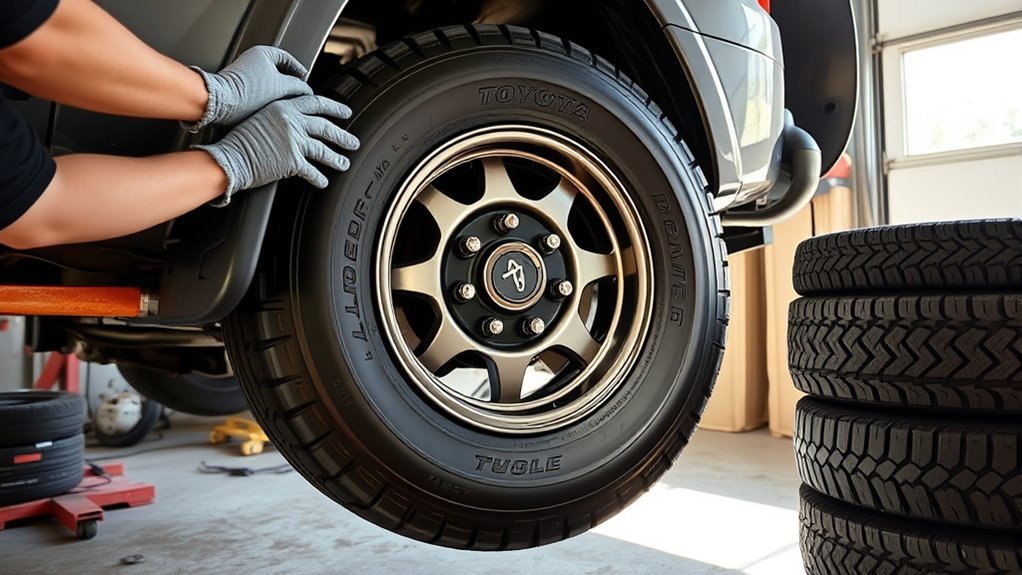
You should include the spare only when it is a matching full-size tire and wheel. That means the same tire size, compatible wheel, similar load rating, similar tread pattern, safe tire age, no cracking or damage, and tread depth close enough to the other four tires.
Toyota’s maintenance schedule calls for regular tire rotation, and Toyota’s tire-maintenance guidance also says to check the spare tire’s condition and pressure when it is not rotated. In other words, the spare should never be ignored. The question is whether it belongs in the driving rotation or should stay as an emergency reserve.
For the safest answer, start with your exact model-year owner’s manual. You can find Toyota manuals through the Toyota Owners manuals page, and Toyota’s maintenance guide shows tire rotation as part of regular service intervals in the 4Runner Warranty & Maintenance Guide.
Warning: Do not rotate in a temporary spare, a different-size spare, an old cracked spare, or a spare with much deeper tread than the other four tires. A mismatched spare may be fine for short emergency use, but it does not belong in a normal rotation pattern.
The Matching Spare Checklist
Before you put the spare into service, check all five tires. A five-tire rotation only works when all five can safely do the same job.
- Size: The spare should match the tire size listed on the tire placard or in the owner’s manual.
- Tread type: The spare should match the tread category and pattern closely enough to behave like the other four tires.
- Tread depth: Measure all five tires. As a conservative rule, avoid mixing one tire that is more than about 2/32 inch different from the others unless a tire professional confirms it is safe.
- Tire age: Check the DOT date code. Even an unused spare can age, crack, or harden.
- Direction: Look for a sidewall arrow or the word “rotation.” Directional tires need special handling.
- TPMS: If your spare wheel has a TPMS sensor, your 4Runner may need a reset or wheel-position registration after rotation.
- Wheel fitment: The wheel must safely clear the brakes and mount correctly on the hub.
Pro Tip: Write each tire’s position and tread depth in a note on your phone before every rotation. Example: LF 8/32, RF 8/32, LR 9/32, RR 9/32, spare 9/32. This makes future rotations much easier to track.
Which 5-Tire Rotation Pattern Should You Use?
The best pattern is the one shown in your exact 4Runner owner’s manual. Toyota has used different rotation diagrams across model years, trims, tire types, and spare setups. Do not rely on one internet pattern if your manual shows a different diagram.
If your owner’s manual allows a five-tire rotation and your 4Runner has five identical, non-directional tires, a common rear-drive/4WD five-tire pattern is:
| Old Position | New Position |
|---|---|
| Left rear | Left front |
| Right rear | Right front |
| Right front | Left rear |
| Spare | Right rear |
| Left front | Spare position |
This pattern spreads wear across all five tires over time. If your Toyota manual shows a different five-tire diagram, use Toyota’s diagram instead.
[Products Worth Considering]

Secure a full-size spare on your trailer with this powder-coated steel spare tire mount bracket. It fits most 4-, 5-, and 6-lug wheel bolt patterns and mounts to trailer tongues up to 4 in wide and 5 in tall. Built for reliable carry with a max 150 lb load rating and includes zinc-plated hardware for straightforward installation.

The VEHLIVE SU-50448 II TPMS relearn tool provides a fast activation reset to restore accurate tire pressure monitoring after sensor replacement or tire rotation. It supports 315 MHz and 433 MHz GM series sensors and helps clear dashboard pressure warnings. With simple two-button operation and horn-confirmed relearning order, you can reprogram sensors conveniently at home.

This TPMS sensor training and relearn reset tool is customized for Ford, Lincoln, and Mercury vehicles to help activate tire pressure programming after sensor replacement or tire rotation. It can activate individual tire pressure sensors with one-button operation, helping prevent TPMS warning light illumination. It is not a sensor programming tool and cannot program replacement sensors—use it to trigger/activate sensors only.
Is Your 4Runner’s Spare Tire Directional or Not?
Check the sidewall before choosing a pattern. A directional tire has an arrow or “rotation” marking that shows the direction it must roll. Directional tires usually move front-to-rear on the same side of the vehicle. Crossing them side-to-side can make the tread run backward unless the tire is demounted and remounted on the wheel.
Most all-terrain tires used on 4Runners are non-directional, but do not assume. Some mud-terrain, winter, or performance-oriented tires may be directional. If your road tires are directional and the spare is mounted for only one side, ask a tire shop how to include it safely.
Asymmetric tires are different from directional tires. Many asymmetric tires can rotate to different positions as long as the side marked “outside” stays facing outward. The sidewall markings decide the rule.
Handling TPMS Lights and Tread Depth Mismatches
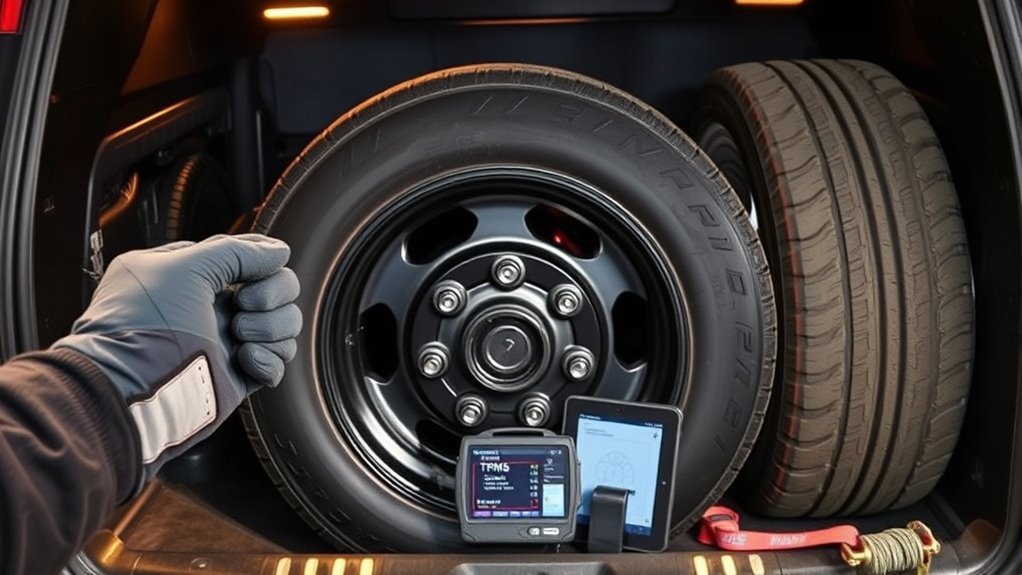
TPMS behavior depends on your 4Runner’s year and sensor setup. Some systems only need correct tire pressures. Newer systems may also need wheel-position registration so the display knows which sensor is at each corner.
After rotating, set all tires to the cold pressure listed on the driver-door tire placard or in your manual. Do not use the maximum pressure printed on the tire sidewall as your normal setting. Then follow your owner’s manual for TPMS reset, pressure setting, or wheel-position registration.
Tread depth matters because different tread depths create different rolling diameters. If one tire is much newer than the others, it may rotate at a slightly different speed. That can affect traction control, braking feel, and drivetrain load, especially on full-time 4WD or AWD-style systems.
Note: If your spare is brand new and the other four tires are already worn, do not automatically put the spare into the rotation. Measure first. If the difference is large, keep the spare for emergencies or ask a tire shop whether tire shaving or full-set replacement makes more sense.
3 Rotation Strategies for 4Runner Owners
[Products Worth Considering]

This 1/2-inch drive breaker bar delivers powerful leverage for loosening and tightening stubborn lug nuts and automotive fasteners. The 180-degree flex head helps you reach tight spaces at the angle you need, making tire and brake jobs easier. A spring-loaded ball detent design holds 1/2-inch sockets securely while the chrome-moly head provides durable strength for everyday use.

This TPMS relearn tool helps you quickly activate, match, and reset GM tire pressure sensors to keep the vehicle monitoring system working properly. It clears tire pressure alarms and dashboard warning lights after sensor replacement or tire rotation, and supports learning for common 315/433 MHz TPMS sensors. Designed for simple one-button operation, it can help you avoid unnecessary trips to repair shops.

Upgrade your wheels with MIKKUPPA closed-end lug nuts designed for reliable fit and corrosion resistance. The one-piece, cold-forged and heat-treated steel construction helps resist rust and stripping, while the integrated finish delivers a durable black appearance. Built to OEM standards with a conical 60-degree seat, these nuts provide a secure solution for compatible Ford, Honda, Jeep, and Chevrolet models.
1. Five-Tire Full Rotation
This is the best choice when you have five matching tires and want all five to wear together. It can stretch the life of the overall tire set because each tire spends some time resting as the spare. It also keeps the spare road-tested instead of sitting unused under the vehicle for years.
The tradeoff is tracking. You need to follow the same pattern every time, record positions, and keep tread depths close.
2. Four-Tire Standard Rotation
This is simpler: rotate only the four tires on the road and leave the spare in reserve. Toyota’s regular maintenance schedule still applies, and you should inspect the spare’s pressure, age, and condition whenever the road tires are rotated.
This strategy is useful when the spare is full-size but not a perfect match, when it lacks TPMS compatibility, or when you want the spare to remain an emergency-only tire.
3. Spare-Only Reserve Strategy
Use this strategy when the spare is temporary, mismatched, older, mounted on a different wheel, or too different in tread depth. Keep it properly inflated and inspect it regularly, but do not put it into normal road service.
If you use your 4Runner off-road or travel far from tire shops, a reserve spare can be valuable. Just remember that “unused” does not always mean “safe.” Age, weather exposure, and underbody storage can still damage a spare.
Complete Walkthrough: Rotating Your 4Runner’s Five Tires
Use this walkthrough only after confirming that the spare is a matching full-size tire and that your owner’s manual allows a five-tire rotation.
[Products Worth Considering]

These M14x1.5 closed-end chrome lug nuts are a one-piece replacement designed for secure fitment on compatible GM, Ford, and select Chrysler/Dodge models. Featuring a 60-degree conical seat and anti-rust chrome plating, they help resist corrosion and maintain a bright look for everyday driving. Built for long-term durability, they include OEM-style part references and are backed by 12 months of support.

The Trivd Frol 1/2" air impact wrench delivers high performance torque up to 1500 ft-lbs with a twin hammer impact mechanism for strong, balanced blows. It features an ergonomic grip, compact lightweight design, and quick-stop control with 3 forward speeds up to 8000 RPM plus a reverse speed. Built for demanding automotive repair and tire shop work, the rear exhaust helps keep debris away from the surface.

Mount your spare tire off the floor and onto your wall using an e-track spare tire carrier that helps you stay organized in trailers, garages, and warehouses. The upgraded double-fittings design improves stability versus single-fittings and supports greater load bearing. Install by snapping into e-track anchor points and securing the tire with a lug-nut style bolt setup for quick, secure storage.
Step 1: Park and secure the vehicle
Park on level, solid ground. Set the parking brake, place the transmission in Park, and chock the wheels that will stay on the ground while lifting.
Step 2: Check all five tires
Confirm matching size, tread type, direction markings, visible damage, DOT date, and tread depth. Do not rotate in a questionable spare.
Step 3: Loosen lug nuts before lifting
Break the lug nuts loose while the tire is still touching the ground. Do not fully remove them yet.
Step 4: Lift and support safely
Use the lift points in your owner’s manual. A floor jack is for lifting; jack stands are for support. Never crawl under or work around an unsupported vehicle.
Step 5: Lower the spare
Use the factory spare-tire tools to lower the spare from under the rear of the vehicle. Inspect the spare carrier and make sure the tire is clean enough to mount securely.
Step 6: Move the tires to their new positions
Follow your owner’s manual diagram. If you are using the common five-tire rear-drive/4WD pattern for matching, non-directional tires, move left rear to left front, right rear to right front, right front to left rear, spare to right rear, and left front to the spare position.
Step 7: Hand-thread and snug the lug nuts
Start every lug nut by hand to avoid cross-threading. Snug the nuts in a star pattern while the wheel is still off the ground.
Step 8: Lower and torque to spec
Lower the 4Runner until the tires touch the ground, then use a calibrated torque wrench and tighten the lug nuts in a star pattern to the torque value listed for your exact model year and wheel type. Do not guess the torque spec.
Step 9: Set pressure and reset TPMS
Set cold tire pressure on all tires, including the spare if it remains in service or reserve. Complete the TPMS reset, pressure setting, or wheel-position registration procedure shown in your owner’s manual.
Step 10: Road-test and recheck
Drive slowly at first and listen for vibration, pulling, or TPMS warnings. Recheck lug-nut torque after a short drive if your manual or wheel manufacturer recommends it.
Frequently Asked Questions
What does Toyota recommend for tire rotation?
Toyota schedules tire rotation as regular maintenance and directs owners to follow the owner’s manual for the correct rotation instructions. For the spare, check your exact manual and tire setup. If the spare is not rotated, Toyota guidance still says to check its condition and pressure.
How often should I rotate the tires on my Toyota 4Runner?
Use the schedule in your owner’s manual or maintenance guide. Toyota commonly schedules maintenance every 5,000 miles or six months, and tire rotation appears in that regular maintenance checklist. Severe use, off-road driving, towing, or unusual wear may require closer inspection.
Can I rotate in a brand-new spare with four worn tires?
Usually, no. Measure tread depth first. If the spare has much deeper tread than the other four tires, keep it as an emergency spare or ask a tire shop for advice. Large tread-depth differences can affect handling and may stress some drivetrain systems.
Should I rotate a directional spare tire?
Only if it can roll in the correct direction at the new wheel position. Directional tires have sidewall arrows and usually rotate front-to-rear on the same side. Crossing them to the opposite side normally requires demounting and remounting.
Will a five-tire rotation confuse the TPMS?
It can, depending on your model year and sensor setup. After rotating, set the correct cold pressures and follow your manual’s TPMS reset or wheel-position registration procedure. If the warning light remains on, recheck pressure and sensor registration.
Conclusion
A 4Runner’s full-size spare can be part of the rotation, but it has to earn that spot. Rotate it only when it matches the other four tires and your owner’s manual supports the pattern. If it does not match, keep it as a reserve, inspect it regularly, and maintain proper pressure. The best five-tire rotation is not just about getting more miles from a set of tires; it is about keeping tread depth, handling, TPMS behavior, and emergency readiness under control.
Sources
- Toyota Owners Manuals & Warranties — model-year owner manual access and Toyota maintenance resources
- Toyota 2024 4Runner Warranty & Maintenance Guide — scheduled maintenance interval and tire rotation checklist
- NHTSA TireWise — tire safety, inflation, tread, and maintenance guidance
- Tire Industry Association: Tire Rotation — rotation intervals, tire-wear reasons, and pattern basics
- Tire Rack: Mixing Tires With Different Tread Depths — tread-depth matching and 2/32-inch guidance
- Discount Tire: How to Rotate Directional Tires — directional tire sidewall markings and rotation limits