A five-tire rotation on a Toyota Tundra means you rotate a matching full-size spare into service with the four road tires. Done correctly, it helps even out tread wear, keeps your spare road-ready, and can extend the useful life of the tire set. The key is using the right pattern for a rear-drive-based truck, checking TPMS behavior, and following your Tundra owner’s manual for tire pressure, jacking points, and lug nut torque.
Quick Answer
For most Toyota Tundra trucks with five matching, non-directional, full-size tires, use a rearward-cross-with-spare rotation. Move both rear tires straight to the front, place the spare on the right rear, move the right front to the left rear, and make the left front your new spare.
Key Takeaways
- Use a five-tire rotation only when the spare is a matching full-size tire with the same size, load rating, tread type, and similar tread depth.
- A Tundra is rear-drive based, so the usual full-size-spare pattern is rearward cross with spare, not a front-wheel-drive forward cross.
- Check your owner’s manual first. A common tire-rotation range is 5,000 to 8,000 miles, or sooner if you see uneven wear.
- Check spare pressure manually because TPMS may not monitor the spare unless the wheel has a registered sensor.
- Never work under a Tundra supported only by a jack. Use rated jack stands, wheel chocks, and the correct Toyota lift points.
At a Glance
| Time Required | 30 to 60 minutes for a DIY rotation, depending on tools, wheel condition, and TPMS relearn needs. |
| Difficulty | Moderate. The truck is heavy, so lifting and support safety matter more than the rotation pattern itself. |
| Tools Needed | Owner’s manual, tire pressure gauge, tread depth gauge, wheel chocks, properly rated jack, rated jack stands, lug wrench or impact tool, and torque wrench. |
| Cost | Usually no parts cost for DIY work. A shop may charge labor, and TPMS relearn or balancing may add cost if needed. |
Understanding the Benefits of Five-Tire Rotation for Your Tundra

When you rotate all five matching tires on your Toyota Tundra, you spread road miles across the spare instead of letting it age unused under the truck. That can help keep tread depth more even across the set and helps you avoid discovering a neglected spare during a roadside emergency.
The benefit only applies when the spare is a full-size matching tire. It should match the other tires in size, load rating, construction, tread pattern, and overall diameter. If the spare is temporary, badly aged, a different size, or has much deeper or shallower tread than the other tires, use it for emergencies only and do not include it in a normal rotation.
NHTSA TireWise says tire rotation can help reduce irregular wear and help tires last longer. It also recommends checking the owner’s manual for the right interval and pattern. For many vehicles, a common interval is about 5,000 to 8,000 miles, but your Tundra’s manual and tire warranty should guide the final schedule.
Note: A five-tire rotation is not the same as using a temporary spare. A temporary spare, compact spare, mismatched spare, or old cracked spare should stay out of normal rotation.
How to Properly Rotate Five Tires: Techniques and Methods
The right pattern depends on drivetrain, tire direction, tire size, and whether your spare is truly full-size. A Toyota Tundra is rear-drive based, including 4WD models, so the safest general pattern for five matching, non-directional tires is a rearward cross with spare.
Proper Rotation Pattern for a Tundra With a Full-Size Spare
Use this pattern only when all five tires are the same size and are non-directional:
- Left rear to left front: Move the left rear tire straight forward.
- Right rear to right front: Move the right rear tire straight forward.
- Spare to right rear: Put the full-size spare into service at the right rear position.
- Right front to left rear: Cross the right front tire to the left rear position.
- Left front to spare location: Make the left front tire the new spare.
This pattern matches the rearward-cross-with-spare approach described by Bridgestone for rear-wheel-drive and 4-wheel-drive vehicles with a full-size spare. It helps keep the spare involved without using a front-wheel-drive rotation pattern on a rear-drive-based truck.
Pro Tip: Before removing the wheels, mark each tire with chalk or tape: LF, RF, LR, RR, and SP. That makes the five-position pattern easier to follow and helps you keep a clean maintenance record.
When Not to Use This Pattern
Do not use the rearward-cross-with-spare pattern blindly. Use your owner’s manual or a tire professional if any of these conditions apply:
- Directional tires: Directional tires must stay on the same side of the truck unless they are demounted and remounted. Rotate them front to rear only, following the arrow on the sidewall.
- Different tire sizes: If the front and rear tires are different sizes, a standard five-tire rotation is not appropriate.
- Temporary spare: A compact or temporary-use spare should never enter normal rotation.
- Different tread depth: A spare with much deeper or shallower tread can affect handling and 4WD behavior.
- Mismatched tire model: Mixing all-terrain, highway, winter, and mud-terrain tread designs can create traction and vibration issues.
- Visible tire damage: Cracks, bulges, punctures, exposed cords, or severe uneven wear mean the tire needs inspection before rotation.
Maintenance and Inspection Tips Before You Rotate
Before moving tires around, check each tire’s tread depth, sidewalls, air pressure, and DOT date. A five-tire rotation works best when all five tires stay close in wear. If one tire is much newer or older than the others, ask a tire shop whether it should be included.
Check tire pressure when the tires are cold. NHTSA recommends checking all tires, including the spare, at least once a month when the vehicle has not been driven for at least three hours. Use the pressure listed on the Tundra’s tire placard or owner’s manual, not the maximum pressure molded into the tire sidewall.
Essential Factors for Matching Tires and Ensuring Compatibility
Compatibility matters because the Tundra is a heavy truck that may tow, haul, drive off-road, or use 4WD. Keep all five tires as close as possible in size, load index, speed rating, tread pattern, and tread depth. That helps maintain predictable steering, braking, traction, and ride quality.
The tire size and load information for your truck appears on the driver-side tire placard and in the owner’s manual. Toyota also provides a manuals and warranties page where you can access model-specific owner information. Use that manual for your exact model year because tire size, jacking instructions, TPMS steps, and torque specs can vary.
The safest five-tire rotation is boring by design: five matching tires, similar tread depth, correct pressure, the right pattern, and a written record every time.
[Products Worth Considering]

This TPMS sensor training and relearn reset tool is customized for Ford, Lincoln, and Mercury vehicles to help activate tire pressure programming after sensor replacement or tire rotation. It can activate individual tire pressure sensors with one-button operation, helping prevent TPMS warning light illumination. It is not a sensor programming tool and cannot program replacement sensors—use it to trigger/activate sensors only.
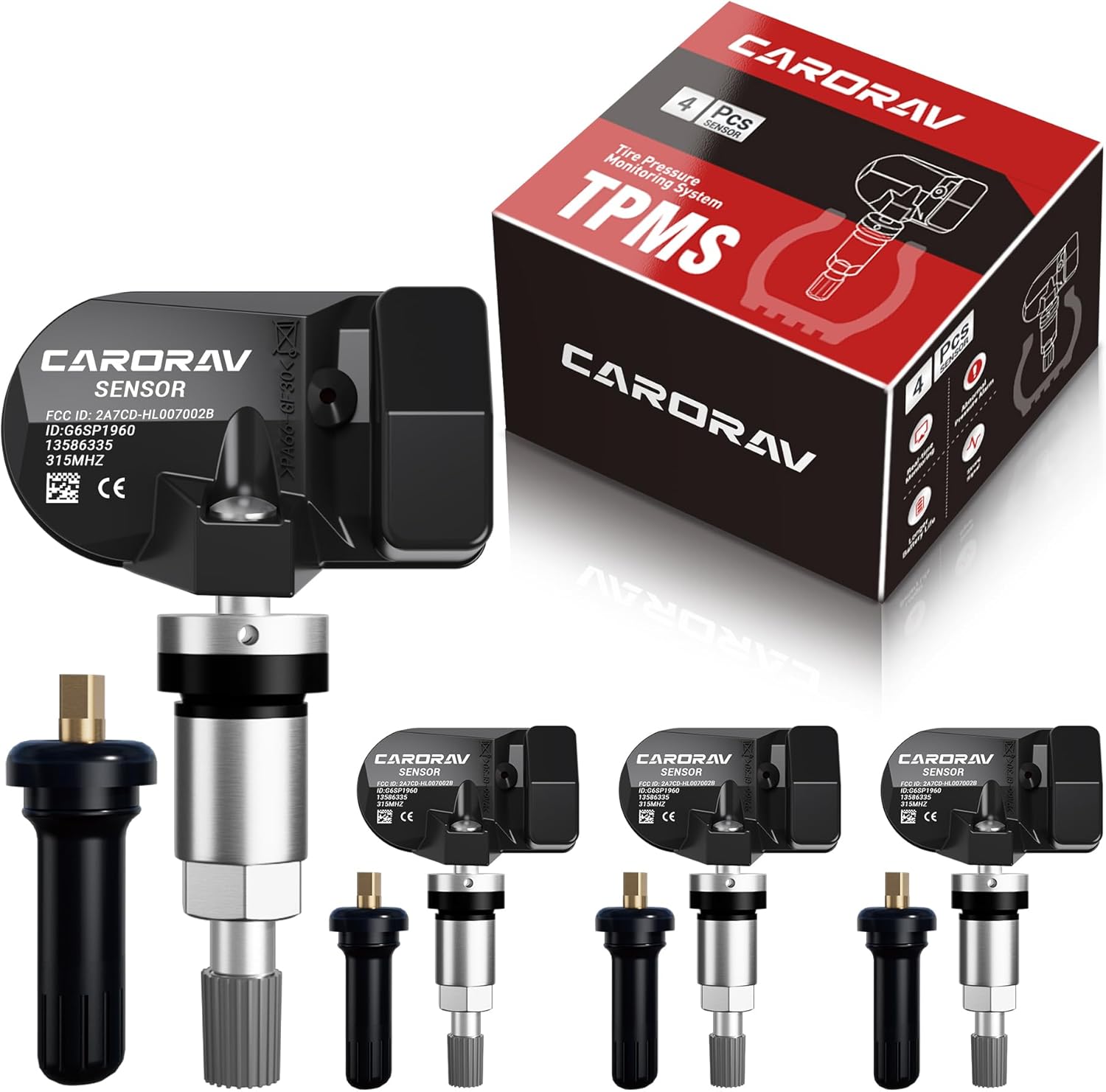
Replace worn or missing TPMS sensors with CARORAV pre-programmed GM-compatible sensors for a smoother installation experience. These 315MHz replacement sensors help monitor tire pressure in real time with long battery life, and they are designed to withstand harsh temperatures. Manual or OBDII relearn may be required to reset the system for proper recognition.

Monitor tire tread wear with a smart, color-coded depth gauge that shows clear condition ranges at a glance. The bar is range marked for fast, easy readings, helping you maintain safer traction and performance. Each gauge is portable with a pocket clip, and the set includes 20 units for daily use and sharing.
The Role of Spare Tires in Five-Tire Rotation Strategies
The spare tire is often ignored until something goes wrong. Including a full-size matching spare in regular rotation keeps it from sitting unused for years, helps you spot age or pressure problems earlier, and can make the tire set wear more evenly.
Still, the spare should not become a permanent shortcut for replacing worn tires. NHTSA warns that spare tires are prone to aging because they seldom get replaced and says a full-size spare should not be used as a replacement for worn tires except in emergencies. Inspect the spare’s DOT date, tread depth, sidewall condition, and pressure before you rotate it into service.
If the spare wheel is a plain steel wheel while the road wheels are alloy, that does not automatically make it unsafe. What matters most is whether the tire itself matches the others and whether the wheel is approved for the truck. If the wheel offset, size, or load rating differs, do not use it for normal rotation until a qualified tire professional confirms compatibility.
Common TPMS Issues With Spare Tires
TPMS can cause confusion during a five-tire rotation. Some spare wheels have a TPMS sensor and can be registered to the vehicle. Others do not. Some trucks may require a relearn procedure after the spare moves into a road position. Your owner’s manual is the best source for the exact TPMS process.
TPMS Sensor Limitations
A tire pressure monitoring system warns you when a monitored tire becomes significantly underinflated, but it does not replace manual pressure checks. NHTSA says TPMS is not a substitute for regular tire maintenance, and underinflated tires can be hard to spot visually.
If your full-size spare has a sensor, the system may need to relearn the tire positions after a five-tire rotation. If the spare does not have a sensor, the truck may show a warning when that wheel goes into service, or it may simply stop reporting that position correctly. Do not ignore the warning. Check pressure with a gauge and follow the Toyota procedure for your model year.
Warning Light Triggers
A TPMS warning after rotation can point to low pressure, an unregistered sensor, a dead sensor battery, a damaged sensor, or a tire position that the system has not relearned. Start with the simple checks first:
- Check all five tire pressures when cold.
- Inflate each tire to the pressure listed on the tire placard or in the owner’s manual.
- Look for leaks, punctures, cracked valve stems, or sensor damage.
- Run the TPMS reset or relearn procedure listed in the Toyota manual.
- If the warning stays on, have a tire shop or Toyota dealer scan the sensors.
Easy Tips to Keep Your Tires in Top Shape
A five-tire rotation helps, but it is only one part of tire care. Your Tundra also needs correct inflation, balanced wheels, proper alignment, and regular tread checks. Small problems can grow quickly on a truck that tows, hauls, or runs oversized all-terrain tires.
- Check pressure monthly: Include the spare and check when the tires are cold.
- Measure tread depth: Check the inner, center, and outer grooves on every tire.
- Look for uneven wear: Cupping, feathering, or one-edge wear can point to alignment, balance, suspension, or inflation problems.
- Balance when needed: If vibration appears after rotation, have the wheels balanced and inspected.
- Inspect after off-road use: Look for sidewall cuts, embedded stones, bead leaks, and bent wheels.
- Record each rotation: Write down mileage, date, pattern, tread depth, and tire pressure.
NHTSA says tires should be replaced when tread is worn to 2/32 inch and that treadwear indicators show when the tire is worn to its limit. For wet roads, towing, or winter driving, you may want to replace tires before reaching the legal minimum because shallow tread reduces traction.
Common Owner Mistakes With Five-Tire Rotation
Tundra owners often like five-tire rotation because it spreads mileage across the spare, but mistakes can undo the benefit. The most common problem is rotating in a mismatched spare just because it fits the hub. Fit alone is not enough.
- Using the wrong pattern: A forward-cross pattern is not the right default for a rear-drive-based Tundra.
- Ignoring tread depth: A spare with a much different diameter can affect handling and 4WD operation.
- Forgetting TPMS relearn: A sensor-equipped spare may need registration or relearn after rotation.
- Skipping pressure checks: A spare can lose air slowly while stored under the truck.
- Using an aged spare: Rubber ages even when the tread looks new.
- Not torquing lug nuts correctly: Uneven or incorrect torque can create wheel and brake issues.
Troubleshooting Common Challenges With Tire Rotation
If the truck feels worse after rotation, do not assume the rotation itself caused the problem. Moving tires can reveal a balance issue, uneven tread wear, belt damage, bent wheel, alignment problem, or tire that was already failing.
Vibration After Rotation
Vibration after a five-tire rotation usually means one tire or wheel needs attention. Check lug nut torque first, then inspect pressure, tread, and wheel weights. If the vibration appears at highway speed, have the tires balanced and ask the shop to inspect for radial runout or a bent wheel.
Pulling or Wandering
If your Tundra pulls to one side after rotation, check pressure on both front tires. If pressure is even, a tire may have uneven wear or internal pull. Rotate the front tires side-to-side only if the tires are non-directional and the pattern allows it. If the pull changes direction, the tire is likely the cause. If it stays the same, inspect alignment and suspension.
One Tire Has More Tread Than the Others
A full-size spare often has deeper tread because it has spent less time on the road. If the depth gap is large, ask a tire professional before adding it to the rotation. Keeping tire diameters close matters most on 4WD trucks and when traction conditions are poor.
Best Practices for Lifting Your Tundra During Tire Changes
Changing tires on a Tundra involves more risk than changing tires on a small car because the truck is heavy and sits high. Work on level, solid ground. Set the parking brake, chock the wheels that stay on the ground, and use equipment rated for the vehicle.
Warning: Never crawl under a Toyota Tundra supported only by a jack. A jack is for lifting. Rated jack stands are for support. Use the jacking and support points listed in your exact owner’s manual.
[Products Worth Considering]

The VEHLIVE SU-50448 II TPMS relearn tool provides a fast activation reset to restore accurate tire pressure monitoring after sensor replacement or tire rotation. It supports 315 MHz and 433 MHz GM series sensors and helps clear dashboard pressure warnings. With simple two-button operation and horn-confirmed relearning order, you can reprogram sensors conveniently at home.

This TPMS relearn tool helps you quickly activate, match, and reset GM tire pressure sensors to keep the vehicle monitoring system working properly. It clears tire pressure alarms and dashboard warning lights after sensor replacement or tire rotation, and supports learning for common 315/433 MHz TPMS sensors. Designed for simple one-button operation, it can help you avoid unnecessary trips to repair shops.

These universal tire valve stem caps help protect valve cores from dust, debris, and moisture while helping maintain stable tire pressure. The corrosion-resistant metal construction and sealed design provide reliable protection in road grime, mud, and winter conditions. Twist-on installation makes them quick to fit on cars, SUVs, trucks, and motorcycles.
Safe Lifting Techniques
- Park on a flat, firm surface away from traffic.
- Set the parking brake and place the transmission in Park.
- Chock the wheels that will remain on the ground.
- Loosen lug nuts slightly before lifting the tire off the ground.
- Use the correct Toyota jacking point from your owner’s manual.
- Place rated jack stands at approved support points before removing wheels.
- Keep your body out from under the truck unless it is properly supported.
Essential Tools Required
Use a properly rated floor jack, rated jack stands, wheel chocks, a lug wrench or impact tool, a torque wrench, a tire pressure gauge, and a tread depth gauge. A small portable inflator is also useful because the spare may need air before it goes into service.
Do not rely on guesswork for lug nut torque. Use the specification in your owner’s manual for your model year and wheel type. After driving a short distance, recheck lug nut torque if your manual or wheel manufacturer recommends it.
Jack Stand Placement
Jack stand placement depends on the Tundra generation and suspension design. Do not assume that advice for one model year applies to another. Use the owner’s manual, Toyota service information, or a qualified technician to confirm the correct lift and support points.
Choosing the Right Spare Tire for Effective Rotation
The right spare tire for five-tire rotation is not just “a tire that fits.” It should be a full-size tire that matches your road tires closely enough to work as part of the set. Check these points before using it:
- Size: Match the size listed on the tire sidewall.
- Load rating: Use a rating suitable for your Tundra’s weight, payload, and towing needs.
- Tread pattern: Match all-terrain, highway, winter, or mud-terrain patterns across the set.
- Tread depth: Keep tread depth close across all five tires.
- Condition: Reject tires with cracks, bulges, exposed cords, puncture damage, or severe uneven wear.
- Age: Check the DOT date code and ask a tire professional if the spare is old, even if the tread looks unused.
- TPMS: Confirm whether the spare wheel has a sensor and whether your Tundra needs a relearn.
If you replace one tire because of damage, think about the whole set. On a 4WD Tundra, one tire with a much different diameter can create driveline stress or traction imbalance. In many cases, replacing tires in pairs or as a full set is safer than mixing one new tire with four worn tires.
[Products Worth Considering]

Accurately measure tire tread depth with a calibrated gauge marked from 0 to 1 inch in 1/32 inch increments. The color-coded bar helps you quickly identify tread condition ranges, supporting safe driving for trucks, motorcycles, automobiles, and passenger vehicles.

The Trivd Frol 1/2" air impact wrench delivers high performance torque up to 1500 ft-lbs with a twin hammer impact mechanism for strong, balanced blows. It features an ergonomic grip, compact lightweight design, and quick-stop control with 3 forward speeds up to 8000 RPM plus a reverse speed. Built for demanding automotive repair and tire shop work, the rear exhaust helps keep debris away from the surface.

Measure tire tread depth quickly and accurately with this LUMITECO dial gauge that reads in 1/32" increments up to 14/32". The color-coded green/yellow/red zones make it easy to judge tire wear and know when replacement is needed. A rugged, compact design with a protective pouch helps keep the gauge ready for use on cars, trucks, motorcycles, and more.
Frequently Asked Questions
What is a 5-tire rotation with a spare?
A 5-tire rotation moves a matching full-size spare into service with the four road tires. Instead of leaving the spare unused, you rotate it through the truck so all five tires share mileage and wear more evenly.
What is the best 5-tire rotation pattern for a Toyota Tundra?
For five matching, non-directional, full-size tires, use a rearward-cross-with-spare pattern: rear tires move straight to the front, the spare goes to the right rear, the right front crosses to the left rear, and the left front becomes the spare. Always confirm with your owner’s manual.
How often should I rotate tires on a Toyota Tundra?
Check your Toyota owner’s manual and tire warranty first. A common rotation range is 5,000 to 8,000 miles, or sooner if you notice uneven wear, vibration, off-road damage, or heavy towing and hauling use.
Can I include a temporary spare in normal rotation?
No. A temporary spare is for short emergency use only. Do not include it in normal rotation. Five-tire rotation is only for a full-size spare that matches the other road tires closely.
Will a five-tire rotation affect TPMS?
It can. If the spare wheel has a TPMS sensor, your Tundra may need a relearn or sensor registration after rotation. If the spare does not have a sensor, the warning light may stay on when that wheel is on the road. Check the manual and verify pressure with a gauge.
Should the spare have the same tread depth as the other tires?
It should be close. A spare with much more or much less tread can change tire diameter, traction, and handling. On 4WD trucks, large tread-depth differences can also affect driveline behavior. Ask a tire professional if the difference is significant.
Conclusion
A Toyota Tundra five-tire rotation works well when your spare is a true matching full-size tire. Use the rearward-cross-with-spare pattern for uniform-size, non-directional tires, check pressure and tread depth before every rotation, and follow your owner’s manual for jacking, torque, and TPMS steps. Done carefully, this routine helps reduce uneven wear, keeps your spare ready, and supports a smoother, safer ride.
Sources
- NHTSA TireWise — supports tire pressure, tread, rotation interval, TPMS, tire aging, and spare-tire safety guidance.
- Toyota Manuals and Warranties — supports checking model-specific owner’s manual guidance for tire pressure, jacking points, TPMS, and torque specs.
- Bridgestone Tire Rotation Guide — supports rearward-cross-with-spare rotation for rear-wheel-drive and 4-wheel-drive vehicles.
- Michelin Tire Rotation Guide — supports rotation benefits, common intervals, drivetrain patterns, and directional tire cautions.