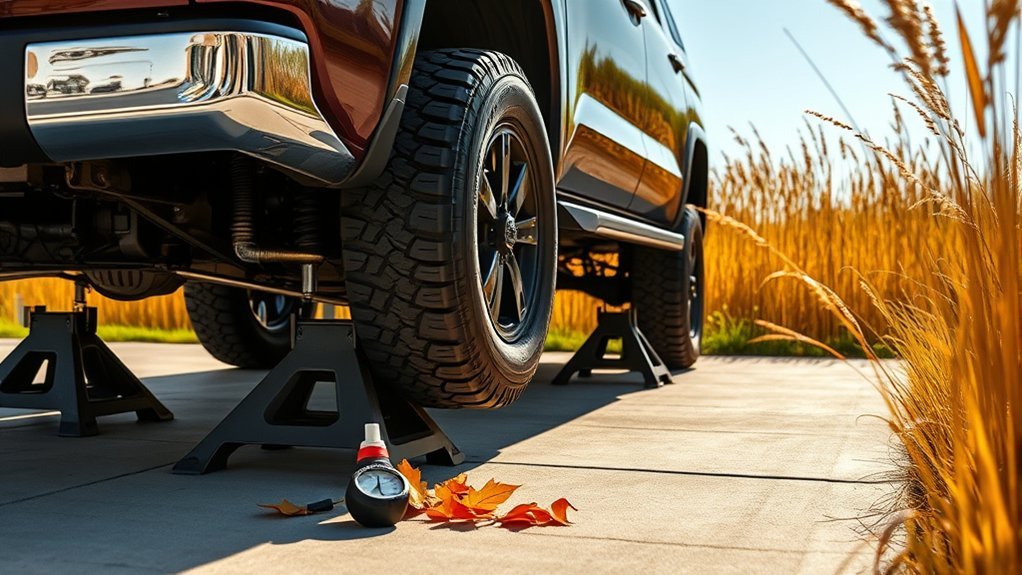
Stored Toyota Tundra tires can develop flat spots when the same part of the tread carries the truck’s weight for weeks or months. You can reduce that risk by setting the correct cold tire pressure, storing the truck on a clean and level surface, moving or driving it on a schedule, and using rated jack stands for long-term storage when it is safe to do so.
Quick Answer
To prevent tire flat spots on a stored Tundra, check cold tire pressure at the driver-door placard setting, park on a clean level surface, use tire cradles or boards, and drive the truck 30–60 minutes every 4–6 weeks. For longer storage, support the truck safely on rated jack stands.
Key Takeaways
- Use the cold tire pressure listed on your Tundra’s tire placard or owner’s manual, not the maximum PSI printed on the tire sidewall.
- Driving the truck every 4–6 weeks helps warm the tires and shifts the contact patch, which reduces flat-spot risk.
- For long storage, tire cradles, plywood, rubber mats, or rated jack stands can reduce pressure on one tread area.
- Never rely on a hydraulic jack alone to support a Tundra. Use properly rated jack stands on a level, solid surface.
- Inspect tires for vibration, cracks, bulges, pressure loss, and DOT age before returning the truck to regular driving.
At a Glance
| Time Required | 20–30 minutes for prep, plus a 30–60 minute drive every 4–6 weeks when practical |
| Difficulty | Easy for pressure checks and surface prep; moderate if lifting the truck |
| Tools Needed | Tire pressure gauge, air compressor, tire cradles or boards, tire covers, wheel chocks, floor jack, rated jack stands, torque wrench |
| Cost | Low if you already own basic tire tools; higher if you need quality jack stands or tire cradles |
How to Prevent Tire Flat Spotting in Stored Vehicles?
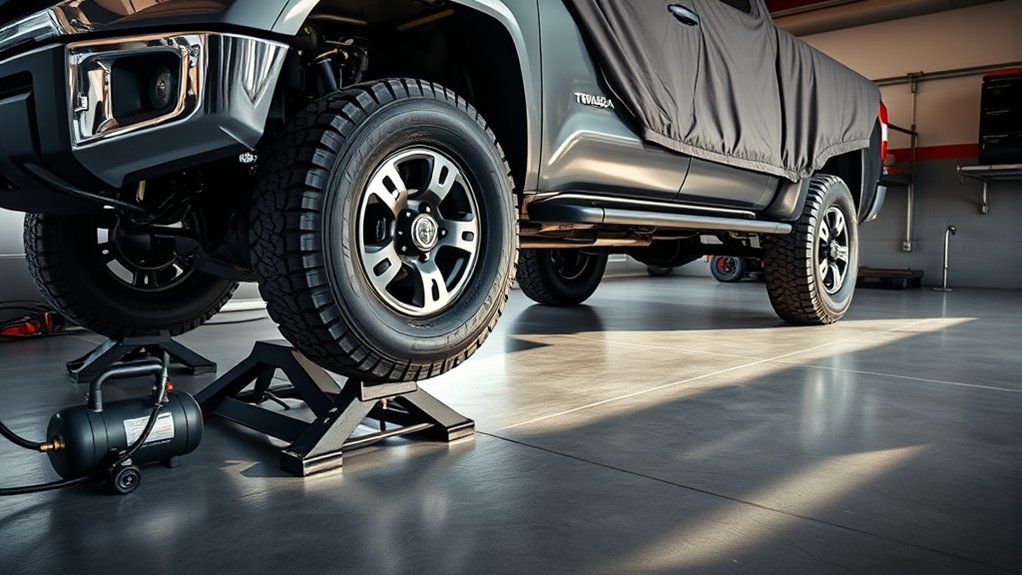
Start with the easiest step: set each tire to the correct cold inflation pressure. For a Toyota Tundra, check the tire and loading information label on the driver-side door jamb or confirm the pressure in the Toyota owner’s manual. Do not use the maximum PSI molded into the tire sidewall as your normal storage setting.
Next, choose a clean, dry, level storage spot. A garage floor is usually fine, but tire cradles, rubber mats, plywood, or wide boards can spread the load across more tread area. Avoid parking for months on hot asphalt when possible, since heat and softened pavement can add stress to the tire contact patch.
If you can safely drive the Tundra, take it out every 4–6 weeks for a real drive, not just a short roll forward and back. A 30–60 minute drive helps warm the tires, rotates the contact patch, charges the battery, moves fluids, and keeps brake surfaces from sitting untouched.
Note: Temporary flat spotting can feel like a light thump or vibration after storage. It may fade after the tires warm up, but vibration that stays after a normal drive needs a tire, balance, and suspension inspection.
Key Tire Maintenance Tips Before Storing Your Vehicle
Before storage, wash the tires with mild soap and water to remove dirt, road grime, and brake dust. Let them dry before you cover the truck or park it for an extended period. Avoid petroleum-based tire dressings before long storage unless the tire manufacturer says they are safe.
Check tire pressure when the tires are cold, which means the truck has been parked for several hours and has not just returned from a drive. The National Highway Traffic Safety Administration recommends proper tire inflation as a core tire-safety habit, and pressure checks matter even when the truck is not being driven daily.
- Inspect tread and sidewalls: Look for cracks, cuts, bulges, exposed cords, nails, or uneven wear.
- Check tire age: Read the DOT date code on the sidewall. Older tires can age out even with good tread.
- Remove extra load: Take heavy cargo out of the bed so the tires carry less weight during storage.
- Clean the storage area: Keep the tires away from oil, solvents, standing water, and direct sunlight.
- Cover the tires: Use breathable tire covers if sunlight reaches the truck.
Pro Tip: Write the storage date, starting tire pressures, and DOT tire age in a note on your phone. This makes the next inspection faster and helps you spot slow leaks.
[Products Worth Considering]

Accurately measure tire tread depth with a calibrated gauge marked from 0 to 1 inch in 1/32 inch increments. The color-coded bar helps you quickly identify tread condition ranges, supporting safe driving for trucks, motorcycles, automobiles, and passenger vehicles.

These aluminum alloy tire valve stem caps protect the valve core from corrosion and help prevent air leakage for more stable tire pressure. The rubber ring design helps support a secure, safe seal while adding a stylish look to your Honda wheels. Easy to install by hand, these caps are ideal for everyday driving and weather exposure.

These universal tire valve stem caps help protect your valve core from dust, debris, moisture, and corrosion, supporting more stable tire pressure. The aluminum alloy design resists long-term wear, while the sealing construction helps help prevent air leakage. They twist on easily for quick installation and help safeguard driving safety across cars, SUVs, trucks, and motorcycles.
How to Elevate Your Tundra to Prevent Flat Spots
For long-term storage, lifting the Tundra can remove constant load from the tires. Use a quality floor jack only to raise the truck, then support it with jack stands rated for the vehicle’s weight. Follow the lift points in your Toyota owner’s manual, work on a solid level surface, and chock the wheels that remain on the ground during each step.
Warning: Never crawl under a Tundra supported only by a hydraulic jack. Use properly rated jack stands, place them at approved support points, and lower the truck gently onto the stands before working near or under it.
If you do not want to lift the truck, you still have good options. Use tire cradles, wide plywood, or rubber mats under each tire. These supports help spread the load and reduce the sharp pressure point that forms when a tire sits in one position for a long time.
Do not remove wheels or loosen lug nuts unless you are storing tires separately or doing service work. If you remove and reinstall wheels, tighten the lug nuts in a crisscross pattern with a torque wrench set to the specification in your Tundra owner’s manual.
[Products Worth Considering]

These universal tire valve stem caps help protect valve cores from dust, debris, and moisture while helping maintain stable tire pressure. The corrosion-resistant metal construction and sealed design provide reliable protection in road grime, mud, and winter conditions. Twist-on installation makes them quick to fit on cars, SUVs, trucks, and motorcycles.

Milton S-921 pencil tire pressure gauge helps you maintain optimal tire pressure for passenger cars with accurate readings in PSI and kPa. It features a built-in deflator valve for convenient pressure adjustments, plus a single chuck head and nylon indicator bar for easy use on the go. Built from durable plated brass and designed for reliable performance, it’s a practical road trip and cold-weather maintenance tool.

Monitor tire tread wear with a smart, color-coded depth gauge that shows clear condition ranges at a glance. The bar is range marked for fast, easy readings, helping you maintain safer traction and performance. Each gauge is portable with a pocket clip, and the set includes 20 units for daily use and sharing.
Monthly Driving Tips to Prevent Tire Flat Spots
A real drive works better than moving the truck a few inches. When possible, drive your Tundra for 30–60 minutes every 4–6 weeks. Include normal turns, steady speeds, and light braking so the tires, brakes, and drivetrain all get used.
Before each drive, check cold tire pressure and inspect the tread for cracks, bulges, embedded objects, or visible flat areas. If the truck has been stored for a long time, start slowly and listen for thumping, humming, pulling, or vibration.
| Action | Frequency | Benefit |
|---|---|---|
| Check cold tire pressure | Before storage and before each drive | Reduces deformation and catches slow leaks |
| Drive the truck | Every 4–6 weeks when practical | Warms tires and shifts the contact patch |
| Use tire cradles or boards | During storage | Spreads weight across more tread area |
| Inspect for vibration | After storage | Helps separate temporary flat spots from tire damage |
Signs of Tire Flat Spots to Watch for During Storage
Flat spots are not always visible while the truck is parked. The most common sign appears during the first drive after storage. You may feel a steady thump, steering wheel shake, seat vibration, or rhythmic noise that changes with speed.
Some temporary flat spotting fades as the tires warm up. If the vibration continues after a normal drive, do not ignore it. Persistent shaking can point to a permanent flat spot, tire imbalance, belt damage, wheel damage, uneven wear, or a suspension issue.
- Visible flat area: One section of the tread looks flatter than the rest.
- Bulge or sidewall bubble: Stop driving and have the tire inspected.
- Cracks or dry rot: Rubber aging may make the tire unsafe even if tread depth looks fine.
- Pressure loss: A slow leak can make flat spotting worse during storage.
- Vibration that does not fade: Schedule a tire and wheel inspection before highway driving.
A tire that looks round while parked can still feel out of round on the road. Judge stored tires by pressure, age, condition, and how they drive after warming up.
Essential Tools for Tire Care During Storage
Proper tire care during storage is easier when your tools are ready before you park the truck. You do not need a professional shop setup, but you do need accurate tire tools and safe support equipment.
- Tire pressure gauge: Use it to check cold pressure before storage, during storage, and before the first drive back.
- Portable air compressor: Top off tires at home instead of driving on low pressure.
- Tire cradles, rubber mats, or plywood: Spread the truck’s weight across a wider contact area.
- Tire covers: Reduce sunlight exposure if the truck is stored near a window or outdoors.
- Wheel chocks: Help keep the truck stable when lifting or parking on a slight grade.
- Floor jack and rated jack stands: Lift and support the Tundra safely for longer storage.
- Torque wrench: Use it when reinstalling wheels, following the torque value in your owner’s manual.
[Products Worth Considering]

The SAFELIFE dial tire tread depth gauge measures tread depth in 1/32 inch increments with clear, easy-to-read 2-inch dial face. Color zones using a traffic light system help you quickly judge whether tread is low, marginal, or ample for safer driving. Built with a durable zinc cast body and a metal detect probe for precise, comfortable use across cars, motorcycles, trucks, and buses.

This heavy duty dual head tire pressure gauge helps you quickly check Schrader valve tires with clear ABS bar markings for both PSI and Bar readings. The straight and 30° reverse chuck designs make it easier to reach inner and outer wheels, while the zinc alloy/brass construction supports reliable use in tough conditions. No battery is required, making it a dependable tool for cars, trucks, RVs, and more.
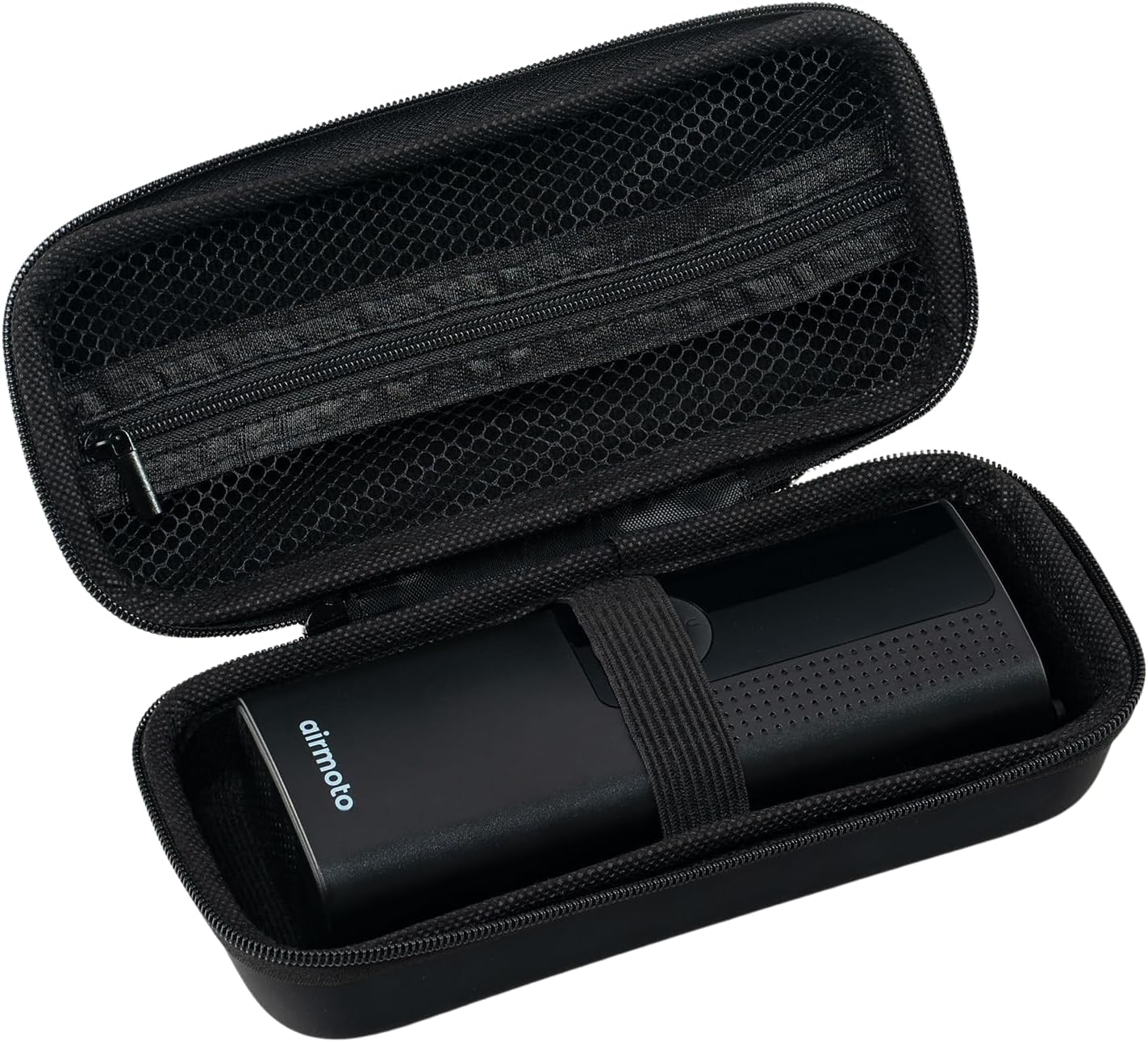
Protect and organize your Airmoto tire inflator with a purpose-designed carrying case made for a precise fit. The durable polyurethane shell and soft interior help guard against cuts, tears, and road wear, while a mesh pocket stores connectors and accessories. This travel box measures 7.5*3.5*2.8 inches and can work with most handheld portable air compressor models; this listing includes the case only.
What to Do When Taking Your Tundra Out of Storage
Before returning to normal driving, inspect all four tires and the spare if your Tundra has one. Check pressure cold, look for cracking or bulges, and confirm that each valve stem is holding air. If the tires are older, check the DOT date code and consider a professional inspection before long highway trips.
On the first drive, start at neighborhood speeds. Listen for thumping and feel for steering shake. If the vibration improves after several miles, the tires may have had temporary flat spotting. If the vibration stays, gets worse, or appears at highway speeds, have a tire shop inspect the tires and balance the wheels before regular use.
Frequently Asked Questions
How do you keep tires from getting flat spots during storage?
Set the correct cold tire pressure, park on a clean level surface, use tire cradles or boards, and drive the vehicle every 4–6 weeks when practical. For longer storage, safely supporting the vehicle on rated jack stands can remove weight from the tires.
How long can a Tundra sit before tires get flat spots?
Flat spots can start after a few weeks, especially in cold weather, under heavy load, or with low tire pressure. The risk increases the longer the truck sits without moving.
Should you overinflate tires for storage?
Use the pressure recommended on your Tundra’s tire placard or owner’s manual unless your tire maker gives a specific storage instruction. Never exceed the maximum pressure printed on the tire sidewall, and reset pressure before driving.
Are tire cradles worth it for a stored truck?
Tire cradles can help because they spread the truck’s weight over a larger tread area. They are most useful when the truck must stay on its tires for several months and you cannot drive it regularly.
Will flat spots go away after driving?
Temporary flat spots may fade after the tires warm up during a normal drive. If vibration remains after several miles, have the tires inspected for permanent flat spotting, belt damage, imbalance, or uneven wear.
Conclusion
You can prevent most tire flat spots on a stored Tundra with a simple routine: set cold tire pressure correctly, store the truck on a clean level surface, spread the tire load with cradles or boards, and drive it every 4–6 weeks when practical. For long storage, rated jack stands can help, but only when you follow safe lifting steps. Before regular driving, inspect pressure, age, sidewalls, tread, and vibration so your Tundra returns to the road safely.
Sources
- NHTSA Tires — tire pressure, tire condition, and general tire-safety guidance.
- Toyota Owner’s Manuals and Warranty Guides — Tundra tire-pressure placard, jacking points, and wheel-service specifications.
- Bridgestone: How to Check Tire Pressure — cold tire-pressure checking and inflation basics.
- Michelin Tire Storage Guidance — tire storage, cleaning, and protection basics.