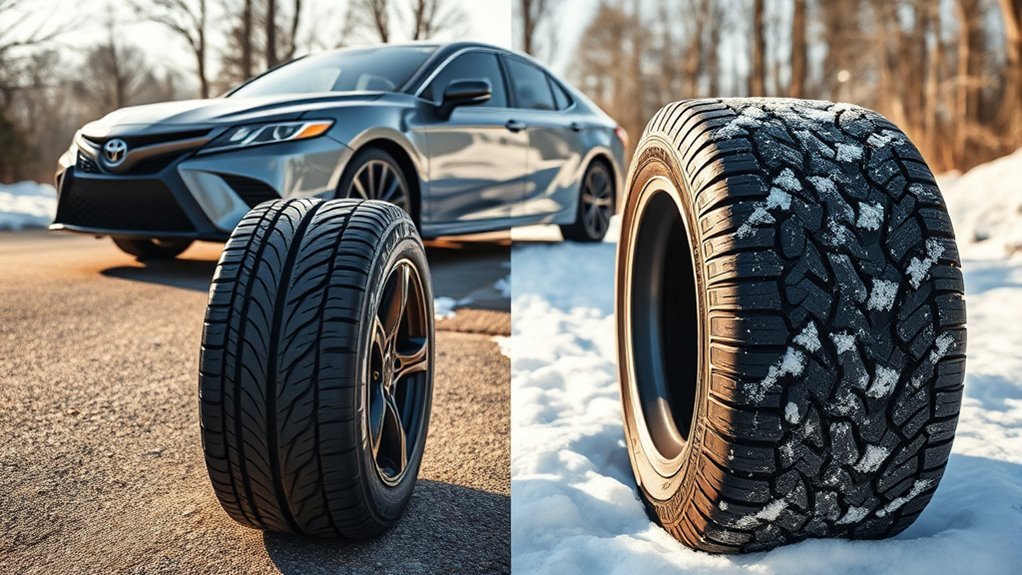
Choosing tires for a Toyota Camry is mostly about weather, temperature, and how often you drive on snow or ice. A Camry can be calm and predictable in bad weather, but only if the tires can stay flexible, clear slush, and keep enough grip for braking and steering.
Quick Answer
For a Toyota Camry, all-season tires are best for mild winters, dry roads, rain, and light snow. Dedicated winter tires are safer when temperatures regularly fall below 45°F or 7°C, especially on ice, packed snow, or unplowed roads. All-weather tires with the 3PMSF symbol are a practical middle ground.
Key Takeaways
- Choose all-season tires if your Camry mostly sees mild weather, wet roads, and occasional light snow.
- Choose winter tires if you drive in regular freezing temperatures, snow, ice, steep roads, or rural areas that are not cleared quickly.
- Look for the Three-Peak Mountain Snowflake symbol if you want verified severe-snow traction.
- Install winter tires as a set of four, not just on the front wheels, so your Camry brakes and turns predictably.
- Always match the tire size, load rating, speed rating, and cold tire pressure listed on your Camry’s door-jamb placard.
Which Tire Type Suits Your Camry?
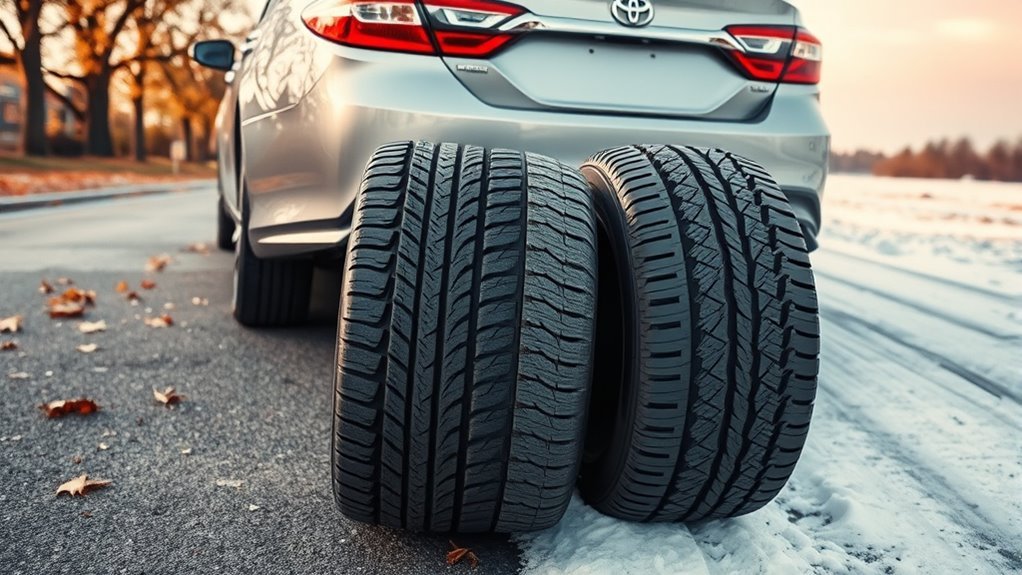
The right tire for your Toyota Camry depends on the worst weather you actually drive through, not just the average weather in your area. A Camry used for city commuting in a mild climate may do well on premium all-season tires. A Camry that sees freezing mornings, icy intersections, lake-effect snow, mountain roads, or long winter highway trips should use dedicated winter tires.
| Tire Type | Best For | Main Limit |
|---|---|---|
| All-season | Mild winters, rain, dry roads, long commutes, and light snow | Less grip on ice, packed snow, and deep snow |
| All-weather | Drivers who want one set of tires year-round but need better winter traction than standard all-seasons | Usually not as strong as dedicated winter tires on glare ice or heavy snow |
| Winter | Freezing weather, snow, slush, ice, mountain roads, and severe winter driving | Faster wear and softer handling in warm weather |
If your area often stays below 45°F or 7°C, winter tires become much more useful. Transport Canada notes that all-season and summer tires begin to lose elasticity below 7°C, while winter tires are designed to keep grip in cold weather.
Note: All-weather tires are not the same as standard all-season tires. If an all-weather tire carries the Three-Peak Mountain Snowflake symbol, it has met a severe-snow traction standard. It can be a good choice for mixed climates, but dedicated winter tires still have the edge in harsh snow and ice.
[Products Worth Considering]

These universal tire valve stem caps help protect valve cores from dust, debris, and moisture while helping maintain stable tire pressure. The corrosion-resistant metal construction and sealed design provide reliable protection in road grime, mud, and winter conditions. Twist-on installation makes them quick to fit on cars, SUVs, trucks, and motorcycles.

Measure tire tread depth quickly and accurately with this LUMITECO dial gauge that reads in 1/32" increments up to 14/32". The color-coded green/yellow/red zones make it easy to judge tire wear and know when replacement is needed. A rugged, compact design with a protective pouch helps keep the gauge ready for use on cars, trucks, motorcycles, and more.

Upgrade your Toyota’s wheels with durable aluminum alloy valve stem caps that help protect valve cores from corrosion and direct exposure to road grime, clay, water, and snow. Rubber rings improve sealing to help prevent air leakage and maintain stable tire pressure for safer driving. These caps are easy to install or remove without tools and add a unique, stylish look to your car.
Why Winter Tires Beat All-Seasons in Real Winter
Winter tires help your Camry grip in cold weather because they use rubber compounds that stay more flexible when temperatures drop. Standard all-season tires are designed to work across a wide range of conditions, but their rubber and tread pattern are not optimized for freezing pavement, packed snow, or ice.
That difference shows up most when you brake or turn. In a Tire Rack ice test, studless winter tires stopped from 10 mph in about 21 feet, while all-season tires needed almost 40 feet. Your exact stopping distance will depend on the tire model, road surface, temperature, vehicle condition, and speed, but the pattern is clear: winter tires can provide a major safety advantage on ice.
On ice, the difference between a winter tire and an all-season tire can be the difference between stopping before the crosswalk and sliding through it.
[Products Worth Considering]

Keep your tires properly inflated with this analog VONDIOR tire pressure gauge, designed for fast, easy readings without batteries. The swiveling, two-axis hose and large glow dial help you measure at any tire angle with instant visibility. Built with a protective rubber shield, it supports durable, low-maintenance use for cars and trucks.

Monitor tire tread wear with a smart, color-coded depth gauge that shows clear condition ranges at a glance. The bar is range marked for fast, easy readings, helping you maintain safer traction and performance. Each gauge is portable with a pocket clip, and the set includes 20 units for daily use and sharing.

Marsflex brand TPMS replacement sensors help restore tire pressure monitoring for compatible Toyota, Lexus, Scion, and Pontiac models. Each sensor is pre-programmed for the vehicle application and includes a long-life battery for up to 8 years of normal use. Designed to replace common OE numbers and requires relearning using a TPMS scan tool after installation.
Improved Winter Traction
Winter tires use deeper grooves, more biting edges, and tread blocks designed to clear snow and slush. That helps your Camry keep more usable rubber on the road instead of riding on a layer of packed snow or water.
| Feature | Winter Tire Benefit |
|---|---|
| Flexible cold-weather compound | Stays pliable in freezing temperatures |
| Deep tread grooves | Move snow and slush away from the contact patch |
| Sipes | Create small biting edges for snow and ice grip |
| Winter-focused tread pattern | Improves braking, cornering, and starting traction in cold weather |
Shorter Braking Distances
A Camry on good all-season tires may feel fine on cold dry pavement, but ice changes everything. Winter tires are built to keep the tread working when the surface is slick and the temperature is low. That can shorten stopping distances, reduce wheelspin when pulling away from a stop, and make steering inputs feel more predictable.
Warning: Do not install winter tires only on the front of a front-wheel-drive Camry. Use four matching winter tires. Mixing tire types can create uneven grip between the front and rear axles, which can make the car harder to control during emergency braking or cornering.
How Winter Tires Help a Camry Grip
Winter tires help a Toyota Camry grip by combining soft cold-weather rubber with tread channels and sipes. The rubber helps the tire conform to rough, frozen pavement. The grooves push slush and water away. The sipes create small edges that bite into snow and help manage the thin film of water that can form on ice.
This matters even if your Camry has traction control, anti-lock brakes, or stability control. Those systems can help manage a skid, but they cannot create grip the tires do not have. Better tires give the safety systems more traction to work with.
When All-Season Tires Still Work
All-season tires still make sense for many Camry owners. If your winters are mostly above freezing, roads are cleared quickly, and you only see occasional light snow, a high-quality all-season tire can be practical, quiet, and long-lasting. The Pirelli AS Plus 3 family, for example, includes all-season touring tires with limited treadwear warranties up to 70,000 miles depending on the exact model.
All-season tires also save you from seasonal swaps and storage. They are usually a better choice than winter tires if you regularly drive in warm weather, because winter rubber can wear faster and feel softer on dry pavement when temperatures rise.
Still, be honest about your roads. If your commute includes icy bridges, steep hills, unplowed streets, or rural highways, all-season tires are a compromise. In those conditions, winter tires are the safer tool.
What Winter Tires Cost a Camry Owner
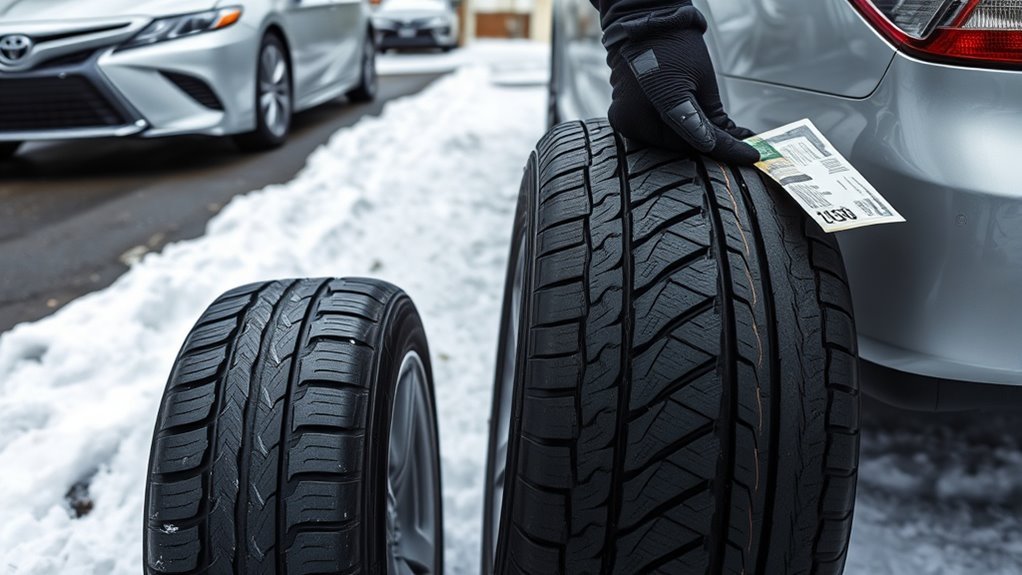
Winter tire costs vary by Camry model year, wheel size, tire size, tire brand, and installer. A full winter setup usually includes the tires, mounting and balancing, seasonal swaps, and possibly a second set of wheels.
- Tires: Expect the biggest cost here. Prices change often, and larger Camry wheel sizes usually cost more.
- Second wheel set: Optional, but useful if you plan to keep winter tires for several seasons.
- Mounting and balancing: Needed when tires are installed on wheels. Seasonal swaps are usually cheaper if the winter tires already have their own wheels.
- TPMS sensors: A second wheel set may need tire pressure monitoring sensors, depending on your setup.
- Storage: Budget for storage if you do not have a cool, dry place to keep the off-season tires.
Pro Tip: If you plan to keep your Camry for several winters, ask for a quote with winter tires mounted on a second set of wheels. The upfront cost is higher, but future seasonal swaps can be quicker and may cost less.
Winter tire life depends on mileage, alignment, rotation, storage, driving style, and temperature. Do not assume every winter tire lasts 40,000 miles. Some do carry mileage warranties, such as the Michelin X-Ice Snow, but warranty coverage varies by tire line and size.
How to Spot Real Winter Tires
Do not rely on tread appearance alone. Read the sidewall markings before buying tires for your Camry.
- Three-Peak Mountain Snowflake: This is the key symbol for severe snow service. Tires with this symbol meet specific snow-traction performance requirements.
- M+S: Mud and snow marking means the tread has certain design features, but it does not prove the same severe-snow performance as the 3PMSF symbol.
- Ice Grip marking: Some newer winter tires also carry an ice-grip certification. This is separate from the 3PMSF severe-snow symbol and focuses on ice braking.
- Size, load index, and speed rating: Match your Camry’s door-jamb placard or owner information. Do not guess based on another Camry trim.
Also check tread depth before every winter. Legal minimums are not the same as best winter performance. NHTSA recommends using the vehicle placard for tire pressure and explains that tire safety depends on proper inflation, loading, tread, and maintenance.
Best Tire Options for a Toyota Camry
The best tire is the one that fits your exact Camry size and matches your winter conditions. Use your tire placard, not memory, before ordering.
[Products Worth Considering]
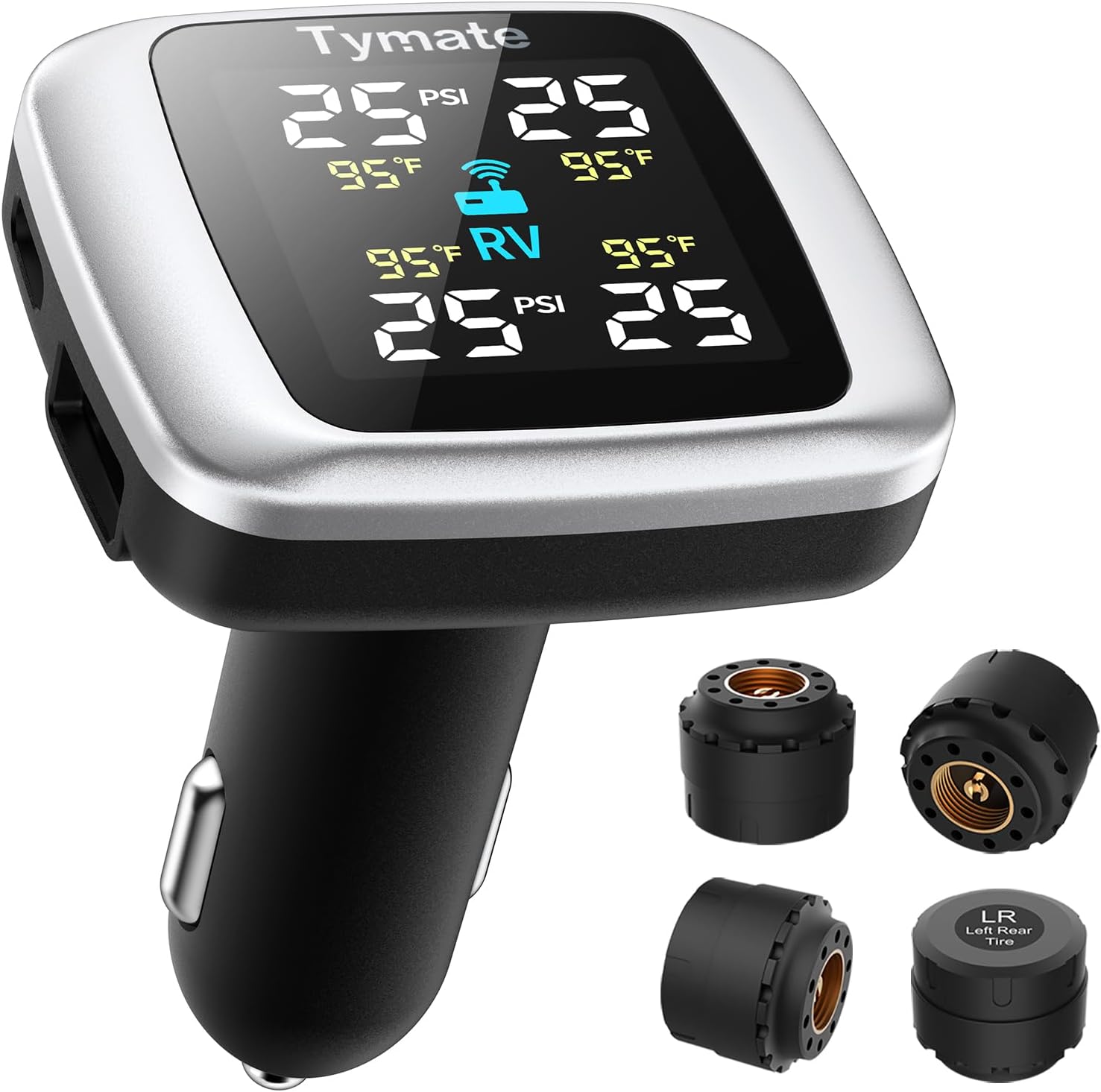
Tymate TM7 is a wireless tire pressure monitoring system that delivers real-time pressure and temperature readings for safer driving. It includes four external sensors, a bright color LCD display with adjustable backlight, and six alarm modes for high/low pressure, fast leakage, high temperature, and sensor signal or battery issues. The system covers a wide 0–144 PSI range and plugs into your vehicle’s cigarette lighter socket for quick DIY setup.

These aluminum alloy tire valve stem caps with an O-ring seal help protect valve stems from corrosion while adding a clean, stylish look to your vehicle. The universal fit works across cars, trucks, motorcycles, bicycles, and more, making them an easy upgrade for everyday driving and off-road use. Installation is quick, and the included four-pack keeps all your tires dressed and protected.

Replace worn or malfunctioning GM TPMS sensors with this 433MHz pre-programmed sensor set designed for compatibility with many Chevrolet, Buick, GMC, and Cadillac models. It includes guidance for proper OBDII relearning/pairing after installation and supports reliable long-term operation with a high-performance CR2032 battery. Quality tested for durability and performance to help restore accurate tire pressure monitoring.
Best Dedicated Winter Tires
- Michelin X-Ice Snow: A strong winter option for drivers who want a quiet, controlled ride and a product line with a limited mileage warranty. Choose the correct Camry size, not an SUV-only fitment.
- Bridgestone Blizzak IcePeak: The updated Blizzak winter option for 2026. Bridgestone says IcePeak replaces the Blizzak WS90 and DM-V2 and carries both 3PMSF and Ice Grip certifications.
Best All-Season Choice for Mild Winters
- Pirelli P7 AS Plus 3: A good example of a long-wearing touring all-season tire for Camry owners who mostly drive on dry, wet, or lightly snowy roads.
When to Consider All-Weather Tires
All-weather tires are worth considering if you want one set of tires year-round and your winters are more serious than a standard all-season tire can comfortably handle. Look for the 3PMSF symbol. They are not a perfect replacement for dedicated winter tires in harsh conditions, but they can be a smart compromise for mixed climates.
Camry Winter Tire Maintenance
Good winter tires still need basic maintenance. Cold weather lowers tire pressure, and underinflation can hurt handling, fuel economy, and tire wear. Check pressure when the tires are cold and inflate to the PSI listed on your Camry’s driver-door placard, not the maximum PSI printed on the tire sidewall.
- Check pressure monthly and before long winter trips.
- Rotate tires every 5,000 to 7,500 miles unless your tire shop or owner information recommends a different interval.
- Inspect tread depth before snow season and replace tires early if winter grip has faded.
- Store off-season tires in a cool, dry place away from sunlight, heat, and chemicals.
- Remove winter tires in warm weather once temperatures are consistently above the winter range.
Frequently Asked Questions
How often should Camry tires be rotated in winter?
Rotate your Camry tires about every 5,000 to 7,500 miles unless your tire manufacturer, installer, or owner information recommends a different schedule. Rotation helps even out wear, especially on a front-wheel-drive Camry where the front tires handle steering, braking, and most acceleration forces.
Do winter tires affect Camry fuel economy?
They can. Winter tires may slightly reduce fuel economy because of their softer compound and more aggressive tread. The tradeoff is better cold-weather braking, steering, and traction on snow and ice. Keeping them properly inflated helps limit the fuel-economy penalty.
Can I use winter tires year-round on my Camry?
You can physically drive on them year-round, but you should not. Winter tires wear faster in warm weather, can feel softer on dry roads, and may not handle as crisply as all-season or summer tires when temperatures rise. Swap back when the cold season ends.
What tire pressure should a Camry use in cold weather?
Use the cold tire pressure listed on your Camry’s driver-door placard. Do not inflate based only on the tire sidewall maximum. Check pressure when the tires are cold, because driving warms the tires and changes the reading.
Do winter tires change Camry handling on dry roads?
Yes, they can. Winter tires often feel softer than all-season tires on dry pavement, especially when the weather is warmer. That is normal because the rubber is designed for cold grip. The handling tradeoff is usually worth it if you regularly drive on snow or ice.
Do I need winter tires if my Camry has front-wheel drive?
Front-wheel drive helps the Camry move from a stop, but it does not replace winter tires. Tires control braking and cornering too. If the road is icy, the tire compound and tread design matter more than the drivetrain.
Are all-weather tires enough for a Toyota Camry?
All-weather tires can be enough if your winters are moderate and you want one tire set for the full year. Choose an all-weather tire with the 3PMSF symbol. For frequent ice, deep snow, mountain driving, or long winter highway trips, dedicated winter tires are still the safer choice.
Conclusion
If your Toyota Camry mostly sees mild weather, rain, and occasional light snow, quality all-season tires can work well. If you regularly drive in freezing temperatures, snow, slush, or ice, dedicated winter tires are the better safety choice. All-weather tires with the 3PMSF symbol sit between those two options and can make sense for mixed climates.
Before buying, check your Camry’s door-jamb placard for the correct tire size and pressure, choose four matching tires, and look for the right sidewall symbols. The best tire is not the most expensive one; it is the one that fits your Camry and matches the worst roads you actually drive on.
Sources
- Transport Canada — Using winter tires — 3PMSF symbol, severe snow performance, and 7°C cold-weather guidance.
- NHTSA TireWise — tire pressure, placard guidance, tread, loading, and tire safety basics.
- Tire Rack ice test — comparative ice braking performance for winter, all-season, and summer tires.
- Michelin X-Ice Snow — product information for Michelin’s winter tire line.
- Bridgestone Blizzak IcePeak announcement — 2026 IcePeak launch, 3PMSF/Ice Grip certifications, and replacement of WS90/DM-V2.
- Pirelli AS Plus 3 family — all-season touring tire warranty and product-family details.