
Winter tires and all-season tires may look similar from a distance, but they are built for very different conditions. If you regularly drive in cold weather, snow, slush, freezing rain, or packed ice, the right tire choice affects braking, steering, stability, tread life, and how confidently your vehicle responds when roads get slippery.
Quick Answer
Choose dedicated winter tires when temperatures regularly fall below 45°F or 7°C, especially if you drive on snow, ice, or slush. Winter tires stay more flexible in cold weather and use deeper tread blocks and dense siping for better grip. All-season tires are acceptable for mild winters with rare snow.
Key Takeaways
- Winter tires are the safer choice for regular cold, snow, slush, freezing rain, or ice.
- All-season tires are a compromise: useful for dry, wet, and mild conditions, but not optimized for severe winter roads.
- Look for the three-peak mountain snowflake symbol, not just M+S, when you need verified severe-snow performance.
- Install four matching winter tires, not just two, to help preserve balanced braking, cornering, and stability.
- Remove winter tires when warm weather returns because their softer compounds wear faster on warm pavement.
At a Glance
| Best Switch Point | When temperatures consistently stay below or above 45°F / 7°C |
| Best For | Winter tires for cold snow and ice; all-season tires for mild climates |
| Main Check | Tire size, load rating, speed rating, tread depth, and 3PMSF symbol |
| Typical Extra Costs | Seasonal mounting, balancing, storage, and optional dedicated wheels or TPMS sensors |
Which Is Better for Snow and Ice: Winter Tires or All-Season Tires?
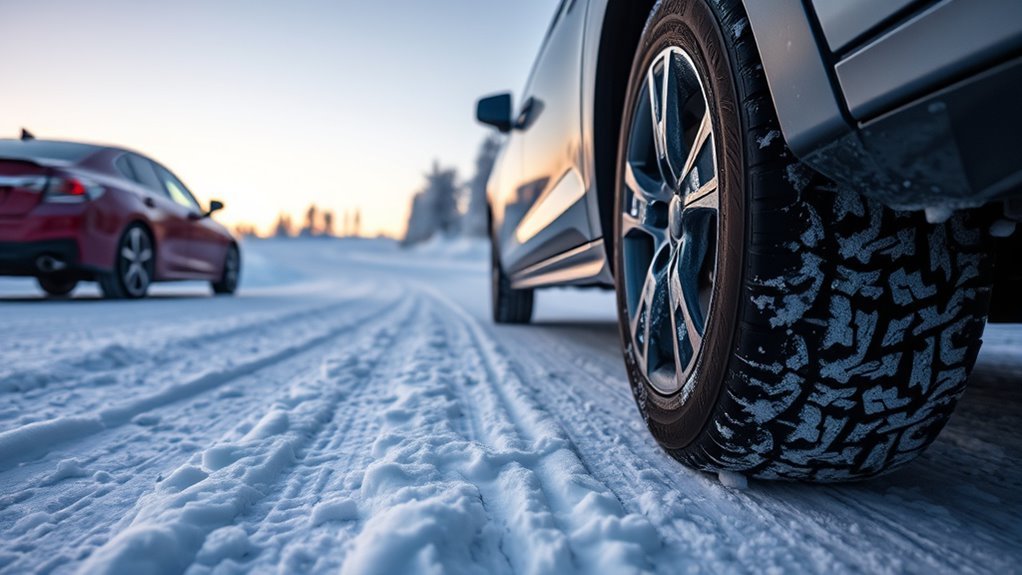
Winter tires are better than all-season tires for snow, ice, slush, and sustained cold weather. Their tread compounds are designed to stay flexible at low temperatures, while many all-season and summer tires begin losing elasticity below about 45°F or 7°C. Transport Canada explains that tires with the peaked mountain and snowflake symbol meet specific snow-traction performance requirements and are designed for severe snow conditions. Transport Canada
All-season tires can work well in moderate weather, rain, and occasional light snow, but they are not engineered for repeated braking and cornering on packed snow or ice. In a real winter climate, the difference is most noticeable during emergency stops, hill starts, lane changes, and turns where grip is limited.
Warning: Do not install only two winter tires on a four-wheel vehicle. A mismatched front and rear setup can reduce stability and make the vehicle harder to control during braking or cornering. Use a full set of four matching winter tires whenever possible.
Why Winter Compounds and Siping Beat All-Seasons Under 45°F
The biggest difference is rubber behavior. Winter tires use compounds that remain more pliable in cold weather, so the tread can conform to rough ice, packed snow, and cold pavement. All-season compounds are built for a wider temperature range, so they usually trade some deep-winter grip for longer tread life, lower noise, and year-round convenience.
Winter tires also use dense siping, deeper grooves, and tread blocks shaped to create more biting edges. Those small cuts and channels help the tire grip packed snow, push away slush, and maintain more contact with the road surface.
| Feature | Winter Tire Advantage | All-Season Limitation |
|---|---|---|
| Rubber compound | Stays more flexible in cold weather | Can stiffen as temperatures drop |
| Siping | Adds biting edges for snow and ice | Usually less aggressive |
| Tread voids | Move slush and snow away from the contact patch | Designed for broader year-round use |
| Best use | Cold, snow, ice, freezing rain, slush | Mild winter, wet roads, dry roads, light snow |
The safest tire is not the one with the most aggressive-looking tread. It is the one designed for the temperature, road surface, vehicle, and driving pattern you actually face.
Stopping Distance & Handling With Winter vs All-Season Tires
Stopping distance is where winter tires often prove their value. On snow and ice, the softer compound, tread depth, and siping help the tire create more usable friction. That can mean shorter stops, more predictable steering, and less reliance on ABS and stability-control systems to correct a slide after grip is already lost.
Handling also changes. A vehicle on all-season tires may feel acceptable while cruising straight ahead, then suddenly push wide in a turn or take longer to stop at an intersection. Winter tires usually give the driver a more gradual and predictable limit, which matters when visibility is poor and traffic is close.
Note: Winter tires do not make ice “safe.” They improve available grip, but drivers still need to slow down, increase following distance, brake early, and avoid sharp steering or throttle inputs.
Tread Depth & Pattern: Packed-Snow and Ice Performance
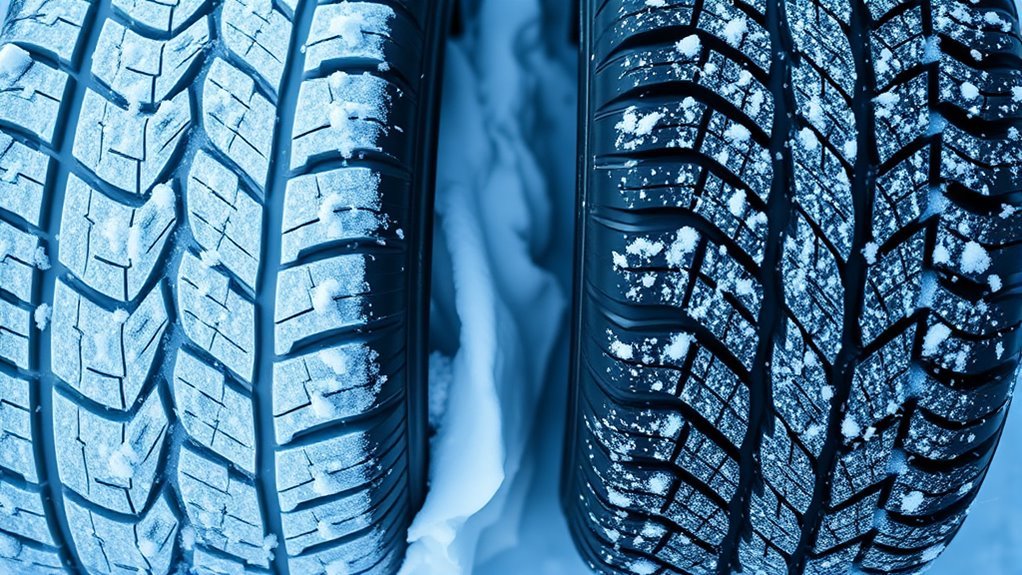
Tread depth matters more in winter than many drivers realize. Deep grooves help clear slush and loose snow, while sharp tread edges help the tire bite into packed snow. As tread wears down, snow traction drops even if the tire is still above the legal minimum.
Transport Canada advises against using tires worn close to 4 mm, or about 5/32 inch, on snow-covered roads. Many new winter tires start with deeper tread than typical all-season tires, but exact depth varies by model and size. Use a tread-depth gauge instead of guessing by eye.
| Tread Condition | Winter Meaning |
|---|---|
| New or near-new | Best snow evacuation and biting-edge performance |
| Around 5/32 inch or 4 mm | Start planning replacement for regular snow use |
| At legal minimum | Not a safe target for winter traction |
| Uneven wear | Check alignment, rotation history, inflation, and suspension condition |
When All-Season Tires Are Acceptable: And When They Aren’t
All-season tires are acceptable when winters are mild, snow is rare, roads are usually wet or dry, and temperatures do not stay below 45°F or 7°C for long periods. They are also convenient if you live where a winter tire would spend most of its time on warm pavement.
All-season tires are not the best choice when you regularly face heavy snow, packed snow, freezing rain, black ice, unplowed roads, mountain passes, or long cold commutes. In those situations, the safer decision is a full set of winter tires.
What About All-Weather Tires?
All-weather tires sit between all-season and dedicated winter tires. Many all-weather tires carry the three-peak mountain snowflake symbol, which means they meet severe-snow performance requirements, but they are still built to remain on the vehicle year-round.
Choose all-weather tires if your winters are moderate and you want one set of tires with better snow capability than a standard all-season. Choose dedicated winter tires if you drive in frequent ice, deep snow, very cold temperatures, steep terrain, or remote areas where getting stuck is more than an inconvenience.
Pro Tip: If you want one set of tires year-round but still need winter certification, compare all-weather models with the 3PMSF symbol. If you want maximum winter grip, choose dedicated winter tires instead.
When to Install and Remove Winter Tires (Seasonal Timing)
Install winter tires when daily temperatures consistently fall below 45°F or 7°C, not after the first major storm. Waiting until snow is already on the road often means long shop wait times and unnecessary risk on the first icy commute.
Remove winter tires when temperatures consistently rise above 45°F or 7°C in spring. Winter compounds are softer and can wear faster on warm pavement, especially during highway driving, heavy braking, or aggressive cornering.
| Trigger | Action | Why It Matters |
|---|---|---|
| Below 45°F / 7°C regularly | Install winter tires | Cold-weather rubber stays more flexible |
| Snow or ice in the forecast | Install before the storm | Avoid being caught on the wrong tires |
| Above 45°F / 7°C regularly | Switch back | Protect tread life and warm-weather performance |
| Before storage | Clean, dry, label, and inspect tires | Helps preserve condition for next season |
How to Identify True Winter Tires (3PMSF, Ice Symbol, M+S)
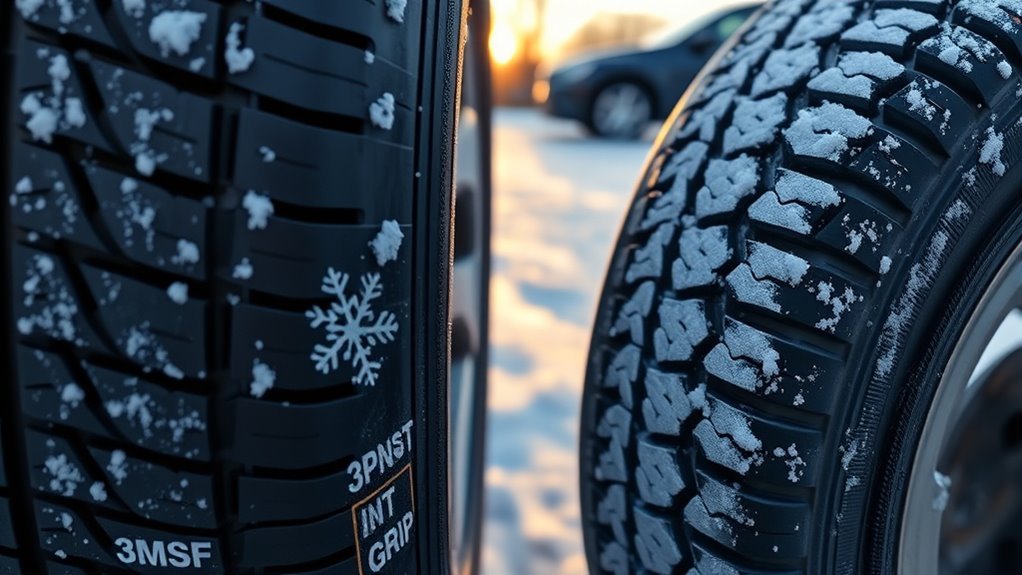
The most important winter marking is the three-peak mountain snowflake, often shortened to 3PMSF or 3PMS. Tires with this symbol meet defined snow-traction performance requirements for severe snow use. M+S, M/S, or Mud and Snow markings are not the same thing; they generally describe tread geometry and do not prove the tire has passed severe-snow traction testing.
The ice-grip symbol is separate. USTMA’s tire information bulletin explains that passenger tires for ice conditions meet an ice-grip performance index and may display a mountain-with-ice pictograph in addition to other markings. U.S. Tire Manufacturers Association
Three-Peak Mountain Snowflake
Use the three-peak mountain snowflake as your quick check for severe-snow capability. It does not mean the tire is perfect on every icy surface, but it is a much stronger signal than M+S alone. The USTMA severe-snow definition is documented in its technical bulletin for passenger and light-truck tires. USTMA TISB 37
- Look at the sidewall: Find the 3PMSF symbol before buying.
- Check exact size: One tire line may not offer every symbol or rating in every size.
- Match the vehicle: Use the size, load index, and speed rating recommended in the owner’s manual or door-jamb placard.
M+S Versus Ice Symbol
M+S can appear on many all-season tires, so it should not be treated as proof of winter performance. The ice-grip symbol is more specialized and points to improved performance on ice, but not every good winter tire carries it. For most drivers, 3PMSF is the minimum winter symbol to look for; the ice-grip symbol is a bonus if icy roads are a major part of your driving.
| Marking | What It Means | Best Use |
|---|---|---|
| M+S | Mud and snow tread designation | Light snow, general use, not severe-snow proof |
| 3PMSF | Meets severe-snow performance requirements | Winter, snow, cold climates |
| Ice Grip | Meets ice-grip performance criteria | Icy regions and frequent freeze-thaw roads |
| No winter symbol | No verified severe-snow marking | Mild weather unless the tire maker states otherwise |
Price Tradeoffs: Cost of Tires, Mounting, and Extra Wheels
Winter tires cost more upfront because you are buying a second set, but they also reduce wear on your all-season or summer tires while installed. The real comparison is not just “one set versus two sets.” It is total cost across several years: purchase price, tread life, mounting, balancing, storage, TPMS sensors, and wheel damage risk from repeated mounting.
Using one set of wheels is cheaper at first, but you pay for mounting and balancing every season. Buying a dedicated winter wheel set costs more upfront, yet it can make seasonal swaps faster and may reduce repeated mounting costs. Dedicated wheels also reduce the chance of damaging tire beads during frequent mount/dismount cycles.
- Calculate cost per season: Include tires, installation, balancing, and storage.
- Ask about TPMS sensors: Some vehicles need sensor setup for a second wheel set.
- Protect warm-weather tires: Storing the off-season set helps extend usable life.
- Check insurance rules: Some regions or insurers may offer winter-tire discounts.
[Products Worth Considering]

The Kurgo Seasonal Tire Tote helps protect your car interior, clothes, and garage from tire grime, brake dust, and residue during seasonal tire changes. Its universal design fits most passenger tires between 22" and 31" in diameter, making storage and transport simpler with less mess. Built for rugged, repeated use, it’s machine washable for easy care and comes with a lifetime warranty.

The Continental Grand Prix 5000 is an allround road bike tire engineered for faster rolling, improved ride comfort, and enhanced puncture protection. It features a Vectran Breaker cut-protection layer, Lazer Grip micro-profile tread for confident cornering control, and Active Comfort Technology to damp vibration for smoother rides. BlackChili compound optimizes grip and speed for everyday performance and long-lasting confidence.

Monitor tire tread wear with a smart, color-coded depth gauge that shows clear condition ranges at a glance. The bar is range marked for fast, easy readings, helping you maintain safer traction and performance. Each gauge is portable with a pocket clip, and the set includes 20 units for daily use and sharing.
Maintenance, Storage, and Safety Checks
Winter tires still need regular care. NHTSA recommends checking tire pressure at least once a month when the tires are cold and using the pressure listed on the vehicle placard or owner’s manual, not the maximum number molded on the tire sidewall. NHTSA TireWise
- Check pressure monthly: Cold weather can lower tire pressure, and underinflation hurts handling, fuel economy, and tire life.
- Rotate on schedule: Follow the vehicle or tire maker’s rotation interval to reduce uneven wear.
- Inspect tread depth: Measure several grooves across each tire, not just one spot.
- Watch tire age: NHTSA notes that some vehicle and tire manufacturers recommend replacing tires that are six to 10 years old regardless of treadwear.
- Store properly: Keep tires clean, dry, cool, and away from direct sunlight, heaters, oils, and solvents.
Top Tire Picks: Best Winter and Best All-Season Options
The best tire depends on your vehicle, tire size, budget, road conditions, and how much winter grip you need. Always confirm the exact size, load index, speed rating, warranty, and current availability before buying.
| Category | Strong Option | Why It Fits |
|---|---|---|
| Severe winter and ice | Bridgestone Blizzak IcePeak | Designed as a flagship winter tire with both 3PMSF and Ice Grip certifications |
| Long-wearing winter tire | Michelin X-Ice Snow | Backed by Michelin’s stated 60,000-mile limited treadwear warranty |
| Comfort-focused all-season | Pirelli P7 AS Plus 3 | Touring all-season tire with a 70,000-mile limited treadwear warranty |
| Sporty all-season | Continental ExtremeContact DWS 06 Plus | Performance all-season choice for dry and wet handling with some light-snow capability |
If your area gets serious winter weather, do not choose an all-season tire just because it has good wet-road reviews. Wet braking, dry handling, light-snow traction, and ice grip are different performance categories.
[Products Worth Considering]

Milton S-921 pencil tire pressure gauge helps you maintain optimal tire pressure for passenger cars with accurate readings in PSI and kPa. It features a built-in deflator valve for convenient pressure adjustments, plus a single chuck head and nylon indicator bar for easy use on the go. Built from durable plated brass and designed for reliable performance, it’s a practical road trip and cold-weather maintenance tool.

Measure tire tread depth quickly and accurately with this LUMITECO dial gauge that reads in 1/32" increments up to 14/32". The color-coded green/yellow/red zones make it easy to judge tire wear and know when replacement is needed. A rugged, compact design with a protective pouch helps keep the gauge ready for use on cars, trucks, motorcycles, and more.

Measure tyre tread depth precisely with a digital gauge that reads in both MM and inches, helping you monitor safe driving conditions. The large LCD screen is easy to operate, and the compact tool fits for cars, trucks, and motorcycles. It provides high accuracy with a 0-25.4mm range and includes a 1-year warranty for added peace of mind.
How to Choose: Final Checklist by Climate and Driving Habits
Use your actual winter exposure to decide. The colder, hillier, icier, or more remote your driving is, the stronger the case for dedicated winter tires becomes.
- Check your climate: If temperatures regularly stay below 45°F or 7°C, winter tires deserve serious consideration.
- Count snow and ice days: Frequent snow, slush, and freezing rain point toward dedicated winter tires.
- Look at road service: Rural roads, steep driveways, mountain routes, and late plowing increase the need for winter grip.
- Check your commute: Early-morning and late-night drivers often face colder, icier roads than midday drivers.
- Confirm markings: Choose 3PMSF for verified severe-snow capability; do not rely on M+S alone.
- Buy four matching tires: Match size, load index, speed rating, and tire type across all four positions.
- Plan storage: A second set only works well if you can store the off-season tires correctly.
[Products Worth Considering]

Keep your tires properly inflated with this analog VONDIOR tire pressure gauge, designed for fast, easy readings without batteries. The swiveling, two-axis hose and large glow dial help you measure at any tire angle with instant visibility. Built with a protective rubber shield, it supports durable, low-maintenance use for cars and trucks.

Replace worn or missing TPMS sensors with a pre-programmed 4-pack designed for compatible GM vehicles. These 315MHz sensors provide real-time tire pressure monitoring and alert you if pressure is too high, too low, or if a rapid air leak occurs. Most installations are ready with minimal relearn effort after mounting, helping improve safety and driving confidence.

The Big Rig Defense Tire Thumper is a truck tire pressure checker that lets you quickly check multiple tires by giving them a firm whack. Listen for a reassuring thump and feel the stick bounce when a tire is fully inflated, helping you get back on the road safely. It features a comfortable, glove-friendly handle and a secure wrist strap for confident use on busy routes.
Frequently Asked Questions
What is the best winter tire for a Prius?
The best winter tire for a Prius depends on the exact tire size shown on the door-jamb placard and owner’s manual. Strong options often include the Michelin X-Ice Snow and Bridgestone Blizzak winter lines when available in the correct size. Do not buy an SUV-marked version unless it matches your vehicle’s approved size, load index, and speed rating.
Is there a big difference between all-season and winter tires?
Yes. Winter tires use colder-weather compounds, deeper tread features, and more siping to improve grip on snow, ice, and slush. All-season tires are designed as a broad compromise for dry, wet, and mild conditions, but they are not the best choice for repeated severe winter driving.
Can I use winter tires all year?
You can physically drive on them in warm weather, but it is not recommended. Winter tires are softer and can wear faster on warm pavement. They may also feel less responsive in heat compared with tires designed for warmer conditions.
Are all-weather tires the same as winter tires?
No. All-weather tires are year-round tires that may carry the 3PMSF symbol and provide better winter capability than many standard all-season tires. Dedicated winter tires are still the stronger choice for frequent ice, deep snow, and very cold conditions.
Do I need winter tires if my car has AWD?
AWD can help a vehicle accelerate, but it does not create extra grip for stopping or turning. Tires provide the contact with the road. In winter conditions, a two-wheel-drive vehicle on good winter tires can often brake and corner more confidently than an AWD vehicle on poor all-season tires.
Conclusion
Think of winter tires as cold-weather boots and all-season tires as everyday shoes. All-seasons are convenient for mild climates, but they are not the right tool for frequent snow, ice, slush, and freezing temperatures. If temperatures regularly drop below 45°F or 7°C and winter roads are part of your routine, choose four matching winter tires with the three-peak mountain snowflake symbol. If your winters are mild and snow is rare, a quality all-season or 3PMSF all-weather tire may be enough.
Sources
- Transport Canada — Using winter tires — temperature guidance, 3PMSF explanation, tread-depth and four-tire installation guidance
- USTMA TISB 37 — severe-snow-use tire definition and 3PMSF reference
- USTMA TISB 56 — ice-grip symbol and passenger tires for ice conditions
- NHTSA TireWise — tire pressure, tread, tire aging, maintenance, and safety guidance
- Michelin USA — How long winter tires last — winter tire life, inspection, and X-Ice Snow treadwear warranty information
- Bridgestone Americas — Blizzak IcePeak announcement — 3PMSF and Ice Grip certifications, design updates, and fitment range

