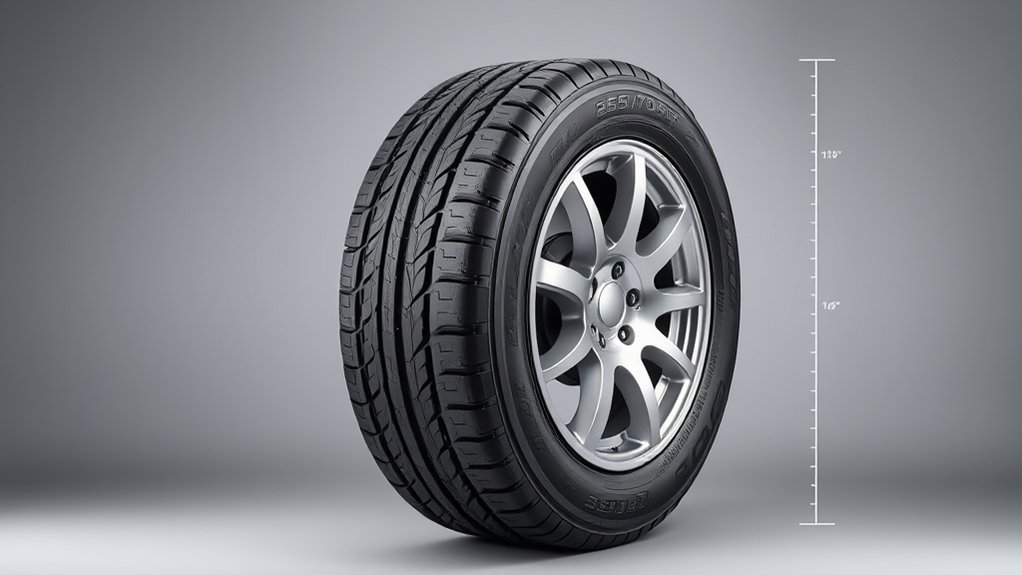
A 265/70R17 tire is approximately 31.6 inches tall, 10.4 inches wide, and has a sidewall height of about 7.3 inches. It fits a 17-inch wheel, but final fitment still depends on your vehicle, wheel width, load rating, clearance, and manufacturer recommendations.
Quick Answer
A 265/70R17 tire converts to about 31.6 inches in overall diameter, 10.4 inches in section width, and 7.3 inches of sidewall height. Its calculated circumference is about 99.3 inches, which works out to roughly 638 revolutions per mile.
Key Takeaways
- A 265/70R17 tire is about 31.6 inches tall, 10.4 inches wide, and made for a 17-inch rim.
- The sidewall height is about 7.3 inches because 70% of 265 mm equals 185.5 mm.
- A 275/70R17 is about 0.6 inch taller than a 265/70R17, while a 285/70R17 is about 1.1 inches taller.
- A larger tire can make your actual road speed higher than the speedometer shows unless the vehicle is recalibrated.
- Always check your tire placard, owner’s manual, load index, speed rating, rim width, and clearance before changing size.
What Does a 265/70R17 Tire Mean?
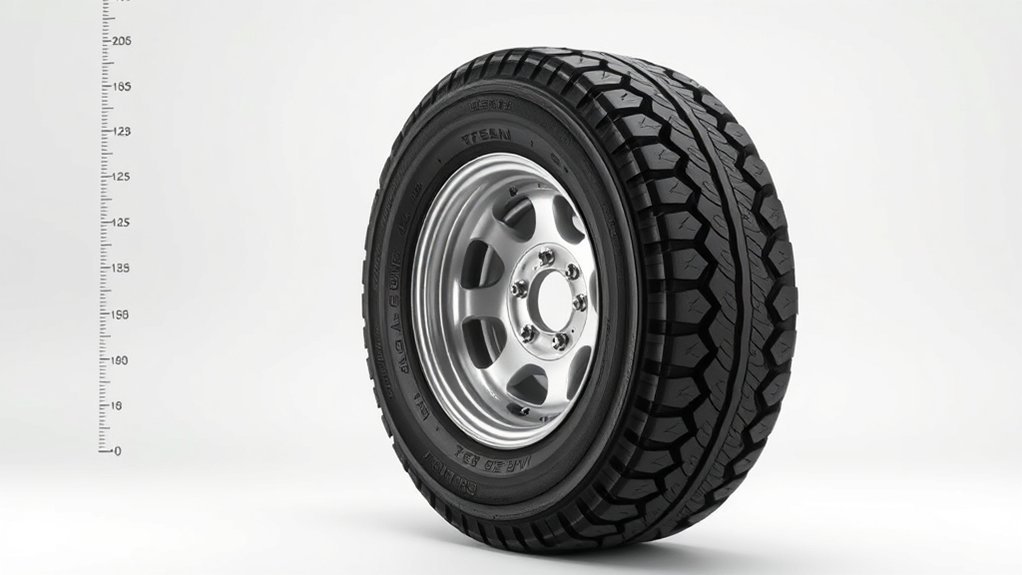
The code 265/70R17 describes the tire’s basic size and construction. The 265 is the tire’s nominal section width in millimeters, measured from sidewall to sidewall. The 70 is the aspect ratio, meaning the sidewall height is 70% of the tire’s width. The R means radial construction, and the 17 means the tire mounts on a 17-inch rim.
That sizing pattern matches how major tire makers explain sidewall markings: the first number is width in millimeters, the second number is the aspect ratio, the letter shows construction, and the final number is the wheel diameter in inches. You can review this same breakdown in Bridgestone’s tire-size guide and Michelin’s sidewall-marking guide.
Note: A calculated tire size is not always the exact mounted measurement. Real-world diameter and width can vary slightly by brand, model, tread depth, wheel width, inflation pressure, and vehicle load.
265/70R17 Tire Dimensions in Inches
A 265/70R17 tire has these approximate calculated dimensions:
| Overall Diameter | 31.6 inches |
| Section Width | 10.4 inches |
| Sidewall Height | 7.3 inches |
| Circumference | 99.3 inches |
| Revolutions Per Mile | About 638 revs/mile |
| Wheel Diameter | 17 inches |
The math is simple. Convert 265 mm to inches by dividing by 25.4, then multiply by 70% to get the sidewall height. Double the sidewall height and add the 17-inch rim diameter to get the overall tire diameter.
Formula: overall diameter = rim diameter + 2 × sidewall height. For 265/70R17, that is 17 + 2 × 7.3 = about 31.6 inches.
How 265/70R17 Compares to 275/70R17
A 275/70R17 is slightly larger than a 265/70R17. It is about 10.8 inches wide and 32.2 inches tall, compared with about 10.4 inches wide and 31.6 inches tall for a 265/70R17.
That gives the 275/70R17 roughly 0.4 inch more section width and about 0.6 inch more overall diameter. The difference is noticeable but modest. You may see a slightly fuller look, a small increase in ground clearance, and a small speedometer change if your vehicle was calibrated for the 265/70R17.
[Products Worth Considering]

Measure tire tread depth quickly and accurately with this LUMITECO dial gauge that reads in 1/32" increments up to 14/32". The color-coded green/yellow/red zones make it easy to judge tire wear and know when replacement is needed. A rugged, compact design with a protective pouch helps keep the gauge ready for use on cars, trucks, motorcycles, and more.

Keep your tires properly inflated with this analog VONDIOR tire pressure gauge, designed for fast, easy readings without batteries. The swiveling, two-axis hose and large glow dial help you measure at any tire angle with instant visibility. Built with a protective rubber shield, it supports durable, low-maintenance use for cars and trucks.

The SAFELIFE dial tire tread depth gauge measures tread depth in 1/32 inch increments with clear, easy-to-read 2-inch dial face. Color zones using a traffic light system help you quickly judge whether tread is low, marginal, or ample for safer driving. Built with a durable zinc cast body and a metal detect probe for precise, comfortable use across cars, motorcycles, trucks, and buses.
How 265/70R17 Compares to 285/70R17
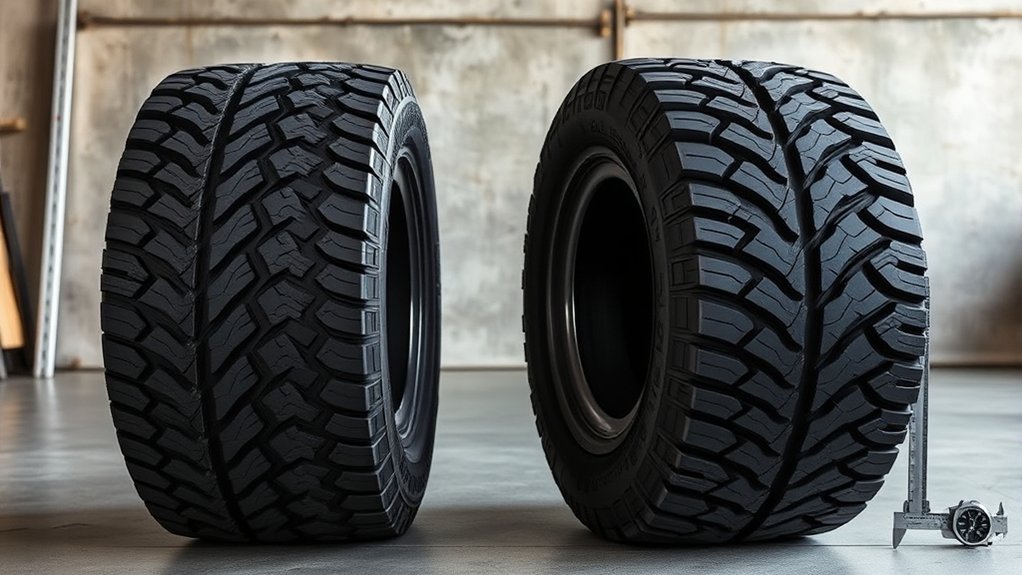
A 285/70R17 is a more noticeable step up. It measures about 11.2 inches wide and 32.7 inches tall. Compared with a 265/70R17, that is about 0.8 inch more width and about 1.1 inches more diameter.
That larger footprint can help with appearance, ground clearance, and traction in some conditions, especially when paired with the right tread pattern. But it can also add weight, increase rolling resistance, reduce clearance, and create rubbing at full steering lock or during suspension compression.
Pro Tip: Before moving from 265/70R17 to 275/70R17 or 285/70R17, check clearance with the wheels turned fully left and right. Also check space near the fender liner, upper control arm, mud flap, bumper edge, and spare-tire location.
265/70R17 vs 275/70R17 vs 285/70R17
| Tire Size | Width | Diameter | Circumference | Revs/Mile |
|---|---|---|---|---|
| 265/70R17 | 10.4 in | 31.6 in | 99.3 in | 638 |
| 275/70R17 | 10.8 in | 32.2 in | 101.0 in | 627 |
| 285/70R17 | 11.2 in | 32.7 in | 102.8 in | 617 |
[Products Worth Considering]

The Big Rig Defense Tire Thumper is a truck tire pressure checker that lets you quickly check multiple tires by giving them a firm whack. Listen for a reassuring thump and feel the stick bounce when a tire is fully inflated, helping you get back on the road safely. It features a comfortable, glove-friendly handle and a secure wrist strap for confident use on busy routes.

This car D-wheel lock nut key provides an anti-theft solution for D-shaped wheel lock bolts, helping keep your wheels secure. It features a flower-shaped internal pattern that resists micro-adjustment theft while allowing removal and mounting of compatible locking nuts. Made for reliable performance under high torque, it’s easy to use with standard socket wrench turning for quick tire maintenance and emergency repairs.

Secure a full-size spare on your trailer with this powder-coated steel spare tire mount bracket. It fits most 4-, 5-, and 6-lug wheel bolt patterns and mounts to trailer tongues up to 4 in wide and 5 in tall. Built for reliable carry with a max 150 lb load rating and includes zinc-plated hardware for straightforward installation.
How 265/70R17 Affects Speedometer and MPG
A 265/70R17 tire only affects your speedometer if it is different from the size your vehicle was calibrated to use. If your vehicle came with 265/70R17 tires and you replace them with the same size, the speedometer change should be minimal.
If you switch from a smaller tire to a larger 265/70R17, your actual road speed can be higher than the speedometer shows. That happens because a larger tire travels farther with each rotation. In simple terms, the speedometer may read slow after upsizing.
Use this formula:
Actual speed = indicated speed × new tire diameter ÷ original tire diameter
Fuel economy can also change, but there is no single guaranteed MPG loss for every vehicle. A taller or heavier tire, a more aggressive tread pattern, lower tire pressure, and extra rotating mass can reduce efficiency. On the other hand, odometer-based MPG calculations can also become inaccurate if the speedometer and odometer are not recalibrated after a size change.
Warning: Do not choose a tire size by diameter alone. The replacement tire should match the vehicle’s required rim diameter and meet or exceed the required load index and speed rating. If you are unsure, check the tire placard, owner’s manual, or a qualified tire dealer.
Fitment Checklist Before Buying 265/70R17 Tires
Before installing 265/70R17 tires, confirm these points:
- Vehicle recommendation: Check the tire information placard and owner’s manual for the original size or approved alternatives. NHTSA advises buying the original tire size or another size recommended by the vehicle manufacturer.
- Wheel diameter: A 265/70R17 tire must mount on a 17-inch wheel.
- Wheel width: Check the specific tire model’s approved rim-width range before mounting.
- Load index: The tire must support the vehicle’s required load. Do not downgrade from the original equipment requirement.
- Speed rating: The speed rating should meet or exceed the vehicle manufacturer’s requirement.
- Clearance: Check fender, suspension, bumper, mud flap, and inner-liner clearance at full steering lock and through suspension travel.
- Calibration: Recalibrate the speedometer, odometer, TPMS, or drivetrain settings if the size change is large enough to affect readings.
- Spare tire: Make sure your spare size is compatible, especially on 4WD and AWD vehicles where mismatched rolling diameter can cause drivetrain stress.
For safety, use the recommended cold inflation pressure from the vehicle placard or owner’s manual, not the maximum pressure molded on the tire sidewall. Michelin also notes that sidewall markings such as maximum load and maximum pressure are not the vehicle’s recommended operating pressure.
[Products Worth Considering]

Mount your spare tire off the floor and onto your wall using an e-track spare tire carrier that helps you stay organized in trailers, garages, and warehouses. The upgraded double-fittings design improves stability versus single-fittings and supports greater load bearing. Install by snapping into e-track anchor points and securing the tire with a lug-nut style bolt setup for quick, secure storage.

Measure tyre tread depth precisely with a digital gauge that reads in both MM and inches, helping you monitor safe driving conditions. The large LCD screen is easy to operate, and the compact tool fits for cars, trucks, and motorcycles. It provides high accuracy with a 0-25.4mm range and includes a 1-year warranty for added peace of mind.

Monitor tire tread wear with a smart, color-coded depth gauge that shows clear condition ranges at a glance. The bar is range marked for fast, easy readings, helping you maintain safer traction and performance. Each gauge is portable with a pocket clip, and the set includes 20 units for daily use and sharing.
Frequently Asked Questions
What is the actual size of a 265/70R17?
A 265/70R17 tire is approximately 31.6 inches tall, 10.4 inches wide, and has a 7.3-inch sidewall. Its calculated circumference is about 99.3 inches, with about 638 revolutions per mile.
Is a 265/70R17 a 33-inch tire?
No. A 265/70R17 is closer to a 32-inch tire because its calculated diameter is about 31.6 inches. It is not a true 33-inch tire.
Is a 265/70R17 a 35-inch tire?
No. A 265/70R17 is about 31.6 inches tall, so it is much smaller than a 35-inch tire. A true 35-inch tire is usually wider, taller, heavier, and more likely to need suspension or body clearance changes.
Is a 31-inch tire the same as a 265?
No. A 31-inch tire description usually refers to overall diameter, while 265 refers to the tire’s nominal section width in millimeters. You need the full tire size, such as 265/70R17, to calculate width, sidewall height, rim diameter, and overall diameter.
Will 265/70R17 tires fit my vehicle?
They will fit only if your vehicle and wheels support that size. Check the tire placard, owner’s manual, wheel width, load index, speed rating, and physical clearance. If 265/70R17 is larger than your original size, also check for rubbing and speedometer error.
What is the difference between 265/70R17 and 285/70R17?
A 285/70R17 is about 11.2 inches wide and 32.7 inches tall. Compared with a 265/70R17, it is about 0.8 inch wider and about 1.1 inches taller. That can affect clearance, acceleration, fuel economy, and speedometer accuracy.
Conclusion
A 265/70R17 tire is a practical 17-inch tire size with an approximate 31.6-inch diameter, 10.4-inch section width, and 7.3-inch sidewall. It is closer to a 32-inch tire than a 33-inch tire, and it is much smaller than a 35-inch tire.
If you are comparing 265/70R17 with 275/70R17 or 285/70R17, the larger sizes add width, height, and circumference. That can change clearance, road speed, gearing feel, and fuel use. For the safest choice, confirm the vehicle manufacturer’s recommendation, match the required load index and speed rating, and check real-world clearance before buying.
Sources
- Bridgestone Americas: How to Read & Determine Tire Size — supports tire width, aspect ratio, construction, and rim-diameter definitions.
- Michelin USA: Tire Markings Explained — supports sidewall marking, load rating, speed rating, and tire pressure guidance.
- NHTSA Tire Safety Brochure — supports checking the placard, owner’s manual, and manufacturer-recommended tire size.
- TireSize.com Tire Size Calculator — supports tire-size calculation formulas, circumference, revolutions per mile, and speedometer change concepts.