
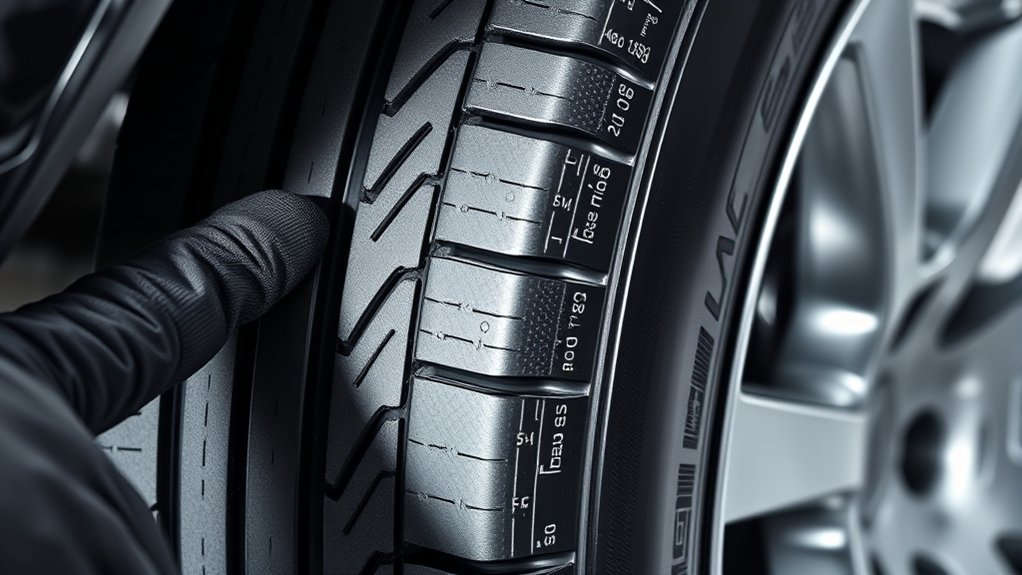
A 97W tire rating tells you two things at once: how much weight the tire can carry and the maximum sustained speed category it is built to handle under proper conditions. The number 97 is the load index, and the letter W is the speed rating. Before buying or mixing tires, always compare both ratings with your vehicle’s tire placard and owner’s manual.
Quick Answer
A 97W tire has a load index of 97, meaning it can carry up to 730 kg (1,609 lb) per tire when properly inflated. The W speed rating means the tire is rated for up to 168 mph (270 km/h) under specified test conditions.
Key Takeaways
- 97 is the tire’s load index, equal to 730 kg (1,609 lb) per tire.
- W is the speed rating, equal to 168 mph (270 km/h).
- A 97W rating is common on performance sedans, sporty crossovers, and some high-performance passenger tires.
- Replacement tires should meet or exceed the load index and speed rating required by your vehicle manufacturer.
- The tire’s load rating does not increase your vehicle’s payload, GVWR, or axle rating.
At a Glance
| Time Required | 5–10 minutes to check your tire sidewall, door-jamb placard, and owner’s manual. |
| Difficulty | Easy, as long as the sidewall code is readable. |
| Tools Needed | Owner’s manual, tire placard, flashlight, and an accurate tire-pressure gauge. |
| Cost | Free to check; tire-pressure gauges usually cost a few dollars if you do not already have one. |
97W Tire Rating Explained
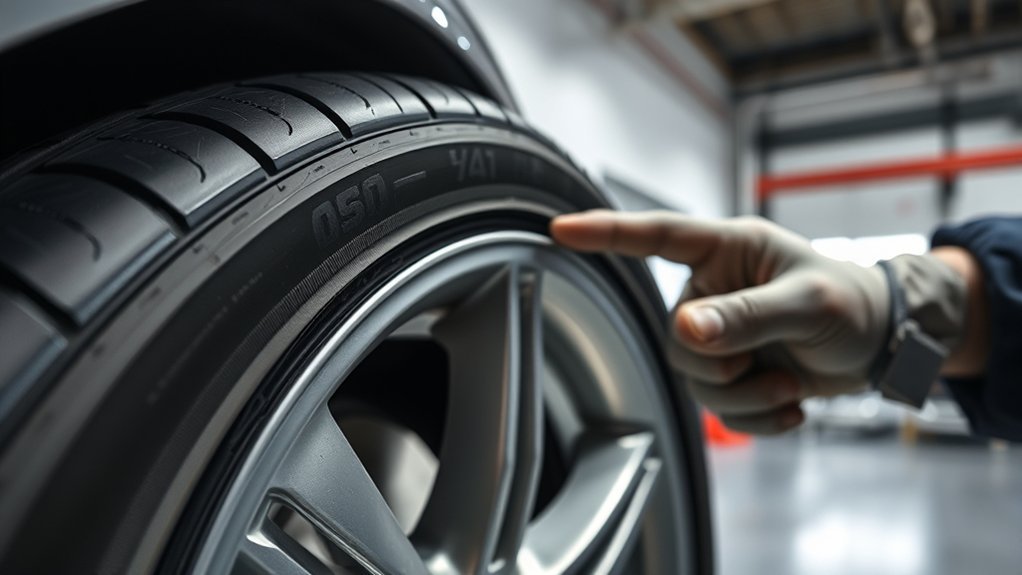
You will usually see 97W at the end of a tire size, such as 235/45R18 97W. In that example, 235/45R18 describes the tire size, while 97W is the service description. The service description combines the tire’s load index and speed rating.
- 97 = load index, or maximum weight capacity per tire.
- W = speed rating, or the tire’s tested maximum sustained speed category.
According to Tire Rack’s load index chart, load index 97 equals 1,609 lb (730 kg) per tire. According to Tire Rack’s speed rating guide, a W-rated tire is rated for 168 mph (270 km/h).
Note: A speed rating is not a recommended driving speed or permission to exceed posted speed limits. It is a tire-performance limit under specified conditions, with the tire properly inflated, not overloaded, and in good condition.
How Load Index 97 Affects Capacity
The 97 load index means one tire can carry up to 730 kg (1,609 lb) when it is properly inflated and used within its design limits. On paper, four 97-rated tires have a combined tire capacity of 2,920 kg (6,436 lb).
That number does not mean your vehicle can safely carry 6,436 lb of passengers and cargo. Your real limit is still set by the vehicle manufacturer’s payload rating, GVWR, GAWR, suspension, brakes, wheels, and the pressure shown on the tire placard.
Warning: Never use tire load capacity alone to decide how much weight your vehicle can carry. Check the Tire and Loading Information Label, owner’s manual, and axle ratings before hauling heavy cargo or towing.
For most drivers, the practical rule is simple: choose replacement tires with a load index that meets or exceeds the load index specified by the vehicle manufacturer. Going lower can increase heat buildup, reduce stability, and raise the risk of tire damage or failure.
What the W Speed Rating Means
A W speed rating means the tire is rated for up to 168 mph (270 km/h) under controlled test conditions. W-rated tires are often used on performance cars, sports sedans, and some higher-performance crossovers because they are built to manage higher heat and speed demands than lower-rated touring tires.
Here is how W compares with nearby common speed ratings:
| Rating | Max Speed | Common Use |
| H | 130 mph / 210 km/h | Sedans, coupes, some crossovers |
| V | 149 mph / 240 km/h | Sport sedans and performance touring tires |
| W | 168 mph / 270 km/h | High-performance passenger tires |
| Y | 186 mph / 300 km/h | Ultra-high-performance tires |
A higher speed rating can come with sharper handling and stronger heat resistance, but it is not automatically the best choice for every vehicle. The right choice is the rating your manufacturer requires, plus the correct size, load index, load range, wheel fitment, and inflation pressure.
Can You Mix 97W With Other Tires?
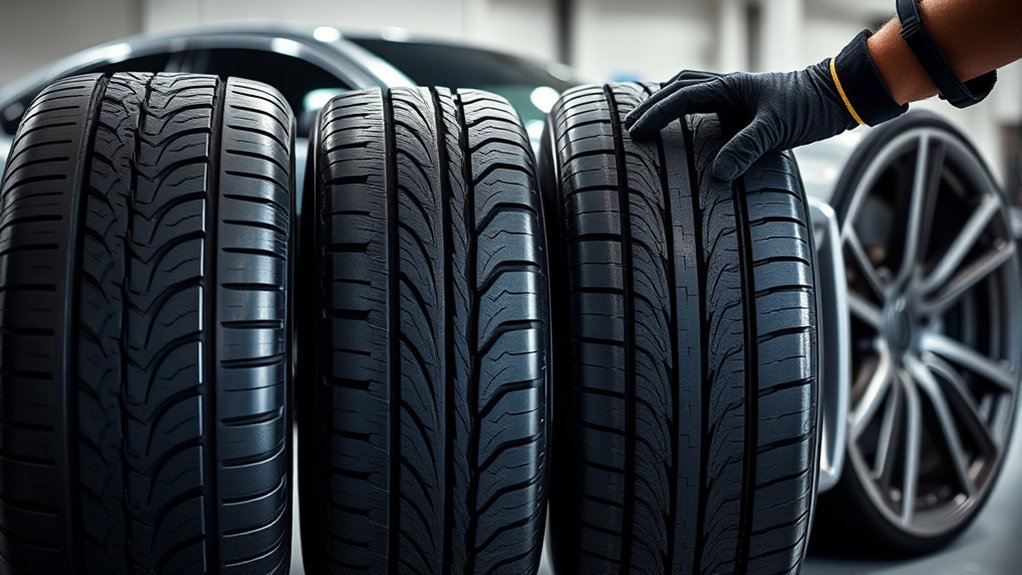
Mixing a 97W tire with a different load index or speed rating is not ideal. Tires on the same axle should match in size, construction, load index, speed rating, tread pattern, and wear level as closely as possible. A mismatch can change steering feel, braking balance, traction, and stability-control behavior.
If you must replace only one or two tires, follow these rules:
- Match the size first. Use the size listed on your vehicle placard or approved by the manufacturer.
- Do not go below the required load index. If the vehicle specifies 97, choose 97 or higher.
- Do not go below the required speed rating. If the vehicle specifies W, choose W or higher unless your manual allows a special exception, such as certain winter tires.
- Keep the same axle matched. Avoid putting different ratings or tread types side by side on the same axle.
- Ask a tire professional if your vehicle has staggered sizes, run-flat tires, EV-specific tires, or unusual load requirements.
Pro Tip: If you are comparing 97W with 97Y, the load capacity is the same, but the Y tire has a higher speed rating. If you are comparing 97W with 96W, the speed rating is the same, but the 96 tire carries less weight.
[Products Worth Considering]

ETENWOLF T300 is a calibrated digital tire pressure gauge designed for reliable readings across low and high pressure ranges. It includes thermal compensation for stable performance in extreme cold or heat, an LED light for visibility, and an auto shut-off to help preserve battery life. Ideal for pickups, RVs, and heavy-duty vehicles, it delivers accurate PSI measurements with sturdy durability.

The Tymate TM12 RV TPMS delivers real-time tire pressure and temperature monitoring with a stable 433Hz display for safer long-distance driving. It supports simultaneous monitoring across vehicle and trailer zones, includes six alarm modes for pressure, temperature, leakage, battery, and signal loss, and features easy DIY installation with auto calibration. Power is supplied via USB-C charging or solar recharging, with a wide 0–144 PSI range and up to 50 ft signal coverage for RVs and towable trailers.

Keep your tires properly inflated with this analog VONDIOR tire pressure gauge, designed for fast, easy readings without batteries. The swiveling, two-axis hose and large glow dial help you measure at any tire angle with instant visibility. Built with a protective rubber shield, it supports durable, low-maintenance use for cars and trucks.
How to Match 97W to Your Vehicle
To decide whether 97W is correct for your vehicle, start with the information the vehicle manufacturer provides. Michelin recommends checking the tire placard, owner’s manual, or a trained tire professional when selecting replacement tires, and NHTSA says the proper tire size and cold inflation pressure are listed on the Tire and Loading Information Label or in the owner’s manual.
[Products Worth Considering]

Monitor tire tread wear with a smart, color-coded depth gauge that shows clear condition ranges at a glance. The bar is range marked for fast, easy readings, helping you maintain safer traction and performance. Each gauge is portable with a pocket clip, and the set includes 20 units for daily use and sharing.

The SAFELIFE dial tire tread depth gauge measures tread depth in 1/32 inch increments with clear, easy-to-read 2-inch dial face. Color zones using a traffic light system help you quickly judge whether tread is low, marginal, or ample for safer driving. Built with a durable zinc cast body and a metal detect probe for precise, comfortable use across cars, motorcycles, trucks, and buses.

This manual duck head tire changer kit makes tire installation and removal simpler by letting you embed the duck head into the tire with applied pressure. The integrated design and durable steel construction help reduce friction and improve efficiency and safety during use. Suitable for 16–21 inch wheels, it’s convenient for cars, trucks, SUVs, and ATV tires, with 24-hour after-sales support.
Step 1: Find the required tire size and rating
Look on the driver’s door jamb, fuel door, glove box, or owner’s manual for the tire placard. You may see a full code such as 235/45R18 97W. Match the full code, not just the 97W part.
Step 2: Compare the load index
If your placard calls for 97, use a tire with load index 97 or higher. Do not assume a lower number is close enough. Each step in the load index chart changes the weight capacity.
Step 3: Compare the speed rating
If your vehicle calls for W, choose W or higher. A Y-rated tire can meet or exceed the W speed rating if the rest of the fitment is correct. A V-rated or H-rated tire should not replace a W-rated tire unless the vehicle manufacturer specifically allows it.
Step 4: Check cold tire pressure
Set tire pressure to the vehicle manufacturer’s recommended cold pressure, not the maximum pressure molded on the tire sidewall. NHTSA recommends checking all tires, including the spare, at least once a month when the tires are cold.
Step 5: Watch for XL, HL, and run-flat markings
Some 97W tires may also be marked XL for Extra Load. If your original tires are XL, HL, run-flat, or EV-specific tires, replace them with tires that meet the same requirements unless your vehicle manufacturer or tire professional approves another option.
Common 97W Replacement Scenarios
Here is the safest way to think about common swaps:
- 97W to 97Y: Usually acceptable if the tire size, load range, construction, and fitment match. Same load index, higher speed rating.
- 97W to 98W: Usually acceptable if fitment matches. Higher load index, same speed rating.
- 97W to 97V: Not recommended unless the vehicle manufacturer allows it. Same load index, lower speed rating.
- 97W to 96W: Not recommended if the vehicle requires 97. Lower load index, same speed rating.
- 97W to a different size: Only do this if the alternate size is manufacturer-approved or verified by a qualified tire professional.
The safest replacement tire is not simply the highest-rated tire. It is the tire that matches the vehicle’s approved size, load index, speed rating, inflation pressure, and intended use.
[Products Worth Considering]

ETENWOLF T300 is a calibrated digital tire pressure gauge for accurate readings from 3 to 200 PSI across light and heavy-duty vehicles. It includes thermal compensation for reliable performance in extreme cold or heat, with an auto shut-off to extend battery life and an LED for easier reading. The sturdy design supports rugged everyday use, making it ideal for pickups, RVs, and industrial applications.

Upgrade your wheels with MIKKUPPA closed-end lug nuts designed for reliable fit and corrosion resistance. The one-piece, cold-forged and heat-treated steel construction helps resist rust and stripping, while the integrated finish delivers a durable black appearance. Built to OEM standards with a conical 60-degree seat, these nuts provide a secure solution for compatible Ford, Honda, Jeep, and Chevrolet models.

Measure tire tread depth quickly and accurately with this LUMITECO dial gauge that reads in 1/32" increments up to 14/32". The color-coded green/yellow/red zones make it easy to judge tire wear and know when replacement is needed. A rugged, compact design with a protective pouch helps keep the gauge ready for use on cars, trucks, motorcycles, and more.
Frequently Asked Questions
What is the difference between 97H and 97V tires?
97H and 97V tires have the same load index, so both carry up to 730 kg (1,609 lb) per tire when properly inflated. The difference is speed rating: H is rated up to 130 mph (210 km/h), while V is rated up to 149 mph (240 km/h). Use the rating your vehicle manufacturer requires.
Are V or W tires better?
W tires have a higher speed rating than V tires: W is rated up to 168 mph (270 km/h), while V is rated up to 149 mph (240 km/h). That does not make W automatically better for every driver. The better tire is the one that matches your vehicle’s required size, load index, speed rating, climate, and driving needs.
What is the difference between 97Y and 97W?
97Y and 97W tires have the same load index, so both carry up to 730 kg (1,609 lb) per tire. The difference is speed rating. W is rated up to 168 mph (270 km/h), while Y is rated up to 186 mph (300 km/h). A 97Y tire can exceed a 97W speed requirement if the tire size and all other fitment details are correct.
What does 97 mean on a tire?
97 is the tire load index. It means the tire can carry up to 730 kg (1,609 lb) when properly inflated and used within its rated limits. The number does not tell you the tire size, tread type, load range, or speed rating by itself.
Can I replace a 97W tire with a 98W tire?
Usually, yes, if the tire size, wheel fitment, load range, construction, and vehicle requirements all match. A 98W tire has a higher load index than 97W and the same W speed rating. Check the placard and owner’s manual before buying.
Does 97W mean the tire is a run-flat tire?
No. 97W only tells you the load index and speed rating. Run-flat tires use separate markings, which vary by brand, such as RFT, ROF, ZP, SSR, or other manufacturer-specific labels. If your vehicle came with run-flat tires, confirm the correct replacement type before switching.
Conclusion
When you see 97W on a tire, read it as two limits working together: 97 means the tire can carry up to 730 kg (1,609 lb), and W means it is speed-rated up to 168 mph (270 km/h). Those ratings matter, but they are only part of the full fitment. For safe replacement, match the full tire size, load index, speed rating, pressure requirement, and any XL, run-flat, or vehicle-specific markings listed by your manufacturer.
Sources
- Tire Rack — What Is Load Index? — supports load index 97 as 1,609 lb / 730 kg.
- Tire Rack — How Do I Check a Tire’s Speed Rating? — supports W speed rating as 168 mph / 270 km/h.
- Michelin — Tire Load Rating & Speed Rating Explained — supports checking the vehicle placard, owner’s manual, and manufacturer-required ratings.
- NHTSA TireWise — Tire Safety Ratings and Awareness — supports cold tire-pressure checks, placard guidance, and tire maintenance safety.
- eCFR 49 CFR 571.110 — Tire Selection and Rims — supports axle/tire load-rating requirements for motor vehicles under the federal standard.

