
A tire marked 97V uses a service description to show two operating limits. The number 97 is the load index, and the letter V is the speed rating. Together, they help you confirm whether a tire is suitable for your vehicle, but they do not replace the tire size, load-range marking, door-jamb placard, or owner’s manual.
Quick Answer
On a tire, 97V means a load index of 97 and a V speed rating. Load index 97 equals 1,609 pounds (730 kg) per tire under specified conditions, while V corresponds to 149 mph (240 km/h). Use the vehicle placard and owner’s manual to confirm the required ratings.
Key Takeaways
- 97 is the load index: 1,609 pounds or 730 kg per tire under specified conditions.
- V is the speed symbol: up to 149 mph or 240 km/h under specified test conditions.
- The rating normally appears after the tire size, such as P225/60R16 97V.
- A speed rating is not permission to drive at that speed and does not, by itself, prove better grip, braking, or tread life.
- Replacement tires should meet the vehicle manufacturer’s size, load, construction, and speed requirements.
What Does 97V Mean on a Tire?
A tire marked 97V has a load index of 97 and a V speed rating. According to a standardized load-index chart, 97 corresponds to 1,609 pounds per tire. The V symbol corresponds to 149 mph (240 km/h) under specified conditions.
The two characters are called the tire’s service description. They are operating ratings, not dimensions. A tire can have the correct 97V service description and still be wrong for your vehicle if its width, aspect ratio, wheel diameter, load range, construction, or approved fitment does not match.
Note: A V rating is a tested speed capability, not a recommended cruising speed. It does not override posted speed limits, road conditions, tire damage, inflation requirements, or the vehicle manufacturer’s limits.
How Do You Decode 97V in a Tire Size?
In a marking such as P225/60R16 97V, the last number and letter form the service description. The complete code reads as follows:
| Marking | Meaning |
|---|---|
| P | Passenger-vehicle tire designation when present |
| 225 | Nominal section width in millimeters |
| 60 | Aspect ratio: sidewall height is 60% of the nominal width |
| R | Radial construction |
| 16 | Wheel diameter in inches |
| 97 | Load index: 1,609 pounds (730 kg) per tire under specified conditions |
| V | Speed rating: 149 mph (240 km/h) under specified conditions |
You will usually find this code molded into the tire sidewall. The vehicle’s recommended tire size and cold inflation pressure are normally listed on the driver-side door-jamb placard and in the owner’s manual. A tire already fitted to the vehicle may be incorrect, so do not use the current sidewall as your only reference.
What Does the Load Index 97 Mean?
A load index of 97 means one tire has a rated load capacity of 1,609 pounds (730 kg) under the conditions defined for that tire. The rating applies to each tire separately. It does not mean you can safely load a four-tire vehicle to 6,436 pounds, because the vehicle’s gross vehicle weight rating, gross axle weight ratings, wheel limits, suspension, and weight distribution may set lower limits.
[Products Worth Considering]
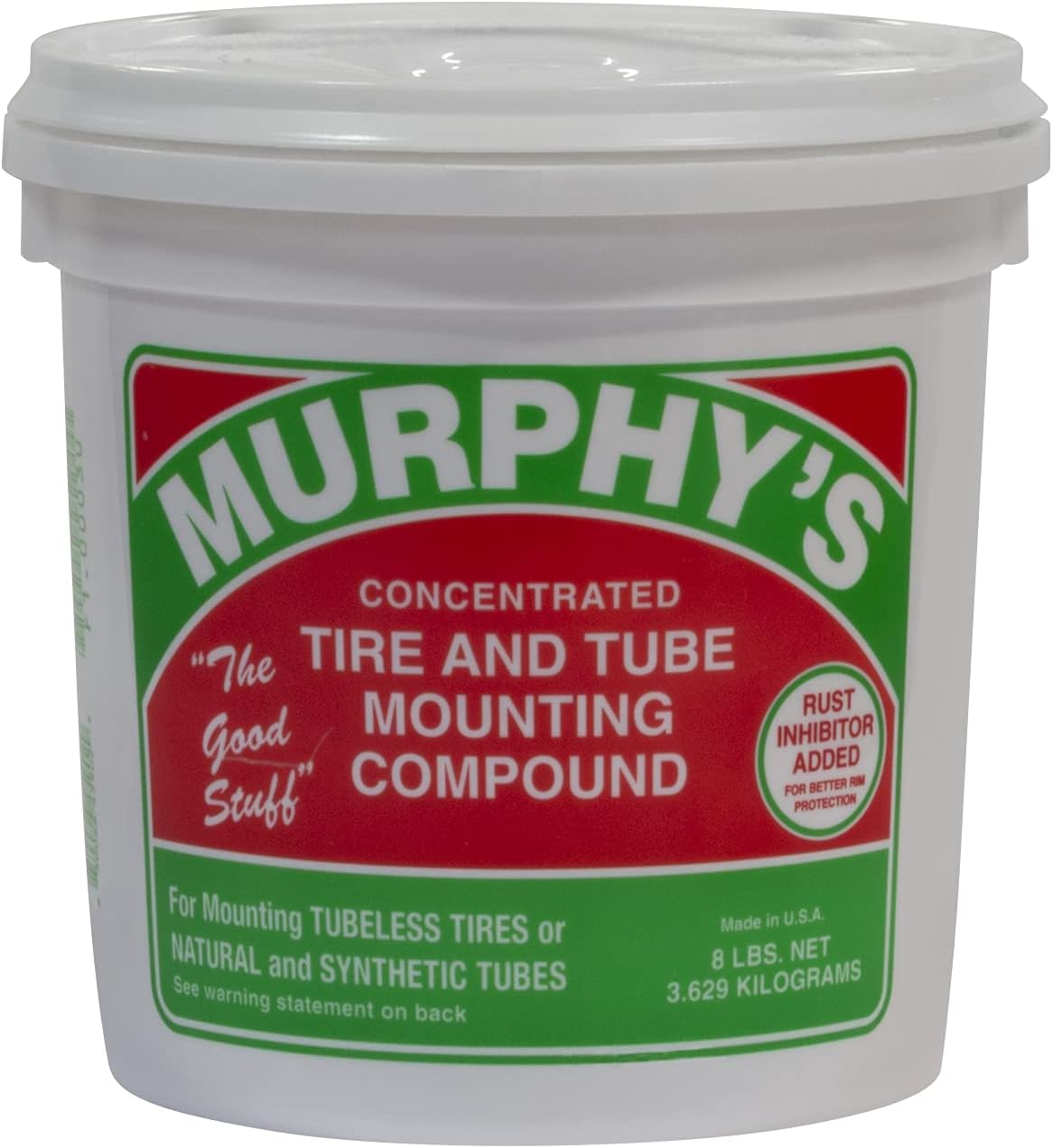
A concentrated tire and tube mounting compound designed to help simplify mounting rubber tires and tubes on passenger, semi truck, construction, and OTR applications. Its ultra-thick formula packs beads effectively and includes rust inhibitors to help protect against corrosion during use.

The Continental Grand Prix 5000 is an allround road bike tire engineered for faster rolling, improved ride comfort, and enhanced puncture protection. It features a Vectran Breaker cut-protection layer, Lazer Grip micro-profile tread for confident cornering control, and Active Comfort Technology to damp vibration for smoother rides. BlackChili compound optimizes grip and speed for everyday performance and long-lasting confidence.

This manual duck head tire changer kit makes tire installation and removal simpler by letting you embed the duck head into the tire with applied pressure. The integrated design and durable steel construction help reduce friction and improve efficiency and safety during use. Suitable for 16–21 inch wheels, it’s convenient for cars, trucks, SUVs, and ATV tires, with 24-hour after-sales support.
Load Capacity Meaning
The load index is a lookup code, not a direct pound value. Higher index numbers generally correspond to higher load capacities. For nearby passenger-tire ratings:
- 95 = 1,521 pounds (690 kg) per tire
- 96 = 1,565 pounds (710 kg) per tire
- 97 = 1,609 pounds (730 kg) per tire
- 98 = 1,653 pounds (750 kg) per tire
- 99 = 1,709 pounds (775 kg) per tire
To use that capacity safely, the tire must be the correct type and size, be mounted on an approved wheel, be in sound condition, carry an appropriate load, and be inflated according to the vehicle and tire manufacturer’s requirements.
Warning: Do not use the maximum pressure molded on the tire sidewall as your routine inflation target. The correct cold pressure comes from the vehicle’s tire placard or owner’s manual. Underinflation and overloading can increase heat buildup and the risk of tire damage or failure.
Where 97 Fits
Load index 97 is common on many passenger-car and crossover tire sizes, but it is not automatically right for every midsize vehicle. The same load index can appear on different tire sizes and on both Standard Load and Extra Load tires. Check the complete specification, including any XL, HL, run-flat, or manufacturer-approval marking required by the vehicle.
Load index 97 means 1,609 pounds per tire; it does not increase the vehicle’s factory payload, axle, or towing limits.
What Does the V Speed Rating Mean?
A V speed rating corresponds to a maximum tested speed capability of 149 mph (240 km/h) under specified conditions. The rating assumes a properly loaded, properly inflated, undamaged tire. It does not guarantee safe operation at that speed on public roads or in real-world weather, traffic, and pavement conditions.
V Rating Meaning
The speed symbol primarily communicates high-speed capability and heat resistance under a standardized test system. It does not, by itself, tell you how quickly the tire stops, how well it corners, how quiet it is, or how long the tread will last. Those qualities depend on the tire’s full design, compound, construction, tread pattern, condition, and test results.
For predictable handling, use the vehicle manufacturer’s specified rating and avoid mixing tires with different sizes, constructions, tread types, or speed capabilities unless the owner’s manual or a qualified tire professional specifically approves the arrangement.
V Speed Limit
| Speed Symbol | Maximum Rated Speed | Key Point |
|---|---|---|
| H | 130 mph (210 km/h) | Lower maximum speed than V |
| V | 149 mph (240 km/h) | The rating in 97V |
| W | 168 mph (270 km/h) | Higher maximum speed than V |
| Y | 186 mph (300 km/h) | Higher maximum speed than W |
A higher speed symbol is not automatically “better” for every driver. It may come with different ride, cost, wear, and performance characteristics. The correct choice is the tire that meets the vehicle maker’s requirements and suits the intended conditions.
How Are Tire Speed Ratings Tested?
Speed ratings come from standardized high-speed testing in a controlled environment. A new, undamaged tire is tested under defined load, inflation, temperature, and speed conditions to show that it can withstand the required test level. The symbol summarizes that laboratory capability; it is not a road test of wet braking, cornering grip, comfort, or tread life.
Real-world capability can be reduced by underinflation, overloading, punctures, impact damage, repairs, aging, excessive wear, heat, or incorrect fitment. That is why the rating should be treated as an operating limit rather than a performance target.
Why Do Load and Speed Ratings Matter?
Load and speed ratings help a tire carry the vehicle’s weight and manage heat and stress within its design limits. A load index that is too low can leave the tire without enough capacity for the weight placed on it. A speed rating below the vehicle’s requirement can reduce the vehicle’s speed capability and may change handling.
Ratings also matter during normal driving, even when you never approach 149 mph. The manufacturer selected the original specification as part of the vehicle’s overall handling, braking, stability, and load-carrying package. Staying within that specification helps the vehicle respond as intended.
- Load index: confirms per-tire carrying capacity.
- Speed rating: confirms tested maximum-speed capability under specified conditions.
- Correct inflation: helps the tire carry its assigned load and control heat.
- Matched fitment: supports balanced handling across the vehicle.
[Products Worth Considering]

This 62-inch extra-long car wash brush kit makes it easy to clean hard-to-reach areas on cars, trucks, SUVs, and RV roofs with lightweight, sturdy poles. It includes soft, non-scratch microfiber and bristles with protective bumpers to help prevent scratches while cleaning effectively. A rubber squeegee helps remove water stains quickly, plus a wheel/tire brush and absorbent towels for complete exterior detailing.
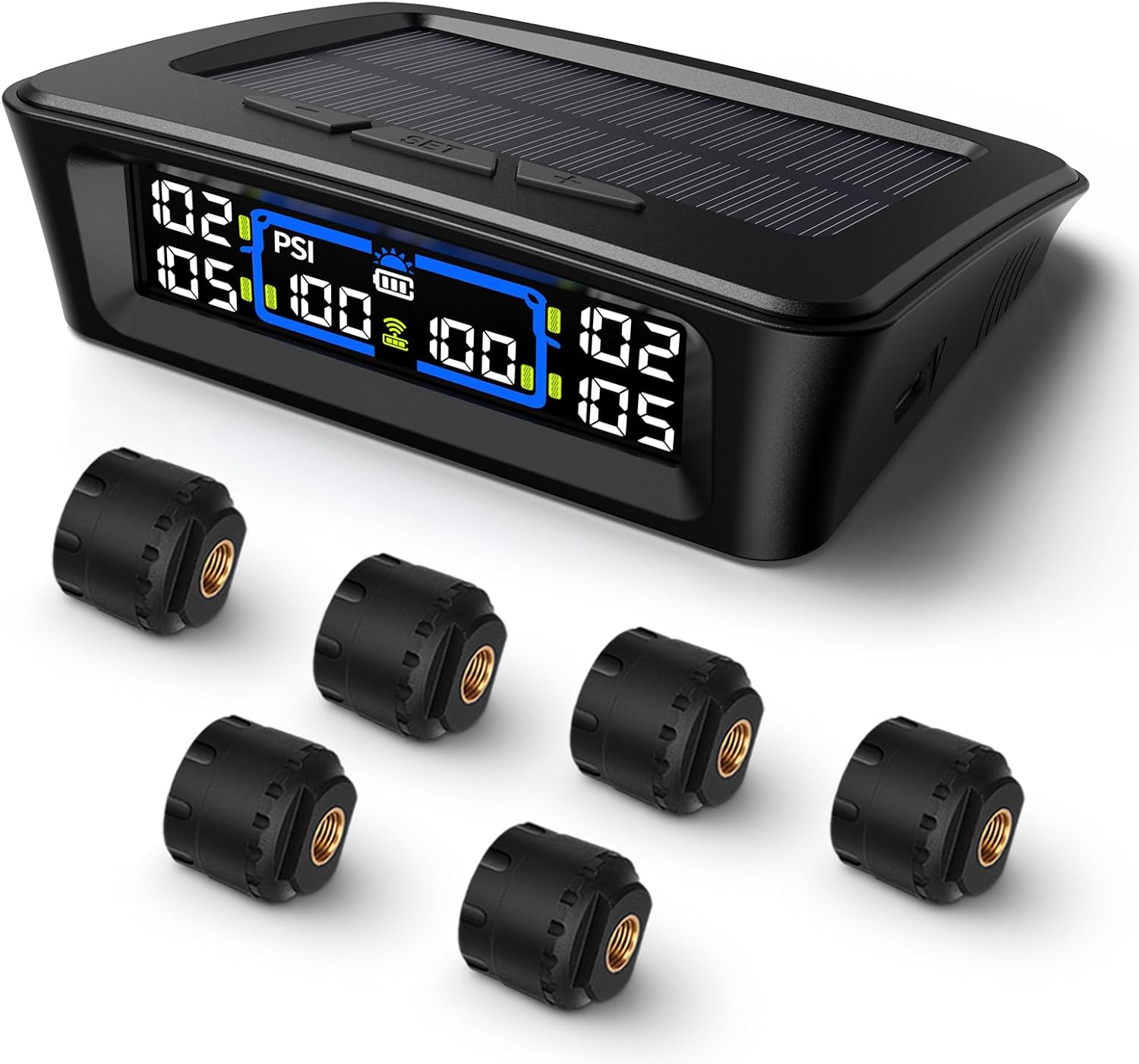
The Tymate TM12 RV TPMS delivers real-time tire pressure and temperature monitoring with a stable 433Hz display for safer long-distance driving. It supports simultaneous monitoring across vehicle and trailer zones, includes six alarm modes for pressure, temperature, leakage, battery, and signal loss, and features easy DIY installation with auto calibration. Power is supplied via USB-C charging or solar recharging, with a wide 0–144 PSI range and up to 50 ft signal coverage for RVs and towable trailers.

This tire inflator with pressure gauge delivers long-lasting performance with a durable rubber-protected gauge and sturdy build. The longer hose and 360 swivel air chuck help you seal the valve securely and keep your hands free while measuring, inflating, or deflating. It’s battery-free for reliable use and provides ±2 PSI accuracy in the mid-range for most typical tires, with universal compatibility for 1/4 NPT compressor outputs.
Can You Replace 97V With a Different Rating?
You can usually replace a 97V tire with a tire that has the same approved size and an equal or higher load index. A higher load index does not increase the vehicle’s factory payload or axle limits. For speed rating, the safest general rule is to meet or exceed the vehicle manufacturer’s specification.
A lower speed rating is generally not recommended. One recognized exception is an approved winter-capable fitment, such as certain tires marked with the three-peak mountain snowflake symbol, when the vehicle or tire manufacturer permits it. In that case, the vehicle’s maximum speed is limited to the lowest speed-rated tire installed, and the driver must follow that lower limit.
Pro Tip: Check the driver-side placard and owner’s manual before shopping, then compare the complete marking—not just 97V. Confirm tire size, service description, Standard Load or XL/HL status, run-flat requirements, and any vehicle-manufacturer approval code.
When possible, use matching tires at all four positions. If different speed ratings are installed, the vehicle’s speed capability is limited by the lowest rating, and handling may change. Follow the owner’s manual and have unusual fitments reviewed by a qualified tire professional.
[Products Worth Considering]

This Rhino USA tire pressure gauge with inflator combines an analog dial, locking chuck, and bleed valve in one no-battery tool for inflating, checking, and bleeding in a single connection. It fits standard 1/4" NPT air compressor fittings and is built for reliable shop, roadside, and fleet use on cars, trucks, motorcycles, SUVs, RVs, and trailers. A lifetime replacement helps keep your tire maintenance routine covered.

This AstroAI 2-pack pencil tire pressure gauge delivers accurate tire readings across common vehicle types, with a precision nozzle that seals on valve stems for reliable results. It measures PSI, kPa, and BAR within a 10–75 PSI range, includes an integrated deflator valve, and features an ABS indicator bar for easier pressure checks. A compact, pocket-friendly design and battery-free operation make it ideal for road trips and everyday maintenance.
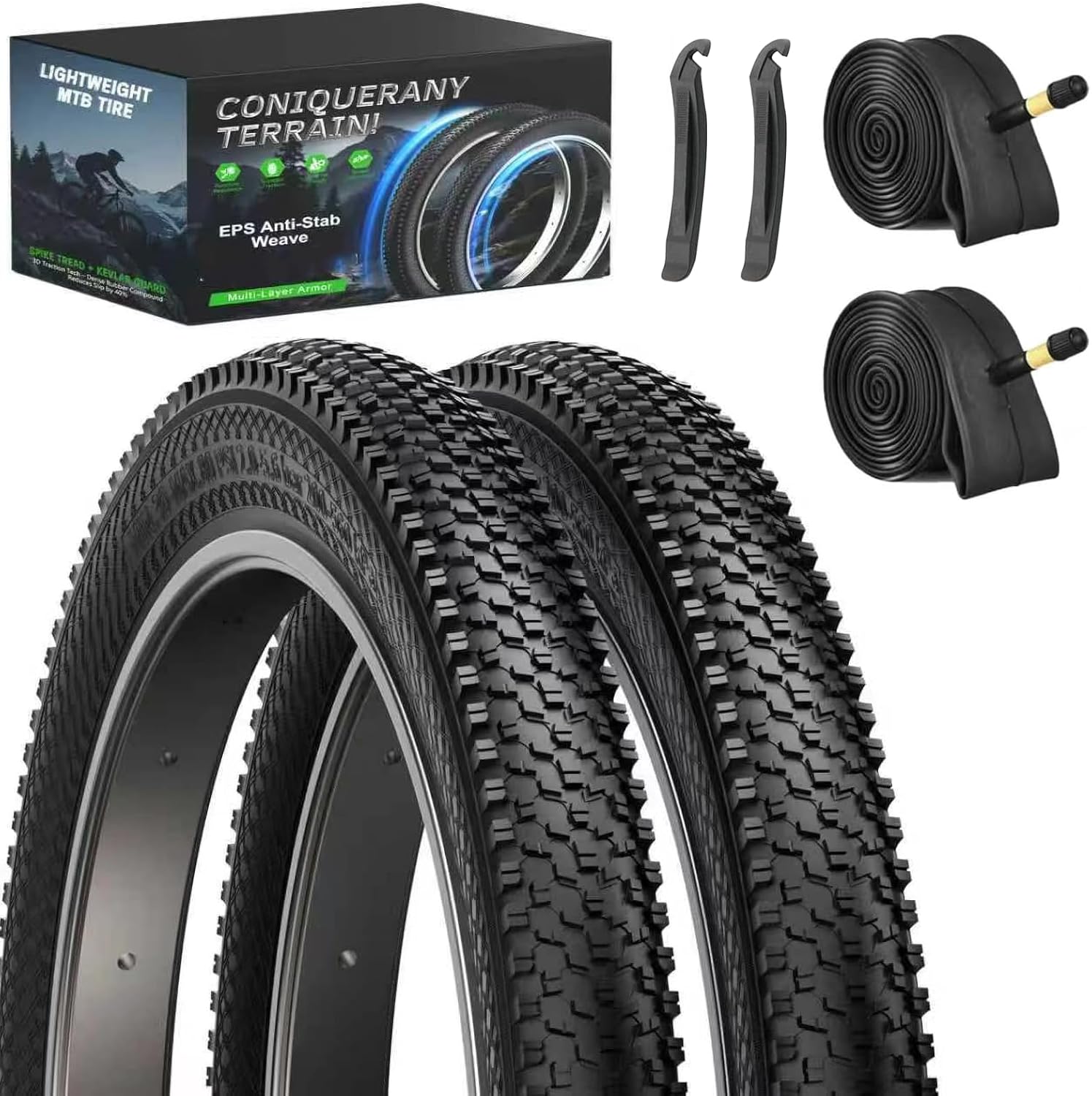
This 2-pack set includes two folding mountain bike tires, two inner tubes, and two tire levers for quick, budget-friendly replacements. The tires feature an anti-stab weave for added protection, plus strong grip and durable construction to help you stay stable across common trail and road conditions. Foldable design makes storage and travel convenient, while the included tubes provide a matched fit for smoother setup.
How Do You Read Your Tire Sidewall?
Start with the size and service description, then check the other safety markings molded into the sidewall:
- Tire size: width, aspect ratio, construction, and wheel diameter.
- Service description: load index and speed symbol, such as 97V.
- Load range: markings such as SL, XL, HL, or an LT load range where applicable.
- Maximum load and pressure: the tire’s limits, not the vehicle’s routine inflation target.
- DOT tire identification number: includes the manufacturing date code at the end.
- Special markings: run-flat, rotation direction, inside/outside mounting, winter-service symbols, or vehicle-manufacturer approvals.
Compare those markings with the vehicle placard and owner’s manual. If the sidewall is damaged, the tire has been repaired, or the markings do not match the vehicle requirements, ask a qualified tire professional to inspect the fitment.
Frequently Asked Questions
What Tire Rating Is Better, H or V?
Neither rating is universally better. H is rated to 130 mph, while V is rated to 149 mph. Use the rating required by the vehicle manufacturer. The speed symbol alone does not prove that one tire has better grip, braking, comfort, or tread life than another.
What Does 225/55R17 97V Mean?
It describes a tire that is 225 mm wide, has an aspect ratio of 55, uses radial construction, fits a 17-inch wheel, has a load index of 97, and carries a V speed rating. The 97 rating equals 1,609 pounds (730 kg) per tire, and V equals 149 mph (240 km/h) under specified conditions.
Is 98V or 98H Better?
Both have load index 98, which equals 1,653 pounds (750 kg) per tire. The difference is speed capability: V is 149 mph and H is 130 mph. Choose the one that meets the vehicle manufacturer’s specification rather than assuming the higher letter is always the better tire.
Is W or V Better for Tires?
W has a higher maximum rated speed than V: 168 mph versus 149 mph. That does not automatically make every W-rated tire better for your vehicle. Fitment, load index, construction, season, ride, wear, braking, and the vehicle maker’s requirements all matter.
Can I Use 97H Instead of 97V?
The load capacity is the same, but 97H has a lower speed rating. Do not make the substitution unless the vehicle manufacturer or a qualified tire professional approves it. Approved winter fitments may use a lower speed rating, but the vehicle must stay within the lower tire rating.
Does 97V Mean the Tire Should Be Inflated to Its Sidewall Maximum?
No. Use the vehicle manufacturer’s recommended cold pressure on the driver-side tire placard or in the owner’s manual. The maximum pressure on the tire sidewall is a tire limit, not the normal pressure recommendation for every vehicle using that tire.
Can Four 97-Rated Tires Carry 6,436 Pounds?
That is the simple sum of four tire ratings, but it is not automatically the vehicle’s allowable weight. The vehicle’s GVWR, front and rear GAWR, wheel ratings, suspension limits, tire pressure, and weight distribution can all impose lower limits.
Conclusion
A 97V marking is straightforward once you separate the two parts: 97 means a maximum rated load of 1,609 pounds (730 kg) per tire under specified conditions, and V means a tested speed capability of 149 mph (240 km/h). The safe replacement choice still depends on the complete tire size, load range, inflation pressure, vehicle placard, and owner’s manual. Match the vehicle’s specification instead of choosing by one number or letter alone.
Sources
- Michelin USA: Tire Load Rating and Speed Rating — service descriptions, replacement guidance, V rating, XL tires, and winter-rating exception.
- Pirelli: Tire Load Index and Chart — load index 97 equals 1,609 pounds per tire.
- Goodyear: Tire Speed Rating — speed-rating chart and limits of what the rating indicates.
- NHTSA TireWise — vehicle placard, correct cold inflation pressure, replacement size, and tire-safety guidance.
