
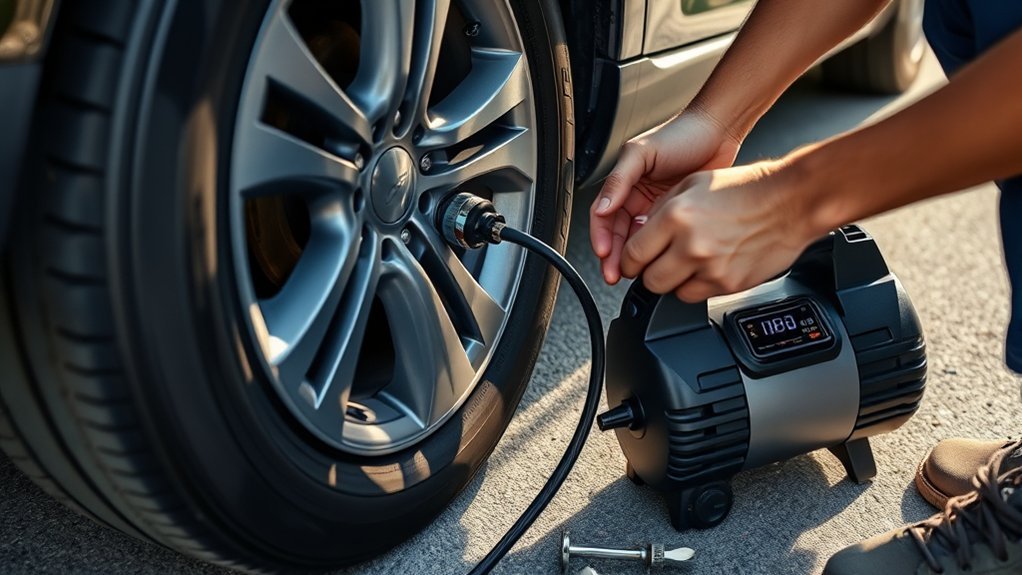
Using a tire air compressor is simple once you know the correct order: find your vehicle’s recommended PSI, check the tire while it is cold, attach the inflator securely, add air slowly, and confirm the pressure with a gauge. The key is to use the pressure listed on your driver’s door placard or owner’s manual, not the maximum PSI printed on the tire sidewall.
Quick Answer
To use a tire air compressor, check the recommended cold PSI on the driver’s door placard or owner’s manual, remove the valve cap, press the chuck firmly onto the valve stem, inflate in short bursts, verify pressure with a gauge, then replace the valve cap and check for leaks.
Key Takeaways
- Use the PSI listed on your vehicle’s Tire and Loading Information Label or owner’s manual.
- Check pressure when tires are cold, before driving or after the vehicle has been parked for at least three hours.
- Attach the compressor chuck straight and firmly so air does not leak around the valve stem.
- Inflate slowly, pause often, and verify the reading with a reliable tire pressure gauge.
- Do not inflate a tire with visible damage, bulges, cracks, or exposed cords.
At a Glance
| Time Required | 5 to 10 minutes per tire |
| Difficulty | Easy |
| Tools Needed | Tire air compressor, tire pressure gauge, valve cap, soapy water, gloves, and safety glasses |
| Cost | Usually free if you already own a compressor; otherwise the cost depends on the inflator and gauge you choose |
Check the Recommended PSI
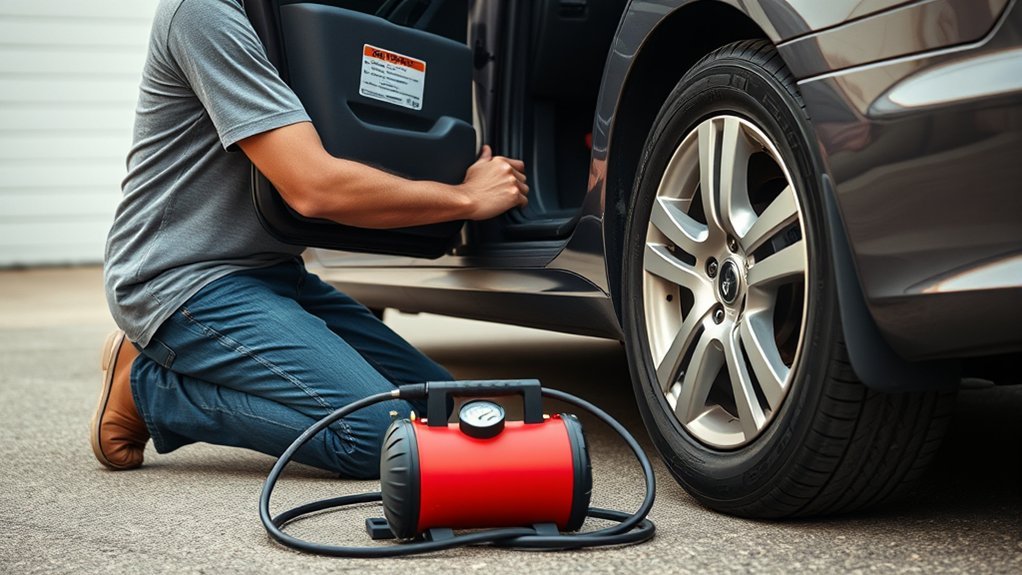
Before you inflate a tire, find the recommended tire pressure for your exact vehicle. The best place to look is the Tire and Loading Information Label on the driver’s side door edge or doorjamb. You can also check your owner’s manual.
Do not use the maximum PSI printed on the tire sidewall as your normal target. That number describes a tire limit, not the pressure your vehicle manufacturer chose for ride quality, handling, load, and braking. Some cars sit near the low 30s, while many SUVs, vans, and trucks use different pressures. Your placard is the final answer.
For the most accurate reading, check pressure when the tires are cold. That means the vehicle has not been driven for at least three hours, or it has only moved a very short distance at low speed.
Warning: Do not inflate a tire that has a bulge, deep cut, exposed cord, cracked sidewall, damaged valve stem, or severe tread damage. Install the spare or call roadside help instead. Adding pressure to a damaged tire can make the failure worse.
Gather Your Tire Inflation Tools
Set out everything before you start. You need a tire air compressor, a reliable tire pressure gauge, a clean tire chuck or inflator nozzle, and the valve cap from the tire. Gloves and safety glasses are smart additions, especially if you are using a portable compressor near the road or in a dusty garage.
Make sure the compressor matches the power source you plan to use. A small 12V inflator may plug into your vehicle’s accessory outlet, while a larger compressor may need a household outlet. Follow the compressor manual, place the unit on a stable surface, and keep the hose away from moving parts, hot exhaust pieces, and sharp edges.
[Products Worth Considering]

This tire inflator with pressure gauge delivers long-lasting performance with a durable rubber-protected gauge and sturdy build. The longer hose and 360 swivel air chuck help you seal the valve securely and keep your hands free while measuring, inflating, or deflating. It’s battery-free for reliable use and provides ±2 PSI accuracy in the mid-range for most typical tires, with universal compatibility for 1/4 NPT compressor outputs.

This tire air chuck with clip adapter helps you connect a vehicle inflator nozzle securely for faster, easier tire inflation. The brass locking design aims to prevent leaks and keeps the connection stable while you fill tires. Ideal for use with compatible air compressors and pumps with an 8mm connection.

The JACO FlowPro Tire Inflator measures, inflates, and airs down tires up to 100 PSI with battery-free operation and ±2% accuracy after calibration. It features a glowing pressure dial for night visibility, a heavy-duty steel build with a hybrid hose, and a precision push-to-inflate thumb trigger. The patented Lightning Air Chuck locks on for a secure seal, and the kit includes quick-connect hardware for easy inline use with your air compressor.
Essential Inflation Tools
- Tire pressure gauge: Use it before and after inflation so you do not rely only on the compressor’s built-in gauge.
- Air compressor or portable inflator: Choose one that can reach your vehicle’s required PSI.
- Tire chuck or nozzle: This creates the seal between the hose and the valve stem.
- Valve cap: Keep it nearby so you can reinstall it right away.
- Soapy water: Use it after inflation to check for bubbles around the valve stem or bead.
Safety Gear Checklist
Wear eye protection if you are working near road debris, dust, or a dirty wheel well. Gloves help you grip the chuck and protect your hands from hot parts, rough wheels, and sharp valve-stem edges. If the compressor becomes very hot, switch it off and let it cool according to the manufacturer’s instructions.
Prepare the Tire Valve Stem
Locate the valve stem on the wheel and wipe away dirt or grit before you remove the cap. A clean valve area helps the chuck seal tightly and reduces the chance of dirt entering the valve.
Remove Valve Cap
Turn the valve cap counterclockwise and place it in your pocket, cup holder, or another safe spot. Do not leave it loose on the ground where it can roll away. A missing valve cap will not usually cause instant pressure loss, but it helps block dust, moisture, and road grime from the valve.
| Step | Action | Purpose |
|---|---|---|
| 1 | Clean the valve area | Helps the chuck seal correctly |
| 2 | Remove the valve cap | Exposes the valve stem |
| 3 | Inspect the stem | Catches cracks, corrosion, or leaks early |
Inspect Stem Condition
Look for cracks, corrosion, bends, missing pieces, or bubbling around the valve stem. If the stem looks damaged or air leaks from it, do not depend on repeated top-offs. Have the valve serviced or replaced by a tire professional.
Secure a Clean Connection
Press the inflator nozzle straight onto the valve stem. If it is a clip-on chuck, push it down until it locks. If it is a screw-on chuck, thread it on carefully so you do not cross-thread the valve. A short hiss while connecting is normal, but steady hissing means the chuck is not seated correctly.
Pro Tip: Keep one hand on the chuck for the first few seconds. If the gauge jumps, drops, or hisses constantly, remove the chuck and reconnect it straight.
Connect the Air Compressor
Place the compressor on a flat, stable surface close enough for the hose to reach without stretching. Connect the air hose to the compressor if it is not already attached, then connect the power source. Keep the compressor away from puddles and avoid running the cord where someone can trip over it.
Attach the nozzle to the valve stem and check for a tight seal before you add air. If the connection leaks, stop and reseat the chuck. Power tools and compressors can cause injuries when used or maintained incorrectly, so follow the manufacturer’s instructions and basic hand and power tool safety practices.
[Products Worth Considering]

This EVOULTES 2-way air chuck set includes a dual head closed flow air chuck and a ball head chuck for versatile tire inflation. It connects easily to air lines, inflator gauges, and compressors using 1/4" NPT threads and includes two 1/4" male quick plugs for fast coupling. Built with durable metal construction and sealed threads using Teflon tape to help prevent air leaks, it’s ideal for inflating Schrader valve tires across cars, bikes, and motorcycles.

This all-in-one air compressor accessories kit includes a tire inflator with gauge for car tires and a combined air chuck setup for easier inflation. It also features a durable 1/4 inch polyurethane air hose for connecting compressors to air tools, plus a heavy-duty blow gun and industrial hose fittings for cleaning and routine projects. Ideal for keeping your air system ready for inflating, cleaning, and quick-connect tool use.

This ALL-TOP auto-stop tire deflator valve kit lets you air down off-road tires quickly without watching pressure, automatically stopping when your preset PSI is reached. Each valve is individually calibrated for reliable performance with an acceptable +/- 2 PSI tolerance. The adjustable deflator range covers 10 to 30 PSI and includes four valves plus valve caps and a zipper pouch for easy setup on trucks, SUVs, RVs, UTVs, and powersports.
Set the Target PSI
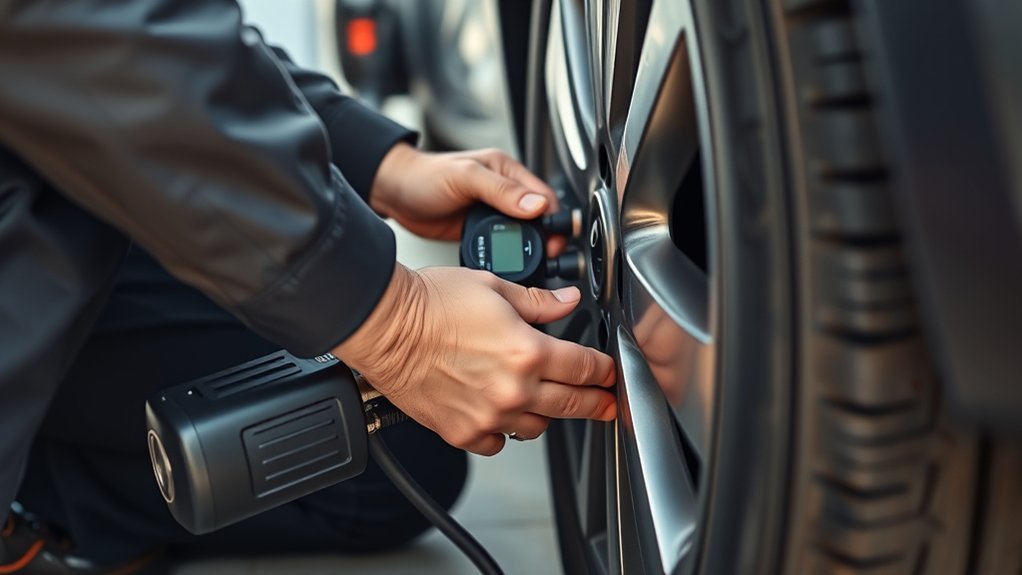
If your inflator has a digital preset or automatic shut-off, set it to the cold PSI listed on your vehicle’s placard. If it does not have a preset, use the compressor gauge as a guide and confirm the final number with your separate tire pressure gauge.
If the tire is warm because you just drove, do not bleed air down to the placard number while the tire is hot. Warm tires can read higher than cold tires. If you must add air on the road, add enough to reach a safe level, then recheck and adjust when the tires are cold.
Proper tire pressure affects safety, tire durability, and fuel consumption. Checking pressure monthly is one of the simplest tire-maintenance habits you can build.
Begin Inflating the Tire
Start the compressor and let air flow into the tire. Watch the gauge as pressure rises. Add air slowly, especially when you are close to the target PSI. Small tires can reach the target quickly, and overfilling is easy if you leave the compressor running too long.
Start the Compressor
Turn on the compressor only after the chuck is secure. Listen for unusual rattling, repeated cycling, or strong hissing. Stop if the hose disconnects, the compressor overheats, or the pressure gauge does not move after several seconds.
| Action | What It Tells You |
|---|---|
| Gauge rises steadily | Air is flowing and the connection is likely sealed |
| Constant hissing | The chuck may not be seated correctly |
| Gauge does not move | The compressor, hose, chuck, or valve may have a problem |
| Compressor gets very hot | Stop and let it cool before continuing |
Attach the Chuck Securely
A secure chuck keeps air from escaping and gives you a more accurate reading. Push or twist the chuck onto the valve stem until it sits straight. If the chuck pulls sideways, remove it and reconnect it. A crooked connection can leak air and make the gauge reading unreliable.
Watch Pressure Rise
As the tire inflates, pause every few seconds near the target and check the pressure. This is especially important with compact portable inflators because some built-in gauges lag or read differently while air is flowing. When the reading reaches the target PSI, stop the compressor.
Stop at the Correct PSI
Stop when the tire reaches the recommended cold PSI from the vehicle placard. If you accidentally overinflate the tire, press the valve core briefly with the tip of a pressure gauge to release a small amount of air, then check again. Repeat until the reading matches the target.
Check all four tires, and check the spare if your vehicle has one. Some compact spare tires use much higher pressure than regular tires, so confirm the spare’s required PSI from the spare tire label or owner’s manual.
Note: Newer vehicles may have TPMS, but the warning light usually appears only after pressure is significantly low. A manual monthly pressure check is still necessary.
Disconnect the Hose and Replace the Cap
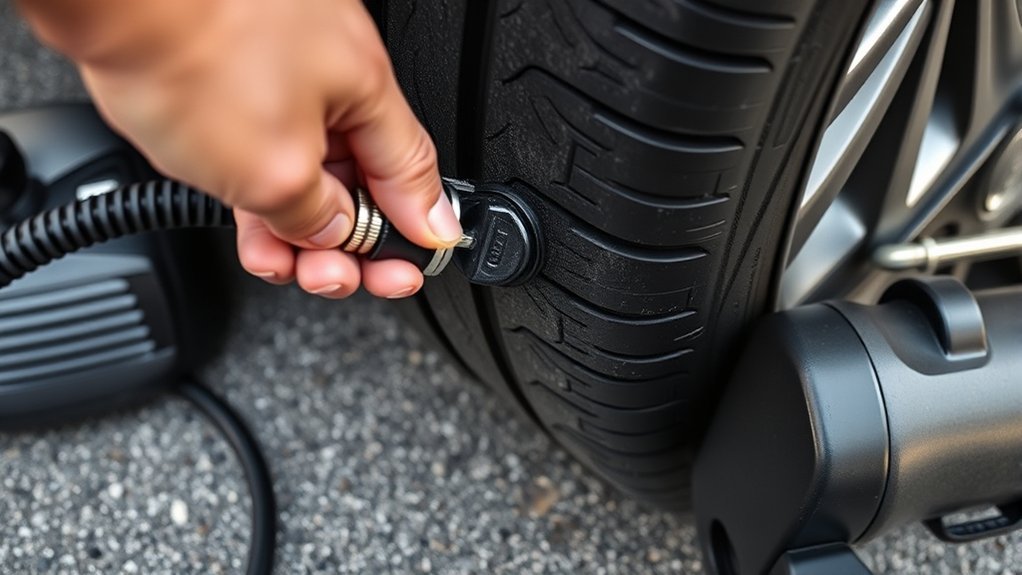
Once the tire reaches the correct PSI, turn off the compressor and remove the chuck quickly and straight. A brief hiss during removal is normal. If air keeps escaping after you remove the hose, the valve core may be loose or damaged.
Check the tire pressure one more time with your gauge. If the reading is still correct, reinstall the valve cap and tighten it snugly by hand. Do not overtighten plastic caps, and avoid metal caps on TPMS valve stems unless your vehicle manufacturer recommends them.
Check for Leaks After Inflation
After inflation, apply soapy water around the valve stem, valve core, bead area, and any suspicious spot on the tread. Bubbles that continue to grow usually mean air is escaping. A small leak may not make noise, so the bubble test helps you catch slow pressure loss early.
If the tire loses pressure again within a short time, do not keep topping it off without inspection. You may have a puncture, leaking valve core, bead leak, cracked wheel, or damaged valve stem. Have the tire inspected and repaired by a qualified tire professional.
Troubleshooting Common Tire Inflator Problems
If the compressor does not seem to work, start with the simple checks before assuming the tire is the problem.
- No air flows: Check the power connection, fuse, hose, and chuck. Make sure the compressor switch is fully on.
- Air hisses at the valve: Remove the chuck and reconnect it straight. Clean the valve stem if dirt blocks the seal.
- Gauge reading jumps around: Pause the compressor and check with a separate pressure gauge.
- Compressor shuts off early: Let it cool, then restart if the manual allows it. Small inflators often need cool-down breaks.
- TPMS light stays on: Recheck all tires when cold. Some vehicles need a short drive or a reset procedure after correction.
- Pressure drops again: Check for leaks with soapy water and schedule a tire inspection.
[Products Worth Considering]

The Milton S-693 straight foot dual head air chuck is designed for accurate tire pressure checks and quick, secure valve-core engagement with lock-on threads on both ends. With a 1/4" FNPT connection and a maximum 150 PSI rating, it’s built for use on inner duals and common vehicle tires, including trucks and RVs.

This digital tire pressure gauge with built-in inflator helps you accurately check and adjust tire pressure for safer driving and better fuel efficiency. It supports multiple units (PSI, KPA, BAR, KG/CM²) and reads within 1% for reliable results. The 3-in-1 design inflates, deflates, and measures, with a quick-connect air chuck and compatible hose setup for cars, trucks, SUVs, RVs, and motorcycles.

This LUMITECO closed flow ball air chuck set helps prevent air loss by passing air only when the chuck locks onto the tire valve. It features a built-in shut-off valve and quick-connect compatibility for fast, reliable inflating on cars, motorcycles, bikes, and trucks. With a universal 1/4 inch FNPT inlet and secure sealing on Schrader valves, it’s ideal for tire gauges, inflator hoses, and compressor attachments.
Maintain Tire Pressure After Inflation
Check all tires at least once a month and before long trips. Michelin notes that tires can lose up to 1 PSI per month, and NHTSA recommends checking pressure when tires are cold. Pressure can also change with outdoor temperature, heavy loads, or a slow leak.
Keep a tire pressure gauge in your vehicle so you can verify readings anywhere. TPMS is helpful, but NHTSA says it is not a substitute for regular tire maintenance. If the warning light turns on, inspect the tires and check pressure as soon as you can do so safely.
Frequently Asked Questions
How do you properly use a tire inflator?
Find the recommended cold PSI on your vehicle’s door placard or owner’s manual. Remove the valve cap, attach the chuck firmly, start the inflator, add air slowly, and stop at the target PSI. Then recheck with a tire gauge, reinstall the valve cap, and inspect for leaks.
What PSI should my Mini Cooper tires be?
Many Mini Cooper models use pressures around the low-to-mid 30 PSI range, but the correct number depends on year, trim, tire size, and load. Use the Tire and Loading Information Label on the driver’s doorjamb or the owner’s manual as the final source.
What tire pressure should my Kia Carnival be at?
Some Kia Carnival setups fall in the 30s PSI range, but the correct tire pressure depends on model year, tire size, trim, and passenger or cargo load. Check the driver’s door placard or owner’s manual, then measure pressure when the tires are cold.
How do you use an air compressor step by step?
Place the compressor on a stable surface, connect it to the correct power source, attach the hose to the tire valve, set the target PSI if available, start the compressor, watch the gauge, stop at the correct pressure, remove the chuck, and replace the valve cap.
Can I drive if one tire is a few PSI low?
A small difference may not mean an emergency, but you should correct it soon. If a tire is visibly low, keeps losing pressure, or triggers the TPMS warning light, stop when safe, check the pressure, and inspect for damage before driving far.
Should I fill tires to the number on the tire sidewall?
No. The sidewall number is not your normal target pressure. Use the vehicle manufacturer’s recommended PSI on the door placard or in the owner’s manual. That pressure is chosen for the vehicle’s weight, handling, braking, and tire setup.
Conclusion
Now you can use a tire air compressor with confidence. Start with the recommended cold PSI, inspect the tire and valve stem, connect the chuck securely, inflate slowly, and verify the final pressure with a gauge. Finish by replacing the valve cap and checking for leaks.
Keeping your tires properly inflated supports safer handling, better fuel economy, and longer tread life. Make tire pressure checks part of your monthly routine, and do not ignore repeated pressure loss or a TPMS warning light.
Sources
- NHTSA TireWise Tire Safety — recommended tire pressure location, cold tire checks, TPMS guidance, tire safety, and monthly maintenance.
- Michelin Tire Pressure Guide — monthly pressure loss, cold tire checking, and checking the door-sticker PSI instead of the sidewall PSI.
- OSHA Hand and Power Tools — general safety support for using powered equipment and avoiding tool-related injury.
