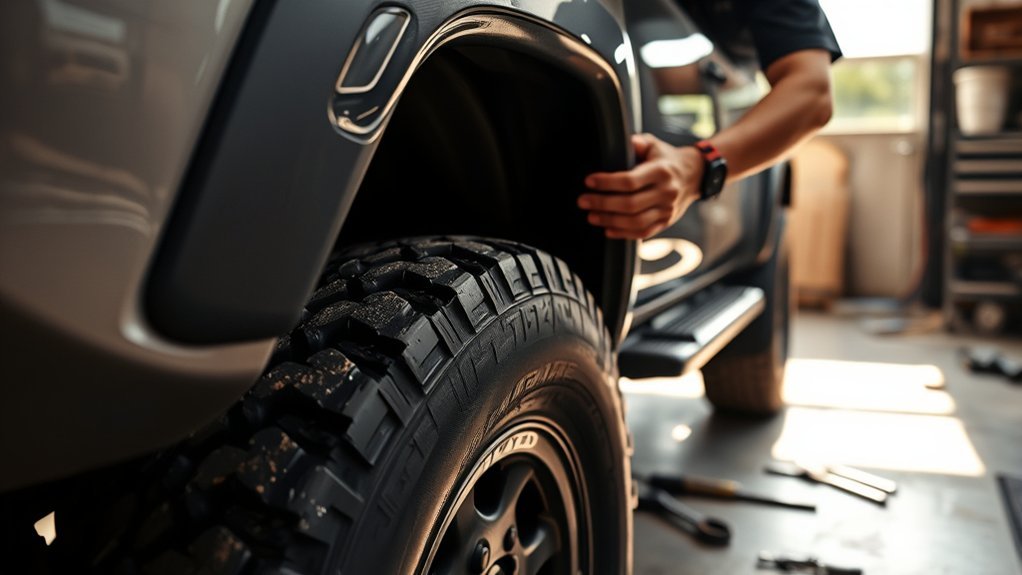
If your Toyota Tacoma tires rub the fender liner, bumper, mud flap, or inner wheel well, start by finding the exact contact point before you cut anything. Tire rubbing often shows up with larger tires such as 285/75R16, wheel spacers, lower-offset wheels, suspension lifts, or alignment changes. A small plastic trim may fix light rubbing, but heavy contact needs a closer look.
Quick Answer
To fix Tacoma tire rubbing, turn the wheels fully left and right, mark the exact contact points, then trim only the plastic fender liner or bumper edge that touches the tire. Do not cut metal, wiring, brake parts, or structural mounts. Recheck tire pressure, alignment, caster, wheel offset, and spacer setup if rubbing continues.
Key Takeaways
- Most Tacoma tire rubbing starts at the front fender liner, bumper edge, mud flap area, body mount area, or upper control arm clearance point.
- A 285/75R16 tire is wider and taller than many stock Tacoma tire sizes, so fitment depends on wheel offset, lift height, caster, and trim level.
- Trim only the marked plastic contact area, often up to about one inch, instead of cutting blindly across the whole liner.
- Wheel spacers and lower-offset wheels can move the tire outward and change where it swings during turns.
- Stop DIY work and get professional help if the tire contacts metal, suspension parts, brake lines, wiring, or the body mount.
At a Glance
| Time Required | 30 to 90 minutes for inspection and light plastic trimming |
| Difficulty | Moderate DIY if rubbing is only on plastic; professional help recommended for metal, suspension, or body-mount contact |
| Tools Needed | Flashlight, painter’s tape or marker, measuring tape, utility knife, heat gun, trim tool, gloves, sandpaper, and basic hand tools |
| Cost | Low if you already own the tools; higher if you need alignment, aftermarket UCAs, or body-mount work |
Identifying and Solving Tire Rubbing Problems on Your Tacoma
When you notice tire rubbing on your Toyota Tacoma, deal with it before the tire cuts into plastic, wears the liner, or damages the sidewall. Rubbing usually appears during sharp turns, driveway angles, reverse turns, or suspension compression. You may hear a scraping sound, see shiny rub marks, or find black tire residue on the liner.
Light rubbing on the plastic fender liner is often fixable with careful trimming or reshaping. Heavier rubbing may require a better alignment, more positive caster, different wheel offset, mud flap removal, bumper trimming, cab mount clearance work, or a different tire size. Before you choose a fix, inspect the truck at full steering lock and under normal ride height.
Warning: Do not cut metal, brake lines, wiring, structural brackets, or suspension components. If the tire touches anything other than plastic liner or a plastic bumper edge, stop and have a qualified technician inspect the fitment.
Top Reasons Your 285/75R16 Tires Rub on Your Tacoma
A 285/75R16 tire is roughly 32.8 inches tall and about 11.2 inches wide before real-world brand differences. That extra height and width can create contact during steering, especially on Tacomas that still have stock bumpers, stock control arms, factory mud flaps, or limited caster adjustment.
The most common causes include:
- Tire size: A taller and wider tire swings through a larger arc when you turn.
- Wheel offset: Lower-offset wheels and spacers push the tire outward, which can move the rub point toward the fender liner or bumper. Tire Rack explains that wheel offset affects clearance inside the wheel well and can affect handling when it is not correct for the vehicle. Learn more about wheel offset.
- Wheel spacers: Spacers can help inner clearance but often increase outer fender or bumper rubbing.
- Caster setting: More positive caster can help pull the tire away from the rear of the fender opening on many lifted Tacoma setups.
- Lift height and suspension travel: A lift can improve vertical clearance, but it does not automatically fix bumper, mud flap, or body mount contact.
- Upper control arm clearance: Wider tires can sit close to stock UCAs, especially with certain wheel widths and offsets.
- Loose liner clips or bumper tabs: A sagging liner may rub even when the tire size is reasonable.
Before you trim, confirm that your tire size and load rating are safe for your truck. NHTSA advises drivers to use the owner’s manual or Tire and Loading Information Label for the correct tire size and inflation pressure. Review NHTSA tire safety guidance. For Tacoma-specific details, check your exact model year in the Toyota owner’s manual library.
How to Identify Specific Rubbing Points
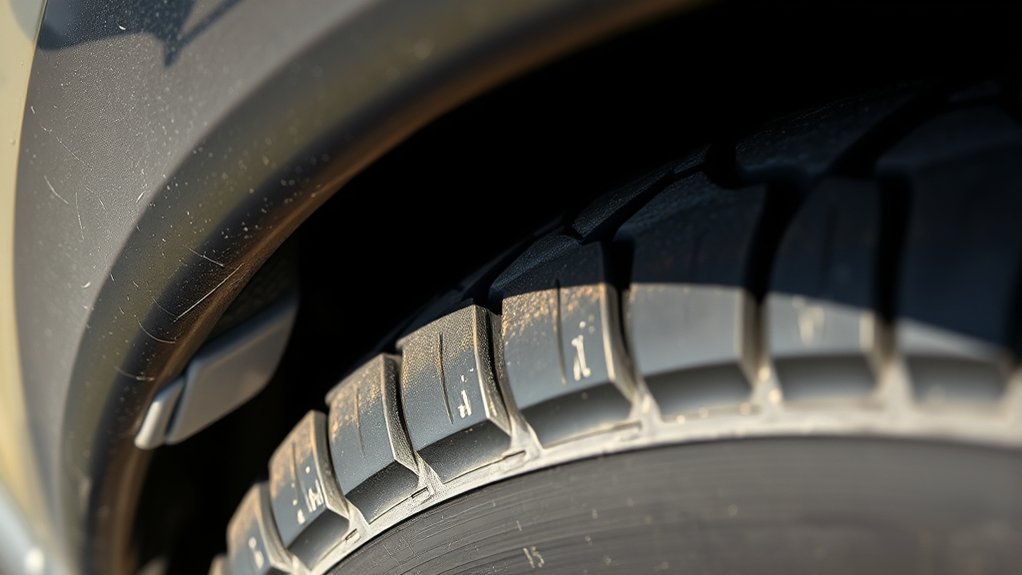
To identify specific rubbing points on your Tacoma, park on flat ground, set the parking brake, and inspect the front wheel wells with a flashlight. Turn the steering wheel fully left, then fully right. Look for contact at the front bumper edge, rear fender liner, mud flap area, upper control arm, sway bar, and body mount area.
Use painter’s tape, chalk, or a marker to label every contact point. If you recently heard rubbing, check for fresh scuffs, polished plastic, rubber transfer, or torn liner edges. Repeat the inspection after a short slow-speed test drive with several tight turns.
Common Rubbing Locations
Most Tacoma tire rubbing appears in a few repeat areas. Check these spots first:
- Front fender liner: Look near the front bumper corner during full steering lock.
- Rear fender liner and mud flap area: Larger tires often contact this area when turning and reversing.
- Front bumper edge: Plastic bumper trim can touch the outer shoulder of wider tires.
- Upper control arm: Inner tire sidewall clearance can be tight with wide tires and certain wheel offsets.
- Body mount area: If the tire contacts metal near the cab mount, trimming plastic alone will not fix the issue safely.
Note: Tire rubbing can happen only during suspension compression. If you off-road, load the bed, or drive steep driveway entrances, inspect again after those conditions because the rub mark may not appear while parked.
Steering Angle Assessment
Assess the steering angle carefully before cutting. Start with the wheels straight, then turn the steering wheel about one-quarter turn, half turn, three-quarter turn, and full lock in both directions. At each position, check the tire’s distance from the liner, bumper, mud flap, and suspension parts.
A helper makes this easier. Have them turn the wheel slowly while you stand clear of the tire path and watch the gap. Do not place your fingers between the tire and liner while the steering wheel is moving. If rubbing appears only at full lock, a small liner trim may be enough. If rubbing happens early in the steering range, you may need alignment or fitment changes.
Gather Your Tools to Trim the Fender Liner
Before you start trimming the fender liner on your Toyota Tacoma, gather the right tools and prepare the work area. Clean the liner first so you can see rub marks clearly. Remove packed mud or gravel because debris can hide the true contact point.
Here’s what you’ll need:
- Utility knife or trim shears: Use these for controlled cuts in plastic liner material.
- Heat gun: Warm the plastic gently so it becomes easier to reshape or cut without cracking.
- Measuring tape: Measure the marked contact area instead of guessing.
- Painter’s tape or marker: Mark the exact cut line before trimming.
- Protective gloves and safety glasses: Protect your hands and eyes from sharp plastic edges.
- Sandpaper or file: Smooth the edge after cutting.
- Socket set or trim tool: Remove clips, screws, or liner fasteners when needed.
Only trim after you know where the tire touches. If the liner is loose, missing clips may be the real problem. Replacing or relocating a clip can sometimes create enough clearance without cutting more plastic.
[Products Worth Considering]

These aluminum alloy tire valve stem caps with an O-ring seal help protect valve stems from corrosion while adding a clean, stylish look to your vehicle. The universal fit works across cars, trucks, motorcycles, bicycles, and more, making them an easy upgrade for everyday driving and off-road use. Installation is quick, and the included four-pack keeps all your tires dressed and protected.

The Ziopetru adjustable magnetic wheel alignment tool helps you check and restore camber and caster positioning after removing and reinstalling undercarriage components. With a clear leveling/bubble measurement system and an easy zeroing adjustment knob, it supports precise horizontal angle checking. The strong magnetic base mounts to metal surfaces for convenient use at home on cars, motorcycles, trucks, vans, and SUVs.

This 1/2-inch drive breaker bar delivers powerful leverage for loosening and tightening stubborn lug nuts and automotive fasteners. The 180-degree flex head helps you reach tight spaces at the angle you need, making tire and brake jobs easier. A spring-loaded ball detent design holds 1/2-inch sockets securely while the chrome-moly head provides durable strength for everyday use.
Step-by-Step Guide: Trimming the Fender Liner
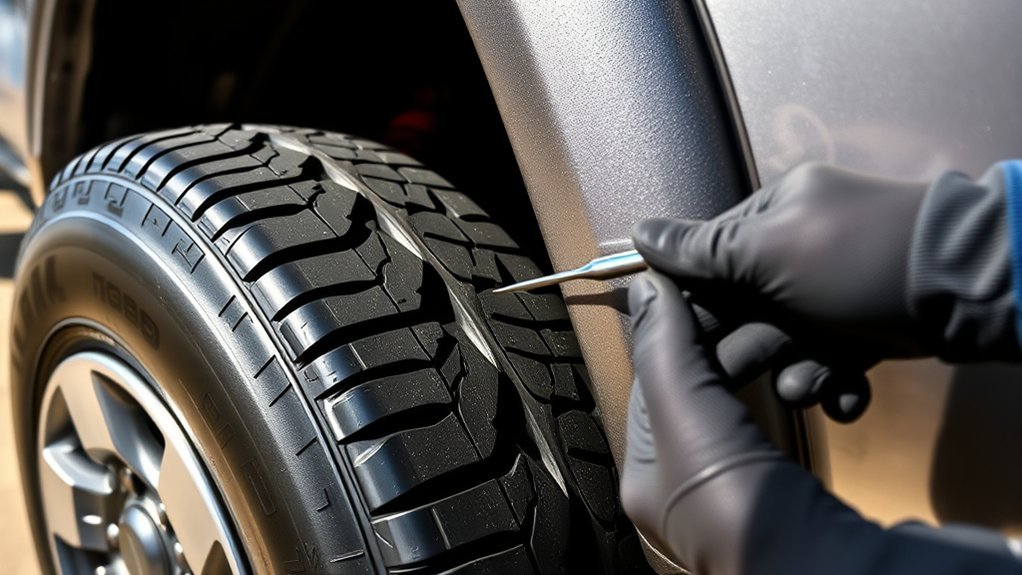
To trim the fender liner on your Toyota Tacoma, work slowly and remove less material than you think you need. You can always trim more, but you cannot put the plastic back once it is gone.
Tools You’ll Need
The basic tool list includes a utility knife, heat gun, measuring tape, marker, gloves, sandpaper, and trim tools. Keep a flashlight nearby so you can inspect the tire path after each adjustment. If you need to remove the wheel for access, use proper jack stands and follow safe lifting procedures from your owner’s manual.
Trimming Techniques Explained
Use this process for light plastic fender liner rubbing:
| Step | Action | Why It Matters |
|---|---|---|
| 1 | Mark the rub point with tape or a marker. | This prevents unnecessary cutting. |
| 2 | Warm the plastic lightly with a heat gun. | Warm plastic cuts and reshapes more cleanly. |
| 3 | Trim only the marked plastic area, often up to about one inch. | Small cuts reduce the chance of removing too much liner. |
| 4 | Smooth the edge with sandpaper or a file. | A smooth edge is less likely to catch mud or cut the tire. |
| 5 | Reinstall clips and test the steering again. | Loose plastic can create new rubbing. |
Pro Tip: Use several small cuts instead of one large cut. After each trim, turn the wheels again and check the gap. This keeps the finished edge cleaner and reduces the chance of over-trimming.
How to Relocate Bumper Attachments
Relocating bumper attachments on a Toyota Tacoma can help when the tire rubs a plastic bumper tab or liner fastener. The goal is not to force the bumper into place. The goal is to move a flexible plastic edge away from the tire while keeping the bumper secure.
Follow these steps:
- Inspect the attachment point: Find the clip, screw, or tab that sits closest to the tire.
- Remove only the needed fastener: Avoid pulling the entire bumper unless you need more access.
- Warm the plastic if needed: Use gentle heat so the plastic can move without cracking.
- Reposition the tab or liner edge: Move it inward or upward only enough to clear the tire.
- Secure it properly: Use the original fastener if it still holds. Replace broken clips instead of leaving the liner loose.
- Check both steering directions: A fix on one side can reveal a new contact point on the other side.
If the bumper cover is cracked, loose, or already trimmed heavily, consider a professional inspection. A poor bumper attachment can vibrate, catch mud, and rub again after a few drives.
[Products Worth Considering]

This professional wheel and rim brush kit makes it easy to lift brake dust, grime, and dirt from wheels and tires without scratching finishes. The brushes feature soft, metal-free wool heads and a flexible 360-degree rim brush design for reaching hard-to-clean areas. Includes multiple brush types plus accessories for thorough car, motorcycle, and general vehicle detailing.

These DECURCAR tire valve stem caps help prevent corrosion with a metal shell and plastic liner insert, making them ideal for wet or cold conditions. They feature a built-in leak-proof sealing ring to help reduce air loss and protect your vehicle from tire leak issues. Easy to hand-tighten and designed for Schrader valve stems, they add both function and a stylish American flag emblem look.

Vigorder rubber cement glue delivers superior adhesion and cures quickly within about 30 seconds for seamless rubber bonding. Once cured, it helps provide a strong, durable, waterproof seal that holds up to vehicle weight, pressure, and heat. Suitable for cars, motorcycles, trucks, bicycles, and off-road tires, it’s designed for emergency patch and maintenance repairs.
Real Tacoma Owners Share Their Success Stories
Tacoma owner reports often point to the same pattern: rubbing changes after larger tires, spacers, or suspension work. Treat these examples as anecdotal, not guaranteed fitment results, because every truck depends on tire brand, wheel width, offset, alignment, lift height, and trim condition.
| Owner-Reported Scenario | Likely Cause | Practical Fix to Check |
|---|---|---|
| Rubbing after moving to larger tires | Tire height and width changed the steering arc | Mark and trim the plastic liner only where contact appears |
| Rubbing after adding spacers | Wheel position moved outward | Check bumper edge, fender liner, mud flap, and offset |
| Rubbing after a lift | Caster and suspension geometry changed | Schedule an alignment and ask about caster adjustment |
The useful lesson is simple: copy the diagnostic process, not someone else’s exact cut line. Your Tacoma may need a different solution even if it runs the same tire size.
What to Do If You Still Experience Rubbing
If you still experience rubbing after trimming your fender liner, do not keep removing plastic blindly. Recheck the source of the contact and work through the next causes in order.
- Check tire pressure cold: Use the pressure listed on the Tire and Loading Information Label or owner’s manual, not the maximum pressure printed on the tire sidewall.
- Inspect tire damage: Look for cuts, gouges, cords, bulges, or repeated sidewall scuffing. Replace damaged tires before driving hard or off-road.
- Get an alignment: Ask the shop to check caster, camber, and toe, especially after a lift or control-arm change.
- Review wheel offset and spacers: A different wheel setup may be the real cause of the rub.
- Check UCAs and suspension clearance: Inner sidewall rubbing can require different wheels, aftermarket UCAs, or a different tire width.
- Inspect body mount contact: If the tire hits metal near the cab mount, plastic trimming will not solve it safely.
- Test under real conditions: Turn in reverse, drive over a mild driveway angle, and recheck after the suspension compresses.
For persistent rubbing, a Tacoma-focused alignment shop or off-road suspension specialist can save you time. They can measure caster, check wheel backspacing, inspect body-mount clearance, and recommend the least invasive fix.
[Products Worth Considering]

Upgrade your 2024-2026 Tesla Model 3 Highland with REEVAA all-weather mud flaps designed for seamless fit along the original body lines. The set of four delivers strong splash protection against mud, gravel, and road debris while using OEM-grade durable materials. Installation is non-destructive with original hole positions and snap-in clips, and the aerodynamic design helps minimize impact on efficiency.

This manual duck head tire changer kit makes tire installation and removal simpler by letting you embed the duck head into the tire with applied pressure. The integrated design and durable steel construction help reduce friction and improve efficiency and safety during use. Suitable for 16–21 inch wheels, it’s convenient for cars, trucks, SUVs, and ATV tires, with 24-hour after-sales support.

The Milton S-693 straight foot dual head air chuck is designed for accurate tire pressure checks and quick, secure valve-core engagement with lock-on threads on both ends. With a 1/4" FNPT connection and a maximum 150 PSI rating, it’s built for use on inner duals and common vehicle tires, including trucks and RVs.
Frequently Asked Questions
Will your tires get damaged if they rub the fender lining?
Yes, tires can suffer damage if they rub long enough or rub hard enough. Light contact on smooth plastic may only leave a scuff, but repeated rubbing can wear the shoulder or sidewall. Stop driving aggressively and inspect the tire if you see cuts, cords, gouges, bulges, or deep sidewall marks.
Why is my tire scraping my fender?
Your tire may scrape the fender because the tire is taller, wider, or positioned differently than stock. Common causes include 285/75R16 tires, wheel spacers, low-offset wheels, loose fender liner clips, mud flaps, bumper tabs, lift-related alignment changes, or limited caster adjustment.
Can I fix Tacoma tire rubbing without trimming?
Sometimes, yes. If the liner is loose, replacing clips may fix it. If the rubbing comes from alignment or caster, an alignment may help. If spacers or wheel offset caused the issue, changing wheel fitment may work better than trimming more plastic.
How much fender liner should I trim?
Trim only the marked contact area. Many light rubbing fixes need less than an inch of plastic removed, but the right amount depends on your tire, wheel offset, alignment, and bumper position. Make small cuts, smooth the edge, and test the steering after each cut.
Do 285/75R16 tires always rub on a Tacoma?
No. Some Tacoma setups clear 285/75R16 tires with only minor trimming, while others rub heavily. Fitment depends on generation, trim, lift height, wheel width, offset, spacers, caster, mud flaps, bumper shape, tire brand, and how the truck is used.
Conclusion
Fixing Tacoma tire rubbing starts with a careful inspection, not a big cut. Find the exact rub point, confirm whether the tire touches plastic or something more serious, then make the smallest safe adjustment. Light fender liner or bumper-edge rubbing may need only careful trimming and new clips.
If rubbing continues, look beyond the fender liner. Alignment, caster, wheel offset, spacers, upper control arm clearance, body mount contact, and tire size all affect fitment. Addressing the real cause early helps protect your tires, keeps the truck safer to drive, and gives your Tacoma better clearance on the road and trail.
Sources
- NHTSA TireWise — tire pressure, tire size, tread, alignment, and general tire safety guidance.
- Toyota Manuals and Warranties — official source for model-year-specific Tacoma owner manuals and maintenance information.
- Tire Rack: What Is Wheel Offset? — explanation of wheel offset, backspacing, clearance, and fitment effects.