
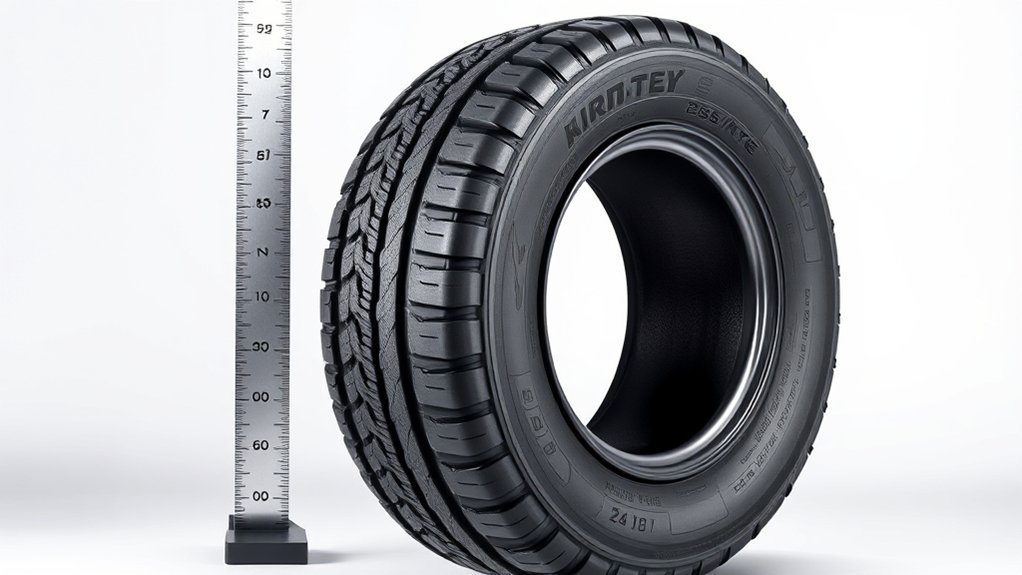
A 285/75R16 tire is a tall, wide 16-inch tire size often used on light trucks, SUVs, overland builds, and off-road setups. By calculation, it measures about 32.8 inches tall, about 11.2 inches wide, and has an 8.4-inch sidewall. Those numbers help you compare clearance, gearing, speedometer error, wheel fit, and load needs before you buy.
The size code gives you a strong starting point, but it does not replace the tire maker’s spec sheet or your vehicle’s tire placard. Actual mounted size, rim width range, load rating, speed rating, and inflation needs can vary by tire model.
Quick Answer
A 285/75R16 tire has a calculated diameter of about 32.8 inches, a section width of about 11.2 inches, and a sidewall height of about 8.4 inches. It is close to a 33-inch tire, but actual measured size, rim range, load rating, and revs per mile vary by tire model.
Key Takeaways
- A 285/75R16 tire is about 32.8 inches tall when calculated from the size code.
- Its section width is 285 mm, or about 11.2 inches.
- Its sidewall height is 75% of 285 mm, or about 8.4 inches.
- It fits a 16-inch wheel, but approved rim width depends on the exact tire model.
- Compared with a 265/75R16, it is about 1.2 inches taller and can make your actual speed higher than the speedometer reading.
- Before mounting this size, confirm wheel width, offset, fender clearance, spare fit, load rating, speed rating, and inflation pressure.
At a Glance
| Time Required | 10 to 20 minutes to compare size, wheel specs, and clearance before buying |
| Difficulty | Easy for size math; moderate for full vehicle fitment |
| Tools Needed | Tire spec sheet, vehicle owner’s manual, tire placard, calculator, tape measure, and a tire shop fitment check |
| Cost | No cost to check size; mounting, balancing, alignment, or recalibration costs vary by shop |
285/75R16 Tire Size Explained
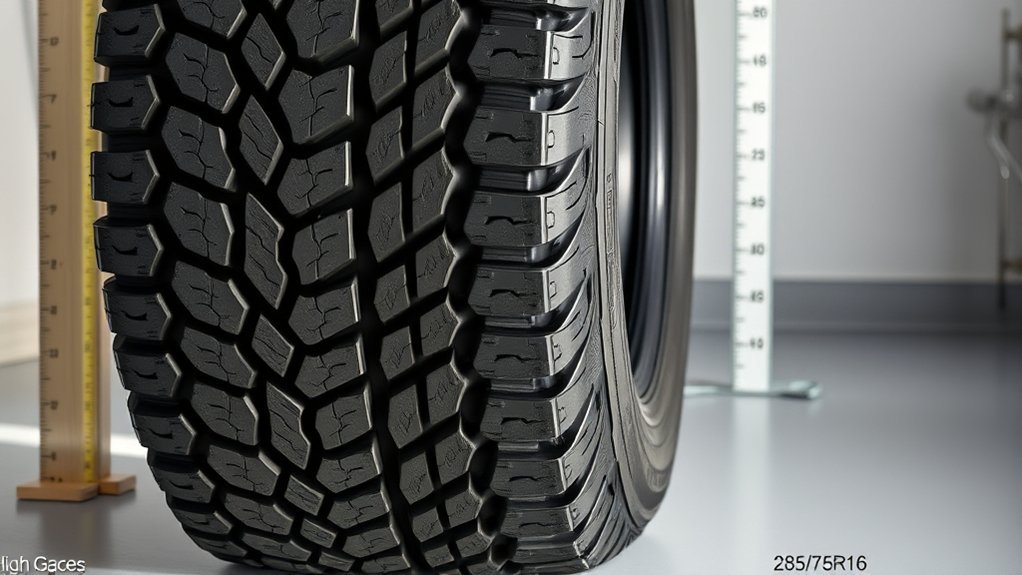
A 285/75R16 tire is a radial tire built for a 16-inch wheel. The size code gives you the section width, aspect ratio, construction type, and wheel diameter. The 285 means the tire is 285 mm wide at its section width. That equals about 11.2 inches.
The 75 means the sidewall height is 75% of the tire width. For this size, that works out to about 214 mm, or 8.4 inches. Add the top and bottom sidewalls to the 16-inch wheel diameter, and you get a calculated overall diameter of about 32.8 inches.
You also get a calculated circumference of about 103.1 inches, or about 615 unloaded revolutions per mile. Real-world revolutions per mile can differ because a tire deflects under vehicle weight, tire models use different tread depths, and manufacturers measure tire dimensions on specified rim widths. BFGoodrich notes that listed tire dimensions are average design values and that section width can change with rim width.
Note: Treat 32.8 inches as the calculated size, not a guaranteed tape-measure size. A new mud-terrain, all-terrain, or highway-terrain tire in 285/75R16 can measure slightly differently once mounted and loaded.
What 285/75R16 Means
When you read 285/75R16, you are looking at four pieces of information: width, sidewall ratio, construction, and rim diameter. BFGoodrich explains that section width is measured in millimeters, aspect ratio describes sidewall height compared with width, and wheel diameter tells you which wheel size the tire fits.
Tire Code Breakdown
- 285 = section width in millimeters.
- 75 = sidewall height equals 75% of section width.
- R = radial construction.
- 16 = 16-inch wheel diameter.
This code helps you compare tires before you mount them. It does not tell you everything, though. You still need to check the tire’s load index, load range, speed rating, approved rim width, maximum pressure, tread type, and actual manufacturer specs.
Width And Aspect Ratio
Width and aspect ratio work together to define the tire’s footprint and sidewall height. In 285/75R16, the 285 means the tire is about 285 millimeters wide, or about 11.2 inches. The 75 aspect ratio means the sidewall is 75% of that width.
The math is simple:
- Section width: 285 mm ÷ 25.4 = 11.2 inches
- Sidewall height: 285 mm × 0.75 = 213.75 mm
- Sidewall height in inches: 213.75 ÷ 25.4 = 8.4 inches
- Overall diameter: 16 + 8.4 + 8.4 = 32.8 inches
A wider tire can add traction on loose surfaces, but it can also need more clearance. A taller sidewall can help absorb impacts, but it can change steering feel, braking response, gearing, and speedometer accuracy.
Rim Diameter Meaning
The “16” in 285/75R16 means the tire is designed for a 16-inch wheel. Do not confuse wheel diameter with wheel width. Diameter tells you whether the tire can seat on the wheel. Width tells you whether the sidewall will sit in the right shape once mounted.
Warning: Never mount a tire on the wrong wheel diameter. A 16-inch tire must not be mounted on a 16.5-inch rim. Tire and rim mismatches can cause serious injury or death. Have a qualified tire professional mount and inflate the tire, and follow the vehicle owner’s manual, tire placard, and tire manufacturer’s load and inflation guidance.
285/75R16 Size Calculation Table
| Size code | 285/75R16 |
| Section width | 285 mm, or about 11.2 inches |
| Aspect ratio | 75% of section width |
| Sidewall height | About 213.75 mm, or 8.4 inches |
| Calculated diameter | About 32.8 inches |
| Calculated circumference | About 103.1 inches |
| Calculated unloaded revolutions per mile | About 615 revs per mile by circumference math |
| Wheel diameter | 16 inches |
Note: These are calculated dimensions from the tire code. Actual mounted diameter, section width, tread width, and revolutions per mile can vary by brand, tread design, load range, inflation pressure, vehicle load, tread wear, and rim width.
Will 285/75R16 Tires Fit Your Wheels?
Yes, a 285/75R16 tire can fit your wheels if you have the right 16-inch wheel, enough rim width, enough clearance, and a tire with the correct load rating for your vehicle. Many 285/75R16 light-truck tires use approved rim width ranges around 7.5 to 9 inches, but that is not a universal rule. Always confirm the approved rim width range for the exact tire model before mounting.
Check your vehicle tire placard or owner’s manual for the original tire size, inflation pressure, load index, and speed rating. If you are changing from the original size, ask a qualified tire shop to check wheel width, offset, clearance, load rating, speed rating, and inflation needs.
Before buying, inspect these points:
- Wheel diameter: The wheel must be 16 inches.
- Rim width: Use the tire maker’s approved rim width range.
- Offset and backspacing: A wider tire can rub suspension parts, frame edges, mud flaps, or fenders.
- Fender clearance: Check full steering lock and full suspension compression.
- Load rating: Match or exceed your vehicle’s load needs.
- Spare tire fit: A 32.8-inch tire may not fit every factory spare location.
- Speed rating: Match the tire to your vehicle use and driving conditions.
- Brake and suspension clearance: Confirm the tire and wheel package clears brake calipers, control arms, sway bars, and inner liners.
| Fitment Check | What To Confirm |
| Wheel size | 16-inch diameter and approved width for the exact tire model |
| Clearance | No rubbing at full steering lock, over bumps, or under suspension compression |
| Vehicle systems | Speedometer, odometer, ABS, traction control, and transmission shift behavior may change after upsizing |
| Load and pressure | Load index, load range, maximum pressure, and cold inflation pressure must suit the vehicle and load |
| Spare tire | Confirm the spare location, carrier, or underbody hoist can hold the larger tire safely |
If your wheels are too narrow, too wide, or your fender space is tight, you can get rubbing, poor steering feel, irregular wear, or unsafe handling. A tire shop can also check whether your wheel offset pushes the wider tire too close to the suspension or too far into the fender edge.
Pro Tip: Do a turning-clearance test after installation. Turn the steering wheel fully left and right, then check the inner fender, control arms, sway bar, mud flaps, bumper edges, and frame area for rubbing.
[Products Worth Considering]

Measure tire tread depth quickly and accurately with this LUMITECO dial gauge that reads in 1/32" increments up to 14/32". The color-coded green/yellow/red zones make it easy to judge tire wear and know when replacement is needed. A rugged, compact design with a protective pouch helps keep the gauge ready for use on cars, trucks, motorcycles, and more.

Keep your tires properly inflated with this analog VONDIOR tire pressure gauge, designed for fast, easy readings without batteries. The swiveling, two-axis hose and large glow dial help you measure at any tire angle with instant visibility. Built with a protective rubber shield, it supports durable, low-maintenance use for cars and trucks.

Monitor tire tread wear with a smart, color-coded depth gauge that shows clear condition ranges at a glance. The bar is range marked for fast, easy readings, helping you maintain safer traction and performance. Each gauge is portable with a pocket clip, and the set includes 20 units for daily use and sharing.
Load Range, Load Index, And Inflation
A 285/75R16 size code does not tell you one fixed load rating. Two tires can share the same size but have different load indexes, load ranges, maximum pressures, tread depths, weights, and speed ratings. That matters most on trucks, tow vehicles, work vehicles, and overland builds that carry extra gear.
Use the vehicle tire placard and owner’s manual as your starting point. If you choose an optional tire size that is not listed on the placard, use the tire manufacturer’s load and inflation guidance or a qualified tire professional. Toyo says load and inflation tables help when replacing tires with optional sizes not listed on the tire placard or owner’s manual.
- Load index: The numeric load rating tied to how much weight the tire can carry.
- Load range: A light-truck tire strength category, often shown as C, D, E, or another rating.
- Maximum pressure: The tire sidewall limit, not automatically your correct daily pressure.
- Cold inflation pressure: The pressure set before driving, based on vehicle load and tire guidance.
- Speed rating: The tire’s speed capability under specified load and conditions.
Warning: Do not choose a tire with a lower load index than your vehicle requires. Underloading, overloading, underinflation, and incorrect pressure for the tire/load combination can increase heat buildup, wear, handling problems, and tire-failure risk.
How 285/75R16 Tires Affect Speed and MPG
Once you confirm fitment, the next thing to evaluate is how 285/75R16 tires change speedometer readings, gearing, braking feel, and fuel economy. A taller tire travels farther with each rotation. If your speedometer was calibrated for a smaller tire, your actual road speed can be higher than the speedometer shows.
If you replace a 265/75R16 tire with a 285/75R16 tire, the new tire is about 3.7% taller by calculation. That means 60 mph indicated can be about 62 mph in real travel, before accounting for tire model and load differences.
Use this quick formula for speedometer change:
Actual speed = indicated speed × new tire diameter ÷ old tire diameter
For example, a 285/75R16 is about 32.8 inches tall, while a 265/75R16 is about 31.6 inches tall. So 60 × 32.8 ÷ 31.6 = about 62 mph.
- Speedometer error: Expect an under-read if you move from a smaller tire to this size.
- Odometer change: The vehicle may record fewer miles than you actually travel if it is not recalibrated.
- Fuel economy: Larger and heavier tires can reduce MPG, but the amount varies by vehicle, tire weight, tread, inflation, gearing, and driving style.
- Traction: The wider footprint can help on dirt, sand, gravel, and snow, depending on tread design.
- Engine RPM: Highway RPM may drop slightly, but acceleration and shift behavior can also change.
- Braking feel: More tire mass and diameter can affect braking response, especially on heavy trucks.
- Driver-assist systems: ABS, traction control, stability control, and transmission shift logic may react differently after a large tire-size change.
If the speedometer change is large enough, ask a shop whether your vehicle can be recalibrated through a scan tool, programmer, dealer service, or compatible module. Accurate tire sizing lets you balance control, efficiency, and confidence without guessing.
285/75R16 vs 265/75R16 and 33-Inch Tires
Compared with a 265/75R16, a 285/75R16 is wider and taller. The 265/75R16 is about 31.6 inches tall and 10.4 inches wide by calculation. The 285/75R16 is about 32.8 inches tall and 11.2 inches wide.
Against a true 33-inch tire, the 285/75R16 sits just under that number by calculation. Many drivers casually call it a 33, but the calculated diameter is closer to 32.8 inches. If your build has tight clearance, that small difference still matters.
| Size | Calculated Diameter | Calculated Width | Best Use |
| 265/75R16 | About 31.6 inches | About 10.4 inches | Factory-style fitment, lighter steering, fewer rubbing issues |
| 285/75R16 | About 32.8 inches | About 11.2 inches | More clearance, wider stance, stronger off-road look |
| 33-inch tire | About 33 inches, depending on model | Varies by size code | Maximum clearance when your vehicle has room for it |
If you want a precise fit decision, compare clearance, gearing impact, wheel width, offset, load rating, speed rating, tire weight, and tread design before you buy. The size code tells you the math. The tire spec sheet tells you what that specific tire needs.
[Products Worth Considering]

The SAFELIFE dial tire tread depth gauge measures tread depth in 1/32 inch increments with clear, easy-to-read 2-inch dial face. Color zones using a traffic light system help you quickly judge whether tread is low, marginal, or ample for safer driving. Built with a durable zinc cast body and a metal detect probe for precise, comfortable use across cars, motorcycles, trucks, and buses.

Accurately measure tire tread depth with a calibrated gauge marked from 0 to 1 inch in 1/32 inch increments. The color-coded bar helps you quickly identify tread condition ranges, supporting safe driving for trucks, motorcycles, automobiles, and passenger vehicles.

Secure a full-size spare on your trailer with this powder-coated steel spare tire mount bracket. It fits most 4-, 5-, and 6-lug wheel bolt patterns and mounts to trailer tongues up to 4 in wide and 5 in tall. Built for reliable carry with a max 150 lb load rating and includes zinc-plated hardware for straightforward installation.
Best Use Cases for 285/75R16 Tires
You will get the most from 285/75R16 tires when you need more ground clearance, a larger footprint, and a stronger all-terrain stance. This size is common on trucks and SUVs used for camping, towing, overlanding, ranch roads, forest roads, and weekend trail use.
It can also work for daily driving, but the tradeoffs matter. Wider and taller tires can add road noise, weight, steering effort, and fuel use. They can also change braking feel and speedometer accuracy. Choose this size when the extra capability is worth those compromises.
[Products Worth Considering]

This manual duck head tire changer kit makes tire installation and removal simpler by letting you embed the duck head into the tire with applied pressure. The integrated design and durable steel construction help reduce friction and improve efficiency and safety during use. Suitable for 16–21 inch wheels, it’s convenient for cars, trucks, SUVs, and ATV tires, with 24-hour after-sales support.

The 22800 wheel stud installer makes replacing wheel studs quick and secure, saving time and effort during tire service. It uses a ratchet or impact wrench to pull new studs firmly into place, helping when existing studs are too long. Compatible with most automotive wheels and light-duty truck wheel studs, it’s designed for easy, tool-assisted installation.

Replace your worn or missing TPMS sensors with pre-programmed, direct-fit sensors for compatible Ford, Lincoln, and select Mazda models. Each sensor comes ready to activate with a scan tool, helping restore accurate tire pressure monitoring and trouble-free installation. Built with a long-life CR2032 battery and tested before factory release, this set provides dependable performance with a one-year warranty.
Off-Road Traction
For off-road traction, the 285/75R16 size gives you a taller tire and a wider footprint than many factory 16-inch tire sizes. The extra height can improve ground clearance, while the added sidewall helps absorb impacts over rocks, ruts, and washboard roads.
The tire model still matters more than the size alone. A highway-pattern 285/75R16 will not grip like a true all-terrain or mud-terrain tire. Look at tread design, sidewall construction, tread depth, load range, and severe-snow rating if you drive in mixed weather.
Daily Driving Comfort
A 285/75R16 tire can still work as a daily-driver tire when it fits properly and uses the right tread pattern. The 8.4-inch sidewall can soften potholes and broken pavement compared with shorter sidewalls. The wider tread can also make a truck feel more planted.
For the best daily ride, keep the tires properly inflated, rotate them on schedule, and check alignment after changing sizes. NHTSA recommends consulting a tire service professional if you notice tire performance issues such as pressure loss, noise, or vibration, so do not rely on looks alone when setting pressure or judging tire condition.
What To Ask Before Mounting 285/75R16 Tires
Before you pay for the tires, ask the seller or tire shop direct fitment questions. This helps you catch problems before the tires are mounted, balanced, and non-returnable.
- Is this exact tire approved for my wheel width?
- Does the load index meet or exceed my vehicle’s needs?
- What cold inflation pressure should I use for my vehicle and load?
- Will this size clear my fenders, mud flaps, suspension, frame, and bumper at full steering lock?
- Will my spare tire location hold this size?
- Will my speedometer or odometer need recalibration?
- Should I get an alignment after installation?
- Will this tire’s weight or tread pattern affect braking, MPG, or steering feel?
Frequently Asked Questions
Is a 285/75R16 the same as a 33-inch tire?
Not exactly. A 285/75R16 tire has a calculated diameter of about 32.8 inches, so it is very close to a 33-inch tire but not always a true 33. Actual mounted size can vary by tire model, tread depth, rim width, inflation pressure, and vehicle load.
Which tire is taller, 285/75R16 or 295/75R16?
A 295/75R16 is taller by calculation. A 285/75R16 is about 32.8 inches tall, while a 295/75R16 is about 33.4 inches tall. The 295 is also wider, so it usually needs more fender, suspension, and steering clearance.
Will a 285/75R16 fit a 16×7 rim?
Some 285/75R16 tires may be approved for a 7-inch-wide rim, but many require a wider wheel. Check the exact tire manufacturer’s approved rim width range before mounting. A narrow rim can change sidewall shape, steering response, tread contact, and wear pattern.
How much will 285/75R16 tires affect my speedometer?
It depends on your original tire size. If you replace a 265/75R16 with a 285/75R16, the new tire is about 3.7% taller by calculation. That can make 60 mph indicated closer to 62 mph actual. Compare your old and new tire diameters to estimate the change.
Will 285/75R16 tires rub?
They can rub if your truck or SUV does not have enough fender, bumper, mud flap, frame, or suspension clearance. Rubbing depends on vehicle model, lift height, wheel offset, tire tread shape, and suspension travel. Always check full steering lock and suspension movement after installation.
Do all 285/75R16 tires have the same load rating?
No. 285/75R16 describes size, not one fixed load rating. Load index, load range, ply rating, maximum pressure, and speed rating vary by tire model. Check the sidewall and manufacturer spec sheet, then match the tire to your vehicle’s load needs.
What tire pressure should I run in 285/75R16 tires?
Use your vehicle’s tire placard or owner’s manual for the original tire size. If 285/75R16 is an optional upsized tire, ask the tire manufacturer or a qualified tire shop to match cold inflation pressure to the tire’s load capacity and your vehicle’s actual load.
Is 285/75R16 good for towing?
It can be, but size alone is not enough. For towing, check load index, load range, maximum pressure, tire weight, vehicle payload, trailer tongue weight, and the vehicle manufacturer’s tire guidance. A tire shop can help confirm the right pressure for the loaded vehicle.
Conclusion
A 285/75R16 tire is about 32.8 inches tall, 11.2 inches wide, and built for a 16-inch wheel by size-code calculation. It is close enough to a 33-inch tire that many drivers use it for a similar look and clearance gain, but it is not always a true 33 by measured diameter.
Before you buy, check more than the size code. Confirm rim width, wheel offset, fender clearance, spare fit, load rating, speed rating, inflation needs, and speedometer change. When you treat the 285/75R16 as a full fitment decision, not just a bigger tire, you get a safer and better-performing setup.
Sources
- BFGoodrich: How to Read a Tire Sidewall — backs up tire width, aspect ratio, radial construction, wheel diameter, load index, and speed rating definitions.
- Toyo Tires: Tire Care Tips and How to Read a Tire Sidewall — backs up section width, aspect ratio, radial construction, wheel diameter, load index, and speed symbol definitions.
- NHTSA TireWise — backs up tire safety, tire condition, spare tire awareness, pressure-loss concerns, and professional-inspection guidance.
- Tire Industry Association: Tire Replacement — backs up replacement tire guidance, tire placard use, load index, speed rating, and professional help for custom tire and wheel packages.
- Toyo Tires: Load and Inflation Tables — backs up optional-size load and inflation guidance when the replacement size is not listed on the vehicle placard.
- BFGoodrich All-Terrain T/A KO2 — backs up manufacturer notes about tire dimension variation, rim-width effects, professional mounting, and tire/rim mismatch warnings.

