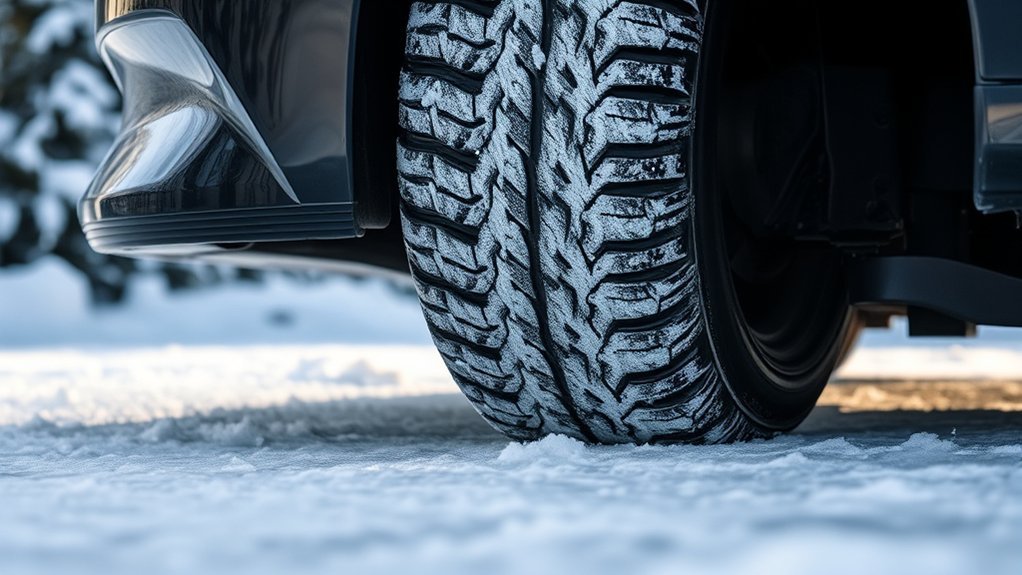
Cold weather changes how your Toyota Camry’s tires grip, brake, and steer. Once daily temperatures remain near or below 45°F (7°C), dedicated winter tires can provide a larger safety margin on cold pavement, snow, slush, and ice. Safe winter performance also depends on correct tire fitment, adequate tread depth, proper cold inflation pressure, and a matching set of four tires.
Last updated: July 17, 2026 · Reviewed against current government, Toyota, and tire-manufacturer guidance.
Quick Answer
For a Toyota Camry driven in regular freezing temperatures, snow, or ice, install four matching winter tires before temperatures consistently fall below 45°F (7°C). Use the exact size and load capacity approved for your model year, maintain the door-placard cold pressure, and replace winter tires when tread approaches 4 mm.
Key Takeaways
- Switch to winter tires when temperatures consistently approach 45°F (7°C), not after the first severe storm.
- Install four matching tires with the correct size, construction, load index, and suitable speed rating.
- Use your Camry’s driver-door placard for cold tire pressure. Never use the tire sidewall’s maximum pressure as your target.
- Use a tread-depth gauge. Winter traction becomes limited as tread approaches 4 mm, even though the tire may remain above the legal minimum.
- Check pressure, tread, damage, age, wheel compatibility, and TPMS operation before winter driving.
At a Glance
| Time Required | About 15–30 minutes for a home inspection; professional installation time varies by shop. |
| Difficulty | Easy inspection; professional mounting, balancing, and TPMS service recommended. |
| Tools Needed | Tire-pressure gauge, tread-depth gauge, flashlight, and the Camry owner’s manual or driver-door placard. |
| Cost | A home inspection may cost nothing if you own the tools. Tires, wheels, mounting, balancing, and TPMS service vary by size and location. |
Understanding Tire Performance in Cold Weather

As temperatures fall, rubber compounds react differently. According to Transport Canada, summer and all-season tires begin losing elasticity below about 7°C, or 45°F. A stiffer tread cannot conform to the road as effectively, which reduces available grip during acceleration, cornering, and braking.
Dedicated winter tires use compounds designed to remain flexible in low temperatures. Their grooves move water and slush away from the contact patch, while small cuts called sipes create extra biting edges on packed snow and ice.
When shopping, look for the Three-Peak Mountain Snowflake, or 3PMSF, symbol on the sidewall. This mark shows that the tire meets a defined severe-snow traction requirement. It does not guarantee perfect ice performance, so you must still reduce speed and leave more stopping space.
Note: “All-season” does not mean equal performance in every condition. An all-season tire may handle occasional light snow, while a dedicated winter tire is built for sustained cold, snow, slush, and ice.
When to Switch to Winter Tires for Optimal Safety?
Install your winter tires when average daily temperatures consistently approach 45°F (7°C). Do not wait for deep snow. Frost, freezing rain, black ice, and sudden overnight temperature drops can appear before the first major storm.
Ideal Temperature Threshold
The 45°F guideline is a seasonal trigger rather than a sharp cutoff. A tire does not become useless the moment the temperature reaches 44°F. However, repeated cold mornings signal that a winter compound is becoming more appropriate than a summer or conventional all-season compound.
- Schedule installation before tire shops become crowded after the first forecasted storm.
- Check the long-range forecast rather than relying on one cold night.
- Use winter tires through the season when freezing temperatures remain common.
- Switch back when temperatures consistently rise above the winter range, since warm pavement can increase winter-tire wear.
Timing Before Snowfall
Early installation gives you time to confirm that the tires are balanced, correctly oriented, properly inflated, and communicating with the tire-pressure monitoring system. It also lets you address vibration, pulling, or a slow leak before severe weather arrives.
After installation, drive gently for the first several trips. Listen for unusual noise and check that the steering wheel remains steady. Recheck pressure after a major temperature change.
Why Winter Tires Matter for Your Toyota Camry
Your Camry’s brakes, traction control, stability control, anti-lock braking system, and available all-wheel-drive system all depend on the grip available at the tire contact patches. Electronic systems can manage wheel slip, but they cannot create traction that the tires do not have.
Winter tires can improve:
- Cold-pavement grip: The tread remains more flexible in freezing conditions.
- Snow traction: Grooves and biting edges help the tire engage packed and loose snow.
- Slush evacuation: Tread channels move slush and water away from the contact area.
- Steering response: A matched set helps the front and rear axles react more predictably.
- Braking control: More available grip can help ABS and stability systems work effectively.
Winter tires improve the grip available to your Camry, but they do not make ice safe. Reduce speed, increase following distance, and avoid abrupt steering, acceleration, or braking.
Warning: Install winter tires as a set of four. Do not mix winter and summer tires or place winter tires on only one axle. Unequal grip between the front and rear can cause unstable steering, understeer, oversteer, or loss of control.
How to Check Your Winter Tire Condition Effectively
Inspect every tire before installation and throughout the season. A winter label cannot compensate for low tread, physical damage, incorrect pressure, or advanced tire age.
Measure the Tread With a Gauge
Use a tread-depth gauge in several grooves across each tire. Transport Canada advises against using tires worn close to 4 mm, or 5/32 inch, on snow-covered roads. Some Toyota manuals also explain that a snow tire loses its effectiveness as a snow tire below 4 mm.
The penny test checks for roughly 2/32 inch of tread, which is a basic replacement threshold used in the United States. It cannot confirm that a tire still has enough depth for dependable winter performance. Use a gauge rather than a coin when checking winter tires.
Inspect the Tread and Sidewalls
Look closely for cuts, cracks, punctures, exposed cords, bubbles, bulges, missing tread pieces, or objects lodged in the grooves. A sidewall bulge can indicate internal structural damage and requires professional inspection. Do not drive on a tire with a visible bulge or exposed reinforcement.
Check for Uneven Wear
Wear concentrated on both shoulders may suggest underinflation. Center wear can be associated with overinflation, while one-sided or feathered wear may point to alignment or suspension problems. Have the cause corrected before installing another set of tires.
Check the Tire’s Age
Find the DOT Tire Identification Number on the sidewall. Its final four digits identify the manufacturing week and year. For example, “2322” means the tire was made during week 23 of 2022. NHTSA notes that some vehicle and tire manufacturers recommend replacement between six and ten years regardless of visible tread, so have older tires evaluated by a qualified professional.
| Check | What to Look For | Action |
|---|---|---|
| Winter tread depth | Approaching or below 4 mm | Plan replacement before driving in snow. |
| Sidewall and tread damage | Bulges, deep cracks, cuts, exposed cords, or separated tread | Do not drive on a visibly unsafe tire; obtain professional inspection. |
| Wear pattern | One-sided, cupped, feathered, center, or shoulder wear | Check pressure, alignment, balance, and suspension. |
| Cold pressure | Below or above the driver-door placard value | Adjust when the tires are cold. |
| Age | Old DOT date code or unknown history | Request a professional age and condition assessment. |
How to Choose the Correct Winter Tire Size for Your Camry
Toyota Camry tire sizes vary by model year, generation, trim, wheel package, and market. Do not buy a tire only because another Camry owner uses the same size.
- Read the driver-door placard. It lists the original tire size and recommended cold inflation pressure for your vehicle.
- Check the owner’s manual. Use Toyota’s official manuals and warranties page to select your model year.
- Match load capacity. The replacement tire must safely support the vehicle’s required load.
- Confirm the speed rating. Do not select a lower rating without qualified guidance and compliance with local requirements.
- Verify wheel width and diameter. A tire must be approved for the wheel on which it will be mounted.
- Confirm TPMS compatibility. A second winter wheel set may require compatible sensors and vehicle registration or relearning.
- Check tread direction. Directional tires must rotate in the marked direction. Asymmetric tires must have the side marked “outside” facing outward.
Warning: A size such as 235/45R18 may fit certain Camry configurations but not every Camry. Confirm the full size, load index, speed rating, wheel specifications, and clearance before purchase.
[Products Worth Considering]

Monitor tire tread wear with a smart, color-coded depth gauge that shows clear condition ranges at a glance. The bar is range marked for fast, easy readings, helping you maintain safer traction and performance. Each gauge is portable with a pocket clip, and the set includes 20 units for daily use and sharing.

Measure tire tread depth quickly and accurately with this LUMITECO dial gauge that reads in 1/32" increments up to 14/32". The color-coded green/yellow/red zones make it easy to judge tire wear and know when replacement is needed. A rugged, compact design with a protective pouch helps keep the gauge ready for use on cars, trucks, motorcycles, and more.

Milton S-921 pencil tire pressure gauge helps you maintain optimal tire pressure for passenger cars with accurate readings in PSI and kPa. It features a built-in deflator valve for convenient pressure adjustments, plus a single chuck head and nylon indicator bar for easy use on the go. Built from durable plated brass and designed for reliable performance, it’s a practical road trip and cold-weather maintenance tool.
Top Winter Tires for Your Toyota Camry: Where to Buy

No single tire is best for every Camry or climate. Your ideal choice depends on the exact size, typical road conditions, local winter severity, noise preference, ice exposure, and whether studded tires are legal where you drive.
- Bridgestone Blizzak WS90: A studless winter tire offered in a range of passenger-car sizes. It is a reasonable model to compare for Camrys that have a verified compatible size.
- Petlas SnowMaster line: Petlas offers several winter models and sizes. Confirm the exact SnowMaster model and full fitment rather than relying only on the name or an example such as 235/45R18.
- Falken Winterpeak F-ICE1: A severe-snow-rated, studdable winter tire. Falken lists the Toyota Camry among its popular vehicle fitments, but your year and trim still need size verification.
- Michelin CrossClimate2: A 3PMSF-rated all-season tire rather than a dedicated winter tire. It can suit drivers who face moderate winter conditions and want one year-round set, but it should not automatically replace a dedicated winter tire for frequent ice or severe snow.
Buy from a reputable tire retailer, Toyota dealer, or established online seller that verifies fitment by year, trim, and tire size. Ask whether mounting, balancing, valve service, TPMS programming, road-hazard coverage, and seasonal storage are included.
Pro Tip: Compare tires within the same category. A studless ice-focused winter tire, a studdable winter tire, and a 3PMSF all-season tire are designed for different priorities.
[Products Worth Considering]

Steelman white tire marking crayons provide high-contrast, semi-permanent marks for repairing and inspecting tires and equipment. They write on wet or dry, smooth or coarse surfaces including rubber, metal, glass, and wood, making them ideal for puncture location and damage outlining. The lead- and zinc-free crayons resist weather and fading yet wipe away when you no longer need the marks.

The Kurgo Seasonal Tire Tote helps protect your car interior, clothes, and garage from tire grime, brake dust, and residue during seasonal tire changes. Its universal design fits most passenger tires between 22" and 31" in diameter, making storage and transport simpler with less mess. Built for rugged, repeated use, it’s machine washable for easy care and comes with a lifetime warranty.

These universal tire valve stem caps help protect valve cores from dust, debris, and moisture while helping maintain stable tire pressure. The corrosion-resistant metal construction and sealed design provide reliable protection in road grime, mud, and winter conditions. Twist-on installation makes them quick to fit on cars, SUVs, trucks, and motorcycles.
Practical Tips for Maintaining Tire Pressure in Winter
Cold air reduces measured tire pressure. A common rule of thumb is a drop of about 1 PSI for each 10°F decrease in temperature. The actual reading still needs to be measured with a gauge.
Regular Pressure Checks
- Check all four tires at least once a month and before long trips.
- Recheck after a sharp temperature drop or when the TPMS warning appears.
- Measure pressure before driving or after the vehicle has been parked for at least three hours.
- Use the cold-pressure value on the driver-door placard.
- Check the spare tire if your Camry has one.
- Replace the valve caps after checking pressure.
NHTSA advises using the vehicle manufacturer’s recommended cold pressure. The number molded into the tire sidewall is normally the tire’s maximum cold pressure, not the correct target for your Camry.
Adjust for Temperature Changes
The table below shows an approximate temperature effect. It does not replace a gauge reading and does not assume a specific Camry placard pressure.
| Temperature Change | Typical Pressure Effect | What You Should Do |
|---|---|---|
| 10°F colder | About 1 PSI lower | Measure all tires cold and adjust to the placard. |
| 20°F colder | About 2 PSI lower | Do not assume the TPMS will warn you immediately. |
| 30°F colder | About 3 PSI lower | Inspect for a leak if one tire loses more pressure than the others. |
Pro Tip: If one tire repeatedly needs air while the others remain stable, have it checked for a puncture, damaged valve, bead leak, or wheel problem.
Understanding Tread Depth for Enhanced Traction
Tread depth is especially important in snow and slush because the grooves need room to clear material from beneath the tire. As tread becomes shallow, the tire has less capacity to move snow and water away from the contact patch.
- Near 4 mm: Winter performance is becoming limited, and replacement should be planned before regular snow driving.
- At 2/32 inch or about 1.6 mm: The tire has reached the basic U.S. tread-replacement threshold described by NHTSA, but it stopped being a strong winter option long before this point.
- Uneven readings: Different depths across one tire can indicate pressure, alignment, balance, or suspension problems.
- No universal “ideal” depth: New-tire depth varies by model. Judge the tire by manufacturer specifications, measured wear, age, condition, and winter performance.
Measure the inner, center, and outer grooves. Also compare all four tires. Large differences in remaining tread can affect stability even when every tire is technically above the minimum.
How to Store Winter Tires During the Off-Season
Correct storage helps protect the rubber and keeps the set organized for the next season. Follow these steps:
- Mark each tire’s position, such as front left or rear right, before removal.
- Clean away road salt, brake dust, stones, and dirt.
- Allow the tires and wheels to dry completely.
- Store them indoors in a clean, cool, dry, and dark area.
- Keep them away from sunlight, heat, fuel, solvents, oils, and ozone-producing electrical equipment.
- Stack or hang tires that remain mounted on wheels.
- Stand unmounted tires upright and rotate their resting position periodically.
- Inspect the tread, sidewalls, valves, and date code before reinstalling them.
Michelin provides additional tire-storage guidance for mounted and unmounted sets.
How to Get Your Tires Ready for Winter
- Confirm your tire type. Look for a dedicated winter designation and the 3PMSF symbol if you regularly face severe snow.
- Verify exact fitment. Match the door placard and owner’s manual for size, load capacity, pressure, and wheel requirements.
- Measure tread. Use a gauge in several grooves and replace tires that are approaching 4 mm before snow use.
- Inspect damage and age. Check sidewalls, tread blocks, DOT date codes, valves, and previous repairs.
- Install four matching tires. Confirm correct rotation direction and outside-sidewall orientation.
- Mount and balance professionally. Ask the installer to inspect the wheels and valves.
- Set cold pressure. Inflate every tire to the driver-door placard value.
- Confirm TPMS operation. Register or relearn winter-wheel sensors if required.
- Check alignment symptoms. Address pulling, steering-wheel vibration, or uneven wear.
- Reinspect during the season. Check pressure monthly and after major temperature changes.
Winter Tire Chains and Studded Tires
Studded-tire and chain rules vary by state, province, country, road, and season. Before using either option:
- Check local laws and posted road restrictions.
- Consult the owner’s manual for your exact Camry model year and tire size.
- Use only a chain or traction device that provides proper clearance.
- Follow the device manufacturer’s installation and speed instructions.
- Remove chains when they are no longer required.
- Have studs installed only in a tire designed to accept them.
Warning: An incorrect chain size or installation can damage the tire, wheel, brake components, suspension, body, or TPMS hardware. Do not assume every Camry wheel package has enough chain clearance.
[Products Worth Considering]

The SAFELIFE dial tire tread depth gauge measures tread depth in 1/32 inch increments with clear, easy-to-read 2-inch dial face. Color zones using a traffic light system help you quickly judge whether tread is low, marginal, or ample for safer driving. Built with a durable zinc cast body and a metal detect probe for precise, comfortable use across cars, motorcycles, trucks, and buses.

Replace worn or malfunctioning GM TPMS sensors with this 433MHz pre-programmed sensor set designed for compatibility with many Chevrolet, Buick, GMC, and Cadillac models. It includes guidance for proper OBDII relearning/pairing after installation and supports reliable long-term operation with a high-performance CR2032 battery. Quality tested for durability and performance to help restore accurate tire pressure monitoring.

Accurately measure tire tread depth with a calibrated gauge marked from 0 to 1 inch in 1/32 inch increments. The color-coded bar helps you quickly identify tread condition ranges, supporting safe driving for trucks, motorcycles, automobiles, and passenger vehicles.
Frequently Asked Questions
Can all-season tires handle cold-weather driving effectively?
All-season tires can handle mild cold and occasional light snow, but they normally cannot match a dedicated winter tire in sustained freezing temperatures, deep snow, slush, or ice. Your local climate and road conditions should determine which category you choose.
How does cold weather change tire pressure?
Measured pressure commonly falls by about 1 PSI for every 10°F temperature decrease. Check the tires cold with a gauge and restore them to the pressure printed on your Camry’s driver-door placard.
What are the signs of winter tire wear or damage?
Watch for tread approaching 4 mm, uneven wear, cracks, cuts, bulges, exposed cords, vibration, repeated pressure loss, increased road noise, or noticeably weaker snow traction. Have questionable tires inspected before continued use.
Can I mix winter and summer tires on my Camry?
No. Mixing tire categories creates unequal grip between the axles and can make the vehicle unstable. Install four matching winter tires of the correct size, construction, load capacity, and compatible ratings.
How long do winter tires typically last?
There is no reliable season count for every driver. Service life depends on mileage, road surface, pressure, alignment, rotation, storage, compound, tread depth, damage, and age. Replace a tire when its winter tread is insufficient, it is damaged, its performance declines, or it reaches the manufacturer’s age limit.
Does an all-wheel-drive Camry still need winter tires?
All-wheel drive can help the vehicle accelerate, but braking and cornering still depend on tire grip. Four winter tires remain valuable when you regularly drive in freezing temperatures, snow, or ice.
Can I use smaller wheels for my Camry’s winter tires?
A smaller approved winter wheel can sometimes reduce cost and provide a taller sidewall, but it must clear the brakes and match the required overall diameter, width, offset, load capacity, and TPMS needs. Confirm the setup with Toyota documentation or a qualified tire professional.
Conclusion
Your Toyota Camry’s winter safety starts with four correctly fitted tires in sound condition. Install winter tires before sustained cold arrives, use the pressure on your driver-door placard, measure tread with a gauge, and replace tires that are worn, damaged, too old, or no longer performing properly. Even with winter tires, slow down and leave extra room whenever snow or ice reduces traction.
Sources
- Transport Canada: Using Winter Tires — supports the 7°C guideline, 3PMSF marking, four-tire installation, and 4 mm snow-tread guidance.
- NHTSA TireWise — supports cold-pressure checks, tread inspection, damage signs, the DOT date code, and tire-aging guidance.
- NHTSA Winter Weather Driving Tips — supports using the vehicle placard pressure and inspecting tires before winter travel.
- Toyota Manuals and Warranties — provides model-year-specific Camry tire, pressure, winter-driving, and traction-device instructions.
- Michelin Tire Pressure Guide — supports cold measurement and regular pressure inspection.
- Michelin Tire Storage Guide — supports correct indoor storage for mounted and unmounted tires.